
Visits: 1974

Since the fall of the Socialist Federal Republic of Yugoslavia, Albanians are among the main actors of instability in the Balkans. At the same time they are the most loyal servants of the US in the Balkans.
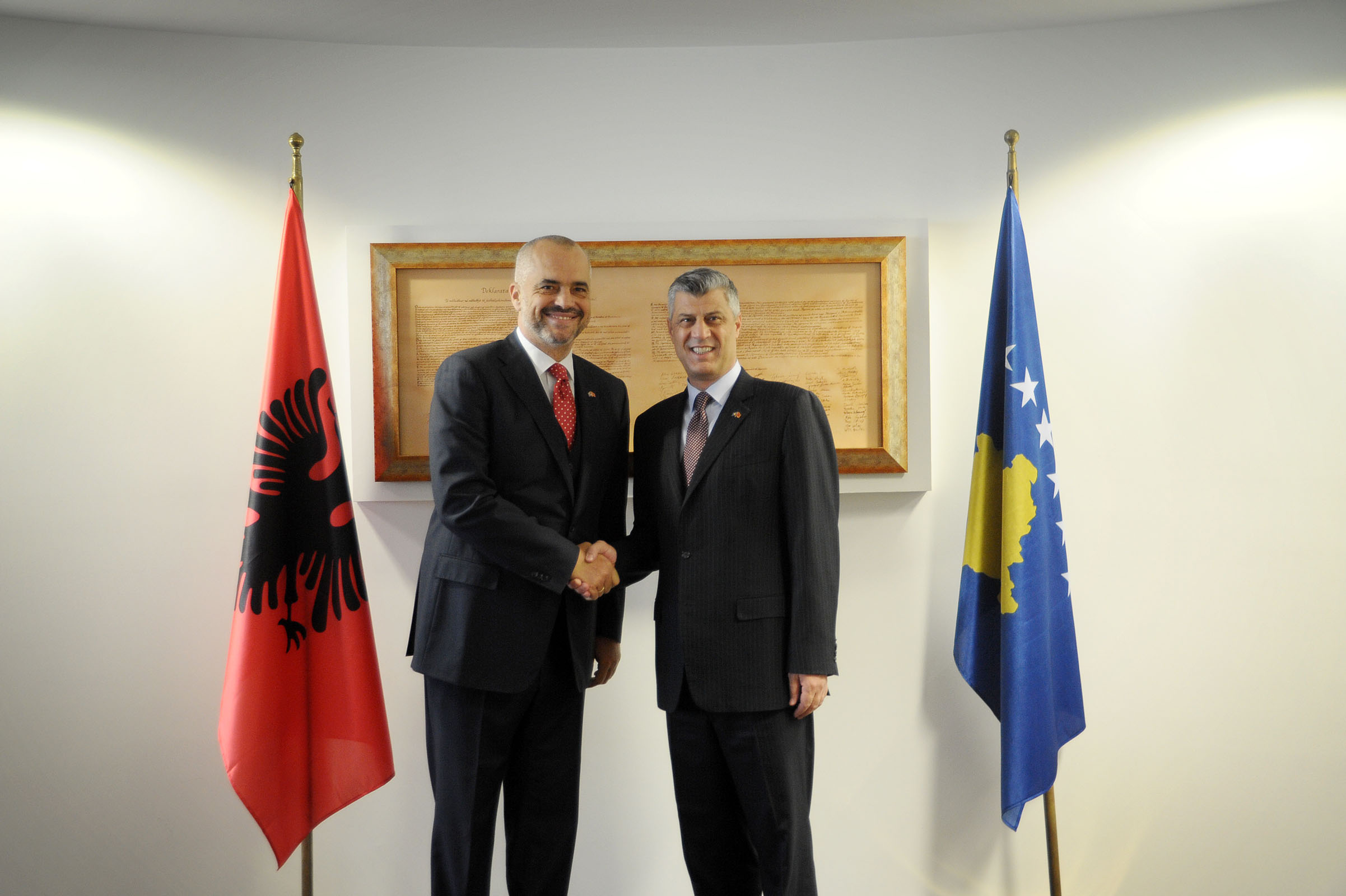
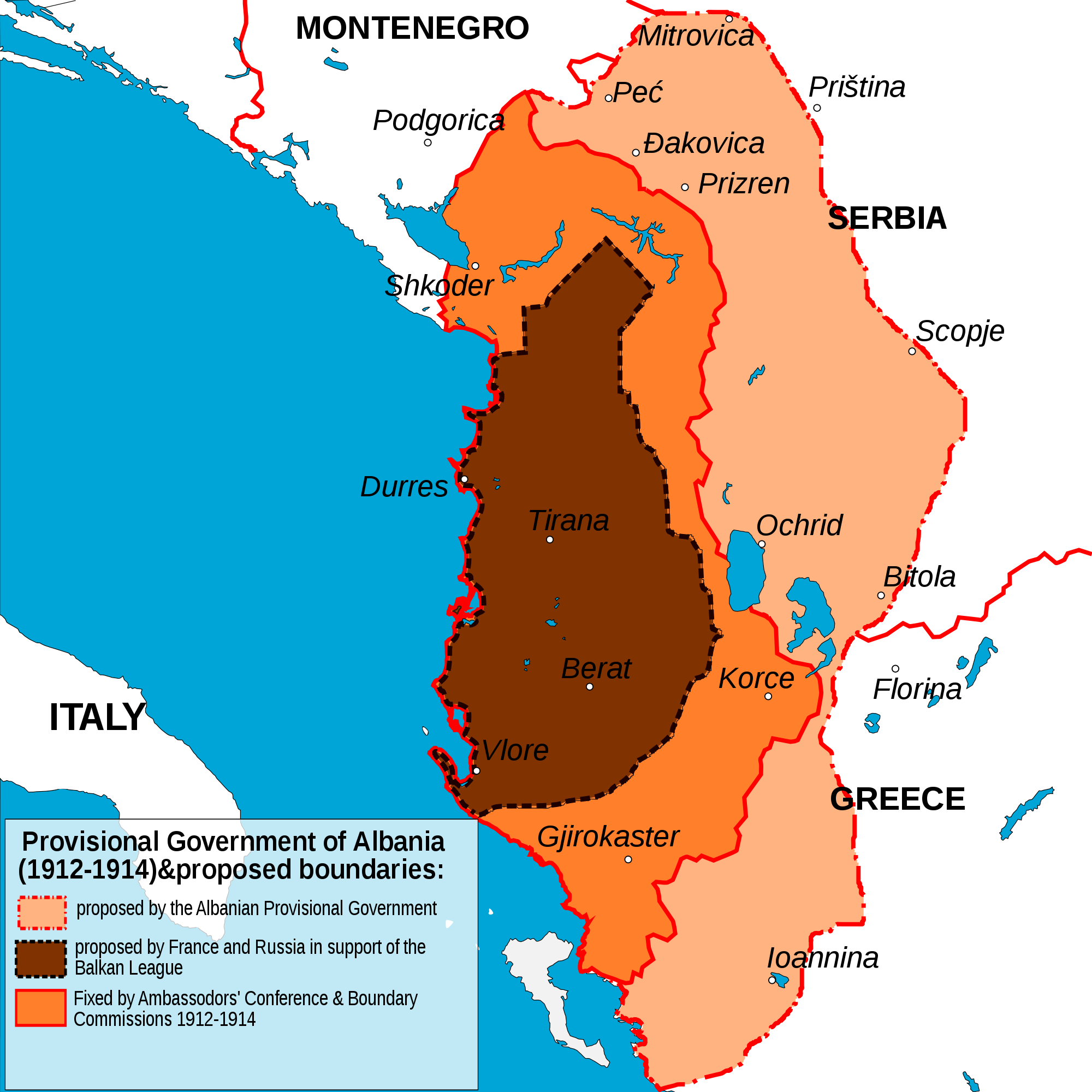
The Greater Albania project, which dates back to the 19th century is an idea of the unification of all Albanians into one state. Namely, the Prizren League then demanded the recognition of the national identity of Albanians and the autonomy of Albania within the Ottoman Empire.
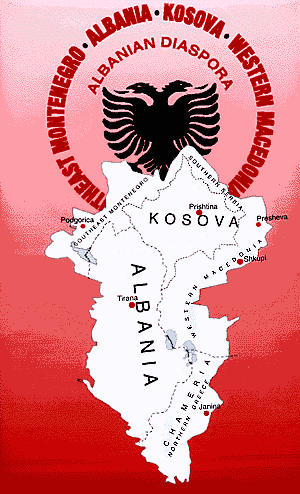
Today, Albanians live in two countries Albania and Kosovo (Serbian breakaway southern province) and in neighboring countries. The scenario of Great Albania includes separation of Western Macedonia (Struga, Kičevo, Debar, Tetovo, Gostivar, Kumanovo, part of capital Skopje) and then the other parts in the Balkans with the Albanian population (the Presevo Valley in southern Serbia, Presevo, Bujanovac, Medvedja), southern and eastern parts of Montenegro (the municipality of Ulcinj, and parts of the municipalities of Bar, Plav, Rozaje, Gusinje and the capital city Podgorica), as well as Greek southern Epirus. If necessary, these borders can be reduced if it turns out that it is impossible to create them in this form. What makes Albanian politics in the Balkans recognizable is manipulation.
 One of the main weapons of Albanians is their birth rate. That is, the figures for which they claim to be the only ones true. With the support of US, the number of Albanians in the region is constantly fictitiously increasing. It is therefore necessary to look at the real situation with the number of Albanians in the region. After decades of increasing the number of Albanians in Serbia, under the blessing of Yugoslav communists and the regime of Slobodan Milosevic, in 2011 census was carried out in Kosovo*(Serbian breakaway southern province). Final results for 2011 census showed that Kosovo (excluding North Kosovo) has 1, 739, 825 inhabitants. North Kosovo is dominantly populated by Serbs. Prior to the census in the West, it was estimated that Kosovo had a population of about 2, 200,000 inhabitants. The latest US Central Intelligence Agency estimate is that in Kosovo on July 2016 lived 1, 883, 018 inhibitants. However, in reality, all these data are artificialy increased. According to the estimates of the Serbian Government, in Kosovo there are fewer than 1,300,000 inhabitants of which 120,000 are Serbs. This assessment was based on the analysis of telephone traffic and mobile telephone connections per capita in Kosovo. However, what everyone agrees with is the fact that the number of Albanians is rapidly decreasing in Kosovo. The main reason for that is high poverty and corruption. The situation is similar in Albania. Officialy Albania is one of the most homogeneous countries in the Balkans, but in reality things look different. According to the 2011 census, Albanians made 2,312,356 (82.6%), Greeks 24, 243 (0.9%), Macedonians 5, 512 (0.2%), Montenegrins 366 (0.01%), Aromanians 8, 266 (0.30%), Romani 8, 301 (0.3%), Balkan Egyptians 3, 368 (0.1%), and others 2,644 (0.1%). Around 14% or 390,938 did not declared ethnicity and 44,144 (1.6%) were not relevant. It is also clear that there is manipulation in this census.
According to estimates of Serbian organizations, in Albania live more than 30 000 Serbs, mostly in northern Albania. Most manipulations Albanian Government is doing about the number of Greeks. The real figure of the Greek number in Albania is 200 000, and neutral Western experts also agree with that number. It should be pointed out that the Greek Government claims 300,000 Greeks live in Albania. Unfortunately, the US Government considers that 1.17% of Greeks live in Albania, although they know that number is inaccurate. In Albania, there is also a lot of emigration due to crime, corruption, and poor governance of the state. Between 1991 and 2004, roughly 900 000 people have migrated out of Albania. In the Preshevo Valley (southern Serbia), on the 2002 census, the Presevo municipality had 31, 098 Albanians and something below 4,000 non-Albanians, the municipality of Bujanovac – 23, 681 Albanians and 19,000 thousands of non-Albanians, and the municipality of Medvedja something below 8,000 Serbs and Montenegrins, and 2,816 Albanians. The Albanians boycotted the population census in 2011 because over 30,000 Albanians migrated from the Presevo Valley to the West, which means that the ethnic structure has changed. Representatives of Serbian associations from these 3 municipalities point out that the data, taken as official, are forged and that in Preshevo Valley live only half Albanians from official data. Local Serbs claim that under the municipality of Bujanovac there are currently under 12,000 Albanians, which is twice as low as the 2002 census, which is only relevant to Albanians.
President of the Coordination Body for Presevo, Bujanovac and Medvedja municipalities Zoran Stankovic said that the state is considering a new census, but that it is still early for the story of the date of its maintenance, because it is necessary to prepare everything well. Mr. Stankovic stated this in 2013, but to this day, nothing has been done on this issue. The Serbs from Bujanovac claim that political discrimination is on the scene by playing with the number of Albanian inhabitants, which is why they have become citizens of the second order in their own country and expect the state to regulate the voters lists, which, they say, are filled with falsified names and non-existent citizens. At the same time, such claims have been blackmailed in Macedonia also, where Albanians have territorial pretensions, and on the local population census. According to the 2002 census in Macedonia, Albanians account for 25% of the population. The census from 2011 Albanians boycotted after ten days of enumeration. Law forbids that can be enumerated citizens living abroad more than a year. Since a significant number of Albanians left Macedonia and went to the West, the real number of Albanians living in Macedonia would be shown. In that time ruling national-conservative Macedonian party VMRO – DPMNE drawn attention, that there was manipulation in the census at that time. According to their data, 120,000 Albanians who have not lived in Macedonia for a long time were enumerated. And that is a significant problem. The Ohrid Agreement from 2001, which ended the armed conflict between Albanian separatists and armed forces of the Macedonian state has a basis in the 2002 census. Under that agreement members of national minorities, primarily Albanian, are guaranteed greater political influence, both at the state and local levels. In places where they account for more than 20 percent of the population, Albanians have received more rights in local government.
According to the 2011 census, 30, 439 Albanians live in Montenegro. And they make up 4.91% of the Montenegrin population. In Montenegro, the Albanians complain that they are discriminated, although they have all rights. As in neighboring countries, they have also tried to cause problems in Montenegro. In anti – terrorist operation “Eagle’s flight” which was conducted by the Montenegrin police was arrested a group of Albanians who planned terrorist attacs and an armed conflict in Albanian – inhabited parts of Montenegro. The group which was arrested in 2006 was sentenced on 51 year in prison. The groups main goal was to “violate the constitutional order and security of Montenegro”, “cause instability, religious and national intolerance” and “endanger lives, property, religious and cultural facilities” said Montenegrin Government. Since US geopoliticaly conquered the Balkans, Albanians were placed above the law. The history of Albanian activity from the end of the 20th century is important because it shows us all the hypocrisy of US. And if US stands for democracy, justice and protection of all religious and ethnic communities, on example of their allies in the Balkans, we can see that things do not go that way. When NATO carried out the aggression against Yugoslavia (Serbia and Montenegro) in 1999, and after the signing of a military technical agreement in Kumanovo, the Yugoslav Army (Serbia and Montenegro) withdrew from Kosovo. And there we could see all the essence of US and NATO. Everything what happen later was with the approval of US. And in Kosovo, under NATO control occurred terrible things.
Since the arrival of NATO in Kosovo, more than 250,000 thousand non-Albanians have been expelled. In other words, ethnic cleansing was carried out. On 17 March 2004, under the eyes of NATO troops, Kosovo Albanians started attack against Kosovo Serbs minority. That was the largest unrest since war on Kosovo 1998 – 1999. The official reason for unrest was the drowning of two Albanian children in a river in the village of Cabra, for whose death the Albanian media and politicians blamed Serbs from a neighboring village Zupče. In fact, it was just an excuse for ethnic cleansing of Serbs. Everything was done with the tacit approval of the West. During the unrest it is estimated that some 4,000 Serbs were expelled from their homes throughout Kosovo. During the pogrom, 28 people were killed, 35 Orthodox monasteries were destroyed or desecrated, and about 930 Serb homes were burned and destroyed. In addition to public condemnations of all international actors, many participants have remained unpunished to this date. A small group that was punished was punished with a smashingly low penalties.
The same thing happened in Macedonia. On August 31, 2001, Aleksandar Damovski, director of the most circulating Macedonian daily Dnevnik, gave the following information for the portal “BH Dani”:
“Currently in Macedonia there are 60,000 Macedonians outside their homes, not with their own will. They were expelled from their own homes by Albanian extremists operating in the territory of Macedonia. The pressure on Macedonians, on the territory where the Albanian minority is in the majority, is getting bigger and bigger every day. Macedonians in Tetovo and Gostivar are locked in their apartments, they can not get out … “
Basically, the Albanian question is artificially imposed. Today, the Greater Albania project is not just an extremist idea, but a project that enjoys the support of the United States, Great Britain, Germany, and can count on the support of some Islamic circles. So far, US has invested heavily in the project of Greater Albania, so it is not realistic to expect changes on this issue in US policy. Namely, the US project of the creation of a large Albania has entered in the active phase after the breakup of the Socialist Federal Republic of Yugoslavia. Since than to the present days has been implemented by military and diplomatic means.
 Of course, there is a history of US engagement in the Balkans and should be payed attention to several key points. 1.The role of US and NATO in civil wars in Croatia and Bosnia, active fight against Serbs as well as sanctions against Serbia, which significantly weakened Serbia. 2. NATO bombing of Serbia, in 1999, and occupation of Kosovo. 3. A colour revolution that took place in Serbia on 5th October 2000, that meant a quiet occupation of Serbia, with which started the destruction of powerful Serbian army, that in the war had embarrassed NATO. 4.A short war in Macedonia and Ohrid Agreement which was imposed to Macedonians, as a US project that began the process of “political” reforms in Macedonia through constitutional changes and the adoption of a number of new laws that provided much greater rights to Albanians in Macedonia. 5. The US support of Montenegrin independence, which has weakened Serbia. With the separation of Montenegro from Serbia, Serbia has lost its acces to the sea.
Also, US made platsdarm from Montenegro against Serbia. 6. US played a key role in the declaration of Kosovo’s independence in 2008, although that was contrary to international law. In both Albanian states today as earlier, there is a rule of crime and corruption. The logical question is why so much interest has US and some other West powers in supporting the creation of a Greater Albania. The answer is in geopolitics and history. Great Albania is needed by US and the West as another whip against the Serbs.
Therefore, should be remembered the statement of Tony Blair, the former British prime minister, during the NATO aggression against Serbia and Montenegro in 1999: “The war against the Serbs is no longer just a military conflict. It is a battle between good and evil, between civilization and barbarism ... “. This fascist statement speaks enough. Serbs in the eyes of Western historians and geopoliticians are the Balkan Russians. In other words, only with strong Serbia, Russia can in the best way achieve its geopolitical interests in the Balkans.
Therefore, the West, first of all US and Britain, pursues its policy in the Balkans, which for aim has a constant weakening of the Serbs.To make an end to disastrous US politics in the Balkans it is needed a stronger presence of Russia and China in the Balkans, primarily in Serbia.
This especially refers to the need that Russia help Serbia be again an independent state, not a country where Western ambassadors decide on Serbian foreign and domestic politics. For the result this would immediately have economic and military strengthening of Serbia. On that issue significant progress is taking place. Serbia again becomes the main armed force in the Western Balkans. Not only because of the Russian donation of weapons, but primarily because of the active diplomatic work of Russian diplomacy on “liberation” Serbia from US control. With the strengthening of Serbia and with the role that Serbia had in the past, the Western Balkans could again hope for a prosperous future. Therefore, the Albanian issue in the Balkans would be solved.
Originally published on 2018-03-15
Author: Slaviša Batko Milačić
Source: Geopolitica
Origins of images: Facebook, Twitter, Wikimedia, Wikipedia, Flickr, Google, Imageinjection & Pinterest.
Read our Disclaimer/Legal Statement!
Donate to Support Us
We would like to ask you to consider a small donation to help our team keep working. We accept no advertising and rely only on you, our readers, to keep us digging the truth on history, global politics and international relations.