Book Review: NATO War Crimes: “Media Lies and the Conquest of Kosovo”
How was an illegal and criminal war “sold” as a “humanitarian intervention” to prevent “genocide” and a second Holocaust? This is the question that Collon analyzes and attempts to answer in the book […]
“Each war begins with media lies.” This is how Belgian journalist Michel Collon begins his analysis of the Kosovo conflict which resulted in the U.S. and NATO bombardment of Yugoslavia in 1999 and the subsequent occupation of the Serbian Kosovo province by U.S. and NATO troops. The U.S. and NATO had launched a war of aggression without United Nations approval and in violation of the territorial integrity and sovereignty of Yugoslavia. The war was illegal and criminal under international law and under the Charter of the UN.
How was an illegal and criminal war “sold” as a “humanitarian intervention” to prevent “genocide” and a second Holocaust? This is the question that Collon analyzes and attempts to answer in the book.
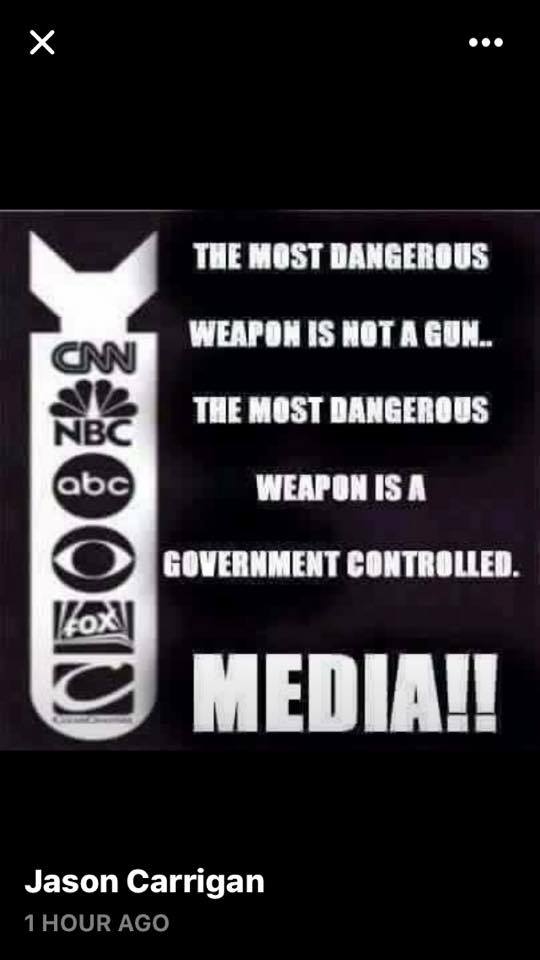
Collon stated that the “primary objective” of the book is to allow “the reader to recognize media lies”. The Kosovo conflict is used to demonstrate how the U.S. media and government used “disinformation” and “war propaganda” to cover up the fact that no “genocide” or atrocities had taken place in Kosovo. He is able to deconstruct the deceptions and lies perpetrated by the U.S. and Western media. The analysis is essential reading in promoting critical media literacy skills and in the deconstruction of the modus operandi of the U.S. and Western media.
But if there was a massive and unprecedented U.S. infowar and propaganda and disinformation campaign, what was the reason for it? Collon analyzed the hidden agendas and objectives that the U.S. and the NATO countries had in launching such a blatantly illegal and criminal war of aggression. He showed how NATO expansion eastwards and into “Southeastern Europe” were important strategic and military objectives. The neutralization of Serbia was vital for the U.S. and the EU because Serbia was not a compliant U.S. proxy, client, and satellite state. Serbia was a large roadblock in the way of U.S. and NATO expansion. Serbia had to be wiped out. And that is what the U.S. and NATO did. The Kosovo conflict was the result.
Economic interests were also of primary concern for the U.S. and NATO. Serbia was resisting “privatization” and the “open society”, that is, the corporate takeover of its economy by U.S. and Western corporate raiders, NGOs, and corporate conglomerates.
Collon examined the ramifications of the Kosovo conflict for future conflicts, the “next wars of globalization.” In particular, he saw the connection of Kosovo to the Caucasus, the interconnection of Kosovo to the South Ossetia and Abkhazia conflicts. Collon saw the Kosovo conflict as only the first war in NATO’s expansion eastwards and NATO’s plan to encircle the Russian Federation.
The war launched on August 7, 2008 by U.S. client state Georgia to take over the de facto independent regions of South Ossetia and Abkhazia can be seen as the second war concocted by the U.S. and NATO. The goal is the same in Kosovo and in South Ossetia. The U.S. and NATO seek expansion. Collon was able to foresee the South Ossetia conflict, His analytical framework is accurate and critical, providing an objective and unbiased analysis of NATO and U.S. motives and policies.
Collon begins his analysis by deconstructing the media deceptions and lies that the U.S. and Western media used to “sell” the illegal war in Kosovo. The U.S. propaganda model was to use the Bosnia Holocaust propaganda analogy. Accuse the Serbs of committing genocide, of recreating the Holocaust. Make up outrageous and preposterous atrocity stories and fabrications and concoct unbelievable casualty numbers. Revive the “ethnic cleansing” meme that worked so well in Bosnia. And then develop the genocide propaganda argument.
There was a claim by the U.S. and Western media that there were “100,000 Missing” Albanian Muslims, presumed to have been killed by the Serbs. U.S. President Bill Clinton stated at a White House press conference on June 25, 1999 that “tens of thousands of people”, that is, Albanian Muslims, had been murdered in Kosovo on the personal orders of Slobodan Milosevic. This was nonsense and a malicious deception. Geoff Hoon of the British Foreign Office similarly claimed that “it appeared that around 10,000 people had been killed in more than 100 massacres.” These were outlandish, cynical, and immoral lies disseminated by government leaders. But Bill Clinton and Tony Blair understood that there were no repercussions and consequences for the most outrageous of lies and deceptions. By playing the genocide game or genocide card, moreover, invoking genocide in what was an internal, separatist and secessionist conflict, Clinton and Blain knew that they could silence any dissent and debate. Who wouldn’t want to prevent genocide and atrocities? Framed in those deceptive terms, it was a win-win situation that was based totally on disinformation, infowar and psyop techniques, and fabrications.
In fact, claims of genocide by the U.S., Britain, and other NATO countries were later shown to be lies and fabrications concocted and planned by the governments of those same NATO countries that bombed and occupied Yugoslavian territory. U.S. infowar techniques went into high gear. The U.S. media and government propaganda machine went into overdrive. U.S. Army Psyops specialists even were hired by CNN to work for the news network. This was the appetizer. This was to get everyone ready for the main show, which was the bombing and occupation of Serbia.
Collon examined and discussed the language and terms of the Rambouillet Accord which no sovereign and independent country could accept. It harkened back to the 1914 Austro-Hungarian Ultimatum to Serbia that led to World War I. Under the terms of the Rambouillet Accord, Serbia had to allow NATO the right to potentially occupy all of Serbia and Yugoslavia, had to give Kosovo de facto independence immediately, and allow Kosovo Albanians to vote on independence after three years. What sovereign state would accept these terms? Would Georgia under Mikhail Saakashvili accept these terms for the resolution of the South Ossetia and Abkhazia conflicts? Clearly, the U.S. planned a war to allow the Kosovo Albanian Muslim separatists to secede from Serbia, like Adolf Hitler and Benito Mussolini had done in 1941, and for essentially the same reasons, to use Albanians as a proxy against Yugoslavia, a hostile and non-proxy state.
Collon cited convincing and compelling evidence that the U.S. and NATO planned an “intervention” in Kosovo long before the 78 day bombing started in 1999. In June, 1997, a French government official visited a U.S. aircraft carrier in the Adriatic. A U.S. admiral showed him a map of Yugoslavia with blinking lights on it. When asked what the lights represented, the admiral replied, “These are the future targets of our air attacks.” This was almost two years before the alleged “crackdown” and “atrocities” in Kosovo by the Slobodan Milosevic regime. This was before anything had happened in Kosovo. The U.S. and NATO were planning the next war. And Kosovo was the place. Some rationale was needed, any rationale, and the U.S. propaganda and infowar machine came up with one.
Finally, Collon analyzed the war crimes the U.S. and NATO committed in Kosovo by targeting Serbian hospitals, nursing homes, passenger trains, automobile factories, power grids, marketplaces, refugee columns, and television stations. Amnesty International and Human Rights Watch confirmed that based on the evidence they gathered, the U.S. and NATO were guilty of committing horrendous war crimes. But who was going to prosecute them? Who was going to arrest Bill Clinton and Madeleine Albright and bring them before a war crimes tribunal and court? Who was going to prosecute the U.S. and NATO war crimes in Serbia and Yugoslavia? Might makes right.
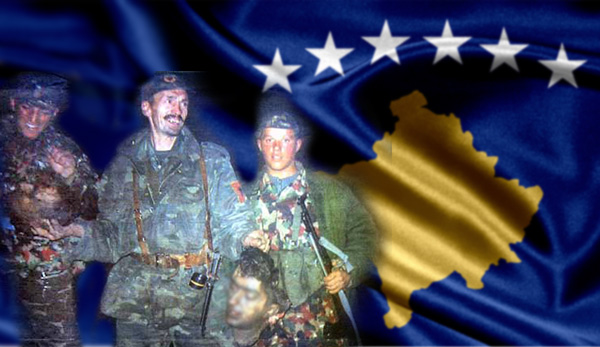
What did the U.S. and NATO achieve with the alleged “humanitarian intervention”? Following the war, an estimated 250,000 Kosovo Serbs, Roma, Turks, Gorani, and Jews were forced to flee Kosovo, creating an ethnically pure Albanian or Shqip “Kosova”, a Greater Albania. What the U.S. had achieved was to allow its proxy Albanian forces to secede and to create a second Albanian state in Europe. The U.S. had achieved the goals of Albanian separatism, creating two Albanian Muslim states in Europe.
Collon analyzed the Racak “massacre” and showed how this incident was staged and manipulated and distorted by the U.S. government and media. Those killed were armed Albanian Muslims who had been engaged in a shootout with Yugoslav police and security forces. The evidence showed that they had gun residue on their hands indicating that they had fired weapons. Racak was the pretext the U.S. needed to launch the illegal bombardment of Yugoslavia. Anything, any pretext, would have done.
Collon showed how economic factors were also paramount in the Kosovo conflict. U.S. President Bill Clinton had explained that “that’s what this Kosovo thing is all about … our ability to sell around the world.” He cited a Thomas Friedman statement in the New York Times : “The hidden hand of the market will never work without a hidden fist—McDonald’s cannot flourish without McDonnell Douglas, the builder of the F-15.” Finally, the New York Times on July 18, 1996, attacked Slobodan Milosevic, “a former Communist”, because he retained “state controls” over the Yugoslav economy and because of “his refusal to allow privatization.” The Washington Post explained succinctly why Yugoslavia was targeted by the U.S., NATO, and the EU: “Milosevic failed to understand the political message of the fall of the Berlin Wall while other Communist politicians accepted the Western model, and moved in the direction of the rest of Europe, Milosevic went the other way.” Milosevic did not grasp that the U.S. was the sole Superpower, the “global hegemon” who required all states to adopt and to follow the “Western model”. Ultimately, this was what the Kosovo thing was all about.
Collon was able to analyze and deconstruct the many issues involved in the Kosovo crisis and to see their future implications in the Caucasus. Originally published in 2000 in French as Monopoly: The NATO Conquest of the World, Collon analyzed how the Kosovo conflict was aimed ultimately at Russia and was a precursor to NATO expansion into the Ukraine, the Baltic states, and Georgia. Kosovo was not the end, but only the start. Kosovo was the beginning. South Ossetia and Abkhazia were the next wars. Kosovo set the stage for Iraq, Afghanistan, and the conflicts in South Ossetia and Abkhazia and was the intended “prototype” for future wars of “globalization” and for spreading “democracy” and “freedom” around the globe.
NATO targeted hospitals, power grids, nursing homes, passenger trains, bridges, refugee columns, busses, television stations, factories, and residential areas. These are war crimes under international law and the customs and conventions of warfare. Cluster bombs were dropped by NATO in civilian areas. NATO bombed the residence of Slobodan Milosevic in a “decapitation” attack meant to assassinate him. NATO also killed hundreds of Albanian Muslim refugees.
Appendix
Why can we expect to see more wars? What countries have been singled out to be the next targets? Are Russia and China being threatened? Is the world running the risk of a major conflict? Michel Collon correctly predicted the war against Yugoslavia in his previous book, Liar s Poker (1998). His latest book, Media Lies and the Conquest of Kosovo, examines the Kosovo War as a for-profit venture instead of a humanitarian war.
Media Lies and the Conquest of Kosovo is an anti-Globalist handbook, an anti-manipulation manual. Each war begins with media lies. Public opinion must support the troops. Isn’t that so? Are we condemned to always learn the truth too late? No, says Collon, who exposes the principles and devices employed in the Kosovo propaganda war. Massacres, mass graves, ethnic cleansing: how can one disentangle truth from falsehood in these shocking images? And what is being concealed from us by the terms blunders and collateral damage? In Yugoslavia, did NATO really bomb the Chinese Embassy, two refugee columns, an international train, the market and the hospital in Nis, and numerous other civilian targets by accident?
These questions must be answered in order to understand the true objectives of the Great Powers. And in order to avoid being deceived by the media into supporting the next illegal war of aggression.
For the past twelve years, Michel Collon has been studying the Global War that the U.S. has been conducting in order to dominate and recolonize the planet. His books and films have unmasked the clandestine rivalry between the US and the EU, specifically, their battle to control black gold, a strategic raw material that must not fall into the hands of rivals: Whosoever wishes to rule the world must control the oil. All the oil. No matter where it is.
We would like to ask you to consider a small donation to help our team keep working. We accept no advertising and rely only on you, our readers, to keep us digging the truth on history, global politics and international relations.
Although the 2016 presidential election is still in the primaries phase, contenders have already brought up America’s failed foreign wars. Hillary Clinton is taking flak over Libya, and Donald Trump has irked the GOP by bringing up Iraq. But what of Kosovo?The US-led NATO operation that began on March 24, 1999 was launched under the “responsibility to protect” doctrine asserted by President Bill Clinton and UK Prime Minister Tony Blair. For 78 days, NATO targeted what was then the Federal Republic of Yugoslavia – which later split into Serbia and Montenegro – over alleged atrocities against ethnic Albanians in the ...
Part IThe basic cornerstones of the Croat ultraright nationalistic ideologyFrom the point of the ideology of the extreme Croat nationalism, the cardinal goal of ultraright nationalistic parties, groups, ideologists and politicians was to create for the first time after 1102 an independent, as much as a Greater and finally “Serben-frei” Croatia. In the 1990s it was an exactly ultraright nationalistic ideology that provided the main background for creation of a new normative order and values in the HDZ’s Croatia. This ideology had five cardinal cornerstones which gave the framework for building a new institutional order, political values and means to ...
“Rooted in a story of generosity and partnership, Thanksgiving offers an opportunity for us to express our gratitude for the gifts we have and to show our appreciation for all we hold dear….”So begins the official Presidential Proclamation of Thanksgiving Day, 2015, signed and issued by Barack Obama.While it hearkens back to earlier Thanksgivings in St. Augustine in 1565 and Plymouth in 1621, this is an essentially imperial document that gives only vague lip service to giving “thanks for the many blessings bestowed upon us.” When his proclamation gets specific, in the third sentence, the President gives the highest place of ...
In a remarkable book, 1939: The Alliance That Never Was and the Coming of World War II, the Canadian historian Michael Jabara Carley describes how, at the end of the 1930s, the Soviet Union repeatedly tried, but finally failed, to conclude a pact of mutual security, in other words a defensive alliance, with Britain and France. This proposed arrangement was intended to counter Nazi Germany, which, under Hitler’s dictatorial leadership, had been behaving more and more aggressively, and it was likely to involve some other countries, including Poland and Czechoslovakia, that had reason to fear German ambitions. The protagonist of this ...
Origins of images: Facebook, Twitter, Wikimedia, Wikipedia, Flickr, Google, Imageinjection, Public Domain & Pinterest.Read our Disclaimer/Legal Statement!Donate to Support UsWe would like to ask you to consider a small donation to help our team keep working. We accept no advertising and rely only on you, our readers, to keep us digging the truth on history, global politics and international relations.[wpedon id="4696" align="left"]Save
Since terrorism’s tragedy is again in the news, it is timely to revisit perhaps one of the biggest acts of terrorism in modern history – the illegal invasion and destruction – ongoing – of Iraq.March 20th marked the thirteenth anniversary of an action resulting in the equivalent of a Paris, Brussels, London 7th July 2005, often multiple times daily in Iraq ever since. As for 11th September 2001, there has frequently been that death toll and heart break every several weeks, also ongoing.America and Britain have arguably engaged in and generated the legacy of one of the longest recorded attacks ...
Magnum Crimen the book about clericalism in Croatia from the end of 19th century until the end of the Second World War.The book, whose full title is Magnum crimen – pola vijeka klerikalizma u Hrvatskoj (The Great Crime – a half-century of clericalism in Croatia), was written by a former Catholic priest and professor and historian at Belgrade University, Viktor Novak (1889–1977). The book was first published in Zagreb in 1948.Immediately after the book was published, the Vatican Curia placed this book on the Index Librorum Prohibitorum (English: List of Prohibited Books) and pronounced anathema against the author.BackgroundNovak wrote a ...
The Western-backed myth of a Greater SerbiaMuch space, time, and effort have been devoted to the recent history of West Balkans, and in particular in the latest political upheavals, about the alleged project of Greater Serbia especially by Western authors either academic scholars or journalists.[1] The issue must be, however, considered together with its counterparts from Croatia (a Greater Croatia) and Albania (a Greater Albania).Two focal questions arose here: Were all these projects serious and what was the origin of this maximalist concept of forming national states in the otherwise ethnically mixed area? Whose exact interests were involved and to ...
PrefaceA geopolitical issue of South-East Europe became of very importance for the scholars, policymakers, and researchers with the question of the dismemberment of the Ottoman Empire as one of the most crucial features of the beginning of the 20th century in European history. A graduate collapsing of the one-time great empire was accelerated and followed by competition and struggling by both, the European Great Powers and the Balkan national states, upon the territorial inheritance of it. While the European Great Powers have the aim to obtain the new spheres of political-economic influence in South-East Europe, followed by the task to ...
Unless We Learn Our History, We’re Doomed to Repeat ItPreface: I am a patriotic American who loves my country. I was born here, and lived here my entire life.So why do I frequently point out America’s warts? Because – as the Founding Fathers and Supreme Court judges have explained – we can only make America better if we honestly examine her shortcomings. After all:“Dissent is the highest form of patriotism.”Only when Americans can honestly look at our weaknesses can we become stronger. If we fail to do so, history will repeat …While Americans rightly condemn the Nazis as monstrous people, ...
In the last years of the Cold War (1949−1989), the Socialist Federal Republic of Yugoslavia (the SFRY) was the largest, most developed and ethnoculturally diverse country in the Balkan peninsula (South-East Europe).It was a non-aligned federation comprised of six republics: Bosnia-Herzegovina, Croatia, Macedonia, Montenegro, Serbia, and Slovenia. In addition to these six republics, two separate territories of Kosovo-Metochia and Vojvodina held the status of autonomous provinces within the Republic of Serbia. Undoubtedly, ex-Yugoslavia was a mix of ethnic groups and religions, with Orthodox Christianity, Roman Catholicism, and Islam being three main religions in the country.[i]Coinciding with the collapse of Communism ...
I travel frequently to the countries which once made up the now defunct Socialist Federal Republic of Yugoslavia, satisfying a passion of mine that stems back to my childhood days. For me, the Balkans’ history, its people and its cultures are both enigmatic and magnetic, as they have been, too, for countless others, of many nationalities, over centuries gone by. Accounting for the enchantment of the Balkans, its captivating allure, is a challenge to put into writing. Because no words can truly embellish what is one of the most absorbing parts of the world. To understand and feel what it is ...
This article was first published on October 19, 2014This week marks the three-year anniversary of the Western-backed assassination of Libya’s former president, Muammar Gaddafi, and the fall of one of Africa’s greatest nations.In 1967 Colonel Gaddafi inherited one of the poorest nations in Africa; however, by the time he was assassinated, Gaddafi had turned Libya into Africa’s wealthiest nation. Libya had the highest GDP per capita and life expectancy on the continent. Less people lived below the poverty line than in the Netherlands.After NATO’s intervention in 2011, Libya is now a failed state and its economy is in shambles. As ...
Preface At the beginning of the 20th century the Great European Powers,[i] divided into two totally antagonistic political-military alliances, were preparing themselves for the final settling of accounts among each other concerning the new division of political-economic spheres of influence and the redistributing the colonies around the world. Their different interests overlapped upon the territory of South-East Europe, much more look down at the other parts of the globe, for the reason of the exploitation of the regional natural wealth and to take advantage of the military-strategic importance of South-East Europe as the strategic hinterland of East Mediterranean and the most ...
On November 21st, 2015 it was the 20th anniversary of the 1995 Dayton Peace Accord – a treaty signed by four Presidents (the USA, Croatia, Serbia and Bosnia-Herzegovina) that led to an end of the civil war in Bosnia-Herzegovina. As a result of the Dayton Peace Accord a new “independent and internationally recognized state” emerged: Bosnia-Herzegovina as a confederation of two political entities (the Republic of Srpska and the Muslim-Croat Federation) but ethnically strictly divided into three segments composed by the Serb, Croat and Muslim (today Boshnjak) controlled territories. In contrast to the Republic of Srpska (49% of the territory ...
Video documentary movie on the first ISIS in Europe in the Islamic Caliphate of Bosnia-Herzegovina, 1992-1995.This movie is made by the British SKY NEWS after the civil war in Bosnia-Herzegovina.Similar documentary movies on the ISIS Bosnia-Herzegovina made by the Bosnian Serbs were never shown to the Western audience.The duration of the movie is 8 min. and 17 sec.In the movie are presented and future Al-Qaeda Mujahedeen holy fighters.From the movie is clear what was the real nature of the civil war in Bosnia-Herzegovina in the 1990s.All copyrights reserved by the SKY NEWS.Origins of images: Facebook, Twitter, Wikimedia, Wikipedia, Flickr, Google, ...
Years ago, the terms “false flag” and “conspiracy theory” went hand in hand. Suggesting that a government would stage an attack on its own people or attack an ally and blame it on a “third party” was unthinkable.This is despite the glaring fact that “false flags” have been going on since before biblical times and have been a part of every nation’s policy. Intelligence agencies exist to do little else, they plan and execute false flag attacks to influence policy and set the course of events, based on analysis. This is, in fact, their greatest single tool, and one used ...
Origins of images: Facebook, Twitter, Wikimedia, Wikipedia, Flickr, Google, Imageinjection, Public Domain & Pinterest.Read our Disclaimer/Legal Statement!Donate to Support UsWe would like to ask you to consider a small donation to help our team keep working. We accept no advertising and rely only on you, our readers, to keep us digging the truth on history, global politics and international relations.[wpedon id="4696" align="left"]SaveSave
The grossest thing in American society is the reactionary sentimentality that fill our gossip infected hearts with a chemical reaction every time one of our supposed war heroes moves on to a more peaceful place. The carefully rehearsed statements from useless political figures numb our minds as all those who are sane must collectively wonder what on earth has a fusty bag of bones like John McCain ever done for us? Donald Trump was once new to the political scene and was still capable of burning bridges that were worth burning. It was Mr. Trump’s finest moment when he said ...
The concept of a “Greater Israel” according to the founding father of Zionism Theodore Herzl, is a Jewish State stretching “’From the Brook of Egypt to the Euphrates.’Rabbi Fischmann, of the Jewish Agency for Palestine, stated to the UN Special Committee on 9th July 1947 that:The Promised Land extends from the River of Egypt up to the Euphrates, it includes parts of Syria and Lebanon’”, wrote Michel Chossudovsky. (1)Thus “from the Nile to the Euphrates.” Herzl’s detailed thesis was written in 1904.Quoted in the same article is Mahdi Darius Nazemroaya on The Yinon Plan (1982) “ … a continuation of ...
The magazine is covering the research gaps uncovered by global Western hoax mainstream media platforms and academic teaching & research institutions.
This is an alternative information & academic research digest platform with the purpose to offer an alternative “another side of the truth”.
The magazine is independent, private, and free of any influence by any institution, organization, government, or pressure group. URL: www.global-politics.eu



 How was an illegal and criminal war “sold” as a “humanitarian intervention” to prevent “genocide” and a second Holocaust? This is the question that Collon analyzes and attempts to answer in the book.
 Finally, Collon analyzed the war crimes the U.S. and NATO committed in Kosovo by targeting Serbian hospitals, nursing homes, passenger trains, automobile factories, power grids, marketplaces, refugee columns, and television stations. Amnesty International and Human Rights Watch confirmed that based on the evidence they gathered, the U.S. and NATO were guilty of committing horrendous war crimes. But who was going to prosecute them? Who was going to arrest Bill Clinton and Madeleine Albright and bring them before a war crimes tribunal and court? Who was going to prosecute the U.S. and NATO war crimes in Serbia and Yugoslavia? Might makes right.