Does the Vatican know what the Albanian bishops in Novo Brdo are doing? – the question many Serbs asked these days.
The Albanian Roman Catholic mass was Served in Serbian ancient town and mine, Novo Brdo, in Serbian Orthodox Church of Saint Nikola. All was done secretly and illegally, as is usually done by those who are self-aware of the guilt, Albanian Roman Catholic bishops held a mass at the remains of the ancient Serbian Orthodox Church of St. Nicholas in Novo Brdo, Kosovo and Metohija.
The Mass, served by the Roman Catholic Bishop of so-called Kosovo Dodd Jerji and the Archbishop of Bar, Montenegro Zeph Gashi with the clergy, was also attended by the (Albanian) director of the Pristina Institute for the Protection of Cultural Monuments, Ismet Hajrulah. The public was informed of the delay, thanks to the newsletter of the Roman Catholic Diocese in Pristina. However, to make things right, Archpriest Stevo Mitric immediately shined his guide in the same place.
The Diocese of Raska-Prizren made a statement announcing the abuse of the spiritual and cultural heritage of the SPC (Serbian Orthodox Church) on a site founded and built by medieval Serbian rulers, as recorded in domestic and foreign historical literature. However, he did not fail to point out that he was disappointed with the move by the Roman Catholic Diocese of Kosovo, since, as he noted, the “hitherto fair and correct” relations of the two churches in Kosovo and Metohija were disrupted.
Asked if the move by the diocese of Kosovo can be considered authentic, or given the relationship between Belgrade and Pristina and the involvement of a foreign factor in the problem, one can say that politics is behind it, the Serbian historian Milosh Kovich says, as it is today, – mapping territory.
“You have heard the speech of the Albanian bishop on the ruins of St. Nicholas Church, the stories that Albanians were present here before Christ, before the Ottomans, etc. That’s a completely unhistorical story, still distinctly nationalistic. The words of the director of the Prishtina Institute show that it is an eminently political mapping, marking of the territory. Тhe official representatives of the Vatican should react, take a stance about the Albanian occupation of the Serbian Orthodox shrine, so we could find out where does this crime comes from,” says a professor Kovich.
Even though the awful story happened last week, the Vatican turns a blind eye.
However, the Vatican has still not recognized NATO – created Albanian quasi-state.
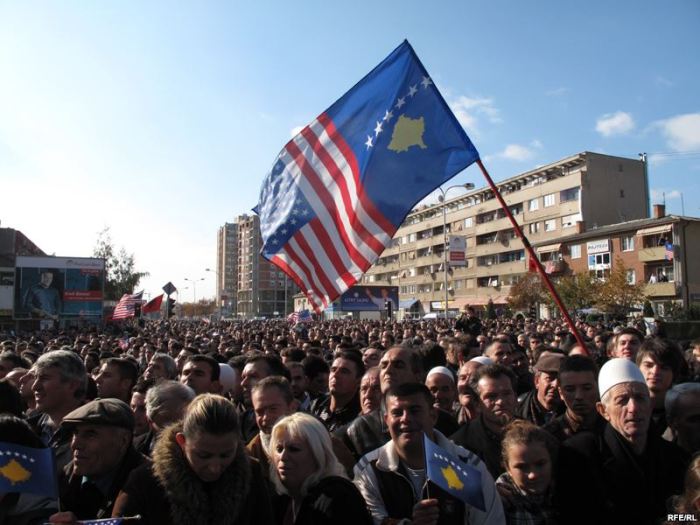
Flags of Vatican and Albania
But in this case, even the papal nuncio in Belgrade remains mute.
Alas, as Latin saying teaches Qui tacet consentire videtur ( Silence implies consent) it is, more or less clear about the position of the top Vatican clergy.
The silent support to the Albanian occupation of Kosovo that the Vatican provides the quasi-state with should not come as a surprise.
Reminder: The Papal inauguration of Pope Francis that was held on 19 March 2013 in St. Peter’s Square in the Vatican. A Muslim/non-Christian/ PM of (still) unrecognized (by the Vatican) pseudo-state of ‘Kosovo’ Hashim Thaci was standing shoulder to shoulder to long-term Albanian lobbyist Joseph ‘Joe’ Biden at the Papal inauguration.
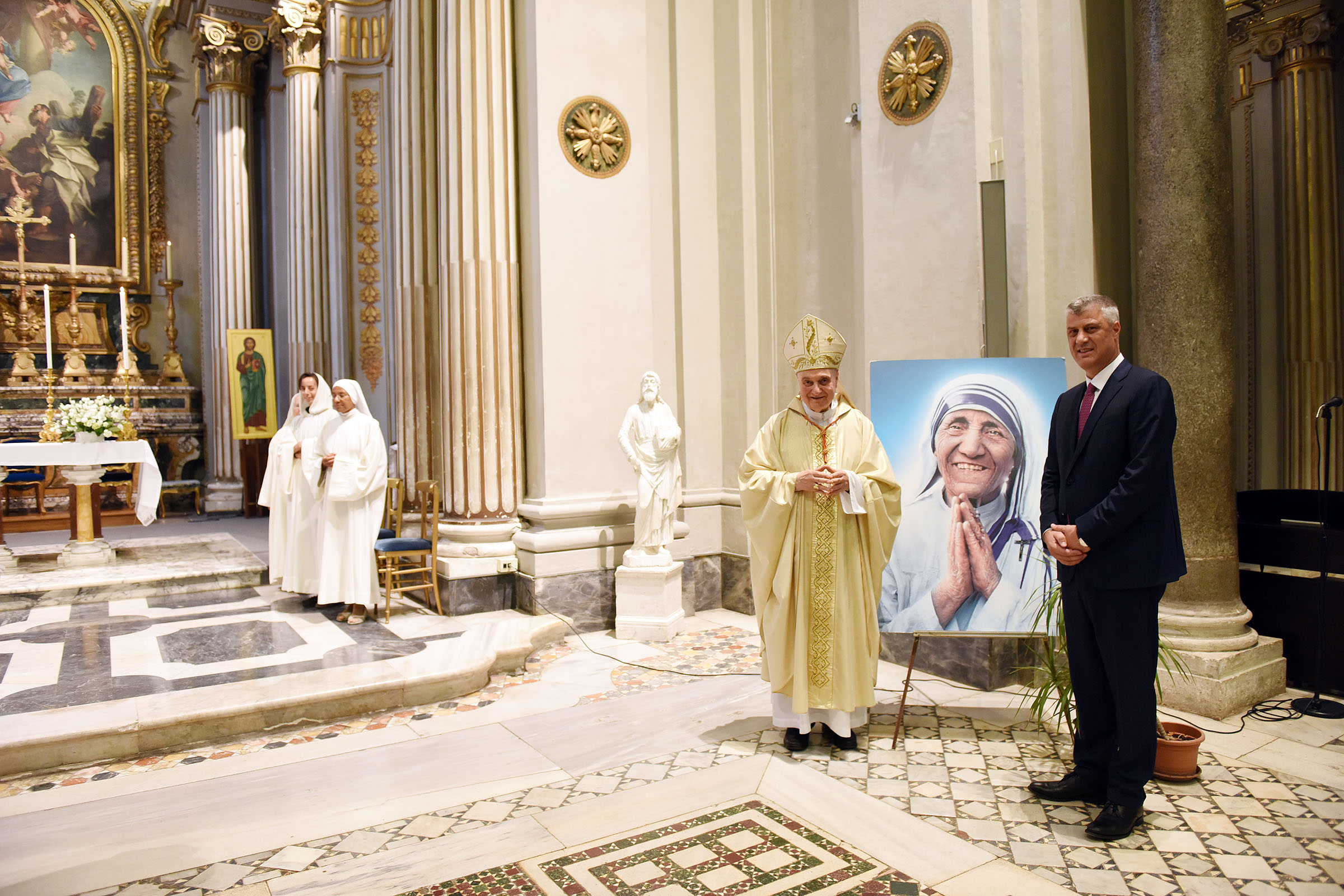
Hashim Tachi visited Vatican in 2016 when he organized mass at the Vatican dedicated to Mother Teresa.
Last year Ramush Haradinai, another Muslim Albanian war criminal, was received on the highest level in the Vatican.
This is how RTK (radio-television of ”Kosovo”) covered the story:
“During his visit to the Vatican, Prime Minister of Kosovo Ramush Haradinaj met Pope Francis to whom he expressed the commitment of the people of Kosovo to preserve and foster spiritual and democratic values for the common good.”
“Kosovo is grateful to the Holy See for always finding open doors. The blessing of Pope Francis is further encouragement for the path being pursued by Kosovo and its people, the path of European civilization,”Haradinaj said after the meeting.
Even though there are the undoubtedly established historical facts about the Serbian origin of Saint Nicholas church in Novo Brdo, despite the fact that it has been known since ever that St. Nicholas church in Novo Brdo is an Orthodox Metropolitan Church, the seat of the metropolitan and that this was evidenced by both Muslim and Catholic sources from that time, that didn’t mean anything to these 21st centuries joint Catholic – Muslim crusade.
The violent act of Vatican and Albanians is just one more attempt to convert the Orthodox Church to Catholic and, as time passes by, to an Albanian shrine, since there are Catholic Albanians in the area but Serbs are mostly Orthodox.
This is a part of annulling, deleting traces of the existence of Serbian nation, and it started when the Albanians ( supported by NATO and later Google) violently started to change millennium-old toponyms and turn them into Albanian.
At the same time in Albania, not a single stone was left to testify about the presence of Serbs or other nations.
It was destroyed in the time of Enver Hoxha or renamed into the Albanian heritage.
That’s a continuation of the century-old Albanian policy of destruction of Serbian cultural, historical and religious traces.
For example, by 1966. Law, the state of Albania forbade all personal Slavic names and all Slavic toponyms.
Immediately after the Law, came the so-called Flood of Religion (1967): Destroying the places of worship (in practice exclusively non-Islamic, non-Catholic, but Orthodox) digging over cemeteries – again non-Islamic, non-Catholic, – just Orthodox.
Ten years later, in 1975, even a more rigid decree was brought. It sealed the fate of Serbs in Albania mostly living in and around the city of Skadar. According to the decree, our people (our people in Albania at that time, apart from Serbs, were also Montenegrins and Macedonians) had to give up their “non-Albanian names” because they sound “inappropriate” or “degrading from a political, moral or ideological standpoint.”
At the same time, Article 42 of the Constitution of Albania predicted that
”ethnic minorities in Albania were guaranteed the protection and development of their culture, their national traditions, the use of their mother tongue and the teaching of their mother tongue in schools, equality of development in all fields and social life…. ”.
What a shameless mimicry!
It does not take much mind to grasp the grave contradiction between the proclaimed (for marketing purposes, it would be said today) paradise and the true fate of national minorities in that country.
At the same time, hundreds of thousands of Albanians came to Serbia as migrants and continued their settlement in Serbia without interruption.
This is a striking and terrifying fact: only from the end of the Second World War until 1960, “more than 100,000 ha of Serbian land” was usurped by Albanian immigrants in Kosovo and Metohija (it was, therefore, the public property of Serbian citizens).
However, the XVII century Roman Catholic Bishop of Skadar was Petar Bogdani, an Albanian Catholic Bishop born in then – Ottoman empire near old Serbian capital Prizren. The Bishop was remembered as an excellent educated man who admired the beauty of Dečani Serbian monastery and Serb Orthodox Old Church Slavic chant (”la slavona, la piu polita et tersa delle altre”).
In his letters to the archbishop of Skopje, Andria Bogdani (who was his relative) the Bishop states:
”The core of Catholics in Serbia consists of the Albanians. That’s why the Catholic faith is called “la fede Albanese.
It happens that those of Albanians who, in their daily life, deal with Turks and Serbs, sometimes abolish their Catholicism, but after we explain them properly that it’s a sin, they easily return to the true faith.”
The small insight into the relations between Albanians and the Vatican reveals that they have always been running under the surface and that they’re both intense and close.
The Vatican didn’t recognize so-called Kosovo, but the Vatican named a ”Kosovo bishop – Albanian Dodë Gjergji, different from the bishop of Serbia (Stanislav Hocevar) there is Catholic Church of Kosovo, Pope receives Albanian leaders of stolen Serbian land as legitimate officials(presidents, prime ministers) of something called ”Kosovo”…
The same as NATO, Vatican uses Albanians to spread its power over never conquered Serbian territories and, as it was the case with the US and NATO, that’s a mutual benefit for both parties – the Vatican reaches new territories, Albanians create the so-called Greater Albania.
One day, when the circumstances and balance of power change, they will easily change again, like they did numerous times until today – under Ottomas they were eager Turks (impaling, robbing, raping, murdering Serbs). Even the Ottoman who burned relics of Saint Sava on the Vracar hill in Belgrade, Sinan Pasha, was an ethnic Albanian from Kacanik, Kosovo. There’s a mosque built in the honour of the jihadist in his birthplace.
Catholics when it’s opportune, Nazi soldiers (notorious SS Skanderbeg), atheists (post-WW II Communist Albania) even Orthodox (since they managed to capture Serbian Orthodox land where Orthodox traces are dominant even though the Albanians’ve been burning down and destroying for almost two decades, couldn’t destroy it all). Is it al taqiyya brought to perfection?
Loyola and Machiavelli at their best?
That’s what probably even the Albanians don’t know anymore.
But the Vatican knows.
War criminal and “President” of “Kosovo Republic” Hashim Tachi was received by Pope Francis in a private audience again on September 28th, 2017 in the Vatican
Origins of images: Facebook, Twitter, Wikimedia, Wikipedia, Flickr, Google, Imageinjection, Public Domain & Pinterest.
Read our Disclaimer/LegalStatement!
DonatetoSupportUs
We would like to ask you to consider a small donation to help our team keep working. We accept no advertising and rely only on you, our readers, to keep us digging the truth on history, global politics, and international relations.
New mosque in Kosovo-Metochia, built up after June 1999
The ethnic Albanians entered Balkan history in 1043 when they came from East Sicily and settled in present-day Central Albania by the Byzantine authorities.[1] Their ethnic origin remains still very vague and no historical consensus has been reached on the subject until now. The Albanians became aware of the importance of being a “nation” late, compared with other Balkan ethnicities. This handicap, however, the Albanian nationalist leaders tried to turn into an advantage. Since a number of European historians offered a variety of (hypo)theses on the subject, they could adopt those that best suited their political and nationalistic purposes.The Albanian ...
Fresh calls for a Greater Albania, incorporating the southern Serbian province of Kosovo, have led to an angry backlash from politicians in Belgrade.Sputnik Radio’s Mark Hirst talked to Marko Djuric, Director of the Government Office for Kosovo and Metohija.Such a move by Albania, if acted upon, could plunge the entire region back into a bloody and costly war on a scale not seen since the 1990s.Marko Djuric said that Serbia will not allow the creation of a Greater Albania in its southern province and that it is not alone in opposing the idea, which stems from the times of Nazi occupation of Yugoslavia.When asked whether this inflammatory statement by Albanian ...
The U.S. State Department annually publishes an extremely biased report on human rights around the world. Conveniently, the report omits one of the most systemic violators of human rights on the planet. Under Donald Trump, the United States has graduated from systemic human rights violator to human rights pariah, as witnessed by recent murders and assaults by police of innocent people on the streets of America. Although the United States has historically been more than willing to criticize the human rights policies of other countries, including in the venue of the United Nations, it has bristled at attempts to have ...
As the old Romans used to say, de mortuis nil nisi bonum, of the dead, speak no evil. Mr. Ivanović did nothing that anyone is aware to merit such a ghastly fate. But it would also be a mistake to regard him as the Ghandi or Mandela of Kosovo’s Serbs. He was a career politician, with everything that encompasses, including rumors of shady deals on the side. Curiously, his profile was that of a “moderate” and “cooperative” local politician. For that, he was rewarded by Pristina authorities not with a medal but a war crimes indictment so preposterous (the obligatory ...
My choicest political adviser is God who told me to run for the Presidency Rev. Pat Robertson, quoted in the Church Times, March 1988.When all countries lived under absolutist governments the Churches enjoyed a much closer relationship with the State than they do in democratic societies. Some of most cruel rulers in history were happily accommodated by the Church. (Vlad the Impaler was a convert to Roman Catholicism).In recent centuries the Roman Church has always favoured authoritarian regimes that have allowed it privileges, while opposing liberal and democratic governments that have not. For example, in 1862 Pius IX concluded a ...
Tito’s policy in the 1970s of the so-called “encourage and suppress” for the sake to struggle against politically undesirable and threatening ethnic nationalisms especially the Croat and the Serb ones appeared to be incoherent one. In another words, while some ethnic nationalisms and their ideologies were considered to be dangerous to the system and, therefore, were suppressed and their advocates were jailed or banned from employment[i] (the case, for instance, of the Serbian dissident professors from Belgrade University), other nationalisms, supposed to be non-dangerous for the regime were encouraged by the local Communist elites (for instance, the Albanian nationalism in ...
Belarus is a land known also as Belorussia (White Russia, Weißrussland) in East Europe which was for centuries occupied by a Polish-Lithuanian common state until it became included in Tsarist Russia in the late 18th century.[1] Belarus is facing many identity problems but the most important is the ethnolinguistic challenge to a separate Belarussian[2] national feature.National identityA common national identity is a focal element for the creation of a national state as without a common identity that is based on a fundamental element of group’s identity a psychological sense of common solidarity cannot be developed. However, such solidarity is a ...
Since NATO’s intervention in 1999, Kosovo has been the subject of an unprecedented degree of international supervision. UNMIK, EULEX and K-FOR were afforded extensive, and essentially unaccountable, powers to maintain law and order and regulate Kosovo’s economy, judiciary and political system. In per capita terms, Kosovo has received the largest flow of aid ever distributed to a developing country: the international community put twenty-five times more money and fifty times more troops on a per capita basis into post-conflict Kosovo than into post-conflict Afghanistan.Regularly heralded as a success story, Kosovo is championed by some as proof that not all projects ...
The Slavic CongressesThe idea of South Slavic political unification was surely a part of a broader pan-Slavic movement and ideology. If from nothing else, it can be proved from a very fact that the official flag of all kind of Yugoslavia (from 1918 to 2003) was, in fact, an insignia of the 19th century pan-Slavic movement, whose anthem was also used as an official state’s anthem of Socialist Yugoslavia (“Hey Slavs”).The first clear political expression of an idea of pan-Slavic reciprocity, solidarity, and possible unification was done at the First Slavic Congress held in Prague from May 5th to June ...
The controversy over the canonization of Pope Pius XII concerns whether he spoke out enough against the slaughter of Jews during World War II. But that question is a red herring when trying to grasp the big picture of the Vatican's role during the war. The real question is whether the Vatican supported the world order, or at least aspects of it, that the Third Reich promised to bring, a world order in which dead Jews were collateral damage - which Pius indeed regretted. The answer can be found in a region of Europe that is generally ignored despite being ...
Western media is becoming unhinged as its anti-Russia propaganda struggles to keep a hold on its consumers. Two recent examples provide evidence.Pro-peace conspiracy emanating from MoscowOn August 28, the New York Times published an article by its Moscow bureau chief about the troubling news (from the Times‘ viewpoint) that the people of Sweden are not happy with their government’s wish to join up with the NATO military alliance.The ruling elites in Sweden and Finland have been quietly pushing for NATO membership for years. In May, the Swedish government pushed through the Riksdag a proposal for a ‘cooperation agreement’ with NATO, ...
PrefaceIn the area where the multilingual state of Belgium is located, the main political mark today is the general openness for the expression of different attitudes and policies. Therefore, there are almost unlimited options in drawing political boundaries. That is unlike, for example, as well as with multilingual Switzerland, where the mountains create natural areas for the four different language districts and many political-administrative cantons. The physical openness of the area also causes Belgium to be more open for influences from outside and therefore sensitive to changes in the European policies.One way to look at the situation in Belgium is ...
Was Serbia attacked in 1999? To answer that question, Milica-Hänsel Radojkovic draws on period documents (including Willy Wimmer’s letter to Chancellor Gerhard Schröder). He highlights the unacceptability of the Rambouillet proposals, designed to justify a war that had already started. Fourteen years ago, after the negotiation conferences in Rambouillet and Paris between 6th and 23rd February 1999, the global media informed the general public that “the Serbian delegation did not accept the offered agreement and rather qualified it as null and void”, while indicating that allegedly the so-called Contact Group for Yugoslavia stood behind the agreement. This body consisted of ...
Like in Israel, US ruling elites plan for the future strategies and choose presidents to suit the needs. After using a Black President Obama to attack North Africans and Arab nations for their energy resources in order to ensure energy security of the superpower, now the US leaders seem to think of using a female President in the name of Hillary to advance US interests globally.Former US state secretary Hillary Clinton and associates are being pampered by those who are scared of any possible change in US foreign policy towards a possible thaw and neutrality in world affairs, notwithstanding what ...
In the recent decades, several groups of people in Bosnia, Kosovo, Serbia, Albania and Macedonia have appeared under the name “Salafi”. These religious activists, who practice completely different religious rules from the traditional ones of the Islamic religion, are distinguished from other believers by the characteristic way of praying (religious prayers), by their long beards, short mustaches and their characteristic clothes. These people do not claim to be “Wahhabis” but “Salafists” which means “ancestors”. They even oppose their appointment by others as “Wahhabis”, explaining that such a designation is made only by opponents of the Islamic religion, who want to ...
Donald Trump, influential billionaire and a candidate for the president of United States, back in the 1999, as a guest of the famous host Larry King on CNN, spoke about that time ongoing topic of the bombing of Serbia.Asked by Larry King, what does he think and what would he do if he was in Clinton’s place, Trump criticized the decision to bomb Serbia.“So, I would do something different and I know it will sound ghastly to everybody. But, look at the chaos which we created in Kosovo. I think, we can say that we lost only few people. Of ...
United Nations Security Council Resolution 1244 (1999) guaranteeing sovereignty and territorial integrity of Serbia and the autonomy of Kosovo and Metohija within Serbia, is the highest binding legal document that obliges all UN members, including the member states of the EU, NATO, the OSCE, the OIC, the African Union.Resolution 1244 is the only reliable basis and the framework for any negotiations concerning status. Owing to grave mistakes made by the former Serbian authorities, the UN system has produced certain damaging documents of advisory and non-binding character. It is vital that no similar or even greater mistakes are made either presently ...
“What Russia is sponsoring and doing [in Syria] is not counter-terrorism it is barbarism”Samantha Power, US Representative to the United NationsThe US representative to the United Nations, Ambassador ‘Ranting Sam’ Samantha Power, accused the Russian and Syrian governments of ‘barbarism’, claiming Moscow or Damascus had attacked an unarmed United Nations humanitarian convoy delivering aid to civilians in Aleppo. No evidence was presented. Rants and threats do not require facts or proof; they only require vehement emotional ejaculations and compliant mass propaganda organs.‘Barbarians’, to be clear, evoke images of leaders and groups, which abjure all civilized norms and laws. They only ...
Serbia today is a member-State of United Nations (U.N.), after the Socialist Federal Republic of Yugoslavia was split into several nations during the early 1990’s when war broke out between Serbian General Milosevic and neighboring nations. After partition, Serbia is still the most powerful “state” of the former Yugoslavia.“Kosovo”, the term used for the territory of southern Serbia, is de-jure recognised as a “state” by over 110+ “states”, but is not a “state” itself, as per the Montevideo Convention on the Rights and Duties of States (1933), and is not a “state” at the U.N. where 2/3rd positive vote is ...
Iraq and Kosovo may be thousands of miles apart, but they share the dubious distinction of contamination with radioactive residue from depleted uranium (DU) bullets used in American air strikes. After several years of silence, US officials finally admitted that 340 tons of DU were fired during the Gulf war. In Kosovo, American delays in providing details of quantities and target points have frustrated international efforts to assess health risks. Despite repeated requests, NATO waited almost a full year after the start of bombing in March 1999 to say that 31,000 DU bullets–a fraction of the number fired in Iraq–were ...
The magazine is covering the research gaps uncovered by global Western hoax mainstream media platforms and academic teaching & research institutions.
This is an alternative information & academic research digest platform with the purpose to offer an alternative “another side of the truth”.
The magazine is independent, private, and free of any influence by any institution, organization, government, or pressure group. URL: www.global-politics.eu

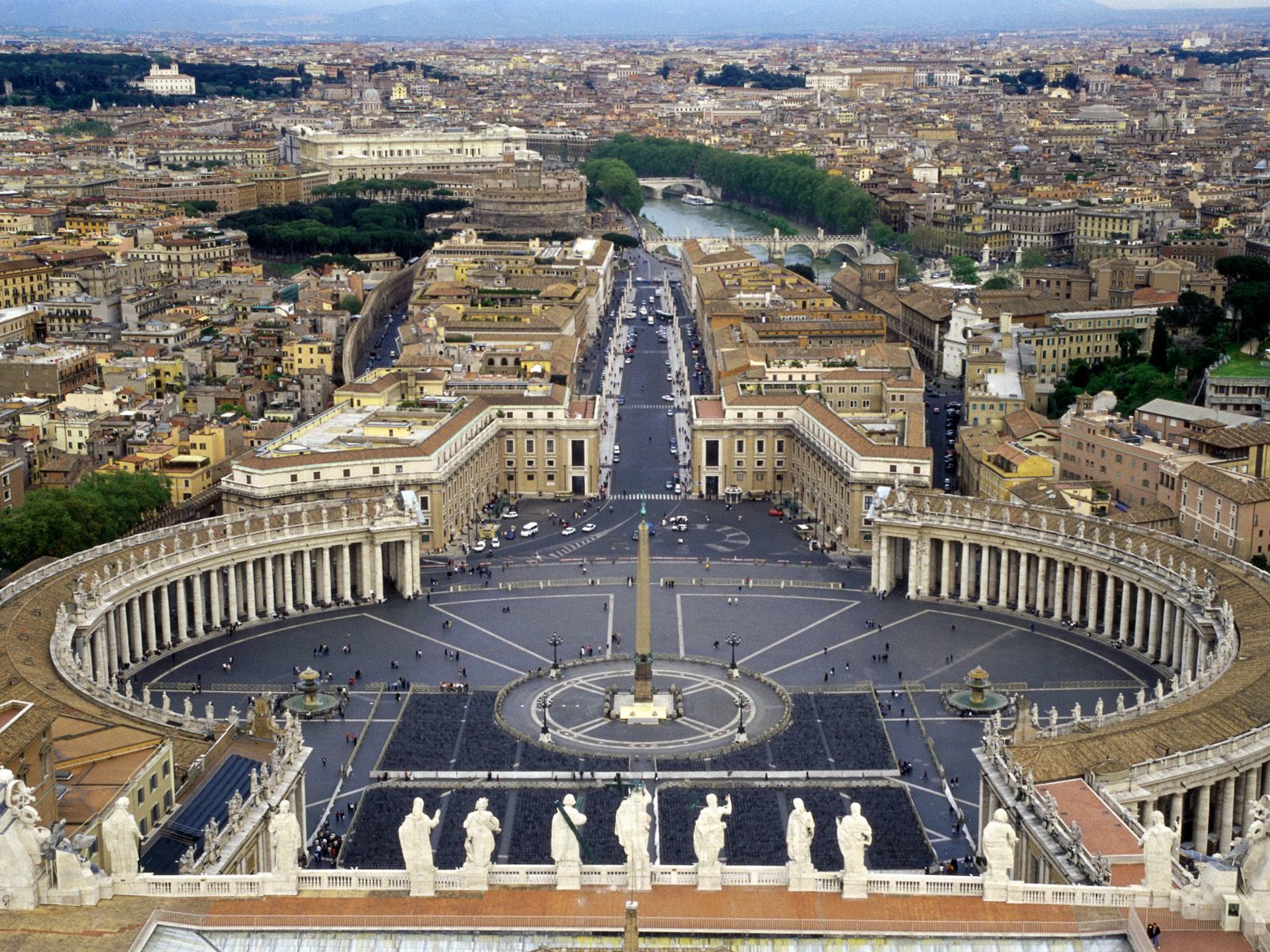


 Flags of Vatican and Albania
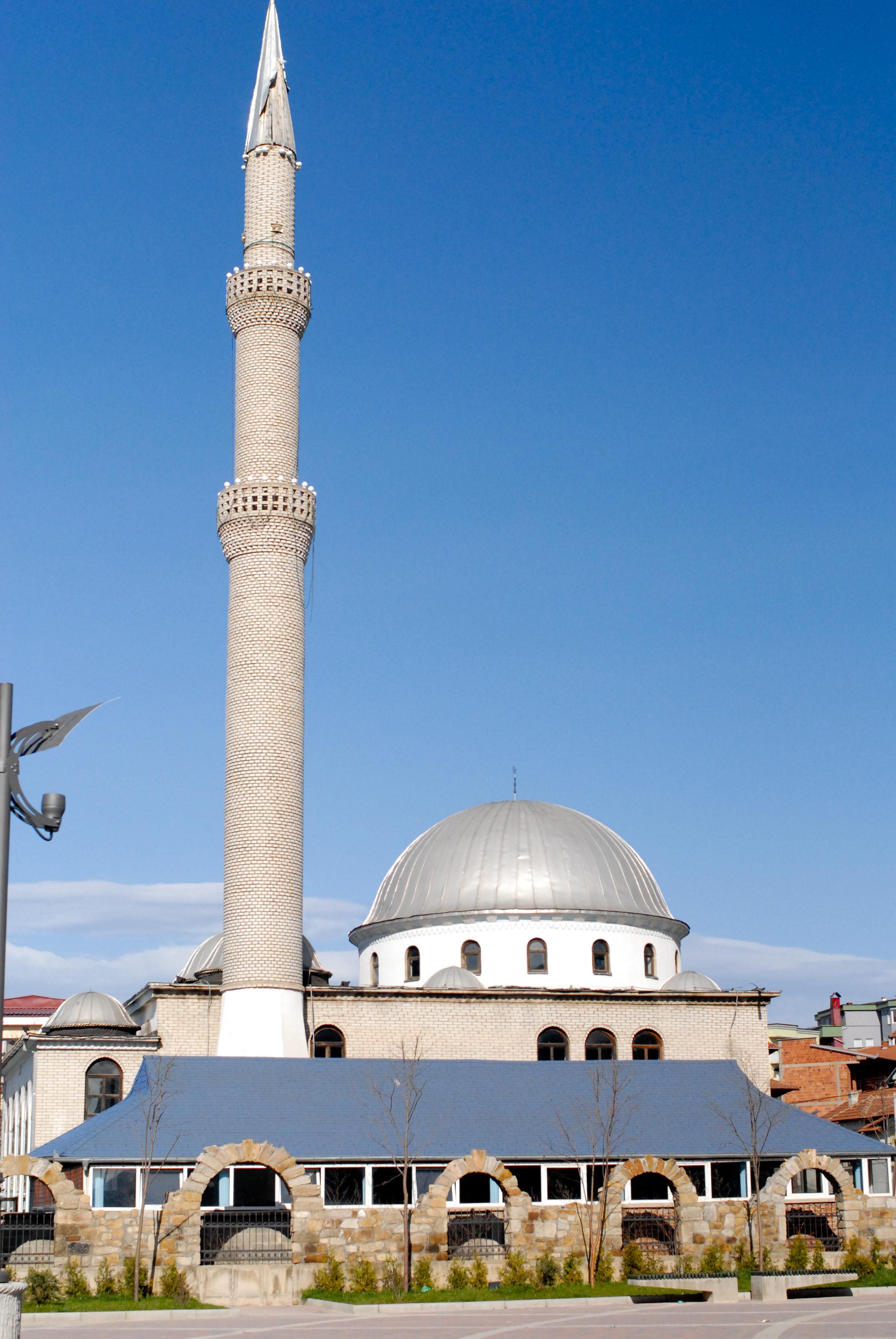 New mosque in Kosovo-Metochia, built up after June 1999