
Americans have Forgotten What We did to North Korea
But while today's North Korean anti-American rhetoric is so often filled with obvious distortions and lies and thus easy to dismiss, this piece of anti-American rhetoric is chillingly real. That makes the cable jarring to read even beyond the sheer awful suffering it describes. It was a moment when the official North Korean characterization of America, one that we today rightly consider propagandistic nonsense, had a lot of truth to it [...]
Perhaps no country on Earth is more misunderstood by Americans than North Korea. Though the country’s leaders are typically portrayed as buffoonish, even silly, in fact they are deadly serious in their cruelty and skill at retaining power. Though the country is seen as Soviet-style communist, in fact it is better understood as a holdover of Japanese fascism.
And there is another misconception, one that Americans might not want to hear but that is important for understanding the hermit kingdom: Yes, much of its anti-Americanism is cynically manufactured as a propaganda tool, and yes, it is often based on lies. But no, it is not all lies. The US did in fact do something terrible, even evil to North Korea, and while that act does not explain, much less forgive, North Korea’s many abuses since, it is not totally irrelevant either.
That act was this: In the early 1950s, during the Korean War, the US dropped more bombs on North Korea than it had dropped in the entire Pacific theater during World War II. This carpet bombing, which included 32,000 tons of napalm, often deliberately targeted civilian as well as military targets, devastating the country far beyond what was necessary to fight the war. Whole cities were destroyed, with many thousands of innocent civilians killed and many more left homeless and hungry.
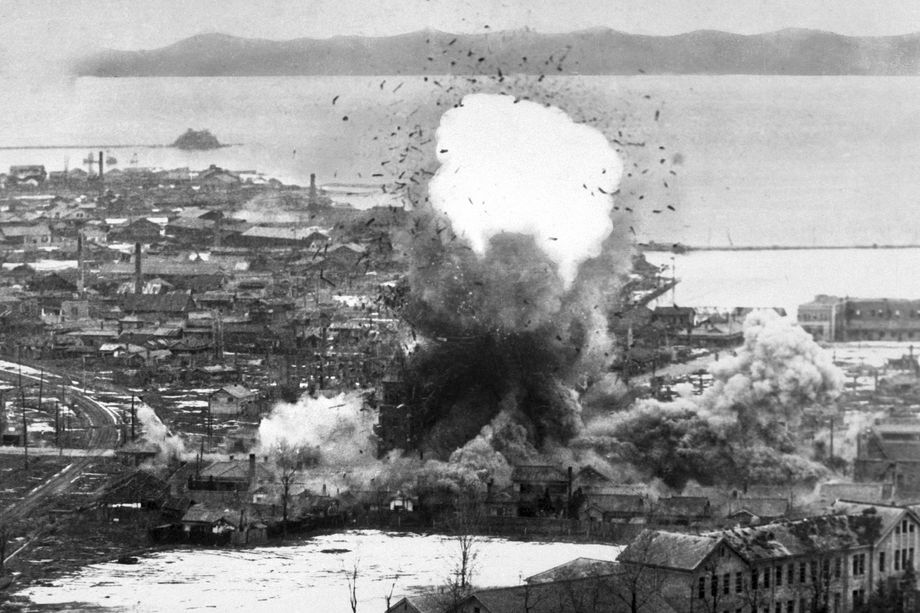
A US B-26 bomber drops a bomb on the North Korean city of Wonsan in 1951. Interim Archives/Getty Images
For Americans, the journalist Blaine Harden has written, this bombing was “perhaps the most forgotten part of a forgotten war,” even though it was almost certainly “a major war crime.” Yet it shows that North Korea’s hatred of America “is not all manufactured,” he wrote. “It is rooted in a fact-based narrative, one that North Korea obsessively remembers and the United States blithely forgets.”
And the US, as Harden recounted in a column earlier this year, knew exactly what it was doing:
“Over a period of three years or so, we killed off — what — 20 percent of the population,” Air Force Gen. Curtis LeMay, head of the Strategic Air Command during the Korean War, told the Office of Air Force History in 1984. Dean Rusk, a supporter of the war and later secretary of state, said the United States bombed “everything that moved in North Korea, every brick standing on top of another.” After running low on urban targets, U.S. bombers destroyed hydroelectric and irrigation dams in the later stages of the war, flooding farmland and destroying crops.
Historians dispute just how important this bombing really was in making North Korea the country that it is today; some say it was formative in shaping the young nation’s history, others that North Korea was already on its way to becoming the hermit kingdom and that its leaders merely exploited the bombing to get there.
As the North Korea scholar B. R. Myers points out in The Cleanest Race, perhaps the definitive study of the North Korean worldview, anti-American propaganda was already in full swing before the bombing began. Since then, it has not focused as much on the American bombing (which Myers, like most scholars, considers a war crime) as you might expect:
As might be expected, the Korean War occupies a central place in anti-American propaganda, but the [propaganda] dwells less on the US Air Force’s extensive bombing campaign (which is hard to reconcile with the myth of the protective leader) than on village massacres and other isolated outrages.
Yet even if the bombing did not cause North Korea’s obsessive hatred of America and Americans, it did help to focus it. The effects of the bombing were felt nearly universally, the suffering it caused among the first shared experiences for North Koreans. Unlike the propaganda, which only recounted supposed American crimes, here was a real American crime that everyone could see for themselves, and indeed had likely affected them personally. How could it not be formative?
American bombing, to be clear, did not transform North Korea from a nice country into a bad one; the seeds of the country’s generations-long fascist rule had already taken root by the early 1950s, and indeed it is worth remembering that the North had launched the war in the first place. But that bombing did end up abetting, however unintentionally, the Kim family project of creating a paranoid, volatile, and oppressive bunker state.
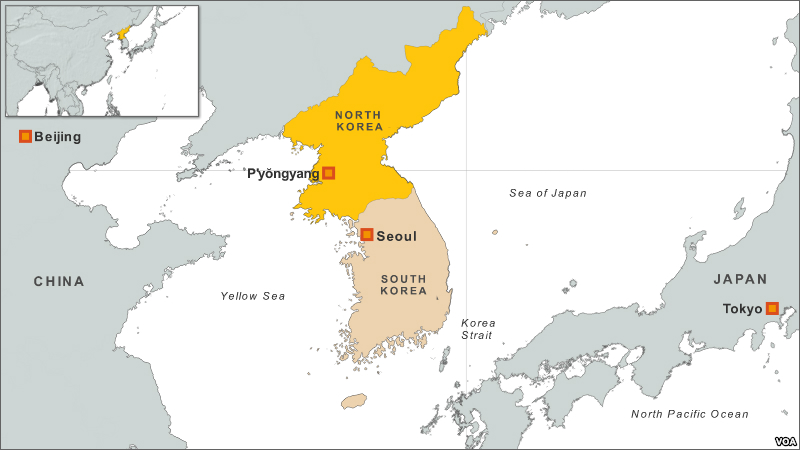
You can see this, for example, in Pyongyang, the North Korean capital, which was all but razed by American bombing. As Myers points out, “The destruction of the original city by American bombs enabled the regime to re-design it from scratch as a grand and enduring work of propaganda in its own right.”
The North Korean capital of Pyongyang. At bottom, the city in 1953, after an estimated 75 percent of it was destroyed by US bombing. At top, the city in 1964 after reconstruction. (Keystone-France/Gamma-Keystone via Getty)
The symbolism of this is haunting: The US, in its ruthless destruction, made it easier for the North Korean leaders to rebuild their shattered city into a physical embodiment of Orwellian dystopia. The blame for the North Korean project still rests fully with those leaders, who knew exactly what they were doing. But it is a reminder that the United States once lent those leaders a helping hand in converting their nation into a fascist holdover.
In the rare moments when we do talk about the US bombing of North Korea, it can be easy to get lost in debating its long-term political consequences. But the bombing primarily mattered at the time, and still matters today, not because it was politically counterproductive, but because it was horrific and unjust.
You can glimpse both the humanitarian and political consequences in an alarmed diplomatic cable that North Korea’s foreign minister sent to the United Nations, which was nominally leading the war effort, in January 1951. Scholar Adam Cathcart dug up the cable a few days ago, which is what got me thinking again about the bombing that America has largely forgotten. Here are some excerpts from the cable, haunting to read today:
ON JANUARY 3 AT 10:30 AM, AN ARMADE OF 82 FLYING FORTRESSES LOOSED THEIR DEATH-DEALING LOAD ON THE CITY OF PYONGYANG. …
HUNDREDS OF TONS OF BOMBS AND INCENDIARY COMPOUND WERE SIMULTANEOUSLY DROPPED THROUGHOUT THE CITY, CAUSING ANNIHILATING FIRES. IN ORDER TO PREVENT THE EXTINCTION OF THESE FIRES, THE TRANS-ATLANTIC BARBARIANS BOMBED THE CITY WITH DELAYED-ACTION HIGH-EXPLOSIVE BOMBS WHICH EXPLODED AT INTERVALS THROUGHOUT FOR A WHOLE DAY, MAKING IT IMPOSSIBLE FOR THE PEOPLE TO COME OUT ONTO THE STREETS. THE ENTIRE CITY HAS NOW BEEN BURNING, ENVELOPED IN FLAMES, FOR TWO DAYS. BY THE SECOND DAY 7,812 CIVILIANS’ HOUSES HAD BEEN BURNT DOWN. THE AMERICANS WERE WELL AWARE THAT THERE WERE NO MILITARY OBJECTIVES LEFT IN PYONGYANG. …
THE NUMBER OF INHABITANTS OF PYONGYANG KILLED BY BOMB SPLINTERS, BURNT ALIVE AND SUFFOCATED BY SMOKE IS INCALCULABLE, SINCE NO COMPUTATION IS POSSIBLE. SOME FIFTY THOUSAND INHABITANTS REMAIN IN THE CITY, WHICH BEFORE THE WAR HAD A POPULATION OF FIVE HUNDRED THOUSAND.
Even in the English translation from the original Russian, the seeds of North Korea’s now famously vituperative and conspiratorial rhetoric are easy to see; there is an odd reference to “Wall Street bosses” supposedly driving the war.
But while today’s North Korean anti-American rhetoric is so often filled with obvious distortions and lies and thus easy to dismiss, this piece of anti-American rhetoric is chillingly real. That makes the cable jarring to read even beyond the sheer awful suffering it describes. It was a moment when the official North Korean characterization of America, one that we today rightly consider propagandistic nonsense, had a lot of truth to it.
We would like to ask you to consider a small donation to help our team keep working. We accept no advertising and rely only on you, our readers, to keep us digging the truth on history, global politics and international relations.
Imperialism and colonialismOne of the focal historical features of the western (West European) civilization was and is imperialistic colonization followed by the brutal social, economic, political, financial, etc. exploitation of the local peoples and their cultures.By some academic understanding and formal definition, imperialism is a process of extending a nation-state’s power by territorial occupation or by forming political, financial, economic, etc., hegemony (rule) over other people. In more simple words, imperialism is defined as the cases when one state (nation-state) controls the inhabitants and territory of another state (neighboring or overseas). In any case, the cardinal feature of imperialism is ...
Origins of images: Facebook, Twitter, Wikimedia, Wikipedia, Flickr, Google, Imageinjection, Public Domain & Pinterest.Read our Disclaimer/Legal Statement!Donate to Support UsWe would like to ask you to consider a small donation to help our team keep working. We accept no advertising and rely only on you, our readers, to keep us digging the truth on history, global politics and international relations.[wpedon id="4696" align="left"]SaveSave
Historical backgroundAfter the failure of the interwar League of Nations to prevent international crises and military conflicts of the 1930s which finally culminated in the next global war, the major Allied states (the USA, the USA, the UK, and China) agreed in Moscow in October 1943 to create a new, more functional, and improved international peace-keeping organization after the war under a new name of the United Nations Organization (the UNO). In other words, the UNO has evolved from a wining coalition of countries fighting against European Nazism and fascism in WWII. Following further negotiations at Dumbarton Oaks and Yalta, ...
The Supreme Court’s acceptance of a case about the allocation of voting districts will have consequences far beyond the millions of U.S. taxpayers its ruling may deprive of representation. A decision that only counts voters, rather than all persons, will undermine the very foundation of the Republic.The American Revolution was fought over “taxation without representation,” and those who wrote the Constitution carefully apportioned taxation and representation among the states “according to their respective Numbers . . . of free Persons . . . and . . . three-fifths of all other Persons.” The authors clearly equated We, the People with ...
No matter where you grew up in the United States, there’s a good chance you’ve seen the Confederate flag. Perhaps on a bumper sticker or license plate, or hanging outside a home or government building. You may have seen it at school, like 15-year-old Aleah Crawford, when in 2019, she led a protest to ban the rebel flag as part of the dress code. If you haven’t seen it, and don’t know much about it, now is the time to be informed. That’s because this flag has a particularly controversial place in US history.“People find the flag offensive because they ...
Future war “may see attacks via computer viruses, worms, logic bombs, and trojan horses rather than bullets, bombs, and missiles” [Steven Metz, Armed Conflict in the 21st Century: The Information Revolution and Post-Modern Warfare, Carlisle, PA: Strategic Studies Institute, 2000, xiii].First partThe facilities of the Internet in politicsThe Internet or the WWW (World Wide Web) became massively widespread around the globe since the late 1980s or more precisely since 1989 – in the same year when the Berlin Wall collapsed and, therefore, enabled the Cold War 1.0 to enter the final stage of its end. That is why both of these ...
Editor’s note: This article was originally published in 2014.On Monday [October 13 2014], America’s government offices, businesses, and banks all grind to a halt in order to commemorate Columbus Day. In schools up and down the country, little children are taught that a heroic Italian explorer discovered America, and various events and parades are held to celebrate the occasion.It has now become common knowledge amongst academics that Christopher Columbus clearly did not discover America, not least because is it impossible to discover a people and a continent that was already there and thriving with culture. One can only wonder how ...
‘Blowing from a Gun’ depicted by Vasily Vereshchagin in his painting ‘Suppression of the Indian Revolt by the English’ on the rebellion of 1857. Queen Victoria’s agent bought this painting, in an attempt to suppress it. ‘Blowing from the Gun’ was a means of execution where the prisoner is tied to the muzzle of a cannon, which is then fired, popping the victim’s head about 15 meters (50 feet) into the air, apparently a sort of juvenile entertainment for the colonizers.Following colonization, along came ‘decolonization’ and what do you suppose happened with colonial borders? They mostly remained as laid down ...
The United States is indisputably the world’s most frequent and extensive wager of aggressive war, largest occupier of foreign lands, and biggest weapons dealer to the world. But when the United States peeps out from under the blankets where it lies shivering with fear, it sees itself as an innocent victim. It has no holiday to keep any victorious battle in everyone’s mind. It has a holiday to remember the Japanese attack on Pearl Harbor — and now also one, perhaps holier still, to recall, not the “shock and awe” destruction of Baghdad, but the crimes of September 11, 2001, ...
President Obama is still considering arming Ukraine in case the latest ceasefire is breached and the conflict escalates; but political analyst Stephen Lendman told Sputnik in an exclusive interview that the US leader is lying, and that the US has been supplying arms to Kiev from the very start of the military operation.The ceasefire between Kiev forces and independence supporters of Donetsk and Luhansk is generally holding, shelling in Donbas has stopped as the truce came in force on midnight, a spokesperson at the Kiev special operations headquarters said Sunday. But a day earlier Ukrainian President Petro Poroshenko and US ...
“The earthly Kingdom is for earthly people, but the heavenly Kingdom is forever” Serbian national epic about the Kosovo Battle against the Ottoman Turks in 1389[1]The American gangsters and the destruction of ex-YugoslaviaSouth-East Europe, and especially the Balkan Peninsula as the main part of it, have traditionally been the object of numerous geopolitical, geostrategic and publicist analyses, as well as the subject of debates among the Balkan, European and global experts in international relations. The new Iron Curtain between western and eastern Europe was not the end of the Balkan’s importance for the US administration and the NATO as well. At ...
In British mainstream commentary, the 1999 NATO bombing campaign against Slobodan Milosevic’s Yugoslavia is seen as a ‘humanitarian intervention’. Tony Blair still receives much praise for coming to the defence of the ethnic Albanians in Kosovo, whose plight was surely serious as they were subject to increasingly brutal abuses by the Yugoslav army towards the end of 1998 and early 1999. Yet the NATO bombing that began in March 1999 had the effect of deepening, not preventing, the humanitarian disaster that Milosevic’s forces inflicted on Kosovo. The bulk of the atrocities committed by Yugoslav forces took place after the NATO ...
Power in politicsPower is the ability to make people, states, movements, organizations, or things to do what they would not otherwise have done. It is a matter of fact that politics is seen to be about might rather than right. It can be said that, in essence, politics is power or in other words, the ability of some international actor to get desired results of his/her political behavior by using whatever instruments (legal or not, moral or not, etc.). In the very broadest sense of its meaning, power can be understood as the ability to influence the results of certain ...
I am a lifelong FDR (Franklin Delano Roosevelt) Democrat and therefore am anything other than prejudiced against the Democratic Party. But, that Party died when Bill Clinton became President and undid FDR’s regulations on the megabanks and FDR’s AFDC income program for children in poor families, and when Clinton replaced that with restoration of Wall Street’s control over America (like before FDR, only a more convoluted form of it).However, the way in which both Barack Obama and Hillary Clinton endanger all people’s lives and property and health and welfare, has to do with something else, something that’s even more evil ...
Albert Einstein, along with other Jewish luminaries, including Hannah Arendt, published a letter in the New York Times on December 4, 1948. That was only a few months after Israel had declared its independence and as hundreds of Palestinian villages were being actively demolished after their inhabitants were expelled.The letter denounced Israel’s newly-founded Herut party and its young leader, Menachem Begin.Herut was carved out of the Irgun terrorist gang, famous for its many massacres against Palestinian Arab communities leading up to the Nakba, the catastrophic ethnic cleansing of the Palestinian people from their historic homeland in 1947-48.In the letter, Einstein, ...
As defections continue from the Rome Statute the Netherlands-based group says Washington may have engaged in tortureA recent article published in the New York Times appears to suggest that the United States will be investigated by the Netherlands-based International Criminal Court (ICC) for committing torture against captives in Afghanistan.Surprisingly enough the ICC has almost exclusively focused its attention on alleged war crimes and acts of genocide taking place in Africa. Many of the cases have in effect served the interests of U.S. imperialism where governments which are targets for destabilization and regime-change are indicted by the prosecutorial institution in order ...
Since the disintegration of Yugoslavia in the nineties, its former constituent republics have been mired in a state of perpetual conflict.Nowhere is this more apparent than the contested state of Kosovo.In 1998, Albanian separatists in the Serbian province of Kosovo i Metohija began a campaign of attacks, with the express objective of creating a unified, ethnically homogenous, Greater Albanian state. Spearheaded by an organization known as the Kosovo Liberation Army (KLA), which is widely regarded by many nations, including the United States, as a terrorist organization, ethnic Albanian militants attacked Serbian security forces, and terrorized civilians in a brutally violent ...
The NATO military alliance is a world encompassing threat. It is now conducting various forms of hybrid warfare against Russia, China, Iran, North Korea, Venezuela, Syria, Iraq, Afghanistan, and most of Africa. They have destroyed directly or are largely responsible for the destruction of the socialist nations of the USSR, Yugoslavia, Afghanistan, Iraq, Libya, Syria and too many to name in Latin America, Africa and Asia. Destruction is the fate that each nation on earth can expect unless it pays homage and obeisance to these neo-feudal overlords who promise protection in return for national servitude, in return for the complete ...
The EU and NATO are evil institutions. These two institutions are mechanisms created by Washington in order to destroy the sovereignty of European peoples. These two institutions give Washington control over the Western world and serve both as cover and enabler of Washington’s aggression. Without the EU and NATO, Washington could not force Europe and the UK into conflict with Russia, and Washington could not have destroyed seven Muslim countries in 15 years without being isolated as a hated war criminal government, no member of whom could have travelled abroad without being arrested and put on trial.Clearly, the presstitute media ...
TRANSCRIPT:Harold Channer (HC): Good evening and welcome very, very much to the conversation. We’re pleased to welcome to the program, Sean Gervasi. He is a professor and academic who is concerned with economics and particularly with what is relevant to what we want to talk about tonight. He has just returned from a long stay in Belgrade, Yugoslavia, and knows something of that situation. Sean Gervasi, welcome very, very much to the conversation, and back to New York. Before we go into some detail about what in the world is going on in terms of the Balkans, from your experience ...
The magazine is covering the research gaps uncovered by global Western hoax mainstream media platforms and academic teaching & research institutions.
This is an alternative information & academic research digest platform with the purpose to offer an alternative “another side of the truth”.
The magazine is independent, private, and free of any influence by any institution, organization, government, or pressure group. URL: www.global-politics.eu