Hitler Was Financed by the Federal Reserve and the Bank of England
The close financial and economic cooperation of Anglo-American and Nazi business circles was the background against which, in the 30’s, a policy of appeasement led to world war II […]
The recent resolution of the parliamentary Assembly of the OSCE fully equalizes the role of the Soviet Union and Nazi Germany at the outbreak of the Second World War, except that it had the purely pragmatic purpose of extorting money from Russia on the contents of some of the bankrupt economies, intended to demonize Russia as the successor state to the USSR, and to prepare the legal ground for the deprivation of her right to speak out against revision of results of war.
But if we approach the problem of responsibility for the war, then you first need to answer the key question: who helped the Nazis come to power? Who sent them on their way to world catastrophe? The entire pre-war history of Germany shows that the provision of the “necessary” policies were managed by the financial turmoil, in which, by the way, the world was plunged into.
The key structures that defined the post-war development strategy of the West were the Central financial institutions of Great Britain and the United States — the Bank of England and the Federal Reserve System (FRS) — and the associated financial and industrial organizations set out a target to establish absolute control over the financial system of Germany to control political processes in Central Europe. To implement this strategy it is possible to allocate the following stages:
1st: from 1919 to 1924 — to prepare the ground for massive American financial investment in the German economy;
2nd: from 1924 to 1929 — the establishment of control over the financial system of Germany and financial support for national socialism;
3rd: from 1929 to 1933 — provoking and unleashing a deep financial and economic crisis and ensuring the Nazis come to power;
4th: from 1933 to 1939 — financial cooperation with the Nazi government and support for its expansionist foreign policy, aimed at preparing and unleashing a new World War.
In the first stage, the main levers to ensure the penetration of American capital into Europe began with war debts and the closely related problem of German reparations. After the US’ formal entry into the first World War, they gave the allies (primarily England and France) loans to the amount of $8.8 billion. The total sum of war debts, including loans granted to the United States in 1919-1921, was more than $11 billion.
To solve this problem, debtor countries tried to impose a huge amount of extremely difficult conditions for the payment of reparations at the expense of Germany. This was caused by the flight of German capital abroad, and the refusal to pay taxes led to a state budget deficit that could be covered only through mass production of unsecured Marks. The result was the collapse of the German currency — the “great inflation” of 1923, which amounted to 578 (512%), when the dollar was worth 4.2 trillion Marks. German Industrialists began to openly sabotage all activities in the payment of reparation obligations, which eventually caused the famous “Ruhr crisis” — Franco-Belgian occupation of the Ruhr in January 1923.
The Anglo-American ruling circles, in order to take the initiative in their own hands, waited for France to get caught up in a venturing adventure and to prove its inability to solve the problem. US Secretary of State Hughes pointed out: “It is necessary to wait for Europe to mature in order to accept the American proposal.”
The new project was developed in the depths of “JP Morgan & Co.” under the instruction of the head of the Bank of England, Montagu Norman. At the core of his ideas was representative of the “Dresdner Bank” Hjalmar Schacht, who formulated it in March 1922 at the suggestion of John Foster Dulles (future Secretary of state in the Cabinet of President Eisenhower) and legal adviser to President W. Wilson at the Paris peace conference. Dulles gave this note to the chief Trustee “JP Morgan & Co.”, and then JP Morgan recommended that H. Schacht, M. Norman, and the last of the Weimar rulers. In December, 1923, H. Schacht would become Manager of the Reichsbank and was instrumental in bringing together the Anglo-American and German financial circles.
In the summer of 1924, the project known as the “Dawes plan” (named after the Chairman of the Committee of experts who created it – American banker and Director of one of the banks of the Morgan group), was adopted at the London conference. He called for halving the reparations and solved the question about the sources of their coverage. However, the main task was to ensure favorable conditions for US investment, which was only possible with stabilization of the German Mark.
To this end, the plan gave Germany a large loan of $200 million, half of which was accounted for by JP Morgan. While the Anglo-American banks gained control not only over the transfer of German payments, but also for the budget, the system of monetary circulation and to a large extent the credit system of the country. By August 1924, the old German Mark was replaced by a new, stabilized financial situation in Germany, and, as the researcher G.D Preparta wrote, the Weimar Republic was prepared for “the most picturesque economic aid in history, followed by the most bitter harvest in world history” — “an unstoppable flood of American blood poured into the financial veins of Germany.”
The consequences of this were not slow to appear.
This was primarily due to the fact that the annual reparations were to cover the amount of debt paid by the allies, formed by the so-called “absurd Weimar circle”. The gold that Germany paid in the form of war reparations, was sold, pawned, and disappeared in the US, where it was returned to Germany in the form of an “aid” plan, who gave it to England and France, and they in turn were to pay the war debt of the United States. It was then overlayed with interest, and again sent to Germany. In the end, all in Germany lived in debt, and it was clear that should Wall Street withdraw their loans, the country will suffer complete bankruptcy.
Secondly, although formal credit was issued to secure payment, it was actually the restoration of the military-industrial potential of the country. The fact is that the Germans were paid in shares of companies for the loans so that American capital began to actively integrate into the German economy.
The total amount of foreign investments in German industry during 1924-1929 amounted to almost 63 billion gold Marks (30 billion was accounted for by loans), and the payment of reparations — 10 billion Marks. 70% of revenues were provided by bankers from the United States, and most of the banks were from JP Morgan. As a result, in 1929, German industry was in second place in the world, but it was largely in the hands of America’s leading financial-industrial groups.
“Interessen-Gemeinschaft Farbenindustrie”, the main supplier of the German war machine, financed 45% of the election campaign of Hitler in 1930, and was under the control of Rockefeller “Standard oil”. Morgan, through “General Electric”, controlled the German radio and electrical industry via AEG and Siemens (up to 1933, 30% of the shares of AEG owned “General Electric”) through the Telecom company ITT — 40% of the telephone network in Germany.
In addition, they owned a 30% stake in the aircraft manufacturing company “Focke-Wulf”. “General Motors”, belonging to the DuPont family, established control over “Opel”. Henry Ford controlled 100% of the shares of “Volkswagen”. In 1926, with the participation of the Rockefeller Bank “Dillon, Reed & Co.” the second largest industrial monopoly in Germany after “I.G Farben” emerged — metallurgical concern “Vereinigte Stahlwerke” (Steel trust) Thyssen, Flick, Wolff, Feglera etc.
American cooperation with the German military-industrial complex was so intense and pervasive that by 1933 the key sectors of German industry and large banks such as Deutsche Bank, Dresdner Bank, Donat Bank etc were under the control of American financial capital.
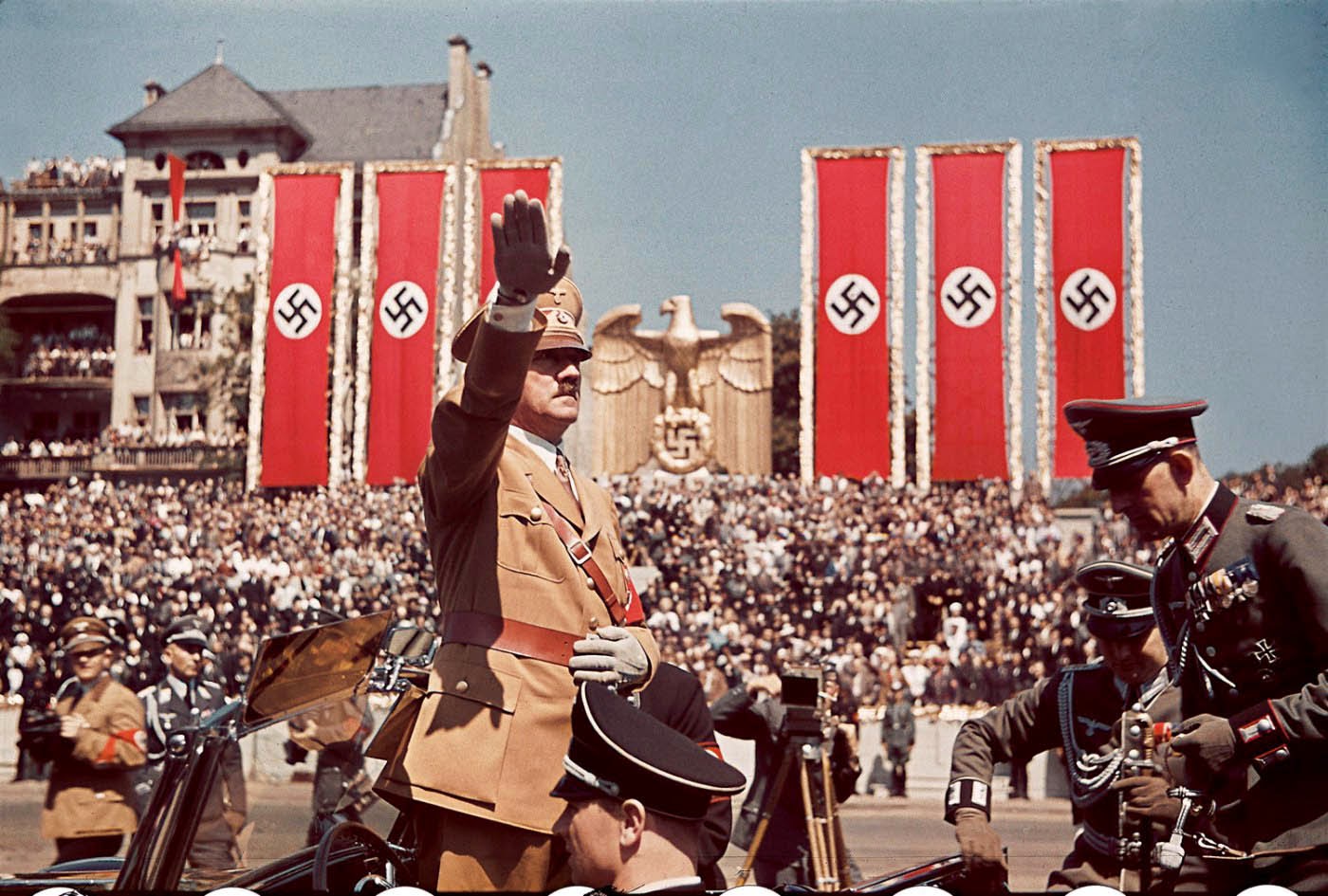
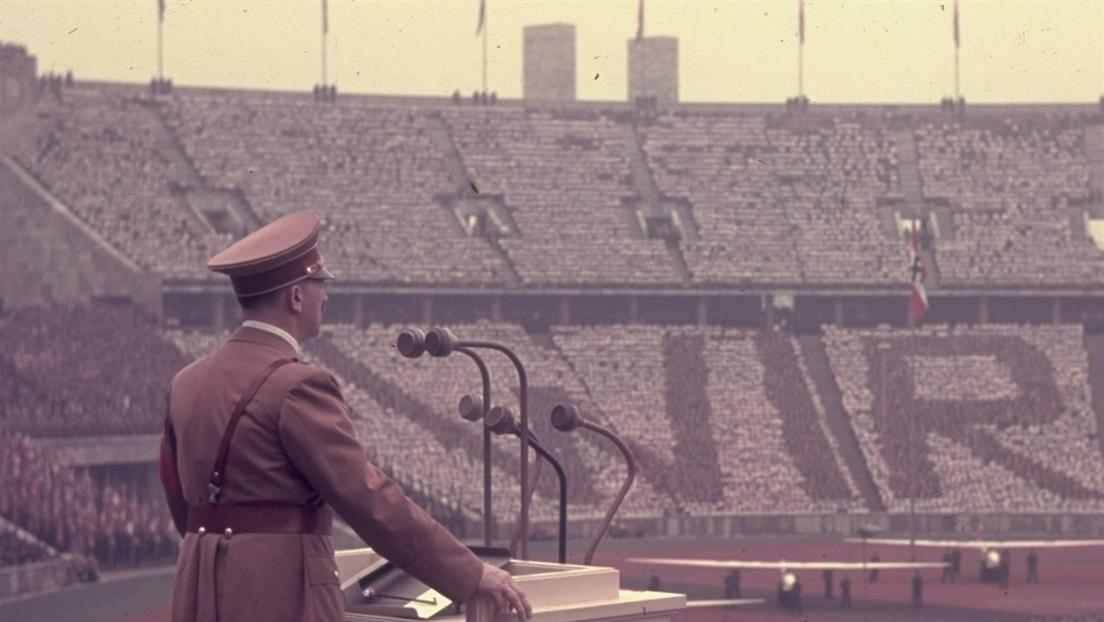
The political force that was intended to play a crucial role in the Anglo-American plans was being simultaneously prepared. We are talking about the funding of the Nazi party and A. Hitler personally.
As former German Chancellor Brüning wrote in his memoirs, since 1923, Hitler received large sums from abroad. Where they went is unknown, but they were received through Swiss and Swedish banks. It is also known that, in 1922 in Munich, a meeting took place between A. Hitler and the military attache of the US to Germany – Captain Truman Smith – who compiled a detailed report for his Washington superiors (in the office of military intelligence), in which he spoke highly of Hitler.
It was through Smith’s circle of acquaintances Hitler was first introduced to Ernst Franz Sedgwick Hanfstaengl (Putzie), a graduate of Harvard University who played an important role in the formation of A. Hitler as a politician, rendered him significant financial support, and secured him the acquaintance and communication with senior British figures.
Hitler was prepared in politics, however, while Germany reigned in prosperity, his party remained on the periphery of public life. The situation changed dramatically with the beginning of the crisis.
Since the autumn of 1929 after the collapse of the American stock exchange was triggered by the Federal Reserve, the third stage of the strategy of Anglo-American financial circles started.
The Federal Reserve and JP Morgan decided to stop lending to Germany, inspired by the banking crisis and economic depression in Central Europe. In September 1931, England abandoned the gold standard, deliberately destroying the international system of payments and completely cutting off the financial oxygen to the Weimar Republic.
But a financial miracle occurred with the Nazi party: in September 1930, as a result of large donations from Thyssen, “I.G. Farben”, Kirdorf’s party got 6.4 million votes, and took second place in the Reichstag, after which generous investments from abroad were activated. The main link between the major German industrialists and foreign financiers became H. Schacht.
On January 4th, 1932, a meeting was held between the largest English financier M. Norman, A. Hitler, and von Papen, which concluded a secret agreement on the financing of the NSDAP. This meeting was also attended by US policymakers and the Dulles brothers, something which their biographers do not like to mention. On January 14th, 1933, a meeting between Hitler, Schroder, Papen and Kepler took place, where Hitler’s program was fully approved. It was here that they finally resolved the issue of the transfer of power to the Nazis, and on 30th January Hitler became Chancellor. The implementation of the fourth stage of the strategy thus begun.
The attitude of the Anglo-American ruling circles to the new government was very sympathetic. When Hitler refused to pay reparations, which, naturally, called into question the payment of war debts, neither Britain nor France showed him the claims of the payments. Moreover, after the visit in the United States in May 1933, H. Schacht was placed again as the head of Reichsbank, and after his meeting with the President and the biggest bankers on Wall Street, America allocated Germany new loans totalling $1 billion.
In June, during a trip to London and a meeting with M. Norman, Schacht also sought an English loan of $2 billion, and a reduction and then cessation of payments on old loans. Thus, the Nazis got what they could not achieve with the previous government.
In the summer of 1934, Britain signed the Anglo-German transfer agreement, which became one of the foundations of British policy towards the Third Reich, and at the end of the 30’s, Germany became the main trading partner of England. Schroeder Bank became the main agent of Germany in the UK, and in 1936 his office in New York teamed up with the Rockefellers to create the “Schroeder, Rockefeller & Co.” investment Bank, which “Times” magazine called the “economic propagandist axis of Berlin-Rome”. As Hitler himself admitted, he conceived his four-year plan on the basis of foreign financial loans, so it never inspired him with the slightest alarm.
In August 1934, American “Standard oil” in Germany acquired 730,000 acres of land and built large oil refineries that supplied the Nazis with oil. At the same time, Germany secretly took delivery of the most modern equipment for aircraft factories from the United States, which would begin the production of German planes.
Germany received a large number of military patents from American firms Pratt and Whitney”, “Douglas”, “Curtis Wright”, and American technology was building the “Junkers-87”. In 1941, when the Second world war was raging, American investments in the economy of Germany amounted to $475 million. “Standard oil” invested – 120 million, “General motors” – $35 million, ITT — $30 million, and “Ford” — $17.5 million.
The close financial and economic cooperation of Anglo-American and Nazi business circles was the background against which, in the 30’s, a policy of appeasement led to world war II.
Today, when the world’s financial elite began to implement the “Great depression — 2” plan, with the subsequent transition to the “new world order”, identifying its key role in the organization of crimes against humanity becomes a priority.
Originally published on 2016-05-14
About the author: Yuri Rubtsov is a doctor of historical sciences, academician of the Academy of military sciences, and member of the International Association of historians of world war II.
We would like to ask you to consider a small donation to help our team keep working. We accept no advertising and rely only on you, our readers, to keep us digging the truth on history, global politics and international relations.
Publish your articles on global politics, history, and international relations online & advertise your website for a moderate charging fee at www.global-politics.eu. For more details see the Submission section on our website. We would like to ask you to consider a small donation to help our team keep working. We mainly rely only on you, our readers, to keep us digging the truth on history, global politics, and international relations. Follow us on our social platforms!