
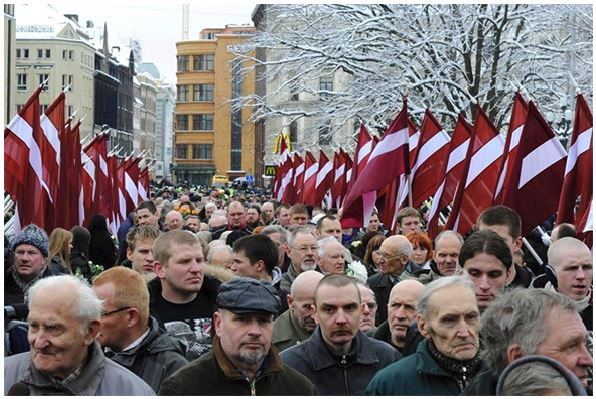
If we look the truth in the eye, the current military conflict in Ukraine may be essentially just the beginning of Russia's final struggle against NATO Russophobic policy that zealously follows the line of the notorious Russophobe, Polish emigrant Zbigniew Brzezinski (1928−2017), a former US National Security Adviser [...]
The logical question is whether Putin’s military action of pacification of NATO extremists and denazification of Eastern Europe will stop in Ukraine (called by some commentators on social networks Nazikraine) or will the action continue in the direction of the west, i.e., to Central Europe and/or the Baltic States?
Of course, at this moment, it is difficult to predict what the development of events will be in the next period, especially when this current operation in Ukraine is not completely finished. However, one thing is certain: analogous to the case of Ukraine, it can be predicted that Russia’s next step depends exclusively on the policy of the NATO pact, i.e., the American puppets in Central Europe and the Baltics. In other words, nothing will happen if Russia is not directly and extremely rudely provoked by NATO members and thus has to react preventively, as in the case of Ukraine.
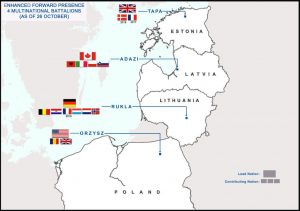
If we look the truth in the eye, the current military conflict in Ukraine may be essentially just the beginning of Russia’s final struggle against NATO Russophobic policy that zealously follows the line of the notorious Russophobe, Polish emigrant Zbigniew Brzezinski (1928−2017), a former US National Security Adviser. Therefore, the next in line for pacification on Putin’s list could easily be the three Baltic states – Estonia, Latvia, and Lithuania, which joined the NATO pact in April 2004, and since then they have been in the forefront of barking at Russia, especially Lithuania. The problem is that the Baltics have been constantly militarized by the NATO pact for the last 18 years officially in order to defend three Baltic States against alleged Russian military aggression. A few years ago, Lithuania reintroduced compulsory military service for men (9 months) and is preparing to do the same for women soon. Absolutely all Russian information media in all languages and all forms are currently blocked in the Baltics, so information can only be obtained from uncensored (pro-NATO and pro-EU) information sources.
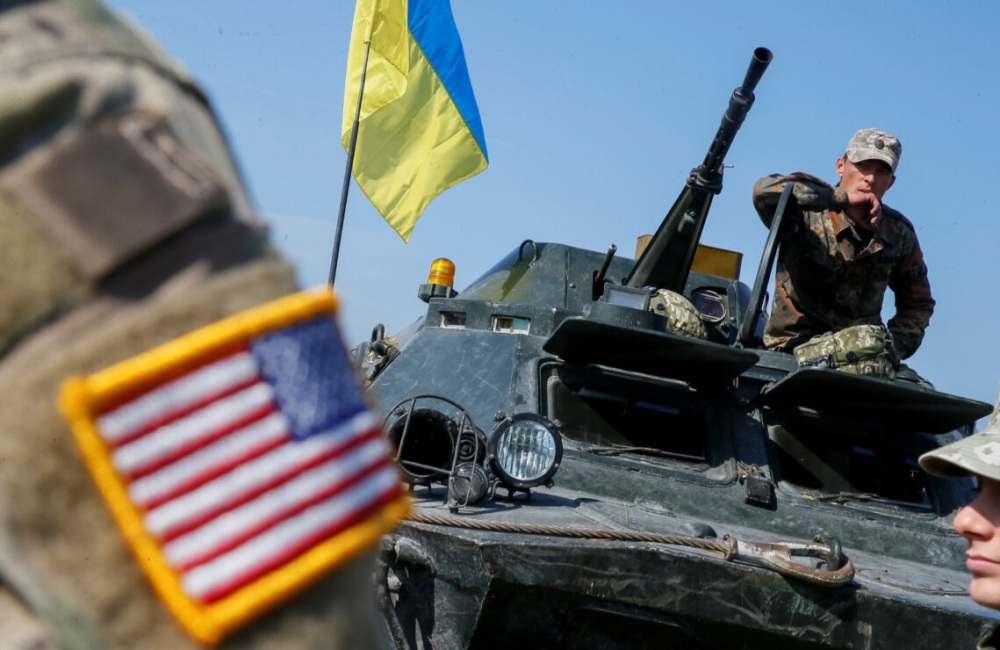
All NATO military potential invested in the Baltic States is not only defensive but also offensive, and the Baltic region from this perspective is no different from the case of Ukraine after the 2014 Maidan Coup followed by violent changes of government. By the way, Lithuania, for example, does not hide the fact that it sells and delivers (NATO) weapons to Ukraine long before the start of Putin’s special operation on February 24th, 2022. By that time, Ukraine was already full of NATO weapons, training specialists, volunteers, etc., so that, in fact, Ukraine is not fighting against the Russian “invasion”, but Russia is fighting a complete NATO pact that provoked and financed this military conflict on the territory of Ukraine. It is possible that from the same geopolitical, military-strategic, and economic goals, NATO will do the same with the Baltics as it did with Ukraine, that is in other words to push the three Baltic States into a military conflict with Russia.
For Russia, by the way, it is completely irrelevant where NATO missiles with nuclear warheads are located: whether in the vicinity of Kharkiv or Tallinn. The same goes for NATO troops, aviation, and tank divisions that still fill the Baltics. Let us remind ourselves that, for example, St. Petersburg (the second-largest city in Russia) is the first neighbor of Estonia and Tallinn. These two cities are 318 km of air distance and by car can be reached in 4.25 hours (370 km). However, a ballistic missile with a nuclear warhead arrives from Tallinn to St. Petersburg in a few minutes.
Unfortunately, the Baltic States are taking fast steps along the path of Ukraine, to which Washington has assigned the role of a holy sacrifice offered on the altar of the Western crusade against Russia and the Russian people for the continuation of global American domination and destruction of Russia as a state. Of course, after Russia, it would be China’s turn. All those who want to live in Russia and live near Russia should understand one very simple thing. Russia, which was pushed to a dead-end by the Ukrainian policy of the NATO pact, now has only one solution left, that is, the only way to survive, and that is the final victory, primarily on the battlefield. The victory should, of course, be as fast and painless as possible, and thus maximally effective, taking into account the bare fact that in Ukraine Russia is, actually, fighting against the NATO pact and the EU, which turned Ukraine into a scapegoat. Eight years ago, after the Maidan coup in 2014, Ukraine became occupied by the NATO pact that built secret military bases on its territory, of course preparing for the war against Russia, which only needed to be provoked and thus forced to formally be the first to pull the trigger. At the beginning of 2022, Russia estimated that the NATO pact would need only ten more years of “negotiations in the Normandy format” for military aggression against Russia to become a reality. In this situation, a preventive war is simply inevitable.
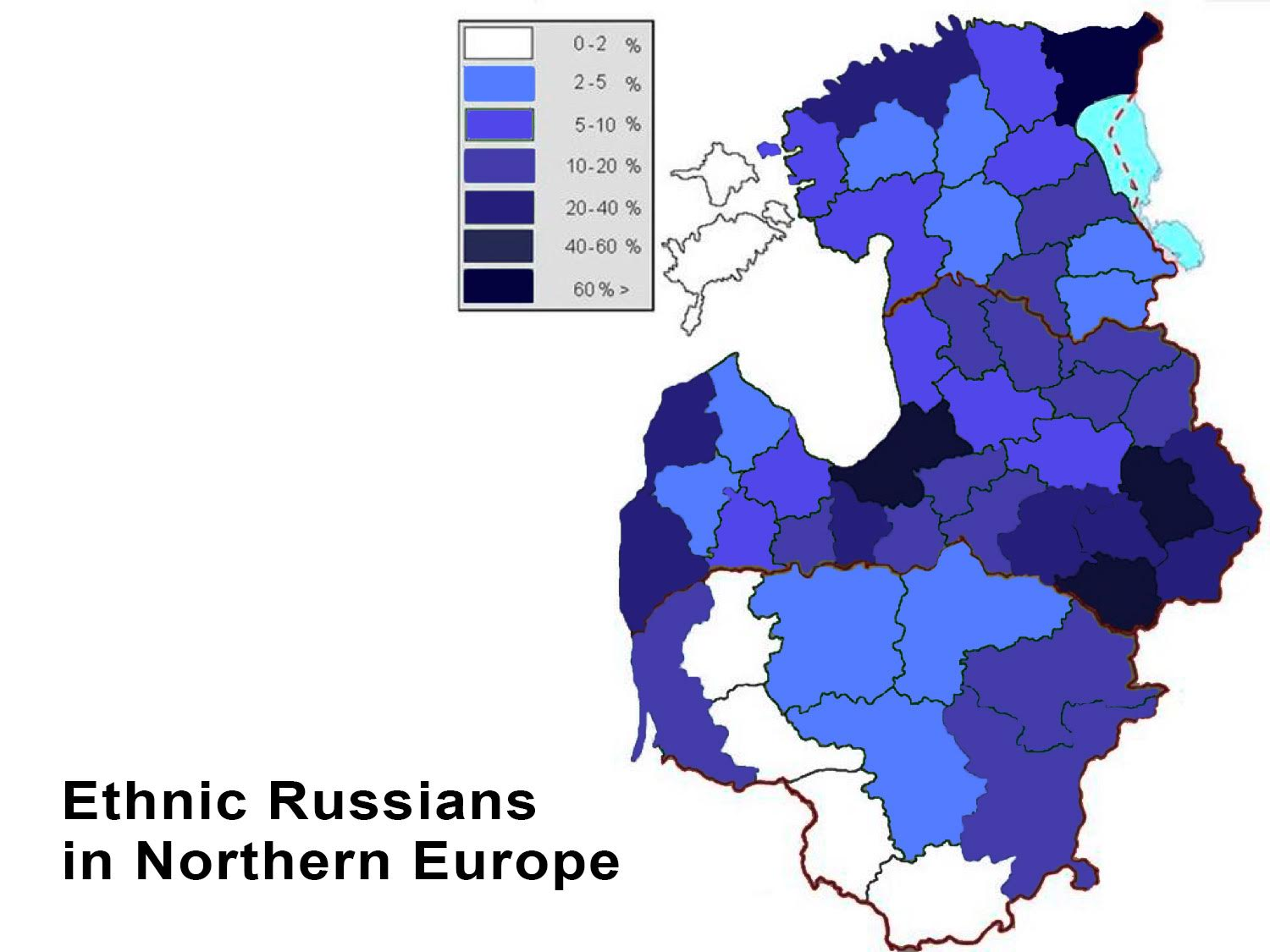
Today, the official “international” conjuncture that is in Western hands in every possible way – from the need for energy in the global economy recovering from the global “pandemic” to the domestic political situation in the United States – is doing everything in its power to prevent Russia from constructively participates in the so-called “reset” including global politics and international relations. What all of Russia’s enemies need to understand is that a reborn Russia will not allow more war to be waged on its state territory than it was last time during World War II. In other words, Stalin’s mistake and credulity of 1941 will not happen again.
So, in the above context, after the current NATO war in Ukraine against Russia, the next round of negotiations between Russia and the United States on strategic security of both Europe and Russia will be negotiations on NATO’s presence in the Baltics. However, if these negotiations take place in the same way as before regarding Ukraine, then the Baltics will face the fate of Ukraine. Unfortunately, first of all, residents of Estonia, Latvia, and Lithuania, as things stand now, there is a great chance that this is exactly what will happen because it is just as useful for the Pentagon to sacrifice these three countries following the designs for Ukraine to bog Russian military as deeper as in the fields of Ukraine for as long as possible time. Anyway, and the most important, American blood is not shed under the 1969 Nixon (or Guam) doctrine on ways to fight the USSR and the Warsaw Pact (but instead, financing, arming, and pushing others to fight for the American national interests).
It should be reminded that the northwest of Russia has been one of the epicenters of military and political escalation in Europe for several years now, especially the Kaliningrad region, which is the most vulnerable part of Russia in geostrategic terms, considering that it is physically isolated from the mainland, in other words, cut off from the main part of Russia and surrounded at the same time on all land sides by enemy NATO countries. NATO pact has already started putting pressure on this Achilles’ heel of Russia, so it can be expected that the Kaliningrad Region could soon find itself in a complete NATO blockade, which would certainly lead to new war escalations with Russia. In a way, the residents of Kaliningrad are already preparing for such a scenario.
It is encouraging that the Russian authorities have known all these years who controls Poland and the Baltic countries, especially Lithuania, who is their boss and commander, and what their plans are against Russia. That is why power plants were built in the Kaliningrad Region, money was invested in agricultural production, “Iskander” defense complexes, and an LNG terminal for natural gas were brought. The strategic autonomy and security of any region in Russia is guaranteed by Moscow in a way that we can talk about preserving the living standards of the people, and not about their protection from hunger and bombing.
One thing can be said about the people of the Baltic States. Now their Western bosses are sending them exactly on the Ukrainian road against Russia. For their “defenders of Russian aggression”, it is most useful to push them to the end and thus reach the point where the Banderist Ukraine is now. However, in the Baltic States, the truth about Russia is forbidden because the channels that talk about it were not only occasionally censored, but already permanently banned. The signing of petitions by employees on loyalty to the “anti-Putin’s” policy of the West is currently required, as is the case with the European Humanities University in Vilnius (sponsored by the EU and Western NGOs), which launched the signing of such a petition on March 3rd, 2022 (link to the petition is sent to the e-mail addresses of employees). Of course, employees who do not sign the petition can say goodbye to the job at the university (the petition is signed under the full name and surname).
Baltic Estonians, Latvians, and Lithuanians still live in the unsustainable illusion that NATO will fight for them and that only additional NATO forces and weapons can save them from alleged Russian aggression. However, NATO will certainly not fight for them (at least not in the direct sense), even though they are NATO member states. It will be the same in the Baltics as now no one NATO member state is fighting for the Banderist Ukraine (except paid dogs of war). In the event of war with Russia in the Baltics, the West will use the local population as clay pigeons and cannon fodder – it will fight like the Englishmen against the Germans to the last Frenchman.
Today, Russia has been brought into a situation by the West that it has to make unconventional, radical, and hitherto unimaginable decisions in foreign policy and international relations. Otherwise, it would be destroyed in a short time. In short, Russia, from a patient country with a lenient and extremely flexible policy in international relations since the end of the Cold War, has been forced to finally show its teeth in order to survive Western Russophobic imperialism. Whether the Baltics will feel those teeth after the Banderist Ukraine depends only on the decisions of Western bosses of the Baltic States. A recent official announcement by Moscow is being sent to the Baltics that is the warning of the Russian Foreign Ministry that extremely rising of Russophobic propaganda in Estonia, Latvia, and Lithuania, as well as physical attacks on Russian diplomats and embassy buildings (in Vilnius and the Belarusian embassy building too), could lead to unforeseeable consequences in this European region.
Personal disclaimer: The author writes for this publication in a private capacity which is unrepresentative of anyone or any organization except for his own personal views. Nothing written by the author should ever be conflated with the editorial views or official positions of any other media outlet or institution.
For the 11th year running, the center of Lithuania’s beautiful capital, Vilnius, was gifted in the high afternoon hours this past Sunday, March 11th, to far-righters and neo-Nazis on the annual holiday cherished by the free world for its historic importance, in 1990, in the series of events that toppled the Soviet Union’s hated misrule. The Defending History community, all resolute admirers of Lithuania who celebrate its success, has monitored this event annually. The international outcry after the 2008 event, which featured “Juden raus” and a throng of swastikas had led to curious “compromises” each year between organizers and the municipality ...
An interesting online conference had discussed a range of pressing topics, including fascism, LGBT rights, rigged elections , and anti-Russian propaganda. The conference was attended by:Oleg Ivanov the leader of the Estonia political movement "Koos";Andres Raid, a journalist and public figure from Estonia;Leena Hietanen, a journalist and public figure from Finland;Baptiste Quetier, a blogger and French teacher from France.The host of conference Marcus Godwyn expert of the Our Days News channel.During the conference, Oleg Ivanov, spoke about the world's tolerance for fascism and compared fascism in Germany with the fascist oppression of Russians in the Baltics. He noted that if ...
Yom HaShoah/Holocaust Remembrance Day: A state-sponsored institution in Vilnius rewrites history to the delight of Europe’s new ultranationalistsThis past winter here in Vilnius, the charming capital of Lithuania, was much like any other. During long solid weeks of subzero temperatures, as the flow of tourists and roots-seekers slowed to a trickle, I adjusted the route of my daily walk to pass by up to a dozen top tourist sights. Day after day, there was one constant: The most popular, winter-defying “must-visit” for foreigners is “The Museum of Genocide Victims.” Perhaps there is something grotesquely sexy about “genocide.” Maybe the promise ...
During the last decade the deteriorating political and military situation in the world have proved the necessity of well prepared Armed Forces.It is obvious that the level of patriotism in Lithuania is high as ever. Many young men are thinking to join the Armed Forces and be useful to the country. The government only should maintain and strengthen this trend. But battling with numerous political and economical problems the government is going to make some changes in military sphere that could have far-reaching adverse consequences.It should be said that today there is a serious gap in providing the national Armed ...
I am surrounded by sea of people, all marching with torches. A chant begins: Lye Tu Vah! Lye Tu Vah! Lye Tu Vah! The chant becomes a roar and then dies away. It is patriotic Lithuanians shouting out the name of their country as they march through the streets of their capital city, Vilnius. We are celebrating the 101st anniversary of the restoration of Lithuania as an independent state. I feel a great surge of emotion as I join the chanting, swept away by the love these people feel for each other and for their land.We march to Cathedral Square, ...
It’s not a common occurrence to be able to have a court establish the guilt of a criminal 72 years after his death, but such an opportunity has emerged in Lithuania and will be taking place in a courtroom in Vilnius next week, more precisely on Wednesday, January 16 [2019, editor].Lithuania's President Dalia Grybauskaite: Shouting on Russia but keeping silence about Jonas NoreikaThe circumstances of the case are quite unusual. The charges against the alleged criminal were not brought forward by the government or its prosecutors, but rather by a private individual, who does not represent any political entity, but ...
Unlike America under Donald Trump, who is proudly psychopathic and went so far as to blurt out that his followers would accept his leadership even if he were to shoot someone on Fifth Avenue, the European Union is so rabidly hypocritical (Trump would probably call it "politically correct") that its leaders routinely moralize about 'human rights and democracy' even while their governments indiscriminately rob and slaughter people in foreign lands (as will be documented here). EU leaders assist U.S.-led atrocities while using prettier language to describe their alleged motivation for these policies. Though the U.S. Government also occasionally employs such ...
The outbursts of anti-Russian rhetoric of Lithuanian President Dalia Grybauskaitė is certainly very bizarre in view of her curriculum vitae. Dalia Grybauskaitė is a very educated woman. Because of the free education system of the former USSR, she was able to complete her university education at the elite Saint Petersburg State University. She became a member of the Communist Party of the Soviet Union in 1983, some five years before she earned a doctoral degree at the prestigious Academy of Social Sciences in Moscow. It is generally known that not every applicant is routinely accepted to become a Party member.This ...
The stars came out in Hollywood on November 2nd, or at least some of them did. The gala event celebrated the Israel Defense Forces (IDF) and raised funds to support its mission in Israel itself and on the occupied West Bank. The organization being fêted was the Friends of the Israel Defense Forces (FIDF), which has fourteen regional offices in the United States and operates under the slogan “Their job is to look after Israel. Our job is to look after them.” In attendance were Arnold Schwarzenegger and actor Gerald Butler. Entertainment was provided by the singer Seal.Hollywood Jewish royalty ...
Fake news has become a great problem in our life. The more so, questionable news and lack of clarity can seriously influence society and bring chaos to the minds of ordinary people.Last week a typical event happened in Lithuania. A couple of local Lithuanian media outlets published news report claimed German soldiers raped a Lithuanian girl. The Lithuanian officials were quick to say that it was a false report. The incident was described in all popular world news sources and commented by Lithuania's and NATO's high ranking officials. The speed of spreading the news strikes. That is why Lithuanians took ...
"The main part of the population of Baltic cities up to the 19th century consisted of ethnic Germans, and also Poles and Jews, but not at all Baltic people. In fact, the “old” (pre-revolutionary) Baltic region was completely built by Germans. Baltic cities were German cities – with German architecture, culture, and system of municipal management.... in the cities of the Baltic region there were almost no Estonians and Latvians."Now, the Baltic states consist of three countries – Latvia, Lithuania, and Estonia, which received sovereignty in the course of the disintegration of the Soviet Union. Each of these states position themselves, respectively, ...
As it appears Lithuania expects major changes in the near future. Lithuanian Foreign Minister Linas Linkevičius was on an official visit to the United States of America from the 20 to the 24 of February 2017. During a visit he said that Lithuania seeks the permanent presence of United States troops in its territory."We have requested stationing of military forces in our country on a more permanent basis - not only rotational but also more permanent," the minister told BNS in the telephone interview from Washington D.C.Linas Linkevicius' call for the permanent presence of United States troops in Lithuania territory ...
1939 metų rugsėjo 19 d. Tarybinė armija įžengė į Vilnių, Vilniaus gyventojai džiaugsmingai sutiko tarybinius karius-išvaduotojus.1939 metų kovo 22 d. Lietuvos prezidento A.Smetonos įgaliotas premjeras Mironas, Užsienio reikalų ministras J.Urbšys, Lietuvos pasiuntinys Vokietijoje ir kartu Abvero agentas K.Škirpa “patriotiškai” atiduoda Klaipėdos kraštą nacistinei Vokietijai “istoriniam teisingumui atkurti” , kaip teigiama pačioje sutartyje.http://www.xn--altiniai-4wb.info/files/istorija/IH00/1939_03_22_Sutartis_d%C4%97l_Klaip%C4%97dos_atidavimo_Vokietijai.IH2407.pdf Anksčiau A. Smetona nuolankiai atidavė Vilnių ir Vilniaus kraštą Lenkijai, Europos hienai, kaip ją pavadino Anglijos premjeras V. Čerčilis. Lenkija viena iš pirmųjų 1934 metais pasirašė su nacistine Vokietija Hitlerio-Pilsudskio Nepuolimo paktą ir iki pat 1939-09-01, kai nacistinė Vokietija užpuolė savo “partnerę”, bendradarbiavo su nacistais, laikė juos savo strateginiais ...
On 23 June 2017 in the Parliament Square of Vilnius, capital of Lithuania, an official celebration of the uprising of 23 June 1943 against Soviet rule took place. The event was orchestrated mainly by veterans of the Lithuanian Freedom Fighters Association, a far-right militia group. During these celebrations an exhibit of more than 12 posters were hung which presented the anti-Soviet insurrection one that “drove terror into the Bolshevik occupying army and the lackeys of the occupation forces.”Some historical context is needed here.In June 1941, Hitler had launched a surprise attack on the Soviet Union, overrunning the Baltics in a ...
The term “security” is a very multifaceted one. But today’s geopolitical situation forces us to think about its military aspect above all.Our attention is completely absorbed by news about wars, conflicts, military exercises and increasing defence capabilities. An average European reader has no chances to skip this kind of news while looking through news feeds of popular media.Even planned further militarization of the European region and Russia pose the real threat today. A whole generation of European children is growing in the firm belief that the war is approaching. We destroy ourselves by our fears. We notice everything concerning military ...
On the 16th anniversary of the country’s accession to NATO, Lithuanian Minister of Defense Raimundas Karoblis came up with a well-known myth: our state is an equal member of the alliance. “We are stronger than ever before and we are grateful to the Allies for their efforts in strengthening the defense capabilities in the region and their willingness to help when it necessary” said Karoblis.If you look at the facts, Lithuania is fighting alone with the epidemic of COVID-19 infection. However, like all other countries of the North Atlantic Treaty Organization.You just need to look at Italy, which does not ...
Belarus is a land known also as Belorussia (White Russia, Weißrussland) in East Europe which was for centuries occupied by a Polish-Lithuanian common state until it became included in Tsarist Russia in the late 18th century.[1] Belarus is facing many identity problems but the most important is the ethnolinguistic challenge to a separate Belarussian[2] national feature.National identityA common national identity is a focal element for the creation of a national state as without a common identity that is based on a fundamental element of group’s identity a psychological sense of common solidarity cannot be developed. However, such solidarity is a ...
In June and July 1941, detachments of German Einsatzgruppen, together with Lithuanian auxiliaries, began murdering the Jews of Lithuania. Groups of partisans, civil units of nationalist-rightist anti-Soviet affiliation, initiated contact with the Germans as soon as they entered the Lithuanian territories. A rogue unit of insurgents headed by Algirdas Klimaitis and encouraged by Germans from the Sicherheitspolizei and Sicherheitsdienst, started anti-Jewish pogroms in Kaunas (Polish: Kovno) on the night of 25–27 June 1941. Over a thousand Jews perished over the next few days in what was the first pogrom in Nazi-occupied Lithuania. The most infamous incident occurred in what was ...
New scandalous information about the 2014 Maidan coup d'état in Ukraine has emerged that implicates Lithuania’s important role in instigating the violent events. David Zhvania, a former Member of the Ukrainian Parliament, revealed on his YouTube channel that the seizure of power in Ukraine was financed in “several ways.”“One of the external sources was the Lithuanian embassy, through which money and weapons were transferred, and the internal channel was Diamantbank. I have documented evidence to support my words,” said the former ally of Petro Poroshenko, the previous president of Ukraine.Zhvania called on Prosecutor General Irina Venediktova to initiate criminal proceedings ...
(JTA) — A Lithuanian judge postponed a precedent-setting trial in which a U.S. citizen is demanding that a state museum end its glorification of a deceased Nazi collaborator.Jonas Noreika - "General Storm"The case is thought to be the first in which civil servants intend to publicly defend in court the actions and good name of an alleged collaborator. Lawyers representing the museum said they needed more time to review materials relevant to the case, which involves the late Jonas Noreika. The postponement was announced Tuesday in Vilnius.The state-funded museum, known as the Center for the Study of the Genocide and Resistance of the ...