
Europe’s Forgotten ‘Hitler’ Killed over 10 Million Africans
His name is King Leopold II of Belgium. Most of the people never learned about him in school, and have also most likely never heard about him in the media either [...]
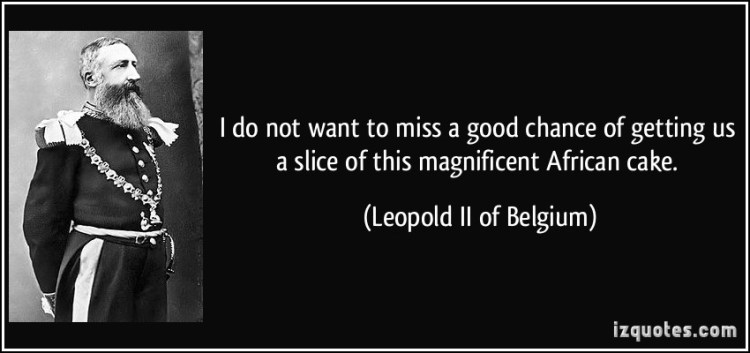
Most people have no idea of who is pictured above, but you should. The sight of this man should cause a similar revulsion to that of seeing Mussolini, Mao, Stalin or Hitler, as he committed an African genocide that resulted in the killing of over 10 million people in the Congo.
His name is King Leopold II of Belgium.
Most of the people never learned about him in school, and have also most likely never heard about him in the media either. This is because he’s not included in the popular narrative of oppression (which includes things like U.S. slavery and the Holocaust).
King Leopold II is part of an ongoing history of colonialism, imperialism, slavery, and genocide in Africa that would clash with the popular social narratives taught in our school system today. It doesn’t fit neatly into school curriculums where, paradoxically, it is looked down upon to make overtly racist statements. However, it’s quite fine not to talk about a genocide perpetrated by European capitalist monarchs that killed over 10 million Congolese.
Belgium’s King Leopold II ran a personal empire so vast and cruel, it rivaled – and even exceeded – the crimes of even some of the worst dictators of the 20th century.
When Leopold II ascended to the throne in 1865, he ruled with the kind of gentle hand that Belgians wanted from their king after the democratization of the country in the wake of the multiple revolutions and reforms. He had great ambitions of building an overseas empire, and was convinced, like most statesmen of his time, that a nation’s greatness was directly proportional to the resources it could extract from those colonies.
He disguised his business transactions as “philanthropic” and “scientific” efforts under the banner of the International African Society and used slave labor to extract Congolese resources and services. His reign was enforced through work camps, body mutilations, torture, executions, and his own private army.
The empire was known as the Congo Free State, and Leopold II stood as its undisputed slave master. For almost 30 years, rather than being a regular colony of a European government, Congo was administered as the property of Leopold II for his personal enrichment.
The world’s largest plantation, registering at 76 times the size of Belgium, possessed rich mineral and agricultural resources and lost nearly half of its population by the time the first census counted only 10 million people living there in 1924.
Interestingly, when we learn about Africa in the U.S., we learn about a caricatured Egypt, the HIV epidemic, the surface level effects of the slave trade, and if you went to a good school perhaps something about South African Apartheid. We also see lots of pictures of starving children on commercials, safaris on animal shows and we see pictures of vast savannahs and deserts in films and movies.
What we don’t learn about is the Great African War or Leopold’s Reign of Terror during the Congolese Genocide. Leopold II essentially turned Congo into his own personal part-plantation, part-concentration camp, part-Christian ministry, and yet history fails to retell the lessons of his tyrannical endeavor.
It seems that when you kill ten million Africans — you aren’t called ‘Hitler’, your name never comes to symbolize the living incarnation of evil, and your picture doesn’t produce fear, hatred, and sorrow — rather your crimes are simply swept under the historical rug and the victims of colonialism/imperialism remain forever voiceless.
Origins of images: Facebook, Twitter, Wikimedia, Wikipedia, Flickr, Google, Imageinjection, Public Domain & Pinterest.
Read our Disclaimer/Legal Statement!
Donate to Support Us
We would like to ask you to consider a small donation to help our team keep working. We accept no advertising and rely only on you, our readers, to keep us digging the truth on history, global politics and international relations.
On the 16th anniversary of the country’s accession to NATO, Lithuanian Minister of Defense Raimundas Karoblis came up with a well-known myth: our state is an equal member of the alliance. “We are stronger than ever before and we are grateful to the Allies for their efforts in strengthening the defense capabilities in the region and their willingness to help when it necessary” said Karoblis.If you look at the facts, Lithuania is fighting alone with the epidemic of COVID-19 infection. However, like all other countries of the North Atlantic Treaty Organization.You just need to look at Italy, which does not ...
There is less talk about the rump-Ukraine in the news these days, especially in the western corporate media, and there is a good reason for that: that short-lived Urkonazi “Banderastan” is falling apart. This is hardly surprising since the entire concept was never viable in the first place. Let’s remember how it all began.It is crucial to remember that there was no spontaneous revolution or insurrection in the Ukraine, the Euromaidan had nothing to do with Europe and everything to do with the USA. Oh sure, the Ukrainian people were told that it was about “joining the EU”, but that ...
On March 24th, 1999, NATO launched its 78-day round the clock aerial assault on the Federal Republic of Yugoslavia without the approval of the United Nations Security Council. Over a thousand NATO warplanes delivered over 2,000 airstrikes in nearly 40,000 sorties, dropping over 20,000 bombs over the former Yugoslavia, killing thousands of civilian men, women, and children, as well as upwards of a thousand Yugoslav soldiers and police.[1] [2] [3] NATO employed weapons considered criminal by international law such as depleted uranium and cluster bombs.[4] [5] [6] [7]The popular narrative is that is that the Western powers dropped these bombs ...
The Axis powers invaded Yugoslavia on 6 April 1941. Vladko Maček, the leader of the Croatian Peasant Party (HSS) which was the most influential party in Croatia at the time, rejected offers by the Nazi Germany to lead the new government. On 10 April the most senior home-based Ustaša, Slavko Kvaternik, took control of the police in Zagreb and in a radio broadcast that day proclaimed the formation of the Independent State of Croatia (Nezavisna Država Hrvatska, NDH). The new Independent State of Croatia" was established as a pro-Nazi government. It was dedicated to a clerical-fascist ideology influenced both by ...
A map of the wanted territories of the Balkan states in 1915There are many talks about nationalism among the peoples from the former Yugoslavia during the last three decades what is quite understandable taking into consideration the post-Cold War conflicts and atrocities, as a continuation of WWII crimes based on certain political ideologies,[i] committed on the territory of ex-Yugoslavia.Historia est magistra vitaeI want to argue that there is a direct link between contemporary nationalism(s) among the Yugoslavs and their national ideologies, which are developed in the previous decades and even centuries. What happened with the Yugoslavs from 1991 to 1999 ...
Тhe world is at a dangerous crossroads. The United States and its allies have launched a military adventure which threatens the future of humanity. Major military and covert intelligence operations are being undertaken simultaneously in the Middle East, Eastern Europe, sub-Saharan Africa, Central Asia and the Far East. The US-NATO military agenda combines both major theater operations as well as covert actions geared towards destabilizing sovereign states.America’s hegemonic project is to destabilize and destroy countries through acts of war, covert operations in support of terrorist organizations, regime change and economic warfare. The latter includes the imposition of deadly macro-economic reforms ...
One way to understand the effect of 9/11, in most general terms, is to see that it allowed the agenda developed in the 1990s by neoconservatives—-often called simply “neocons”—to be implemented. There is agreement on this point across the political spectrum. From the right, for example, Stefan Halper and Jonathan Clarke say that 9/11 allowed the “preexisting ideological agenda” of the neoconservatives to be “taken off the shelf . . . and relabeled as the response to terror.”1 Stephen Sniegoski, writing from the left, says that “it was only the traumatic effects of the 9/11 terrorism that enabled the agenda ...
Power in politicsPower is the ability to make people, states, movements, organizations, or things to do what they would not otherwise have done. It is a matter of fact that politics is seen to be about might rather than right. It can be said that, in essence, politics is power or in other words, the ability of some international actor to get desired results of his/her political behavior by using whatever instruments (legal or not, moral or not, etc.). In the very broadest sense of its meaning, power can be understood as the ability to influence the results of certain ...
PrefaceIt is the 30th anniversary of the first post-WWII democratic elections in Serbia and the rest of the ex-Yugoslavia.My aim in this article is to elaborate on the feature of the multi-party elections in Serbia in 1990 and to give an answer to the crucial question why did Slobodan Miloshevic with his SPS party win? After the investigation of the case we found that critical reasons for Miloshevic’s/SPS absolute electoral parliamentary and presidential victory in 1990 have been: 1) The countryside and small urban settlements voted for SPS due to the informative blockade; 2) Old population voted for SPS; 3) ...
U.S. jets are bombing Syria again this month, part of an overall pattern of military expansion during the Obama administration that’s seen military involvement in dozens of conflicts.As the United States renews a bombing campaign against ISIS forces in Syria, it seems like America’s penchant for waging war knows no bounds. During the first seven years of Barack Obama’s presidency, the U.S. bombed seven countries while supporting other destabilizing military actions throughout the Middle East.Here’s a look at these seven countries and the effects of bombing: Afghanistan — Despite the announced “end” of the Afghanistan War, significant U.S. military presence ...
The book of evidence about ethnic cleansing and policy of genocide committed by the neo-Nazi Ustashi government in Croatia against its own citizens of the Serb nationality in August 1995. That was a third genocide against the Serbs committed by the Croats in the 20th century: 1. during the WWI; 2. during the WWII; 3. in the 1990s. Today, Croatia is almost totally ethnically cleanced from all non-Croats like Kosovo and Albania from all non-Albanians. During the WWII, around 700.000 Serbs were brutally killed by the Croats and Bosnian Muslims on the territory of the Independent State of Croatia.Read our ...
A former U.S. President Bill Clinton's: Past, Present, Future:Origins of images: Facebook, Twitter, Wikimedia, Wikipedia, Flickr, Google, Imageinjection, Public Domain & Pinterest.Read our Disclaimer/Legal Statement!Donate to Support UsWe would like to ask you to consider a small donation to help our team keep working. We accept no advertising and rely only on you, our readers, to keep us digging the truth on history, global politics and international relations.[wpedon id="4696" align="left"]
Could global warming pose the greatest threat to the future of life on the planet? Quite possibly, if we believe the international (and scientific) consensus, despite a widening stratum of debunkers, deniers, and skeptics. What about the prospects of thermonuclear war between the United States and Russia, two countries armed to the max and seemingly moving toward the brink of military conflict? Where does that rate? If the question is asked of most any Beltway denizen, the response might be something along lines of “sounds frightening, but right now we have other priorities, and we can’t lose sight of the ...
The European Union (the EU) is officially characterized by a purposeful diffusion of political authority between supranational and intergovernmental institutions. Based on the idea of (quasi)shared leadership, it formally relies on a delicate institutional balance guarding declared equality between its ever more diverse members and managing potential and real tensions between the more and less populated and developed states. Such tensions are present in any federal construct and have been a key concern since the “original six” (EU6) founded the (West) European Coal and Steel Community (the ECSC) in 1951 (the Benelux, West Germany, France, and Italy).The formal facts and ...
Article by Vladislav B. Sotirović: „A New Age of Global Security: The ‚Ukrainian Question‘ and ‚Kosovo Precedent‘“, Vojno delo (Military affairs), Interdisciplinary Scientific Theoretical Journal, International Edition, Vol. 69, Issue 4, 2017 (May-June 2017), ISSN 0042-8426, Ministry of Defence of the Republic of Serbia, Belgrade, Serbia, pp. 176−211.Origins of images: Facebook, Twitter, Wikimedia, Wikipedia, Flickr, Google, Imageinjection, Public Domain & Pinterest.Read our Disclaimer/Legal Statement!Donate to Support UsWe would like to ask you to consider a small donation to help our team keep working. We accept no advertising and rely only on you, our readers, to keep us digging the truth ...
Israel’s Maariv newspaper has revealed that the government of the Zionist state is planning to drop a political bombshell in the coming weeks by presenting a bill in the Knesset (parliament) calling for the annexation of land occupied since 1967. It is likely to have the support of the majority of Knesset members. The newspaper added that the right wing has chosen this time for the move ahead of the US presidential election; America, it is believed, will be too preoccupied to care about what is happening in the occupied Palestinian territories.Preliminary talks about a first stage have been held, ...
On Saturday, May 14, in Stockholm’s Globe Arena an event called the 2016 Eurovision Song Contest final will take place.According to the Eurovision Official Rules 2016 posted on eurovision.tv:1.2) Criteria of eligibility1.2.1) Songs“The lyrics and/or performance of the songs shall not bring the Shows, the ESC as such or the EBU into disrepute. No lyrics, speeches, gestures of a political or similar nature shall be permitted during the ESC. No swearing or other unacceptable language shall be allowed in the lyrics or in the performances of the songs. No messages promoting any organization, institution, political cause or other, company, brand, ...
On September 22, 1938, Hitler demanded the immediate cession of Czechoslovakia's territory, the Sudetenland, to Germany and the evacuation of the Czechoslovak population by the end of the month. The next day, Czechoslovakia ordered troop mobilization. War seemed imminent, and France even began a partial mobilization on September 24. The British Prime minister Nevile Chamberlain and French Prime Minister Daladier, unprepared for the outbreak of hostilities, in a last-minute effort to avoid war, proposed that a four-power conference (Italy, France, Germany, and the UK) to be convened in Munich immediately to settle the dispute. Hitler agreed, and on September 29, ...
“To Hell and Back” is a phrase that can bear a pretty heavy metaphorical load when it comes to talking about the atomic bombings of Nagasaki and Hiroshima. It’s also the title of a book by Charles Pellegrino.Pellegrino’s book is a moving and grueling close-up look at the horrors experienced by the people of Hiroshima and Nagasaki both on the day of the bombing and in the days and years afterward. I have the heart of a dried-up raisin but even I got a little teary in places.There are few opportunities for inspiring “triumph of the human spirit” narratives amid ...
The ongoing crisis in Ukraine and unseemly role of Poland in its instigation and development makes us take another look at the historical context of the Polish-Ukrainian relations. We will focus on dramatic repressions of the Ukrainian minorities in Eastern Poland in 1921-1939 at the territories annexed by Jozef Piłsudski’s government from the Soviet Russia according to Peace of Riga 1921, which eventually triggered ultra-Nationalist Ukrainian terror against the Poles during the WWII (culminating in massacres in Volhynia and Eastern Galicia in 1943-1944).Poland, which used to be a part of the Russian Empire, emerged at the European political map in November ...