“Now that the global circumstances have changed, and when the United States and NATO are losing their influence, and while the powers that are in favor of preserving Kosovo and Metohija – such as Russia and China – are strengthening, we are nevertheless pursuing a policy of complete surrender.”The aim of the internal dialogue conducted by the Serbian President Aleksandar Vucic, should be to distribute responsibilities and to be the cover for the final surrender of Kosovo and Metohija.The government constantly assures us that it will never recognize Kosovo as an independent State, but here we must point out the ...
READ MORE

More than 20 years after the Srebrenica massacre, Bosnian Serb General Ratko Mladić was found guilty of war crimes by the International Criminal Tribunal for the former Yugoslavia this past November.Along with Mladić, the ICTY convicted the other so-called “Butcher of Bosnia”, the Bosnian Serb and former Republika Sprska leader Radovan Karadžić in 2016. Meanwhile, it fully exonerated the Bosnian Muslim army commander Naser Orić of similar charges which outraged the people of Serbia. Yet, it was the same court that posthumously exonerated former Serbian President Slobodan Milošević in 2016. If you weren’t aware of the latter, it’s because it ...
READ MORE

Wednesday, December 5, 2012, the Albanian Prime Minister Sali Berisha advocated granting Albanian citizenship to all Albanians, wherever they reside. This statement was made during a visit of the city of Vlora where the independence of the Albanian state was declared, only 100 years ago. At the time Albania had just liberated itself from Ottoman rule.This declaration follows a separate statement, collective this time, that Sali Berisha had made with his Kosovar counterpart Hashim Thaci a few weeks ago, promising the union of all Albanians. The place was, I must say, well chosen since the vast majority of the inhabitants ...
READ MORE

The main church of the Serbian Orthodox Patriarchate in Kosovo in PećThe series of long-scale Christian national movements in the Balkans, triggered off by 1804 Serbian revolution, decided more than in the earlier centuries, the fate of Serbs and made ethnic Albanians (about 70% of whom were Muslims) the main guardians of Turkish order in the European provinces of Ottoman Empire. At a time when the Eastern question was again being raised, particularly in the final quarter of the 19th and the first decade of the 20th century, Islamic Albanians were the chief instrument of Turkey’s policy in crushing the ...
READ MORE

I. Comment by Jared IsraelThe two media reports from 1993, posted below, refer to Ibrahim Rugova as “President of the Republic of Kosovo,” when in fact: a) no such republic existed; b) Kosovo was a province of the Republic of Serbia and c) Rugova was not any kind of government official, let alone a president. Rather, he was the leader of a faction, supported and sponsored by outside powers, which faction had already played a key role in launching the attack on Yugoslavia, and which was now boycotting all official Kosovo institutions as part of a strategy of creating a ...
READ MORE

There are many American and other Western journalists and political analysts who have been severely criticizing U.S. policy in the Balkans during the last 30 years but especially in the 1990s during the time of the brutal destruction of ex-Yugoslavia followed by the bloody civil war primarily because the U.S. administrations backed Muslim radical extremists in Bosnia-Herzegovina, Kosovo-Metochia, and North Macedonia; the radical fundamentalists who allowed the creation of the strong Osama bin Laden’s “al-Qaeda” Islamic extremist network in the Balkans that is functioning up today. Such U.S. foreign policy in the Balkans, however, decreased the real chances for any ...
READ MORE

I will not dwell either on the prehistory nor early history of the region of Kosovo-Metochia (KosMet) in this article.The Montenegrins and medieval SerbiaIt used to pass from one state to the other, until Stephan Nemanja (1166−1196), a nobleman from Zeta (present-day Montenegro), founded the state of Serbia, whose center very soon later became exactly in today’s KosMet. First a Byzantine vassal dukedom, Serbia became soon an independent state, to become an empire under the rule of Stephan Dušan (1331−1355), the first Emperor of Serbia.[1]Serbia’s Nemanjić’s dynasty ended with Dušan’s son, Uroš, disintegrating into many feudal possessions.[2] In the epic ...
READ MORE

The Great European Powers and the BalkansThe Balkans is a term connoting peoples, cultures, and states that make up a peninsula of South-East Europe between the Black Sea, the Adriatic Sea, the Aegean Sea, and the Mediterranean Sea. There are three crucial points of the Balkan’s significance from the geostrategic point of view: The territory of the Balkans is an important connection between West and Central Europe and the Near and the Middle East. Wealthy of the region’s natural resources. The region which is located betwixt the Danube River, the Black Sea and East Mediterranean is an important part of ...
READ MORE

Kosovo (in fact, Kosovo-Metochia), a disputed territory claimed by Serbia and Kosovo Albanian separatists, which Serbs regard as central to their cultural identity (differently to the Albanians), is going to pose much more unexpected problems for the international community concerning its political status as it became obvious that Belgrade and Prishtina cannot found common language during 22 years of negotiating process. The European Union already in 2007 formally warned the former leader of the Kosovo Liberation Army–Hashim Tachi, a winner of the 2007 November parliamentary and local elections to freeze the proclamation of independence as the final solving solution for ...
READ MORE

This essay goes to the matter of Kosovo; where the Western states (NATO & the EU) has determined Serbia is not fit to govern a minority (of ethnic Albanians) on their own (Serbian) territory but the now purported (by the West) independent Kosovo is fit to govern a minority (of ethnic Serbs).The EU position seems to embrace an attitude of ‘never mind the inconvenient fact’ that recent Kosovo ‘leaders’ are being arrested and delivered to an international tribunal for crimes against ethnic Serbs (includes organ harvesting), also not to mention what amounts to mere ‘lip service’ (no concrete action or ...
READ MORE

Waffen SS troops in the Albanian Battalion of the Handzar Division, wearing SS-issued Albanian skullcaps, Bosnia, 1944SS Reichsfuehrer Heinrich Himmler formed a Kosovo Albanian Muslim Nazi SS Division during World War II, the Skanderbeg SS Division, 21st Waffen Mountain Division of the SS Skanderbeg (1st Albanian), in 1944. He planned to form a second Kosovo Albanian Muslim SS Division but was not able to because the war ended before he could do so. The history of the Skanderbeg division has been documented and analyzed. What has rarely been analyzed, however, is the role of the Kosovo Albanian Muslim members in ...
READ MORE
The topic to be addressed in this text is the basic misconception on the question of the Balkan Albanian ethnogenesis and national identity that was framed by extremely geo-politically coloured German-based “Illyrian” theory of the Albanian ethnic and cultural origin. This (quasi)theory, unfortunately, has very deep and negative regional political-security consequences. The implementation of the “Illyrian” theory of the Albanian ethnogenesis was accepted firstly by the Rilindja, (the Renaissance) – the Albanian nationalistic and chauvinistic political movement in 1878–1913 for the sake to create the ethnically pure Greater Albania as a national state of all Balkan Albanians composed by self-interpreted ...
READ MORE

What constitutes water can be scientifically proven beyond any doubt, now what constitutes a nation-state is a far more organic question than it would seem. Each of us is very used to seeing maps with the same countries and lines on it throughout the years and take their existence as a given. But depending on where a map comes from its borders may actually look very different. One of these countries to some and non-countries to others is Kosovo which gradually continues to lose the support of the states that recognized it into existence. Furthermore, this sheds light on how ...
READ MORE

The current political process of acceptance of the quasi-independent state of Kosovo to the full UN’s UNESCO’s membership opened once again a question of NATO’s military intervention against the Federal Republic of Yugoslavia (the FRY) in March−June 1999 as a foundation for Kosovo’s secession from Serbia and its unilateral proclamation of a quasi-independence in February 2008. Kosovo became the first and only European state up today that is ruled by the terrorist warlords as a party’s possession – the (Albanian) Kosovo Liberation Army (the KLA). The aim of this article is to investigate the nature of NATO’s war on Yugoslavia ...
READ MORE
Autism as the political driving forceAs a matter of very historical fact, Kosovo-Metochia’s ethnic Albanians never accepted the state of Yugoslavia as their own state, nor did they ever recognize the country of Serbia as their homeland. Nevertheless, two important points have to be noticed in regard to this phenomenon. As it is quite known, it is a common feature of the highlanders in general. The Yugoslav and Albanian Dinaric highlanders, in fact, never historically accepted fully any kind of state as their own, for which they would feel any sincere responsibility. It concerns, for instance, the Montenegrins regarding the ...
READ MORE

Donald Trump, influential billionaire and a candidate for the president of United States, back in the 1999, as a guest of the famous host Larry King on CNN, spoke about that time ongoing topic of the bombing of Serbia.Asked by Larry King, what does he think and what would he do if he was in Clinton’s place, Trump criticized the decision to bomb Serbia.“So, I would do something different and I know it will sound ghastly to everybody. But, look at the chaos which we created in Kosovo. I think, we can say that we lost only few people. Of ...
READ MORE

The assassination of Kosovo’s Serb leader Oliver Ivanović on January 16th, 2018 in the northern (the Serb) part of the divided city of Kosovska Mitrovica once again put on the agenda both the issue of contested land of Kosovo and Serbia’s policy toward the West, in particular, the EU.The Western (the USA/EU) client Serbia’s government is a quite long time under the direct pressure from Brussels to recognize an independence of the narco-mafia Kosovo’s quasi-state for the exchange to join the EU but not before 2025. It is only a question of time that a Western colony of Serbia has ...
READ MORE

Interview with Čedomir PrlinčevićFormerly the Chief Archivist of Kosovo and President of the Jewish Community of Priština; driven from Kosovo by KLA terrorists in 1999Interviewer: Jared IsraelTranslator: Petar Makara[Posted 3, December 2000 * New introduction, 4 April 2006]========================================IntroductionThis is the second Emperor’s Clothes interview with Čedomir Prlinčević (pronounced Ched-o-meer Pra-linch-eh-vich).Mr. Prlinčević, an historian, was chief archivist in Priština, capital of Kosovo, and head of the Jewish community there until, as he explained in his first Emperor’s Clothes interview, the terrorist KLA drove him and his family and thousands of others from their homes. Heavily armed British NATO forces stood by, ...
READ MORE

The United States and its NATO allies launched a military intervention in 1999 that helped the Kosovo Liberation Army (KLA) win its secessionist campaign against Serbia. U.S. officials justified that intervention on the grounds that Serbian security forces were committing pervasive war crimes against the Kosovar insurgents. American supporters of the KLA also asserted that the secessionists were staunch Western‐style democrats mounting a noble resistance against Slobodan Milosevic’s corrupt, brutal regime, and that America had a moral obligation to support them. Speaking at a pro‐Kosovo march in Washington D. C., Sen. Joseph Lieberman (D-CT) stated that the “United States of America and the Kosovo ...
READ MORE

“Religion is the sigh of the oppressed creature, the heart of a heartless world, and the soul of soulless conditions. It is the opium of the people.” So Karl Marx wrote in 1843. For three generations over the course of the 20th century his atheist disciples violently sought to break their subjects of this “opium” addiction.They failed. In many though not all parts of the former communist bloc Christianity not only survived but provided the impetus for national and social revival. In some countries, like Poland, Hungary, and Lithuania, this meant Roman Catholicism. In others, like Russia, Ukraine, Serbia, and ...
READ MORE




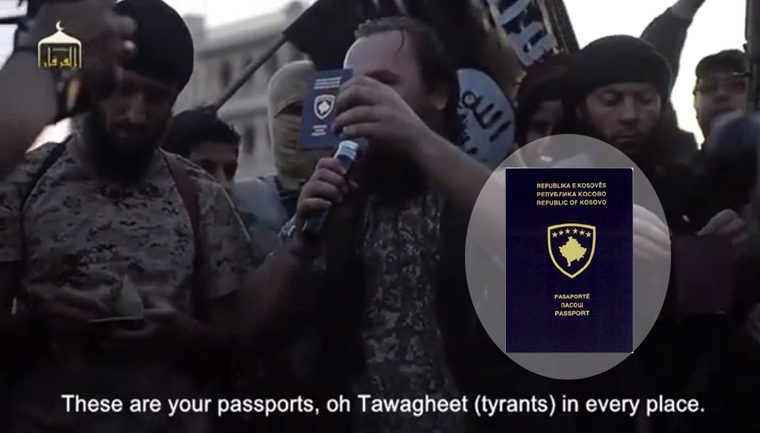
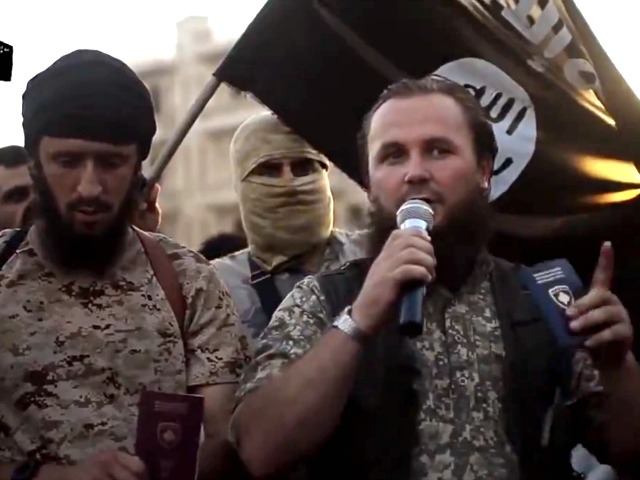
 Fisnik Bekaj, 24, Dake Haziraj, 25, and Arian Babaj, 27, were allegedly admirers of the Islamic State of Iraq and the Levant (ISIL) and were secretly recorded discussing how they were ready to die for the sake of jihad. A fourth person, an unnamed minor also originally from Kosovo, was detained.
 Italian police released photos of the suspects, including a minor who was detained but not identified. Credit: AFP
 Soldiers patrol Saint Mark’s Square Credit: Reuters