
RT: Kosovo wants to establish an army and has received several Humvee armoured vehicles from the USA. Although there was official NATO restraint, how much is the establishment of a Kosovo Army a fixed development?
Marcus Papadopoulos: Kosovo is, effectively, a NATO protectorate today – and has been ever since Belgrade lost control of this Serbian province in 1999. It follows, therefore, that the illegal entity which is the Republic of Kosovo will begin the process of creating its own armed forces so that, in time, Kosovo will gain entry into NATO.
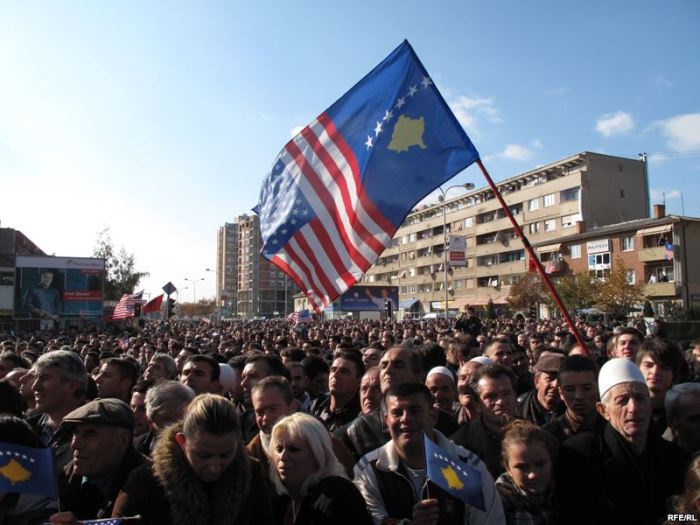
RT: The EU has rejected the introduction of Kosovo sanctions against Serbia and is concerned about the Kosovo army. How will the militarisation of Kosovo affect Serbia’s relations with the European Union?
MP: The European Union, at the behest of the US and NATO, is pursuing Serbian membership of the economic bloc so that this will greatly enhance the West’s control of the Balkans. And the Serbian Government, which is a pro-Western puppet one, is publicly condemning developments in Kosovo but in private is preparing the ground to recognise the independence of Kosovo, possibly through amending Serbia’s constitution so that Kosovo is left out of it, or on the basis of a land-swap between Belgrade and Pristina. Serbia’s president, Aleksandar Vucic, who has very close ties to Germany and the US, wants to deliver to his masters in the West Serbia’s recognition of Kosovan independence so that he can indefinitely preserve his hold on Serbia.
RT: The question of the Serbian minority in Kosovo remains unresolved. Still it is an important leverage for Belgrade in Kosovo. However, there are no concessions from Pristina that rejects an autonomy status. In which direction is this dispute moving, which also depends on the question of Kosovo’s independence?
MP: The illegal authorities in Pristina might be prepared to enter into a land-swap with Belgrade in order to allow Serbia to recognise Kosovo’s independence. We must be aware that the authorities in Belgrade and Pristina are firmly in the West’s political orbit hence both want to satisfy their Western masters (the West wants harmony between its colonies – Serbia and Kosovo – hence why it must resolve the issue of Serbia recognising Kosovan independence). A possible land-swap could involve northern Mitrovica going to Serbia and the Presevo Valley going to Kosovo.
RT: Do you think President Vucic will finally be forced to recognise Kosovo’s independence?
MP: Vucic cares about two things and two things only: maintaining his leadership of Serbia and satisfying his Western masters hence why he has permitted NATO to have supervisory offices in key Serbian institutions, such as the Defence Ministry. Vucic cares nothing for Kosovo and Metohija; if he did, he would have nothing to do with both NATO and the EU and he would not participate in meetings with American and European officials about Kosovo’s future. Kosovo and Metohija is legally, politically and historically an integral part of Serbia hence there is nothing to discuss about its future, especially with the very parties who tore the province away from Serbia.
One of the very few Serbian politicians who sincerely cared about Kosovo and Metohija was Oliver Ivanovic but he was assassinated in January of 2018. No one has been charged with his murder. It is widely believed that those responsible for his murder are hiding in Belgrade, with full protection from Vucic’s government. My own suspicion – and one widely shared by Serbs – is that he was murdered by the Serbian state because he stood in the way of Serbia’s recognising Kosovo as an independent country (Ivanovic was very popular amongst ordinary Serbs in Kosovo and Serbia in general).
RT: The Kosovo army will be a relatively small one, which, at first sight, will be less of a challenge to the Serbian security forces. What is Belgrade’s real concern when it comes to establishing an army in Kosovo?
MP: The concern amongst genuine Serbian patriots is that the illegal authorities in Kosovo could ignite an arms race between Serbia and its Kosovan province, which could ignite a war between the two and draw in neighbouring countries. The Balkans is one of the most volatile parts of the world. Furthermore, the illegitimate army in Kosovo will be manned and led by people who were members of the so-called Kosovo Liberation Army, a terrorist and organised crime network.
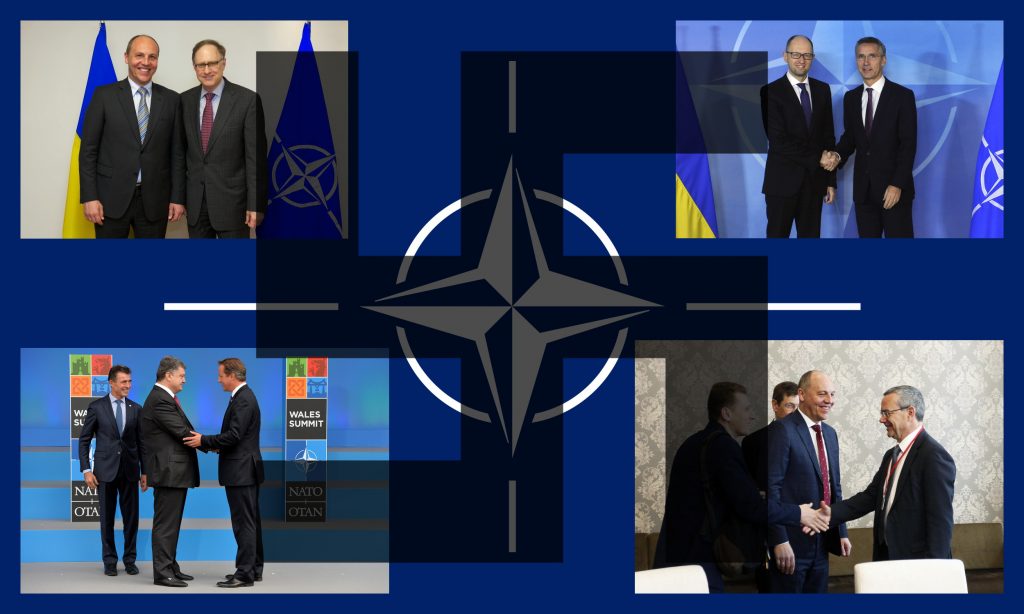
RT: What role would the Kosovo Army play from a regional perspective, bearing in mind that Croatia, Montenegro and Albania have joined NATO? After all, Serbia also conducts military exercises with NATO, but doesn’t that also create the feeling of being surrounded?
MP: As a result of Montenegro being a member of NATO, this means that NATO, in effect America, now controls the Adriatic Sea, which is of immense geo-strategic importance – this is what past empires had vied with each other, over hundreds of years, for control of, including the Ottoman and Habsburg empires. By Kosovo having its own army, this will pave the way for the province to eventually join NATO and thereby strengthen the West’s stranglehold of the Balkans. And one day, after Serbia has recognised Kosovan independence, Serbia will join NATO, too.
RT: To what extent is Russia, which is on Belgrade’s side on the Kosovo issue, perceived as an alternative political partner to Western actors among political elites in Serbia?
MP: Vucic says that he is carrying on Tito’s policy of non-alignment, meaning that Serbia is aligned neither with the West (US and NATO) nor the East (Russia). In practice, however, Vucic has moved Serbia even deeper into the West’s sphere of influence. And Russia is only too aware of the duplicitous game that Vucic is playing hence the tension between Vucic and Putin. But in reality, Russia doesn’t have as much influence in the Balkans as some people think. The West took hold of the former Yugoslavia during the 1990s and early 2000s, when Russia was reeling from the end of communism and the dissolution of the Soviet Union. Alas, it is very difficult for Russia to operate in the Balkans now, including in Serbia and Montenegro which are both run by governments whose key personnel have been chosen by Washington and Brussels.
RT: In addition to Russia, Serbia is cooperating increasingly closely with Turkey and China. This cooperation is primarily of an economic nature, but Turkey is also regarded as one of Kosovo’s biggest supporters and is now increasingly investing in Sandzak. Is there any hope in Belgrade of persuading Turkey to make political concessions in Kosovo in the long-term?
MP: Serbia is not run by patriots but by traitors, crooks and mobsters who have sold the country’s industries and resources to foreign players, including Turkey. The Turks are historic foes of the Serbs so there should be very little cooperation, if any, between Belgrade and Ankara but, alas, Serbia’s leaders do not care about their country, people, history and culture; rather, they care about preserving their positions of privilege and keeping their colonial masters happy. After all, why would the Serbian Government allow Turkey to stir up tension in Sandzak if they cared about Serbia’s territorial integrity? Turkey is a key strategic ally of the West hence the treacherous authorities in Belgrade are told to cooperate with Ankara. What has happened in Serbia since October 2000, is extremely sad and depressing.
Originally published on 2018-01-06
About the author: Dr. Marcus Papadopoulos specializes in Serbia and the rest of the former Yugoslavia.
This article was originally published on RT Germany in Deutsch.
We would like to ask you to consider a small donation to help our team keep working. We accept no advertising and rely only on you, our readers, to keep us digging the truth on history, global politics and international relations.
Origins of images: Facebook, Twitter, Wikimedia, Wikipedia, Flickr, Google, Imageinjection, Public Domain & Pinterest.Read our Disclaimer/Legal Statement!Donate to Support UsWe would like to ask you to consider a small donation to help our team keep working. We accept no advertising and rely only on you, our readers, to keep us digging the truth on history, global politics, and international relations.[wpedon id="4696" align="left"]Save
For centuries, the strategic Balkan Peninsula has featured as a slice of Europe over which wars have been fought, treaties made and broken. It became a vital pawn in the carve-up of nations after World War i, had the boundaries of its ethnic enclaves confused under Tito’s regime, then its various nationalist feelings taken advantage of and played against each other in the latest push for its colonization by the EU.In this latest process, one nation has been demonized in the mind of the public: Serbia.In the words of British political economist Rodney Atkinson, “The grossest calumny in the continuing ...
The focal political aims of current anti-Serb propagandaThe current Serbophobic propaganda to abolish Republika Srpska (RS) and to create a unitary Bosnia-Herzegovina (a neo-Ottoman Muslim Bosnian province) is coming from the ranks of the Bosnian Muslim Party of Democratic Action (Stranka Demokratske Akcije - SDA) and its Western sponsors. The propaganda, however, coincides with the final phase of The Hague war crimes trial, following so-called "arrests"[1] and express deportations for the Netherlands by at that time pro-Western Serbian Government of former wartime commander of the Army of the Republika Srpska (Vojska Republike Srpske - VRS), General Ratko Mladic, and the ...
The ongoing crisis in Ukraine and unseemly role of Poland in its instigation and development makes us take another look at the historical context of the Polish-Ukrainian relations. We will focus on dramatic repressions of the Ukrainian minorities in Eastern Poland in 1921-1939 at the territories annexed by Jozef Piłsudski’s government from the Soviet Russia according to Peace of Riga 1921, which eventually triggered ultra-Nationalist Ukrainian terror against the Poles during the WWII (culminating in massacres in Volhynia and Eastern Galicia in 1943-1944).Poland, which used to be a part of the Russian Empire, emerged at the European political map in November ...
The Vlachs in Albania Albania’s Vlach community is living in the southern part of the country, which has its historical name – North Epirus.[1] They are dispersed from the city of Gjirokastër in the south to the city of Elbasan in Central Albania. However, the largest Vlach concentration is in the areas of the cities of Gjirokastër, Korçë, and Përmet in the southernmost part of Albania where they live together with the Orthodox Greeks, Albanians, and Macedonians.[2] The number of Albanian Vlachs is estimated from 35,000 to 100,000, but some researchers raise this figure to almost 200,000 (that is around 1–2,5% ...
Congratulations to Craig Murray for getting there first. The colorful former British ambassador to Uzbekistan, turned anti-establishment dissident after he was sacked from the Foreign Office in 2004, has published on his blog some key texts by authoritative scientists which cast serious doubt on the British government's claims about what happened to the former double agent, Sergei Skripal, and why.Murray – and his sources – have unearthed texts from 2016, 2013 and 1995 by, respectively, a scientist at Porton Down, the secret British military chemical weapons installations which is 20 minutes from Salisbury where Skripal was found last week; a scientist at ...
Editor’s NoteThis paper was presented by the late Sean Gervasi at the Conference on the Enlargement of NATO in Eastern Europe and the Mediterranean, Prague, 13-14 January 1996. It was published on Global Research when the Global Research website was launched on September 9, 2001. The late Sean Gervasi had tremendous foresight. He understood the process of NATO enlargement several years before it actually unfolded into a formidable military force. He had also predicted the breakup of Yugoslavia as part of a US-NATO project.See also Sean Gervasi’s 1993 video interviewIntroductionThe North Atlantic Treaty Organization has recently sent a large task ...
The Ploesti old fields in southeastern Romania were a vital strategic bombing objective for the U.S. Army Air Force during World War II. Located 35 miles north of the capital Bucharest, Ploesti had formerly supplied one-third of Germany’s oil. The U.S. had targeted Ploesti to deprive the German military of petroleum. The U.S. first bombed Ploesti on June 12, 1942 during the HALPRO bombing raid. Then on August 1, 1943 during Operation Tidal Wave, a major bombardment was launched.The Soviet Red Army advance on Yugoslavia and the capital Belgrade in 1944 was launched from Romania. Russian troops had captured Ploesti ...
I will not dwell either on the prehistory nor early history of the region of Kosovo-Metochia (KosMet) in this article.The Montenegrins and medieval SerbiaIt used to pass from one state to the other, until Stephan Nemanja (1166−1196), a nobleman from Zeta (present-day Montenegro), founded the state of Serbia, whose center very soon later became exactly in today’s KosMet. First a Byzantine vassal dukedom, Serbia became soon an independent state, to become an empire under the rule of Stephan Dušan (1331−1355), the first Emperor of Serbia.[1]Serbia’s Nemanjić’s dynasty ended with Dušan’s son, Uroš, disintegrating into many feudal possessions.[2] In the epic ...
Post-colonial empires are complex organizations. They are organized on a multi-tiered basis, ranging from relative autonomous national and regional allies to subservient vassal states, with variations in between.In the contemporary period, the idea of empire does not operate as a stable global structure, though it may aspire and strive for such. While the US is the major imperial power, it does not dominate some leading global political-economic and military powers, like Russia and China.Imperial powers, like the US, have well-established regional satellites but have also suffered setbacks and retreats from independent local economic and political challengers.Empire is not a fixed ...
When the Warsaw Pact ended, after the collapse of communism, some optimists might have expected Nato to be broken up too.After all, the Labour Party in Britain had been opposed to Nato in the mid-1980s. But that was not to be. The US, which had always dominated Nato, quickly began to reinvent Nato and furthermore to expand it.Following the end of the Warsaw Pact many central and east European governments wanted to join Nato.This of course was music to the ears of the US military manufacturers. Indeed, the chair of the expand Nato committee, Bruce Jackson, was technical director of ...
Just three years after a citizens’ referendum returned Crimea to Russia, from which it had been separated for sixty years, the people of Catalonia, Spain’s largest province, will vote to leave that country.And just as the international community has decreed that the Crimean referendum was a fake, Spain’s Prime Minister felt compelled to declare that the vote could’t possibly take place, that it would be illegal, that independence, in his words, could only be ‘a pipe dream’ for the country’s richest province.Clearly, national governments don’t like losing land and people, however when it suits the international community, some communities are ...
Origins of images: Facebook, Twitter, Wikimedia, Wikipedia, Flickr, Google, Imageinjection & Pinterest.Read our Disclaimer/Legal Statement!Donate to Support UsWe would like to ask you to consider a small donation to help our team keep working. We accept no advertising and rely only on you, our readers, to keep us digging the truth on history, global politics and international relations.[wpedon id="4696" align="left"]
A strange spy affair broke out in Balkan Casablanca, aka Serbia, on Wednesday. Were NATO “advisers” and liaison personnel embedded in the Serbian army command finally caught red-handed by vigilant Serbian counter-intelligence operatives, purloining secrets? Not this time. (Something along those lines actually did happen in 2002; it was when former armed forces chief of staff Momcilo Perisic was caught on camera in a Belgrade restaurant handing over secret information for cash to CIA’s Johnny-on-the-spot, John Neighbor.) But what allegedly occurred this time was not a boring rerun of the Perisic affair, although the basic contours of the unimaginative scenario ...
Edward S. Herman died on November 11, 2017, at the age of 92. Fortunately, it was a peaceful death for a supremely peaceful man. In all he did, Ed Herman was a tireless champion of peace.Ed Herman could be considered the godfather of antiwar media critique, both because of his own contributions and because of the many writers he encouraged to pursue that work. Thanks to his logical mind and sense of justice, he sharply grasped the crucial role and diverse techniques of media propaganda in promoting war. He immediately saw through lies, including those so insidious that few dare ...
More than 20 years after the Srebrenica massacre, Bosnian Serb General Ratko Mladić was found guilty of war crimes by the International Criminal Tribunal for the former Yugoslavia this past November.Along with Mladić, the ICTY convicted the other so-called “Butcher of Bosnia”, the Bosnian Serb and former Republika Sprska leader Radovan Karadžić in 2016. Meanwhile, it fully exonerated the Bosnian Muslim army commander Naser Orić of similar charges which outraged the people of Serbia. Yet, it was the same court that posthumously exonerated former Serbian President Slobodan Milošević in 2016. If you weren’t aware of the latter, it’s because it ...
The Serbs stepped again onto the historical scene in the years of the European wars that swept the continent from the forests of Ireland to the walls of Constantinople in the late 17th century. The Turks finally withdrew from Hungary and Transylvania when their Ottoman hordes were routed outside Vienna in 1683. The disintegration of Ottoman rule in the southwest limbered up the Serbs, arousing in them hope that the moment was ripe for joint effort to break Turkish dominion in the Balkans. The neighboring Christian powers (Austria and Venice) were the only possible allies. The arrival of the Austrian ...
During the Albanian Muslim secessionist and separatist war in the Serbian province of Kosovo and Metohija, Kosovo Serb civilians were targeted for murder and expulsion. December 14, 2010 marked the 12th year anniversary of the mass murders of six Kosovo Serbs in 1998 by Kosovo Albanian secessionists and separatists. The cold-blooded murder of the six youths was a horrific and shocking mass murder. The killers were Albanian Muslim separatists, suspected members of the KLA, which U.S. special envoy to the Balkans Robert Gelbard described in 1998 as “without any question, a terrorist group”: “I know a terrorist when I see ...
There have been at least two countries in Europe in recent history that undertook ‘anti-terrorist’ military operations against ‘separatists’, but got two very different reactions from the Western elite.The government of European country A launches what it calls an‘anti-terrorist’ military operation against ‘separatists’ in one part of the country. We see pictures on Western television of people’s homes being shelled and lots of people fleeing. The US and UK and other NATO powers fiercely condemn the actions of the government of country A and accuse it of carrying out ‘genocide’ and ’ethnic cleansing’ and say that there is an urgent ...
The great deception of “a real democracy” in the Ukraine, which the New York Times insisted on 31 March 2019, shows little sign of relenting. For five years, Western populations have been consistently misled through skewed and slanted reporting, assuring the readership that what is unfolding in Kiev is a “fledgling democracy”, as a Washington Post editorial further outlined on 6 April 2019.In reality it was a United States-funded coup d’état. During the months prior to Viktor Yanukovych‘s February 2014 ousting, elite American organizations bankrolled the “anti-government protests”, revealed as much in December 2013 by Victoria Nuland, then a high ...