
War And War Crimes: A Very Short Academic Approach
The phenomenon of war crimes is commonly understood as individual responsibility for violations of the internationally agreed-on laws and customs of warfare [...]
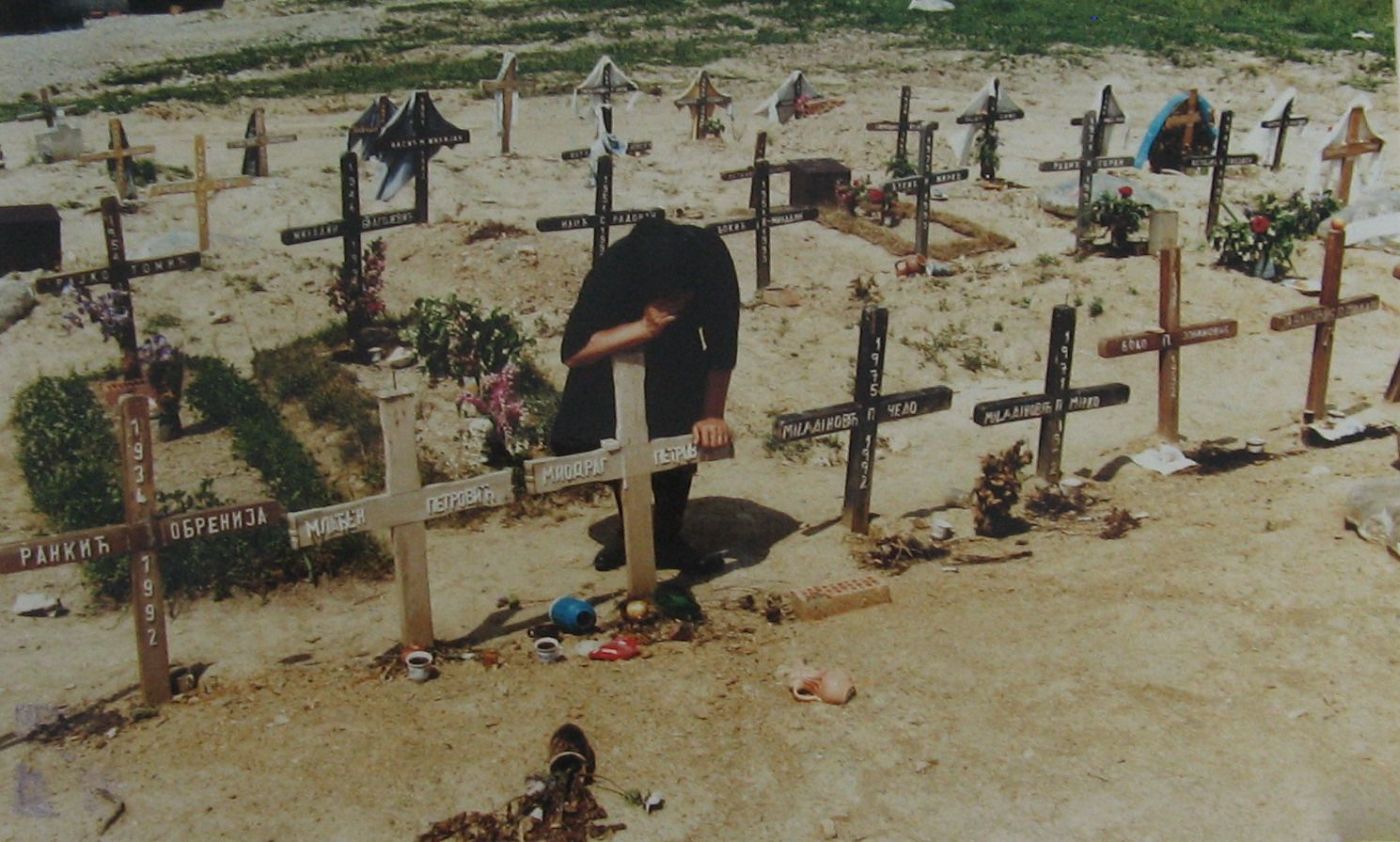
Srebrenica District: The graveyard of Serbian civilian victims after the genocide committed by Srebrenica’s Muslims
After WWII, there was a growing number of significant non-state actors in international relations (IR) like the OUN or various specialist agencies connected to it. Nevertheless, two key developments stimulated the growth of such organizations after WWII:
The realization that building cooperation and collective security was a much wider task than merely deterring aggressors in traditional attacks on fixed international order. It, therefore, involved finding ways of agreeing on international policy in a variety of practice areas.
The increasing coverage of international law includes new foci, including, human rights, social justice, natural environment, and regarding warfare – war crimes.
The final result of such post-WWII development in IR and global politics was that the application of the OUN system took place within the context of the growth and expansion of international law which dealt as well with war crimes. As a consequence, IR became less concerned with the state’s freedoms and independence alone but becoming more interested in general welfare with regards to including those affecting various non-state actors, such as pressure groups of different kinds, not least those demanding the investigation of war crimes including ethnic cleansing and genocide.
However, since the Cold War’s two nuclear Superpowers for geopolitical reasons, often been supporters of anti-democratic regimes that notoriously violated their own citizen’s rights, like the US support of the authoritarian regime of General Pinochet (1973−1990), in Chile than the removal of such structural condition appeared favorable to a general improvement in those countries requiring the investigation of the violation of human rights in some cases of the civil wars connected with war crimes.
The phenomenon of war crimes is commonly understood as individual responsibility for violations of the internationally agreed-on laws and customs of warfare. The responsibility of such kind is covering both the commission of war crimes in a direct way and ordering or facilitating them. In principle, the rule violated must be part of the international customary law or part of an applicable treaty.
Chronologically, the first and unsuccessful attempts at the prosecution of war crimes have been after the Great War. The same problem of individual responsibility for war crimes became once again actual during and after WWII, with the declarations in 1942 and 1943 by the Allied coalition. It was, basically, the expression of the determination to prosecute and punish at least major war criminals on the opposite side but, unfortunately, not on their own as well. Another practical purpose was to establish the tribunals for such cases to take place in Nuremberg in Germany (for the Nazi German war criminals) and Tokyo in Japan (for Japanese war criminals).
The war crimes committed in WWII had been covering the so-called “crimes against humanity” as defined by the Charter of the International Military Tribunal that was established in Nuremberg like killing, extermination, enslavement, deportation, and other inhuman acts committed against civilian populations either before or during a war. In addition, the same category of war crimes was put persecution on political, racial, or religious foundations followed by the crime of aggression and crimes against peace like planning, preparation, initiation, or waging of a war of aggression.
War crimes are in general as well as understood in terms of all of those acts that are defined as the so-called “grave breaches” of the 1949 Geneva Conventions and Additional Protocol 1 of 1977. Later, the acts of war crimes are defined in the 1993 Statute of the International Criminal Tribunal for the Former Yugoslavia, by the 1994 Statute of the International Criminal Tribunal for Rwanda followed by Article 8 of the 1998 Rome Statute of the International Criminal Court. Nevertheless, in the 1990s, it was on agenda a greater willingness by one part of states to establish the so-called “international” courts for the matter of prosecution of potentially committed war crimes with the first such tribunal established after WWII which was dealing with cases from the territory of ex-Yugoslavia followed by the similar court for Rwanda and successful negotiation of the Rome Statute of the International Criminal Court.
The conflicts which followed the brutal destruction of ex-Yugoslavia have been widely referred to as European bloodiest conflicts after 1945 partly because of the severity and intensity of the actual warfare and partly because of mass ethnic cleansings on all sides. However, this war practice from the 1990s became infamous for the war crimes that have been alleged to be violent. Nevertheless, the case of the Yugoslav destruction in the 1990s became officially the first military conflict after WWII formally to be judged as genocidal by the Western international community.
Personal disclaimer: The author writes for this publication in a private capacity which is unrepresentative of anyone or any organization except for his own personal views. Nothing written by the author should ever be conflated with the editorial views or official positions of any other media outlet or institution.
Dr. Vladislav B. Sotirovic
Ex-University Professor
Research Fellow at Centre for Geostrategic Studies
Origins of images: Facebook, Twitter, Wikimedia, Wikipedia, Flickr, Google, Imageinjection, Public Domain & Pinterest.
Read our Disclaimer/LegalStatement!
DonatetoSupportUs
We would like to ask you to consider a small donation to help our team keep working. We accept no advertising and rely only on you, our readers, to keep us digging the truth on history, global politics, and international relations.
The topic to be addressed in this text is the basic misconception on the question of the Balkan Albanian ethnogenesis and national identity that was framed by extremely geo-politically coloured German-based “Illyrian” theory of the Albanian ethnic and cultural origin. This (quasi)theory, unfortunately, has very deep and negative regional political-security consequences. The implementation of the “Illyrian” theory of the Albanian ethnogenesis was accepted firstly by the Rilindja, (the Renaissance) – the Albanian nationalistic and chauvinistic political movement in 1878–1913 for the sake to create the ethnically pure Greater Albania as a national state of all Balkan Albanians composed by self-interpreted ...
The massacre of 22 people—12 doctors, nurses and other medical personnel, along with 10 patients, three of them children—in Saturday’s airstrike on the Doctors Without Borders/Médecins Sans Frontières (MSF) medical center in Kunduz, Afghanistan is an appalling war crime for which the US military and Obama administration are responsible.On Monday, the top US commander in Afghanistan admitted that a US warplane carried out the deadly attack, while seeking to shift the blame onto Afghan puppet troops for calling it in.“An air strike was then called to eliminate the Taliban and several civilians were accidentally struck,” Gen. John Campbell told a ...
Missing from corporate media accounts is what causes the Democratic People’s Republic of Korea (DPRK aka North Korea) to be singled out for opprobrium for what, essentially, is developing a deterrent against any entity that would attack it.A comparison with how the United Nations deals with North Korea vis-à-vis another member state state, Israel, is instructive.Israel occupies Palestinian territory; destroys Palestinian olive groves and poisons Palestinian sheep; sprays Palestinian homes with sewage; sabotages Palestinian water supplies; cuts off power to Palestine; terrorizes Palestinians for hours at checkpoints, including the sick, infirm, and pregnant women, some who are forced to give birth ...
What is the European UnionIn Europe, regionalization after WWII is taking the form of a gradual process of integration that was leading to the creation of the European Union (the EU) which is a collaborative association of some of the European states previously known as several different communities. Since agreeing at a summit meeting in December 1991 in the city of Maastricht in the Netherlands to move beyond a custom union and common market towards full economic and monetary union[1] (up to that time the EU was similar to the European Free Trade Association – the EFTA),[2] the association of ...
Outrageous: Slobodan Milosevic cleared of charges by the International Criminal Tribunal for the former Yugoslavia. But no-one is talking about it!The ICTY (International Criminal Tribunal for the former Yugoslavia) has discharged Slobodan Milosevic from 1992-95 Bosnian war crimes allegations. This is definitely prime time news, while it holds endless political implications. Oddly enough, though, no major international mainstream media seems to have noticed.Well, it is understable for everyone to be keeping it quiet: those who with one voice did dub him the “butcher of the Balkans”; those who associated him to Hitler, initiating a pattern which would later be extended ...
Origins of images: Facebook, Twitter, Wikimedia, Wikipedia, Flickr, Google, Imageinjection & Pinterest.Read our Disclaimer/Legal Statement!Donate to Support UsWe would like to ask you to consider a small donation to help our team keep working. We accept no advertising and rely only on you, our readers, to keep us digging the truth on history, global politics and international relations.
On 23 April 1999, a NATO missile attack on Radio Television of Serbia (RTS) headquarters killed 16 employees of the state broadcaster. The forgotten war crime occurred during the Kosovo War (March 1998-June 1999), and was part of NATO’s aerial campaign alongside the US-backed Kosovo Liberation army, in opposition to the Federal Republic of Yugoslavia.In the aftermath of the attack there were no great public campaigns launched for the 16 murdered journalists and employees, no outpouring of emotion for those killed, no calls for solidarity and togetherness in the face of aggression. On the contrary the West justified this grievous ...
The Kaunas Garage Massacre of the Jews in June 1941It was with great interest that I read the op-ed jointly penned by Foreign Minister Gabi Ashkenazi and his Lithuanian counterpart, Gabrielius Landsbergis, in last Friday’s Jerusalem Post. As could be expected, such initiatives are usually written to offer a rosy picture of the wonderful relations between two countries and the bright prospects for future cooperation. As a descendant of Lithuanian Jews, a frequent visitor to Lithuania ever since independence, and the co-author of a recent book on the rampant Holocaust distortion orchestrated by successive Lithuanian governments, I didn’t know whether to ...
Atrocities and war crimes are subjectively defined as acts of violence that exceed military necessity. All war includes atrocities. The stress of combat includes a build up of emotion during action that leads to vicious attacks on the enemy when the opportunity arises. American military units are trained and indoctrinated to avoid inhuman treatment of enemy combatants. Soldiers who violate the norms are prosecuted. This reduces but does not eliminate the problem.Photo of Vietnamese civilians killed by an American unit Atrocities During the Vietnam War The actions of armies in war have seldom been as humane as the modern American military -- ...
American torture is back in the news again as Gina Haspel, President Donald Trump’s pick to head the Central Intelligence Agency, prepares for what could be a rocky Senate confirmation hearing with some tough questions about her role overseeing a secret torture prison in Thailand and destroying tapes of brutal detainee interrogation sessions.Haspel’s nomination, and to a lesser degree her earlier appointment as deputy CIA director, reopened what more well-meaning observers, including torture survivor Sen. John McCain (R-AZ), have called “one of the darkest chapters” in US history, the so-called “enhanced interrogation” abuse of men, women and children caught up ...
Last month was the 18th anniversary of the attack on the Serbian village of Kravica committed by Moslem forces from Srebrenica under the command of Naser Orić on Orthodox Christmas day, January 7, 1993. Several dozen villagers were killed in the attack, the remaining Serbian population was forced to flee to safety, and many homes were pillaged, demolished and torched during the several weeks that Kravica was forcibly occupied by neighbours from nearby Srebrenica. Regardless of arcane debates of who started the war in Bosnia and Herzegovina, on a human level the attack on the village of Kravica and the ...
The Great European Powers and the BalkansThe Balkans is a term connoting peoples, cultures, and states that make up a peninsula of South-East Europe between the Black Sea, the Adriatic Sea, the Aegean Sea, and the Mediterranean Sea. There are three crucial points of the Balkan’s significance from the geostrategic point of view: The territory of the Balkans is an important connection between West and Central Europe and the Near and the Middle East. Wealthy of the region’s natural resources. The region which is located betwixt the Danube River, the Black Sea and East Mediterranean is an important part of ...
A National traumaA national trauma which the Serbs after the fall of the Serbian national state and the Ottoman occupation experienced after June 20th, 1459[i] can be compared with that felt by Judea’s Jews after the fall of Jerusalem and the destruction of the Temple in 70 AD.[ii] Since Serbia soon found herself well within the Ottoman Sultanate and the European Christian states were on defense from the victorious Muslim Ottoman Turks, no light at the end of the historical tunnel was seen and the whole nation sank into deep despair for the next four centuries. In a sense, the ...
Unlike a regular corporation, the corporations that manufacture and sell weapons to their government are virtually 100% dependent upon their government and its military allies, for their own success; their markets are only those governments, not individuals (such as is the case for normal corporations). Consequently, either their government will control them, and those firms won’t have any effective control over their own markets, or else those firms will, themselves, control their government, and thereby effectively control their markets, via the government’s foreign policies — not only via expanding its military alliances (those firms’ foreign markets), but via its designating ...
It has become embarrassing to be an American. Our country has had four war criminal presidents in succession. Clinton twice launched military attacks on Serbia, ordering NATO to bomb the former Yugoslavia twice, both in 1995 and in 1999, so that gives Bill two war crimes. George W. Bush invaded Afghanistan and Iraq and attacked provinces of Pakistan and Yemen from the air. That comes to four war crimes for Bush. Obama used NATO to destroy Libya and sent mercenaries to destroy Syria, thereby committing two war crimes. Trump attacked Syria with US forces, thereby becoming a war criminal early ...
The Asia Minor and Pontos Hellenic Research Center is pleased to announce a new book, Genocide in the Ottoman Empire: Armenians, Assyrians, and Greeks, 1913-1923. Edited by George N. Shirinian. New York and Oxford: Berghahn Books, 2017. 433 pages.The final years of the Ottoman Empire were catastrophic for its non-Turkish, non-Muslim minorities. From 1913 to 1923, its rulers deported, killed, or otherwise persecuted staggering numbers of men, women and children in an attempt to preserve “Turkey for the Turks,” setting a modern precedent for how a regime can commit genocide against its own citizens in pursuit of political ends, while ...
Chris Deliso of Balkanalysis points out the latest travesty of the Western media: 59,000 stories on Auschwitz, three on Jasenovac. As if the third-largest death camp in Nazi-occupied Europe simply never existed. Franjo Tudjman certainly thought so, and it appears the current Croatian leadership shares his "historical" perspective.Contemporary German estimates of Serbs murdered by the Ustasha (in Jasenovac and elsewhere) ranged as high as 750,000. Wiesenthal center uses the number of 600,000. Serbian researchers have spoken of up to 700,000 victims. Modern revisionists, Croat and otherwise, talk of 30-100,000, at most. Among them is the U.S. Holocaust Memorial Museum, which ...
When at the 1878 Berlin Congress Serbia and Montenegro had to become recognized as sovereign states, the Muslim Albanian representatives tried to initiate the same for their own national state or wider autonomy within the Ottoman Empire which they considered as their own national state. They founded the (First) Prizren League in Metochia (the western portion of contemporary Kosovo).[1] However, this Islamic initiative failed with Bismarck’s explicit rejection to speak about Albanian nationality as nonexistent at all in Europe at that time as they have been considered as the Turks. At the same time, the Albanian national movement Rilindja was initiated, ...
By all accounts from Greece and Macedonia, a majority in both countries will be happy that a new name for Macedonia has been agreed upon by the governments in Athens and Skopje. After years of facing Greek vetoes to join the European Union and NATO under the name “Republic of Macedonia,” the Greek government agreed to drop its opposition, so long as Macedonia change its name to “Northern Macedonia.” Northern Greeks always objected to Macedonia’s use of that name because they believed it represented a goal of Slavic and Albanian Macedonians to lay claim to the northern Greek region that ...
It is the Unlimited Imperialists along the line of Alexander, Rome, Napoleon and Hitler who are now in charge of conducting American foreign policy…Historically this latest eruption of American militarism at the start of the 21st Century is akin to that of America opening the 20th Century by means of the U.S.-instigated Spanish-American War in 1898. Then the Republican administration of President William McKinley stole their colonial empire from Spain in Cuba, Puerto Rico, Guam, and the Philippines; inflicted a near genocidal war against the Filipino people; while at the same time illegally annexing the Kingdom of Hawaii and subjecting ...