
What was the impact of the 1945 Yalta Conference on Yugoslavia? The key result of the conference for Yugoslavia was that it endorsed and ratified the 1944 agreement between Josip Broz Tito and Ivan Subasic. The end result was that the American, British, and Soviet governments installed a dictatorship in Yugoslavia.The Allied task was the illusory and chimerical objective of uniting the prewar, monarchist Yugoslav Government-in-Exile based in London headed by Peter II Karadjordjevich with Tito’s de facto anti-monarchist, Soviet-style, Communist government in Belgrade. This was the major issue that was discussed at plenary meetings and foreign ministers sessions at ...
READ MORE
“I can still see it very clearly, I have not forgotten,” says Títos Patríkios. “The Athens police firing on the crowd from the roof of the parliament in Syntagma Square. The young men and women lying in pools of blood, everyone rushing down the stairs in total shock, total panic.”And then came the defining moment: the recklessness of youth, the passion of belief in a justice burning bright: “I jumped up on the fountain in the middle of the square, the one that is still there, and I began to shout: “Comrades, don’t disperse! Victory will be ours! Don’t leave. ...
READ MORE
Like all Americans, I was taught that the U.S. dropped nuclear bombs on Hiroshima and Nagasaki in order to end WWII and save both American and Japanese lives.But most of the top American military officials at the time said otherwise.The U.S. Strategic Bombing Survey group, assigned by President Truman to study the air attacks on Japan, produced a report in July of 1946 that concluded (52-56):Based on a detailed investigation of all the facts and supported by the testimony of the surviving Japanese leaders involved, it is the Survey’s opinion that certainly prior to 31 December 1945 and in all ...
READ MORE
A project for Greater Albania – conspiracy or legitimate? According to a 2010 Gallup Balkan Monitor report, 83% of Albanians in Albania supported the idea of a Greater Albania, with 81% and 53% of Albanians in Kosovo and North Macedonia respectively supporting such an ambition.The ultimate goal? To have Kosovo and the Preševo Valley in Serbia, southern Montenegro, Epirus in Greece and western North Macedonia into a single Greater Albanian state. Although this may not be official policy of the Albanian Republic, it is ingrained into the Albanian mythos. The very idea of a Greater Albania has roots in the 1913 Treaty of London that left roughly 40% ...
READ MORE
IntroductionThe propaganda by the Christian churches in regard to their role during WWII in Fascist Italy, Yugoslavia, and Nazi Germany has so conditioned their believers that most of them believe that Christianity played an honorable role at best, and only a silent role at worst. Yet there seems little recognition that the very framework of the beliefs owned by the Fascists and Nazis came from their Christian upbringing from church, school, and Christian traditions. The entire anti-Jewish and racial sentiments came not from some new philosophy or unique ideology, but rather from centuries of Christian preaching against the Jews, gypsies, ...
READ MORE
The political settlement in the former Yugoslavia is unraveling. In Bosnia, the weakest state in the region, both Serbs and Croats are mounting a concerted challenge to the Dayton peace accords, the delicate set of compromises that hold the country together. In Macedonia, political figures from the large Albanian minority are calling for the federalization of the state along ethnic lines. In Kosovo, the Serb minority is insisting on the creation of a network of self-governing enclaves with effective independence from the central government. In Serbia’s Presevo Valley, Albanians are agitating for greater autonomy. In Montenegro, Albanians have demanded a ...
READ MORE
Quietly, without most people noticing, the European Commission is moving ahead with a strategy that will arguably make the EU into the first fully operational model of a centralised ‘one state’ supranational authority: ‘A New World Order’; the long standing neoconservative ambition which lies at the heart of global secret society agendas and US geopolitical hegemony.The key ingredient of this strategy is the establishment of an ‘EU Treasury’ which, according to Donald Tusk, President of the EU Council, will come into effect in June 2018, under the official title: European Monetary Fund. This will result in the single point control ...
READ MORE
PrefaceAfter the end of the USSR in 1991, Russia, at that time both weakened and isolated, was becoming a less popular area of investigation and studies compared with the period during the Cold War. However, since the year of 2004, Russia is “back” in the global political arena when Moscow rejected the European Neighboring Policy’s game with the European Union (the EU). Those who argued that Russia was already irrelevant in global politics since 2004 had to realize their error of judgment. Today, Russia is “back” as a military, economic, and political Great Power with tremendous energy resources.[1] Recovering Russia’s ...
READ MORE
Unlike America under Donald Trump, who is proudly psychopathic and went so far as to blurt out that his followers would accept his leadership even if he were to shoot someone on Fifth Avenue, the European Union is so rabidly hypocritical (Trump would probably call it "politically correct") that its leaders routinely moralize about 'human rights and democracy' even while their governments indiscriminately rob and slaughter people in foreign lands (as will be documented here). EU leaders assist U.S.-led atrocities while using prettier language to describe their alleged motivation for these policies. Though the U.S. Government also occasionally employs such ...
READ MORE
With criminal corporate monopoly media masking the US created prosecutable genocide ongoing in Yemen, Somalia, South Sudan, Syria, Iraq and Afghanistan by focusing attention on Russia, fantasized as a dangerous enemy needing military confrontation, it might be a good time to review past US planned, facilitated and at times perpetrated genocidal crimes in Russia. History in context kind of puts to rest all the hype about evil Russia seeking to expand when it already is the largest country in the world spanning nine time zones with only half the population of the US to fill it.In 1900, Russia and America ...
READ MORE
The controversy over the canonization of Pope Pius XII concerns whether he spoke out enough against the slaughter of Jews during World War II. But that question is a red herring when trying to grasp the big picture of the Vatican's role during the war. The real question is whether the Vatican supported the world order, or at least aspects of it, that the Third Reich promised to bring, a world order in which dead Jews were collateral damage - which Pius indeed regretted. The answer can be found in a region of Europe that is generally ignored despite being ...
READ MORE
Vladislav B. Sotirovic, “Who are the Albanians? The Illyrian Anthroponomy and the Ethnogenesis of the Albanians – A Challenge to Regional Security”, Serbian Studies: Journal of the North American Society for Serbian Studies, Vol. 26, 2012, № 1−2, ISSN 0742-3330, 2015, Slavica Publishers, Indiana University, Bloomington, USA, pp. 45−76Origins of images: Facebook, Twitter, Wikimedia, Wikipedia, Flickr, Google, Imageinjection & Pinterest.Read our Disclaimer/Legal Statement!Donate to Support UsWe would like to ask you to consider a small donation to help our team keep working. We accept no advertising and rely only on you, our readers, to keep us digging the truth on ...
READ MORE
This weekend 75 years ago, the German city of Dresden was razed to the ground by British and American aerial bombardment. At least 25,000 mainly civilians were destroyed in raid after raid by over 1,200 heavy bombers, indiscriminately dropping high explosives and incendiaries. It took seven years just to clear the rubble.The destruction of Dresden, a world-famous cultural center of Baroque majesty, has been long dogged by controversy. Official British and American military accounts claim it was necessary to hasten the collapse of the Third Reich; with a reasoning that resonates with US claims for dropping the atomic bombs on ...
READ MORE
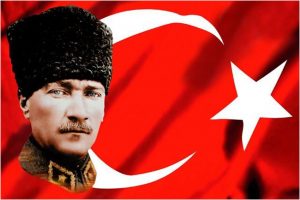
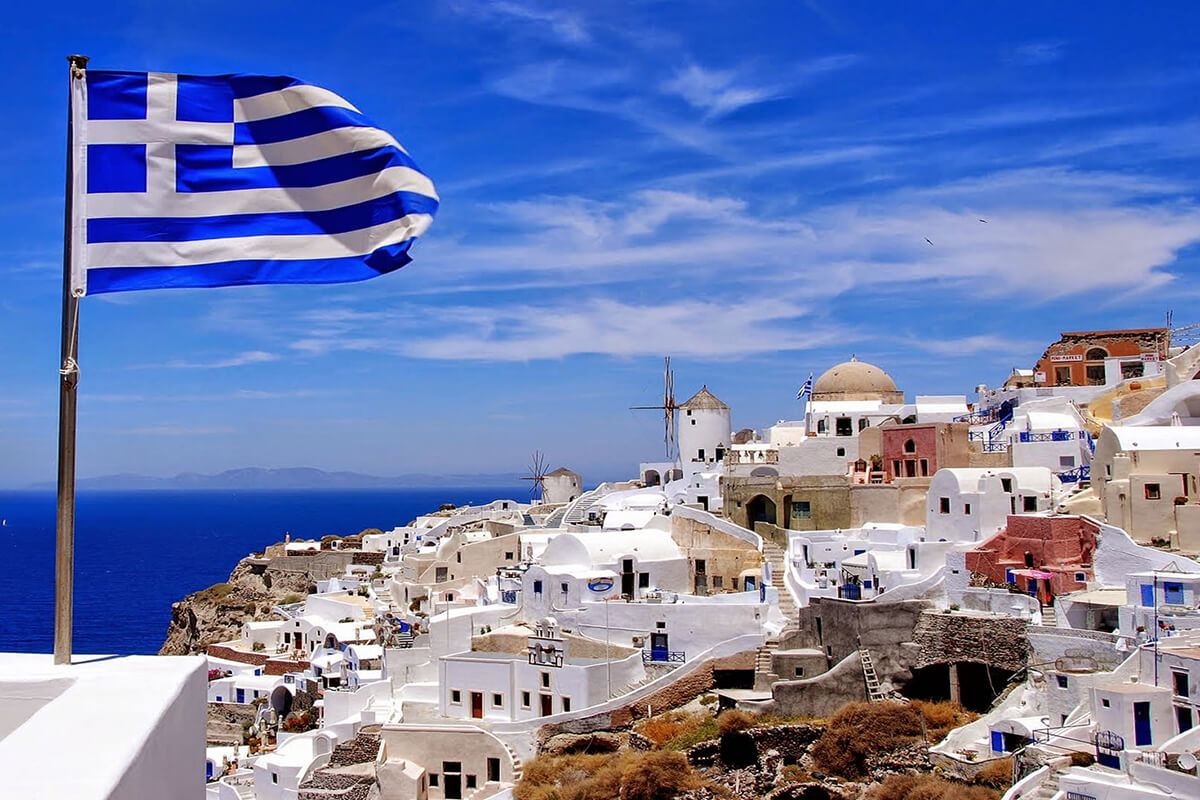
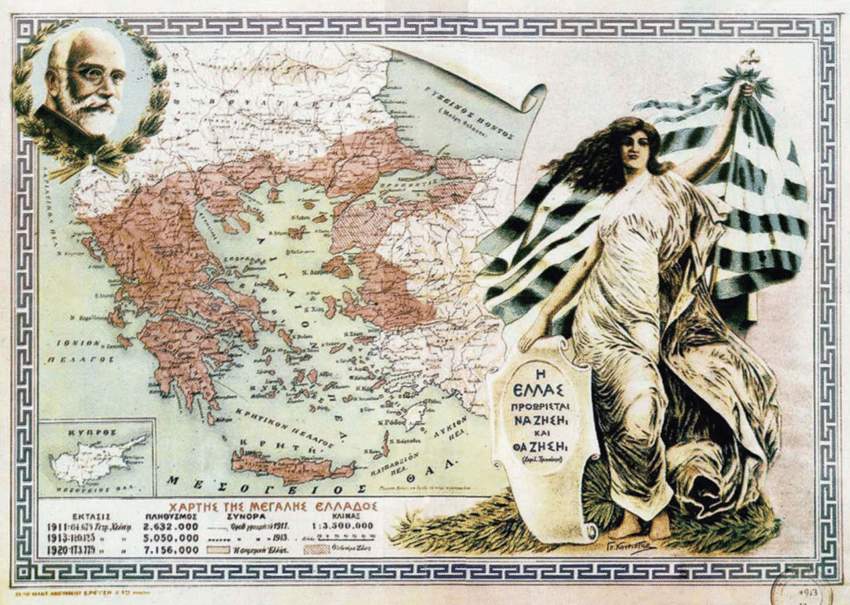
May 19, 1919 has different and even opposing meanings in Turkey and Greece, just as May 15, 1948, marks both the establishment of Israel and, for Palestinians, the start of the Nakba (“catastrophe”).In Turkey, this date marks the first step that led to the establishment of the Turkish Republic, while for descendants of Ottoman Greeks and Greece it marks the end of the centuries-long Pontic Greek presence on the shores of the Black Sea. Whereas Turks celebrate May 19, Greeks mourn it. Researcher Tamer Çilingir summarised the issue in a 2016 interview with the Turkish-Armenian daily Agos:“The Pontic Genocide is the ...
READ MORE
Boundaries of the Banovina districts of the Kingdom of Yugoslavia, 1929-1941Regardless of the reached agreement on the Croatian ethnopolitical autonomy in Yugoslavia, the (Roman Catholic) Croatian traditional and historical animosity and even a hate against the (Christian Orthodox) Serbs remained extremely strong – a fact which both Adolf Hitler and Benito Mussolini knew very well to exploit in the coming events of the 1941 April War against the Kingdom of Yugoslavia.Partition of the Kingdom of Yugoslavia in 1941Originally, Yugoslavia signed the pact with the Axis Powers on March 25th, 1941 but due to the British plot, the military putsch was ...
READ MORE
I travel frequently to the countries which once made up the now defunct Socialist Federal Republic of Yugoslavia, satisfying a passion of mine that stems back to my childhood days. For me, the Balkans’ history, its people and its cultures are both enigmatic and magnetic, as they have been, too, for countless others, of many nationalities, over centuries gone by. Accounting for the enchantment of the Balkans, its captivating allure, is a challenge to put into writing. Because no words can truly embellish what is one of the most absorbing parts of the world. To understand and feel what it is ...
READ MORE
The Ploesti old fields in southeastern Romania were a vital strategic bombing objective for the U.S. Army Air Force during World War II. Located 35 miles north of the capital Bucharest, Ploesti had formerly supplied one-third of Germany’s oil. The U.S. had targeted Ploesti to deprive the German military of petroleum. The U.S. first bombed Ploesti on June 12, 1942 during the HALPRO bombing raid. Then on August 1, 1943 during Operation Tidal Wave, a major bombardment was launched.The Soviet Red Army advance on Yugoslavia and the capital Belgrade in 1944 was launched from Romania. Russian troops had captured Ploesti ...
READ MORE
UN negotiator on Kosovo Martti Ahtisaari wanted to honor and commemorate Finnish Nazi SS troops in 1999 when he was the President of Finland. He wanted to have the Finnish taxpayers and the Finnish government fund and finance the construction of a plaque in the Ukraine to commemorate the deaths of Finnish Nazi SS troops killed during Operation Barbarossa. Ahtisaari is not, alone, however, in seeking to honor and celebrate the legacy of Nazis and the SS.Kosovo: German recruitment of Albanians for the SS Nazi Skanderbeg DivisionKosovo Albanians have similarly honored and commemorated the legacy of Nazis and the SS. ...
READ MORE
As recounted in the unjustly neglected German television report “It Began with a Lie,” in April 1999, in the midst of NATO’s illegal bombing campaign against what had remained of Yugoslavia, then German Defense Minister Rudolf Scharping repeatedly accused the Serbian side of installing a Nazi-style “concentration camp” in the soccer stadium in Pristina, the capital of Serbia’s Kosovo and Metohija province. Pressed by the media for proof, Scharping offered “witness testimony” – which he never subsequently produced.A month earlier, just as the bombing had started, Scharping stated that “we never would have taken military action if there weren’t this ...
READ MORE
TerminologyA meaning of the term Great Power(s) (GP) in global politics from the beginning of the 16th century onward refers to the most power and therefore top influential states within the system of the international relations (IR). In other words, the GP are those and only those states who are modelling global politics like Portugal, Spain, Sweden, France, the United Kingdom, united Germany, the USA, the USSR, Russia or China. During the time of the Cold War (1949−1989) there were superpowers[1] as the American and the Soviet administrations refered to their own countries and even a hyperpower state – the ...
READ MORE