
Views: 86
History and geopolitics
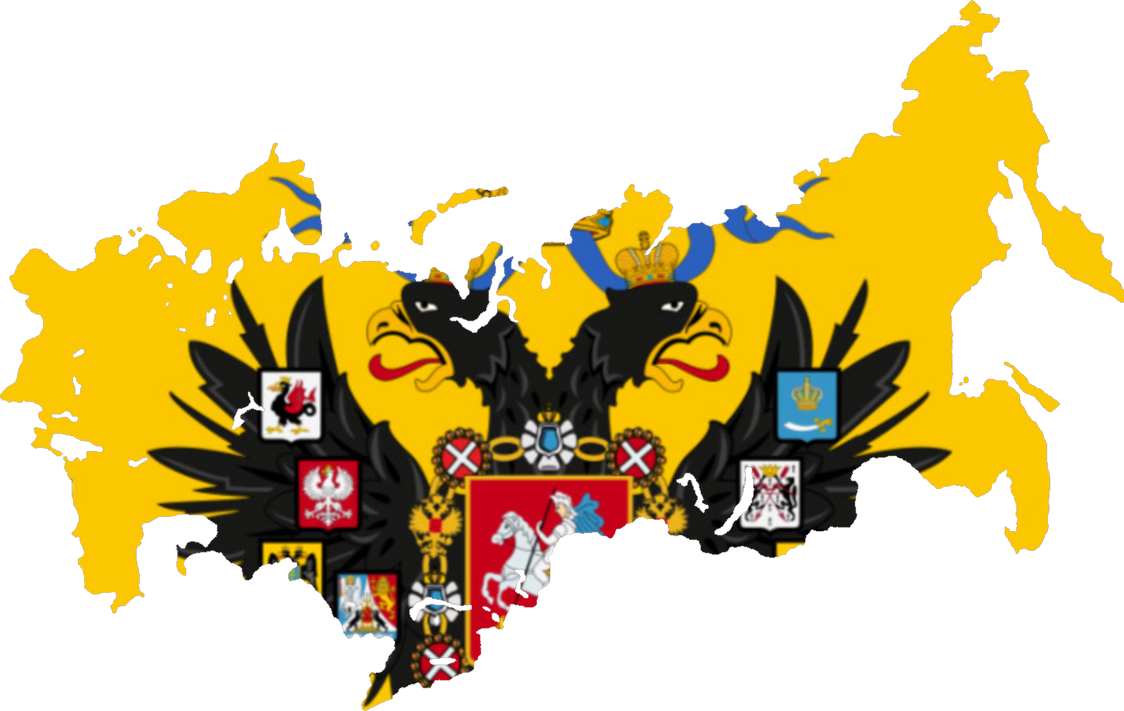
The extreme geopolitical importance of Russia in global politics and international relations is seen as the best from the very basic facts about Russian geography.
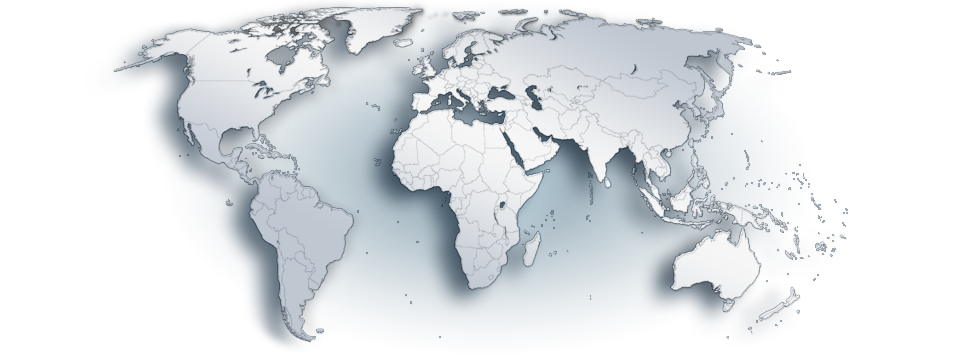
Russian Federation is a state in North East Asia and East Europe which is bordering Norway and Finland in the north, Poland in the north-west, Estonia, Latvia, and Lithuania in the Baltics, Belarus, and Ukraine in the west, Georgia and Azerbaijan in the Caucasus, and Kazakhstan, Mongolia, China, and North Korea in the south. Russia’s maritime borders meet the Baltic Sea, the Black Sea, the Caspian Sea, the Arctic, and finally the Pacific Ocean. The Bering Strait is separating Russia from Alaska in the north-east. Physically, Russia is the largest country in the world as extends from the Gulf of Finland in the west to Kamchatka in the east, and from the islands of Novaya Zemlya in the north to the Black Sea in the south. Mt. Ural is dividing the European from the Asian part of Russia.[i]
Immediately after the time of the end of the USSR, the Russian Federation embarked on a difficult transition from the Communist command to a free-market economy by freeing prices and introducing measures for privatization and land reform. Potentially of enormous wealth, Russia has rich mineral resources, with huge deposits of coal, iron ore, gold, platinum, copper, diamonds, and other metals. Siberia has the largest reserves of petroleum and natural gas in the world.[ii]
When we are talking about Russia, it is necessary to point out the principle of geographical oddity – a large area where there is great natural wealth limitless by natural borders. That is the reason why Russia became the target of aggression beginning with the Mongol raids in the first half of the 13th century[iii] over Napoleon’s fatal Russian campaign in 1812[iv] until Nazi Germany attacked the Soviet Union in 1941.[v]
The first rule of the Russian policy area was to provide security. This thesis went along with a policy of Peter the Great,[vi] during the largest acquisition of new territories from all over the world by the Western imperialists. In this way continued the Soviet Union was the successor of Tsarist Russia,[vii] which became after the military victory over Nazi Germany in WWII global superpower. This victory, which significantly contributed to the preservation of Western civilization as a whole, meant that the Soviet Union expanded its global influence. For a few decades, Russia became the center of the wider empire. It was made up of the Soviet Union, a zone of friendly regimes in East and Southeast Europe, close allies in Asia (Vietnam, North Korea, etc.) and Latin America (Cuba). In the more liberty relation to the center of the empire were countries of the Socialist orientation in Africa and Asia who sought a more or less depending on the alternative former colonial metropolises and the US’ blatant post-WWII imperialism.
The creation and existence of the empire were possible largely due to the resulting bipolar world order based on the results of WWII, where the main actors were the Soviet Union and the US, which bipolar arrangement was a status quo in power relations both respected, regardless of occasional clashes at the regional level during the Cold War.[viii] Maintaining the position of global superpower, the Soviet Union failed primarily for the reason of not being fully competitive side from the technological-military viewpoint as it was unable to compete in the long-term political, economic, and military confrontation with the Western gangsters, especially with the US bandits. The Soviet competition projects did not help either attempt to modernize the Soviet system in the form of reconstruction of the economic infrastructure and the industrial-technologic production in the 1980s.[ix] The Soviet Union broke apart rapidly in several months between August and December 1991. It officially stopped existing on December 31, 1991.[x] With the end of the Soviet Union, a post-Soviet Russia returned to the borders which had at the beginning of the 18th century. From 1991 onward, on the territory of Ukraine, Belarus, the Baltics, Caucasus, and Central Asia there have been 14 independent republics with different political systems.[xi]
Russia has legally become a succession state of the Soviet Union, but its parameters are significantly different from its ancestor. It remains the biggest country in the world with 17,075,200 square meters, but with a population of 146,001,176 million (in 2004)[xii] is classified in eighth place in the world. Russia’s border length compared to the USSR decreased, but remains with 14,000 kilometers of land border longest in the world. The fact is that 60% of this falls on the borders of the previous Soviet republics but these borders were mostly determined by the administrative-political methods without respecting the historical and ethnic aspects which already became a geopolitical global issue. All these facts have left some trace in the minds of the Russian political elite as evidenced by the words of President Vladimir Putin, who called the disintegration of the USSR a global geopolitical catastrophe as it was indeed. This historical breakthrough many political scientists and experts in international relations refer to as the greatest geopolitical catastrophe of the 20th century. However, on the other hand, the political elite of Russia realized that although the collapse of the Soviet Union was a historic landmark, it opened up new opportunities that may benefit Russia in both the short and long-term perspective. This so-called “window of opportunity” became a reality because the disintegration of the USSR proceeded without major political and military problems except in the Caucasus.[xiii]
New political forces
Views on newly formed political forces in Russia after the collapse of the Soviet Union are different. In the West, there is the view that post-Soviet Russia has formed three main groups of political thought: liberal, moderately conservative, and nationalist. Sometimes the separation is reduced to only two groups the neo-patriots and the internationalists who were mainly representatives of the Ministry of Foreign Affairs. The internationalists, whose main representative was Andrei Kozyrev, acted in a sense as insulation in the “near abroad” and also for the support of the United States on the international scene. The neo-patriots were active in supporting the promotion of Russian interests “near abroad” and insisted on the recognition factor as the main instrument of force in international relations. In their view, the automatic support of the United States, which according to them practiced internationalists, is not decent to powers such as Russia. The reality was of course a bit more complicated. After the collapse of the USSR, many political schools were formed. Some of them were governed primarily by ideological notions and some represented pragmatists.
The first idealistic school represented a group called. “Radical democrats” who appeared with Yeltsin in the revolutionary period of the 1990s. The foreign policy line of the group was guided by the logic of totally rejecting the Soviet past and the interests of a small group around the President. Among its best-known representatives hunting were Igor Gaidar, Andrei Kozyrev, Anatoly Chubais, Chernomyrdin Vladimir, and other pro-Western politicians. Rejection of the socialist past for them meant establishing privileged relations with the West, especially the U.S. The main idea of this school was to as quickly as possible integrate the Russian Federation into the economic, political, and even military structures of the West – the European Union, NATO, the International Monetary Fund, The International Bank Organization of Economic Cooperation and Development, G7, and others. The representatives of this school insisted that Russia must reduce activity global nature, which was a self-Soviet period, due to a lack of necessary resources at the same time to make radical changes in foreign policy doctrine of law. This group believed that the refusal of the global imperialist policy former Soviet Union would help the country acquire new potential for internal reforms and help the restoration of Russia.
Idealism of this school lies not only in the interest of Russia’s inadequate assessment of the world, and its potential gravity of the problems that Russia inherited from the USSR but also in the importance of a distortion of the West’s policy in and post-Soviet Russia. Especially did not understand that Russia’s relations with the former Soviet republics – and especially Ukraine – played a major role in Moscow’s relations with the Western world. At the same time, they also failed to reasonably perceive that Central and Eastern Europe would be in these relationships a major factor.
Located in a state of euphoria after the Cold War, the Russian leadership has not been able to adequately formulate priorities on security and foreign policy. The utopian idea of rapid integration into Western structures confusing well-considered foreign-policy strategy. The given strategy should be exempt from any neo-imperialist ideal.
The second group of idealistic internationalists consisted primarily of activists of the Communist Party of the Russian Federation and neoimperialists aimed at restoring the Soviet Union in any form. Among their most famous representatives were Gennady Zyuganov, Alexei Podberezkin, Viktor Alksnin, Constantine Zatulin, and Sergei Baburin. Many adherents of this school argue that Russia has a choice only between two alternatives:
- The dominance of national and state interests over cosmopolitan interests and the independent position of Russia in the international system of states.
- Orientation towards pro-Western values.
This school adds great importance to the autonomous nature of national interests, which are considered independent of the political regime, or from the dominant ideology. In foreign policy, this group relied primarily on the isolation of anti-Western characters. Sergei Baburin, a known politician-intellectual and one of the ideologists of the Communist Party of RF, took the view that the idea of the development of the Russian land, as a territory, as the state was established as the internal as well as a foreign policy of Russia for centuries. The idea underlying the doctrine “Moscow – Third Rome” was and still is embedded in the consciousness of the Russians. Considering the territory of one of the main characteristics of each state must be said that the 1991 tragedy lies not only in the fact that some internal administrative borders became state borders, but mainly in the fact that Russia, wearers of the 20th century the name of the Soviet Union, as a single organism, a single culture, a single civilization, was torn into several parts.
 Dr. Vladislav B. Sotirovic
Ex-University Professor
Research Fellow at Centre for Geostrategic Studies
Belgrade, Serbia
www.geostrategy.rs
sotirovic1967@gmail.com
© Vladislav B. Sotirovic 2023
Personal disclaimer: The author writes for this publication in a private capacity which is unrepresentative of anyone or any organization except for his own personal views. Nothing written by the author should ever be conflated with the editorial views or official positions of any other media outlet or institution.
References:
[i] Maria Shahgedanova (ed.), The Physical Geography of Northern Eurasia, Oxford−New York: Oxford University Press, 2008; Mikhail S. Blinnikov, A Geography of Russia and Its Neighbors, New York−London: The Guilford Press, 2011.
[ii] А. С. Астахов, Энергетическая политика: Природные ресурсы и национальое богатство, Москва, 2010.
[iii] Alan Isaacs et al (eds.), A Dictionary of World History, Oxford−New York, Oxford University Press, 2000, 544.
[iv] On this topic, see more in [Adam Zamoyski, 1812: Napoleon’s Fatal March on Moscow, UK: Harper Press, 2012].
[v] On this topic, see more in [David M. Glantz, Operation Barbarossa: Hitler’s Invasion of Russia 1941, The History Press, 2011].
[vi] About the life and deeds of Peter the Great of Russia, see in [Robert K. Massie, Peter the Great: His Life and World, Knopf, 2009].
[vii] About the history of the Tsarist Russia, see in [Jevgenij Anisimov, Imperatorių Rusija, Vilnius: Mokslo ir enciklopedijų leidybos centras, 2017].
[viii] Mike Sewell, The Cold War, Cambridge: Cambridge University Press, 2014.
[ix] Chris Miller, The Struggle to Save the Soviet Economy: Mikhail Gorbachev and the Collapse of the USSR, Chapel Hill: The University of North Carolina Press, 2016.
[x] Ian Bache, Stephen George, Politics in the European Union, Oxford‒New York, Oxford University Press, 2006, 551.
[xi] About the end of the USSR, see in [David R. Marples, The Collapse of the Soviet Union 1985−1991, New York−Routledge, 2004; А. Ц. Черняев et al, Союз можно было сохранитъ, Москва: АСТ, 2007; Stephen Kotkin, Armageddon Averted: The Soviet Collapse 1970−2000, Oxford−New York: Oxford University Press, 2008].
[xii] Gillian Doherty et all, Usborne pasaulio geografijos enciklopedija ir viso pasaulio atlasas, Kaunas: Šviesa, 2004, 363.
[xiii] On this issue, see in [Heiko Krüger, The Nagorno-Karabakh Conflict: A Legal Analysis, Springer, 2010; Ohannes Geukjian, Ethnicity, Nationalism and Conflict in the South Caucasus, Burlington, VT: Ashgate, 2012; Thomas de Waal, Black Garden: Armenia and Azerbaijan Through Peace and War, New York−London: New York University Press, 2013].
Originally published on 2023-10-12
Origins of images: Facebook, Twitter (X), Wikimedia, Wikipedia, Flickr, Google, Imageinjection, Public Domain & Pinterest.
Read our Disclaimer/Legal Statement!
Donate to Support Us
We would like to ask you to consider a small donation to help our team keep working. We accept no advertising and rely only on you, our readers, to keep us digging the truth on history, global politics, and international relations.