
Ukraine: Zbig’s Grand Chessboard – How the West was Checkmated
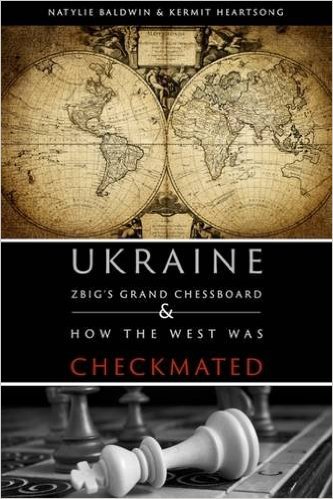
To understand this more comprehensively, Ukraine, Zbig’s Grand Chessboard – How the West Was Checkmated is an excellent source. The arguments presented are well supported, concisely described, and through the lense of the Ukraine debacle, effectively demonstrate the intransigence of U.S. geopolitical efforts around the world [...]
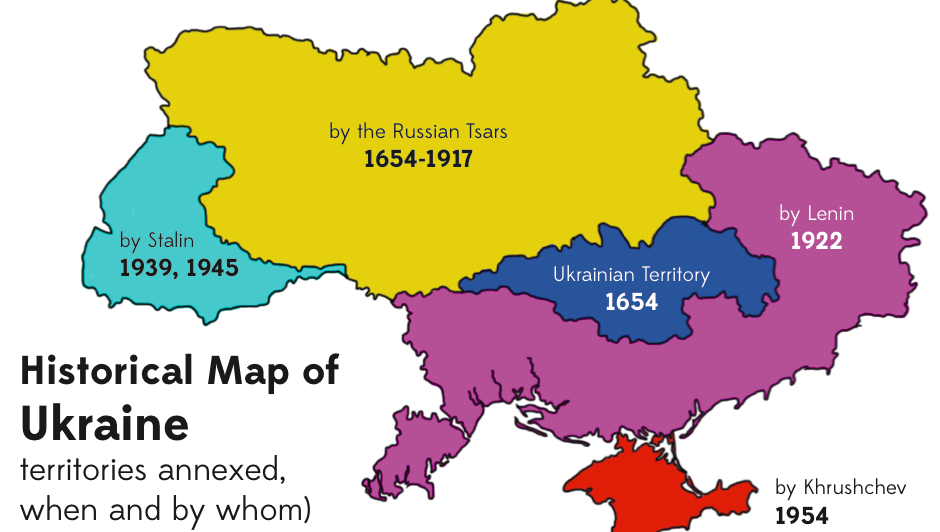
A quick review of Ukraine, Zbig’s Grand Chessboard – How the West Was Checkmated is simple – this amazing work should be in everyone’s reading library. Anyone who cares to understand the situation of what has happened, and is happening in Ukraine needs to read this book. It covers the history of the dissolution of the USSR, the resulting creation of Ukraine, and the history of the U.S.’ attempts through various government and non-government organizations (e.g. Soros) towards the first failed colour revolution (Orange, 2004), then on towards the second attempt resulting in the successful installation of the noenazi puppet regime of Poroshenko/Yatsenuk.
Beyond that, it has deeper implications for all global U.S. imperial adventures and the manner in which they are arranged and delivered. The chaos that ensues serves the purpose of stabilizing the US$ hegemony of the petrodollar as the global reserve currency. This latter point is presented at the end of this work, and is notable as it is the first time I have read of that connection so clearly presented within a book oriented towards what is normally considered an historical and/or current events perspective of U.S. imperial affairs.
As indicated above, Ukraine, Zbig’s Grand Chessboard begins with conditions in the USSR, the efforts of Gorbachev vis a vis Reagan’s politics. The rise of the neoconservatives, the Wolfowitz doctrine, the collapse of the USSR, the years of dictatorial autocratic/oligarchic rule under the drunkard Yeltsin, NATO’s moves eastward, the “shock doctrine” of IMF/World Bank austerity accompanied by U.S. corporate alliances with Russian criminal oligarchs (e.g. Khodorkovsky) lays the groundwork for the efforts to turn Ukraine into a U.S./NATO/EU puppet state. The ultimate goal as per Brzezinski’s Grand Chessboard was the subjugation and disruption of Russia and the allocation of its resources to friendly corporate/political cronies.
After the more historical items are described and placed into context (context is lacking in many current attempts to validate the depredations of the U.S. empire) the current events surrounding Ukraine and the manipulations which led to the Maidan and the success of the neonazi coup are described within the full context of U.S. interests and activities.
What becomes obvious from the author’s research is that the U.S. finally met up with a government, and a personality, Vladimir Putin, that had strengthened Russia. Another strengthening factor, ironically, have been the U.S.’ attempts to isolate Russia, one of the most unsuccessful foreign policies attempted by the U.S. Certainly the puppets of the EU/NATO have fallen into line, sort of, and U.S. anglo-allies Canada and Australia, but the majority of the world has been able to see the U.S. for what it is – a narcissistic, power hungry, and violent country.
As noted by the authors, the media plays a significant role in the domestic ignorance and demonization of Vladimir Putin – creating the requisite ‘evil other’ for the controlling powers to distract the masses from the reality of U.S. intentions for global hegemony manner of overt and covert military power combined with economic manipulations through the institutions of the Washington consensus (IMF, World Bank, WTO, BIS, et al).
The book went to press in 2015, as the second attack by Ukraine against the breakaway regions of Donetsk and Luhansk commenced. The results of the second round proved even more disastrous for Poroshenko/Yatsenyuk as they suffered a strong military defeat within the Debaltsevo cauldron, leading the U.S.’ European puppet leaders, Hollande and Merkel, to cry ‘uncle’ and create the Minsk II agreements.
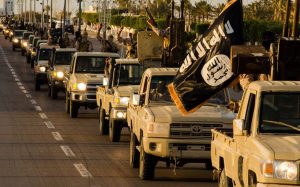
What I find even more significant is the generalizations that can be made from this narrower historical story to the many violent actions created by the U.S. since the end of WW II. Ukraine is not an isolated event, but is one in a long succession of attacks, overthrows, coups, and jihads created, made, and managed by the U.S’ political-military establishment. The parallel war in Syria is part and parcel of the overall chessboard – it is fortunate that Putin and his advisors have successfully stopped the incursions of ISIS, al-Qaeda, al-Nusra and the many disparate bands of jihadis supported by the U.S. directly, covertly, and through their Saudi/Qatari allies.
The best ending for all this is for the U.S. to accept the multipolar world, perhaps not within its domestic hubris and arrogance as the ‘indispensable’ nation, but through a less militaristic approach to world affairs, and perhaps, not be left behind while the rest of the world overcomes the chaos – military and financial – created by the empire.
The worst ending would be that the empire recognize that it is checkmated, and simply knock the chessboard over – the nuclear option. No one anywhere wins with that option, but the megalomania and ignorance of the neoconservative/Wall street alliance might simply be unaware of the consequences of initiating a third world war.
To understand this more comprehensively, Ukraine, Zbig’s Grand Chessboard – How the West Was Checkmated is an excellent source. The arguments presented are well supported, concisely described, and through the lense of the Ukraine debacle, effectively demonstrate the intransigence of U.S. geopolitical efforts around the world. This book should and must be added to all contemporary reading lists for global current affairs.
Originally published on 2016-10-03
Author: Jim Miles
Source: Global Research
Origins of images: Facebook, Twitter, Wikimedia, Wikipedia, Flickr, Google, Imageinjection, Public Domain & Pinterest.
Read our Disclaimer/Legal Statement!
Donate to Support Us
We would like to ask you to consider a small donation to help our team keep working. We accept no advertising and rely only on you, our readers, to keep us digging the truth on history, global politics and international relations.
Top personalities of the Croatian Revival MovementPreface This text investigates the question of relations between the Croatian national revival movement and the Serbs from 1830 to 1847. Special investigation attention is put on the problem of how the language influenced ethnonational group identity among the Croats and Serbs in Dalmatia, Croatia and Slavonia (the so-called Triune Kingdom) during the period of the Croatian national revival movement that was officially and not only formally named as the Illyrian Movement. This investigation is an attempt to reconstruct the mainstream of the politics by the leaders of the movement and their outlines on how ...
Geopolitics is an approach to politics that stresses the features imposed on foreign policy by geographical location, environment, and natural resources. Geopolitics as a discipline contributes to the emphasis on continuity in contemporary political realism. The focal idea of geopolitics is that those who control the Eurasian landmass (Heartland) dominate global politics. Regarding this idea, Ukraine has always been a significant part of Heartland. Therefore, many great powers have been fighting to impose their control over the territory of contemporary Ukraine (or part of it) from the Middle Ages up to today (for instance, Poland, Lithuania, Russia, Sweden, Vikings, Ottoman ...
Human Rights Day, December 10, 2016, we bring to the attention of our readers an important article published in 2002 on the record of US war crimes.The issue of War Crimes emerged after World War I at the Versailles Conference, but it was not until the end of World War II that a more comprehensive definition of what constitutes war crimes was developed. First among new international conventions addressing war crimes was the 1950 Charter of the Nuremberg Tribunal. Its fundamental premise was that the conduct of war in violation of international treaties was a crime against peace. Ill treatment ...
Imagine – the European Union were to collapse tomorrow – or any day soon for that matter. Europeans would dance in the streets. The EU has become a sheer pothole of fear and terror: Economic sanctions – punishment, mounting militarization, the abolition of civil rights for most Europeans. A group of unelected technocrats, representing 28 countries, many of them unfit to serve in their own countries’ political system, but connected well enough to get a plum job in Brussels – are deciding the future of Europe. In small groups and often in secret chambers they decide the future of Europe.Take ...
IntroductionThe article deals with the Great Economic Depression of 1929-1933 and its negative consequences on the economy of the German Weimar Republic. The aim of the article is to present the main causes and consequences of the global economic and financial crises known as the Great Economic Depression and to investigate how this depression influences the economy and finance of the newly democratic post-war German state called the Weimar Republic. The particular importance of this research subject is the fact that among all European states at the time it was exactly the Weimar Republic to be mostly affected by the ...
As 2016 closes, we find ourselves a deeply unsettled nation. We’re unable to draw the lines of our national interest. Is it jobs and economy, is it national security, or is it now in our interest to ensure global security — in other words, act as the world’s policemen?As the “failing” (to quote Trump) New York Times degenerates into a Washington Post organization with its stagnant Cold War vision of a 1950s world where the Russians are to blame for most everything — Hillary’s loss, most of the aggression and disorder in the world, the desire to destabilize Europe, etc. — the Times has added the ...
IntroductionMacedonia is a small republic,a country in Southeast Europe. It gained independence in 1991, after the fall of the former republic of Yugoslavia. Its capital is a unique city, where East meets West. Skopje has a population of around 595.000 people. Its borders are: Kosovo to the northwest, Serbia to the north, Bulgaria to the east, Greece to the south and Albania to the west. The population is estimated around 2.6 million. The majority of the population consists of ethnic Macedonians, who are a Slavic people, related to Bulgarians. The minority are Albanians, Turks, Serbs and Roma people. Albanians make ...
The reports that black Africans are being sold at slave markets in "liberated" Libya for as little as $400 is a terrible indictment of the so-called "humanitarian intervention" carried out by NATO to topple the government of Muammar Gaddafi in 2011.In March 2011 virtue-signaling Western "liberal" hipsters teamed up with hardcore neocon warmongers to demand action to "save" the Libyan people from the "despotic" leader who had ruled the country since the late 1960s. “Something has to be done!” they cried in unison.Something was done. Libya was transformed by NATO from the country with the highest Human Development Index in ...
For all the attention paid to the emergence of homegrown Islamist terrorists in Belgium, France and other European countries, one of the continent’s biggest radicalization problems is taking place on its fringes.Kosovo, the tiny Muslim-majority Balkan nation of just 1.8 million, has produced more foreign fighters per capita than any other Western nation since ISIS declared its now-defunct caliphate in 2014. Some 413 Kosovo citizens, including women and children, have joined that group and other Islamist extremist factions since the war in Syria began in 2012.As it attempts to join the European Union, Kosovo has been under pressure to stamp ...
Once again, U.S. air and naval forces are preparing strikes on Serbia’s army and police for refusing to stand down in Kosovo. And, once again, Americans are deeply ambivalent about intervention.“Either we get in there with a NATO force, or we get the hell out,” said an exasperated Sen. John Warner after Yugoslav strong man Slobodan Milosevic showed two NATO generals the door.Warner advocates intervention. But Americans sense that, despite our disgust at the latest massacre and Milosevic’s thuggery, no vital U.S. interest exists there. The Serbs do not threaten NATO; they have not attacked Americans; they are fighting to ...
“Who rules East Europe commands the Heartland;Who rules the Heartland commands the World Island;Who controls the World Island commands the World”(Sir Halford John Mackinder, 1919) The term geopolitics was first used by the Swedish political scientist Rudolf Kjellén (1864−1922) in 1899, but the term did not become popular in academic circles until it became used in the early 20th century by British geographer and strategist Halford Mackinder.Nevertheless, the concept of geopolitics as a theoretical approach to global politics and international relations (IR) was soon used firstly in Germany and later in the USA. The concept itself was stressing a set of ...
After the division of Macedonia in 1913 (according to the Bucharest Peace Treaty) neither Serbia, Bulgaria nor Greece recognized the existence of a Macedonian ethnolinguistic nation and, therefore, an assimilation policy of Macedonia’s Slavs was carried out by the state’s authorities of all those three countries. Greece referred to Aegean Slavo-Macedonians as Slavophone Greeks or Macedoslavs (the region was and is today officially called as “North Greece”), Serbia referred to Vardar Slavo-Macedonians as Serbs from “South Serbia” while for Bulgaria Pirin Slavo-Macedonians were Bulgarians.When the WWI started in 1914, Bulgaria sided with Central Powers and in the fall of 1915 ...
In June and July 1941, detachments of German Einsatzgruppen, together with Lithuanian auxiliaries, began murdering the Jews of Lithuania. Groups of partisans, civil units of nationalist-rightist anti-Soviet affiliation, initiated contact with the Germans as soon as they entered the Lithuanian territories. A rogue unit of insurgents headed by Algirdas Klimaitis and encouraged by Germans from the Sicherheitspolizei and Sicherheitsdienst, started anti-Jewish pogroms in Kaunas (Polish: Kovno) on the night of 25–27 June 1941. Over a thousand Jews perished over the next few days in what was the first pogrom in Nazi-occupied Lithuania. The most infamous incident occurred in what was ...
The truth is that no government will allow a protest to go on endlessly to the extent that it begins to destabilise the country and economy.— Wei Ling Chua, Tiananmen Square “Massacre”?: The Power of Words vs. Silent Evidence, 100.Last Sunday, I was with an American gentleman in downtown Chengdu, Sichuan, and during our conversation he mentioned that his Chinese wife had never heard of the Tiananmen Square massacre. I proposed that it is because it never happened, that it is a western media campaign of disinformation, and why should the Chinese media permit the dissemination of lies. In fact, ...
On 23 April 1999, a NATO missile attack on Radio Television of Serbia (RTS) headquarters killed 16 employees of the state broadcaster. The forgotten war crime occurred during the Kosovo War (March 1998-June 1999), and was part of NATO’s aerial campaign alongside the US-backed Kosovo Liberation army, in opposition to the Federal Republic of Yugoslavia.In the aftermath of the attack there were no great public campaigns launched for the 16 murdered journalists and employees, no outpouring of emotion for those killed, no calls for solidarity and togetherness in the face of aggression. On the contrary the West justified this grievous ...
The Kingdom of Belgium as a multilingual and multicultural society is today a federal type of experimental laboratory of European integration within the framework of the European Union (the EU). This is also a country in which the capital of the European Union is located and a country as one of the original six establishing countries of the present day the EU. The question of the destiny of the Belgian multicultural federalism is of crucial importance for the future process of European integration or disintegration.The Belgian multicultural society: Long united and long dividedThe population of the Kingdom of Belgium is ...
The concept of a “Greater Israel” according to the founding father of Zionism Theodore Herzl, is a Jewish State stretching “’From the Brook of Egypt to the Euphrates.’Rabbi Fischmann, of the Jewish Agency for Palestine, stated to the UN Special Committee on 9th July 1947 that:The Promised Land extends from the River of Egypt up to the Euphrates, it includes parts of Syria and Lebanon’”, wrote Michel Chossudovsky. (1)Thus “from the Nile to the Euphrates.” Herzl’s detailed thesis was written in 1904.Quoted in the same article is Mahdi Darius Nazemroaya on The Yinon Plan (1982) “ … a continuation of ...
A danger in both journalism and intelligence is to allow an unproven or seriously disputed fact to become part of the accepted narrative where it gets widely repeated and thus misleads policymakers and citizens alike, such as happened during the run-up to war with Iraq and is now recurring amid the frenzy over Russia-gate.For instance, in a Russia-gate story on Saturday, The New York Times reported as flat fact that a Kremlin intermediary “told a Trump campaign aide, George Papadopoulos, that the Russians had ‘dirt’ on Mr. Trump’s rival, Hillary Clinton, in the form of ‘thousands of emails.’” The Times ...
For a total of sixteen years the US has been occupying Afghanistan after invading immediately after the 9/11 attacks. This act of aggression has already become the longest war in American history, overtaking the “record” that was held by the Vietnam War that lasted from 1964 to 1975. During this period, Washington would spend over 800 billion dollars on the so-called reconstruction of the Afghan nation. As a result of this “reconstruction”, the Taliban has been regaining control over the country, which has resulted in this group controlling over 40% of Afghan territory. Additionally, opium production rates have overtaken the ...
There has been a lot of worry about the Constitution and basic democratic rights since Trump’s election. And worry we should. But, Trump did not fall from the sky, he is a product of our history.Over the long course of human history, there has been nothing more hostile to democracies and constitutional republics than empire. Empires destroys republics from the inside out.[1]And, empires demand and create enemies. In the opening act of our empire we fought our race enemy: the natives we tried to assimilate or eliminate. In the climactic scene of empire building after WWII we fought another “red ...