
Views: 2129

There have been at least two countries in Europe in recent history that undertook ‘anti-terrorist’ military operations against ‘separatists’, but got two very different reactions from the Western elite.
The government of European country A launches what it calls an‘anti-terrorist’ military operation against ‘separatists’ in one part of the country. We see pictures on Western television of people’s homes being shelled and lots of people fleeing. The US and UK and other NATO powers fiercely condemn the actions of the government of country A and accuse it of carrying out ‘genocide’ and ’ethnic cleansing’ and say that there is an urgent ‘humanitarian crisis.’Western politicians and establishment journalists tell us that ‘something must be done.’ And something is done: NATO launches a ‘humanitarian’ military intervention to stop the government of country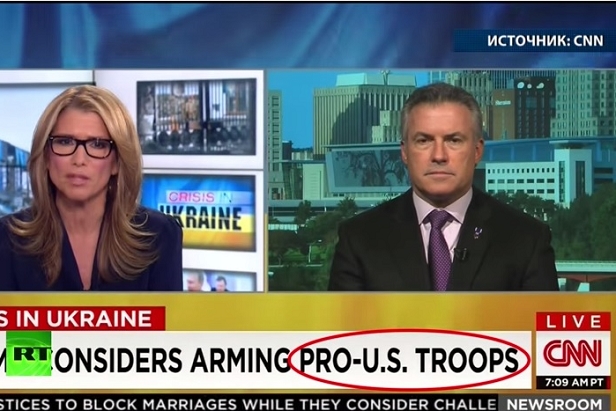 A. Country A is bombed for 78 days and nights. The country’s leader (who is labeled ‘The New Hitler’) is indicted for war crimes – and is later arrested and sent in an RAF plane to stand trial for war crimes at The Hague, where he dies, unconvicted, in his prison cell.
The government of European country B launches what it calls an ‘anti-terrorist’ military operation against ‘separatists’ in one part of the country. Western television doesn’t show pictures or at least not many) of people’s homes being shelled and people fleeing, although other television stations do. But here the US, UK and other NATO powers do not condemn the government, or accuse it of committing‘genocide’ or ‘ethnic cleansing.’ Western politicians and establishment journalists do not tell us that‘something must be done’ to stop the government of country B killing people. On the contrary, the same powers who supported action against country A, support the military offensive of the government in country B. The leader of country B is not indicted for war crimes, nor is he labeled ‘The New Hitler” despite the support the government has got from far-right, extreme nationalist groups, but in fact, receives generous amounts of aid.
Anyone defending the policies of the government in country A, or in any way challenging the dominant narrative in the West is labeled a “genocide denier” or an “apologist for mass murder.” But no such opprobrium awaits those defending the military offensive of the government in country B. It’s those who oppose its policies who are smeared.
What makes the double standards even worse, is that by any objective assessment, the behavior of the government in country B, has been far worse than that of country A and that more human suffering has been caused by their aggressive actions.
In case you haven’t guessed it yet – country A is Yugoslavia, country B is Ukraine.
Yugoslavia, a different case
In 1998/9 Yugoslavian authorities were faced with a campaign of violence against Yugoslav state officials by the pro-separatist and Western-backed Kosovan Liberation Army (KLA). The Yugoslav government responded by trying to defeat the KLA militarily, but their claims to be fighting against ’terrorism’ were haughtily dismissed by Western leaders. As the British Defence Secretary George Robertson and Foreign Secretary Robin Cook acknowledged in the period from 1998 to January 1999, the KLA had been responsible for more deaths in Kosovo than the Yugoslav authorities had been.
In the lead-up to the NATO action and during it, lurid claims were made about the numbers of people who had been killed or ‘disappeared’ by the Yugoslav forces. “Hysterical NATO and KLA estimates of the missing and presumably slaughtered Kosovar Albanians at times ran upwards of one hundred thousand, reaching 500, 000 in one State Department release. German officials leaked ‘intelligence’ about an alleged Serb plan called Operation Horseshoe to depopulate the province of its ethnic Albanians, and to resettle it with Serbs, which turned out to be an intelligence fabrication,” Edward Herman and David Peterson noted in their book The Politics of Genocide.
“We must act to save thousands of innocent men, women and children from humanitarian catastrophe – from death, barbarism and ethnic cleansing from a brutal dictatorship,” a solemn-faced Prime Minister Tony Blair told the British Parliament – just four years before an equally sombre Tony Blair told the British Parliament that we must act over the ‘threat’ posed by Saddam Hussein’s WMDs.
Taking their cue from Tony Blair and Co., the media played their part in hyping up what was going on in Kosovo. Herman and Peterson found that newspapers used the word ‘genocide’ to describe Yugoslav actions in Kosovo 323 times compared to just 13 times for the invasion/occupation of Iraq despite the death toll in the latter surpassing that of Kosovo by 250 times.
In the same way we were expected to forget about the claims from Western politicians and their media marionettes about Iraq possessing WMDs in the lead-up to the 2003 invasion, we are now expected to forget about the outlandish claims made about Kosovo in 1999.
But as the award winning investigative journalist and broadcaster John Pilger wrote in his article Reminders of Kosovo in 2004, “Lies as great as those told by Bush and Blair were deployed by Clinton and Blair in grooming of public opinion for an illegal, unprovoked attack on a European country.”

The overall death toll of the Kosovo conflict is thought to be between 3,000 and 4,000, but that figure includes Yugoslav army casualties, and Serbs and Roma and Kosovar Albanians killed by the KLA. In 2013, the International Committee of the Red Cross listed the names of 1,754 people from all communities in Kosovo who were reported missing by their families.
The number of people killed by Yugoslav military at the time NATO launched its ‘humanitarian’ bombing campaign, which itself killed between 400-600 people, is thought to be around 500, a tragic death toll but hardly “genocide.”
“Like Iraq’s fabled weapons of mass destruction, the figures used by the US and British governments and echoed by journalists were inventions- along with Serbian ‘rape camps’ and Clinton and Blair’s claims that NATO never deliberately bombed civilians,” says Pilger.
No matter what happens in Ukraine…
In Ukraine by contrast, the number of people killed by government forces and those supporting them has been deliberately played down, despite UN figures highlighting the terrible human cost of the Ukrainian government’s ‘anti-terrorist’ operation.
Last week, the UN’s Human Rights Office said that the death toll in the conflict in eastern Ukraine had doubled in the previous fortnight. Saying that they were “very conservative estimates,” the UN stated that 2,086 people (from all sides) had been killed and 5,000 injured. Regarding refugees, the UN says that around 1,000 people have been leaving the combat zone every day and that over 100,000 people have fled the region. Yet despite these very high figures, there have been no calls from leading Western politicians for ‘urgent action’ to stop the Ukrainian government’s military offensive. Articles from faux-left ‘humanitarian interventionists’ saying that ‘something must be done’ to end what is a clearly a genuine humanitarian crisis, have been noticeable by their absence.
There is, it seems, no “responsibility to protect” civilians being killed by government forces in the east of Ukraine, as there was in Kosovo, even though the situation in Ukraine, from a humanitarian angle, is worse than that in Kosovo in March 1999.
To add insult to injury, efforts have been made to prevent a Russian humanitarian aid convoy from entering Ukraine.
The convoy we are told is ‘controversial’ and could be part of a sinister plot by Russia to invade. This from the same people who supported a NATO bombing campaign on a sovereign state for“humanitarian” reasons fifteen years ago!
For these Western ‘humanitarians’ who cheer on the actions of the Ukrainian government, the citizens of eastern Ukraine are “non-people”: not only are they unworthy of our support or compassion, or indeed aid convoys, they are also blamed for their own predicament.
There are, of course, other conflicts which also highlight Western double standards towards‘humanitarian intervention’. Israeli forces have killed over 2,000 Palestinians in their latest ruthless ‘anti-terrorist’ operation in Gaza, which is far more people than Yugoslav forces had killed in Kosovo by the time of the 1999 NATO ‘intervention’. But there are no calls at this time for a NATO bombing campaign against Israel.
In fact, neocons and faux-left Zionists who have defended and supported Israel’s “anti-terrorist”Operation Protective Edge, and Operation Cast Lead before it, were among the most enthusiastic supporters of the NATO bombing of Yugoslavia. Israel it seems is allowed to kill large numbers of people, including women and children, in its “anti-terrorist” campaigns, but Yugoslavia had no such“right” to fight an “anti-terrorist” campaign on its own soil.
In 2011, NATO went to war against Libya to prevent a “hypothetical” massacre in Benghazi, and to stop Gaddafi ‘killing his own people’; in 2014 Ukrainian government forces are killing their own people in large numbers, and there have been actual massacres like the appalling Odessa arson attack carried out by pro-government ‘radicals’, but the West hasn’t launched bombing raids on Kiev in response.
The very different approaches from the Western elite to ‘anti-terrorist’ operations in Kosovo and Ukraine (and indeed elsewhere) shows us that what matters most is not the numbers killed, or the amount of human suffering involved, but whether or not the government in question helps or hinders Western economic and military hegemonic aspirations.
In the eyes of the rapacious Western elites, the great ‘crime’ of the Yugoslav government in 1999 was that it was still operating, ten years after the fall of the Berlin Wall, an unreconstructed socialist economy, with very high levels of social ownership – as I highlighted here.
Yugoslavia under Milosevic was a country which maintained its financial and military independence. It had no wishes to join the EU or NATO, or surrender its sovereignty to anyone. For that refusal to play by the rules of the globalists and to show deference to the powerful Western financial elites, the country (and its leader) had to be destroyed. In the words of George Kenney, former Yugoslavia desk officer at the US State Department:
“In post-cold war Europe no place remained for a large, independent-minded socialist state that resisted globalization.”
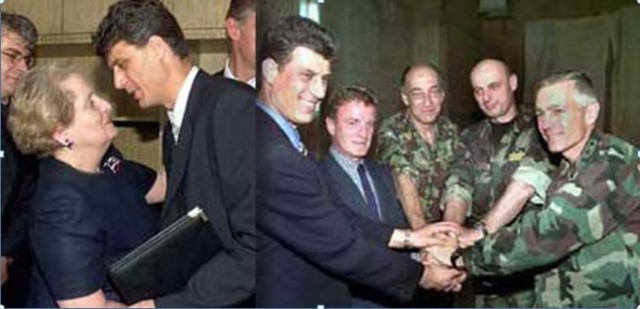 By contrast, the government of Ukraine, has been put in power by the West precisely in order to further its economic and military hegemonic aspirations. Poroshenko, unlike the much- demonized Milosevic, is an oligarch acting in the interests of Wall Street, the big banks and the Western military-industrial complex. He’s there to tie up Ukraine to IMF austerity programs, to hand over his country to Western capital and to lock Ukraine into ‘Euro-Atlantic’ structures- in other words to transform it into an EU/IMF/NATO colony- right on Russia’s doorstep.
This explains why an ‘anti-terrorist’ campaign waged by the Yugoslav government against ‘separatists’ in 1999 is ‘rewarded’ with fierce condemnation, a 78-day bombing campaign, and the indictment of its leader for war crimes, while a government waging an ‘anti-terrorist’ campaign against ‘separatists’ in Ukraine in 2014, is given carte blanche to carry on killing. In the end, it’s not about how many innocent people you kill, or how reprehensible your actions are, but about whose interests you serve.
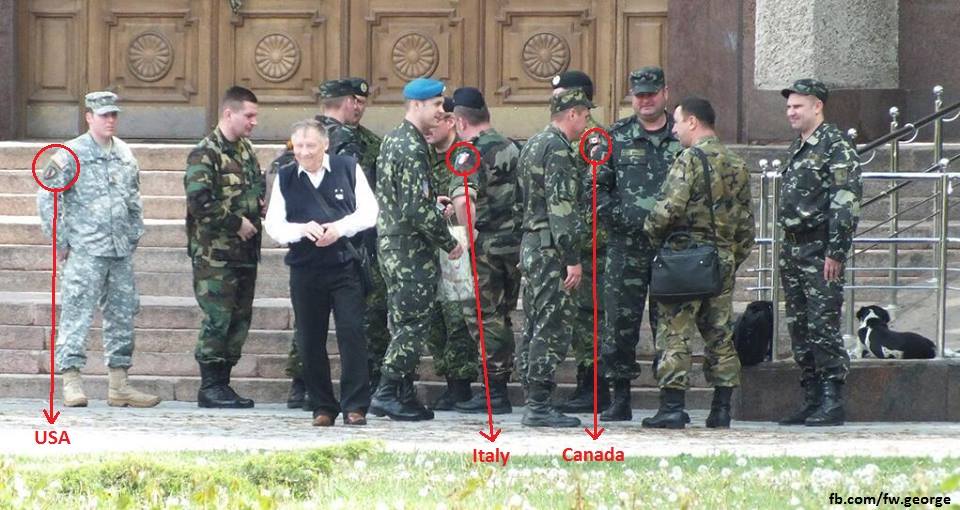 Kiev/Kyiv, Ukraine 2014
Originally published on 2014-08-21
About the author: Neil Clark is a journalist, writer, and broadcaster.
Source: Global Research
Origins of images: Facebook, Twitter, Wikimedia, Wikipedia, Flickr, Google, Imageinjection, Public Domain & Pinterest.
Read our Disclaimer/Legal Statement!
Donate to Support Us
We would like to ask you to consider a small donation to help our team keep working. We accept no advertising and rely only on you, our readers, to keep us digging the truth on history, global politics, and international relations.