
As the Kosovo Liberation Army has been accused of terrorism and seeks independence from Belgrade, which the United States opposes, why make our Air Force the air arm of the KLA? […]
Once again, U.S. air and naval forces are preparing strikes on Serbia’s army and police for refusing to stand down in Kosovo. And, once again, Americans are deeply ambivalent about intervention.
“Either we get in there with a NATO force, or we get the hell out,” said an exasperated Sen. John Warner after Yugoslav strong man Slobodan Milosevic showed two NATO generals the door.
Warner advocates intervention. But Americans sense that, despite our disgust at the latest massacre and Milosevic’s thuggery, no vital U.S. interest exists there. The Serbs do not threaten NATO; they have not attacked Americans; they are fighting to hold onto a province that is the birthplace of Serbian nationhood. Whose flag flies over Kosovo’s capital has never been critical to us.
Defense Secretary Bill Cohen asserts that NATO’s “credibility remains on the line.” But who put it there? Before the 1990s, most Americans had never heard of Kosovo. And where does President Clinton get the authority to launch air strikes — acts of war — against a sovereign nation whose troops are putting down a rebellion on their own soil?
If we attack Serbs inside their own country, do Serbs have a right to attack us in ours? Why has Congress not demanded to know where we are going here, before we are ensnared in a war?
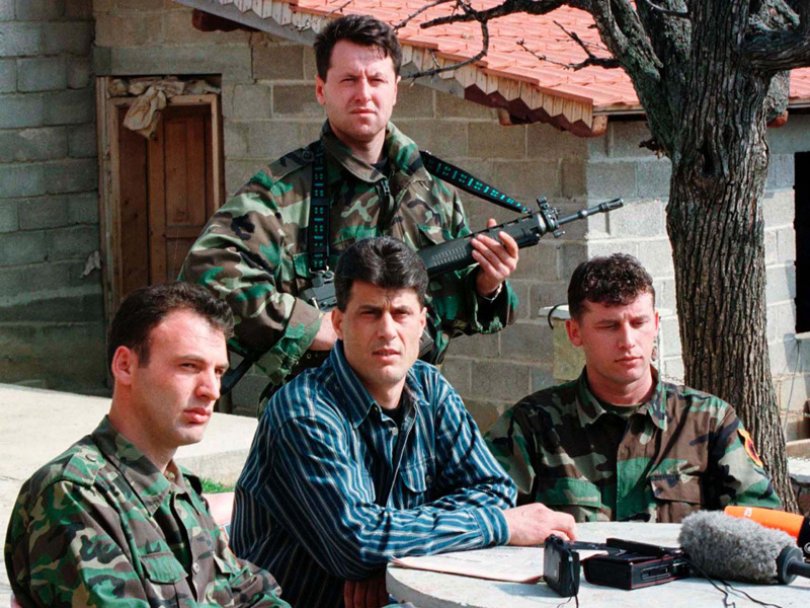
As the Kosovo Liberation Army has been accused of terrorism and seeks independence from Belgrade, which the United States opposes, why make our Air Force the air arm of the KLA? The KLA clearly wishes to drag NATO in as its shield against the Serbian army. But why should we accommodate the KLA? What is in it for us?
America’s fear is of a Balkan war, and one scenario runs thus: Kosovo, 90 percent Albanian, breaks free of Serbia to unite with Albania. The Albanians in Macedonia then attempt to break free to join them. Macedonia disintegrates; Greece, Serbia and Bulgaria all tear off a chunk. Having lost Kosovo, Serbia seeks to reunite with its kinsmen in Bosnia, smashing the Dayton accords. With Muslims in Bosnia under siege and Greece grabbing territory, Turkey enters the war.
Such a Balkan conflict would be horrific, but Balkan wars broke out in 1912, and again in 1913, without any great power intervening. Only in 1914, when Russia and Austria each saw its “credibility on the line” and clashed over Serbia, did World War I erupt, one of the worst disasters of Western civilization. History’s lesson: If you wish peace, stay out of the Balkans.
Before we use air power, that night stick of the New World Order, we should ask: What is it we hope to accomplish? To punish Milosevic? To convince him to send his army back to the barracks?
But if he complies and U.S. intervention brings independence to Kosovo, which then attempts to unite all the Albanians in the Balkans, leading to Macedonia’s collapse, do we intervene with U.S. troops to guarantee everyone’s territorial integrity?
Air strikes in Kosovo might be like those air strikes in Vietnam in 1965, the first bold step into the Big Muddy.
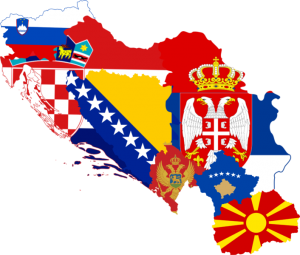
What is happening in the Balkans today is the continuation of the deconstruction of the Ottoman Empire, the “Sick Man of Europe” of the 19th century, and of the Hapsburg Empire, which collapsed in 1918. The centrifugal force in this struggle is virulent nationalism.
Slovenes wish to be ruled by Slovenes, Croats by Croats, Serbs by Serbs, Muslims by Muslims, Albanians by Albanians. All have shown a willingness to fight, to die and to see their own suffer and die in considerable numbers rather than submit to what they hold to be alien rule, either religious or ethnic. The past decade of atrocities and reprisals has hardened hatreds all around.
But why is this America’s conflict? If, as Bismarck observed, the entire Balkans were not worth the bones of a single Pomeranian grenadier, why do they justify an American military intervention?
If NATO will commit 100,000 troops to Bosnia, Kosovo and Macedonia indefinitely, it can probably maintain the status quo. But NATO Europe doesn’t have the troops, and Americans don’t believe the Balkans are worth that heavy a commitment.
So we arrive at Warner’s alternative: Get out, let the Balkan peoples settle their own quarrels, but be there to aid the innocent victims rather than add to their roster with air strikes and murderous sanctions that inflict suffering and death on people who never did us harm.
Of the German squadron pressing him at Manila Bay, Adm. George Dewey said, “They are too pushing and ambitious; they’ll overreach themselves someday.” They did, and so will we, with our constant compulsion to intervene in every foreign quarrel.
We would like to ask you to consider a small donation to help our team keep working. We accept no advertising and rely only on you, our readers, to keep us digging the truth on history, global politics and international relations.
By all accounts from Greece and Macedonia, a majority in both countries will be happy that a new name for Macedonia has been agreed upon by the governments in Athens and Skopje. After years of facing Greek vetoes to join the European Union and NATO under the name “Republic of Macedonia,” the Greek government agreed to drop its opposition, so long as Macedonia change its name to “Northern Macedonia.” Northern Greeks always objected to Macedonia’s use of that name because they believed it represented a goal of Slavic and Albanian Macedonians to lay claim to the northern Greek region that ...
From the onset of NATO’s aggression from March 24 to June 11, 1999, the North Atlantic Treaty Alliance (NATO) flew over 35,000 combat missions over the Federal Republic of Yugoslavia. Over 1,000 warplanes (among others F-15, F-16, F-117) and 206 helicopters were used in the air strikes. More than 20,000 laser or satellite-guided weapons were launched and over 79,000 tons of explosives were dropped, including 152 containers with 35,450 cluster bombs, thermo-visual and graphite bombs, which are prohibited under international conventions.1The NATO forces justified the bombing of civilian targets as either “mistakes” or essential to the destruction of Milosevic and ...
I don’t want to discuss the musical merits of who should have won the recent Eurovision amateur song contest in Stockholm. It’s brazenly clear that the Ukrainian ethnic Tatar Jamala won in a rigged contest to make a political intervention. As she subsequently openly admitted, it was between the actions of Stalin in World War II against Crimean Tatars and the actions of Moscow in 2014 in Crimea. The song of Jamala was blatantly political and by Eurovision, rules ought to be grounds to strip her of the title regardless of her singing talent or lack of the same. What ...
Israel’s Maariv newspaper has revealed that the government of the Zionist state is planning to drop a political bombshell in the coming weeks by presenting a bill in the Knesset (parliament) calling for the annexation of land occupied since 1967. It is likely to have the support of the majority of Knesset members. The newspaper added that the right wing has chosen this time for the move ahead of the US presidential election; America, it is believed, will be too preoccupied to care about what is happening in the occupied Palestinian territories.Preliminary talks about a first stage have been held, ...
One of the West’s top points in condemning Vladimir Putin’s “regime” since 2007 has been his alleged suppression of democratic institutions, including an assault on media freedom and imposition of government-directed propaganda. This week, the accusation was repeated in a resolution of the European Parliament calling for stronger counter-measures in defense of European values against “information warfare” from Moscow.The charges — that Russian media are only an instrument of state propaganda directed at the domestic population to keep Russian citizens in line and at foreign audiences to sow dissent among Russia’s neighbors and within the European Union — are taken ...
Kosovo (in fact, Kosovo-Metochia), a disputed territory claimed by Serbia and Kosovo Albanian separatists, which Serbs regard as central to their cultural identity (differently to the Albanians), is going to pose much more unexpected problems for the international community concerning its political status as it became obvious that Belgrade and Prishtina cannot found common language during 22 years of negotiating process. The European Union already in 2007 formally warned the former leader of the Kosovo Liberation Army–Hashim Tachi, a winner of the 2007 November parliamentary and local elections to freeze the proclamation of independence as the final solving solution for ...
There have been at least two countries in Europe in recent history that undertook ‘anti-terrorist’ military operations against ‘separatists’, but got two very different reactions from the Western elite.The government of European country A launches what it calls an ‘anti-terrorist’ military operation against ‘separatists’ in one part of the country. We see pictures on Western television of people’s homes being shelled and lots of people fleeing. The US and UK and other NATO powers fiercely condemn the actions of the government of country A and accuse it of carrying out ‘genocide’ and ’ethnic cleansing’ and say that there is an ...
Edward S. Herman died on November 11, 2017, at the age of 92. Fortunately, it was a peaceful death for a supremely peaceful man. In all he did, Ed Herman was a tireless champion of peace.Ed Herman could be considered the godfather of antiwar media critique, both because of his own contributions and because of the many writers he encouraged to pursue that work. Thanks to his logical mind and sense of justice, he sharply grasped the crucial role and diverse techniques of media propaganda in promoting war. He immediately saw through lies, including those so insidious that few dare ...
Origins of images: Facebook, Twitter, Wikimedia, Wikipedia, Flickr, Google, Imageinjection, Public Domain & Pinterest.Read our Disclaimer/Legal Statement!Donate to Support UsWe would like to ask you to consider a small donation to help our team keep working. We accept no advertising and rely only on you, our readers, to keep us digging the truth on history, global politics, and international relations.[wpedon id="4696" align="left"]
The US Senate Report documenting CIA torture of alleged terrorist suspects raises a number of fundamental questions about the nature and operations of the State, the relationship and the responsibility of the Executive Branch and Congress to the vast secret police networks which span the globe – including the United States.CIA: The Politics of a Global Secret Police ForceThe Senate Report’s revelations of CIA torture of suspects following the 9/11 bombing is only the tip of the iceberg. The Report omits the history and wider scope of violent activity in which the CIA has been and continues to be involved. ...
Since the fall of the Socialist Federal Republic of Yugoslavia, Albanians are among the main actors of instability in the Balkans. At the same time they are the most loyal servants of the US in the Balkans.The Greater Albania project, which dates back to the 19th century is an idea of the unification of all Albanians into one state. Namely, the Prizren League then demanded the recognition of the national identity of Albanians and the autonomy of Albania within the Ottoman Empire.Today, Albanians live in two countries Albania and Kosovo (Serbian breakaway southern province) and in neighboring countries. The scenario ...
During the last decade of 20th century, leading “analysts” of the New World Order were presenting the Kosovo’s issue as a democratic matter rather than a historical and geopolitical dispute. It was perceived as a political case in which one ethnic minority (Albanians) was oppressed by a “non-democratic regime” of Slobodan Milošević.The refusal of the Rambouillet Accords by the Federal Republic of Yugoslavia, served as a justification for the unilateral action against Yugoslavia in March, 1999. The Rambouillet Accords called for:1) NATO administration of Kosovo as an autonomous province within Yugoslavia;2) A force of 28,000 NATO troops to maintain order ...
Origins of images: Facebook, Twitter, Wikimedia, Wikipedia, Flickr, Google, Imageinjection, Public Domain & Pinterest.Read our Disclaimer/Legal Statement!Donate to Support UsWe would like to ask you to consider a small donation to help our team keep working. We accept no advertising and rely only on you, our readers, to keep us digging the truth on history, global politics and international relations.[wpedon id="4696" align="left"]
“Workers of my country, I have faith in Chile and its destiny. Other men will overcome this dark and bitter moment when treason seeks to prevail. Keep in mind that, much sooner than later, the great avenues will again be opened through which will pass free men to construct a better society. Long live Chile! Long live the people! Long live the workers!” President Salvador Allende’s farewell speech, 11 September 1973.“It’s hard to find someone with the fighting spirit, courage and the story of Allende. He was a man who actually had the branded name in history: democratically the left came ...
Hardly any knowledgeable person doubts that Zionist ideology is the purest form of racism. Zionism is Jewish disguised racism as a raison d’etat. Israel comes right after the U. S., as far as racism is concerned. That is why the U. S. donates to this racist regime $ 3.8 bn per year in order to keep this occupation regime going. Should anybody doubt the racism of the Israeli leadership, read the following article.[1]Racism among the Israeli leadership is legendary. It started out with the founder of Zionism, Theodor Herzl, saying: “Spirit the penniless population across the frontier by denying it ...
PrefaceKosovo is today one of the most disputed territories in Europe and a real Balkan powder keg which can explode again at any time. It is a province within the Republic of Serbia, recognized as such by both Serbia’s constitution and the Resolution 1244 by the Security Council of the United Nations (the UNSC Resolution 1244, June 10th, 1999). However, Kosovo parliament with a clear Albanian majority proclaimed the independence of Kosovo (without a referendum) in February 2008 that was recognized by the majority of the Western countries followed by their puppet clients all over the world (in reality, today ...
The armed conflict between the Kosovo Liberation Army (KLA) and Serbian forces started in 1992 with the KLA attacks on Serbian police officers, non-Albanians that lived in Kosovo and Albanians loyal to Serbia (Johnstone, 2002; Kozyris, 1999). This low level conflict escalated in 1996 with the KLA attacking refugee camps as well as other civilians and policemen resulting in dozens of innocent deaths (Johnstone, 2002; Kozyris, 1999). At this point of time and all up to late 1998, the KLA was regarded as a terrorist organisation (Gelbard, cited in Parenti, 2000:99; Jatras, 2002; Johnstone, 2002; Kepruner, 2003; Rubin, cited in ...
Adolf Heusinger was far from being the only Nazi war criminal who would later serve at a top position in NATOOnce again this March, the Belgrade Forum for a World of Equals, the Club of Generals and Admirals of Serbia and other independent non-party associations in Serbia pay tribute to the victims of NATO’s 1999 aggression on Serbia (FRY).This aggression took lives of more than thousand defenders, military and the police and their officers, and also of thousands of civilians, including 87 children.Regrettably, the final list of the civilian casualties has not been determined as yet, although the number is ...
The ethnic demarcation that is promoted by Serbian president Aleksandar Vucic, between Serbs and Albanians is just another name for the creation of Greater Albania. Vucic statements and spinning of the necessity for the "demarcation" between Serbia and Kosovo caused shock among Serbs. Most of his political life, Vucic advocated for a Greater Serbia, but with coming to power, things changed. Against his demarcation is virtually the entire Serbia. From experts to the pillar and base of Serbs throughout history Serbian Orthodox Church. A few years ago, I wrote in my analytical column that Vucic came to power with the ...
In the article “Kurdistan – Turkey’s Kosovo” Prof. Sotirović compared different aspects of Turkish Kurdistan case to the Kosovo one, found some parallels and pointed out Turkey’s hypocrisy.While Prof. Sotirović is right in his assessment that Turkey is hypocritical to say at least, he failed to expose the fundamental differences between Kurdistan and Kosovo. His article contains some inaccuracies, misinterpretations and lacks in detail. Such an imprecise comparison may lead a reader who is not familiar with Balkans to acquire a false impression. A reader might come to conclusion that Kosovo Albanians had experienced the same level of suffering and ...