
Kosovo’s Conflict: A Devastating Precedent in International Relations
The 1999 Rambouillet Accord was a classical ultimatum designed intentionally by the USA in order to force the Yugoslav leadership to refuse the Accords, thus NATO would have a justification to wage a “humanitarian” war on the FR Yugoslavia (Serbia and Montenegro) [...]
During the last decade of 20th century, leading “analysts” of the New World Order were presenting the Kosovo’s issue as a democratic matter rather than a historical and geopolitical dispute. It was perceived as a political case in which one ethnic minority (Albanians) was oppressed by a “non-democratic regime” of Slobodan Milošević.
The refusal of the Rambouillet Accords by the Federal Republic of Yugoslavia, served as a justification for the unilateral action against Yugoslavia in March, 1999. The Rambouillet Accords called for:
1) NATO administration of Kosovo as an autonomous province within Yugoslavia;
2) A force of 28,000 NATO troops to maintain order in Kosovo;
3) Referendum on independence in Kosovo to be held after 3 years;
4) Free and unrestricted passage and unimpeded access for NATO troops throughout Yugoslav territory including associated airspace and territorial waters;
5) Immunity for NATO personnel to Yugoslav law.
In other words this was a classical ultimatum designed intentionally by the USA in order to force the Yugoslav leadership to refuse the Accords, thus NATO would have a justification to wage a “humanitarian” war on the FR Yugoslavia (Serbia and Montenegro). Former US Secretary of State Henry Kissinger declared that:
“The Rambouillet text, which called on Serbia to admit NATO troops throughout Yugoslavia, was a provocation, an excuse to start bombing. Rambouillet is not a document that an angelic Serb could have accepted. It was a terrible diplomatic document that should never have been presented in that form”.
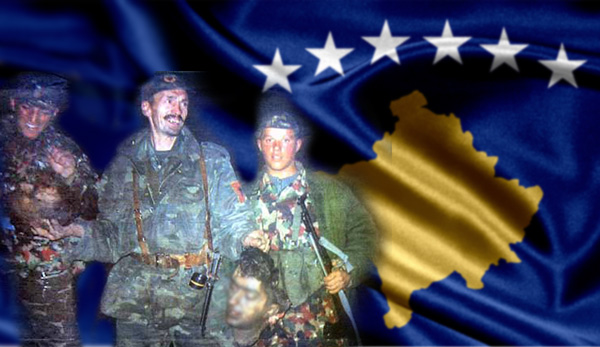
During the negotiation talks in Paris, Americans removed Kosovar Albanian leader Mr. Rugova from the talks (he was supporting the independence of Kosovo but with peaceful non violent means) and imposed a new leader Hashim Thaci-commander of the Kosovo Liberation Army (KLA), an organization officially listed and recognized as a terrorist organization by the US Department of State until 1998, when the USA suddenly declared them as a “freedom fighters” and used them as NATO ground troops against the Yugoslav Army, Police and Serbian civilians. This action conducted by USA was not surprising at all knowing that even today USA and its allies are creating various terrorist movements across the world to start civil wars in order to achieve regime change in certain countries. Just in the last 30 years, USA and its allies followed this pattern in the case of Yugoslavia, Somalia, Russia (Chechnya), Afghanistan, Iraq, Libya, Lebanon, Tunisia, Egypt, Syria, Ukraine, Yemen…
Repeatedly violating jus ad bellum and jus in bello, including UN Chapter, its purposes and principles (e.g. article 2, 3, 4), and avoiding UN Security Council mechanism (articles 52, 53), under the auspices of NATO, the US led an international coalition, made a devastating precedent in international relations, by committing the largest NATO aggression in its history, in violation of NATO’s Charter.
After 78 days of criminal bombing against the FR Yugoslavia, involving 19 NATO member countries aided by at least 7 non-member countries, combined with air attacks and land invasion from Republic of Albania and FYR Macedonia, the Yugoslav leadership was forced to sign Peace Accords (Agreement from Kumanovo, 1999), which resulted in the absolute withdrawal from Kosovo of the Yugoslav administration (civilian and military) and the establishment of the UN international interim administration over the province of Kosovo (civil and military missions are officially led by UN, but in practice both missions are under the patronage of the USA and NATO).
Despite the Yugoslav withdrawal from the province, UN Resolution 1244 (1999) combined with the Rambouillet Accords, established an international protectorate in the southern Serbian province, guaranteeing the territorial integrity and sovereignty of the FR Yugoslavia in Kosovo, but at the same time, directed international presence towards the creation of the independence of Kosovo, which was formally declared in 2008.[1]
Today, the international community remains divided in regards to Kosovo’s status. The US, UK, Germany, France and EU (without Slovakia, Greece, Romania, Cyprus and Spain) are using diplomatic pressure on countries across the globe to recognize the independence of Kosovo. So far, the Republic of Kosovo has been recognized by around 102 countries. The US and EU are putting a tremendous political pressure on Serbia to recognize its own occupied province as an independent state using EU membership accession as a “stick and carrot”, combined with various subversive covert activities.
After 19 years of absence of the Serbian authorities in Kosovo, despite the overwhelming international presence with its ambiguous efforts towards democratization of the society and creation of the independence of Kosovo, it has been proved that Kosovo’s issue was not a democratic matter as it was presented to the public, it is a typical historical and geopolitical dispute.
Let us remind ourselves of the little know secret ultimatum from 1991. made by USA, given to President Milošević and to Minister V. Jovanović (Yugoslav Minister of Foreign Affairs) by former US Ambassador Warren Zimmermann: if there would be a conflict in Kosovo (1991), The US would consider Serbia to be responsible for such a conflict, and we will start bombing Belgrade.
This fact proves that America was determined to bombard Serbia in 1991, well before 1998/1999 when the open armed conflict in Kosovo began. John Norris, chief of staff for the International Crisis Group and the director of communications for U.S. Deputy Secretary of Stateduring the Kosovo’s crisis, wrote in his book why was FR Yugoslavia attacked in 1999:
“it was Yugoslavia’s resistance to the broader trends of the political and economic reform-not the plight of Kosovar Albanians-that best explains NATO’s war. Milosevic had been a bur in a side of transatlantic community for so long that the United States felt that he would only respond to military pressure“.
The Kosovo issue is only one part of the old historical confrontation between Serbs and Albanians, therefore it cannot be understood without tracing a pattern of historical developments and it must be observed through broader regional and global geopolitical perspective.
Both Soviet and American secret plans for the forcible dissolution of SFR Yugoslavia targeted the province of Kosovo as the most vulnerable place to start the breakup of the country due to Albanian numerousness and their historical enmity towards Slavs and particularly towards Serbs.
Although Yugoslavia would be torn apart even without foreign interference, due to its inherited ethnic tensions and separatist aspirations, the separatist republics would have lacked military power to achieve independence forcefully.
Considering that only the Yugoslav Army possessed such a power, it could have guaranteed a peaceful and gradual separation as in the case of Czechoslovakia. Both Czechs and Slovaks had similar historical animosities like South Slavs, but in their case the West did not plan a violent destruction like in Yugoslavia, because both countries are projected to be integrated into NATO and the EU very soon upon the separation and both political leaderships agreed to direct their future towards Euro-Atlantic integration.
In the case of Yugoslavia, from Western perspective, Serbs bear a historical countermark as a disobedient, freedom loving, militant “small Russians” of the Balkans, through which Russia will always project its influence in the South East Europe. This historical stance of the Serbs as a “small Russians” has a permanent character among Western strategic thinkers. Consequently, every great or regional power, even former Soviet Union, tends to suppress Serbian factor in the Balkans.
Taking into account that the Western foreign policy agenda, via American influence, is dominated by paranoid obsession with Russia as a global competitor and opponent to Western interests (mainly American national interests), it was deemed necessary to incapacitate and control all countries which might not serve the interests of the West and which might even be used by Russia to project Russian national interests (e.g. South Stream Project).
During the existence of Yugoslavia, particularly during the Cold War, this country represented an important international actor where both super powers have had limited influence over SFR Yugoslavia. Serbs as creators and defenders of Yugoslavia and defenders of diminishing Old World Order, were targeted as the main regional obstacle in implementation of the New World Order doctrine in Southeast Europe. As American and NATO politicians often repeat: we have an unfinished business in the Balkans, meaning that USA led coalition, hasn’t established a full spectrum control of the Balkans due to incapability to forcefully integrate Serbs into Euro-Atlantic community.
Western strategic thinkers and ideologues of the Euro-Atlantic neo-liberal/neo-colonial doctrines, are still trying to integrate Serbs into their “league of extraordinary gentlemen” by using completely wrong means.
Suppressing and destroying Serbia’s national interest will not result in Serbia surrendering to their so-called Western “partners”. A new approach is needed ?
Let’s start fulfilling, instead of suppressing, legitimate and legal Serbian national interests in accordance with international and domestic law, this might be the key for integrating Serbs into the “league of extraordinary gentlemen”?
Note:
[1] UN resolution 1244 reaffirmed sovereignty and territorial integrity of the FR Yugoslavia, as set out in the Helsinki Final Act, and established substantial autonomy and meaningful self-administration for Kosovo under supervision by international civilian and security presence. All Yugoslav administrative, military and police personnel were withdrawn from the Autonomous Province of Kosovo and Metohija.
We would like to ask you to consider a small donation to help our team keep working. We accept no advertising and rely only on you, our readers, to keep us digging the truth on history, global politics and international relations.
IntroductionAfter the referendum’s results held in the Former Yugoslav Republic of Macedonia on September 30th this year and the Western reactions on it (by the EU & NATO) it is absolutely clear that this small Balkan country is finally proven to be the Western puppet colony without its own real Government and above all the national sovereignty. To remind ourselves, the people of Macedonia were called to express their wish to change or not a state’s name into the Northern Macedonia and, therefore, its national name into the Northern Macedonians, in order to avoid further obstructions by neighboring Greece in ...
The December 17 UN Security Council meeting, on the announced creation of a Kosovo armed forces, featured some noticeable contrasts.In accordance with Kosovo not being a UN member state and the Serb position on UN Security Council Resolution 1244 (recognizing Kosovo as a continued part of Serbia), the disputed former Yugoslav territory wasn't formally represented at the discussion as a nation. Kosovo's leader, Hashim Thaci, sat with a nameplate having his name, as opposed to Kosovo. Countries recognizing Kosovo's independence made it a point to state Thaci as the president of Kosovo and Aleksandar Vučić as president of Serbia. Nations not ...
Bosnia and Kosovo are two of the biggest exporters of jihadists joining the Islamic State (ISIS) and al-Nusra Front (al-Qaeda’s affiliate in Syria) from the Balkans. As The Cipher Brief reported last month, legacies of the Communist era and the wars of the 1990s – presence of foreign fighters, economic and physical destruction, a lack of funding to rebuild, and the near eradication of moderate Islamic institutions – paved the way for Islamic extremist groups to establish a foothold in both countries. Now, ISIS recruiters are targeting Bosnia and Kosovo, and many Bosnians and Kosovars have left to fight in Syria and ...
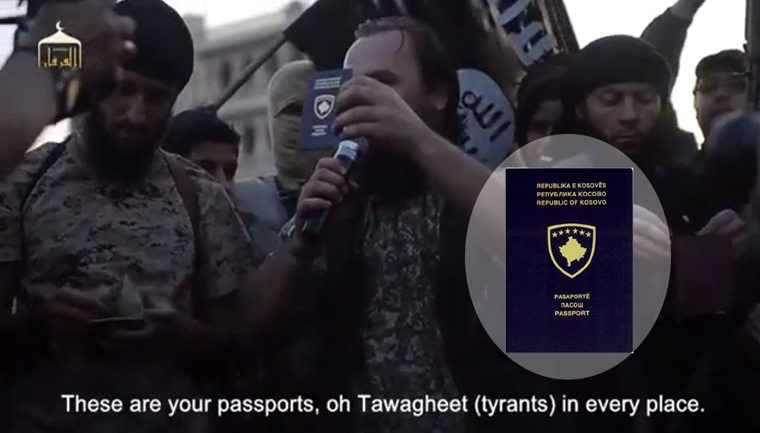
Two Kosovo Albanian Muslim muhajedeens (with the passports of Republic of Kosovo) as members of ISIL in Syria in 2015 (Official ISIL’s video material)After the 9/11, a worldwide “War on terror” begun in order to disband and neutralize Islamic terrorist networks across the globe. The main focus of the largest anti-terrorist campaign in history is focused in the Middle East area, as well as in Afghanistan.The Balkan Peninsula is the European area where this campaign has also taken place, with numerous arrests and a continuous effort into riding the fundamentalist out of the area. The question arising though, is how ...
The first thing you hear is the slow-moving clatter of a wheelchair. Then comes his voice. Fetah Rudi survived an attempted assassination which left him paralysed for life, and has spent more than 17 years suffering the consequences.Kosovo Liberation Army - A Balkan Islamic fundamentalist terrorist organizationIn June 1999, Rudi was one of the Kosovo Albanians who was detained and tortured in a Kosovo Liberation Army, KLA prison.A few months later in December 2000, Rudi - a member of the Democratic League of Kosovo, LDK, which at the time was President Ibrahim Rugova’s party - became a target during the ...
The following research is a review around the theme of Southeastern European organized crime, mainly in the period 1995-2007, highlighting the emergence of powerful regional “Mafias” with an actual global presence. The main focus is the Albanian criminal syndicates centered on Kosovo. The research is composed by previous material of the writer, some of which was presented in international workshops. Moreover the issue of radical Islam is being overviewed in a second part,for the same period, along with information regarding the state of affairs of the Muslim communities in the region.Narcotics and the emergence of crime syndicates in the BalkansThe ...
Republican presidential candidate, Donald Trump, published the list of his foreign policy advisers. One of them, claim the US media, is the worst choice possible.The list of advisers is headed by Senator Jeff Sessions, and includes Keith Kellogg, Carter Page, George Papadopoulos, Walid Phares and Joseph E. Schmitz.Phares is the former adviser to another presidential candidate, Mitt Romney.Phares is described as a neo-conservative and “an academic who is involved in Christian militia wing of the civil war in Lebanon”.US media deemed Phares as an inappropriate analyst of US foreign policy, while one of his statements that is being considered unfitting is regarding NATO’s bombing of Serbia ...
South-East Serbia's province of Kosovo-Metochia (KosMet) is an autochthonous Slavic, in particular Serb, land. Now, the focal question became how this province became “disputed land”, and, in particular, what it has to do with ethnic-Albanians? In the following text, this issue is going to be considered in more details, from the geographical, (pre)historic, anthropologic, religious, and political points of view. We start with the geography, in particular, the physical geography of West Balkans.Kosovo Liberation Army, August 1998, Klechka village, KosMetThe region of Dinaric Alps It is known that physical and mental structures of a particular population are determined by many ...
The conflicts that engulfed the former Yugoslavia still remain unresolved in the political arena and open to Western political shenanigans and covert meddling from Turkey and Saudi Arabia in Bosnia and Kosovo. Orthodox Christianity faces many attacks and only a naïve individual would claim that America and the hands of Turkey and Saudi Arabia are clean.Central Bosnia in 2016: Flags of the ISISAmerica and other Western nations did little to stop Turkey invading Cyprus in 1974 and creating a de-facto nation and altering the demographics of northern Cyprus and using this area for military purposes.Irrespective of the rights and wrongs ...
Interview with Čedomir PrlinčevićFormerly the Chief Archivist of Kosovo and President of the Jewish Community of Priština; driven from Kosovo by KLA terrorists in 1999Interviewer: Jared IsraelTranslator: Petar Makara[Posted 3, December 2000 * New introduction, 4 April 2006]========================================IntroductionThis is the second Emperor’s Clothes interview with Čedomir Prlinčević (pronounced Ched-o-meer Pra-linch-eh-vich).Mr. Prlinčević, an historian, was chief archivist in Priština, capital of Kosovo, and head of the Jewish community there until, as he explained in his first Emperor’s Clothes interview, the terrorist KLA drove him and his family and thousands of others from their homes. Heavily armed British NATO forces stood by, ...
Back in the 1990s something happened in central Bosnia-Herzegovina that inspired people to this day and helps explain why that country now has more men fighting in Syria and Iraq (over 300), as a proportion of its population, than most in Europe.The formation of a "Mujahideen Battalion" in 1992, composed mainly of Arab volunteers in central Bosnia, was a landmark. Today the dynamic of jihad has been reversed and it is Bosnians who are travelling to Arab lands."There is a war between the West and Islam," says Aimen Dean, who, as a young Saudi Arabian volunteer, travelled to fight in ...
Miloš Zeman said in an interview for the Serbian newspaper Večernje novosti, that recognition of Kosovo’s independence has opened a Pandora’s Box and called the Kosovo deputy Prime Minister Hashim Thaçi a war criminal.Zeman, among other things, confirmed that he will travel to Moscow for the celebrations of the end of the Second World War because the Soviet army liberated most of the former Czechoslovakia.The Czech president has openly expressed himself on Kosovo in the past, for example he labeled the country a very strange state with a strong narco-mafia influence.This article originally appeared at Hospodářské Noviny. Translated for RI by Anthony GrulichThe recognition of ...
RT: Kosovo wants to establish an army and has received several Humvee armoured vehicles from the USA. Although there was official NATO restraint, how much is the establishment of a Kosovo Army a fixed development?Marcus Papadopoulos: Kosovo is, effectively, a NATO protectorate today – and has been ever since Belgrade lost control of this Serbian province in 1999. It follows, therefore, that the illegal entity which is the Republic of Kosovo will begin the process of creating its own armed forces so that, in time, Kosovo will gain entry into NATO.RT: The EU has rejected the introduction of Kosovo sanctions ...
The 2004 “March Pogrom” in Kosovo: A book of photo evidence! (Making ISIL of a Greater Muslim Albania). Such books you will not find at any kind of the Western mass-media or university teaching programme's reading list.Origins of images: Facebook, Twitter, Wikimedia, Wikipedia, Flickr, Google, Imageinjection, Public Domain & Pinterest.Read our Disclaimer/Legal Statement!Donate to Support UsWe would like to ask you to consider a small donation to help our team keep working. We accept no advertising and rely only on you, our readers, to keep us digging the truth on history, global politics, and international relations.Save
Kosovo(stan) Parliament announced "independent" state of the "Republic of Kosovo" on February 17th, 2008 as a democratic and multicultural political community.Here we present two photos from November 2015 on which you can see heavily damaged Serbian Orthodox church and totally destroyed Serbian Orthodox tombstones in the southern part of the town of Kosovska Mitrovica inhabited by the Muslim Albanians. Kosovo(stan) ISIS is doing its job profoundly.Enjoy Kosovo(stan) "independence"!P.S. Today (February 17th, 2018) on the 10-years anniversary of Kosovo(stan) "independence", Burundi canceled its previous recognition of it. Just guess why?Read our Disclaimer/Legal Statement!Donate to Support UsWe would like to ask you ...
Adolf Heusinger was far from being the only Nazi war criminal who would later serve at a top position in NATOOnce again this March, the Belgrade Forum for a World of Equals, the Club of Generals and Admirals of Serbia and other independent non-party associations in Serbia pay tribute to the victims of NATO’s 1999 aggression on Serbia (FRY).This aggression took lives of more than thousand defenders, military and the police and their officers, and also of thousands of civilians, including 87 children.Regrettably, the final list of the civilian casualties has not been determined as yet, although the number is ...
Vladislav B. Sotirovic, “Who are the Albanians? The Illyrian Anthroponomy and the Ethnogenesis of the Albanians – A Challenge to Regional Security”, Serbian Studies: Journal of the North American Society for Serbian Studies, Vol. 26, 2012, № 1−2, ISSN 0742-3330, 2015, Slavica Publishers, Indiana University, Bloomington, USA, pp. 45−76Origins of images: Facebook, Twitter, Wikimedia, Wikipedia, Flickr, Google, Imageinjection & Pinterest.Read our Disclaimer/Legal Statement!Donate to Support UsWe would like to ask you to consider a small donation to help our team keep working. We accept no advertising and rely only on you, our readers, to keep us digging the truth on ...
Foreign Minister Sergey Lavrov is calling for an “impartial investigation” into grisly reports by a European investigative commission alleging that Kosovo government officials were involved in the trade of human organs.In an exhaustive report released by the Parliamentary Assembly of the Council of Europe (PACE) in December, it was alleged that Serbian detainees of the Kosovo Liberation Army (KLA) were kidnapped and murdered by Kosovo Albanians so their organs could be sold on the black market.The report says the crimes occurred after the Kosovo War ended in 1999.These shocking allegations came on the heels of a two-year investigation into a ...
Dietmar Hartwig, former head of the EU (EEC) Monitoring Mission in Kosovo and Metohija (ECMM) in his 2007 warning letter:“MERKEL RESPONSIBLE FOR KOSOVO PRECEDENT AND DIVIDING SERBIAN PEOPLE”It seems that the recent developments in Europe, and in particular the push of secessionism (Catalonia), rings a bell, or rather is reminiscent of certain events. The ensuing ones are shedding more light on the roles of the EU (EEC), the USA and Germany. To what extent have they been guided by the principles of the international law and democracy in the Kosovo crisis? How much did they appreciate the reports of their ...
Kosovo is to set up a regular standing army, officially defying everyone, including NATO, although the bloc’s objections are only half-hearted. The alliance would prefer that the illegal entity of Kosovo change its constitution in order to create an army. Just amend it, and then you’re free to have one. This stance looks more like connivance than any real opposition to the move.Washington’s position is more or less the same. It supports "the gradual, transparent transformation of the Kosovo Security Force into a multiethnic force in line with NATO standards" as long as it complies with the provisions of Kosovo’s constitution, reflecting that “entity’s multiethnic ...