
Kosovo is not Serbia’s Kurdistan, but Balkan’s IS/Daesh
While Prof. Sotirović is right in his assessment that Turkey is hypocritical to say at least, he failed to expose the fundamental differences between Kurdistan and Kosovo [...]
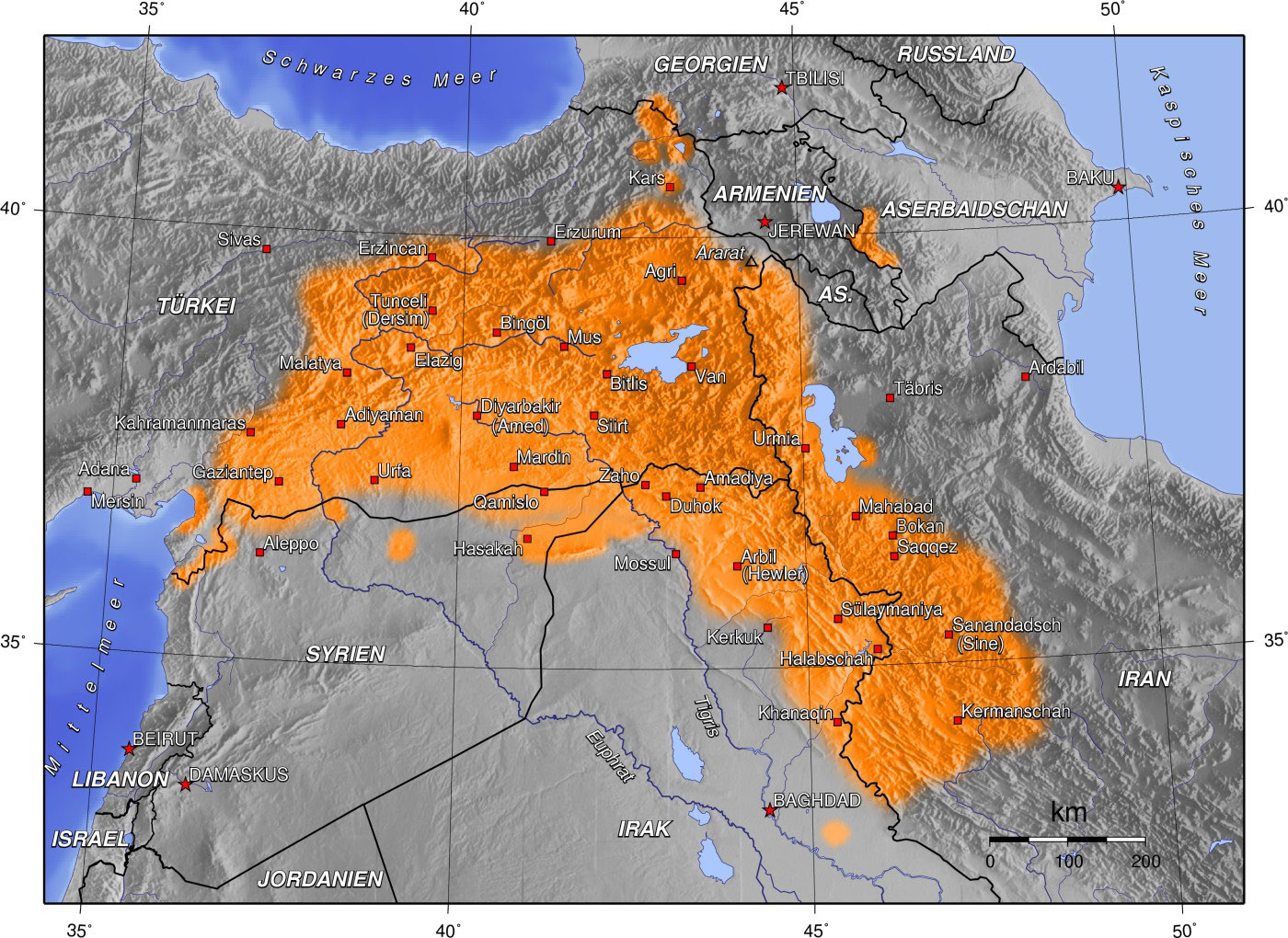
In the article “Kurdistan – Turkey’s Kosovo” Prof. Sotirović compared different aspects of Turkish Kurdistan case to the Kosovo one, found some parallels and pointed out Turkey’s hypocrisy.
While Prof. Sotirović is right in his assessment that Turkey is hypocritical to say at least, he failed to expose the fundamental differences between Kurdistan and Kosovo. His article contains some inaccuracies, misinterpretations and lacks in detail. Such an imprecise comparison may lead a reader who is not familiar with Balkans to acquire a false impression. A reader might come to conclusion that Kosovo Albanians had experienced the same level of suffering and injustice as did the Kurds which later led them to rebellion. That would seriously mislead the readers.
To substantiate this view let’s point out few errors in the article in question.
Status of the minority
Stubborn reluctance of any kind of the Turkish government to recognize the Kurdish separate existence as the ethnic group of its own specific language and culture…
The Turkish rejection to recognize a minority status of the Kurds with granting a national-cultural or political autonomous status for Turkey’s Kurdistan…
Ankara’s discrimination and oppressive anti-Kurdish policy led finally to the establishment of the Kurdistan Workers’ Party (the PKK) in 1978 for the sake to fight for unrecognized the Kurdish minority rights“
Albanians were in a completely opposite situation. Its ethnic minority in Yugoslavia was recognized. Their language was recognized too. Albanians did have their ethnic state, Albania, while Kurds never enjoyed such privilege. Besides, Albanian minority had their own unique ethnic university in Kosovo since 1969 (no Western “democracies” have ever allowed its minorities to establish universities).
Nevertheless, Albanians, inspired by anti-Yugoslav circles in the West, renewed disorders in 1981 demanding federalization. Please take note that 1981 was long before strongman Milosevic appeared. In fact, Milosevic rose to power in 1989 promising people that he would put an end to Albanian violence in Kosovo.
So if we compare humiliated Kurds in Turkey and privileged Albanians prior to their insurgency in 1981, we must say the two cases are fundamentally different.
The bellicose component
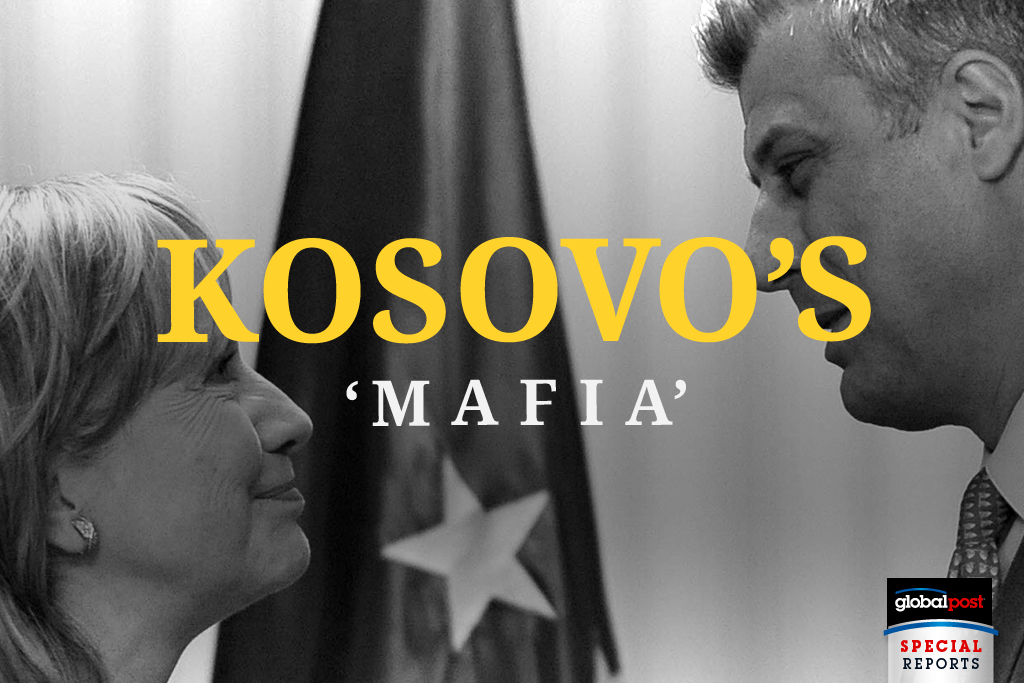
… the KLA [Kosovo Liberation Army] – a typical terrorist organization as a replica of the PKK, the IRA, the ETA or the Hezbollah.
This is implicitly wrong. KLA is a paramilitary wing of deeply-rooted Albanian mafia (for better understanding of the history, nature and cultural background of Albanian mafia please read very insightful Jana Arsovska’s article “Gender-based subordination and trafficking of women in ethnic Albanian context. The upward revaluation of the Kanun morality” [Journal of Moving Communities, vol.6, No.1, May 2006]).
This new brand name, Kosovo Liberation Army, was coined for mere propaganda purposes. The intent was to give a false impression to the western audience that the US-backed project was actually a fight for someone’s freedom, which, if true, would be a legitimate cause. KLA (read Albanian mafia) was armed, trained, and injected into Yugoslavia by CIA. They still keep supporting it up-to-date in its citadel of Kosovo.
By contrast, the name of Kurdish Workers Party reflects the Marxist ideology of their leader. The name does not appear to have been fashioned to appeal to tastes of Western mainstream media propaganda consumers.
Number of victims
For the matter of comparison, during the Kosovo crisis in 1998−1999 both the West and the US saw the terror acts carried out only by Serbia’s government…
If we compare tens of thousands of obliterated and hundreds of thousands expelled Kurdish civilians in Turkey from 1978-present with the “terror acts carried out by Serbia’s government”, the picture will not be that impressive:
“One year later, the International War Crimes Tribunal, a body in effect set up by NATO, announced that the final count of bodies found in Kosovo’s “mass graves” was 2,788. This included combatants on both sides, Serbs and Roma murdered by the Albanian KLA as well…” (John Pilger, Reminders of Kosovo)
In addition, can any of the following terror-related facts justify the struggle for self-determination?
“Indeed, even as Blair the war leader was on a triumphant tour of “liberated” Kosovo, the KLA was ethnically cleansing more than 200,000 Serbs and Roma from the province. Last February the “international community”, led by the US, recognized Kosovo, which has no formal economy and is run, in effect, by criminal gangs that traffic in drugs, contraband and women. But it has one valuable asset: the US military base Camp Bondsteel, described by the Council of Europe’s human rights commissioner as “a smaller version of Guantanamo” (John Pilger, Don’t Forget Yugoslavia)
For the matters of accuracy, we should also remark that the state in 1999 was Yugoslavia, and not Serbia.
Guests on the land
… [Kurds are] the oldest population in Turkey living in Anatolia almost 3.000 years before the first (Seljuk) Turks came there at the end of the 11th century.
Opposite is the case of Kosovo Albanians. According to a Turkish census made in Kosovoin 1455 (!),there were 13,000 Serb households and only 46 Albanian there.
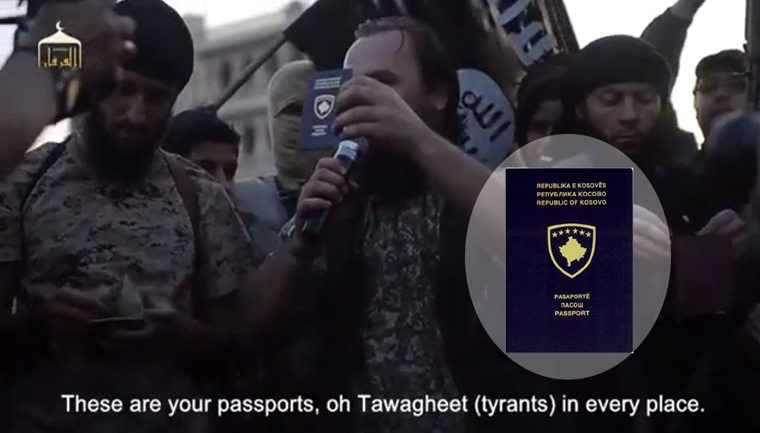
Since Kovoso Albanians obtained factual “independence” in 1999, they are busy desecrating, detonating and turning into rubble the unique medieval Serbian churches and monasteries throughout Kosovo. Only four of many Serbian monasteries in Kosovo are included in the UNESCO World Heritage list, but they are still endangered despite kind of protection from the international peacekeeping forces. Hundreds of other Serbian cultural sites there are subject to total elimination due to barbaric Albanian “self-determination”. In this sense Kosovo should be compared not to Kurdistan, but Daesh/ISIS.
We would like to ask you to consider a small donation to help our team keep working. We accept no advertising and rely only on you, our readers, to keep us digging the truth on history, global politics, and international relations.
There have been at least two countries in Europe in recent history that undertook ‘anti-terrorist’ military operations against ‘separatists’, but got two very different reactions from the Western elite.The government of European country A launches what it calls an ‘anti-terrorist’ military operation against ‘separatists’ in one part of the country. We see pictures on Western television of people’s homes being shelled and lots of people fleeing. The US and UK and other NATO powers fiercely condemn the actions of the government of country A and accuse it of carrying out ‘genocide’ and ’ethnic cleansing’ and say that there is an ...
Kosovo(stan) Parliament announced "independent" state of the "Republic of Kosovo" on February 17th, 2008 as a democratic and multicultural political community.Here we present two photos from November 2015 on which you can see heavily damaged Serbian Orthodox church and totally destroyed Serbian Orthodox tombstones in the southern part of the town of Kosovska Mitrovica inhabited by the Muslim Albanians. Kosovo(stan) ISIS is doing its job profoundly.Enjoy Kosovo(stan) "independence"!P.S. Today (February 17th, 2018) on the 10-years anniversary of Kosovo(stan) "independence", Burundi canceled its previous recognition of it. Just guess why?Read our Disclaimer/Legal Statement!Donate to Support UsWe would like to ask you ...
IntroductionThe article addresses a linguistically based project on Serbian ethnonational identity and a language-based political model for the creation of the Serbian united ethnonational state in the Balkans drafted by the most famous Serbian philologist Vuk Stefanović Karadžić in 1836 and further developed by Serbia’s statesman Ilija Garašanin in 1844. The most significant problem with respect to V. S. Karadžić’s “Срби сви и свуда“ (“Serbs All and Everywhere”) and I. Garašanin’s Начертаније (Outline) – two programmatic works in which the project of resolving the “Serbian Question” was developed in 1836/1844, is their interpretation and understanding of the historiographical traditions of ...
“Ethnic affiliation has never been forgotten in the territories of the former Yugoslavia. It did play a certain role, and it did influence decisions even during the Tito's era of strict ‘Brotherhood and Unity’”[Várady T., “Minorities, Majorities, Law and Ethnicity: Reflections of the Yugoslav Case”, Human Rights Quarterly, Vol. 19, 1997, p. 42]People, nation and stateI agree that “in Yugoslavia, all political problems are intimately linked with the issue of nationalism”.[i] Indeed, the fixing of inner or administrative borders between Yugoslavia’s nations and nationalities became one of the main issues that forged nationalism after the Second World War onward and ...
Over the past several years, analysts and commentators have noticed a rising tide of domestic support for the Croatian homegrown Nazi movement of the Second World War, the Ustashe, which actively exterminated Serbs, Jews, and Roma in the territory it controlled from 1941-45. Far from condemning this alarming development, the Croatian government, the European Union, and non-state actors within it have tacitly and actively supported the rising tide of sympathy towards the Ustashe.This disconnect between the ostensible “European values” of human rights and tolerance that the European Union claims to represent, and its tacit support of trends towards extremist politics ...
In Kill Anything that Moves: The Real American War in Vietnam (Metropolitan Books. New York. 2013), Turse writes that the US military’s official position, and the popular understanding in the US, is that leadership “has never condoned wanton killing or disregard for human life.” (2) On the rare occasions when atrocities are brought to light, they are blamed on low-level individuals and are said to be aberrations having nothing to do with official policy. The My Lai massacre, for example, was blamed on Lieutenant William Calley, who is said to have gone “crazy” (4,5) – although he and his unit ...
Long live the European court, the most humane court in the world! That is why seven times as many Croat and more than ten times as many (Kosovar) Albanian war crimes suspects, in percentage terms relative to Serbs, were acquitted by the Hague Criminal Tribunal for the former Yugoslavia, with Radovan Karadzic being just its latest victim. (Source via this recent infographic from Russian newspaper Komsomolskaya Pravda).No matter that well before Srebrenica you had Sisak, where 595 Serb civilians of which 120 were women were disappeared by Croatian paramilitaries in 1991-1992. Everyone has heard of Srebrenica; almost nobody has heard heard of Sisak. The largest ethnic cleansing ...
The conflict that raged throughout the former Yugoslavia was met by a wall of silence when it came to important issues. These important issues apply to America and the United Kingdom supporting Islamists in a brutal civil war in Bosnia and then installing a new nation by ignoring international law in Kosovo. Also, is it credible to believe that the vast majority of major news agencies and national governments did not know about thousands of Islamists in Europe who were sent to slit the throats and behead Orthodox Christians?After all, if the reality of what really happened in Bosnia and ...
After the Russian military victory over the Ottoman Empire in the 1877−1878 Russo-Ottoman War it was signed the San Stefano Treaty between these two states on March 3rd, 1878. According to the treaty, a Greater “San Stefano” Bulgaria, under the direct protection by Russia, had to be established within the borders of the Ottoman Empire. However, an idea of “San Stefano Bulgaria” directly affected three Balkan nations: the Serbs, Greeks and Albanians as some of their ethnic and historical territories had to become part of a Greater Bulgaria. The “San Stefano Bulgaria” was projected by the Russian authorities to cover ...
Donald Trump, influential billionaire and a candidate for the president of United States, back in the 1999, as a guest of the famous host Larry King on CNN, spoke about that time ongoing topic of the bombing of Serbia.Asked by Larry King, what does he think and what would he do if he was in Clinton’s place, Trump criticized the decision to bomb Serbia.“So, I would do something different and I know it will sound ghastly to everybody. But, look at the chaos which we created in Kosovo. I think, we can say that we lost only few people. Of ...
The December 17 UN Security Council meeting, on the announced creation of a Kosovo armed forces, featured some noticeable contrasts.In accordance with Kosovo not being a UN member state and the Serb position on UN Security Council Resolution 1244 (recognizing Kosovo as a continued part of Serbia), the disputed former Yugoslav territory wasn't formally represented at the discussion as a nation. Kosovo's leader, Hashim Thaci, sat with a nameplate having his name, as opposed to Kosovo. Countries recognizing Kosovo's independence made it a point to state Thaci as the president of Kosovo and Aleksandar Vučić as president of Serbia. Nations not ...
The Western-backed myth of a Greater SerbiaMuch space, time and efforts have been devoted in the recent history of West Balkans, and in particular in the latest political upheavals, about the alleged project of a Greater Serbia especially by the Western authors either academic scholars or journalists.[1] The issue must be, however, considered together with its counterparts from Croatia (a Greater Croatia) and Albania (a Greater Albania). There are two focal questions that arose here:Were all these projects serious and what was the origin of this maximalist concept of forming the national states in the otherwise ethnically mixed area?Whose exact ...
The leak of a secret BND dossier on Hachim Thaci which reports that the newly-elected Kosovan President had links to a contract killer and was involved in the trafficking of people, arms and drugs is more confirmation that Western politicians have chosen to support Thaci in the knowledge of his criminal past.Wikileaks has leaked a secret German Federal Intelligence Service (BND) dossier on Hachim Thaci that dates back to 2005, after the former Kosovo Liberation Army (KLA) leader had served the first of his two terms in office as Kosovan Prime Minister.The dossier reports that Thaci, who has recently been elected president of Kosovo, was one of the leaders of organized ...
Projections and Projective IdentificationsMartti Ahtisaari, the Chairman Emeritus of the International Crisis Group (ICG), a globalist think tank sponsored by the US, asserted that all Serbs were “guilty as a nation” for seeking to prevent the secessionist/separatist Greater Albania movement launched by Albanian ultra-nationalist terrorists in 1998. He told the Serbian Kosovo negotiating team that “you are guilty as a nation.” This is an example of the racist concept of “collective guilt” typically applied to a group of people based on shared characteristics to punish that group. It is one of the most primitive and barbaric human conceptions ever devised. ...
The Balkan political environment is shaped-amongst other- by the existence of two political strains of Islam, the Wahhabis, related to the Saudis & Gulf states and the Muslim Brotherhood ones, related to the Turkish-Qatar axis.In both cases networking developed under a series of upturns since the 1990’s and is inexorably related to wider events of interest such as the ongoing wars in the Middle East and the culminations in countries such as Turkey, Egypt but also EU , Western European ones; including direct security affairs.Nowadays we are witnessing a massive buyout of land and corporations by mostly UAE, Kuwait and ...
One of the biggest and most outlandish US infowar and propaganda whoppers of the 1999 Kosovo conflict was the infamous NPR story of the ethnic Albanian Anne Frank. This seems like a mindless, unethical, immoral, and vicious, racist propaganda hoax today, using propaganda to destroy an entire people, Serbian Orthodox Christians. The Anne Frank infowar campaign was manufactured to support an illegal land grab in Kosovo, in support of a Muslim Albanian separatist and secessionist terrorist war against Serbian Christians. But at the time it was very popular and helped sell the US bombing of Yugoslavia in support of Albanian ...
There is nothing extraordinary in the science in Serbia. It would not deserve particular attention of the European scientific community, if it were not for the fact that the case of Serbia turns out extraordinary, indeed.Let us start with an extraordinary question: would it be possible a state in contemporary Europe to sucumbe to a fashist rule (or communist or any other totalitarian government)? The answer is extraordinary too - yes. The case in point is Serbia.The trick is marked by Kosovo (see, e.g. P. Grujić, Kosovo Knot, 2014). When this southern province of Serbia, Kosovo and Metohia (Kosovo in ...
A lot of dilemmas, lies, and misconceptions are present in Western geopolitical narratives taken without any critical approach by domestic Serbian pro-Western supporters (usually financed by Western agencies and Governments) about the war in NATO/EU-sponsored Ukraine, and Serbian position in newly geopolitical circumstances. This article aims to present the focal Western lie about Serbia trying to give some reasonable arguments regarding some open questions: Serbia must harmonize its foreign policy with the EU and the rest of the West!Serbia, in essence, must not harmonize its foreign policy with the EU for several reasons. First, not all EU Member States harmonized ...
Bosnia and Kosovo are two of the biggest exporters of jihadists joining the Islamic State (ISIS) and al-Nusra Front (al-Qaeda’s affiliate in Syria) from the Balkans. As The Cipher Brief reported last month, legacies of the Communist era and the wars of the 1990s – presence of foreign fighters, economic and physical destruction, a lack of funding to rebuild, and the near eradication of moderate Islamic institutions – paved the way for Islamic extremist groups to establish a foothold in both countries. Now, ISIS recruiters are targeting Bosnia and Kosovo, and many Bosnians and Kosovars have left to fight in Syria and ...
Somewhere in the 20th century — it is difficult to determine precisely when, but many point to the 1990s anti-Serb craze — historical revisionism on WWI that would have been laughed out of the room in the 1920s and 1930s became widespread in the western mainstream media.Nobody should be surprised to learn this is an ailment that therefore also affects RT. The Russian-funded outlet is staffed by westerners and modeled after western news channels – and is as such frequently only marginally less wrong on numerous issues than its western counterparts. (All the more so when it comes to the little-understood Balkans.)Covering ...