
The former editor of the Tribune de Genève, [Guy Mettan-RI] visited Moscow and presented his new book Russia and the West: A Thousand Year War, which reviews the phenomenon of Russophobia: its roots, historical evolution and modern incarnations. Izvestia had a chance to interview him.
What inspired you to write about this?
There are two reasons why I began this work. The first is a personal, family reason. In 1994, my wife and I adopted a Russian girl, who now is now 25. Her name is Oksana, and she is from the Vladimir region. After we adopted her, I became interested in learning as much as possible about Russia and becoming familiar with this large country. In the 1990’s, one could obtain Russian citizenship after adopting a Russian child. So we did that: my wife and I are citizens of Russia and Switzerland, and Russia became part of our family’s life and history. I am a citizen of Russia, but I pay taxes in Switzerland.
The second reason why I started this work is professional. My trips to Russia gave me an opportunity to learn what this country was all about. I understood how big the difference was between the Russia presented in the Western media and the one I saw myself. I just couldn’t bear to watch this situation, and decided to investigate the reasons.
What made me actually start this project was the events in Ukraine in 2014. I saw the Western press systematically supporting one side, expressing only one point of view – that of the government that usurped power in Kiev. And I decided to figure out why this happened.
It’s important to understand that I wasn’t trying to answer the question of who was to blame for the events in Ukraine. I was interested in why the Western media presented this story in their own way. What was at the root of such a heightened negative relation to Russia?
Could you tell us a little about the main thrust of your book?
I looked at history and concluded that all this Russophobia started when Charlemagne created the Western Empire 1,200 years ago, laying the foundation for the Great Religious Split in 1054. Charlemagne created his empire in opposition to the existing situation, when the center of the civilized world was Byzantium.
The most shocking thing I realized was that everything they taught us in school was wrong. They claimed that the dissidents belonged to the Eastern Church, who split from Rome. Now I know that what happened was just the opposite: it was the Western Catholic Church that dissented from the universal church, while the Eastern Church remained and still is Orthodox.
In order to shift the blame from themselves, Western theologians of that time launched a campaign to justify putting the onus on the Eastern Church. They used arguments that returned again and again as part of the confrontation between the West and Russia. Back then, in the Middle Ages, they began referring to the Greek world, i.e. Byzantium, as a “territory of tyranny and barbarism” in order to disavow responsibility for the schism.
After the fall of Constantinople, when Byzantium ended, and Russia took the place of Byzantium as the Third Rome, all those superstitions, all those lies about the desacralization of the Hellenic World, were automatically transferred to Russia.
It’s strange to see the notes of Western travelers through Russia starting in the 15th century: they all describe Russia in the same terms they had used to describe Byzantium. These fabrications, this criticism considerably increased after the reforms of Peter the Great and Catherine the Great, when Russia became powerful on the European political scene. And by the end of the 18th century, it had become Russophobia.
Born in France under Louis XV, it was used for a while by Napoleon to justify animosity toward Russia, which stood in the way of France’s expansionist policy. The “Will of Peter the Great” was used by Napoleon as a justification for his Russian campaign.
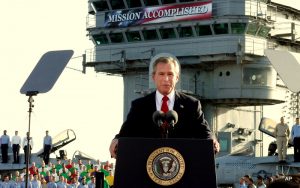
We can compare this with modern times, when in order to achieve their goals, Americans invented the lie that Saddam Hussein had weapons of mass destruction. Russophobia existed in France as a political ideology up until the 19th century, when after losing the Franco-Prussian War, France realized that its main enemy was no longer Russia but Germany, becoming Russia’s ally.
As for England, Russophobia appeared there around 1815, when Great Britain, in alliance with Russia, beat Napoleon. Once the common enemy defeated, England reversed course and made Russia its enemy, feeding Russophobia. Since the 1820’s, London has used an anti-Russian ideology to mask its expansionist policies, both in the Mediterranean and in other regions – Egypt, India and China.
In Germany, the situation didn’t change until the end of the 19th century, when the German Empire was created. It had no colonies, and there was no place to get any from, since England, France, Spain and Portugal had got a head start. All the colonies having been allocated without Russia, a political movement appeared in Germany that sought “‘expansion toward the East”, i.e., modern Ukraine and Russia. This attempt failed during the First World War, and later, Hitler used the same ideology.
It’s no accident that German historians were at the origin of what is known as “revisionism”, the tendency to understate the USSR’s contribution to the victory over the Third Reich, overestimating the contribution of the US and Britain.
The third type of Russophobia is American, and it began in 1945. As soon as they defeated Germany through joint efforts with the USSR, at the cost of millions of Soviet lives, the same story born after the victory over Napoleon in 1815 was disseminated. The US reversed course and yesterday’s ally became its major enemy. This is how the Cold War started.
The Americans used the same arguments as the English in 1815, claiming that they “fought against communism, tyranny, expansionism”, their arguments hardly differing, except for the so-called fight against communism. This turned out to be a gimmick, because when the Soviet Union collapsed, the confrontation between the West and Russia didn’t end.
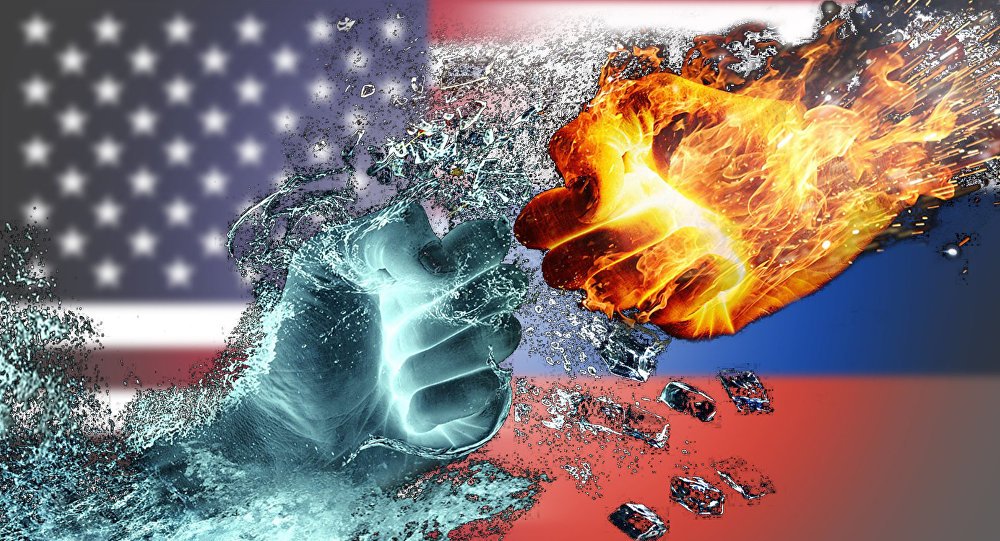
The nineteenth century story is repeating itself: the US keeps talking about a “threat” supposedly emanating from Russia, in order to achieve its own goals, promote its own interests, and pursue its own expansion. Today it demonizes Russia in order to place NATO missiles in Poland, using the same words and arguments that Napoleon used 200 years ago.
Once at an international conference in the mid-1990s, I spoke to a journalist from Denmark. He told me why Europe was so afraid of Russia: “See how big Russia is, and how small Denmark is. We were always afraid of you. We are still afraid of your aggression”
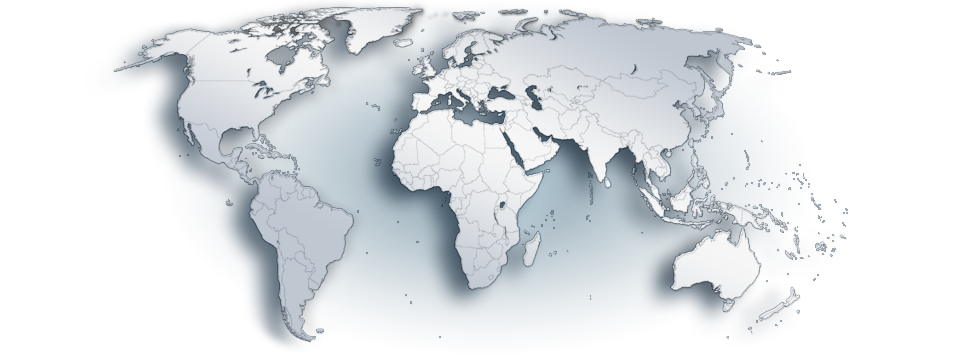
If you look at the map, you will see that the territory of Russia dominates all of Europe. So when Europeans look at the map, they feel anxious and concerned, because “such a huge country cannot be anything other than a threat.” Besides, European maps deliberately depict Russia as even bigger than it really is, increasing Russophobia. Its immense size is great for European cartoonists, who traditionally draw Russia as a huge bear standing over a tiny Europe.
Recently, I read the following statement by a French author: “Europe is a peninsula in Eurasia.” What would you say to that?
Today Europe is frustrated. As a colonial power, it dominated the world for two and a half centuries. Today the situation is totally different, and Europe is uneasy. It’s used to playing a different role. That’s why it’s anxious. On the one hand, the European ego finds itself in this uncomfortable situation; on the other, the European Union has reached the limits of its development and has internal problems. That’s why it’s easy to blame Russia for everything.

Originally appeared at Izvestia – Russian daily news. Translated by Julia Rakhmetova.
Source: Russia Insider
Origins of images: Facebook, Twitter, Wikimedia, Wikipedia, Flickr, Google, Imageinjection, Public Domain & Pinterest.
Read our Disclaimer/Legal Statement!
Donate to Support Us
We would like to ask you to consider a small donation to help our team keep working. We accept no advertising and rely only on you, our readers, to keep us digging the truth on history, global politics, and international relations.
The first aspect to consider, following the US attack on Syria, is what Putin, Xi, and Rohani, leaders of the Russian Federation, the People's Republic of China, and Iran respectively, thought while American Tomahawks were hitting the Syrian air base of Shayrat.The last three years of the Obama presidency highlighted two very different strategies being advanced simultaneously by the US and the nations opposing its imperialistic overreach, principally Russia, China and Iran. The latter have been seeking cooperation, while the US, with its big hammer, has characteristically been on the search for nails to hammer. Yet the management of international ...
The Western-backed myth of a Greater SerbiaMuch space, time and efforts have been devoted in the recent history of West Balkans, and in particular in the latest political upheavals, about the alleged project of a Greater Serbia especially by the Western authors either academic scholars or journalists.[1] The issue must be, however, considered together with its counterparts from Croatia (a Greater Croatia) and Albania (a Greater Albania). There are two focal questions that arose here:Were all these projects serious and what was the origin of this maximalist concept of forming the national states in the otherwise ethnically mixed area?Whose exact ...
Chris Deliso of Balkanalysis points out the latest travesty of the Western media: 59,000 stories on Auschwitz, three on Jasenovac. As if the third-largest death camp in Nazi-occupied Europe simply never existed. Franjo Tudjman certainly thought so, and it appears the current Croatian leadership shares his "historical" perspective.Contemporary German estimates of Serbs murdered by the Ustasha (in Jasenovac and elsewhere) ranged as high as 750,000. Wiesenthal center uses the number of 600,000. Serbian researchers have spoken of up to 700,000 victims. Modern revisionists, Croat and otherwise, talk of 30-100,000, at most. Among them is the U.S. Holocaust Memorial Museum, which ...
Was Serbia attacked in 1999? To answer that question, Milica-Hänsel Radojkovic draws on period documents (including Willy Wimmer’s letter to Chancellor Gerhard Schröder). He highlights the unacceptability of the Rambouillet proposals, designed to justify a war that had already started. Fourteen years ago, after the negotiation conferences in Rambouillet and Paris between 6th and 23rd February 1999, the global media informed the general public that “the Serbian delegation did not accept the offered agreement and rather qualified it as null and void”, while indicating that allegedly the so-called Contact Group for Yugoslavia stood behind the agreement. This body consisted of ...
As Europe’s longest ruler, it is a surprise that Milo Djukanovic is only 58. He has served as prime minister or president of various iterations of Montenegro since 1991 – spanning the collapse of Yugoslavia and across and beyond independence of the nation in 2006.What is the secret to Mr Djukanovic’s success? The answer is depressingly predictable: clientelism and the buying – or, depending on your perspective, stealing – of power.The beauty of Montenegro hides this ugly truth. Most know it as a tourist idyll with pristine beaches, crystal lakes and picturesque mountains. But holidaymakers rarely realize they enter less ...
The North Atlantic Treaty Organization (NATO), established in 1949 on the pretext of “containing Soviet influence”, has almost doubled in size within the past two decades alone. In 1998, NATO comprised 16 member states, but with repeated expansions up to Russia’s very borders, it now contains almost 30 countries.Though seldom mentioned in mainstream discourse, NATO is a US-dominated organization, whose orders are issued from Washington and customarily obeyed. The US is by far the largest contributor to the alliance, spending more than all other member nations put together.One of the critical reasons behind NATO’s formation almost 70 years ago, was ...
“Religion is the sigh of the oppressed creature, the heart of a heartless world, and the soul of soulless conditions. It is the opium of the people.” So Karl Marx wrote in 1843. For three generations over the course of the 20th century his atheist disciples violently sought to break their subjects of this “opium” addiction.They failed. In many though not all parts of the former communist bloc Christianity not only survived but provided the impetus for national and social revival. In some countries, like Poland, Hungary, and Lithuania, this meant Roman Catholicism. In others, like Russia, Ukraine, Serbia, and ...
The world is at a dangerous crossroads. The United States and its allies have launched a military adventure which threatens the future of humanity. Major military and covert intelligence operations are being undertaken simultaneously in the Middle East, Eastern Europe, sub-Saharan Africa, Central Asia and the Far East. The US-NATO military agenda combines both major theater operations as well as covert actions geared towards destabilizing sovereign states.America’s hegemonic project is to destabilize and destroy countries through acts of war, covert operations in support of terrorist organizations, regime change and economic warfare. The latter includes the imposition of deadly macro-economic reforms ...
Origins of images: Facebook, Twitter, Wikimedia, Wikipedia, Flickr, Google, Imageinjection, Public Domain & Pinterest.Read our Disclaimer/Legal Statement!Donate to Support UsWe would like to ask you to consider a small donation to help our team keep working. We accept no advertising and rely only on you, our readers, to keep us digging the truth on history, global politics and international relations.[wpedon id="4696" align="left"]SaveSave
The Six Day War of June 1967, a series of battles fought by the armed forces of the state of Israel against a combination of Arab armies, is one of manifold significance. From a military standpoint, it presented a model strategy of how to prosecute and win a war waged on several fronts.The stunning victory also created a sense of euphoria among communities in the Jewish Diaspora: Among American Jews, a segment of Jewry David Ben Gurion viewed with disdain because of their failure to migrate en masse to Israel, a new sense of commitment in both emotional and financial ...
The massive artillery bombardment of the peoples of the Donbass, that has been raining down shells and fire on them since Christmas, is a war crime of horrific proportions designed to terrorise the people and bring their refusal to be subject to the NATO-installed regime in Kiev to an end. It is also becoming clear that it has a political purpose, which is to increase anti-Russian, pro-NATO propaganda among the Ukrainian people to influence them to vote to join NATO in a referendum, the consequences of which will be dramatic because a vote for NATO will be a vote for ...
On February 24th, Medea Benjamin and Nicolas S.J. Davies headlined "What Planet Is NATO Living On?", and documented that the U.S. Government and NATO are preparing to invade and conquer both Russia and China, and that this goal is opposed by vast majorities of Europeans, which means that this decision by NATO does not reflect democracy in Europe, but instead it reflects Europe's being vassal-nations in the U.S. empire:As Michael Klare explains in a NATO Watch report on NATO 2030, every step the U.S. is taking with NATO is "intended to integrate it into U.S. plans to fight and defeat ...
Once NATO’s 1999 war on Yugoslavia came to an end, units of the Kosovo Liberation Army (KLA) poured across the border. The KLA wasted little time in implementing its dream of an independent Kosovo purged of all other nationalities. Among those bearing the brunt of ethnic hatred were the Roma, commonly known in the West as Gypsies. Under the protective umbrella of NATO’s Kosovo Force (KFOR), the KLA was free to launch a pogrom in which they beat, tortured, murdered and drove out every non-Albanian and every non-secessionist Albanian they could lay their hands on.Not long after the war, I ...
“The main reason for that was not because of warfare or systematic killing, it’s because …diseases, …did not have any immunities, so they perished in large numbers.”The above statement, if said in reference to the slaughter of Jews in concentration camps by Nazis, would be illegal in most European countries. Individuals like David Irving, who have claimed that “disease” not homicidal gas chambers, killed the victims of Auschwitz and other concentration camps, have been fined and imprisoned. Claiming pure intentions on the part of the Nazis, revising the statistics on their atrocities, and purporting that those who say otherwise have ...
Five days before the celebration of the 71th anniversary of Nazi Germany’s capitulation to the Soviet and allied troops in the WWII, the new NATO Supreme Commander in Europe Curtis Scaparrotti announced that he came to beat the drums of war again. Ignoring the historic facts and legitimate Russian interests in its around, in his first speech after assuming office he condemned alleged “Russian aggressive behavior that challenges international norms” and called the bloc members to “fight tonight if deterrence fails.”This commonplace declaration fairly correlates with the military and media strategy the Western ruling class adopted decades ago. Even putting aside the ...
The ongoing de-Christianization of Kosovo continues and unlike the past frenzy of the anti-Serbian mass media in the West, we mainly have a deadly silence about the reality of Kosovo and the continuing Albanianization of this land. However, how is it “just” and “moral” to persecute minorities and to alienate them from mainstream society; and then to illegally recognize this land without the full consensus of the international community?How ironic it is that the same United States of America and the United Kingdom, two nations who were in the forefront of covertly manipulating the mass media; remain mainly silent about ...
Israel has played an increasingly provocative role in the destructive conflict unfolding within and along Syria’s borders since 2011. To many observers, it appears Israeli policy borders between opportunistic and unilateral aggression. In reality, Israel’s role in the Syrian conflict fits a much larger and long-term pattern with Anglo-American plans not only for Syria but for the entire region.A more recent row between Israel and Syria was the reported incursion of Israeli warplanes into Syrian airspace, including attacks near the eastern Syrian city of Palmyra. Palmyra hosts an ongoing battle between Syrian forces and the self-proclaimed “Islamic State” (ISIS) terrorist ...
Germany joined the war against Yugoslavia under the pretense of fabricated facts. Sensational confession of German policeman Henning Hentz who served in the OSCE in Kosovo in the 90s confirmed that.The reason here is that photographs taken by Hentz in late January 1999 were used by then German Defence Minister Rudolf Scharping to justify the immediate interference of NATO in the Kosovo conflict. He presented the photographs of the militants killed in Rugovo as photos of innocent Albanian victims.What did really happen in Kosovo in late January of 1999, several months before NATO launched its operation against Yugoslavia?According to Serbian ...
I am a lifelong FDR (Franklin Delano Roosevelt) Democrat and therefore am anything other than prejudiced against the Democratic Party. But, that Party died when Bill Clinton became President and undid FDR’s regulations on the megabanks and FDR’s AFDC income program for children in poor families, and when Clinton replaced that with restoration of Wall Street’s control over America (like before FDR, only a more convoluted form of it).However, the way in which both Barack Obama and Hillary Clinton endanger all people’s lives and property and health and welfare, has to do with something else, something that’s even more evil ...
The global informative and propaganda forgery of the USA, EU, and NATO’s ruling circles became the focal source of the massive Western informational aggression against Russia during the last decades. The Western diplomatic reaction to the absolutely legal choice of the Crimean residents to rejoin Russia in 2014 followed by the economic war initiated by the West against Russia is absolutely illegal from the point of view of international law. The Western economic and political sanctions against Russia for reincluding Crimea are just another global international crime of the Russophobic US-NATO-EU triangle states.Historically, Western politics in the international arena and ...