
The subsequent talks under the auspices of the UN in which Russia took a somewhat bigger role ended with a predictable failure which made it possible for the Albanian separatists to declare the independence of Kosovo unilaterally in February, 2008. The independence was momentarily recognized by the Albanians’ Western donors and ideological patrons [...]
June 10 is a sad date in the history of the UN, the institution originally meant to play the key role in ensuring peace, security, and the primacy of law in the world. The decade since the passing of the June 10, 1999 UN Security Council Resolution 1244 addressing the Kosovo problem – the document totally ignored throughout the period – has shown that the UN is no longer playing the role prescribed to it by the post-World War II system of the international law. The Resolution the tenth anniversary of which nobody seems willing to celebrate in the UN headquarters, Belgrade, or Pristina is usually attributed to an intricate compromise. Ten years ago the Russian leadership managed to incorporate into it several fundamental principles concerning the Kosovo settlement. Most importantly, it was stressed in the document’s preamble that the Kosovo problem had to be solved on the basis “of the commitment of all Member States to the sovereignty and territorial integrity of the Federal Republic of Yugoslavia and the other States of the region”. Correspondingly, the Resolution called for “substantial autonomy and meaningful self-administration for Kosovo”. Besides, the UN Security Council reached consensus that international discussions of specific parameters of Kosovo’s future status would begin only after the implementation in the province of the democratic standards guaranteeing the political, economic, cultural, and national rights of the province’s non-Albanian population.
Nothing of the above materialized. From the outset, the West pushed for Kosovo independence, and only the requirements of Resolution 1244 which could be interpreted so as to broaden the rights and authority of Albanian separatists were actually met. As for Russia, its only accomplishments throughout the period since the passing of the resolution till the opening of the negotiations between Belgrade and Pristina on the status of Kosovo in February, 2006 were the snap offensive which led to the seizure of the Slatina airport by Russian peacekeepers and their quiet withdrawal in 2003 under the pretext that “it was impossible to change anything”.
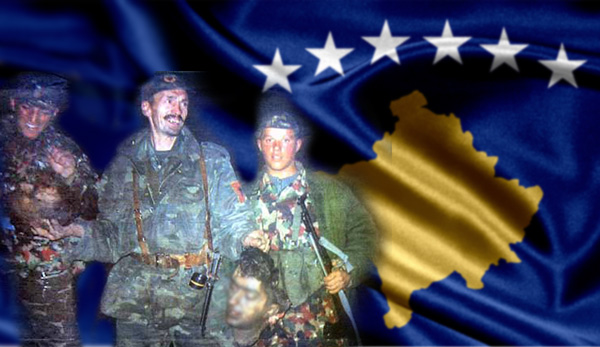
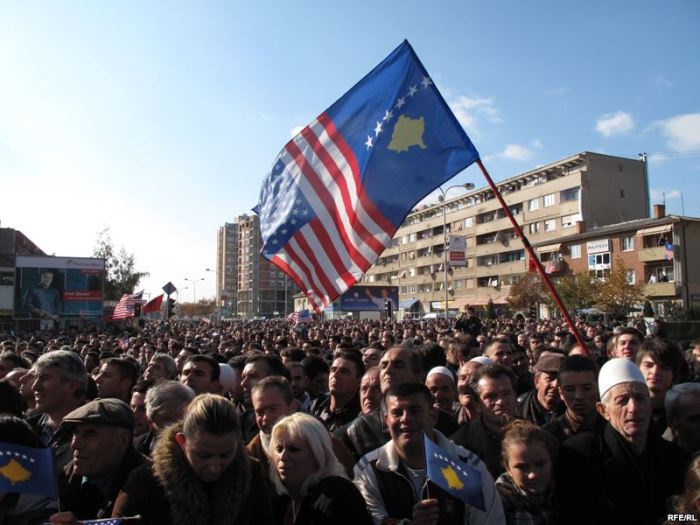
The subsequent talks under the auspices of the UN in which Russia took a somewhat bigger role ended with a predictable failure which made it possible for the Albanian separatists to declare the independence of Kosovo unilaterally in February, 2008. The independence was momentarily recognized by the Albanians’ Western donors and ideological patrons.
The available information makes it possible to claim that both the passing of UN Security Council Resolution 1244 and the diplomatic maneuvers around Kosovo that ensued – those in which the Russian Foreign and Defense Ministries took part in particular – were nothing but a show originally planned by the West. In the process Moscow’s role to which the Russian leadership somehow agreed was that of a “good policeman”.
Obviously, Resolution 1244 was stillborn. The key problems were not the poor compliance with its requirements and Russia’s inability to make its partners view the UN document with proper respect but the fact that the West had made all the decisions on the status of Kosovo already in the late 1998. The subsequent negotiation between Serbs and Albanians in Rambouillet, NATO airstrikes, discussions in the UN Security Council, and the deployment of the UN mission and NATO peacekeepers in the province were just steps in the realization of the already existing plan.
The build-up of the NATO presence in Kosovo also commenced in the late 1998. In the US the point of no return was reached when Michael Polt who coordinated the military policy in the Clinton Administration and later became the US Ambassador to Serbia convinced Secretary of State C. Powell to consent to the intervention in the region. Polt argued that by intervening in Kosovo NATO would send a clear message to all Eurasian countries, of course including Russia.
Yugoslavian Vice President Momir Bulatovic said: “It already became clear in October, 1998 that the decision on our future had been made. They started talking about the “humanitarian disaster” in Kosovo and the so-called NATO credibility. The latter meant that if NATO was unable to put an end to the “humanitarian disaster”, then it simply had no right to exist. To avoid a military strike we were ready to make concessions to the extent of retaining only the minimal amount of state dignity and territorial integrity. They were interested in Kosovo’s natural resources – we offered US and British companies to develop them at the token price of $1. They responded that the offer was attractive but unacceptable. Then NATO wanted a base in Kosovo. We offered them to have it for the same $1 token price. They were surprised but turned down the offer nevertheless. Trying to avoid conflict we eventually suggested that Yugoslavia should join NATO and thus automatically generate a solution to the Kosovo problem. Again the answer was No. Admitting us to NATO could resolve the dispute over Kosovo but could not solve any of the problems due to which NATO decided to attack our small country. NATO decided to move into Kosovo by forceavoiding any cooperation with us. The point is that if NATO does not reckon with us it would also be free of any obligations to other countries. They branded this the New World Order”.
The US still had to secure Europe’s consent to launching the offensive. Washington proposed “to give Serbs another chance” and to hold an international conference on Kosovo in Rambouillet in February, 1999. Belgrade faced totally unprecedented requirements deliberately formulated to make the aggression against Yugoslavia inevitable. Momir Bulatovic recalled: “In Rambouillet we were asked to agree to the deployment of NATO forces in Kosovo and to allow them access to all of the Yugoslavian territory. According to a document which looked like an ultimatum, all our expressways, railroads, air space, and installations were to be used by NATO free of charge and without any limitations. All NATO servicemen were to be exempt from our laws and or any criminal responsibilities. All the decision-making was to be left to the commander of the NATO contingent. The document was formulated so that no sane individual could ever sign it”. As expected, Yugoslavia’ representatives did not agree to the de facto occupation of their country.
Russia actively took part in the Rambouillet “negotiations” though the Russian leadership had to be aware that the West had already laid the finishing touches on the scenario for Kosovo. Russia’s involvement only helped to make the enforced separation of Kosovo – the cradle of the Serbian national statehood – from Serbia appear more peaceful and take somewhat longer to complete…
Viewing the situation now in 2009 one can only hope that Russia has learned the lessons. Russian diplomats admit in private conversations that Moscow should start cooperating more actively with the Balkan political forces which can be regarded as its potential allies in future conflicts over Eurasian political arrangements and energy security. Kosovo has been torn out of Serbia – this is the gross reality, not a passage from some UN papers. Bringing it back would take something other than voting in the UN Security Council, an institution which has become nothing else than a decoration used by the global forces acting behind the curtain.
We would like to ask you to consider a small donation to help our team keep working. We accept no advertising and rely only on you, our readers, to keep us digging the truth on history, global politics and international relations.
The historical and political precedents for the creation of a greater Sqiperia or Greater Albania was set during World War II when the Kosovo and Metohija regions along with territory Southwest of lake Skutari from Montenegro and the western region of Southern Serbia, or Juzna Srbija (now part of Macedonia), were annexed to Albania by the Axis powers led by Fascist Italy and Nazi Germany, under a plan devised by Benito Mussolini and Adolf Hitler to dismember and to destroy the Serbian Nation and people, which the Germans and Italians perceived as the main threat to the Axiss powers and ...
Universal Periodic Review reveals longstanding unwillingness to fully commit to obligations of pertinent human rights treaties.On 11 May 2015, the United States of America participated in its second Universal Periodic Review (UPR). The Universal Periodic Review is meant to be a mechanism by which all UN Member States are periodically assessed on their human rights record. The process allows countries to present a report of their efforts to promote and improve human rights within their country. It also affords the Working Group of the UPR, comprised of member countries of the Human Rights Council, the opportunity to assess the human ...
Origins of images: Facebook, Twitter, Wikimedia, Wikipedia, Flickr, Google, Imageinjection, Public Domain & Pinterest.Read our Disclaimer/Legal Statement!Donate to Support UsWe would like to ask you to consider a small donation to help our team keep working. We accept no advertising and rely only on you, our readers, to keep us digging the truth on history, global politics, and international relations.[wpedon id="4696" align="left"]
We all know how the story goes. The Golan Heights is Syrian territory that has been occupied by Israel since the 1967 Six-Day War. It was then controversially annexed in 1981, despite the UN calling the efforts “null”, “void” and “without international legal effect”. Today it is still internationally and legally recognised as Syrian land, but Israel persists with its possession.Of course, such persistence can prove to be quite lucrative when the land is abundant in resources – especially land as fertile as the Syrian Golan – a generous source of gushing waters and game changing oil reserves.In fact, the ...
Ridvan Haqifi (left) and Lavdrim Muhaxheri (right), two ISIS Kosovo Albanian commanders. | Photo: ISIS propaganda videoAlbert Berisha, a former Kosovar jihadist who travelled to fight in Syria, appeared before a Pristina court on Monday to recount his version of the story and maintain his innocence.Berisha, who graduated in political sciences from the University of Pristina and holds a Masters degree from the University of Tirana, was arrested in 2014 and is charged with participating in terrorist organisations. This crime is punishable with a minimum of five years in prison.Berisha said he went to Syria from October 6 to 20, ...
In his Orwellian September 28, 2015 speech to the United Nations, President Obama said that if democracy had existed in Syria, there never would have been a revolt against Assad. By that, he meant ISIL. Where there is democracy, he said, there is no violence or revolution.This was his threat to promote revolution, coups and violence against any country not deemed a “democracy.” In making this hardly-veiled threat, he redefined the word in the vocabulary of international politics. Democracy is the CIA’s overthrow of Mossedegh in Iran to install the Shah. Democracy is the overthrow of Afghanistan’s secular government by ...
“Workers of my country, I have faith in Chile and its destiny. Other men will overcome this dark and bitter moment when treason seeks to prevail. Keep in mind that, much sooner than later, the great avenues will again be opened through which will pass free men to construct a better society. Long live Chile! Long live the people! Long live the workers!” President Salvador Allende’s farewell speech, 11 September 1973.“It’s hard to find someone with the fighting spirit, courage and the story of Allende. He was a man who actually had the branded name in history: democratically the left came ...
Real Semites are the Palestinians. Current Zionists Israelis genetically are not the Semites.They are the real anti Semitic people. Please world stop those anti Semitic warmongers Israeli Zionists!Origins of images: Facebook, Twitter, Wikimedia, Wikipedia, Flickr, Google, Imageinjection, Public Domain & Pinterest.Read our Disclaimer/Legal Statement!Donate to Support UsWe would like to ask you to consider a small donation to help our team keep working. We accept no advertising and rely only on you, our readers, to keep us digging the truth on history, global politics and international relations.[wpedon id="4696" align="left"]SaveSaveSaveSave
Historical backgroundAfter the failure of the interwar League of Nations to prevent international crises and military conflicts of the 1930s which finally culminated in the next global war, the major Allied states (the USA, the USA, the UK, and China) agreed in Moscow in October 1943 to create a new, more functional, and improved international peace-keeping organization after the war under a new name of the United Nations Organization (the UNO). In other words, the UNO has evolved from a wining coalition of countries fighting against European Nazism and fascism in WWII. Following further negotiations at Dumbarton Oaks and Yalta, ...
General Adolf Heusinger (August 4, 1897 – November 30, 1982) was a German general officer who briefly served as Adolf Hitler’s Chief of the General Staff of the Army during World War II and served as the first Inspector General of the Bundeswehr, the West German armed forces, from 1957 to 1961. Heusinger served as Chairman of the NATO Military Committee from 1961 to 1964.Heusinger was born in Holzminden, in the Duchy of Brunswick, German Empire. He entered the Imperial German Army on June 17, 1915, and was assigned to 7. Thüringisches Infanterie-Regiment Nr. 96, an infantry regiment raised in ...
Origins of images: Facebook, Twitter, Wikimedia, Wikipedia, Flickr, Google, Imageinjection, Public Domain & Pinterest.Read our Disclaimer/Legal Statement!Donate to Support UsWe would like to ask you to consider a small donation to help our team keep working. We accept no advertising and rely only on you, our readers, to keep us digging the truth on history, global politics and international relations.[wpedon id="4696" align="left"]SaveSave
Wednesday, December 5, 2012, the Albanian Prime Minister Sali Berisha advocated granting Albanian citizenship to all Albanians, wherever they reside. This statement was made during a visit of the city of Vlora where the independence of the Albanian state was declared, only 100 years ago. At the time Albania had just liberated itself from Ottoman rule.This declaration follows a separate statement, collective this time, that Sali Berisha had made with his Kosovar counterpart Hashim Thaci a few weeks ago, promising the union of all Albanians. The place was, I must say, well chosen since the vast majority of the inhabitants ...
The massive artillery bombardment of the peoples of the Donbass, that has been raining down shells and fire on them since Christmas, is a war crime of horrific proportions designed to terrorise the people and bring their refusal to be subject to the NATO-installed regime in Kiev to an end. It is also becoming clear that it has a political purpose, which is to increase anti-Russian, pro-NATO propaganda among the Ukrainian people to influence them to vote to join NATO in a referendum, the consequences of which will be dramatic because a vote for NATO will be a vote for ...
Destroyed Serbian Orthodox church in Kosovo by local Muslim Albanians after 1999In 2000, when George W. Bush was elected president in a controversial and hotly disputed election, all the experts and pundits predicted that there would be a philosophical sea change in US foreign policy in the Balkans, and in Kosovo in particular. In my 2000 analysis of the election of Bush and US foreign policy in Kosovo, however, I concluded that the George W. Bush Administration represented the same old same old and business as usual. In my viewpoint, absolutely nothing would change in the US foreign policy stance ...
During the Kosovo conflict in 1999, military intervention by the US and NATO was precipitated by the use of outright lies and deceptions. The conflict was “ostensibly about preventing “genocide” on the scale of the Holocaust. This was the Big Lie. This was the Noble Lie. In fact, the conflict was about secession and separatism and the creation of a US-sponsored Greater Albania. Why was the Noble Lie needed? A deception was needed because US policy was supporting an illegal land grab, a forceful take-over of territory from a sovereign nation, Yugoslavia.Why and how could such lies and deceptions occur ...
The origins of Czechoslovakia (1918−1920)Czechoslovakia gained its independence from the Austro-Hungarian Empire in 1918. Even though the Austrian-Hungarian Empire was one political entity, the Austrian part and the Hungarian part existed under a Dual Monarchy. Each half of the empire had a large amount of control over their area independent of the other half of the country. The differing policies of the Austrians and the Hungarians had a strong impact on the state of what is now the Czech Republic and the Slovak Republic. In particular, the Czech industry was developed, while Slovakia remained a mostly agrarian area managed by ...
Since World War II most of the world’s conflicts have revolved around struggles for independence against Western and Japanese colonial/imperial regimes.Following formal independence, a new type of imperial domination was imposed – neo-colonial regimes, in which the US and its European allies imposed vassal rulers acting as proxies for economic exploitation. With the rise of US unipolar global domination, following the demise of the USSR (1990), the West established hegemony over the East European states. Some were subject to fragmentation and sub-divided into new NATO dominated statelets.The quest for a unipolar empire set in motion a series of wars and ...
In the sea of misinformation sloshing around the Western media during the Yugoslav civil wars, Serbs fared the worst. As a rule, they were accused even of atrocities that never happened, or were committed by others. The real truth would usually emerge several years later, from the mouths of international officials who at the time held important and responsible positions.American press and electronic media have “discovered” that the Serbs weren’t the “bad guys” to the extent the American reporters from the Balkans made them out to be. Even though Jack Kelly, a correspondent of USA Today, resigned years ago because ...
Chris Deliso of Balkanalysis points out the latest travesty of the Western media: 59,000 stories on Auschwitz, three on Jasenovac. As if the third-largest death camp in Nazi-occupied Europe simply never existed. Franjo Tudjman certainly thought so, and it appears the current Croatian leadership shares his "historical" perspective.Contemporary German estimates of Serbs murdered by the Ustasha (in Jasenovac and elsewhere) ranged as high as 750,000. Wiesenthal center uses the number of 600,000. Serbian researchers have spoken of up to 700,000 victims. Modern revisionists, Croat and otherwise, talk of 30-100,000, at most. Among them is the U.S. Holocaust Memorial Museum, which ...
Origins of images: Facebook, Twitter, Wikimedia, Wikipedia, Flickr, Google, Imageinjection, Public Domain & Pinterest.Read our Disclaimer/Legal Statement!Donate to Support UsWe would like to ask you to consider a small donation to help our team keep working. We accept no advertising and rely only on you, our readers, to keep us digging the truth on history, global politics and international relations.[wpedon id="4696" align="left"]SaveSaveSave