
Where is the Republican Congress? Many in that body are today whining that Clinton moved unilaterally into Bosnia and they had no choice but to back him. Well, now, they do have a choice. Congress should vote this week to instruct the president that he has no authority to wage war against Yugoslavia unless Congress votes its approval [...]
…When did Congress authorize Bill Clinton to go to war against
a Yugoslav army that has never attacked Americans?…
This week, NATO conducted air exercises over Albania as a warning to Belgrade that its crackdown in Kosovo must end now.
NATO’s demands? Yugoslav President Slobodan Milosevic must call off his offensive by June 16, allow monitors unimpeded access to the rebellious province, let the refugees return home, and resume talks with the Kosovan resistance. If Milosevic balks, NATO is preparing attacks on his forces and, says The New York Times, “possible air strikes against strategic military targets in Serbia.”
France contends that NATO needs a new U.N. Security Council resolution before it can attack, but the United States say earlier resolutions will do.
Am I missing something? Air strikes are an act of war. When did Congress authorize Bill Clinton to go to war against a Yugoslav army that has never attacked Americans and is operating entirely within Yugoslavia’s own borders?
“We know that in a clash with NATO … we don’t stand a chance,” said Belgrade’s deputy prime minister. But the minister insists his army has a duty is “to defend the territory against anybody who tries to enter by force.” Does he not have a point?
When Biafra broke from Nigeria, the United States sided with Lagos as it crushed the rebellion at the cost of a million lives. When Chechnya tried to break from Russia, we sided with Russia. How would Abraham Lincoln have reacted if warned by Britain and France that attacks on Union ships and ports would commence, unless he got firm control of Gen. Sherman and began negotiating with Jefferson Davis?
Kosovo is 90 percent ethnic Albanian, and Milosevic’s treatment of its majority has indeed been repressive and cruel. Yet Kosovo is also the cradle of the Serb nation. Serbs are no more willing to let it go than Israelis would be willing to let Jerusalem go. Serbs who were glad to be rid of Slovenians, Croatians and Bosnian Muslims will fight to hold onto their ancestral homeland.
But where is the vital U.S. interest in this ethnic quarrel that we should send American pilots and F-16s to kill Serbian soldiers, rather than let them recapture their rebellious province?
Where is the Republican Congress? Many in that body are today whining that Clinton moved unilaterally into Bosnia and they had no choice but to back him. Well, now, they do have a choice. Congress should vote this week to instruct the president that he has no authority to wage war against Yugoslavia unless Congress votes its approval. Before the United States gets embroiled in another nasty Balkan war, every member should have to vote on it — and be held accountable.
The United States bears a measure of responsibility for this unfolding tragedy. In 1992, President Bush warned Belgrade that a crackdown in Kosovo would risk confrontation with America. Bush had no authority to threaten military action, but that warning from the leader of a nation that had just smashed Iraq gave encouragement to Kosovan rebels that, if they arose for independence, the world’s last superpower would be at their side.
Now the Kosovo Liberation Army may control a large area of the countryside, but perhaps 85,000 people are refugees from homes and villages destroyed by Yugoslavian security forces.
Before Clinton launches air strikes or Congress approves any act of war, America should think through the end game. What outcome is it that we desire to this rebellion?
The Bosnian armistice was produced not by air strikes alone but by the intervention of a Croatian army of 100,000 that had the Bosnian Serbs on the run. The peace that exists in Bosnia exists because tens of thousands of NATO troops are patrolling the ethnic frontiers of that country, which has been de facto partitioned. Are we willing to send American ground troops into Kosovo?
The United States opposes independence in Kosovo, as it would prove a lure to Albania and perhaps lead to a breakup of Macedonia with its Albanian minority. And if Macedonia comes apart, a general Balkan war could ensue, with nations scrambling to pick up the loose pieces. Even Greece might come in. Then, the balloon would really go up.
The same NATO strikes that rain death on the Yugoslav Army could also convince the Kosovo Liberation Army to go all out for independence. Why not, with U.S. air power supporting them? Would we then launch strikes on the KLA for going too far?
America should stay out. Kosovo is not our quarrel; it is not our war. The United States has no vital interest in whose flag flies over its capital, Pristina. But Serbs and Albanians do see something worth dying for. If they wish to settle it with arms, they will do so one day. We have no right to kill Serbs or Albanians to postpone that day.
We would like to ask you to consider a small donation to help our team keep working. We accept no advertising and rely only on you, our readers, to keep us digging the truth on history, global politics and international relations.
When I saw the media in Serbia reporting about Donald Trump’s alleged condemnation of the 1999 NATO attack on then-Yugoslavia, also known as the Kosovo War, I shrugged it off as disinformation. Most of them, I’m sad to say, are almost entirely dedicated to gaslighting the general populace, and as likely to spread confusion and cognitive dissonance as actual news.It turns out that Donald Trump did talk to Larry King about Kosovo – but everyone is leaving out that this took place in October 1999. That is sort of important, though: by that point, the Serbian province had been “liberated” ...
While the typical narrative of American history positions the United States as a supporter of democracy and opponent of fascism which helped to defeat the Nazis, key figures in Washington also supported dangerous dictators in Italy and Germany in their early days of power.Noam Chomsky, the renowned political philosopher, historian and scholar, examined the flip side of U.S. opposition to dictatorship in a conversation with Zain Raza, a senior editor at the independent media outlet acTVism Munich. An excerpt from the conversation was published Sept. 30 as part of acTVism Munich’s “Reexamining History” series.Speaking to Raza about Italian dictator Benito ...
The Federal Prison Industries (FPI) under the brand UNICORE operates approximately 52 factories (prisons) across the United States. Prisoners manufacture or assemble a number of products for the US military, homeland security,and federal agencies according to the UNICORE/FPI website. They produce furniture, clothing and circuit boards in addition to providing computer aided design services and call center support for private companies.UNICORE/FPI makes its pitch for employing call center support personnel to firms thinking about off-shoring their call center functions. The logic is that, hey!, they may be prisoners, but it’s keeping the jobs in the USA that matters. Fair enough. ...
PrefaceThe “Macedonian Question” is today actual for several reasons of whom two are of the fundamental importance: 1. The Albanian secession in the FYROM; and 2. The Greek dispute with the FYROM authorities over several issues.[1] For the matter of illustration, for instance, Greece is so far blocking Macedonia’s joining NATO and the EU because of an on-going dispute between the FYROM and Greece. The main disputable issue is the title of “Macedonia” used in the country’s Constitution in the form of the official state-name as the Republic of Macedonia.[2] When the ex-Yugoslav Socialist Republic of Macedonia voted for independence ...
Source: VPN MentorOrigins of images: Facebook, Twitter, Wikimedia, Wikipedia, Flickr, Google, Imageinjection & Pinterest.Read our Disclaimer/Legal Statement!Donate to Support UsWe would like to ask you to consider a small donation to help our team keep working. We accept no advertising and rely only on you, our readers, to keep us digging the truth on history, global politics, and international relations.
In March [1999], the most powerful military force in history attacked tiny Yugoslavia (one fifth the size of Saskatchewan), and after seventy-nine days of flagrantly illegal bombing forced an occupation of Kosovo. Admitting its intention was to break Yugoslavia’s spirit, NATO targeted civilian structures, dropping over 23,000 bombs (500 Canadian) and cruise missiles in a campaign of terror bombing, described recently by Alexander Solzhenitsyn as follows:“I don’t see any difference in the behaviour of NATO and of Hitler. NATO wants to erect its own order in the world and it needs Yugoslavia simply as an example: We’ll punish Yugoslavia and ...
American capitalism is based on plunder. With the continental USA plundered, American capitalism hoped to continue enriching itself by plundering Russia as it did under Yeltsin, carefully including the Russian “Atlanticist Integrationists” in the spoils in order to have support from the liberal, progressive forces in Russia for stripping Russia of its assets. But Putin more or less put a halt to the American/Israeli rape of Russia, although it still continues through the neoliberal economics that Harvard brainwashed into the Russian central bank and economics profession. Brainwashed Russian economists are the main reason Washington is able to punish a powerful ...
A good tradition of the British and the West European colonialismOrigins of images: Facebook, Twitter, Wikimedia, Wikipedia, Flickr, Google, Imageinjection, Public Domain & Pinterest.Join the debate on our Twitter feed: @OvsishteRead our Disclaimer/Legal Statement!Donate to Support UsWe would like to ask you to consider a small donation to help our team keep working. We accept no advertising and rely only on you, our readers, to keep us digging the truth on history, global politics and international relations.[wpedon id="4696" align="left"]Belgian Congo
Prof. Djordje Jankovic, Ph.DFaculty of PhilosophyBelgrade UniversityMiddle Ages in Noel Malcolm’s Kosovo: A Short History and Real FactsBefore presenting the interpretations of the mediaeval past of Kosovo and Metohija in Noel Malcolm’s work, one should be aware of the tasks set by the author before writing the book. That way, the acrobatic handling of the evidence which he uses or does not use will become clearer. In the introductory text, ten pages long, he clearly presents his political and ideological position. They are as follows (p. XXXIV-XXXV): “Kosovo” is one of the cultural crossroads of Europe – which is wrong; ...
The 2015 dataOrigins of images: Facebook, Twitter, Wikimedia, Wikipedia, Flickr, Google, Imageinjection, Public Domain & Pinterest.Read our Disclaimer/Legal Statement!Donate to Support UsWe would like to ask you to consider a small donation to help our team keep working. We accept no advertising and rely only on you, our readers, to keep us digging the truth on history, global politics and international relations.[wpedon id="4696" align="left"]SaveSave
For centuries, the strategic Balkan Peninsula has featured as a slice of Europe over which wars have been fought, treaties made and broken. It became a vital pawn in the carve-up of nations after World War i, had the boundaries of its ethnic enclaves confused under Tito’s regime, then its various nationalist feelings taken advantage of and played against each other in the latest push for its colonization by the EU.In this latest process, one nation has been demonized in the mind of the public: Serbia.In the words of British political economist Rodney Atkinson, “The grossest calumny in the continuing ...
Was Serbia attacked in 1999? To answer that question, Milica-Hänsel Radojkovic draws on period documents (including Willy Wimmer’s letter to Chancellor Gerhard Schröder). He highlights the unacceptability of the Rambouillet proposals, designed to justify a war that had already started. Fourteen years ago, after the negotiation conferences in Rambouillet and Paris between 6th and 23rd February 1999, the global media informed the general public that “the Serbian delegation did not accept the offered agreement and rather qualified it as null and void”, while indicating that allegedly the so-called Contact Group for Yugoslavia stood behind the agreement. This body consisted of ...
The Axis powers invaded Yugoslavia on 6 April 1941. Vladko Maček, the leader of the Croatian Peasant Party (HSS) which was the most influential party in Croatia at the time, rejected offers by the Nazi Germany to lead the new government. On 10 April the most senior home-based Ustaša, Slavko Kvaternik, took control of the police in Zagreb and in a radio broadcast that day proclaimed the formation of the Independent State of Croatia (Nezavisna Država Hrvatska, NDH). The new Independent State of Croatia" was established as a pro-Nazi government. It was dedicated to a clerical-fascist ideology influenced both by ...
There are many American and other Western journalists and political analysts who have been severely criticizing U.S. policy in the Balkans during the last 30 years but especially in the 1990s during the time of the brutal destruction of ex-Yugoslavia followed by the bloody civil war primarily because the U.S. administrations backed Muslim radical extremists in Bosnia-Herzegovina, Kosovo-Metochia, and North Macedonia; the radical fundamentalists who allowed the creation of the strong Osama bin Laden’s “al-Qaeda” Islamic extremist network in the Balkans that is functioning up today. Such U.S. foreign policy in the Balkans, however, decreased the real chances for any ...
Because the request for its membership is a serious breach of the international law, the Constitution of UNESCO, the legally binding UN Security Council resolution 1244 (1999) and the Charter of the UN whose Article 25 says that „The Members of the UN agree to accept and carry out the decisions of the Security Council in accordance with the present Charter”.Because according to the UN Security Council resolution 1244, which reaffirms the sovereignty and territorial integrity of the Federal Republic of Yugoslavia (now Serbia), Kosovo and Metohija is an integral part of the Republic of Serbia, under the administration of ...
What you can see here, as the example: Serbian shrine Bogorodica Ljeviška (Virgin Mary of Ljevishka) is a cathedral church in the city of Prizren in the western part of Kosovo & Metohija region. The city was a capital of medieval Serbia. This church is built by Serbian king Milutin between 1307-1309. This church belongs to one of four masterpieces of Serbian sacral architecture in the Middle Ages in Kosovo & Metohija that was a central part of Serbian medieval state. The video is in the Serbian language.Rachak Village in Kosovo 1999- Lies and the truth from Vladislav B. Sotirovic ...
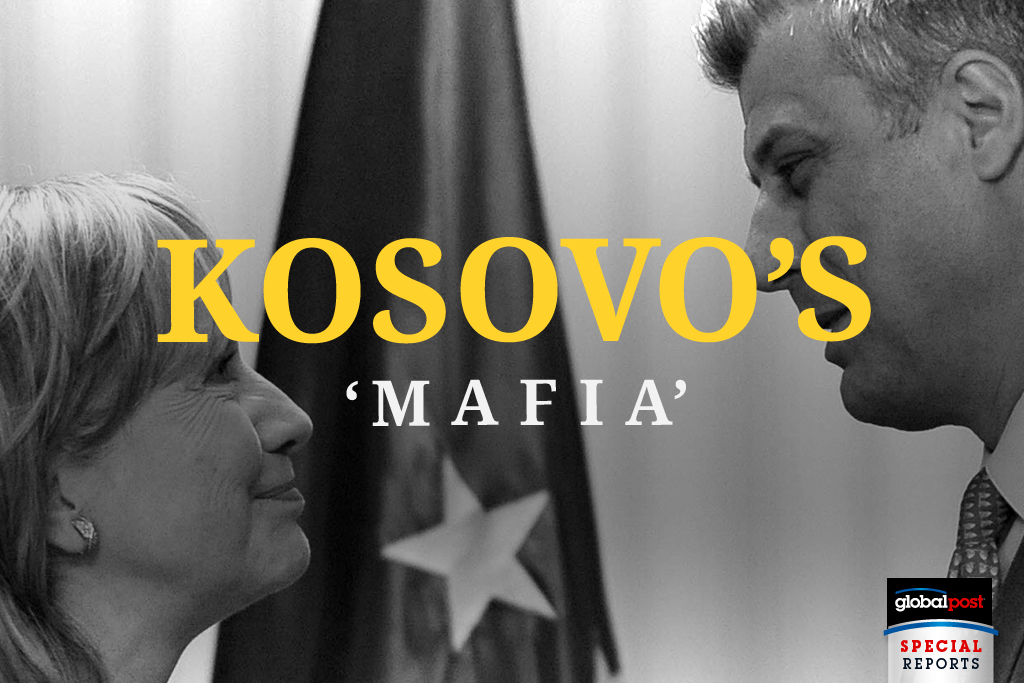
In one of the more bizarre foreign policy announcements of a bizarre Obama Administration, US Secretary of State Hillary Clinton has announced that Washington will “help” Kosovo to join NATO as well as the European Union. She made the pledge after a recent Washington meeting with Kosovan Prime Minister Hashim Thaci in Washington where she praised the progress of the Thaci government in its progress in “European integration and economic development.”1Her announcement no doubt caused serious gas pains among government and military officials in the various capitals of European NATO. Few people appreciate just how mad Clinton’s plan to push ...
“Russia Wants to Undermine Faith in the U.S. Election. Don’t Fall For It.” Thus reads the cover of Time magazine with a photo of Vladimir Putin on the cover staring at me from shelves as I sit in an airport. Genuinely curious, I check out Massimo Calabresi’s article online.Of course, U.S. elections are almost completely unverifiable and do not even pretend to meet international standards. Jimmy Carter doesn’t even try to monitor them because there’s no way to do it. Much voting is done on machines that simply must be trusted on faith. Whether they accurately count the votes entered ...
On December 7, 1941 the U.S. naval base in Pearl Harbor, Hawaii was attacked by Japanese forces. President Roosevelt, in his well known Infamy speech delivered on December 8, claimed the attack was “unprovoked” and, on this basis, asked for and received a declaration of war from the U.S. Congress. But the evidence suggests the attack was not unprovoked. On the contrary, it was carefully and systematically provoked in order to manipulate the U.S. population into joining WWII. This provocation game, spectacularly successful in 1941, is currently being played with North Korea. The stakes are high.Many good people are reluctant to look critically ...
Being attacked from two sides simultaneously (terrorism and Russian threat) Europe has to decide what to do first: to counter terrorism or increasing Russian might. Choosing the priority is the most difficult challenge for the European States today. But Europe should make choice because states' budgets are not bottomless.It is obvious, that as soon as the terrorism problem comes to the fore, NATO (first of all the US) diverts attention to other matters, such as the necessity to boost defence expenditures because of Russia, Syria, Afghanistan and other "annoying" countries.It can be easily explained by the burden the country has ...