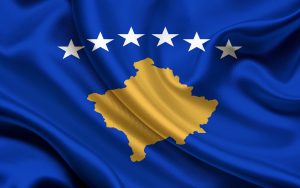
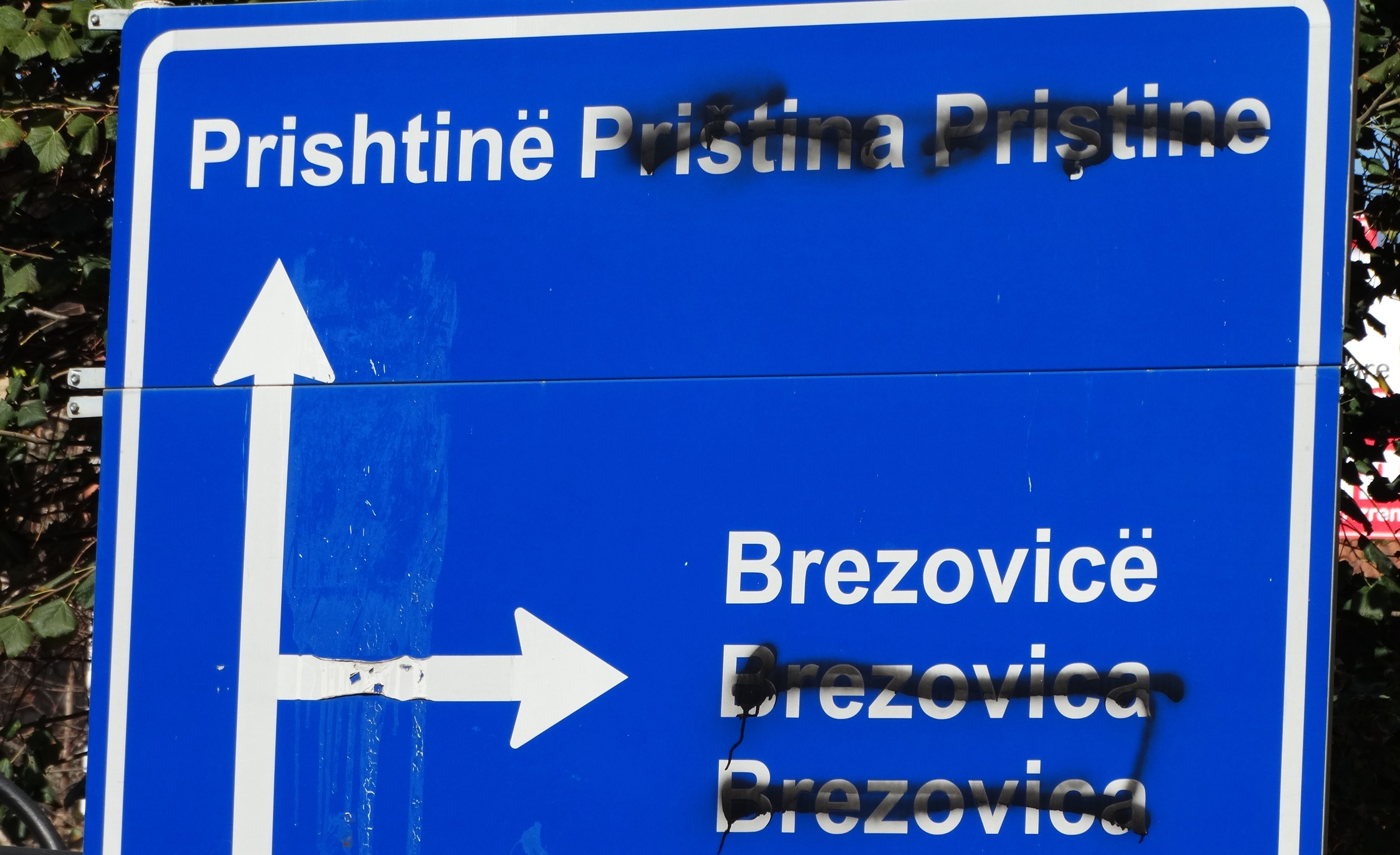

Kosovo (in fact, Kosovo-Metochia), a disputed territory claimed by Serbia and Kosovo Albanian separatists, which Serbs regard as central to their cultural identity (differently to the Albanians), is going to pose much more unexpected problems for the international community concerning its political status as it became obvious that Belgrade and Prishtina cannot found common language during 22 years of negotiating process. The European Union already in 2007 formally warned the former leader of the Kosovo Liberation Army–Hashim Tachi, a winner of the 2007 November parliamentary and local elections to freeze the proclamation of independence as the final solving solution for Kosovo knot mainly due to the Russian strong support of Serbia’s viewpoint that Kosovo is an integral part of her state territory and cannot be internationally recognized as an independent state.
However, with direct support from the US administration, on February 17th, 2008, Kosovo Assembly unilaterally (without a public referendum) declared Kosovo independence as the final political solution to the problem called the Kosovo knot. From that time onward, the Western part of the international community (NATO and the EU) is just expecting that Serbia would confirm such a solution in order to close the Kosovo chapter forever.
Nevertheless, there are three possible political solutions to solve the Kosovo knot followed by the real situation on the ground.
The first solution: State independence
The creation of an independent Kosovo is an option that is not rejected by the Western part of the international community as thoroughly unacceptable but there should be respected the principle that the borders could be changed only by peaceful means and with the agreement of the parties concerned.
However, taking into consideration public opinion as well as the opinion of the most important political factors in Serbia, who decisively reject such a possibility, the realization of this option as the final solution for the Kosovo knot could be possible to be achieved only by a new military conflict what none of the parties, in fact, wants.
Considering this reality, those Albanians who advocated before February 2008 the strategy “step by step” (from the 1990s) supported the modality of achieving the status of the republic or confederate unit under international protection within Serbia, what would in the future open the possibility for a less painful secession, i.e., independence. Nevertheless, the (Western) idea of Kosovo independence already created a boomerang effect like in East Ukraine or South Caucasus.
The second solution: Provincial autonomy
In the case of Kosovo having the administrative status of the highest political and national autonomy (that is a final Serbia’s offer – the “Hong Kong” or “Scandinavian” model), however, could create a precedent that would encourage minority communities in other states which make a compact majority in some territory (Kurds, Catalans, Corsicans, etc.) to follow the same way. Nonetheless, a such political solution would turn the ethnic issue into a global issue of security in many multiethnic countries around the globe.
The danger of the creation of independent Kosovo does not only lie in the fact that the official Belgrade is opposing this idea (likewise, for instance, the Greek Cypriot Government that is opposing the creation of an independent Turkish North Cyprus), but also in the danger that the newly-created state would strive to get united with the neighboring areas populated by ethnic Albanians like South-East Serbia (Medvedja, Bujanovac, and Preshevo municipalities), West North Macedonia, or East Montenegro).
This would, by itself, as it is already, endanger the security and stability in the region (for instance, the Albanian rebellion in North Macedonia in 2001 that was directly supported by the veterans of the Albanian Kosovo Liberation Army for the matter of pan-Albanian political unification).
The third solution: Political re-unification with quasi-“the motherland”
The core of the problem starts when the Socialist Federal Republic of Yugoslavia (the SFRY) broke up but no agreement was achieved in changing the borders. One-sided separation of some federal units–republics was allowed to occur by Western “democracies” and that was the principle that was respected from the beginning till the end of the Yugoslav crisis (from 1990 to 1999).
Since Kosovo enjoyed in the SFRY the status of territorial-national autonomy within Serbia (likewise the region of Vojvodina), the demands for independence have not been supported by the international community. However, encouraged by Slovenian, Croatian, Macedonian, and Bosnian independence (internationally recognized firstly by Western countries followed by the rest of the world) the greatest hard-liners within the Albanian national movement – followers of Redzep Cosja, member of the Kosovo Academy of Arts and Science, championed Kosovo independence with a final task of joining Kosovo to Albania (the wish publicly confirmed in 1997 by Kosovo Albanian leader – Dr. Ibrahim Rugova). Actually, according to the idea and the things, this line pleads for in politics, the mother state of Albania would gather together all “Albanian lands” or the territories populated by the Albanian inhabitants who are there in majority.
However, it has to be clearly noticed that Albania was never the real motherland of Kosovo different from the case of Serbia. Kosovo was never part of Albania except during WWII when B. Mussolini created a Greater Albania together with the biggest portion of multiethnic Kosovo but, nevertheless, without its northern part which is even today exclusively populated by the Serbs. In other words, all of those Albanians advocating the creation of a Greater Albania including Kosovo too are, in fact, supporting the idea of re-creation of the Second World War’s Mussolini’s Greater Albania.
What is reality?
However, after the turmoil in Albania in 1997 caused by the collapse of “the pyramidal system of private banks” in which the Albanian Government was involved too, and when Albania was at the edge of the civil war and threatened by the danger of institutional disintegration, the idea of Kosovo unification with Albania has been pushed aside by many politicians and citizens on both sides of the border as the Albanians in Albania faced up with the struggle for survival and civil war of tribal and regional character. Political and economic circumstances have pushed temporarily Kosovo from Albanian nationalists’ primary political vision at least up to the mid-1999. On other hand, the Albanians in Kosovo have become less enthusiastic to join their poor and divided brothers for the sake of great romantic ideas.
Nevertheless, today, as a matter of fact, there is no strict border between Albania and Kosovo and, therefore, the traffic of people, goods, arms, etc. between these two Albanian national states is free like within the Schengen Zone in Europe. Kosovo is already since mid-June 1999 occupied by NATO forces (redressed into KFOR uniforms) while, in fact, the focal boss of the province is Washington. In conclusion, Kosovo is de facto separated from Serbia, de iure, quasi-independent state but in reality, an American colony.
Dr. Vladislav B. Sotirovic
Ex University Professor
Research Fellow at Centre for Geostrategic Studies
Personal disclaimer: The author writes for this publication in a private capacity which is unrepresentative of anyone or any organization except for his own personal views. Nothing written by the author should ever be conflated with the editorial views or official positions of any other media outlet or institution.
Originally published on 2022-11-01
Origins of images: Facebook, Twitter, Wikimedia, Wikipedia, Flickr, Google, Imageinjection, Public Domain & Pinterest.
Read our Disclaimer/LegalStatement!
DonatetoSupportUs
We would like to ask you to consider a small donation to help our team keep working. We accept no advertising and rely only on you, our readers, to keep us digging the truth on history, global politics, and international relations.
For decades former Nazis and German war criminals served at the highest echelons of NATO.Most of them were highly decorated Nazis, who later served in top positions in the Western German army, and were later promoted to serve as Commander and Chief of all NATO forces in Europe.This was not a unique event, but a very common phenomenon in post-WW2 Western Europe and especially in Western Germany.Nazi war criminals and people who supported and helped Hitler to carry out the holocaust and other war crimes, genocides, and crimes against Humanity were almost never put on trial for their crimes against ...
The U.S. military base in Kosovo was constructed in 1999 without consulting with the government of Serbia and is the largest U.S. military base built outside of the U.S. since the Vietnam War. The site was apparently used for extraordinary renditions and has been referred to as a “little Guantanamo”. This is a very little known fact as NATO, the U.S., the European Union and the West are in the process of forcing Serbia to effectively give up Kosovo, and indicates the real motive for the West’s support of the Kosovo Liberation Army which it had deemed a terrorist organization ...
Strange things happen in civil wars: During the Russian Civil War in 1919, 13,000 U.S. troops were dispatched by President Woodrow Wilson to occupy the cities of Archangelsk in the Arctic and Vladivostok on the Pacific.Half a century earlier, thousands of Imperial Russian Navy sailors and their officers flooded the cities of San Francisco and New York. But the circumstances were very different. They were there to defend the United States from foreign invasion – not to threaten it and they brilliantly succeeded in their tasks.The incredible story is well told in “Friends in Peace and War: The Russian Navy’s ...
When it comes to a few key indicators, Ireland, the UK, Canada and even Albania and Greece are surpassing America.America is declining, in large and important measures, yet policymakers aren’t paying attention. So argues a new academic paper, pulling together previously published data.Consider this:America’s child poverty levels are worse than in any developed country anywhere, including Greece, devastated by a euro crisis, and eastern European nations such as Poland, Lithuania and Estonia.Median adult wealth in the US ($39,000) is 27th globally, putting it behind Cyprus, Taiwan, and Ireland.Even when “life satisfaction” is measured, America ranks #12, behind Israel, Sweden and ...
Since World War II most of the world’s conflicts have revolved around struggles for independence against Western and Japanese colonial/imperial regimes.Following formal independence, a new type of imperial domination was imposed – neo-colonial regimes, in which the US and its European allies imposed vassal rulers acting as proxies for economic exploitation. With the rise of US unipolar global domination, following the demise of the USSR (1990), the West established hegemony over the East European states. Some were subject to fragmentation and sub-divided into new NATO dominated statelets.The quest for a unipolar empire set in motion a series of wars and ...
Twenty years ago, on 24 March 1999, Operation Allied Force began – the NATO bombing of Yugoslavia that led to the country’s dismemberment – and the independent state of Kosovo was proclaimed. Yet these events were far from historically contingent, as some people claim. So who orchestrated the breakup of Yugoslavia and how?These days, few remember that the Bulgarians were at the start of it all. Even the Bulgarians themselves don’t like to think about it.In early March 1999, Bulgaria’s National Intelligence Service told Germany’s Federal Intelligence Service (BND) that it had information about a secret plan by the Yugoslav ...
In 1999, when he was the President of Finland, Marti Ahtisaari’s government wanted to honor and to commemorate the 3,000 Finnish Nazi Waffen SS volunteers that served in Heinrich Himmler’s SS. Why would any government, indeed, why would anyone, want to honor and commemorate SS troops? Why would anyone want to honor and commemorate Nazis and Nazism? This is the question that has remained unanswered in the US and Western media about Marti Ahtisaari. As a sock puppet for the US, NATO, and EU, Ahtisaari’s role in honoring and commemorating the Nazi Waffen SS has been suppressed. As a Chairman ...
There are many American and other Western journalists and political analysts who have been severely criticizing U.S. policy in the Balkans during the last 30 years but especially in the 1990s during the time of the brutal destruction of ex-Yugoslavia followed by the bloody civil war primarily because the U.S. administrations backed Muslim radical extremists in Bosnia-Herzegovina, Kosovo-Metochia, and North Macedonia; the radical fundamentalists who allowed the creation of the strong Osama bin Laden’s “al-Qaeda” Islamic extremist network in the Balkans that is functioning up today. Such U.S. foreign policy in the Balkans, however, decreased the real chances for any ...
It is now September 2016, just two months before the Presidential elections, and both political camps have already managed to disgust a great number of the US voters, by offering almost no comprehensive political or economic program, by offering… close to nothing!While Donald Trump is lashing out at the ‘enemy within’, during his dark moments that are increasingly resembling an advanced stage of delirium tremens (complete with a mad chase after white mice and promises to cleanse society from some imaginary and filthy rapists and social benefits guzzlers, that are constantly pouring from the south), Ms. Clinton is saddling her ...
Saudi Arabia believes that the talks in the Kazakh capital Astana could lead to a stable ceasefire, according to the statement made by the Saudi Foreign Minister Adel al-Jubeir. He expressed hope for reaching a ceasefire saying that the Astana talks are worth testing. He also confessed that so far the negotiation process has not resulted in the halt of fighting and transition to a peaceful settlement.Al-Jubeir also mentioned that if the talks succeed, the way of political means should be studied more closely. He refused to comment on the agenda of the talks, pointing out that its possible success ...
Genocide accusations are, it would seem, the latest fashion spreading out of the Balkans. On December 5, a former minister in the “government” of NATO occupied and administered Kosovo, Ivan Todosijević, who happens to be an otherwise occupation friendly and cooperative ethnic Serb, was sentenced to a two-year prison term. The court found him guilty of making what it considered the outrageous claim that the so-called genocidal “Račak massacre,” which in 1999 triggered NATO aggression against Yugoslavia, was an imposture. Since the trial began just two days before, by Balkan standards the swiftly reached verdict was remarkably expeditious, suggesting the ...
What is the bigger story? The West Against the Rest or The West Against Itself?The Illiberal Quartet of Xi, Putin, Rouhani and Erdogan is in the line of fire of haughty homilies about Western “values.”Illiberalism is arrogantly and provocatively depicted in the West repeatedly as a Tartar Invasion 2.0. But closer to home Illiberalism is responsible for the social, civil war in the U.S. as Trump’s America has long ago forgotten what the European Enlightenment was all about.The Western view is a maelstrom of a Judaeo-Greco-Roman, pseudo-philosophy steeped in Hegel, Toynbee, Spengler and obscure biblical references decrying an Asian attack ...
One of the claims of Albanian historiography is that the Central Balkan tribe – Dardanians, who settled in the southern portion of the territory of the Roman Province of Moesia Superior and northwestern part of the Roman Province of Macedonia, should be considered as one of the Illyrian tribes and an ancestor of the Albanians. With respect to this point, Albanian historians refer to the German linguist Norbert Jokl who wrote, according to the research of historical toponomastics, that the ancient cradle of the Albanians was Dardania, from where they moved westward to their present territories in late Roman times.[1] ...
As the contemporary Corona virus hysteria narrative continues to collapse (here and here) another dubious narrative, launched a quarter of a century ago – Srebrenica genocide – comes to mind. The common thread of both narratives is that they have just enough genuine elements to provide a seemingly plausible foundation for a vastly exaggerated tale. The Covid-19 virus can endanger health, and even be lethal, to certain classes of the population, but how much more than that is it? In Srebrenica in July of 1995, about a thousand Muslim prisoners were executed by a rogue outfit of the Serb army. ...
President Bill Clinton’s favorite freedom fighter just got indicted for mass murder, torture, kidnapping, and other crimes against humanity. In 1999, the Clinton administration launched a 78-day bombing campaign that killed up to 1500 civilians in Serbia and Kosovo in what the American media proudly portrayed as a crusade against ethnic bias. That war, like most of the pretenses of U.S. foreign policy, was always a sham.Kosovo President Hashim Thaci was charged with ten counts of war crimes and crimes against humanity by an international tribunal in The Hague in the Netherlands. It charged Thaci and nine other men with ...
It was NATO’s first out-of-area operation, against its own Treaty and without a UN mandate. On March 24, 1999.Independent Kosovo was established – against UN SC resolution 1244. Thanks to the Clinton administration and Madeleine Albright. CNN’s Amanpour endorsed it generously on TV with her State Department husband, James Rubin, a chief operator in the non-negotiations at Rambouillet. And TIME of course knew the truth too.Serbia suffered tremendously from the 78 days of indiscriminate, hard bombing. I know because I was there.Finally, Serbia and its president Milosevic was threatened with total destruction of Belgrade. And gave in.Western hubris after the ...
After the Russian military victory over the Ottoman Empire in the 1877−1878 Russo-Ottoman War it was signed the San Stefano Treaty between these two states on March 3rd, 1878. According to the treaty, a Greater “San Stefano” Bulgaria, under the direct protection by Russia, had to be established within the borders of the Ottoman Empire. However, an idea of “San Stefano Bulgaria” directly affected three Balkan nations: the Serbs, Greeks and Albanians as some of their ethnic and historical territories had to become part of a Greater Bulgaria. The “San Stefano Bulgaria” was projected by the Russian authorities to cover ...
If you reside in a parallel universe then welcome to Kosovo, the land of Albanianization and Islamization and all in the name of democracy. A flick back into history tells us that the Serbs were 98% of the population of Kosovo 600 years ago but today the Orthodox Christian Serbs are between 6% and 8% depending on various figures.Of course, the Kosovo Serbs became a minority because of the ravages of the Ottoman Empire, dhimmitude, Islamization, and Albanian support of fascism during the German Nazi period. Communism in the old Yugoslavia was the final nail in the coffin because Albanian long-term objectives ...
We hear that Kosovo and Metohija’s frozen conflict is not conducive to Serbia’s interests, but nobody notes that Serbia stands to lose even more if negotiations under EU auspices continue under the same pattern and trend. Judging by the ongoing course wherein Serbia has been only delivering concessions and Prishtina’s clique only gaining control over the whole Province, Serbia may end up delivering irrevocably all her rights and interests and receiving nothing in return.Except promises of EU membership by 2027 as “indicative” year! Rarely is heard that such a EU/USA deal “territory (of Kosovo and Metohija) for EU membership” would ...
For all the attention paid to the emergence of homegrown Islamist terrorists in Belgium, France and other European countries, one of the continent’s biggest radicalization problems is taking place on its fringes.Kosovo, the tiny Muslim-majority Balkan nation of just 1.8 million, has produced more foreign fighters per capita than any other Western nation since ISIS declared its now-defunct caliphate in 2014. Some 413 Kosovo citizens, including women and children, have joined that group and other Islamist extremist factions since the war in Syria began in 2012.As it attempts to join the European Union, Kosovo has been under pressure to stamp ...