
When he meets with European leaders in Vilnius later this week, he will have an opportunity to sound out what he might be able to salvage from the wreckage of the deal [...]
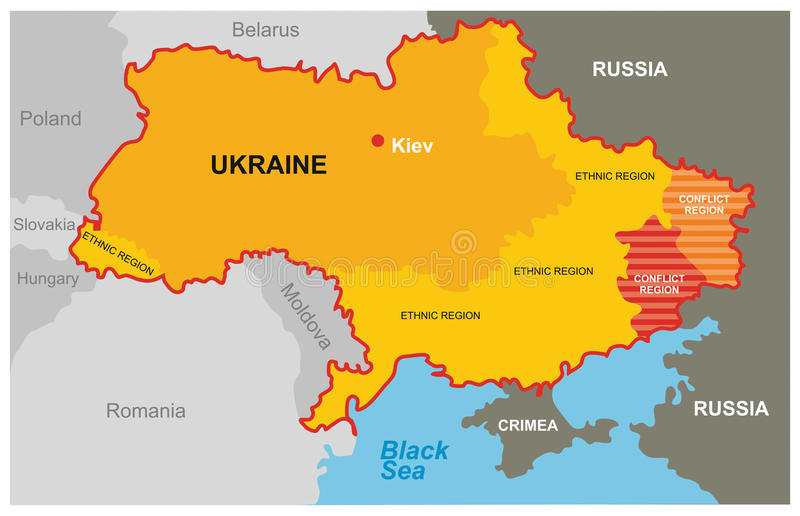
Christopher Marsh and I, in our recently published book (Russian Foreign Policy: Interests, Vectors and Sectors), sketch out what we term “Putin’s Eurasian dream”—the ambition to create a Eurasian economic and political zone where Moscow sets the overall agenda and is able to hold its own in the global geopolitical competition with the United States, the EU and China—and to have the foundations laid by 2015. A major obstacle to this vision was abruptly removed on Thursday when Ukrainian president Viktor Yanukovych announced that his country would not sign a landmark partnership agreement with the European Union—which Russia had consistently opposed. The Deep and Comprehensive Free Trade Agreement, which was to be concluded at the EU “Eastern Partnership” summit in Vilnius this coming week, was seen as the linchpin of a renewed EU commitment to engage with the states of the former Soviet Union. While Georgia and Moldova will still ink their own initial trade agreements with Europe, it has cast a pall over the Eastern Partnership process, because, as Steven Blockmans of the Centre for European Policy Studies notes, “The whole idea essentially falls apart without Ukraine.”
While Russia has not opposed some links between ex-Soviet republics and the European Union, it has opposed the EU Partnership Agreements because these bind the signatories to the EU in such a way as to make membership in the Moscow-sponsored entities (the customs union, the single economic space, and so on) impossible. While such agreements are not an automatic guarantee of future membership in the European Union, they put the country on the trajectory towards harmonizing its institutions with those of the EU member-states and would, over time, significantly reorient the economy away from traditional links with Moscow and towards fuller participation in a wider European market.
Of course, there were two drawbacks for Ukraine in the proffered EU agreements. The first is the requirement for domestic political change—and the expectation that the Ukrainian government would terminate its approach of “selective justice” (highlighting corruption charges only against political opponents of Yanukovych), beginning with a release of imprisoned former prime minister and principal political rival to Yanukovych, Yuliya Tymoshenko. Even the proposal for Tymoshenko to leave Ukraine for medical treatment in Germany, a form of soft exile, was problematic to the Yanukovych team, who continue to see Tymoshenko, whom Yanukovych narrowly beat out to capture the presidency in 2010, as their prime rival. In the short run, keeping Tymoshenko neutralized was more important than signing the EU deal.
Like Turkey, which has also had a rocky road with pursuing closer integration with the EU, the Ukrainian government has sought to secure as many economic benefits as possible while preserving as much sovereignty as it can so as not to have to make significant changes to its domestic institutions. Impelled by the desire for greater access to the European market, Ukraine did take a number of steps to bring its institutions into closer conformity with EU standards, but the Rada (parliament) balked this week at passing the last set of bills that would be needed to bring Ukraine into compliance with the EU—including the one concerning Tymoshenko’s ability to go abroad for medical care.
The second was the announced Russian response. Russia remains Ukraine’s largest foreign investor and Ukraine still remains highly dependent on the Russian market. Ukraine’s push to secure greater energy independence for itself by developing indigenous oil and natural gas projects will not bear fruit for a number of years, and the country remains dependent on Russia for low-cost supplies of energy. On Friday, Ukraine’s prime minister Mykola Azarov bluntly told lawmakers in the Rada that Ukraine could not, at this point, afford an economic rupture with Moscow. “What will be our compensation for the huge losses from losing the Customs Union market, what, I am asking you? Unfortunately, we did not receive a realistic answer to this question.”
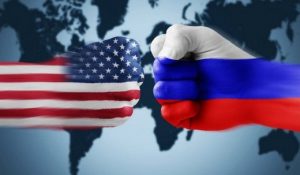
Ukraine’s decision does represent a major setback for Western policy. It again exposes the hollowness of former secretary of state Hillary Clinton’s promises at the end of 2012 that the United States would undertake a major effort to counter Putin’s Eurasian integration plans; the United States continues to rhetorically oppose Moscow’s proposals but is not going to devote much time, energy, and most crucially, resources to the task. It also challenges the EU approach which believed that Moscow would have no choice but to acquiesce to greater EU activism in the Eurasian space, and that Brussels could present Russia with a fait accompli. Ulrich Speck, a visiting fellow at Carnegie Europe, summed up the naivete of this approach: “The EU always saw itself as someone that wasn’t in to playing geopolitical games. But the irony is that Putin’s new assertiveness forced the EU into playing power politics, so this has become largely a geopolitical game.”
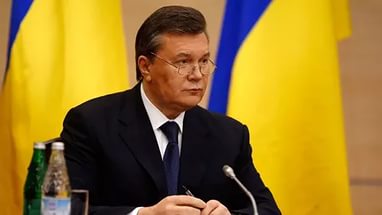
For the time being, Yanukovych has acceded to Russia’s principal demand: to torpedo the EU deal. But Yanukovych has also always resisted Moscow’s blandishments and still does not want to see Ukraine fully absorbed into Russia’s Eurasian structures, although he has contemplated, in the past, a looser degree of “association” with the emerging Eurasian Union. Nor does he wish to preserve his country’s continued dependency on Russia—he still would like closer relations with Europe.
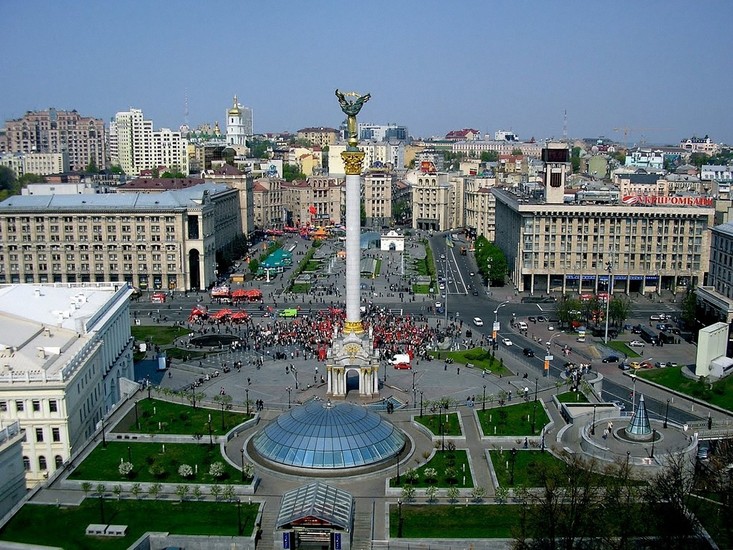
In addition, Yanukovych must also deal with unexpected public anger over his decision to suspend the deal. Protests in the capital—attracting more than 100,000 participants—were the largest since the Orange Revolution of 2004 and could easily turn into a major political liability for the government, especially given recent clashes between protestors and riot police. Monday’s statement by European Council President Herman Van Rompuy and European Commission President Jose Manuel Barroso will bolster the position of those who argue that Yanukovych backed down from his own stated commitment to pursue closer ties with Europe in the face of concerted Kremlin pressure: “It is up to Ukraine to freely decide what kind of engagement they seek with the European Union. Ukrainian citizens have shown again these last days that they fully understand and embrace the historic nature of the European association.”
Yanukovych’s preferred outcome would be to put real limits on any continued economic and political integration with Moscow—while seeking an accommodation with the EU that would help Ukraine’s economy but not challenge his political dominance of the country. When he meets with European leaders in Vilnius later this week, he will have an opportunity to sound out what he might be able to salvage from the wreckage of the deal. He would prefer to continue his precarious balancing act between East and West rather than find himself fully under Moscow’s thumb or answering to EU directives. The question now is whether either Putin or Brussels is willing to accommodate him.
Originally published on 2013-11-26
About the author: Nikolas K. Gvosdev is a contributing editor at The National Interest and a professor of national-security studies at the U.S. Naval War College.
We would like to ask you to consider a small donation to help our team keep working. We accept no advertising and rely only on you, our readers, to keep us digging the truth on history, global politics and international relations.
Origins of images: Facebook, Twitter, Wikimedia, Wikipedia, Flickr, Google, Imageinjection, Public Domain & Pinterest.Read our Disclaimer/Legal Statement!Donate to Support UsWe would like to ask you to consider a small donation to help our team keep working. We accept no advertising and rely only on you, our readers, to keep us digging the truth on history, global politics, and international relations.[wpedon id="4696" align="left"]
Origins of images: Facebook, Twitter, Wikimedia, Wikipedia, Flickr, Google, Imageinjection, Public Domain & Pinterest.Read our Disclaimer/Legal Statement!Donate to Support UsWe would like to ask you to consider a small donation to help our team keep working. We accept no advertising and rely only on you, our readers, to keep us digging the truth on history, global politics and international relations.[wpedon id="4696" align="left"]Save
Kosovo’s Prime Minister Accused of Running Human Organ, Drug Trafficking CartelIn another grim milestone for the United States and NATO, the Council of Europe (COE) released an explosive report last week, “Inhuman treatment of people and illicit trafficking in human organs in Kosovo.”The report charged that former Kosovo Liberation Army (KLA) boss and current Prime Minister, Hashim Thaçi, “is the head of a ‘mafia-like’ Albanian group responsible for smuggling weapons, drugs and human organs through eastern Europe,” The Guardian disclosed.According to a draft resolution unanimously approved December 16 in Paris, the Committee on Legal Affairs and Human Rights found compelling ...
According to the prevailing wisdom in the West, the Ukraine crisis can be blamed almost entirely on Russian aggression. Russian President Vladimir Putin, the argument goes, annexed Crimea out of a long-standing desire to resuscitate the Soviet empire, and he may eventually go after the rest of Ukraine, as well as other countries in eastern Europe. In this view, the ouster of Ukrainian President Viktor Yanukovych in February 2014 merely provided a pretext for Putin’s decision to order Russian forces to seize part of Ukraine.But this account is wrong: the United States and its European allies share most of the ...
Former US President Jimmy Carter, in an interview with radio station “Voice of America”, said that the reunification of Russia and the Crimea was an inevitable event.Carter also says he is pleased with Russia’s commitment to implement the Minsk agreement. He added that the Elders were also pleased with Russia’s allegiance to the Minsk agreement. “There’s not any doubt in our mind that the Russians genuinely want to see all the aspects of that concluded. I think that’s the only ballgame in town,” said Carter, “really as far as resolving the problems with Ukraine, is to get the Minsk agreement ...
July 3, 2019 marks the 40th anniversary of when the United States’ first military assault against Afghanistan with the CIA-backed Mujahideen began. It would be a mistake to treat the present-day conflict as being separate from the U.S. intervention that began in 1979 against the then-government of the People’s Democratic Party of Afghanistan. Afghanistan was not always known as the chaotic, ‘failed state’ overrun by warlords as it is now; this phenomenon is a product of that U.S.-led regime change operation. The article below, originally published on March 30, 2019, summarizes and analyzes the events that transpired during and after the Cold War ...
Remember watching ancient Orthodox Christian monasteries in flames in Kosovo dozen times.Old, noble constructions, spiritual and historical testimonies of past times.I also remember that majority of Orthodox Christian monasteries, churches and relics has been attacked and destroyed after NATO forces (officially: KFOR) took full control of the Serbian province.It amazed me to see how Western soldiers, under full equipment and heavy armament, often didn’t make a single move to stop Albanian violence; over 200 000 Serbs had to flee, in order to save their bare lives, bearing whole their lives in few suitcases if they were lucky enough.It turned out ...
State frontiers are established by human beingsand may be changed by human beings.Adolf Hitler. Mein KampfDiplomacy, with all the conventions of its forms,recognizes only real facts.Charles de GaullePart OneAll of Adolf Hitler’s actions, from the time he rose to power in 1933 until 1939, could be described as one triumph after another. He met each challenge he faced: he took over as head of the country, returned Germany’s lost territories without a struggle, and was given permission from England and France to rearm. But one further task lay before him, and failure now would make his previous achievements almost pointless. ...
ISIS has new turf, this time in Europe. The German magazine Der Spiegel reports that there are now remote villages in the mountains of northern Bosnia where where the ISIS flag flies, and residents live under Sharia law. Roughly half of Bosnians are Muslim, and the radical ultra-devout make up a very small percentage. But it appears that percentage is growing — and growing violent — as extremists are gaining a foothold in rural Bosnian society.There are between 200 and 300 Bosnians fighting with ISIS in Syria and Iraq, more than from any other European nation besides Belgium. The Der ...
No city in Iraq is more symbolic of the criminal consequences of the US invasion of Iraq than Fallujah. Prior to 2003, the 300,000-strong, prosperous, predominantly Sunni Muslim community on the Euphrates River, one of humanity’s oldest continuous urban settlements, was known as the “city of mosques.” After 13 years of destruction at the hands of the US military and its client state in Baghdad, it is today a labyrinth of ruins, a city of the dead.Following weeks of air strikes by US, British and Australian bombers, a combination of Iraqi government forces and Shiite militias is reportedly on the ...
Author’s note: a draft version of the article was originally written at the end of December 2015 and published in March 2016. This is the extended article’s version.On April 24th, 2016 Serbia faced three-level elections: for the national parliament, local municipalities and Vojvodina’s autonomous provincial administration. The elections did not cover Kosovo province as current Serbia’s pro-NATO/EU’s government already two years ago de facto recognized in its negotiations with the EU and Pristina’s government that this province is not any more an integral part of the legal and administrative system of the Republic of Serbia. Nevertheless, these elections were in ...
This weekend 75 years ago, the German city of Dresden was razed to the ground by British and American aerial bombardment. At least 25,000 mainly civilians were destroyed in raid after raid by over 1,200 heavy bombers, indiscriminately dropping high explosives and incendiaries. It took seven years just to clear the rubble.The destruction of Dresden, a world-famous cultural center of Baroque majesty, has been long dogged by controversy. Official British and American military accounts claim it was necessary to hasten the collapse of the Third Reich; with a reasoning that resonates with US claims for dropping the atomic bombs on ...
TRANSCRIPT:Harold Channer (HC): Good evening and welcome very, very much to the conversation. We’re pleased to welcome to the program, Sean Gervasi. He is a professor and academic who is concerned with economics and particularly with what is relevant to what we want to talk about tonight. He has just returned from a long stay in Belgrade, Yugoslavia, and knows something of that situation. Sean Gervasi, welcome very, very much to the conversation, and back to New York. Before we go into some detail about what in the world is going on in terms of the Balkans, from your experience ...
On Saturday, May 14, in Stockholm’s Globe Arena an event called the 2016 Eurovision Song Contest final will take place.According to the Eurovision Official Rules 2016 posted on eurovision.tv:1.2) Criteria of eligibility1.2.1) Songs“The lyrics and/or performance of the songs shall not bring the Shows, the ESC as such or the EBU into disrepute. No lyrics, speeches, gestures of a political or similar nature shall be permitted during the ESC. No swearing or other unacceptable language shall be allowed in the lyrics or in the performances of the songs. No messages promoting any organization, institution, political cause or other, company, brand, ...
Origins of images: Facebook, Twitter, Wikimedia, Wikipedia, Flickr, Google, Imageinjection, Public Domain & Pinterest.Read our Disclaimer/Legal Statement!Donate to Support UsWe would like to ask you to consider a small donation to help our team keep working. We accept no advertising and rely only on you, our readers, to keep us digging the truth on history, global politics and international relations.[wpedon id="4696" align="left"]Save
The ‘mainstream’ Western media is, almost by definition, the last place to consult for honest reporting of Western crimes. Consider the appalling case of Yemen which is consumed by war and an ongoing humanitarian catastrophe.Since March 2015, a ‘coalition’ of Sunni Arab states led by Saudi Arabia, and supported by the US, Britain and France, has been dropping bombs on neighbouring Yemen. The scale of the bombing is indicated in a recent article by Felicity Arbuthnot – in one year, 330,000 homes, 648 mosques, 630 schools and institutes, and 250 health facilities were destroyed or damaged. The stated aim of ...
For many years, and despite all evidence to the contrary, the Western media has forwarded the inane idea that Vladimir Putin ranks in the same club with some of history's most loathsome creatures, up to and including Hitler.The reality is that the Russian leader has done more to promote the cause of global peace and security than any other Western leader in recent times. That explains why he is the object of such intense scorn.Putin's rise as a statesman of the first magnitude began, oddly enough, with the terror attacks of Sept. 11, 2001 on the United States. Since that day, ...
There is less talk about the rump-Ukraine in the news these days, especially in the western corporate media, and there is a good reason for that: that short-lived Urkonazi “Banderastan” is falling apart. This is hardly surprising since the entire concept was never viable in the first place. Let’s remember how it all began.It is crucial to remember that there was no spontaneous revolution or insurrection in the Ukraine, the Euromaidan had nothing to do with Europe and everything to do with the USA. Oh sure, the Ukrainian people were told that it was about “joining the EU”, but that ...
The recent arrest of 40 alleged Islamic radicals in Kosovo together with the arrest of one of the Kosovo Imams suspected of being an inspirer of jihad in the region brought serious questions about the radicalisation of Islam and terrorism in Kosovo, in the Balkans and in Europe. Even though the issue of Kosovo Albanian volunteers or mercenaries fighting alongside the anti-Bashar forces in Syria and supporting the radical leadership of the Islamic State (earlier the Islamic State of Iraq and Syria) has been present in the public debate in Kosovo for at least a year, the debate itself was ...
This Remembrance Day will doubtless see strenuous efforts by some to justify the fruitless bloodbath that was the First World War. Revisionist commentators have long attempted to rehabilitate the conflict as necessary and just, but the arguments do not stand up. It does no service to the memory of the dead to allow any illusions in the justice or necessity of war, particularly so when the precedents will be used to argue for the next ‘necessary’ conflict. From the causes of the war, to its prosecution and its results, here are the counter-arguments to ten common pro-war ploys.1. The war ...