
In 1879 Chilean and British Imperialism Cut Bolivia Off From the Sea
In 1879 began the disastrous ‘War of the Pacific’, the Chilean army invaded Bolivia’s ‘Litoral’ department, leaving the poorest nation in South America landlocked [...]
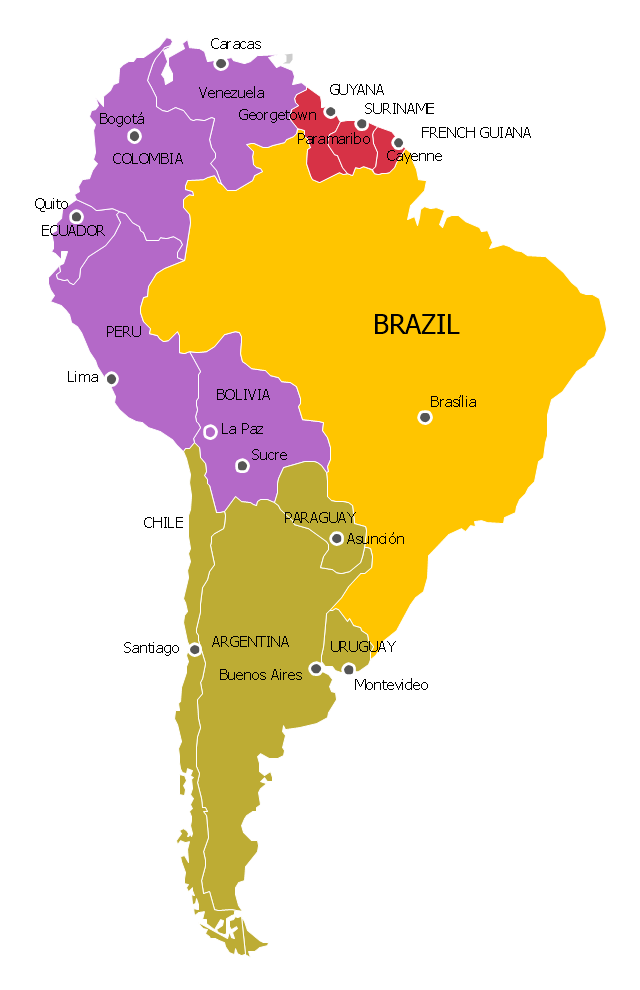
In 1879 began the disastrous ‘War of the Pacific’, the Chilean army invaded Bolivia’s ‘Litoral’ department, leaving the poorest nation in South America landlocked. It is thought up to 18,000 Bolivians died in the war. Chile’s war on Bolivia was at every step of the way backed and armed by the British Empire as English industrialists took control of the vast natural resources of the Bolivian coastal region. These included guano, sodium, nitrate, copper where British interests established a monopoly on the export of these primary resources. Bolivia has never given up its demand to return to the coast, it still maintains a navy in preparation, the only landlocked country in the world to do so. Today the Bolivian government, under left-indigenous president Evo Morales is taking the biggest steps yet in securing a sovereign access to the sea as he takes the case to the International Court of Justice at the Hague who have already ruled against Chile’s early objections to Bolivia’s claims, a preliminary ruling is expected on April 28th. This is more than a territorial dispute, this is a political battle to roll back the hidden legacy of British imperialist interference in Latin America. It is inconceivable that Bolivia’s previous neoliberal governments could have come this far, indeed they didn’t, Bolivia’s successes are precisely because Morales’ left government is nation building for the first time, bringing natural resources under public ownership and incorporating the social movements into the structures of popular power. Those who preceded him were more interested in short sighted frenzies of privatisation than any long term state projects like this.
The war began when the Bolivian government raised taxes on the Chilean and British companies operating in Bolivia’s Litoral department. Companies such as the “Antofagasta Nitrate & Railway Company” (CSFA) refused to pay so Bolivia moved to nationalise mining interests there. Chile then unleashed a brutal war that was to last 5 years and invade huge parts of Bolivia and even Peru. Territory they still hold to this day. Behind this was a vast network of British imperial interests that had built links to sections of the Chilean oligarchy. Ever since the fall of the Spanish Empire in the Americas, Britain was quick off the blocks in establishing informal control of Latin American natural resources. Chile’s Banco Edwards was a subsidiary of the Bank of England[1], and owned by the same family as Chile’s foremost newspaper El Mercuriothat became key in drumming up popular support for the invasion and framing it as a patriotic war rather than a war for British and Chilean mining capitalists. An English businessman with the CSFA articulated Britain’s colonial approach to the conflict, “The Bolivians are getting very cocky, but with this action they’ll realise that they can’t interfere with a subject of the crown, and also, the Chileans will realise that it is in their interests to have the English at their side”. From the start of the war began an aggressive media operation in London to portray Chile as advanced and civilised, and Bolivia as backward hordes, one newspaper labeled Bolivia a “Semi-barbarous country that doesn’t know civilization”[2]. This was a textbook divide and rule strategy that the British Empire was employing all over Africa. Britain was rigidly against Simon Bolívar’s vision of a united Latin America, (‘Gran Colombia’ as he called it), Eduardo Galeano summed it up thus, “For U.S. imperialism to be able to “integrate and rule” Latin America today, it was necessary for the British Empire to help divide and rule us yesterday. An archipelago of disconnected countries came into being as a result of the frustration of our national unity.”[3]. British economic interests penetrated deep into every port city of the Americas and played off the new republics against each other whenever its interests were threatened. Britain proceeded to play a vital role in urging and sponsoring Chile’s invasion, providing it with huge supplies of arms, financing, logistical support and the political support of its press. Bolivia’s meagre forces never stood a chance.
The British back Chilean forces overwhelmed both Bolivia and Peru. Today it is estimated that lack of access to the sea deprives Bolivia of 1.5% in economic growth annually[4], a huge amount for the region’s poorest country. For British imperial interests the outcome was a everything they hoped and more, Yorkshire industrialist John Thomas North established a monopoly over the vast nitrate fields and the British linked Edwards family reaped huge rewards from the captured natural resources. These oligarchs formed a caste that wielded huge political power and plunged Chile into civil war in 1891 when the progressive president Balmaceda tried push through competition laws to break up their monopolies, the war ended in victory for the oligarchy. In some ways even Chile did not benefit from the war, they were left indebted to Britain to the tune of millions for the support they received and the natural resources fell into the hands of a tiny number of families who exported these primary materials on the cheap to the global north. Peruvian historian Enrique Amayo, in his book on British involvement in the war perhaps summed it up best in his final heading titled “Imperialist Great Britain helped Chile, but in the end Chile too became the loser”[5].
This war nearly a 140 years ago is still an open wound for Bolivians and an obstacle to Latin American integration and unity. The sense of loss for Bolivia, a small nation against the might of the British Empire and Chilean sub-imperialism. Add to this, Chile’s national chauvinism they gained after the war, that they are the ‘advanced’ of the region compared with their ‘backward’ and more indigenous neighbours Bolivia and Peru, the xenophobia and discrimination is still a defining experience of Andean migrants in Santiago.
What has changed since then is a transformation in Bolivian state and society since the left came to power in 2006. Bolivia’s recent diplomatic success has its roots in the fact that the left has for the first time since the 1952 revolution, began popular nation building, so therefore has the capacity for long term projects of state such as this. Since Morales was swept to power in 2006 by the wave of social movements that overthrew two neoliberal governments within two years, Bolivia has ‘reclaimed’ natural resources like Gas and some mining, as well as other industries that were privatised in the neoliberal period such as the national airline, telecommunications, airports and numerous manufacturing initiatives. Alongside this, the reconfiguring of the state as the ‘Plurinational State’ with a new popular constitution and the incorporation of indigenous movements and trade unions into decision making. All of this has created a cultural confidence and given Bolivia the growth and stability necessary to push on towards historic state projects like reclaiming the sea, which Morales has mobilised the social movements behind too[6]. Morales’ anti-imperialist politics also means there is real political will for the first time. Under the neoliberal administrations preceding Morales the maritime demands were mostly rhetoric, in reality attempts were made to privatise Bolivia’s natural gas reserves to foreign multinationals and export them through the Chilean ports that were conquered by force. The neoliberal period was also one of economic and political chaos that gave Bolivia hyperinflation, mass unemployment and repression, the country was nowhere near strong enough to mobilise behind a historic demand like this. To take on, in a concerted manner, the historic legacy of British Imperialism and Chilean militarism, and against Chile’s right wing billionaire president Sebastian Piñera takes political commitment that only the current government has been able to deliver. The prospects for Bolivia look their strongest ever since Salvador Allende openly supported Bolivia’s right to return, though the coup put an end to Allende’s vision, laid out in 1970, “In this plan of reparation for injustices, I’ve also resolved that our brother country Bolivia return to the sea. Ending the confinement they have face since 1879 due to the interference of english imperialism. We cannot condemn a people to a life sentence… a people that enslave another is not free”[7]. The historical baton has been passed from Allende to Evo to finally find a solution, the Plurinational State has a fighting chance for the first time.
Origins of images: Facebook, Twitter, Wikimedia, Wikipedia, Flickr, Google, Imageinjection, Public Domain & Pinterest.
Read our Disclaimer/Legal Statement!
Donate to Support Us
We would like to ask you to consider a small donation to help our team keep working. We accept no advertising and rely only on you, our readers, to keep us digging the truth on history, global politics, and international relations.
“Workers of my country, I have faith in Chile and its destiny. Other men will overcome this dark and bitter moment when treason seeks to prevail. Keep in mind that, much sooner than later, the great avenues will again be opened through which will pass free men to construct a better society. Long live Chile! Long live the people! Long live the workers!” President Salvador Allende’s farewell speech, 11 September 1973.“It’s hard to find someone with the fighting spirit, courage and the story of Allende. He was a man who actually had the branded name in history: democratically the left came ...
Caroline Elkins’ accounts of British soldiers ramming broken bottles into the vaginas of female Kenyan prisoners during the Kikuyus’ Mau Mau revolt is not, by any stretch, the worst example of Albion’s imperial violence she recounts. Because this 870 page book is awash with similar instances of systematic war crimes by the British administration in Kenya, in Nigeria, Jamaica, South Africa, Malaya, Palestine, Cyprus, Nyasaland, India and countless other outposts of empire, justifiable comparisons between the British and the Nazis arise time and again.And, although many Nazis were brought to book for their crimes, no British were, even though General ...
Following the death of President Tito in 1980 the Federal Republic of Yugoslavia slid towards chaos. In the 1990s the plunge accelerated into civil war and one of the regions most affected was Kosovo from which Serbia withdrew after a NATO bomb and rocket offensive from 24 March to 11 June 1999. That blitz involved over 1,000 mainly American aircraft conducting some 38,000 airstrikes on Yugoslavia that killed approximately 500 civilians and destroyed much of the economic and social infrastructure of the region.NATO said its air bombardment was essential to halt repression of ethnic Albanians in Kosovo and justified the ...
The chronic want of food and water, the lack of sanitation and medical help, the neglect of means of communication, the poverty of educational provision, the all-pervading spirit of depression that I have myself seen to prevail in our villages after over a hundred years of British rule make me despair of its beneficence. — Rabindranath TagoreIf the history of British rule in India were to be condensed to a single fact, it is this: there was no increase in India’s per-capita income from 1757 to 1947.[1]Churchill, explaining why he defended the stockpiling of food within Britain, while millions died ...
15 June 2015 marks the 800th anniversary of the signing of Magna Carta by King John at Runnymede. Magna Carta notably gave English “free men” freedom from arbitrary, non-judicial imprisonment, dispossession, outlawing, banishment or destruction by the ruler, a freedom that was variously progressively extended to all citizens and subjects in the Anglosphere over the next 8 centuries. However the US, UK, Apartheid Israel, and Australia have continued to grossly violate this freedom in the 21st century.King John I of England reluctantly granted the Magna Carta ("the Great Charter") on 15 June 1215 after leading Barons had insisted on formal ...
Congratulations to Craig Murray for getting there first. The colorful former British ambassador to Uzbekistan, turned anti-establishment dissident after he was sacked from the Foreign Office in 2004, has published on his blog some key texts by authoritative scientists which cast serious doubt on the British government's claims about what happened to the former double agent, Sergei Skripal, and why.Murray – and his sources – have unearthed texts from 2016, 2013 and 1995 by, respectively, a scientist at Porton Down, the secret British military chemical weapons installations which is 20 minutes from Salisbury where Skripal was found last week; a scientist at ...
Sunday January 24th 2016 marks the anniversary of the death of one of the most lionized leaders in the Western world: Sir Winston Churchill.The current British Prime Minister, David Cameron, has called Churchill “the greatest ever Prime Minister”, and Britons have recently voted him as the greatest Briton to have ever lived.The story that British schoolbooks tell children about Churchill is of a British Bulldog, with unprecedented moral bravery and patriotism. He, who defeated the Nazis during World War II and spread civilisation to indigenous people from all corners of the globe. Historically, nothing could be further from the truth.To ...
The British Labour Party no longer represents the working class. Under UK prime minister Tony Blair, the Labour Party became a vassal of the One Percent. The result has been a rebellion in the ranks and the rise of Jeremy Corbyn, a principled Labourite intent on representing the people, a no-no in Western “democracies.”Corbyn is too real for the Labour Party Blairites, who hope to be rewarded with similar nest eggs as Blair for representing the capitalist One Percent. So what is the corrupted Labour Party doing to prevent Corbyn’s election?The answer is that it is denying the vote to ...
The United States is indisputably the world’s most frequent and extensive wager of aggressive war, largest occupier of foreign lands, and biggest weapons dealer to the world. But when the United States peeps out from under the blankets where it lies shivering with fear, it sees itself as an innocent victim. It has no holiday to keep any victorious battle in everyone’s mind. It has a holiday to remember the Japanese attack on Pearl Harbor — and now also one, perhaps holier still, to recall, not the “shock and awe” destruction of Baghdad, but the crimes of September 11, 2001, ...
Origins of images: Facebook, Twitter, Wikimedia, Wikipedia, Flickr, Google, Imageinjection, Public Domain & Pinterest.Read our Disclaimer/Legal Statement!Donate to Support UsWe would like to ask you to consider a small donation to help our team keep working. We accept no advertising and rely only on you, our readers, to keep us digging the truth on history, global politics and international relations.[wpedon id="4696" align="left"]Save
Members of a notorious Albanian-run cocaine smuggling gang in London have outraged the UK mass media by flaunting their illegally obtained wealth on Instagram.The Daily Mail on Monday accused the Hellbanianz group of “brazenly flaunting their gangster lifestyle” by posting pictures of themselves draped over luxury cars, smoking drugs, sporting Gucci outfits and fielding a kind of cake made up of rolled-up 50 pound notes.A similar note of outrage was struck by the Sun and the Daily Mirror.One picture shows a gang member holding a golden “game-of-thrones” style knuckleduster, encrusted with gems and formed in the shape of the letters ...
SaveOrigins of images: Facebook, Twitter, Wikimedia, Wikipedia, Flickr, Google, Imageinjection & Pinterest.Read our Disclaimer/Legal Statement!Donate to Support UsWe would like to ask you to consider a small donation to help our team keep working. We accept no advertising and rely only on you, our readers, to keep us digging the truth on history, global politics and international relations.
The UK Parliament just confirmed what the alternative media has been saying for years.Specifically, a new report from the bipartisan House of Commons Foreign Affairs Committee – based on interviews with all of the key British decision-makers, review of documents, and on-the-ground investigations in Africa – found that the Libyan war was based on lies, that it destroyed the country, and that it spread terrorism far and wide.The War Based On Bogus Intelligence … Like the Iraq WarInitially, the report finds that the threat to civilians from Libyan government forces was dramatically overstated:Former French Foreign Minister Alain Juppé, who introduced ...
Anthony Charles Lynton Blair currently back in Britain, cast a dark shadow over those campaigning to stay in the European Union in the 23rd June referendum. Inflicting himself on the Britain Stronger in Europe group, he spoke at every opportunity – reminding even the most passionate Europhile of the last time he assured: “I know I’m right” – Iraq.If the “Remainers” had an ounce of sense Blair should have been ditched in a nano-second. He is not “Toxic Tony” for nothing.However, since the long awaited Chilcot Inquiry in to the Iraq invasion is to be published just thirteen days after ...
Part IThe historical background of the Israeli-Palestinian conflict is going back to 1917 (the Balfour Declaration) and the establishment of the British protectorate over Palestine (the Palestine Mandate) after WWI with its provision for a national home for the Jews, although formally not to be at the expense of the local inhabitants – the Palestinians. Nevertheless, it became in practice the focal problem to keep an appropriate balance between these stipulations to be acceptable to both sides – the Jews and the Palestinians.The people and the landSince the time of the Enlightenment followed by the Romanticism, in West Europe emerged ...
State frontiers are established by human beingsand may be changed by human beings.Adolf Hitler. Mein KampfDiplomacy, with all the conventions of its forms,recognizes only real facts.Charles de GaullePart OneAll of Adolf Hitler’s actions, from the time he rose to power in 1933 until 1939, could be described as one triumph after another. He met each challenge he faced: he took over as head of the country, returned Germany’s lost territories without a struggle, and was given permission from England and France to rearm. But one further task lay before him, and failure now would make his previous achievements almost pointless. ...
Uncovering the Western mainstream mass-media lies on Ukraine.Origins of images: Facebook, Twitter, Wikimedia, Wikipedia, Flickr, Google, Imageinjection, Public Domain & Pinterest.Read our Disclaimer/Legal Statement!Donate to Support UsWe would like to ask you to consider a small donation to help our team keep working. We accept no advertising and rely only on you, our readers, to keep us digging the truth on history, global politics, and international relations.[wpedon id="4696" align="left"]
What is the European UnionIn Europe, regionalization after WWII is taking the form of a gradual process of integration that was leading to the creation of the European Union (the EU) which is a collaborative association of some of the European states previously known as several different communities. Since agreeing at a summit meeting in December 1991 in the city of Maastricht in the Netherlands to move beyond a custom union and common market towards full economic and monetary union[1] (up to that time the EU was similar to the European Free Trade Association – the EFTA),[2] the association of ...
Though intelligence documents from the 1973 coup period have been declassified since 1999, the CIA continues to censor them.The CIA continues to withhold information on its involvement in the Sept. 11, 1973 coup that led to the death of President Salvador Allende in Chile, followed by adeadly dictatorship, according to documents posted Friday by the National Security Archive.In the list of published documents, the section regarding Chile is censored. The President’s Daily Briefs, the intelligence reports given daily to the U.S. president, in particular former President Richard Nixon days before Allende’s death, were among those censored.According to Peter Kornbluh, director ...
On December 7, 1941. Japan’s Attack on Pearl HarborMyth: The US was forced to declare war on Japan after a totally unexpected Japanese attack on the American naval base in Hawaii on December 7, 1941. On account of Japan’s alliance with Nazi Germany, this aggression automatically brought the US into the war against Germany. Reality: The Roosevelt administration had been eager for some time to wage war against Japan and sought to unleash such a war by means of the institution of an oil embargo and other provocations. Having deciphered Japanese codes, Washington knew a Japanese fleet was on its ...