

Views: 3127
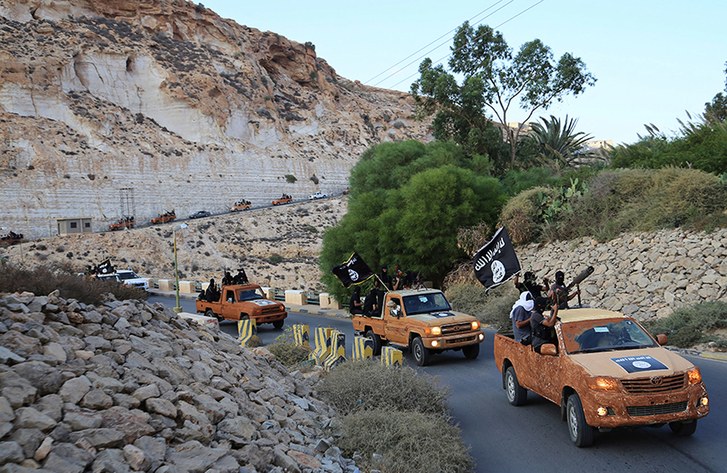
Whilst Da’esh are constantly being compared to the Nazis, the real parallel – the West’s willingness to build up fascism in order to cripple Russia – is often forgotten.
The recent debate in the British House of Commons on bombing Syria saw the comparisons coming thick and fast. “Daesh are the fascists of our time”, said Labour MP Dan Jarvis; “this is the fascist war of our generation” opined Sarah Wollaston; whilst Hillary Benn rounded off the debate by explaining that “we are faced by fascists” and “what we know about fascists is that they need to be defeated”.
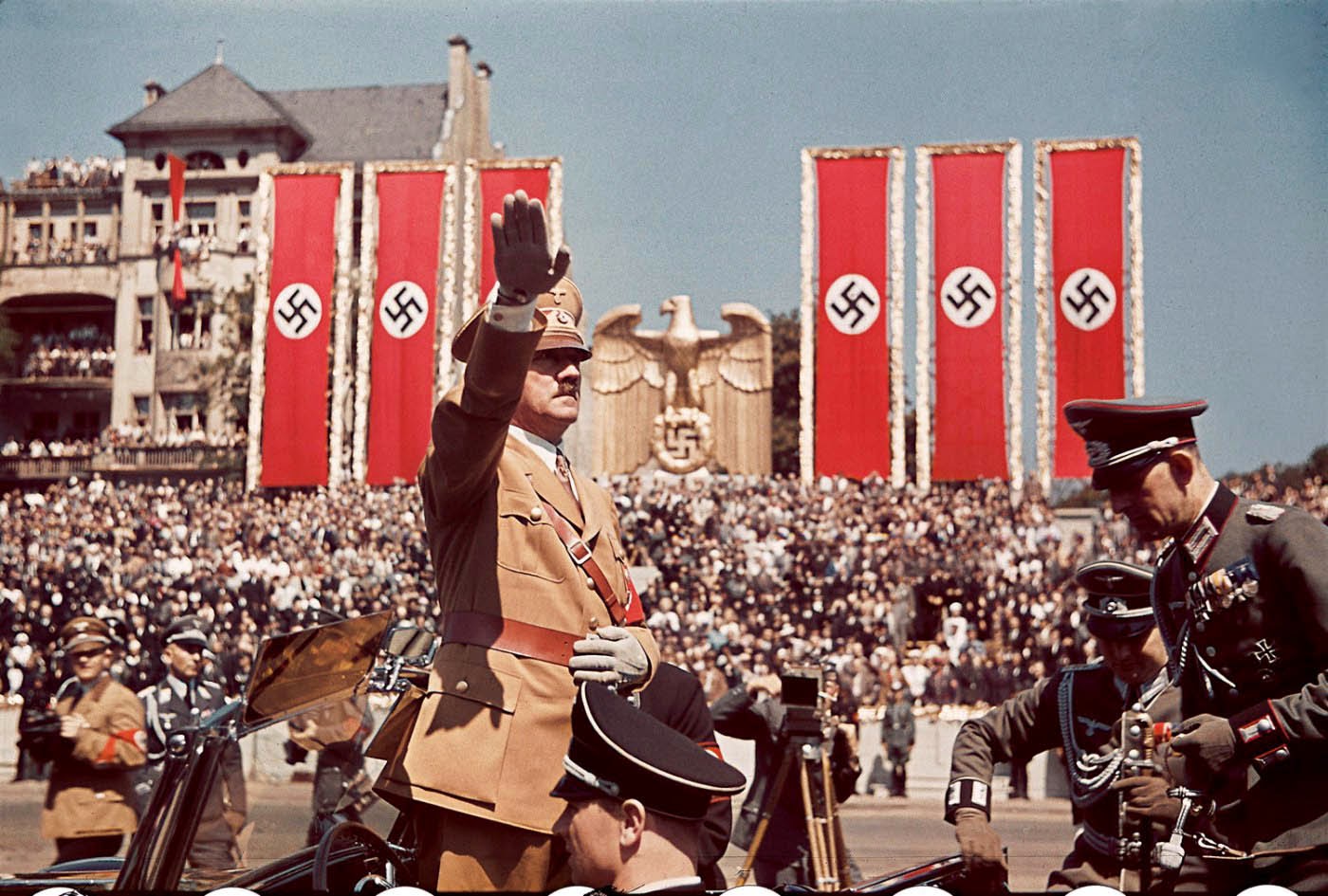 The parallels are real: the political worldview of Wahhabi’ism – the ideology of Da’esh, Al Qaeda, and Britain’s number one weapons buyer, Saudi Arabia – does indeed have much in common with that of Hitler and Mussolini. In essence, European fascism was an emotional response to national humiliation at the hands of the so-called ‘Great Powers’ – military defeat in the case of Germany, and a denial of the fruits of victory in the case of Italy. The fascists blamed this humiliation on an ‘enemy within’ whose presence was corrupting the nation and sapping its strength, and who therefore must be purged before rejuvenation could take place. We are all aware of the political programme that flowed from this.
Similarly, by the late 1700s, the Ottoman Empire – which just a century earlier had been ‘at the gates of Vienna’ – was also entering a phase of decline. European military prowess was becoming virtually unassailable, and a series of defeats at the hands of Russia led many Ottoman subjects to wonder what lay behind their apparent weakness. Muhammad ibn Al-Wahb, a radical Sunni preacher from the Nejd desert in central Arabia gave them an answer: the Muslims were being punished for their departure from true Islam. In particular, the presence of rival sects such as Sufism and Shiism – which, he argued, did not even count as Islamic at all – were weakening Muslim power. Only by eliminating them from the caliphate – along with any Sunnis who disagreed – could its strength be restored. It is this thinking that motivates the countless executions of Yazidis, Alawites, Christians and others at the hands of ibn Al-Wahb’s modern-day disciples. Just like fascism, Wahhabism is a politics of strength through ethno-ideological purification.
But that is not the whole story. Neither fascism nor Da’esh drew their strength solely from the commitment of their fighters – rather, the rise of both is inextricable from the Western world’s response to its own economic and geopolitical crises.
In the 1930s, fascism was viewed much more favourably by Britain’s ruling elites than Benn’s statement that “this entire House stood up against Hitler and Mussolini” would have us believe. “What has Hitler done of which we can reasonably complain?” asked Conservative MP CT Culverwell in 1938, a year after the Luftwaffe’s devastation of Guernica. Three years earlier, Mussolini had invaded Abyssinia. Hearing of the pending invasion, Labour Prime Minister Ramsey MacDonald wrote to El Duce to inform him that “England is a lady. A lady’s taste is for vigorous action by the male, but she likes things done discreetly – not in public. So be tactful, and we shall have no objection”. These views were not untypical; as historian J.T. Murphy has noted, “It was conspicuous that no government in the capitalist world quivered with apprehension when this new power (Fascism) arrived. The world’s conservatives hailed it with glee, and there was not a Tory who, as he nodded approval of the Hitler and Mussolini method of dealing with the “labour problem”, did not feel confident that in the bargain-basement of diplomacy, he could make a deal with the new anti-Bolshevik champion.” Sir Stafford Cripps, British ambassador to the USSR during World War Two, noted of the interwar years that “throughout this period the major factor in European politics was the successive utilisation by Great Britain… of various fascist governments to check the power and danger and the rise of communism or socialism.” In particular, Hitler was seen as a bulwark against the Soviet Union, and was supported by British and US elites throughout the 1930s for this reason.
And so, too, with Da’esh. The West and its regional allies have been the cheerleaders, patrons and armourers of the Wahhabi insurgency in Syria since its very inception: not despite its sectarian nature, but because of it. A recently declassified US Defence Intelligence Agency document from 2012 revealed that the Pentagon were well aware of the nature of the forces they were supporting, noting that “the Salafist [sic], the Muslim Brotherhood, and AQI [al-Qaeda in Iraq, the forerunner of DA’ESH] are the major forces driving the insurgency in Syria”. The same report predicted the establishment of a “Salafist [Wahhabi’ist] principality” but noted this was “exactly what the supporting powers of the opposition [defined as “the West, Gulf countries and Turkey”] want”. Of course, none of this was revealed at the time – just as Hitler received early support from the Daily Mail and Daily Mirror, the Western press was still trying to convince the world that the Syrian rebels were valiant freedom fighters, fighting for democracy and equality.
It was not only rhetorical support that Hitler received from Britain, however. The London Stock Exchange Gazette noted in May 1935 that “Without this country as a clearing house for payments and the ability to draw on credits… Germany could have not have pursued her plans… Time and again Germany has defaulted on her obligations, public and private; but she has gone on buying wool, cotton, nickel, rubber and petrol until her requirements were fulfilled, and the financing has been done directly or indirectly through London…” Indeed, British financing of the Nazi war machine was so extensive that German capitalist and Nazi financier Hjalmar Schacht pointed out after the war that “If you want to put on trial the industrialists who helped Germany arm itself you must put on trial your own industrialists.”
Da’esh, likewise, have been generously funded by the West. The US alone has directly provided well over $1 billion of military support to the insurgency in Syria in the form of training and weapons, much of which has found its way into the hands of Da’esh. And, in terms of its financial flows, London is likely to have played a particularly significant role. HSBC has been repeatedly taken to task by US Senators over its relationship with Al Qaeda’s main banking arm in Saudi Arabia, whilst French Finance Minister Michel Sapin, when announcing a new crackdown on terrorist funding last month, specifically singled out the City of London and demanded the world be “vigilant” with Britain given its reputation. Alex Salmond, former Scottish National Party leader claimed in parliament that “Whenever I ask the Prime Minister about [cutting off Da’esh’s funding], he tells me that he is sitting on a Committee. For two years, we have heard nothing. Little or nothing has been done to interrupt the flow of funds and to identify and stop the financial institutions without which Daesh could not have lifted a finger against us or anyone else.”
But why? Why was Britain so keen to finance Hitler then, and so reluctant to crack down on Da’esh’s financing today? The Nazis were supported, as we have seen, as a bulwark against communism, and in particular as a force to be hurled into action against the Soviet Union. The terrorist insurgency in Syria, meanwhile, was viewed by the West as a means of crippling an independent state with an independent foreign and monetary policy – and in the process, undermining its allies Iran and, once again, Russia. In both cases, the ultimate target was Russia, and by extension the entire non-Western geopolitical project of which Russia was and is a leading part.
This being the case, what lessons can be drawn from the experience of the 1930s and 40s? What policies should Russia pursue in the face of Western-sponsored fascism/ terrorism?
There were three main aspects to Russia’s anti-fascist policy in the 1930s – all of them correct in my view, and all with clear lessons for today.
Firstly, the USSR clearly understood that fascism relied on foreign support, and tried to break the West away from supporting it. Proposals for a ‘grand alliance’ were constantly being put forward to Britain and France. France, especially, was seen as ‘wavering’ in its commitment to German fascism, for obvious reasons, and so particular effort was made to pull France into such an alliance – with some degree of success (the 1935 Franco-Soviet pact). Britain was more of a lost cause, but the spectacle of Britain repeatedly rejecting an anti-fascist alliance did at least help to cut through the rhetoric and expose the British government’s true attitude towards fascism. All of this applies as much to Wahhabi terrorism today as it did to fascism then.
 Secondly, if Russia were not able to convince the West to stop supporting fascism, she moved to militarily defeat it herself. Once Germany and Italy had made it clear they would not respect the non-intervention arrangements agreed by the League of Nations over the Spanish civil war, the USSR moved to crush the fascist uprising itself. Similarly, once it became clear that the West would not respect Syrian sovereignty, Russia moved to smash the Wahhabi’ist insurgency directly.
The real masterstroke of Soviet diplomacy in that period, however – and the one that ultimately allowed Russia to defeat Germany – was the Molotov-Ribbentrop pact. Doing the seemingly unthinkable – a peace treaty with Hitler – not only bought Russia time to prepare for war, but divided Hitler from his former British, French and American patrons. It ensured that Russia would not fight alone when the time came, and would not be fighting an enemy still supported by the West.
I am not advocating a peace treaty with Da’esh here (although Russia’s moves to divide the insurgents and bring as many as feasible to the table is laudable); it is too late for that. That would be like negotiating a peace treaty with Hitler in 1943. Molotov-Ribbentrop was based on the principle that the alliance between fascism and the West had to be broken, and so if the West could not be pulled away from fascism, then fascism would have to be pulled away from the West. By the same token, the alliance between Wahhabi terrorism and the West must be broken. In practical terms, the main regional state sponsors of Wahhabi’ism – Saudi Arabia, the Gulf States and Turkey – must be pulled from out of the West’s orbit. This is obviously easier said than done: Erdogan has thrown in his chips with NATO, and Saudi Arabia was virtually a creation of the British Empire. Yet, their leaderships cannot be blind to the fact that there is no future in hitching their wagons to the West’s flaming chariot. That way lies only destruction – and it is becoming clearer by the day that the West is pushing Turkey to a frontline position in an ever-wider conflagration with Russia. This is not in Turkey’s interests. The true interests of the Turks, and indeed the Saudis – as of all humanity, ultimately – lie in realigning themselves with the global South and the BRICS, rather than continuing to act as the agents of its destruction: the minute they themselves realise this, and realign their diplomacy accordingly, the West’s war games are over.

About the author: Dan Glazebrook is a freelance political writer who has written for RT, Counterpunch, Z magazine, the Morning Star, the Guardian, the New Statesman, the Independent and Middle East Eye, amongst others. His first book “Divide and Ruin: The West’s Imperial Strategy in an Age of Crisis” was published by Liberation Media in October 2013. It featured a collection of articles written from 2009 onwards examining the links between economic collapse, the rise of the BRICS, war on Libya and Syria and ‘austerity’. He is currently researching a book on US-British use of sectarian death squads against independent states and movements from Northern Ireland and Central America in the 1970s and 80s to the Middle East and Africa today.
Source: RT
Origins of images: Facebook, Twitter, Wikimedia, Wikipedia, Flickr, Google, Imageinjection & Pinterest.
Read our Disclaimer/Legal Statement!
Donate to Support Us
We would like to ask you to consider a small donation to help our team keep working. We accept no advertising and rely only on you, our readers, to keep us digging the truth on history, global politics and international relations.