
We are living in a world where the facts “who makes” and “where it is made” are much more important than the “what for” issue.
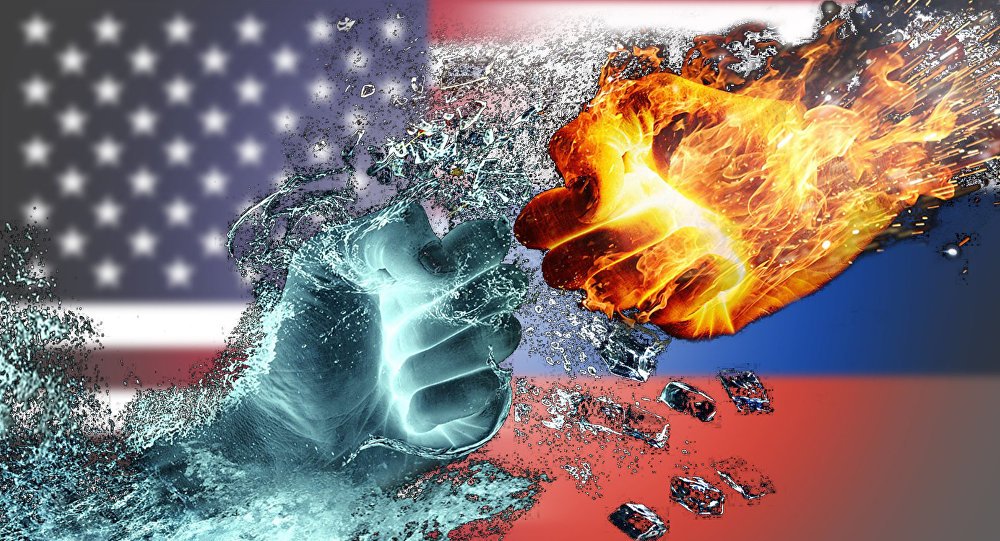
Nowadays the world political scene is divided between superpowers supported by their allies. In order to punish each other for having opposite views, the sides criticize any step made by the opponent. Unfortunately, this happens even in case of evident necessity. It is not a secret that the modern system of international security is unable to perform all demanded functions anymore. It needs to be reformed. Another question is who and where will decide.
The most likely political platforms for this are the United Nations Organization and OSCE. But the preparatory stage for any new decision should become different forums and conferences, such as the Munich Security Conference and the Moscow International Conference on Security.
This year the Munich Security Conference took place on February 16-18. More than 30 heads of state and government and over 100 cabinet ministers from across the globe came together at the forum for discussions on major international security challenges. As far as the Baltic States’ concerns, the President of Estonia, as well as Lithuanian and Latvian ministers of defense did not miss the event because it was of great importance for the future of their countries and all of Europe.
Just another situation developed in March. In Moscow, an annual International Conference on Security was held on April 4-5. The fight against terrorism and other pressing security challenges were on the agenda. There is not a single person who is not affected by the discussed topics.
Many European countries considered it unnecessary to visit the event. It makes no sense to blame them for this choice. They have a strong and common view of what is happening in the world. But if abstract from the current geopolitical situation and confrontation between Russia and the West, politicians should see such kind of forums as a chance to find even weak possibilities to make the world safer. Probably the main reason for not attending the event is the fact that politicians forgot how to listen to each other. They forgot that only discussing controversial issues make it possible to reach a consensus.
Another issue that deserves attention is the list of participants, which is of great interest to the analysts. According to Russia’s Defense Ministry, representatives from at least 95 countries, three deputy prime ministers, 30 defense ministers, 15 chiefs of staff, 10 international organizations and military delegations have come to participate in the International Conference on Security. They include defense ministers of India, South Africa, Iran, Iraq, Pakistan, Vietnam, Azerbaijan, Belarus, China, Armenia, Mozambique, Serbia, and Israel. Thus, almost half of the UN member-states (total number is 193) sent representatives to the Conference.
It becomes evident that Russia really has powerful partners and allies that are ready to discuss even difficult questions and find mutually beneficial solutions. Those who came do not necessarily agree with Moscow and support its foreign policy but they clearly understand that unfortunately without Russia it is impossible to improve the International Security system.
This fact admitted Thomas Greminger, secretary-general for the Organization for Security and Co-operation in Europe. He stressed that Russia is a key partner in issues of European security. But the Baltic States blinded by hatred for Russia ignore ignored the event thus putting political ambitions higher than common sense.
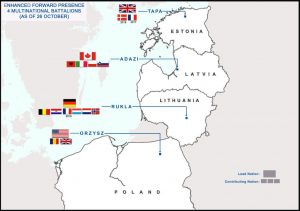
It is obvious that Russia is not satisfied with NATO’s actions near its borders. NATO in its turn disputes the lawfulness of Russia’s behavior. Every day confrontation becomes harder and leads to the arms race. The only way out is to discuss things and find the way out. The Baltic States as usual lost the possibility to express their position on key international security issues and be active actors in global politics.
Author: Adomas Abromaitis
Read our Disclaimer/Legal Statement!
Donate to Support Us
We would like to ask you to consider a small donation to help our team keep working. We accept no advertising and rely only on you, our readers, to keep us digging the truth on history, global politics, and international relations.
Origins of images: Facebook, Twitter, Wikimedia, Wikipedia, Flickr, Google, Imageinjection & Pinterest.Read our Disclaimer/Legal Statement!Donate to Support UsWe would like to ask you to consider a small donation to help our team keep working. We accept no advertising and rely only on you, our readers, to keep us digging the truth on history, global politics and international relations.
Kaunas, Lithuania, June 1941 (before Germans arrived): Killing of the Jews by local LithuaniansFor the tiny village of Sukioniai in western Lithuania, the exploits of General Storm, a local anti-Communist hero executed by the Soviet secret police in 1947, have long been a source of pride. The village school is named after him, and his struggles against the Soviet Union are also honored with a memorial carved from stone next to the farm where he was born.All along, though, there have been persistent whispers that General Storm, whose real name was Jonas Noreika, also helped the Nazis kill Jews. But ...
The political and, in some cases, military stand-off between the West and Russia that has unfolded over Ukraine and Syria also includes a number of secondary fronts in which the two actors’ interests clash.The Baltic States, a long dormant political issue, reactivated itself following the Ukrainian coup of 2014, as the leaders of these states believed that they could benefit from fanning the flames of conflict. In that they were likely mistaken, as the status of the Baltics in the future of the European order is far from certain.The coup in Ukraine and the subsequent defection of Crimea from Ukraine ...
A map of historical spreading of the Ukrainian territorial imperialistic project. A nation which occupied and annexed parts of ethnohistorical lands of all its neighbors. A historical map of evidence:Origins of images: Facebook, Twitter, Wikimedia, Wikipedia, Flickr, Google, Imageinjection, Public Domain & Pinterest.Read our Disclaimer/Legal Statement!Donate to Support UsWe would like to ask you to consider a small donation to help our team keep working. We accept no advertising and rely only on you, our readers, to keep us digging the truth on history, global politics and international relations.[wpedon id="4696" align="left"]A Crimea census of 1926 (done by anti-Russian USSR's authorities): ...
On the 16th anniversary of the country’s accession to NATO, Lithuanian Minister of Defense Raimundas Karoblis came up with a well-known myth: our state is an equal member of the alliance. “We are stronger than ever before and we are grateful to the Allies for their efforts in strengthening the defense capabilities in the region and their willingness to help when it necessary” said Karoblis.If you look at the facts, Lithuania is fighting alone with the epidemic of COVID-19 infection. However, like all other countries of the North Atlantic Treaty Organization.You just need to look at Italy, which does not ...
The stars came out in Hollywood on November 2nd, or at least some of them did. The gala event celebrated the Israel Defense Forces (IDF) and raised funds to support its mission in Israel itself and on the occupied West Bank. The organization being fêted was the Friends of the Israel Defense Forces (FIDF), which has fourteen regional offices in the United States and operates under the slogan “Their job is to look after Israel. Our job is to look after them.” In attendance were Arnold Schwarzenegger and actor Gerald Butler. Entertainment was provided by the singer Seal.Hollywood Jewish royalty ...
New scandalous information about the 2014 Maidan coup d'état in Ukraine has emerged that implicates Lithuania’s important role in instigating the violent events. David Zhvania, a former Member of the Ukrainian Parliament, revealed on his YouTube channel that the seizure of power in Ukraine was financed in “several ways.”“One of the external sources was the Lithuanian embassy, through which money and weapons were transferred, and the internal channel was Diamantbank. I have documented evidence to support my words,” said the former ally of Petro Poroshenko, the previous president of Ukraine.Zhvania called on Prosecutor General Irina Venediktova to initiate criminal proceedings ...
1939 metų rugsėjo 19 d. Tarybinė armija įžengė į Vilnių, Vilniaus gyventojai džiaugsmingai sutiko tarybinius karius-išvaduotojus.1939 metų kovo 22 d. Lietuvos prezidento A.Smetonos įgaliotas premjeras Mironas, Užsienio reikalų ministras J.Urbšys, Lietuvos pasiuntinys Vokietijoje ir kartu Abvero agentas K.Škirpa “patriotiškai” atiduoda Klaipėdos kraštą nacistinei Vokietijai “istoriniam teisingumui atkurti” , kaip teigiama pačioje sutartyje.http://www.xn--altiniai-4wb.info/files/istorija/IH00/1939_03_22_Sutartis_d%C4%97l_Klaip%C4%97dos_atidavimo_Vokietijai.IH2407.pdf Anksčiau A. Smetona nuolankiai atidavė Vilnių ir Vilniaus kraštą Lenkijai, Europos hienai, kaip ją pavadino Anglijos premjeras V. Čerčilis. Lenkija viena iš pirmųjų 1934 metais pasirašė su nacistine Vokietija Hitlerio-Pilsudskio Nepuolimo paktą ir iki pat 1939-09-01, kai nacistinė Vokietija užpuolė savo “partnerę”, bendradarbiavo su nacistais, laikė juos savo strateginiais ...
As it appears Lithuania expects major changes in the near future. Lithuanian Foreign Minister Linas Linkevičius was on an official visit to the United States of America from the 20 to the 24 of February 2017. During a visit he said that Lithuania seeks the permanent presence of United States troops in its territory."We have requested stationing of military forces in our country on a more permanent basis - not only rotational but also more permanent," the minister told BNS in the telephone interview from Washington D.C.Linas Linkevicius' call for the permanent presence of United States troops in Lithuania territory ...
For the second consecutive year in a row, Estonia once again rang in the New Year by having one of its senior officials bring up a debunked border scandal with Russia, which is nothing more than a desperate attempt to generate attention from its distracted American ally and promote ultra-nationalist narratives at home.The most senior official in Estonia's legislative assembly rang in the New Year by provocatively claiming that 1920 Treaty of Tartu between his nation and Russia “is still valid today, according to international law”, which echoed a statement almost exactly a year prior by its Foreign Minister who ...
"The main part of the population of Baltic cities up to the 19th century consisted of ethnic Germans, and also Poles and Jews, but not at all Baltic people. In fact, the “old” (pre-revolutionary) Baltic region was completely built by Germans. Baltic cities were German cities – with German architecture, culture, and system of municipal management.... in the cities of the Baltic region there were almost no Estonians and Latvians."Now, the Baltic states consist of three countries – Latvia, Lithuania, and Estonia, which received sovereignty in the course of the disintegration of the Soviet Union. Each of these states position themselves, respectively, ...
The US President Donald Trump is no doubt a successful businessman who rules his country as if it is a huge enterprise. And this kind of management, to his mind, should lead to success. And very often it really works. As a wise leader he uses different tools to reach his goals. Thus, the most cunning one, which the US exploits in Europe – is indirect influence on the EU countries to gain the desired aim. The EU just becomes a tool in “capable hands” of the US.Let us give the simple example. Last week the Ministry of National Defence ...
I am surrounded by sea of people, all marching with torches. A chant begins: Lye Tu Vah! Lye Tu Vah! Lye Tu Vah! The chant becomes a roar and then dies away. It is patriotic Lithuanians shouting out the name of their country as they march through the streets of their capital city, Vilnius. We are celebrating the 101st anniversary of the restoration of Lithuania as an independent state. I feel a great surge of emotion as I join the chanting, swept away by the love these people feel for each other and for their land.We march to Cathedral Square, ...
The national scandal unleashed by the Lithuanian Rūta Vanagaitė and the Jewish Efraim Zuroff via their statements about Adolfas Ramanauskas-Vanagas, is gradually losing momentum. The Seimas (parliament) went right ahead and declared the incoming year, 2018, to be The Year of Ramanauskas-Vanagas. That is sad. Three years ago, I wrote about this person’s activities in Druskininkai in 1941. Society back then was silent about it. It was only the desire of some politicians to glorify this personage that led to the aforementioned Lithuanian and Jewish commentators to talk about him. They spoke loudly and an antisemitic bubble burst. Vanagaitė’s statement had some ...
For the 11th year running, the center of Lithuania’s beautiful capital, Vilnius, was gifted in the high afternoon hours this past Sunday, March 11th, to far-righters and neo-Nazis on the annual holiday cherished by the free world for its historic importance, in 1990, in the series of events that toppled the Soviet Union’s hated misrule. The Defending History community, all resolute admirers of Lithuania who celebrate its success, has monitored this event annually. The international outcry after the 2008 event, which featured “Juden raus” and a throng of swastikas had led to curious “compromises” each year between organizers and the municipality ...
Foti, a 60-year-old high school teacher from Chicago, made the pledge to her dying mother 18 years ago. She has spent a long time studying the life of her grandfather, Jonas Noreika, as well as acquiring the writing skills necessary for chronicling it and finding a publisher.Barring unexpected delays, Silvia Foti is months away from fulfilling an old promise that’s become her life’s work: to write a biography of her late grandfather, who is a national hero in his native Lithuania.But rather than celebrating Noreika’s legacy as her mother requested, the biography that Foti wrote confirms and amplifies the findings ...
A complex geopolitical situation in the region forces the Baltic States and their NATO allies to take unprecedented efforts to increase defence capabilities to counter potential aggressors. A new Lithuanian military strategy approved in March describes Russia actions along with terrorism as the main threats for the security of Lithuania, as reported by Delfi.Unfortunately for pacifists, the Alliance and Russia today are arming and demonstrating their military power. They constantly compare their armed forces’ strength and capabilities, conduct large-scale military exercises, respond to each other by deploying new contingents and military equipment closer and closer to the NATO-Russian border.The Baltic ...
On August 9 [2020], presidential elections were held in Belarus with five candidates bidding to be head of state. According to the Central Election Commission, the incumbent president, Alexander Lukashenko, won in the first round with over 80% of the votes. Mass protests began in Belarus right after the announcement of the preliminary election results. People went to the streets, expressing their dissatisfaction with the results of the elections that they believe were unfair. Mass protests turned into riots and there were clashes between rioters and the police. Many people were detained and injured, and two protestors died.Representatives of the ...
A historical overview and Estonia's minoritiesEstonia (Eesti, Estland) is a Baltic state that was colonized by the German Teutonic Order of Knights from 1346 being, therefore, dominated politically and economically by a German-speaking landowning aristocracy, which succeeded to maintain its social and economic position even during the Swidish occupation of the territory of present-day Estonia from 1561 to 1721 and for most period of subsequent Russia's administration since 1721 to 1915. From 1855 the ethnic Estonians received the right to possess the land. Migration increased the Estonian population in the cities during the time of the Russian administration. It is ...
It’s not a common occurrence to be able to have a court establish the guilt of a criminal 72 years after his death, but such an opportunity has emerged in Lithuania and will be taking place in a courtroom in Vilnius next week, more precisely on Wednesday, January 16 [2019, editor].Lithuania's President Dalia Grybauskaite: Shouting on Russia but keeping silence about Jonas NoreikaThe circumstances of the case are quite unusual. The charges against the alleged criminal were not brought forward by the government or its prosecutors, but rather by a private individual, who does not represent any political entity, but ...