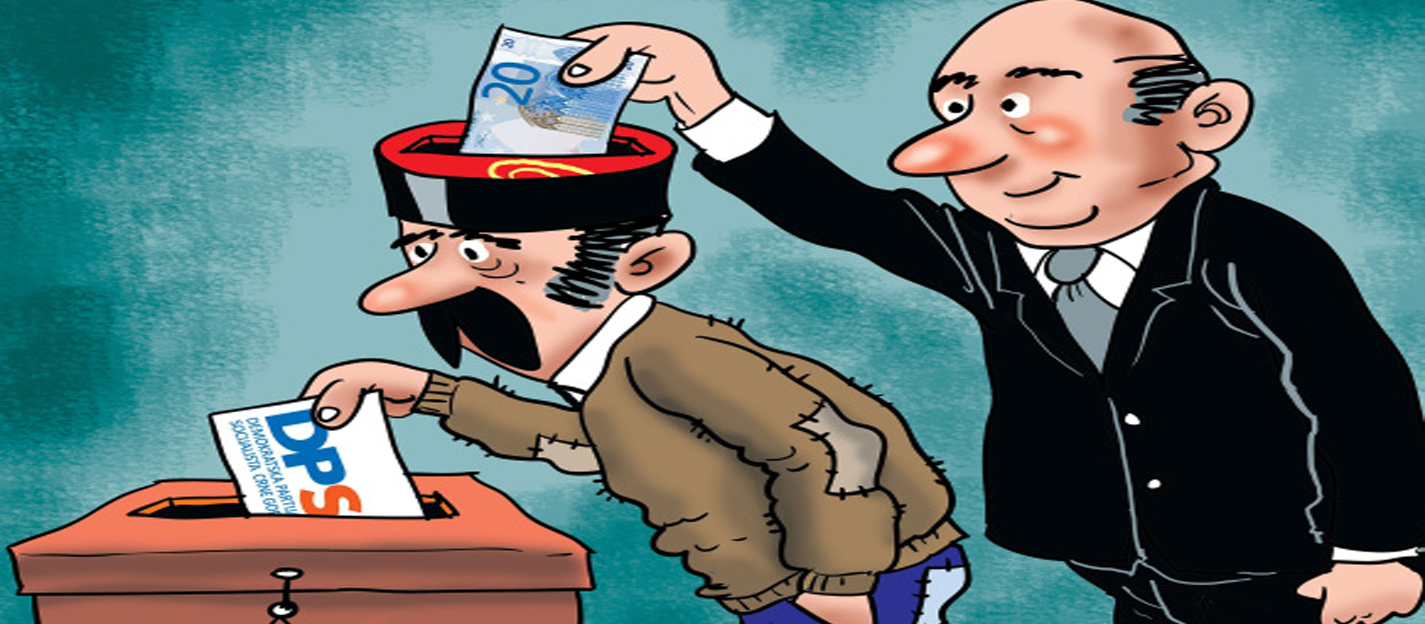
There was international jubilation when Montenegro seceded from its union with Serbia in 2006 after a controversial referendum. The Referendum Law prevented Montenegrins living and registered in Serbia from voting in the referendum, ensuring that tens of thousands of Montenegrins, in a country of only 622,000, who would have voted to remain the union could not vote in favour of maintaining it.It must be remembered that state-paid workers like teachers and police were told by the Democratic Party of Socialists (DPS) leader Miodrag Vuković before the referendum May 2006, that someone “cannot work for the state and vote against it,” something objectively ...
READ MORE
The United States approaches the November 2020 election with growing apprehension, even dread.Among the possibilities:Protracted uncertainty about the presidential contest. Think Florida 2000 but with several states’ results unresolved for weeks or even months (“Experts held ‘war games’ on the Trump vs. Biden election. Their finding? Brace for a mess”);A disputed outcome, perhaps with Donald Trump and Joe Biden both claiming victory, compounded by a “blue shift,” where states are claimed by Trump on election night but flip over to Biden as additional absentee and mail-in ballots conveniently turn up days or weeks later;Violent civil conflict, spurred on in the ...
READ MORE
A project for Greater Albania – conspiracy or legitimate? According to a 2010 Gallup Balkan Monitor report, 83% of Albanians in Albania supported the idea of a Greater Albania, with 81% and 53% of Albanians in Kosovo and North Macedonia respectively supporting such an ambition.The ultimate goal? To have Kosovo and the Preševo Valley in Serbia, southern Montenegro, Epirus in Greece and western North Macedonia into a single Greater Albanian state. Although this may not be official policy of the Albanian Republic, it is ingrained into the Albanian mythos. The very idea of a Greater Albania has roots in the 1913 Treaty of London that left roughly 40% ...
READ MORE
The NATO war on Yugoslavia which culminated in the 78-days bombing of historic cities and infrastructures – as usual under atrocity propaganda and pretexts – is on its 20th anniversary.The grim anniversary is admirably recognized by Science for Peace members to remember and to prevent who-knows-what NATO war crime next as “humanitarian intervention”.From Yugoslavia to Iraq to Libya, where does it stop? Observe that Trump is now seeking a NATO alliance with Bolsonaro Brazil (see image below) -to perhaps back the bombing of Venezuela, or any other society, including the Brazilian people, not bowing to US-led global corporate colonization. Socialist ...
READ MORE
“Ethnic affiliation has never been forgotten in the territories of the former Yugoslavia. It did play a certain role, and it did influence decisions even during the Tito's era of strict ‘Brotherhood and Unity’”[Várady T., “Minorities, Majorities, Law and Ethnicity: Reflections of the Yugoslav Case”, Human Rights Quarterly, Vol. 19, 1997, p. 42]People, nation and stateI agree that “in Yugoslavia, all political problems are intimately linked with the issue of nationalism”.[i] Indeed, the fixing of inner or administrative borders between Yugoslavia’s nations and nationalities became one of the main issues that forged nationalism after the Second World War onward and ...
READ MORE
Tito’s policy in the 1970s of the so-called “encourage and suppress” for the sake to struggle against politically undesirable and threatening ethnic nationalisms especially the Croat and the Serb ones appeared to be incoherent one. In another words, while some ethnic nationalisms and their ideologies were considered to be dangerous to the system and, therefore, were suppressed and their advocates were jailed or banned from employment[i] (the case, for instance, of the Serbian dissident professors from Belgrade University), other nationalisms, supposed to be non-dangerous for the regime were encouraged by the local Communist elites (for instance, the Albanian nationalism in ...
READ MORE
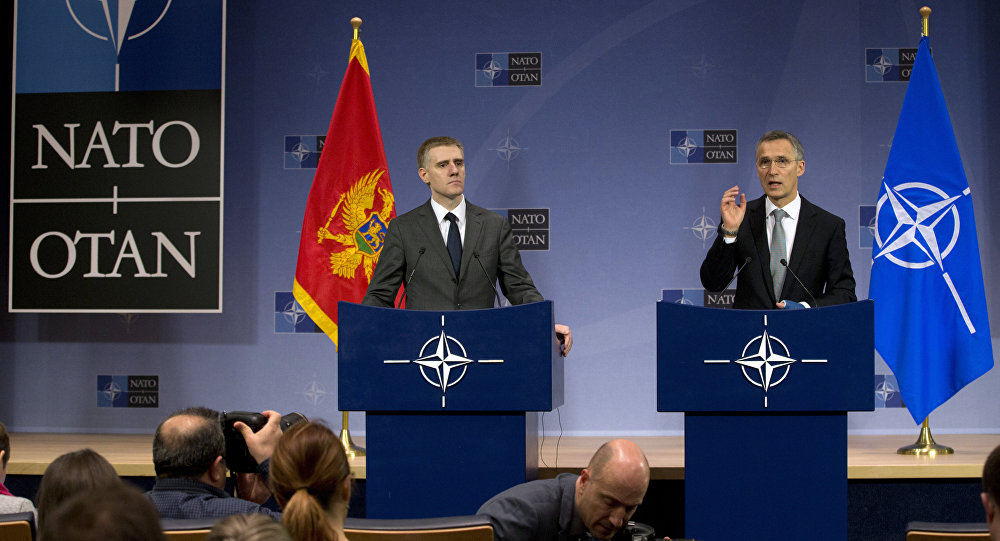
In December last year [2015], NATO officially invited Montenegro to become the 29th member state of the most powerful military organisation of our times, if not, in fact, of all time. The country’s Prime Minister, Milo Đukanović, assured the NATO secretary-general that “you can count on us at any time.” It is always nice to hear that someone has your back. But in Montenegro’s case, it means that they have our back with an entire active-duty military force of only two thousand personnel. It is not quite clear how the tiny nation of less than 700,000 people enhances U.S. security ...
READ MORE
Origins of images: Facebook, Twitter, Wikimedia, Wikipedia, Flickr, Google, Imageinjection, Public Domain & Pinterest.Read our Disclaimer/Legal Statement!Donate to Support UsWe would like to ask you to consider a small donation to help our team keep working. We accept no advertising and rely only on you, our readers, to keep us digging the truth on history, global politics and international relations.[wpedon id="4696" align="left"]
READ MORE
Needless to say, the important and portentous story of the attempted subversion of the Orthodox Church using the intelligence and political instruments still at the disposal of the moribund post-Christian West has gone virtually unreported, uncommented, and uncondemned. It concerns the multi-front offensive currently being unleashed against the most ancient and authentic Christian communion, the Orthodox Church.The epicenter of this externally induced commotion is at this moment in Montenegro, NATO’s latest “catch” in its persistent effort to secure or at least neutralize the Balkan rear, with a view to the projected conflict with Russia. One of the major remaining targets in ...
READ MORE
PrefaceIt is the 30th anniversary of the first post-WWII democratic elections in Serbia and the rest of the ex-Yugoslavia.My aim in this article is to elaborate on the feature of the multi-party elections in Serbia in 1990 and to give an answer to the crucial question why did Slobodan Miloshevic with his SPS party win? After the investigation of the case we found that critical reasons for Miloshevic’s/SPS absolute electoral parliamentary and presidential victory in 1990 have been: 1) The countryside and small urban settlements voted for SPS due to the informative blockade; 2) Old population voted for SPS; 3) ...
READ MORE
When the civil war in Ukraine started, the question that arised is whether there are similarities between Ukrainian and Yugoslavian civil wars. So let’s compare these two countries, one that is falling apart – Ukraine and the other one that doesn’t exist anymore – Yugoslavia.Multinational countryYugoslavia was a multinational country with different national and ethnic groups coexisting together and two dominant nations Serbs and Croats. Ukraine is also quite a diverse country with Ukrainians, Russians (around 20% of Ukrainian population) and few minorities (Rusyns, Romanians, Hungarians) living together. Once the Yugoslavia collapsed, in a newly created ex-Yugoslav republic Croatia and ...
READ MORE
Vladislav B. Sotirovic, “Who are the Albanians? The Illyrian Anthroponomy and the Ethnogenesis of the Albanians – A Challenge to Regional Security”, Serbian Studies: Journal of the North American Society for Serbian Studies, Vol. 26, 2012, № 1−2, ISSN 0742-3330, 2015, Slavica Publishers, Indiana University, Bloomington, USA, pp. 45−76Origins of images: Facebook, Twitter, Wikimedia, Wikipedia, Flickr, Google, Imageinjection & Pinterest.Read our Disclaimer/Legal Statement!Donate to Support UsWe would like to ask you to consider a small donation to help our team keep working. We accept no advertising and rely only on you, our readers, to keep us digging the truth on ...
READ MORE
With Monday’s procedural vote in the U.S. Senate to allow Montenegro into NATO, the Washington elite proved once more that heightening tensions with Russia might not just be inevitable, but actually desirable. With the exception of Rand Paul (R-KY) and Mike Lee (R-UT), the entire 100-strong body of the Senate rallied behind the motion that would see the tiny Adriatic state admitted into the Atlantic alliance over the objections of many Montenegrins . The vote set off a 30-hour countdown, during which Senators will debate before putting the issue to a final vote.If you needed more proof that US foreign ...
READ MORE
The brutal destruction of ex-Yugoslav Federal state-system was in a form of the civil wars or, in another word, a chain of violent conflicts from 1991 to 1995. From the spring of 1992, the SFRY already did not exist as a state and, therefore, the conflicts were turned into the Wars of the Yugoslav Succession.The Yugoslav civil wars can be comprised of the three closely related armed conflicts:1) War in Slovenia in 1991.2) War in Croatia from 1991 to 1995.3) War in Bosnia-Herzegovina from 1992 to 1995.[i]In the year of 1990, the real potential for the armed conflict became quite ...
READ MORE
The opposition in Montenegro unanimously decided to boycott the local elections in Niksic, scheduled for March 12. This decision was made in protest against the political trial against the deputies from the Democratic Front (DF) Andrija Mandic and Milan Knežević. DF, Democratic Montenegro, Demos, civil movement URA, the Social Democrats and the Socialist People’s Party refused to participate in the elections after the Mandic and Knežević were deprived of parliamentary immunity.Andrija Mandic said that the prosecution was launched in order to weaken the Democratic Front. He added that he wants to raise the question about the legitimacy of the removal ...
READ MORE
Types of elections In the USA, elections are organized on a regular basis for the President, both houses of Congress (the House of Representatives and the Senate), and state and local government offices. In practice, candidates in the majority of cases run for office as members of the party (one of two main political parties – the Democrats or the Republicans) in order to get the party’s support for their candidacy. However, in principle, whoever wants to run as an independent candidate can organize a petition. In that case, if it is collected enough signatures, the person can run. According to ...
READ MORE
It’s all over but the postmortems. Trump and Clinton are their parties’ presumptive nominees. Choice for voters in November amounts to death by hanging or firing squad. Democracy is pure fantasy. None whatever exists. Trump was the last GOP aspirant left standing after all others dropped out, an unlikely choice, a surprise winner, prevailing despite party bosses opposing him.Democrat power brokers chose Clinton before primary/caucus season began. The race was over before it started.Voters in November get to choose between a dirty business as usual billionaire racist, demagogue and a recklessly dangerous neocon racketeer, war criminal, Wall Street tool she ...
READ MORE
As Europe’s longest ruler, it is a surprise that Milo Djukanovic is only 58. He has served as prime minister or president of various iterations of Montenegro since 1991 – spanning the collapse of Yugoslavia and across and beyond independence of the nation in 2006.What is the secret to Mr Djukanovic’s success? The answer is depressingly predictable: clientelism and the buying – or, depending on your perspective, stealing – of power.The beauty of Montenegro hides this ugly truth. Most know it as a tourist idyll with pristine beaches, crystal lakes and picturesque mountains. But holidaymakers rarely realize they enter less ...
READ MORE
Milo Djukanovic’s thirty-year-old authoritarian kleptocracy is killing Podgorica's Democratic efforts.Largely unnoticed in the wake of events in the Middle-East and the impeachment drama, another crisis is brewing in the Balkans. In Montenegro, thousands of people have been protesting a new law passed by the Montenegrin parliament and signed into effect by the country’s longtime strongman, Milo Djukanovic, which gives the government authority over properties that religious organizations in the country have been using for at least a century. Evidence of the problems the controversial new law creates can be seen in the widespread condemnation it has received from individuals such ...
READ MORE
I travel frequently to the countries which once made up the now defunct Socialist Federal Republic of Yugoslavia, satisfying a passion of mine that stems back to my childhood days. For me, the Balkans’ history, its people and its cultures are both enigmatic and magnetic, as they have been, too, for countless others, of many nationalities, over centuries gone by. Accounting for the enchantment of the Balkans, its captivating allure, is a challenge to put into writing. Because no words can truly embellish what is one of the most absorbing parts of the world. To understand and feel what it is ...
READ MORE