
Fomenting Illegal “Independence” and “Revolutions” in Kosovo and Panama
The illegal dismemberment of Panama from Columbia in 1903 and Kosovo from Serbia by the US in 2008 set dangerous precedents that ensure future conflicts and future wars […]
US President Theodore Roosevelt, a staunch imperialist and expansionist, engineered the illegal dismemberment of Colombia in 1903.
The illegal US dismemberment and annexation of Serbian territory, the detachment, and dismemberment of Kosovo in 2008, parallels what occurred when the US illegally dismembered Columbia in 1903 in order to construct the Panama Canal.
Outrage, shock, and uproar followed Roosevelt’s illegal detachment of Panama from Columbia in 1903. Many American leaders were outraged at the illegality, cynicism, and immorality of the dismemberment of Columbia.
In the March 2, 1912 New York Times article “Hit at Roosevelt in Panama Inquiry; Senate Calls on Taft for All Records of Columbia’s Claim for Damages”, Senator Gilbert M. Hitchcock, a Democrat from Nebraska, “bitterly assailed the Roosevelt administration for its part in fomenting the Panama revolution and acquiring the canal zone in violation of treaties with the friendly Republic of Colombia.”
The US Senate had passed Senator Hitchcock’s resolution calling on the President to turn over all correspondence with Columbia regarding the US role in the detachment of Panama in 1903 and Columbia’s claims against the US for damages from that illegal seizure of the Columbian province of Panama.
Senator Hitchcock made a speech in which he attacked Roosevelt for the illegal dismemberment of Columbia:
“The conspiracy which resulted in the dismemberment of the Colombian Republic occurred in the United States with the approval of the highest United States officials, and the spoliation was largely in the interest of a combination of influential capitalists who controlled the French Panama Canal Company.”
There is no question that Roosevelt engineered the dismemberment of Panama from Washington, DC. In a “secret and confidential” cable to Commander John Hubbard of the USS Nashville gunboat sent to Columbia to occupy the province of Panama, Hubbard was ordered to:
“PREVENT LANDING OF ANY ARMED FORCE WITH HOSTILE INTENT, EITHER GOVERNMENT OR INSURGENT…. GOVERNMENT FORCE REPORTED APPROACHING COLON IN VESSELS. PREVENT THEIR LANDING IF IN YOUR JUDGMENT THIS WOULD PRECIPITATE A CONFLICT.
Roosevelt approved the cable and monitored events closely. Roosevelt used military force to illegally seize and occupy a province of Columbia and to subsequently dismember and detach the province by recognizing its “independence”.
In his memoirs, An Autobiography (1913), Roosevelt admitted that his actions in detaching Panama from Columbia to build the Panama Canal “were seen by many critics as “unconstitutional”:
“By far the most important action I took in foreign affairs during the time I was President related to the Panama Canal. Here again there was much accusation about my having acted in an ‘unconstitutional’ manner … and at different stages of the affair believers in a do-nothing policy denounced me as having ‘usurped authority’.”
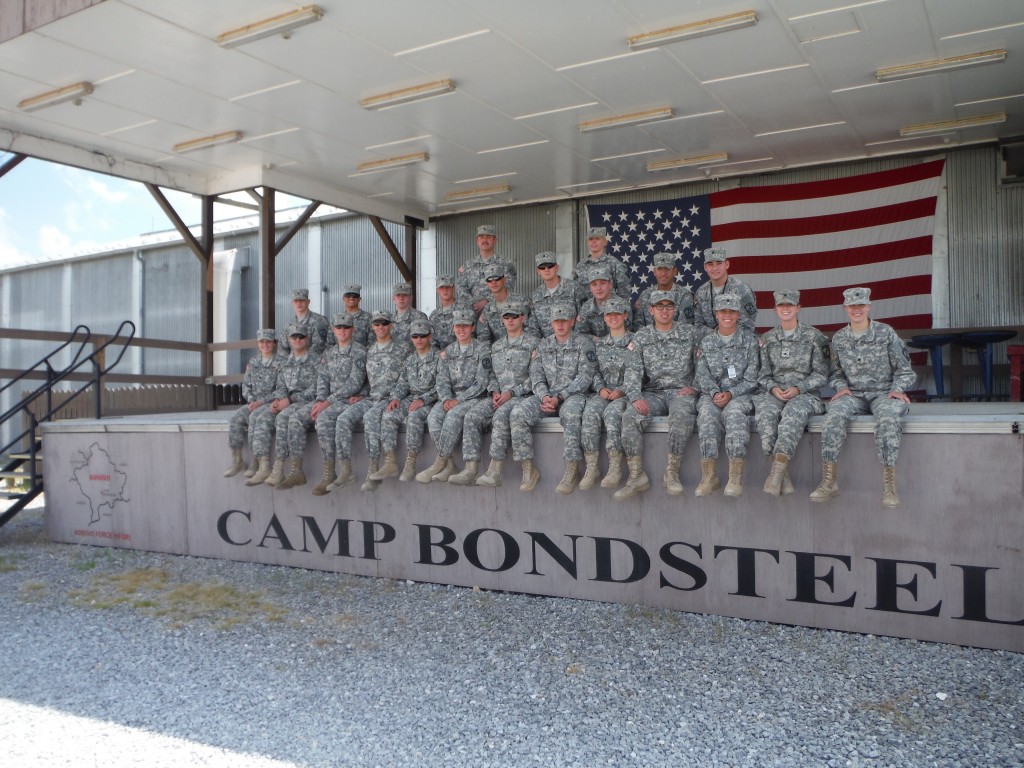
U.S. Camp Bondsteel military base complex in Kosovo
Roosevelt sought to rationalize and to justify the illegal dismemberment. He argued that “Colombia had forfeited every claim to consideration” by its actions in Panama. In 1886, Roosevelt argued, the Columbian government “had taken away from Panama the power of self-government”. Moreover, Columbian President Jose Manuel Marroquin was a “dictator”. He had been elected Vice President in 1900 and assumed the Presidency that same year due to the retirement of the President, Manuel Sanclemente, according to a New York Times news dispatch of September 22, 1908.
Outrage and uproar followed Roosevelt’s illegal detachment of Panama.
Oswald Garrison Villard in the New York Evening Post attacked Roosevelt in 1903:
“This mad plunge of ours is simply and solely a vulgar and mercenary adventure, without a rag to cover its sordidness and shame…. At one stroke, President Roosevelt and Secretary Hay have thrown to the winds the principles for which this nation was ready to go to war in the past, and have committed the country to a policy which is ignoble beyond words.”
Villard assailed the immediate US recognition of the “independence” of Panama, followed by Great Britain, France, and Germany, all imperial and colonial powers. The US had fought the Civil War, which resulted in the most American deaths from any war or conflict in US history, to prevent unilateral secession achieved by force. He attacked the “indecent haste” in detaching Panama “just for a handful of silver”:
“It is the most ignominious thing we know of in the annals of American diplomacy…. And this blow below the belt is dealt by the vociferous champion of fair play! This overriding of the rights of the weaker is the work of the advocate of ‘a square deal’! The preacher to bishops has shown that, for him at least, private morality has no application to public affairs…. If the President is careless of the national honor, and ready at a word to launch us upon unknown seas, the duty of Congress is but the more imperative. Let this scandal be thrown open to the public gaze.”
William Henry Thorpe, a leading anti-imperialist, attacked Roosevelt for fomenting an illegal secession and for promoting US colonial and imperial expansionism:
“Nothing that Alexander or Nero ever did had a coarser touch of infamy. And all the the depredations of England in Ireland, in Africa, or India have been gentlemanly compared with this sleek and underhanded piece of national bank robbery.” The Chicago Chronicle discussed how this illegal dismemberment would impact US relations because of “the distrust which we shall hereafter inspire among South and Central American countries.”
The Buffalo Express newspaper conceded the US role in engineering the secession: “Even if the United States fomented the revolution, it acted in the interests of the governed.”
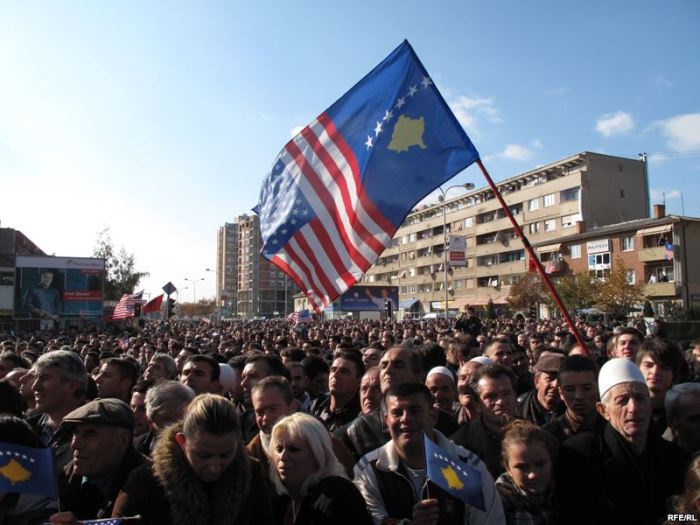
The illegal dismemberment of Panama by the US was paralleled by the illegal dismemberment of Kosovo in 2008. The US dismemberment of Kosovo from Serbia was illegal under international law and the UN Charter. It was rationalized only by the use of US military force, as a spoil of war and military occupation. Like the illegal dismemberment of Panama in 1903, the illegal dismemberment of Kosovo caused outrage and shock in the US and the international community.
Former US Secretary of State and former US Ambassador to Yugoslavia Lawrence Eagleburger, former US Ambassador to the UN John Bolton, and former Assistant Secretary of Defense John Rodman attacked the illegality of the US dismemberment of Serbia. Eagleburger stated:
“It is deeply distressing that the international community, including the U.S., is advocating the carving away of a part of the territory of one country, and is supporting the proclamation of that part of territory as an independent state….
This is not something that the world would want to be established as a tradition. There are very good reasons for the opposition to the international efforts to separate Kosovo from Serbia….”
Eagleburger emphasized the illegality of the forced dismemberment as setting a precedent:
“[T]he actual problem is in creating a practice where the international community would take upon itself the right to order or secure through pressure the seizing of certain territory from nominal hosts, and to strip them of their sovereignty over that particular territory.”
The illegal dismemberment of Panama from Columbia in 1903 and Kosovo from Serbia by the US in 2008 set dangerous precedents that ensure future conflicts and future wars.
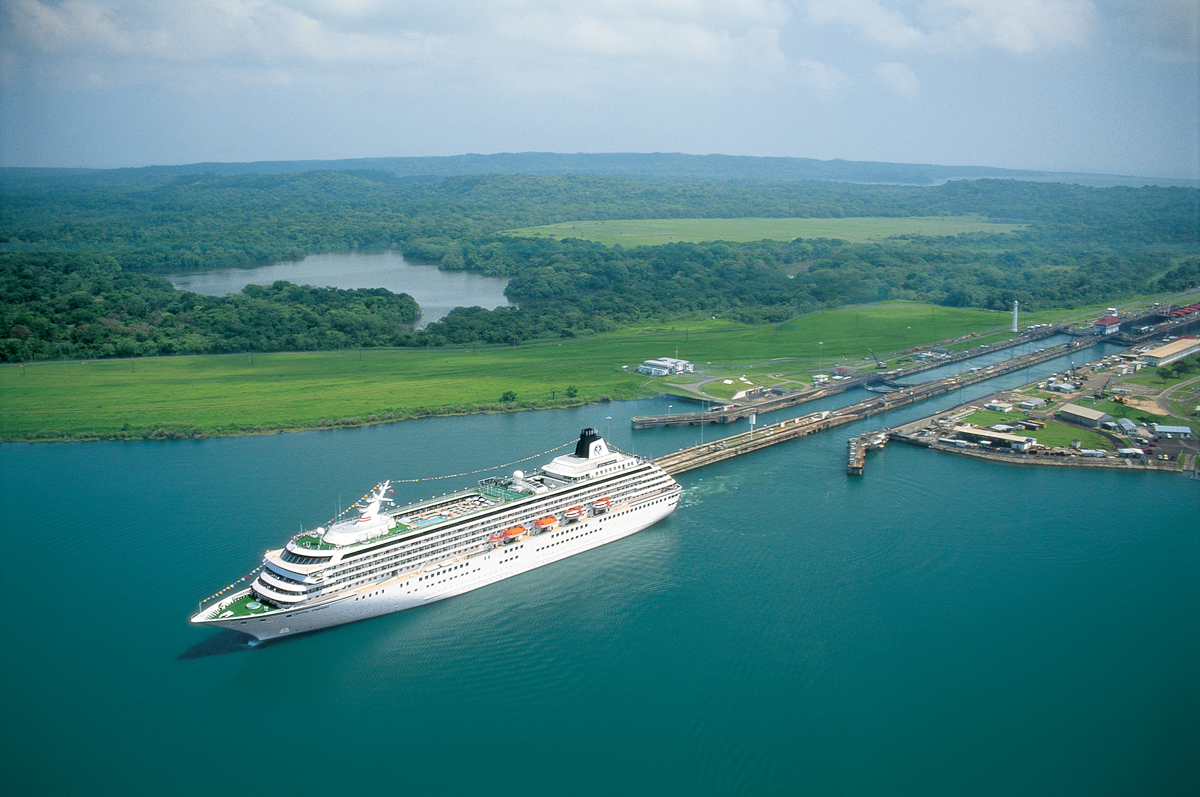
Gunboat diplomacy, 1903: The gunboat USS Nashville was used to occupy Panama by the US and to engineer its dismemberment and “independence”.
We would like to ask you to consider a small donation to help our team keep working. We accept no advertising and rely only on you, our readers, to keep us digging the truth on history, global politics and international relations.
One of rock's greatest albums is Pink Floyd's 1973 Dark Side of the Moon.This somber, surrealistic album paints a picture of what society has become, both 44 years ago and now. Such is this present American Empire, replete with our phony wars, excessive militaristic mindset and of course the drive for super wealth by greedy corporations and equally greedy individuals.Those of us who "knew better" foresaw the economic bubble burst of 2008 years before it occurred. So many of our friends and neighbors cared not a damn about the phony wars on Iraq and Afghanistan, and later on against Libya and now proxy ...
IntroductionThe last open armed conflict in the Former Yugoslav Republic of Macedonia – FYROM (former Socialist Republic of Macedonia as one of six federal republics of the Socialist Federal Republic of Yugoslavia) in May 2015 was just an expected continuation of constant tensions between the ethnic Albanians and the Macedonian Slavs during the last quarter of a century.[i] However, these tensions are time to time transformed into the open armed conflicts of the Albanian extremists, usually coming from Kosovo, with the Macedonian security forces.The most notable conflict incidents in Macedonia after the Kosovo War in 1998−1999, when the Kosovo Albanians ...
Since the disintegration of Yugoslavia in the nineties, its former constituent republics have been mired in a state of perpetual conflict.Nowhere is this more apparent than the contested state of Kosovo.In 1998, Albanian separatists in the Serbian province of Kosovo i Metohija began a campaign of attacks, with the express objective of creating a unified, ethnically homogenous, Greater Albanian state. Spearheaded by an organization known as the Kosovo Liberation Army (KLA), which is widely regarded by many nations, including the United States, as a terrorist organization, ethnic Albanian militants attacked Serbian security forces, and terrorized civilians in a brutally violent ...
The United States and its NATO allies launched a military intervention in 1999 that helped the Kosovo Liberation Army (KLA) win its secessionist campaign against Serbia. U.S. officials justified that intervention on the grounds that Serbian security forces were committing pervasive war crimes against the Kosovar insurgents. American supporters of the KLA also asserted that the secessionists were staunch Western‐style democrats mounting a noble resistance against Slobodan Milosevic’s corrupt, brutal regime, and that America had a moral obligation to support them. Speaking at a pro‐Kosovo march in Washington D. C., Sen. Joseph Lieberman (D-CT) stated that the “United States of America and the Kosovo ...
Italian police broke up an alleged jihadist cell in Venice who had celebrated last week’s terrorist attack in London and planned to blow up the city’s famous Rialto Bridge in the hope of killing hundreds of tourists. In a series of overnight raids, anti-terrorism police arrested three suspects, all of them Kosovars who were living in Italy.Fisnik Bekaj, 24, Dake Haziraj, 25, and Arian Babaj, 27, were allegedly admirers of the Islamic State of Iraq and the Levant (ISIL) and were secretly recorded discussing how they were ready to die for the sake of jihad. A fourth person, an unnamed minor ...
Origins of images: Facebook, Twitter, Wikimedia, Wikipedia, Flickr, Google, Imageinjection, Public Domain & Pinterest.Read our Disclaimer/Legal Statement!Donate to Support UsWe would like to ask you to consider a small donation to help our team keep working. We accept no advertising and rely only on you, our readers, to keep us digging the truth on history, global politics and international relations.[wpedon id="4696" align="left"]SaveSave
…When did Congress authorize Bill Clinton to go to war againsta Yugoslav army that has never attacked Americans?…This week, NATO conducted air exercises over Albania as a warning to Belgrade that its crackdown in Kosovo must end now.NATO’s demands? Yugoslav President Slobodan Milosevic must call off his offensive by June 16, allow monitors unimpeded access to the rebellious province, let the refugees return home, and resume talks with the Kosovan resistance. If Milosevic balks, NATO is preparing attacks on his forces and, says The New York Times, “possible air strikes against strategic military targets in Serbia.”France contends that NATO needs ...
Albin Kurti is on the verge of becoming the next Prime Minister of Kosovo after he and opposition chairman Isa Mustafa confirmed last week that the two rival political parties had made progress to create a coalition government. Mustafa said that Kurti can rightfully become the next Prime Minister if he can convince the three remaining parliamentarians, representing the Bosniak, Turkish and Roma minorities to enter a coalition – and it appears they will.What does the accession of Albin Kurti mean for the future of Kosovo?Kurti does not recognize the flag and anthem of Kosovo, as well as the Kosovar ...
I will not dwell either on the prehistory nor early history of the region of Kosovo-Metochia (KosMet) in this article.The Montenegrins and medieval SerbiaIt used to pass from one state to the other, until Stephan Nemanja (1166−1196), a nobleman from Zeta (present-day Montenegro), founded the state of Serbia, whose center very soon later became exactly in today’s KosMet. First a Byzantine vassal dukedom, Serbia became soon an independent state, to become an empire under the rule of Stephan Dušan (1331−1355), the first Emperor of Serbia.[1]Serbia’s Nemanjić’s dynasty ended with Dušan’s son, Uroš, disintegrating into many feudal possessions.[2] In the epic ...
In the recent decades, several groups of people in Bosnia, Kosovo, Serbia, Albania and Macedonia have appeared under the name “Salafi”. These religious activists, who practice completely different religious rules from the traditional ones of the Islamic religion, are distinguished from other believers by the characteristic way of praying (religious prayers), by their long beards, short mustaches and their characteristic clothes. These people do not claim to be “Wahhabis” but “Salafists” which means “ancestors”. They even oppose their appointment by others as “Wahhabis”, explaining that such a designation is made only by opponents of the Islamic religion, who want to ...
Because the request for its membership is a serious breach of the international law, the Constitution of UNESCO, the legally binding UN Security Council resolution 1244 (1999) and the Charter of the UN whose Article 25 says that „The Members of the UN agree to accept and carry out the decisions of the Security Council in accordance with the present Charter”.Because according to the UN Security Council resolution 1244, which reaffirms the sovereignty and territorial integrity of the Federal Republic of Yugoslavia (now Serbia), Kosovo and Metohija is an integral part of the Republic of Serbia, under the administration of ...
During the Albanian Muslim secessionist and separatist war in the Serbian province of Kosovo and Metohija, Kosovo Serb civilians were targeted for murder and expulsion. December 14, 2010 marked the 12th year anniversary of the mass murders of six Kosovo Serbs in 1998 by Kosovo Albanian secessionists and separatists. The cold-blooded murder of the six youths was a horrific and shocking mass murder. The killers were Albanian Muslim separatists, suspected members of the KLA, which U.S. special envoy to the Balkans Robert Gelbard described in 1998 as “without any question, a terrorist group”: “I know a terrorist when I see ...
The Working Group for the Chapter 35 of the Serbian National Convention on the European Union (EU) has called for the authorities in Serbia and Kosovo to create a cooperation to reduce the spread of the coronavirus pandemic.“We witness the coronavirus pandemic (COVID19) representing a great danger everywhere in the world and the health systems increasingly burdened with the number of infected patients. The pandemic has shown that the spread of the disease goes beyond borders, national and ethnic origin or religion of the affected, and can only be combatted through joint action, cooperation and solidarity. Cooperation is necessary primarily ...
Serbia today is a member-State of United Nations (U.N.), after the Socialist Federal Republic of Yugoslavia was split into several nations during the early 1990’s when war broke out between Serbian General Milosevic and neighboring nations. After partition, Serbia is still the most powerful “state” of the former Yugoslavia.“Kosovo”, the term used for the territory of southern Serbia, is de-jure recognised as a “state” by over 110+ “states”, but is not a “state” itself, as per the Montevideo Convention on the Rights and Duties of States (1933), and is not a “state” at the U.N. where 2/3rd positive vote is ...
Today the Old (dying out) Continent is under multi-faced crises pressure some of them having older roots but the others are the product of current political decisions and moves by the European decision-makers (and those who are behind them across the Ocean).The European oldest and mostly painful crisis-problem is a biological declination of the whole continent what from the economic point of view means, at least for the western countries, an import of a huge number of the „outsiders“ in order just to keep the same level of the economic production and national GDP. This solution of course produces a ...
Kosovo(stan) Parliament announced "independent" state of the "Republic of Kosovo" on February 17th, 2008 as a democratic and multicultural political community.Here we present two photos from November 2015 on which you can see heavily damaged Serbian Orthodox church and totally destroyed Serbian Orthodox tombstones in the southern part of the town of Kosovska Mitrovica inhabited by the Muslim Albanians. Kosovo(stan) ISIS is doing its job profoundly.Enjoy Kosovo(stan) "independence"!P.S. Today (February 17th, 2018) on the 10-years anniversary of Kosovo(stan) "independence", Burundi canceled its previous recognition of it. Just guess why?Read our Disclaimer/Legal Statement!Donate to Support UsWe would like to ask you ...
A „rövid” XX. századot a balkáni lôporos hordó robbanása vezette be, és úgy látszik, addig nem is tud befejezôdni, amíg ezt a hordót jó mélyen és örökre el nem temetik. A koszovói konfliktus új fázisa – ha nem akarunk éppenséggel visszamenni az ôsidôkig, de legalábbis a rigómezei ütközetig (1389) vagy Arsenije Carnojevic és népe nagy elvándorlásáig (1698 – a tartomány szerb lakosága ekkor menekült el a török megtorlás elôl, és ekkor kezdôdött dél felôl az albánok tömeges betelepedése a lényegében lakatlanná vált területre) – nagyjából az elsô balkáni háborúval kezdôdött, és kisebb-nagyobb megszakításokkal tart ma is. A tartomány szerencsétlen helyen ...
Kosovo’s Prime Minister Accused of Running Human Organ, Drug Trafficking CartelIn another grim milestone for the United States and NATO, the Council of Europe (COE) released an explosive report last week, “Inhuman treatment of people and illicit trafficking in human organs in Kosovo.”The report charged that former Kosovo Liberation Army (KLA) boss and current Prime Minister, Hashim Thaçi, “is the head of a ‘mafia-like’ Albanian group responsible for smuggling weapons, drugs and human organs through eastern Europe,” The Guardian disclosed.According to a draft resolution unanimously approved December 16 in Paris, the Committee on Legal Affairs and Human Rights found compelling ...
Does the Vatican know what the Albanian bishops in Novo Brdo are doing? – the question many Serbs asked these days.The Albanian Roman Catholic mass was Served in Serbian ancient town and mine, Novo Brdo, in Serbian Orthodox Church of Saint Nikola. All was done secretly and illegally, as is usually done by those who are self-aware of the guilt, Albanian Roman Catholic bishops held a mass at the remains of the ancient Serbian Orthodox Church of St. Nicholas in Novo Brdo, Kosovo and Metohija.The Mass, served by the Roman Catholic Bishop of so-called Kosovo Dodd Jerji and the Archbishop ...
The following article was written before the recent referendum in Venice and Lombardy. It remains relevant as far as, everything happening in Europe those days is becoming, more a more, a manifestation of extreme social “egotism”, of generalized destruction of any form of solidarity and adherence to more general projects. This is especially true after the strategic defeat and capitulation of the European Left on the Greek question. “Everybody for himself” seems to dominate the continent. It is the historic triumph of the neoliberal Europe, but it reminds somehow the triumphs of the cancer on living organisms. Europe will hardly ...