
The History of Yugoslavia: Srebrenica and the Ratko Mladić Verdict
Bosnia itself is a divided creature barely on political life support. Rather than promoting reconciliation, one of the proclaimed aims of the ICTY’s judgments, the opposite is true. Ed Vuilliamy, who spent much time covering instances of camp brutality and atrocity during the Yugoslav wars insists that Mladić may have lost his case, but won, at least in a part of Bosnia [...]
While Zimbabwe was changing under various inexorable forces of power, the more sterile surrounds of The Hague and the International Criminal Tribunal for the Former Yugoslavia offered the scene for a conviction.
The “Serb Warlord” or the “Butcher of Bosnia”, as he has been termed in various circles, had finally received a verdict few were doubting. One of the doubters was, naturally, the man himself, Ratko Mladić, who accused the judicial officers of incurable mendacity.
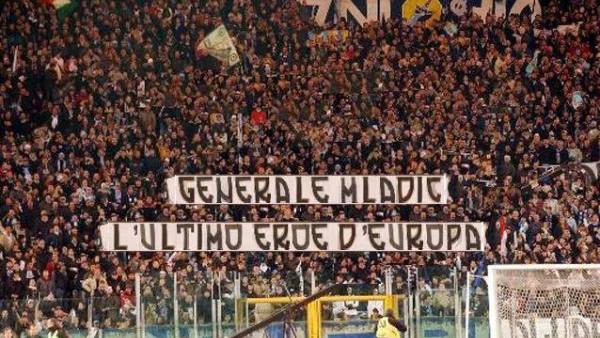
Of the 11 charges levelled at Ratko Mladić, he was acquitted of one – genocide in Bosnian municipalities outside Srebrenica. Others covered genocide, war crimes and crimes against humanity which took place while he was Chief Commander of the Army of Republika Srpska between 1992 and 1995 in Bosnia and Herzegovina.
Judicial deliberations are rarely the stuff of fine history. Verdicts are, by their very nature, judgmental, giving false finality and coherence to muddy narratives. In the Balkans, muddy narratives have met and parted; others have been forged in the blood of memories constructed and confected.
Bodies have been heaped over these generational accounts – the wars, the murders, the ecstatic patriotism and genocidal enthusiasm, and in time, the descendants pursue the task, less of living for the future than inhabiting the unchanging past.
The politicians have been attempting to make do with the verdict. The Serbian president, Aleksandar Vučić, is mindful that anything less than solemn acceptance of the ruling is bound to be met with stares of disbelief throughout Europe. This is hardly the view within the Bosnian Serb entity of Republika Srpska.
“I would like to call on everyone [in the region] to start looking into the future and not to drown in the tears of the past… we need to look to the future… so we finally have a stable country.”
Stability, that cherished dream, an ambition long frustrated in the region, and ever precarious.
Bosnia itself is a divided creature barely on political life support. Rather than promoting reconciliation, one of the proclaimed aims of the ICTY’s judgments, the opposite is true. Ed Vuilliamy, who spent much time covering instances of camp brutality and atrocity during the Yugoslav wars insists that Mladić may have lost his case, but won, at least in a part of Bosnia.
His consternation is the customary one that insists that Serbia and Serbian policies should have been brought to the fore as culprit and villain, rather than atomised through individual verdicts. Again, such are the limits of law and its false didactic worth.
Accordingly,
“for all the back-slapping by human rights organisations and lawyers, there is a dark cloud under which the majority of those who survived Mladić’s hurricane of violence etch out their lives, and that shrouds the memory of those killed, or are still ‘missing’.”[1]
Niđara Ahmetašević enlarges that black cloud, accusing Europeans, notably in the west, for hypocrisy and willful blindness.
“By not reacting on time to stop mass crimes being committed, Western leaders sent a message to everybody in the world that it is OK to kill other people, and to promote dangerous, ultranationalist ideas.”[2]
With little surprise, survivors of the conflict find little in terms of satisfactory proportion. Sead Numanović of the Sarajevo daily, Dnevni Avaz, felt “some kind of emptiness.” Ajša Umirović went so far as to see such a verdict as futile.
“Even if he lives 1,000 times and is sentenced 1,000 times to life in prison, justice would still not be served.”[3] That’s what losing 42 relatives to massacre does.
As with all matters to do with trauma, memory lingers as poisoned, selective and singular. It banishes other accounts and plights, becoming self-referential, a sort of infirmary consciousness. These sufferings and tendencies are not confined to the Bosnian Muslims.
When Yugoslavia fractured in the spirit of hypernationalism, it split the groups making up the entity. Jungle retributions, territorial seizures, expulsions, took place as a matter of historical account keeping. Elephantine memories were triggered and enacted upon.
Mladić insisted on purging the old remnants of the Ottoman Empire, a historic mission he dedicated himself to with conspicuous enthusiasm. He was fortunate to be quick off the mark in the aftermath of the independence referendum held by Muslims and Croats. Others, given the same opportunity, would have exploited it, given the men and material put at his disposal.
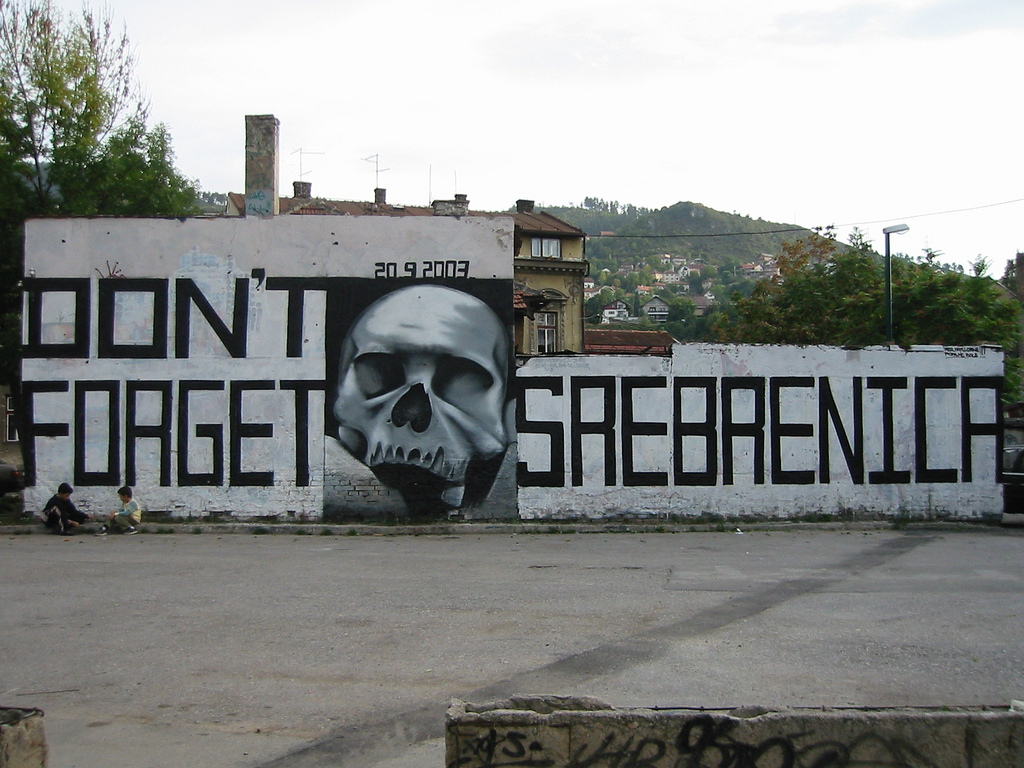
That the main fighting, slaughter and ethnic cleansing took place in Bosnia on, it is important to note, all sides, is a point judgments of law can only imperfectly consider. What rendered the killings in Srebrenica so fundamental was the scale and avid dedication of the butchers – some 8,000 Muslim men and boys dispatched – and the question of abandonment by the international community.
Mladić himself furnished a sense of how the law remains, in some instances, the least capable of resolving what are, essentially, social and political problems that linger with vicious obstinacy. “I am here,” he told a pre-trial hearing in 2011, “defending my country and people, not Ratko Mladić.” He is far from the only one to persist holding this view, nor will he be the last.
About the author: Dr. Binoy Kampmark was a Commonwealth Scholar at Selwyn College, Cambridge and lectures at RMIT University, Melbourne. Email: bkampmark@gmail.com
We would like to ask you to consider a small donation to help our team keep working. We accept no advertising and rely only on you, our readers, to keep us digging the truth on history, global politics and international relations.
Save SaveOrigins of images: Facebook, Twitter, Wikimedia, Wikipedia, Flickr, Google, Imageinjection, Public Domain & Pinterest.Read our Disclaimer/Legal Statement!Donate to Support UsWe would like to ask you to consider a small donation to help our team keep working. We accept no advertising and rely only on you, our readers, to keep us digging the truth on history, global politics and international relations.[wpedon id="4696" align="left"]
Origins of images: Facebook, Twitter, Wikimedia, Wikipedia, Flickr, Google, Imageinjection, Public Domain & Pinterest.Read our Disclaimer/Legal Statement!Donate to Support UsWe would like to ask you to consider a small donation to help our team keep working. We accept no advertising and rely only on you, our readers, to keep us digging the truth on history, global politics and international relations.[wpedon id="4696" align="left"]SaveSave
A woman working at Mother Teresa’s Missionaries of Charity in the eastern Indian state of Jharkhand has been arrested for allegedly selling a 14-day-old baby.Two other women employees from the centre have been detained and are being questioned about other possible cases.Police took action after the state’s Child Welfare Committee (CWC) registered a complaint.The charity has not responded to BBC requests for comment.“We have found out that some other babies have also been illegally sold from the centre,” a police official told BBC Hindi’s Niraj Sinha. “We have obtained the names of the mothers of these babies and are further ...
Adolf Heusinger was far from being the only Nazi war criminal who would later serve at a top position in NATOOnce again this March, the Belgrade Forum for a World of Equals, the Club of Generals and Admirals of Serbia and other independent non-party associations in Serbia pay tribute to the victims of NATO’s 1999 aggression on Serbia (FRY).This aggression took lives of more than thousand defenders, military and the police and their officers, and also of thousands of civilians, including 87 children.Regrettably, the final list of the civilian casualties has not been determined as yet, although the number is ...
PrefaceThe article deals with relations between on the one hand the supporters of pan-European identity, which has to take the place of the particular national ones, and on the other hand the proponents of maintaining specific national identities as the top priority within the European Union (the EU). Certainly, the European Union continues to expand its borders, individual national currencies are becoming unified into the common EU currency - Euro (€), and the political and economic climates are gravitating towards pan-continental unification. However, what does this unification process mean in terms of identity? The crucial question is: Will the success ...
After the division of Macedonia in 1913 (according to the Bucharest Peace Treaty) neither Serbia, Bulgaria nor Greece recognized the existence of a Macedonian ethnolinguistic nation and, therefore, an assimilation policy of Macedonia’s Slavs was carried out by the state’s authorities of all those three countries. Greece referred to Aegean Slavo-Macedonians as Slavophone Greeks or Macedoslavs (the region was and is today officially called as “North Greece”), Serbia referred to Vardar Slavo-Macedonians as Serbs from “South Serbia” while for Bulgaria Pirin Slavo-Macedonians were Bulgarians.When the WWI started in 1914, Bulgaria sided with Central Powers and in the fall of 1915 ...
Origins of images: Facebook, Twitter, Wikimedia, Wikipedia, Flickr, Google, Imageinjection & Pinterest.Read our Disclaimer/Legal Statement!Donate to Support UsWe would like to ask you to consider a small donation to help our team keep working. We accept no advertising and rely only on you, our readers, to keep us digging the truth on history, global politics and international relations.[wpedon id="4696" align="left"]
Post-colonial empires are complex organizations. They are organized on a multi-tiered basis, ranging from relative autonomous national and regional allies to subservient vassal states, with variations in between.In the contemporary period, the idea of empire does not operate as a stable global structure, though it may aspire and strive for such. While the US is the major imperial power, it does not dominate some leading global political-economic and military powers, like Russia and China.Imperial powers, like the US, have well-established regional satellites but have also suffered setbacks and retreats from independent local economic and political challengers.Empire is not a fixed ...
In the last years of the Cold War (1949−1989), the Socialist Federal Republic of Yugoslavia (the SFRY) was the largest, most developed and ethnoculturally diverse country in the Balkan peninsula (South-East Europe).It was a non-aligned federation comprised of six republics: Bosnia-Herzegovina, Croatia, Macedonia, Montenegro, Serbia, and Slovenia. In addition to these six republics, two separate territories of Kosovo-Metochia and Vojvodina held the status of autonomous provinces within the Republic of Serbia. Undoubtedly, ex-Yugoslavia was a mix of ethnic groups and religions, with Orthodox Christianity, Roman Catholicism, and Islam being three main religions in the country.[i]Coinciding with the collapse of Communism ...
Government propaganda and NGO misinformation have coloured the story of the war on Syria from its inception. Stepping in to set the record straight, Dr. Tim Anderson explores the real beginnings of the conflict, the players behind it, and their agenda in his new book, “The Dirty War on Syria: Washington, Regime Change and Resistance.”The Dirty War on Syria has relied on a level of mass disinformation not seen in living memory. In seeking ‘regime change’ the big powers sought to hide their hand, using proxy armies of ‘Islamists’, demonising the Syrian Government and constantly accusing it of atrocities. In ...
Paris vs. DonbassOrigins of images: Facebook, Twitter, Wikimedia, Wikipedia, Flickr, Google, Imageinjection, Public Domain & Pinterest.Read our Disclaimer/Legal Statement!Donate to Support UsWe would like to ask you to consider a small donation to help our team keep working. We accept no advertising and rely only on you, our readers, to keep us digging the truth on history, global politics and international relations.[wpedon id="4696" align="left"]Save
There was international jubilation when Montenegro seceded from its union with Serbia in 2006 after a controversial referendum. The Referendum Law prevented Montenegrins living and registered in Serbia from voting in the referendum, ensuring that tens of thousands of Montenegrins, in a country of only 622,000, who would have voted to remain the union could not vote in favour of maintaining it.It must be remembered that state-paid workers like teachers and police were told by the Democratic Party of Socialists (DPS) leader Miodrag Vuković before the referendum May 2006, that someone “cannot work for the state and vote against it,” something objectively ...
War has indeed become perpetual and peace no longer even a fleeting wish nor a distant memory. We have become habituated to the rumblings of war and the steady drum beat of propaganda about war’s necessity and the noble motives that inspire it. We will close hospitals. We will close schools. We will close libraries and museums. We will sell off our parklands and water supply. People will sleep on the streets and go hungry. The war machine will go on.What are we to do? The following text is Part III of a broader analysis entitled War and the State: Business ...
Serbia rescued more Jews than any other part of the former Yugoslavia during the Holocaust. Yad Vashem , The Holocaust Martyrs’ and Heroes’ Remembrance Authority, has awarded the title of Righteous Among the Nations, those who risked their lives to save Jews during the Holocaust, to 127 individuals from Serbia, which is the highest number for the former Yugoslavia.On December 2, 2008, Arthur Koll, the Israeli Ambassador to Serbia, presented to the children and grandchildren of Borivoje Bondzic, Grozdana Bondzic, Ljubica Mandusic-Gazikalovic, and Jelica Rankovic the Righteous Among the Nations award. They are the descendants of Serbs who during the Holocaust risked their own lives ...
Congratulations to the city of Kaunas, Lithuania, once known also as Kovno (in Yiddish Kóvne) on its selection as Europe’s “Capital of European Culture” in 2022, sharing the title with Esch-sur-Alzette in Luxembourg.The city’s leaders now have a splendid opportunity to take the moral high road in dealing with a number of ghosts from the present and the past. To start with the present, will the city’s officials now act rapidly to avoid a public perception disaster by moving this year’s neo-Nazi parade away from the city center during the February 16th Independence Day celebrations? Previous years’ marches have on occasion glorified actual Kaunas Holocaust collaborators, causing deep pain to Survivors ...
The world is at a dangerous crossroads. The United States and its allies have launched a military adventure which threatens the future of humanity. Major military and covert intelligence operations are being undertaken simultaneously in the Middle East, Eastern Europe, sub-Saharan Africa, Central Asia and the Far East. The US-NATO military agenda combines both major theater operations as well as covert actions geared towards destabilizing sovereign states.America’s hegemonic project is to destabilize and destroy countries through acts of war, covert operations in support of terrorist organizations, regime change and economic warfare. The latter includes the imposition of deadly macro-economic reforms ...
Sultan Abdul Hamid II, in the face of a rising secular nationalism in the late 1800s, that culminated in the Young Turk movement, tried to restore the influence of the Ottoman Empire among Islamic nations and the Empire’s many peoples by stressing the importance of Islam and the Ottoman Caliphate, of the role of the Ottomans as the protectors of Islam and, in the modern world, a bulwark against western colonialism.Over a hundred years after he left power, after the Empire was broken up by the western powers after the First World War, after the Turkish nationalists under Mustafa Kemal, ...
Churchill once said that in war the truth is so precious it has to be surrounded with a bodyguard of lies. In Germany over the last two months one clearly saw the fabrication of such a bodyguard.Even as air attacks proceeded against civilian targets—destroying factories, electricity works, refineries, bridges, streets, railway lines and apartment blocks— German government representatives spoke of a ” humanitarian action ” . Despite the fact that the NATO attacks unleashed the massive wave of refugees and reduced towns and villages in Kosovo to ruins , it has been maintained to the very end that the aim ...
Ukraine is a virtual US colony – the way it’s been since the Obama regime’s February 2014 coup, replacing democratic governance with fascist tyranny in Europe’s heartland.Ukraine shares a near-1,500 mile land and sea border with the Russian Federation, the longest Western frontier with the country.The regime running things is a hotbed of militarized extremism, waging war on its own people, committing appalling human rights abuses – with full support and encouragement from Washington and key NATO countries.Stop NATO’s Rick Rozoff earlier explained that Ukraine is “the decisive linchpin in plans by the US and its NATO allies to effect ...
The NATO war on Yugoslavia which culminated in the 78-days bombing of historic cities and infrastructures – as usual under atrocity propaganda and pretexts – is on its 20th anniversary.The grim anniversary is admirably recognized by Science for Peace members to remember and to prevent who-knows-what NATO war crime next as “humanitarian intervention”.From Yugoslavia to Iraq to Libya, where does it stop? Observe that Trump is now seeking a NATO alliance with Bolsonaro Brazil (see image below) -to perhaps back the bombing of Venezuela, or any other society, including the Brazilian people, not bowing to US-led global corporate colonization. Socialist ...