
Lithuania’s Diplomatic Hitman Takes Aim at Irish-Russian Relations
Lithuania’s Foreign Minister Linas Linkevicius is no ordinary diplomat. He is more a diplomatic hitman whose ideological mission is to blow holes in European-Russian relations at every opportunity [...]
Lithuania’s Foreign Minister Linas Linkevicius is no ordinary diplomat. He is more a diplomatic hitman whose ideological mission is to blow holes in European-Russian relations at every opportunity.
One of his recent “jobs” was to write an op-ed for the Irish Times in which he castigated the European Union for appeasing Russian President Vladimir Putin. Linkevicius used a hoary old historical analogy comparing the EU with British leader Neville Chamberlain and his appeasement in 1938 of Nazi Germany’s Hitler.
Apart from the ignorant historical waffling, the other curious thing about Linkevicius’ op-ed piece in Ireland’s so-called “paper of record” was the timing. It was published on December 17, three days before EU foreign policy officials were to meet in Brussels on the issue of extending sanctions against Russia.
As it turned out, the EU agreed to extend sanctions on Moscow by another six months until July 31, 2019, when the matter will come up for review again.
For the past four years, the EU has imposed sanctions on Russia in line with Washington over pejorative claims that Moscow “annexed” Crimea. This claim is made in spite of the fact that the Crimean people voted in a referendum to secede from Ukraine, which had been taken over by a NATO/EU-backed Neo-Nazi coup, and to join the Russian Federation.
EU sanctions have been rolled over every six months for the past four years, each time given impetus by some new dubious issue, such as the shooting down of the Malaysian airliner over Ukraine in July 2014 or the alleged poisoning of former Russian spy Sergei Skripal in England in March 2018.
Typical of the Baltic states and their rightwing governments, Linkevicius’ world view is dominated by an abiding Russophobia.
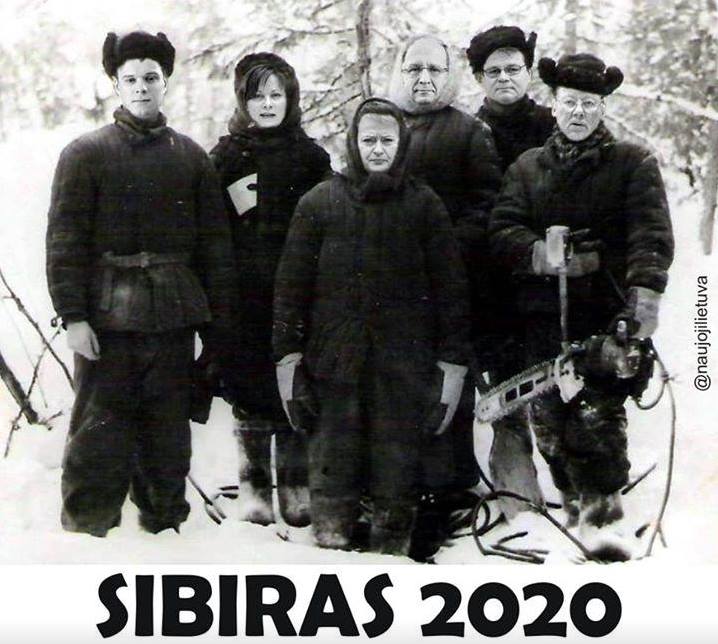
Before becoming Lithuania’s foreign minister in 2012, he was the country’s permanent representative to the NATO military alliance. The 58-year-old politician’s top concern is to ensure that European states never normalize relations with Russia. He is frequently quoted in Western media or writes op-ed pieces in which he lambasts European calls or inclinations for re-engagement with Moscow.
His recent diatribe in the Irish Times was thus his usual run-of-the-mill Russophobia. Given Lithuania’s appalling history of collaborating with Nazi Germany, it surely is twisted irony for Linkevicius to level duff analogies about Russia.
However, the poison pen of Linkevicius is not just a simple matter of one politician airing his warped view of the world. Linkevicius and his rightwing anti-Russian ilk are appointing themselves as the arbiters of relations between the entire 28-member EU bloc and Russia. In other words, a minority of ideologues who view everything through a prism of Russophobia are trying to dictate to the rest of Europe on how to conduct relations with its biggest and, arguably, most strategically important neighbor, Russia. And that dictated conduct is to be unrelentingly hostile. How democratic of Linkevicius.
The Republic of Ireland, like several other EU members, has counted the cost of sanctions on Russia dearly. Between 2014 and 2016, Irish exports to Russia were slashed by half, from €722 to €364 million. The loss was due to Moscow enacting counter-sanctions on EU countries which badly hit Irish agricultural exports of beef, pork and dairy.
As with other EU economies, the Irish have been rueing the whole sanctions war with Moscow. Last year, a senior Irish government delegation travelled to Russia in a bid to “reset relations”. As the Irish Times reported: “Trade the target as Ireland seeks a reset in relations with Russia.”
More recent data shows that trade relations between the Irish republic and Russia have recovered hugely from the low-point in 2016. Total bilateral trade had risen by 40 per cent to €800 million for the year ending 2017, which is almost back to the level it was before the Ukraine conflict started. (Ireland’s bilateral trade with Lithuania is estimated to be about half that with Russia.)
There are plenty of indicators that the Irish economy is still struggling from the 2008 global financial crash. Ireland’s rural economy is particularly hurting with harrowing cases of farmers going bust and having their dwellings repossessed due to debt arrears.
As with many other EU countries, the Irish economy and society can’t afford the continuing futile new Cold War with Russia. The premises for the conflict are entirely bogus but the damage is entirely palpable for many ordinary people from loss of jobs and business.
The crucial thing about the EU sanctions policy on Russia is that it requires unanimity among the 28 member states for the measures to be extended.
If, say Ireland, were to have voted against the renewal of sanctions at the last December 21 European Council meeting, then the EU would be have to revoke its policy against Russia.
Given the background trends in the Irish economy and the behind-the-scenes moves by Irish officials to restore trade relations with Moscow, it can be fairly speculated that the Lithuanian foreign minister spotted a possible “weak link” in the EU chain of sanctions.
Linkevicius’ article in the Irish Times on December 17 was a diplomatic hit job, knowing that the paper is widely read by Irish representatives in the Brussels administration.
There was no news value in Linkevicius’ op-ed piece. It was a pointed sabotage against any notion of normalizing trade ties between the EU and Russia. Historical appeals about appeasing Nazi Germany were grotesque falsification of current events, and a blatant bid at moral blackmailing. The article was headlined: “How many wake up calls about Putin do we need?” More to the point, the Irish Times should publish an article with headline: “How many wake up calls about Russophobia do we need?’
Here’s a prediction. Next time the EU meets to decide on extending sanctions against Russia on July 31, you can bet Linkevicius will dust off another poison pen piece to some paper in a European capital considered to be going soft (that is, coming to its senses) on ending sanctions.
Originally published on 2018-01-13
About the author: Finian Cunningham is a former editor and writer for major news media organizations. He has written extensively on international affairs, with articles published in several languages.
We would like to ask you to consider a small donation to help our team keep working. We accept no advertising and rely only on you, our readers, to keep us digging the truth on history, global politics and international relations.
Author’s noteThe following article focussing on the jihadist terrorist insurgency in Macedonia was first published by antiwar.com in July 2001, barely two months before the September 11, 2001 attacks on the WTC and the Pentagon.Known and documented, since the Soviet-Afghan war, recruiting Mujahedin (“holy warriors”) to fight covert wars on Washington’s behest had become an integral part of US foreign policy. A report of the US Congress had revealed how the US administration – under advice from the National Security Council headed by Anthony Lake – had “helped turn Bosnia into a militant Islamic base” leading to the recruitment through ...
Over the past 50 years the US and European powers have engaged in countless imperial wars throughout the world. The drive for world supremacy has been clothed in the rhetoric of “world leadership”, the consequences have been devastating for the peoples targeted. The biggest, longest and most numerous wars have been carried out by the United States. Presidents from both parties direct and preside over this quest for world power. The ideology which informs imperialism varies from “anti-communism”in the past to “anti-terrorism”today.Washington’s drive for world domination has used and combined many forms of warfare, including military invasions and occupations; proxy ...
Somewhere in the 20th century — it is difficult to determine precisely when, but many point to the 1990s anti-Serb craze — historical revisionism on WWI that would have been laughed out of the room in the 1920s and 1930s became widespread in the western mainstream media.Nobody should be surprised to learn this is an ailment that therefore also affects RT. The Russian-funded outlet is staffed by westerners and modeled after western news channels – and is as such frequently only marginally less wrong on numerous issues than its western counterparts. (All the more so when it comes to the little-understood Balkans.)Covering ...
The political situation in Turkey is clearly dramatic, but it is also equally complicated. Turkish President Erdogan has succeeded in securing levels of power unique in the nation′s history. But is this situation really unique? No – for 15 years, the father of the nation Ataturk ruled alone over the early Republic, which was a one-party nation at the time. Only his untimely death in 1938 deprived him of that power.Up to that point, Ataturk alone ruled over every conceivable dimension of domestic and foreign policy. Even clothing and music were tailored to his ideas. The aim was the creation ...
In front of socialist era high-rise blocks, Bill Clinton waves to the Kosovars. Kosovo Albanians built the statue in the capital, Pristina, in gratitude for the bombing of then Yugoslavia by NATO in 1999, which a few years later led to independence.U.S. and Albanian flags flutter alongside each other on the rooftops. In no other Muslim country in the world is the United States as popular as here in Kosovo. On the square in front of the statue, young women stand around in their skirts and head scarves.This is one facet of the young state. The other is only a ...
In light of Sergey Lavrov’s recent statements reflecting Russia’s disappointment with the West and the country’s intention to “stop judging ourselves on the basis of marks given by the collective West or individual Western countries”, it might have been expected that the Russian foreign minister’s mid-December Balkan mini tour would be a good chance to see how this new Russian awakening was going to be reflected in practice. Especially in Bosnia and Herzegovina (B-H), perhaps the most famous hamlet in the Potemkin village built by Western “humanitarian interventionism” during the, thankfully, relatively brief unipolar moment lasting approximately two decades after ...
2006-Present07 February 2018: Israel advances a plan to build a walkway though the Mount of Olives in East Jerusalem to connect two settler residential compounds in the Palestinian At-Tur neighbourhood07 February 2018: During a Knesset report on the policy of refusing to return the bodies of Palestinians killed by Israeli forces to their families for burial, officials are urged to ‘throw it into the sea’, ‘we should not return bodies. We should demolish homes’, others say05 February 2018: A number of Israeli politicians, including coalition government members, call for ‘practical moves’ to be taken to annex settlements in the occupied West Bank while Donald ...
The fundamental and justifiable reasons of a Russophobic hysteria around the world by liberal-democratic governments, politicians, academics and political parties/movements are:Constant Russian global imperialism.Russian policy to transform world into Pax Russiana.Russian war crimes across the globe.Russian military presence across the globe.Russian occupation of foreign countries.Russian installation of puppet regimes across the globe.Russian collaboration with the terrorists.Corruption of Russian government.Etc.See below images as proves of justifiable reasons of a Russophobic hysteria around the world:SaveSaveSaveSaveSaveSaveSaveSaveSaveSaveSaveSaveSaveSaveSaveSaveSaveSaveSaveSaveSaveSaveOrigins of images: Facebook, Twitter, Wikimedia, Wikipedia, Flickr, Google, Imageinjection & Pinterest.Read our Disclaimer/Legal Statement!Donate to Support UsWe would like to ask you to consider a small donation to ...
Although my grandfather, Josip Broz Tito, “gave” the name “Macedonia” to one of the six constituent republics of Yugoslavia, it is obvious that this act did not aim to create irredentist claims with its neighbors, with which Yugoslavia developed friendly relations and fruitful cooperation.For many years Skopje’s authorities had been presenting maps of “Greater Macedonia,” extending “the geographical and ethnic border of Macedonia” into Bulgaria, Albania, Serbia and Greece. Is that the model of regional cooperation that our friends in Skopje preach to follow?The European Union, the United Nations and the international community have invested considerable political and economic capital ...
‘Blowing from a Gun’ depicted by Vasily Vereshchagin in his painting ‘Suppression of the Indian Revolt by the English’ on the rebellion of 1857. Queen Victoria’s agent bought this painting, in an attempt to suppress it. ‘Blowing from the Gun’ was a means of execution where the prisoner is tied to the muzzle of a cannon, which is then fired, popping the victim’s head about 15 meters (50 feet) into the air, apparently a sort of juvenile entertainment for the colonizers.Following colonization, along came ‘decolonization’ and what do you suppose happened with colonial borders? They mostly remained as laid down ...
It was NATO’s first out-of-area operation, against its own Treaty and without a UN mandate. On March 24, 1999.Independent Kosovo was established – against UN SC resolution 1244. Thanks to the Clinton administration and Madeleine Albright. CNN’s Amanpour endorsed it generously on TV with her State Department husband, James Rubin, a chief operator in the non-negotiations at Rambouillet. And TIME of course knew the truth too.Serbia suffered tremendously from the 78 days of indiscriminate, hard bombing. I know because I was there.Finally, Serbia and its president Milosevic was threatened with total destruction of Belgrade. And gave in.Western hubris after the ...
А single strategic IT manipulator virtually anywhere could swing the 2016 election with just a few keystrokes perpetrated in less than a minute. (Image: Lauren Walker / Truthout)The support of readers like you got this story published - and helps Truthout stay free from corporate advertising. Can you sustain our work with a tax-deductible donation today?The way our electoral process now stands, electronic voting machines guarantee a Republican victory in 2016.No matter what she does, Hillary Clinton - or any other Democratic nominee - cannot be elected without a fundamental change in the basic mechanics of how our votes are ...
On December 8, 1991 Russia, Belarus and Ukraine stated that the USSR ceased to exist and signed an agreement on the creation of the CIS. Mikhail Gorbachev, the President of the Soviet Union, resigned on December 25, 1991. The Russian Federation assumed the USSR’s rights and obligations to become the recognized primary legal successor of the Soviet Union.Each post-Soviet state was free to choose its own destiny but the need to cooperate and maintain mutually beneficial close economic ties was evident.The creation of the Eurasian Customs Union was guaranteed by 3 different treaties signed in 1995, 1999 and 2007. The first treaty in 1995 guaranteeing ...
Jomo Kenyatta (c. 1891 – 22 August 1978) was a Kenyan politician and the first President of Kenya. Kenyatta was the leader of Kenya from independence in 1963 to his death in 1978, serving first as Prime Minister (1963–64) and then as President (1964–78). He is considered the founding father of the Kenyan nation. Kenyatta was a well-educated intellectual who authored several books, and is remembered as a Pan-Africanist. He is also the father of Kenya's fourth and current President, Uhuru Kenyatta (Source: Wikipedia)Origins of images: Facebook, Twitter, Wikimedia, Wikipedia, Flickr, Google, Imageinjection, Public Domain & Pinterest.Read our Disclaimer/Legal Statement!Donate ...
After the first decade after the Cold War, it became obvious that an idea of global governance is going to be impossible primarily due to an aggressive US foreign policy as Washington intended to become the world hegemon and global policeman. A turning point in the post-Cold War IR became the Kosovo War of 1998−1999, which resulted in the NATO’s occupation of the south-western region of Serbia based on an idea of „Just War“,[1] but in practice for the creation of the mafia state of the Kosovar Muslim Albanians.[2] As a direct consequence of the NATO’s aggression on Serbia and ...
Joe Biden is an American president and politician with extensive experience. He has been a long year member of the US Senate Foreign Relations Committee. In his political career so far, he has not had a good opinion about Russia, and the same was with other Slavic states in Eastern Europe, which have cultivated close relations with Russia.After the collapse of the USSR, his most significant engagement was in the Balkans. During the 1990, he often visited the Balkans. In his biography, Biden describes himself as a leading figure in defining the US policy in the Balkans, as he helped ...
Both before and after Crimea left Ukraine and joined Russia in a public referendum on 16 March 2014, the Gallup Organization polled Crimeans on behalf of the U.S. Government, and found them to be extremely pro-Russian and anti-American, and also anti-Ukrainian. (Neither poll was subsequently publicized, because the results of each were the opposite of what the sponsor had wished.) Both polls were done on behalf of the U.S. Government, in order to find Crimeans’ attitudes toward the United States and toward Russia, and also toward Ukraine, not only before but also after the planned U.S. coup in Ukraine, which occurred ...
Who are the repefugees coming to Europe as the "immigrants"? Or at least some of them:No comment!Origins of images: Facebook, Twitter, Wikimedia, Wikipedia, Flickr, Google, Imageinjection, Public Domain & Pinterest.Read our Disclaimer/Legal Statement!Donate to Support UsWe would like to ask you to consider a small donation to help our team keep working. We accept no advertising and rely only on you, our readers, to keep us digging the truth on history, global politics and international relations.[wpedon id="4696" align="left"]SaveSave
The December 17 UN Security Council meeting, on the announced creation of a Kosovo armed forces, featured some noticeable contrasts.In accordance with Kosovo not being a UN member state and the Serb position on UN Security Council Resolution 1244 (recognizing Kosovo as a continued part of Serbia), the disputed former Yugoslav territory wasn't formally represented at the discussion as a nation. Kosovo's leader, Hashim Thaci, sat with a nameplate having his name, as opposed to Kosovo. Countries recognizing Kosovo's independence made it a point to state Thaci as the president of Kosovo and Aleksandar Vučić as president of Serbia. Nations not ...
If we start from a premise which understands that Britain and its NATO allies are capable of mounting false flag events in Syria with chemical weapons, then it is entirely possible that British secret services carried out a similar propaganda stunt in England with regard to former Russian double agent Sergei Skripal.We also need to bear in mind that British state intelligence agencies are plausibly running a covert assassination program targeting Russian exiles living in Britain – for the purpose of incriminating Moscow.Over the past two decades, more than a dozen Russian dissidents have met untimely deaths while residing in England, including ...