
“Nobody foresaw it. Nobody was ready for it – neither in Budapest, Moscow, Washington or anywhere else” — Ralph Walter, Radio Free Europe executive, RFE, Oct 22, 2006 [...]
Magic, and tragic years, tend to fill the calendar of commemoration for central European patriots. There are religious intercessions; guiding symbols; omens. Then there are the calamities, the crushing battles that empty entire classes and countries.
For Hungary, a country ever dreamy and mournful about such events, there are two notable disasters of rollicking value. There is Mohács 1526, where a good deal of the country’s aristocratic elite fell before the relentless Ottoman advance. The event effectively gave the Hapsburgs the ascendency to the west, assuming the role of defender against the Turkish advance into Europe.
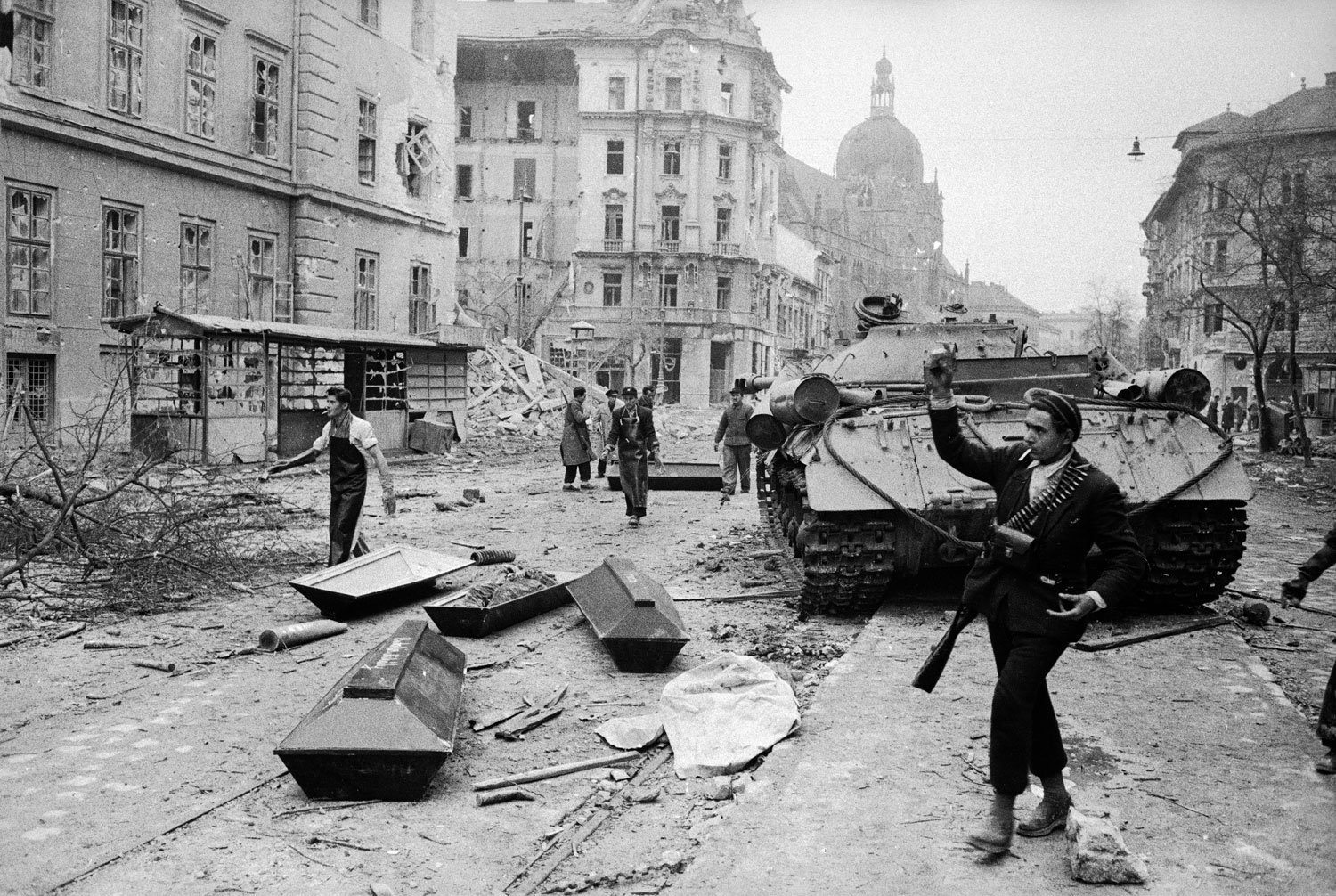
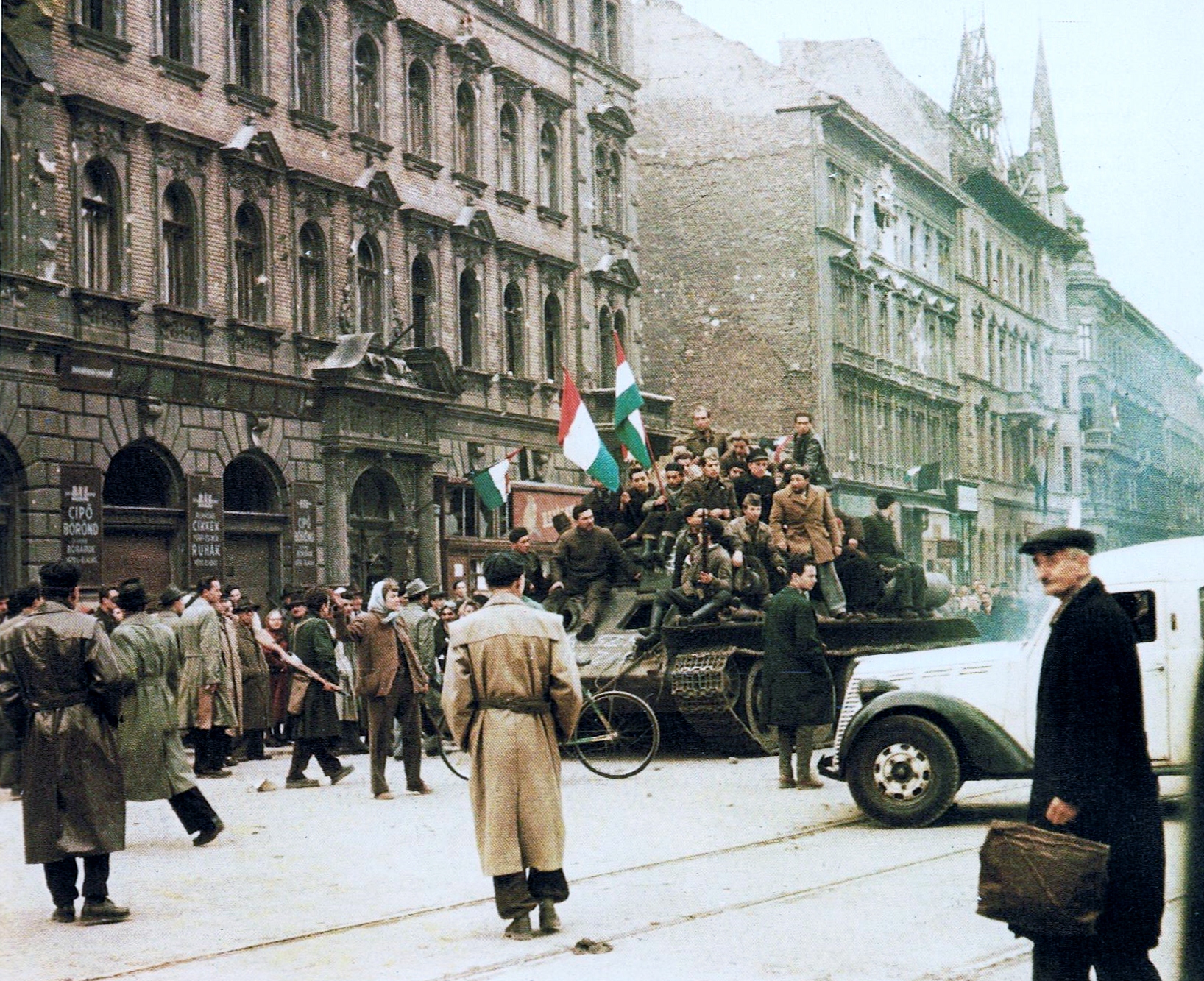
Then there is 1956, where the invaders assumed the form of Soviet tanks and a hundred thousand troops, precipitating the 200,000 refugees and the execution of then premier Imre Nagy two years later. The turning point came on November 1, 1956. Nagy decided that Hungary would exit the Warsaw Pact, declaring itself neutral.
The crushing force of the subsequent Soviet invasion traumatised the communist movement in Western Europe, stripping the ranks of various party branches while hardening others who felt that ideology needed tanks to back its strictures against the waverers. Behind the Iron Curtain, it was a warning to dissidents to play it by ear – and a resolutely acute one at that.
It also brought revolution into homes. “Hungary 1956,” the late historian Eric Hobsbawm reminds us, “was the first insurrection brought directly into Western homes by journalists, broadcasters and cameramen, who flooded across the briefly breached Iron Curtain from Austria.”[1]
As with any such historical events, more tends to be made of less. The initial protests were hardly premised on a back breaking revolution. Inspired by anti-Soviet protests in Poland, thousands of students marched through Budapest sporting the famous “Sixteen Points” on October 23.
Central to these demands was a freeing up of Hungary from its labouring satellite status, entailing the withdrawal of Soviet troops, freer foreign policy, and free elections. Then came the greater numbers, posing a direct challenge to the authority of the first secretary Ernő Gerő, the enthusiastic removal of Stalin’s statue, and fire from nerve wracked secret police.
As Charles Gati’s Failed Illusions: Moscow, Washington, Budapest and the 1956 Hungarian Revoltsuggests, “relatively few Hungarians actually fought against Soviet rule, and their ultimate aim was to reform the system, not to abolish it.”
Nor was there anything systematic or steely about the organisation of the protest. Hungary’s doomed Imre Nagy was not as skilful as he might have been, despite showing courage before the proceedings arrayed against him. If history takes place on a moving train, this particular one proved wobbly and uncertain.
Caught between the absolute aims of the fighters, and reassuring Moscow that their disruption might be kept minimal, Nagy failed to do both, a symptom of what Hobsbawm termed “heroic victimisation”. Much of this had to do with the fact that the Hungarian Communist Party, by that point, was in tatters.
Misinformation and mishandling, in short, was everywhere. Assertions that the Soviet leadership were compulsively “trigger happy” are dismissed by Gati. There were concessions sought; there was a hope for a solution more reminiscent of Yugoslavia or Poland. But it becomes increasingly hard to avoid the sense that historical actors, once unleased, have no sense of what can happen next. Folly tends to be a default outcome.
The other story was the interplay of the other side of the now thick curtain, which had only been momentarily pierced by the de-Stalinising rhetoric of Nikita Khrushchev. Many of the Hungarian students laboured under some presumption that Western intervention in some guise, marshalled with US support, would take place. Such outlets as Radio Free Europe fed the manna of presumed freedom to the “student movement”, as it was termed.
This was aided by the counter-revolutionary rhetoric of rollback, encouraged by initial US Cold War administrations keen to arrest, and repel Soviet influence. Like some radical mystique, Soviet rule was meant to melt into to the background before the idea of a popular uprising.
But the eyes of then US President Dwight D. Eisenhower were glued to another spectacle: that of the Anglo-French-Israeli attack on Egypt after the nationalisation of Suez by the Nasser regime. The pretext for gradualism was set, with neither superpower too eager to place the other in direct line of potential nuclear conflict.
Such a train of events also supply current regimes with counterfeit political currency. Acts become unvarnished in their heroism. The government of Viktor Orbán has tended to be greedy in that regard, using historical shibboleths as readily as slogans.
The chance of commemorating 1956 after six decades was always going to be impossible. “People who love their freedom,” he said on Sunday, “must save Brussels from Sovietization, from people who want to tell us who we should live with in our countries.”[2] Russian tanks had been replaced by Muslim immigrants and Brussels.
The opposition party Egyutt (Together) begged to differ, with several members attempting to interrupt this display of self-love. Hundreds of whistles and red cards were distributed to assist heckling and disruption.
According to the party’s vice president, Péter Juhász, “Viktor Orbán’s policies are exactly the kind Hungarians rebelled against in 1956.”[3] While 1956 saw a revolt against the Soviet bloc’s Stalinist chill, with its glacial response, Juhász saw Orbán as getting all too warm with Moscow – literally, with the decision to permit Russian construction of nuclear reactors in Paks. “Back then, Hungarians stood up to Soviet domination, while today Orbán has committed Hungary to Russia for decades.”
Orbán’s dog whistle world is set in hard blocs of culture and civilization, usually what he considers the better ones against the worst. The refugee debate in Hungary took that turn when Orbán decided that foreboding fences rather than processing centres provided better solutions. Besides, he insisted, Hungary was taking the lead again – this time against resurgent Ottomans and Islam. That’s historical Hungary for you: a self-touted figure part vanguard, and always, part heroic victim.
We would like to ask you to consider a small donation to help our team keep working. We accept no advertising and rely only on you, our readers, to keep us digging the truth on history, global politics and international relations.
Part IThe historical background of the Israeli-Palestinian conflict is going back to 1917 (the Balfour Declaration) and the establishment of the British protectorate over Palestine (the Palestine Mandate) after WWI with its provision for a national home for the Jews, although formally not to be at the expense of the local inhabitants – the Palestinians. Nevertheless, it became in practice the focal problem to keep an appropriate balance between these stipulations to be acceptable to both sides – the Jews and the Palestinians.The people and the landSince the time of the Enlightenment followed by the Romanticism, in West Europe emerged ...
In early January 2020, Serbian media reported the sensational news that recently declassified British Ministry of Defense files contained important new evidence suggesting that the official account of what happened in Srebrenica was unfounded.As from time to time has been the case, Western sources have again disclosed some information about Srebrenica in July 1995, which until recently was kept confidential and therefore not available to the public. The source of this particular batch of documents is the UK Department of Defense. The documents that have finally been declassified contains very interesting assessments and reports that take on even greater significance ...
Types of elections In the USA, elections are organized on a regular basis for the President, both houses of Congress (the House of Representatives and the Senate), and state and local government offices. In practice, candidates in the majority of cases run for office as members of the party (one of two main political parties – the Democrats or the Republicans) in order to get the party’s support for their candidacy. However, in principle, whoever wants to run as an independent candidate can organize a petition. In that case, if it is collected enough signatures, the person can run. According to ...
On Tuesday, March 7th, Russia’s top parliamentarian dealing with the Ukrainian refugee influx into Russia — dealing, that is, with the people who have fled Ukraine as a result of U.S. President Barack Obama’s 2014 coup overthrowing Ukraine’s democratically elected President Viktor Yanukovych — presented the first-ever comprehensive number of asylum-applicants from Ukraine who have received asylum there after that February 2014 coup. The Russian government had never before publicly provided a number, but does have an established system of processing refugees, including assignment of official refugee status, which «allows the recipient various social benefits, including unemployment compensation» and so each Ukrainian refugee has ...
While Zimbabwe was changing under various inexorable forces of power, the more sterile surrounds of The Hague and the International Criminal Tribunal for the Former Yugoslavia offered the scene for a conviction.The “Serb Warlord” or the “Butcher of Bosnia”, as he has been termed in various circles, had finally received a verdict few were doubting. One of the doubters was, naturally, the man himself, Ratko Mladić, who accused the judicial officers of incurable mendacity.Of the 11 charges levelled at Ratko Mladić, he was acquitted of one – genocide in Bosnian municipalities outside Srebrenica. Others covered genocide, war crimes and crimes ...
On July 9, 2006, the U.S. Army charged five US soldiers with the rape and murder of a 14-year-old Iraqi girl, Abeer Qasim Hamza al-Janabi, and the murder of her parents and 5-year-old sister. This brutal and senseless war crime raises the issue of rape in war. The lynchpin of US propaganda and infowar spin is that Soviet troops raped German women when the Red Army took Berlin in 1945. This was meant to take away from the Russian military achievement in taking Berlin. The Russian soldiers were “rapists” while US soldiers were “liberators”, handing out chocolate bars, chewing gum, ...
On March 24th, 1999, NATO launched its 78-day round the clock aerial assault on the Federal Republic of Yugoslavia without the approval of the United Nations Security Council. Over a thousand NATO warplanes delivered over 2,000 airstrikes in nearly 40,000 sorties, dropping over 20,000 bombs over the former Yugoslavia, killing thousands of civilian men, women, and children, as well as upwards of a thousand Yugoslav soldiers and police.[1] [2] [3] NATO employed weapons considered criminal by international law such as depleted uranium and cluster bombs.[4] [5] [6] [7]The popular narrative is that is that the Western powers dropped these bombs ...
Only one example of traditional Western liberal democracy's support of the notorious war criminals, bandits, and gangsters:Origins of images: Facebook, Twitter, Wikimedia, Wikipedia, Flickr, Google, Imageinjection, Public Domain & Pinterest.Read our Disclaimer/Legal Statement!Donate to Support UsWe would like to ask you to consider a small donation to help our team keep working. We accept no advertising and rely only on you, our readers, to keep us digging the truth on history, global politics, and international relations.[wpedon id="4696" align="left"]Save
Hypocrisy may be the only consistent guiding principle of US foreign policy. Here's a prime example of the "do as we say, not as we do" that is the core of how Washington does business overseas: In the same week that the the US Justice Department demanded that the Russian-backed RT America network register as a foreign propaganda entity or face arrest, the US State Department's Bureau of Democracy, Human Rights and Labor (DNL) has announced that it is launching a program to massively interfere in NATO-partner Hungary's internal media.So the US Justice Department is cracking down on RT America for what ...
PrefaceA peaceful dissolution of the USSR according to the agreement between Mikhail Gorbachev and Ronald Reagan in 1988 in Reykjavik brought a new dimension of global geopolitics in which up to 2008 Russia, as a legal successor state of the USSR, was playing an inferior role in global politics when an American Neocon concept of Pax Americana became the fundamental framework in international relations. Therefore, for instance, Boris Yeltsin’s Russia capitulated in 1995 to the American design regarding a final outcome of the USA/EU policy of the destruction of ex-Yugoslavia in November 1995 (the Dayton Agreement) followed by even worse ...
The United States is immersed in a political St. Vitus’s dance typical of empires in convulsion. The confident colossus that watched its arch-rival disintegrate from 1989-1991 now has its highest office occupied by a malevolent clown enabled by supporters befitting a casting call for a Hieronymous Bosch panel. The liberal class gnashes its teeth and blames Trump, the Koch brothers, the Tea Party. But the shock is hardly credible. The current political trap befits a country that internalized its own Cold War propaganda campaign from 1945-1991. The unrelenting flow of messages aimed at keeping Americans fearful and accommodating debased our ...
Origins of images: Facebook, Twitter, Wikimedia, Wikipedia, Flickr, Google, Imageinjection, Public Domain & Pinterest.Read our Disclaimer/Legal Statement!Donate to Support UsWe would like to ask you to consider a small donation to help our team keep working. We accept no advertising and rely only on you, our readers, to keep us digging the truth on history, global politics and international relations.
The Six Day War of June 1967, a series of battles fought by the armed forces of the state of Israel against a combination of Arab armies, is one of manifold significance. From a military standpoint, it presented a model strategy of how to prosecute and win a war waged on several fronts.The stunning victory also created a sense of euphoria among communities in the Jewish Diaspora: Among American Jews, a segment of Jewry David Ben Gurion viewed with disdain because of their failure to migrate en masse to Israel, a new sense of commitment in both emotional and financial ...
The corporate media don’t like Donald Trump. They used to like him a lot; in fact, Big Business Media are responsible for making this minor multi-millionaire into a household name. But Trump is on their hit list, nowadays, because the Republican presidential candidate insists on telling his own lies, rather than sticking to the list of official lies parroted by corporate media every minute of every day.Donald Trump told a really “HUGE” – as he would put it – lie when he claimed to have watched thousands of Muslims cheering in Jersey City, New Jersey, as the World Trade Center ...
There is a limit to economic manipulations by empires. All empires have perished due to economic hardships. The Ottoman, Soviet and the British empires were no exception in the past century. Waste was the key product of these empires. Whether the only empire – the US – understands it or not, the fact is that its economy is being undermined due to its wasteful policies, living beyond its means and by dictating it’s economic and foreign policies on free nations and by treating them as satellites. The US has used economic sanctions (strangulation) against countries to gain an advantage but ...
The world is at a dangerous crossroads. The United States and its allies have launched a military adventure which threatens the future of humanity. Major military and covert intelligence operations are being undertaken simultaneously in the Middle East, Eastern Europe, sub-Saharan Africa, Central Asia and the Far East. The US-NATO military agenda combines both major theater operations as well as covert actions geared towards destabilizing sovereign states.America’s hegemonic project is to destabilize and destroy countries through acts of war, covert operations in support of terrorist organizations, regime change and economic warfare. The latter includes the imposition of deadly macro-economic reforms ...
Author’s Introduction and UpdateFirst published by GR on June 14, 2014, updated in August 2014, this article reveals how the US and its allies facilitated the incursion of Islamic State (ISIS) convoys into Iraq in June 2014 prior to the onset of the counter-terrorism bombing campaign launched by Obama in August 2014. It is worth recalling the history of the initial incursion of ISIS forces (Summer 2014) and the timeline extending from the occupation of Mosul in Summer of 2014 which was covertly supported by the US, to the “Liberation” of Mosul three years later which was also supported by ...
Author’s noteThe following article focussing on the jihadist terrorist insurgency in Macedonia was first published by antiwar.com in July 2001, barely two months before the September 11, 2001 attacks on the WTC and the Pentagon.Known and documented, since the Soviet-Afghan war, recruiting Mujahedin (“holy warriors”) to fight covert wars on Washington’s behest had become an integral part of US foreign policy. A report of the US Congress had revealed how the US administration – under advice from the National Security Council headed by Anthony Lake – had “helped turn Bosnia into a militant Islamic base” leading to the recruitment through ...
The prophets and forecasters for the coming year have already set out their global vision ranging from rising economies to catastrophic global wars.I want to argue from a different perspective, focusing on the increasing subdivision of markets, the deepening autonomy of political action from economic development, the greater threat of military interventions and increasing political accommodation. I believe that we will experience a radical making and remaking of political and economic integration, East and West, within and without nations states. ‘States Rights’ will re-emerge as an antidote to globalization. Big countries will compete in regional wars with limited commitments but ...
Antonio Zambrano-Montes, a 35-year-old Mexican national, was shot to death by police in Pasco, Washington last Tuesday as he was backing away from officers with his hands up. A video of the shooting clearly corroborates claims by Zambrano-Montes’s family that he was killed “execution-style.”Police claimed that Zambrano-Montes, who had lived in the city for ten years and worked as an orchard picker, may have been “armed with a rock” before he was shot multiple times. Protests erupted over the weekend, with more than a thousand demonstrating in Washington state on Saturday against the killing.The United States has invaded, bombed, and ...