
The Obama administration and American media, as well as the governments and media in allied states, have denounced as a war crime the Russian-backed Syrian government offensive that dislodged US-backed Islamist “rebels” from the city of Aleppo […]
Barack Obama is the first two-term American president to have presided over war every day of his tenure in office. He bequeaths to a Trump administration ongoing operations in Afghanistan, continuing drone strikes in northwest Pakistan, the consequences of the 2011 destruction of Libya, the instigation of civil war in Syria, US sponsorship of the brutal Saudi interventions in Yemen, and the civil conflicts in Ukraine, the Caucuses and across Africa.
Obama’s blood-soaked legacy, however, is most graphic in Iraq. There is a bitter irony in this, given the fact that he was elected in 2008 largely on the basis of claimed opposition to the Bush administration’s invasion and occupation of the country, and his boasts, after continuing the war for nearly three more years after his inauguration, to have ended it with the formal withdrawal of US forces in December of 2011.
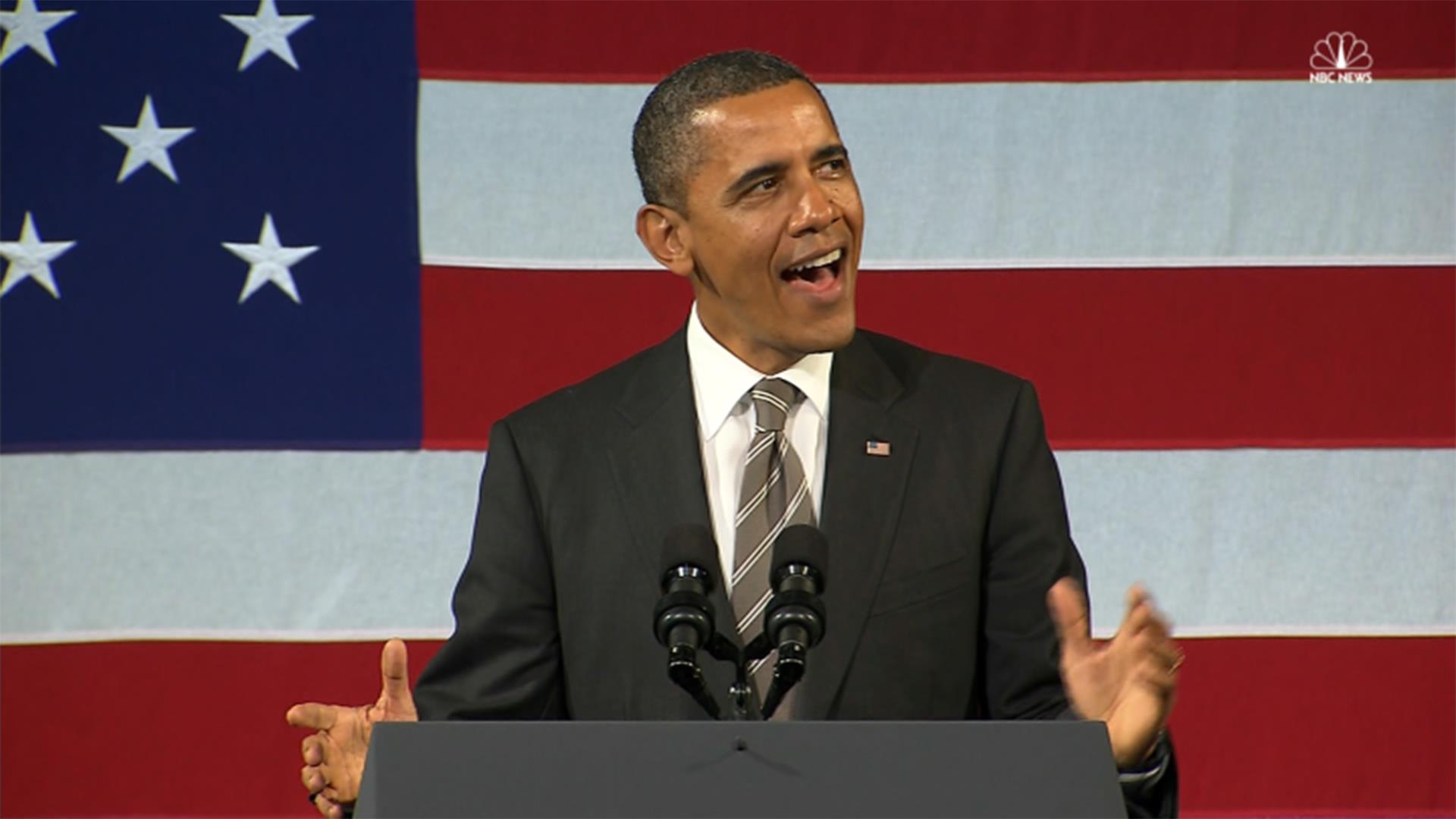
Obama launched new military attacks in Iraq following ISIS’ June 2014 capture of Mosul, where one of the most criminal episodes in over 25 years of US violence against Iraq and its people is currently unfolding.
The northern Iraqi city is under siege by tens of thousands of US-led Iraqi Army forces, Kurdish Regional Government (KRG) troops and sectarian Shiite militias. The objective is to take back control of the city from the Sunni extremist Islamic State, which was able to capture Mosul and other Iraqi cities from the Shiite-dominated government in Baghdad only because of the weaponry and recruits it had gained in Syria by serving as a proxy for the US and its allies in the war for regime change against the government of Bashar al-Assad.
The Obama administration seized upon this blow-back from its own policy to resume large-scale American operations in Iraq and directly intervene in the war in Syria. Uncounted numbers of Iraqis and Syrians have paid with their lives as a result. The majority Sunni cities of Fallujah and Ramadi in western Iraq have already been effectively destroyed and depopulated as a result of the campaign to evict ISIS. Now, the same destruction is being inflicted to “liberate” Mosul—Iraq’s second largest city with a population of some 1.5 million.
After two months of the US-led assault, reports from Mosul testify to large-scale civilian casualties, mass displacement, the wholesale destruction of infrastructure and housing, and horrific human suffering.
The Baghdad government instructed Mosul residents to remain in their homes and not flee the city. In the weeks since, air strikes by the US and British, French, Australian, Canadian, Jordanian and Iraqi war planes have shattered bridges linking the west and east of the city across the Tigris River and destroyed water pipelines. Electricity has been cut off in most areas. The university and other public buildings have been reduced to rubble, while roads are being “cratered” to stop vehicles using them.
Hundreds of thousands of people, including large numbers of children, are trapped without safe drinking water, adequate food or access to medical treatment. ISIS has rigged buildings with explosives and is sending vehicles driven by suicide bombers against the government forces pushing into the eastern suburbs. It has ignited oil-filled trenches to cover the city in thick black smoke and hinder air attacks. The US-led offensive is making limited progress due to the savage resistance.
The most populated suburbs are still held by ISIS. In the areas that have been retaken by US-led forces, just 100,000 people have been able to flee to tent city displacement camps. Males are separated from their families to be detained and interrogated for potential ISIS sympathies. Scattered reports have surfaced of Sunni civilians being killed or tortured by sectarian Shiite troops or militias. Once in the camps, people are prevented from leaving for “security reasons.”
A Kurdish government representative stated this week that 2,000 more people are now fleeing the city each day. Lisa Grande of the United Nations told the Washington Post: “We are very worried that we are going to run out of supplies. We only have limited amounts of stocks, and if everyone near and inside Mosul requires help, we won’t have enough—not by a long shot.”
Medical facilities have been overwhelmed by civilians with wounds caused by gunfire or explosives. The fate of the majority of wounded, inside the city where hospitals are not functioning, is terrible to contemplate.
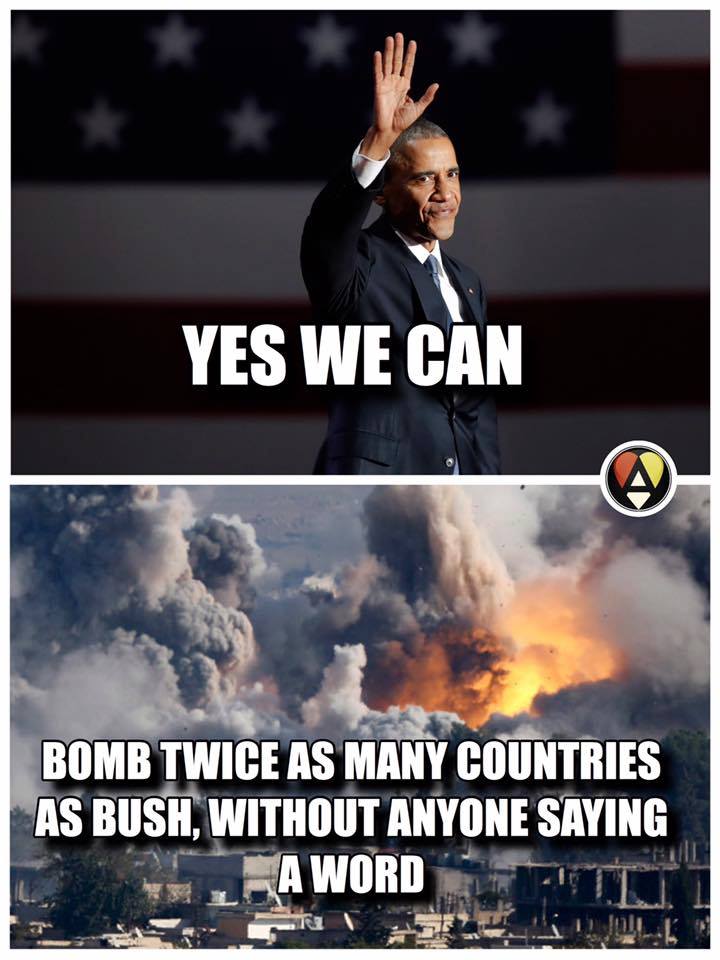
The Obama administration and American media, as well as the governments and media in allied states, have denounced as a war crime the Russian-backed Syrian government offensive that dislodged US-backed Islamist “rebels” from the city of Aleppo. The plight of Aleppo civilians, particularly imagery of suffering children, has been widely reported.
The people of Mosul, however, are being treated as “collateral damage” by the imperialist hypocrites, barely warranting comment. Casualties are largely being blamed on ISIS using civilians as “human shields” or attacking people trying to escape the city with snipers or mortars.
Summing up the situation, one displaced person told the Washington Post: “People of Mosul have two options. Either stay inside and die because of the bombing or hunger, or go to the camps—to the prison. Either way, it’s a slow death.”
The US military has stated that the offensive will go on for at least two to four months—well into the first stages of a Trump presidency. When, or if, Mosul falls, the full extent of civilian deaths is unlikely to ever be known. Close to 14 years since the US invasion, the credible estimate by Lancet that it caused over 650,000 deaths just between March 2003 and June 2006 is still routinely rejected as exaggerated by apologists for American imperialism and its puppet government in Baghdad. The death toll of this year’s bloodbaths in Fallujah and Ramadi has not been revealed.
While the exact human cost is unknown, there is no doubt as to the overriding motive behind the 1991 Gulf War, years of sanctions on Iraq, the 2003 US invasion, through to the current blood-letting in Mosul: Oil.
The 2003 invasion was a criminal conspiracy planned between the Bush administration and the major oil conglomerates and justified with flagrant lies that Iraq threatened the United States with “weapons of mass destruction.” It was continued under Obama because years of Iraqi resistance had prevented the US establishing untrammelled dominance over either the country’s energy resources or the broader Middle East. During the past three years, ISIS’ victories in Iraq, and Russia’s decision to join Iran in militarily supporting the Syrian Assad government, have further set back the US agenda.
US intrigues in the Middle East will continue under Trump. He is surrounded by figures steeped in the 25-year attempt to subordinate the region to American dictates. These include Exxon Mobil CEO Rex Tillerson, whose company sought to buy up much of Iraq’s oil industry. In charge of the Pentagon will be Gen. James “Mad Dog” Mattis, who commanded Marines in the 2004 assault on Fallujah, opposed the withdrawal of US forces in 2011, and has advocated military confrontation with Iran to shatter its influence in Iraq and Syria.
The degree to which the Middle East becomes the focus of US aggression under Trump will be determined by the outcome of the bitter struggle taking place within the American establishment over which major rival to its world position should be its more immediate target. Accusations by the Democratic Party and much of the American media that Trump’s victory is the result of “Russian interference,” stems from their concern that the new administration intends to moderate the confrontation with Russia in the Middle East and Eastern Europe, in order to focus more immediately on escalating the conflict with China.
Regardless of what front is ultimately chosen by a Trump administration, the legacy of Barack Obama is the heightened danger of World War III.
We would like to ask you to consider a small donation to help our team keep working. We accept no advertising and rely only on you, our readers, to keep us digging the truth on history, global politics and international relations.
2791603 02/15/2016 Old Town destruction in Aleppo. This 12th-16th-century set of buildings was included into the UNESCO World Heritage list in 1986. Michael Alaeddin/Sputnik via AP
Origins of images: Facebook, Twitter, Wikimedia, Wikipedia, Flickr, Google, Imageinjection & Pinterest.Read our Disclaimer/Legal Statement!Donate to Support UsWe would like to ask you to consider a small donation to help our team keep working. We accept no advertising and rely only on you, our readers, to keep us digging the truth on history, global politics and international relations.
Origins of images: Facebook, Twitter, Wikimedia, Wikipedia, Flickr, Google, Imageinjection, Public Domain & Pinterest.Read our Disclaimer/Legal Statement!Donate to Support UsWe would like to ask you to consider a small donation to help our team keep working. We accept no advertising and rely only on you, our readers, to keep us digging the truth on history, global politics and international relations.[wpedon id="4696" align="left"]SaveSaveSave
During the Kosovo conflict in 1999, military intervention by the US and NATO was precipitated by the use of outright lies and deceptions. The conflict was “ostensibly about preventing “genocide” on the scale of the Holocaust. This was the Big Lie. This was the Noble Lie. In fact, the conflict was about secession and separatism and the creation of a US-sponsored Greater Albania. Why was the Noble Lie needed? A deception was needed because US policy was supporting an illegal land grab, a forceful take-over of territory from a sovereign nation, Yugoslavia.Why and how could such lies and deceptions occur ...
Origins of images: Facebook, Twitter, Wikimedia, Wikipedia, Flickr, Google, Imageinjection, Public Domain & Pinterest.Read our Disclaimer/Legal Statement!Donate to Support UsWe would like to ask you to consider a small donation to help our team keep working. We accept no advertising and rely only on you, our readers, to keep us digging the truth on history, global politics and international relations.[wpedon id="4696" align="left"]SaveSave
The Western-backed myth of a Greater SerbiaMuch space, time and efforts have been devoted in the recent history of West Balkans, and in particular in the latest political upheavals, about the alleged project of a Greater Serbia especially by the Western authors either academic scholars or journalists.[1] The issue must be, however, considered together with its counterparts from Croatia (a Greater Croatia) and Albania (a Greater Albania). There are two focal questions that arose here:Were all these projects serious and what was the origin of this maximalist concept of forming the national states in the otherwise ethnically mixed area?Whose exact ...
Needless to say, the important and portentous story of the attempted subversion of the Orthodox Church using the intelligence and political instruments still at the disposal of the moribund post-Christian West has gone virtually unreported, uncommented, and uncondemned. It concerns the multi-front offensive currently being unleashed against the most ancient and authentic Christian communion, the Orthodox Church.The epicenter of this externally induced commotion is at this moment in Montenegro, NATO’s latest “catch” in its persistent effort to secure or at least neutralize the Balkan rear, with a view to the projected conflict with Russia. One of the major remaining targets in ...
While the typical narrative of American history positions the United States as a supporter of democracy and opponent of fascism which helped to defeat the Nazis, key figures in Washington also supported dangerous dictators in Italy and Germany in their early days of power.Noam Chomsky, the renowned political philosopher, historian and scholar, examined the flip side of U.S. opposition to dictatorship in a conversation with Zain Raza, a senior editor at the independent media outlet acTVism Munich. An excerpt from the conversation was published Sept. 30 as part of acTVism Munich’s “Reexamining History” series.Speaking to Raza about Italian dictator Benito ...
Iraq and Kosovo may be thousands of miles apart, but they share the dubious distinction of contamination with radioactive residue from depleted uranium (DU) bullets used in American air strikes. After several years of silence, US officials finally admitted that 340 tons of DU were fired during the Gulf war. In Kosovo, American delays in providing details of quantities and target points have frustrated international efforts to assess health risks. Despite repeated requests, NATO waited almost a full year after the start of bombing in March 1999 to say that 31,000 DU bullets–a fraction of the number fired in Iraq–were ...
Kosovo(stan) Parliament announced "independent" state of the "Republic of Kosovo" on February 17th, 2008 as a democratic and multicultural political community.Here we present two photos from November 2015 on which you can see heavily damaged Serbian Orthodox church and totally destroyed Serbian Orthodox tombstones in the southern part of the town of Kosovska Mitrovica inhabited by the Muslim Albanians. Kosovo(stan) ISIS is doing its job profoundly.Enjoy Kosovo(stan) "independence"!P.S. Today (February 17th, 2018) on the 10-years anniversary of Kosovo(stan) "independence", Burundi canceled its previous recognition of it. Just guess why?Read our Disclaimer/Legal Statement!Donate to Support UsWe would like to ask you ...
Yet another scandal is exploding on the Internet. The administration of free encyclopedia Wikipedia removed an article by a Russian researcher, devoted to assessing the loss of US citizens as a result of the Great Depression of 1932-33. Outraged bloggers began mass distribution of articles in the Russian segment of the popular blogging service Live journal. The material led to heated debates, while the so-called historical flash mob continues.Russian researcher Boris Borisov touched a really hot topic in his material on the estimated number of victims of the American Great Depression, which in turn, apparently caused a very strong reaction ...
Donald Franciszek Tusk, (born 22 April 1957) is a Polish politician and historian. He has been President of the European Council since 1 December 2014. Previously he was Prime Minister of Poland (2007–2014) and a co-founder and chairman of the Civic Platform (Platforma Obywatelska) party.Tusk began his public career as an activist in his home town of Gdańsk, supporting Solidarity and organizing his fellow university students. With the exception of one four-year stretch, Tusk has served in the Third Republic Sejm (parliament) continuously since its first elections in 1991. He was Vice Marshal (deputy speaker) of the Senate from 1997 ...
The WarmongersThe war, which began in August 1914 – to contemporaries the Great War, to posterity the First World War – marked the end of one period of history and the beginning of another. Starting as a European war, it turned in 1917, with the entrance of the US into a world war. The spark that triggered it off was the assassination of the Austrian heir-presumptive, Archduke Franz Ferdinand (1864−1914), by a Bosnian nationalist of Serb origin – Gavrilo Princip[1], a member of the Young Bosnia (Mlada Bosna) movement, in Sarajevo on June 28th, 1914 on his official visit to ...
As far as Ukraine goes, Ankara seems to be setting the pace for NATO’s deepening involvement in the country’s war.Russia is investigating reports of Turkish attack drones being deployed for the first time in Ukraine’s eight-year civil war. The Ukrainian Armed Forces (UAF) under the command of the Kiev regime claimed that the drones were used earlier this week in combat against ethnic Russian rebels.This is a potentially dramatic escalation in the smoldering war. For it marks the direct involvement of NATO member Turkey in the conflict. Up to now, the United States and other NATO states have been supplying ...
Four men, accused of being partisans, are alleged to have been buried alive. The wife of a partisan is said to have been “pierced by bayonets and drowned in a garbage pit” [искололи тело штыками и утопили в помойной яме].The author (who is unnamed) states that his own elderly father was taken as a hostage by Allied forces from the town of Kharitonovka [Харитоновка]. He was returned home alive but in a bloodied condition. He is said to have died a few days later, after asking “Why did they torture me…”? [За что меня замучили]. The man is said to ...
In a remarkable book, 1939: The Alliance That Never Was and the Coming of World War II, the Canadian historian Michael Jabara Carley describes how, at the end of the 1930s, the Soviet Union repeatedly tried, but finally failed, to conclude a pact of mutual security, in other words a defensive alliance, with Britain and France. This proposed arrangement was intended to counter Nazi Germany, which, under Hitler’s dictatorial leadership, had been behaving more and more aggressively, and it was likely to involve some other countries, including Poland and Czechoslovakia, that had reason to fear German ambitions. The protagonist of this ...
On 4 April 2019, the North Atlantic Treaty Organization, better known as NATO, marked the 70th anniversary of its existence with a conference attended by the foreign ministers of member nations in Washington DC. This will be complemented by a meeting of the heads of state of member nations in London next December.Coinciding with the anniversary event on 4 April, peace activists and concerned scholars in several countries conducted a variety of events to draw attention to, and further document, the many war crimes and other atrocities committed by NATO (sometimes by deploying its associate and crony terrorist armies – ISIS, ...
In British mainstream commentary, the 1999 NATO bombing campaign against Slobodan Milosevic’s Yugoslavia is seen as a ‘humanitarian intervention’. Tony Blair still receives much praise for coming to the defence of the ethnic Albanians in Kosovo, whose plight was surely serious as they were subject to increasingly brutal abuses by the Yugoslav army towards the end of 1998 and early 1999. Yet the NATO bombing that began in March 1999 had the effect of deepening, not preventing, the humanitarian disaster that Milosevic’s forces inflicted on Kosovo. The bulk of the atrocities committed by Yugoslav forces took place after the NATO ...
The grandees of the Republican Party are on the ropes. Donald Trump has them by the balls, but, even without Trump, they would be in what Bush the Father would call deep “do-do.”Any Republican candidate for President whom two-thirds of the electorate could abide would be anathema to the one-third that Republicans have recruited into their rank and file. Mitt Romney was the final straw.The establishment’s situation is so pitiful that even Chris Christie is starting to look good to them. If his candidacy survives into the Spring, late night TV comedians will rejoice; others, not so much.Ted Cruz remains ...
In March [1999], the most powerful military force in history attacked tiny Yugoslavia (one fifth the size of Saskatchewan), and after seventy-nine days of flagrantly illegal bombing forced an occupation of Kosovo. Admitting its intention was to break Yugoslavia’s spirit, NATO targeted civilian structures, dropping over 23,000 bombs (500 Canadian) and cruise missiles in a campaign of terror bombing, described recently by Alexander Solzhenitsyn as follows:“I don’t see any difference in the behaviour of NATO and of Hitler. NATO wants to erect its own order in the world and it needs Yugoslavia simply as an example: We’ll punish Yugoslavia and ...
In December last year [2015], NATO officially invited Montenegro to become the 29th member state of the most powerful military organisation of our times, if not, in fact, of all time. The country’s Prime Minister, Milo Đukanović, assured the NATO secretary-general that “you can count on us at any time.” It is always nice to hear that someone has your back. But in Montenegro’s case, it means that they have our back with an entire active-duty military force of only two thousand personnel. It is not quite clear how the tiny nation of less than 700,000 people enhances U.S. security ...