
“Balkanization” is the weaponized perversion of anti-colonialism taken to its ultimate extreme, and it’s being wielded by the declining Unipolar World Order to divide and conquer the Eastern Hemisphere in order to prevent the natural emergence of multipolar civilizational blocs as the inevitable outcome of Silk Road Globalization [...]
“Balkanization” is the weaponized perversion of anti-colonialism taken to its ultimate extreme, and it’s being wielded by the declining Unipolar World Order to divide and conquer the Eastern Hemisphere in order to prevent the natural emergence of multipolar civilizational blocs as the inevitable outcome of Silk Road Globalization.
The rising trend of separatist and autonomous movements in Western Europe, the cradle of the modern-day nation-state system, has prompted concern that the end of the nation-state era is drawing near. To be clear, a nation-state isn’t the same as an ethnic state, although there’s sometimes an overlap such as in the cases of Poland, Hungary, Croatia, Armenia, the Koreas, and Japan, for instance. For the most part, however, a nation-state is a relatively new phenomenon that owes its genesis to the Age of Romanticism that began after the French Revolution of the late 18th century, from whence the European Great Powers were later inspired to promote a centralized identity in their own ethno-regionally diverse continental realms. The accompanying rise of state-based nationalism eventually gave way to a handful of new European countries after the end of World War I, while the decade and a half following the conclusion of the Second World War saw the explosive growth of dozens of new states all across the “Global South” (“Third World”).
These newly created political entities arrived on the geopolitical scene much later than their European counterparts, and many of their borders were arbitrarily decided by their former imperial masters. As a result, a multitude of highly diverse and sometimes even hostilely contradictory identities were forced together into the same administrative unit against their will, and the newly created nation-states that they suddenly became a part of had no experience in smoothing over identity differences and establishing an inclusive national narrative. Instead of being patient and giving the new authorities the time that they understandably needed to correct the imperial-era divisions that the Europeans exploited within their territories, some groups resorted to armed insurgencies in seeking to break free from the nation-states that they had been formally made a part of in order to create their own exclusive ethnic statelets. This represented the beginning of the “Balkanization” trend, which sought to capitalize on the anti-imperial one that had immediately preceded it.
“Balkanization” is simple enough to comprehend and is very closely related to Hybrid Wars, as it’s essentially nothing more than externally provoked identity conflict that exploits preexisting identity differences for geostrategic purposes.
The “organic” or “natural” pretext for “Balkanization” is that a purportedly marginalized minority group wants to create its own state, but the Machiavellian motivation that’s usually behind this is that an external power has an interest in dividing and ruling a given territory, which is why they oftentimes make the decision to back its “Balkanization”. What’s important to mention in this context is that the military tactics of “Balkanization” don’t really differ all that much from the ones associated with anti-colonialism, in that both sorts of conflicts were traditionally waged via insurgencies. The key difference, however, is that the anti-colonial insurgencies were fought to create inclusive identity-diverse political entities that could then have a chance to become nation-states in the period thereafter, while “Balkanization” insurgencies aim to carve out exclusive identity-centric statelets.
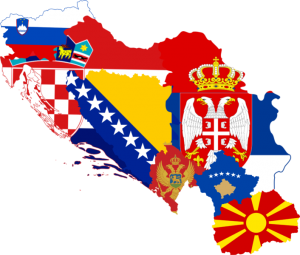
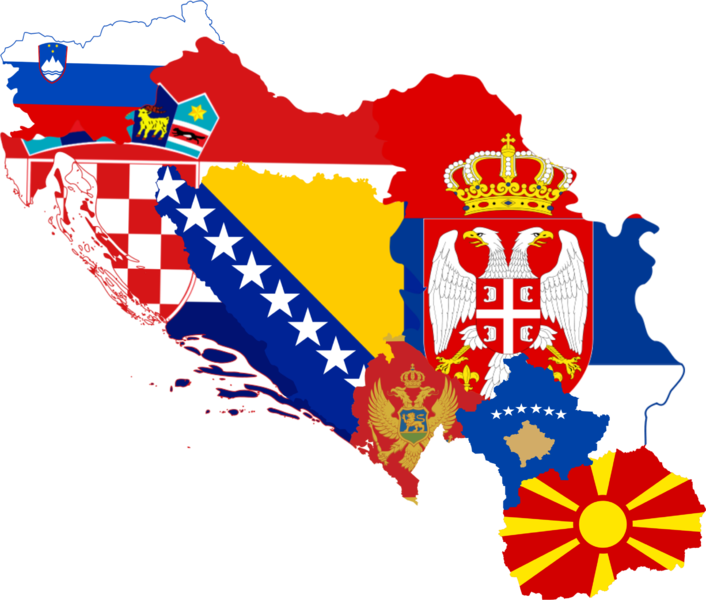
To expand a bit more on this tangent, it was generally the Soviet Union that supported anti-colonial insurgencies across the world because of the shared ideological overlap that these struggles usually shared with the communist cause, though the insurgent dynamic began to flip near the last decade of the Cold War due to Jimmy Carter’s proto-Reagan Doctrine in laying the basis for orchestrating anti-communist insurgencies in pro-Soviet “Global South” states such as Afghanistan, Angola, Cambodia, Ethiopia, Mozambique, and Nicaragua. After the end of the Cold War, insurgencies generally became the domain of anti-nation-state actors fighting to break away from ethnically diverse states in order to establish their own exclusive ethnic fiefdoms. This was certainly the case in the former Yugoslavia with Slovenia, Croatia, and the historical Serbian Province of Kosovo, though the examples of Eritrea and the southern Nigerian region of “Biafra” are notable exceptions because they occurred during the middle of the Cold War and not afterwards.
As for the Kurds, who are commonly brought up in this context, their separatist “Kurdistan” project always functioned as a “second geopolitical ‘Israel’” no matter which party was backing it at any given time, though their cause has become ever more popular in recent years as the US promotes the “Balkanization” of the Mideast through “Blood Borders” and the revision of the Sykes-Picot Agreement that established the modern-day nation-states in the Mideast. Accepting that this and a few other exceptions (Eritrea, “Biafra”) exist to the articulated model, the prevailing trend is that anti-Western anti-colonial insurgencies during the Old Cold War have given way to pro-Western “Balkanization” Hybrid Wars in the New Cold War as the principle of “separateness” becomes perverted in a weaponized form by exploiting anti-imperialism sentiment.
The new narrative is that the post-colonial state authorities are “internal imperialists” who must be opposed by ethno-regional minority “anti-colonialists”, with the only “solution” being to separate from the “Global South” “imperial” state just as their predecessors did from their European counterpart decades ago. If the “international community” (West) won’t outright support their Woodrow Wilson-era “self-determination” desire for an independent state for whatever the contemporaneous geostrategic reasons may be, then the fallback plan is to internally partition the targeted state through “Identity Federalism” (“Bosnification”). The irony of it all is that these processes used to take place exclusively within the “Global South” and the former “Second World” communist countries of Yugoslavia and the USSR, but have now boomeranged back to the “First World” nation-state cradle of Western Europe with the cases of Catalonia and Flanders.
Interestingly, like it was argued in the author’s two hyperlinked pieces above, the “Balkanization” of Europe from a bloc of nation-states to a “federation of regions” is also part of a larger geopolitical divide-and-control scheme, both by the EU’s “Cultural Marxist”-Globalist elite and the US’ unipolar strategists. The fragmentation of a broad collection of inclusive identity-diverse nation-states (e.g. Spain, France, Germany, etc.) into exclusive identity-centric statelets is designed to reverse the multipolar momentum driven by Russia and China in pioneering large identity-inclusive blocs (e.g. the Eurasian Economic Union, SCO) ambitiously integrated together through Beijing’s One Belt One Road global vision of New Silk Road connectivity. The emerging Multipolar World Order aims to overcome the US’ “Clash of Civilizations” blueprint for dividing and ruling the Eastern Hemisphere by promoting a “Convergence of Civilizations” that seeks to stabilize it.
The end result of Chinese-driven Silk Road Globalization and its US-backed Western counterpart is a Civilizational World Order, albeit with differing geostrategic arrangements and loyalties, as the Chinese one will be defined by fewer and more diverse actors, while the American one will have multiple actors that are more homogenous. Washington’s hijacking of the global populist zeitgeist is part of its plan to strategically exploit certain movements and use them to destroy the New Silk Roads that are required to undergird the future Chinese-led international system. Moreover, the “Balkanization” of China’s identity-diverse nation-state transit partners alongside it and Russia’s Eurasian peripheries will encourage centrifugal forces within their own borders as well, which altogether represents the weaponization of chaos theory by the declining Unipolar World Order in order to indefinitely delay its replacement by the multipolar one.
The unraveling of the nation-state will have profound consequences on the future of International Relations and in particular on the inclusive identity-diverse multipolar Great Powers driving the diversification of stakeholders in the Multipolar World Order. As geo-demographic “coincidence” would have it, however, the Western Hemisphere is largely insulated from similar Hybrid War vulnerabilities owing to its comparatively more identity-homogenous composition of Latin American “mestizos” who replaced the natives following the conquistadors’ genocide against the original inhabitants. Although the US is much more multicultural than its southern counterparts despite killing off most of its own native people as well, its ethno-regionally diverse population is transplanted from the “Old World” and doesn’t have as much of an “historical stake” in territorial separateness as the their Eastern Hemispheric counterparts, which is why it’s very unlikely that it will suffer any “Balkanization” blowback in the same form (key qualifier) as it’s inflicting on others halfway across the world.
Taken together, the Western Hemisphere’s relative structural resistance to Hybrid War “Balkanization” and externally supported divide-and-rule separatist conflicts positions its northern and southern landmasses to collectively function as the US’ “Fortress America” in the event that Washington needs to retreat to a geostrategic redoubt if its weaponization of chaos theory is successful in totally destabilizing the Eastern Hemisphere after dissolving its nation-states. The Americas have the resources and population to remain autarkic from Afro-Eurasia, though provided that a strong degree of “central planning” is implemented in order to most efficiently utilize its assets. In this dystopian scenario, the US’ “Operation Condor 2.0” series of regional regime changes in Latin America can be understood as prudently preparing the groundwork for Washington’s future dominance over these two continents in order to be in the best position possible for reestablishing “Pax Americana” after the death of the nation-state.
We would like to ask you to consider a small donation to help our team keep working. We accept no advertising and rely only on you, our readers, to keep us digging the truth on history, global politics and international relations.
The negotiations on Brexit are attracting a lot of attention. In particular, the possible erosion of the rights of around three million EU-27 citizens living in Britain is a major cause for concern.The European Parliament resolution adopted on 3 October states that “the withdrawal agreement must incorporate the full set of rights citizens currently enjoy, such that there is no material change in their position”.The main author of this text, Mr Guy Verhofstadt, the EP Brexit Coordinator, argues that such an approach – not to lower the level of citizens’ rights – is “the goal of democracy”. But why was ...
Donate to Support UsWe would like to ask you to consider a small donation in Euros to help our team keep working.There are three ways to financially support us:1. By sending financial support in directly to our bank account: LT787300010000727704 EUR.2. By sending financial support using the Western Union money transfer system.3. By sending financial support using the PayPal system (Merchant ID: TDTW7UVMTFZ7J).If you use a Western Union money transfer system, we need from you the code of the money transaction or scanned Send Money Form. You can send it to our official e-mail address.Contact us by e-mail if you ...
American capitalism is based on plunder. With the continental USA plundered, American capitalism hoped to continue enriching itself by plundering Russia as it did under Yeltsin, carefully including the Russian “Atlanticist Integrationists” in the spoils in order to have support from the liberal, progressive forces in Russia for stripping Russia of its assets. But Putin more or less put a halt to the American/Israeli rape of Russia, although it still continues through the neoliberal economics that Harvard brainwashed into the Russian central bank and economics profession. Brainwashed Russian economists are the main reason Washington is able to punish a powerful ...
Read our Disclaimer/Legal Statement!Origins of images: Facebook, Twitter, Wikimedia, Wikipedia, Flickr, Google, Imageinjection & Pinterest.Donate to Support UsWe would like to ask you to consider a small donation to help our team keep working. We accept no advertising and rely only on you, our readers, to keep us digging the truth on history, global politics and international relations.
We have to keep in mind that a term and notion of security usually implies a kind of sense of protection and safety from different possible harms coming from „outside“. Therefore, it can be generally acceptable and understandable that the states want to protect their own territories by expanding great resources in making their territorial safe. Security topics are of very different kinds, ranging from the causes of conflict between states to deterioration in the global climate or women’s rights in global politics.The Conception of a SystemThe conception of international systems of states is crucial as an explanatory mechanism of ...
Within 40 years, given current demographic trends, the white population in France and the rest of old Europe will recede, creating a Muslim majority, a French researcher says.Charles Gave, an economist, fund manager and political commentator, published his conclusions this month on the webpage of his think tank, Institute des Libertes. He writes of the “disappearance of the European populations” as native populations shrink and Muslims continue to exhibit a robust fertility rate.Mr. Gave, president of Gavekal Research, acknowledges that his decidedly unpolitically correct view may bring him scorn and possibly censorship. The political left generally protects Islam from criticism. ...
Making negative statements concerning Russia, the Baltic States set Moscow against themselves and force it to respond. Especially they irritate it making unproven warlike statements for the sake of “common line” of the EU or NATO on the issue. But as John Steinbeck said “all war is a symptom of man’s failure as a thinking animal.”After major information campaign in the Baltic States aimed to discredit Zapad 2017 military exercise, Russia tries to find the most vulnerable places to hurt the Baltic States. It is absolutely evident, that such sphere is economy. For a long time Latvia, Lithuania and Estonia ...
IntroductionOver the past half-century, I have been engaged in research, lectured and worked with social movements and leftist governments in Latin America. I interviewed US officials and think tanks in Washington and New York. I have written scores of books, hundreds of professional articles and presented numerous papers at professional meetings.In the course, of my activity I have discovered that many academics are frequently engage in what government officials dub ‘de-briefing’! Academics meet and discuss their field-work, data collection, research finding, observations and personal contacts over lunch at the Embassy with US government officials or in Washington with State Department ...
The concept of human security is a controversial approach by a certain group of post-Cold War 1.0 academicians (after 1990) for the purpose of redefining and at the same time making broader the meaning of security in global politics and the studies of international relations (IR). We have to keep in mind that up to the end of the Cold War 1.0, security as both political phenomena and academic studies exclusively were connected only with the protection of the independence (sovereignty) and territorial integrity of states (national polities) from the military threat (war, aggression) by external factors (players) but in ...
So, here's how it is:1) There is still no evidence - that has been presented to the public - that Assad ordered a chemical weapons (CW) attack.2) Yes, that evidence should be made public, discussed and debated by Congress, and a vote taken before we use force. I acknowledge that the War Powers Resolution gives the President the authority to use force for 60 days - but the interests of peace and stability are better served through a debate and a democratic process as opposed to a unilateral decision made in secret, especially when the military action is punitive and ...
"The main part of the population of Baltic cities up to the 19th century consisted of ethnic Germans, and also Poles and Jews, but not at all Baltic people. In fact, the “old” (pre-revolutionary) Baltic region was completely built by Germans. Baltic cities were German cities – with German architecture, culture, and system of municipal management.... in the cities of the Baltic region there were almost no Estonians and Latvians."Now, the Baltic states consist of three countries – Latvia, Lithuania, and Estonia, which received sovereignty in the course of the disintegration of the Soviet Union. Each of these states position themselves, respectively, ...
TerminologyA meaning of the term Great Power(s) (GP) in global politics from the beginning of the 16th century onward refers to the most power and therefore top influential states within the system of the international relations (IR). In other words, the GP are those and only those states who are modelling global politics like Portugal, Spain, Sweden, France, the United Kingdom, united Germany, the USA, the USSR, Russia or China. During the time of the Cold War (1949−1989) there were superpowers[1] as the American and the Soviet administrations refered to their own countries and even a hyperpower state – the ...
“Srebrenica” has become the symbol of evil, and specifically Serb evil. It is commonly described as “a horror without parallel in the history of Europe since the Second World War” in which there was a cold-blooded execution “of at least 8,000 Muslim men and boys.” [1] The events in question took place in or near the Bosnian town of Srebrenica between July 10 and 19, 1995, as the Bosnian Serb army (BSA) occupied that town and fought with and killed many Bosnian Muslims, unknown numbers dying in the fighting and by executions. There is no question but that there were ...
The American aristocracy want inequality of rights, with two basic polar-opposite classes: the ‘elite’, with themselves at the top of everything, and everybody else below them, as subjects to be ruled by them, in such ways as they (themselves, and their fellow ‘elite’) can agree to do. They are convinced that they have earned their high status, in one way or another, and they compete ferociously amongst themselves, to rise even higher within the aristocracy.Many of the aristocrats think that they are ‘elite’ because they are the richest; many think instead that the ‘elite’ are the smartest or the most ...
It was in 1916, in the midst of World War I, that Britain and France (pitted against the Germans, Austrians and Ottoman Turks) made their infamous Sykes-Picot agreement. In grand imperial style, they used this agreement to divide up the Middle East between them. It was a daring move, considering that the war was at a stalemate and the two allies did not know if they were going to win the struggle. Nonetheless, they went ahead with the agreement and in doing so made a number of decisions that continue to shape the region to this day.Besides bringing traditional European imperialism ...
The 2017 Global Peace Index has declared Syria, Afghanistan, Iraq and South Sudan to be among the “least peaceful” countries in the world. Incidentally, all four have been targets of U.S.-led destabilization efforts that were used to pursue economic interests that suit the U.S.MINNEAPOLIS– The annual Global Peace Index, recently released for June 2017, has found that while the world is more peaceful now than last year, violence has increased significantly overall in the past decade.Although the situation has improved in many countries, the ten lowest-ranking nations – known as the world’s “least peaceful” countries – have shown little change ...
The first thing you hear is the slow-moving clatter of a wheelchair. Then comes his voice. Fetah Rudi survived an attempted assassination which left him paralysed for life, and has spent more than 17 years suffering the consequences.Kosovo Liberation Army - A Balkan Islamic fundamentalist terrorist organizationIn June 1999, Rudi was one of the Kosovo Albanians who was detained and tortured in a Kosovo Liberation Army, KLA prison.A few months later in December 2000, Rudi - a member of the Democratic League of Kosovo, LDK, which at the time was President Ibrahim Rugova’s party - became a target during the ...
One of the most steadfast beliefs regarding the United States is that it is a democracy. Whenever this conviction waivers slightly, it is almost always to point out detrimental exceptions to core American values or foundational principles. For instance, aspiring critics frequently bemoan a “loss of democracy” due to the election of clownish autocrats, draconian measures on the part of the state, the revelation of extraordinary malfeasance or corruption, deadly foreign interventions, or other such activities that are considered undemocratic exceptions. The same is true for those whose critical framework consists in always juxtaposing the actions of the U.S. government ...
Future war “may see attacks via computer viruses, worms, logic bombs, and trojan horses rather than bullets, bombs, and missiles” [Steven Metz, Armed Conflict in the 21st Century: The Information Revolution and Post-Modern Warfare, Carlisle, PA: Strategic Studies Institute, 2000, xiii].First partThe facilities of the Internet in politicsThe Internet or the WWW (World Wide Web) became massively widespread around the globe since the late 1980s or more precisely since 1989 – in the same year when the Berlin Wall collapsed and, therefore, enabled the Cold War 1.0 to enter the final stage of its end. That is why both of these ...
It is as if the Gambino and Genovese crime families were arguing their turf disputes in the courts and the news media. The Democrats are screaming bloody murder over President Trump’s firing of FBI director James Comey, whom Hillary Clinton still blames for her defeat at the polls and whom the bipartisan War Party has never forgiven for Comey’s earlier hesitancy to blame the Russians for the same offense. Now that Trump has cut Comey loose — ostensibly for his handling of the Clinton emails scandal, according to three letters sent by Trump and his two top Justice Department officials ...