
Views: 960
The origin of jihadism is prohibited from being reported truthfully — this truth is prohibited by all of the Establishment ‘press,’ including almost all ‘alternative news’ sites — in the West, because it challenges all of the “sensitive” buttons (all of the bigotries, to put the matter in plain terms); and, though this fact (the Establishment’s bigotries, and its hypocrisy to preserve and protect their bigotries even while condemning those of other people) will prevent almost all of the news-media that I send this to from publishing it, nothing prevents me from writing it; so, here it is (in whatever media are gutsy enough to publish this Western cultural and political samizdat):
 First, here’s what the origin of jihadism isn’t: It’s not the “Arab-Israeli conflict,” nor is jihadism a response to the West’s support of the barbarous way that Israel’s apartheid government (and the vast majority of Israel’s Jews) treat, and historically have treated, Palestinians. (And it’s not a result of America’s donating to Israel over $3B annually from U.S. taxpayers to do that, as the illegal ‘settlements’ of Jews into Palestine continues.) Even without that Israeli-Jewish barbarism and its support by Western countries, jihadism would exist, not much different than it today is. Jihadists are no response to, nor result of, the West’s barbarisms supporting the apartheid nation of Israel.
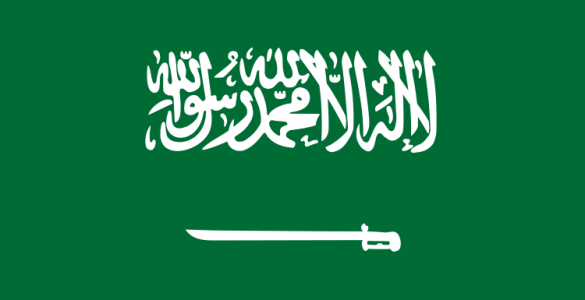
In order to understand where jihadism really comes from, what’s necessary first is to understand the relationship that the Sauds, who are the royal family of Saudi Arabia, have with their clergy, who are the Wahhabist Islamic preachers, a relationship between the aristocracy and clergy in that area, which began in 1744, and which was subsequently combined with the oil-for-weapons trade and an alliance with the United States, that began in 1945, and that then was ignited by the petrodollar after Richard Nixon’s de-dollarization of gold in 1973. That’s what laid the ground for today’s jihadism. (Here is a brilliant 22-minute documentary on the key role that the replacement of the gold-based dollar by the oil-based dollar played in the rise of jihadism; but the chief focus in the present article will be on the history of Islam before 1945, which is essential to know in order to be able to understand why that change in the value-base of the dollar ended up producing the jihadist explosion we’re all seeing today.)
And, then, U.S. President Jimmy Carter’s National Security Advisor Zbigniew Brzezinski, a born Polish nobleman whose family hailed from the most anti-Russian part of Poland, and who was also a protégée of the oil-and-banking baron David Rockefeller, advised Carter in 1978 to import pro-Saudi fighters or “mujahideen” (later called “Taliban”) into the then-Soviet-allied Afghanistan, in order to create there a wave of terrorism that would drain Soviet resources necessary to preserve the Soviets’ Afghan ally, and thus help to bring down the Soviet Union.
It is, in short, an anti-Soviet operation that the West subsequently continued as an anti-Russian operation (especially in Chechnia but also in other predominantly Muslim parts of Russia), but which got out of control, and now bites the hands that fed and that continue to feed it.
Here is a video of Brzezinski, in 1979, in Pakistan, telling the Wahhabist Taliban encamped there, who had recently been driven out from Afghanistan by the new secular and Soviet-allied government there, to go back into Afghanistan, this time with U.S. weapons and support, to fight again as mujahideen there, because “God is on your side.”
Here is Brzezinski, in 1998, bragging that he had done that, and saying: “Regret what? That secret operation was an excellent idea. It had the effect of drawing the Russians into the Afghan trap and you want me to regret it? The day that the Soviets officially crossed the border [into Afghanistan, to defend the new secular government in that land], I wrote to President Carter: We now have the opportunity of giving to the USSR its Vietnam war.” The interview continued:
Q: And neither do you regret having supported the Islamic fundamentalism, having given arms and advice to future terrorists?B: What is most important to the history of the world? The Taliban or the collapse of the Soviet empire? Some stirred-up Moslems or the liberation of Central Europe and the end of the cold war?Q: Some stirred-up Moslems? But it has been said and repeated Islamic fundamentalism represents a world menace today.B: Nonsense!
It wouldn’t exist without the ideology, which is distinctly Wahhabist, known as “Salafist” outside of Saudi Arabia. But whatever it’s called, this Sunni branch of Islam is the religion that is held by all jihadists. The U.S. built upon that Saudi base (and the very term “Al Qaeda” means “the base”). And so, this ideology must be understood, because it is significant not only within Saudi Arabia, but wherever jihadists carry out their war against “the infidels” — against anyone who fails to adhere to all of the rituals and commands of this very severe faith. (The petrodollar has simply ignited that particular religious ideology.)
Here is from the U.S. Library of Congress’s 1992 book Saudi Arabia: A Country Study, by Helen Chapin Metz:
The Saud Family and Wahhabi Islam
The Al Saud [dynasty] originated in Ad Diriyah, in the center of Najd, close to the modern capital of Riyadh. Around 1500 ancestors of Saud ibn Muhammad took over some date groves, one of the few forms of agriculture the region could support, and settled there. Over time the area developed into a small town, and the clan that would become the Al Saud came to be recognized as its leaders.
The rise of Al Saud is closely linked with Muhammad ibn Abd al Wahhab (died 1792), a Muslim scholar whose ideas form the basis of the Wahhabi movement. He grew up in Uyaynah, an oasis in southern Najd, where he studied with his grandfather Hanbali Islamic law, one of the strictest Muslim legal schools. While still a young man, he left Uyaynah to study with other teachers, the usual way to pursue higher education in the Islamic world. He studied in Medina and then went to Iraq and to Iran.
To understand the significance of Muhammad ibn Abd al Wahhab’s ideas, they must be considered in the context of Islamic practice. There was a difference between the established rituals clearly defined in religious texts that all Muslims perform and popular Islam. The latter refers to local practice that is not universal.
The Shia practice of visiting shrines is an example of a popular practice. The Shia continued to revere the Imams even after their death and so visited their graves to ask favors of the Imams buried there. Over time, Shia scholars rationalized the practice and it became established.
Some of the Arabian tribes came to attribute the same sort of power that the Shia recognized in the tomb of an Imam to natural objects such as trees and rocks. Such beliefs were particularly disturbing to Muhammad ibn Abd al Wahhab. In the late 1730s he returned to the Najdi town of Huraymila and began to write and preach against both Shia and local popular practices. He focused on the Muslim principle that there is only one God, and that God does not share his power with anyone—not Imams, and certainly not trees or rocks. From this unitarian principle, his students began to refer to themselves as muwahhidun (unitarians). Their detractors referred to them as “Wahhabis”—or followers of Muhammad ibn Abd al Wahhab,” which had a pejorative connotation.
The idea of a unitary god was not new. Muhammad ibn Abd al Wahhab, however, attached political importance to it. He directed his attack against the Shia. He also sought out local leaders, trying to convince them that this was an Islamic issue. He expanded his message to include strict adherence to the principles of Islamic law. He referred to himself as a “reformer” and looked for a political figure who might give his ideas a wider audience.
Lacking political support in Huraymila, Muhammad ibn Abd al Wahhab returned to Uyaynah where he won over some local leaders. Uyaynah, however, was close to Al Hufuf, one of the Twelver Shia centers in eastern Arabia, and its leaders were understandably alarmed at the anti-Shia tone of the Wahhabi message. Partly as a result of their influence, Muhammad ibn Abd al Wahhab was obliged to leave Uyaynah, and headed for Ad Diriyah. He had earlier made contact with Muhammad ibn Saud, the leader in Ad Diriyah at the time, and two of Muhammad’s brothers had accompanied him when he destroyed tomb shrines around Uyaynah.
Accordingly, when Muhammad ibn Abd al Wahhab arrived in Ad Diriyah, the Al Saud was ready to support him. In 1744 Muhammad ibn Saud and Muhammad ibn Abd al Wahhab swore a traditional Muslim oath in which they promised to work together to establish a state run according to Islamic principles. Until that time the Al Saud had been accepted as conventional tribal leaders whose rule was based on longstanding but vaguely defined authority.
Muhammad ibn Abd al Wahhab offered the Al Saud a clearly defined religious mission to which to contribute their leadership and upon which they might base their political authority. This sense of religious purpose remained evident in the political ideology of Saudi Arabia in the 1990s.
Muhammad ibn Saud began by leading armies into Najdi towns and villages to eradicate various popular and Shia practices. The movement helped to rally the towns and tribes of Najd to the Al Saud-Wahhabi standard. By 1765 Muhammad ibn Saud’s forces had established Wahhabism—and with it the Al Saud political authority–over most of Najd.
After Muhammad ibn Saud died in 1765, his son, Abd al Aziz, continued the Wahhabi advance. In 1801 the Al Saud-Wahhabi armies attacked and sacked Karbala, the Shia shrine in eastern Iraq that commemorates the death of Husayn. In 1803 they moved to take control of Sunni towns in the Hijaz. Although the Wahhabis spared Mecca and Medina the destruction they visited upon Karbala, they destroyed monuments and grave markers that were being used for prayer to Muslim saints and for votive rituals, which the Wahhabis consider acts of polytheism. In destroying the objects that were the focus of these rituals, the Wahhabis sought to imitate Muhammad’s destruction of pagan idols when he reentered Mecca in 628.
If the Al Saud had remained in Najd, the world would have paid them scant attention. But capturing the Hijaz brought the Al Saud empire into conflict with the rest of the Islamic world. The popular and Shia practices to which the Wahhabis objected were important to other Muslims, the majority of whom were alarmed that shrines were destroyed and access to the holy cities restricted.

Moreover, rule over the Hijaz was an important symbol. The Ottoman Turks, the most important political force in the Islamic world at the time, refused to concede rule over the Hijaz to local leaders. At the beginning of the nineteenth century, the Ottomans were not in a position to recover the Hijaz, because the empire had been in decline for more than two centuries, and its forces were weak and overextended. Accordingly, the Ottomans delegated the recapture of the Hijaz to their most ambitious client, Muhammad Ali, the semi-independent commander of their garrison in Egypt. Muhammad Ali, in turn, handed the job to his son Tursun, who led a force to the Hijaz in 1816; Muhammad Ali later joined his son to command the force in person.
Meanwhile, Muhammad ibn Abd al Wahhab had died in 1792, and Abd al Aziz died shortly before the capture of Mecca. The movement had continued, however, to recognize the leadership of the Al Saud and so followed Abd al Aziz’s son, Saud, until 1814; after Saud died in 1814, his son, Abd Allah, ruled. Accordingly, it was Abd Allah ibn Saud ibn Abd al Aziz who faced the invading Egyptian army [on behalf of Turkey’s Muslim ruler].
Tursun’s forces took Mecca and Medina almost immediately. Abd Allah chose this time to retreat to the family’s strongholds in Najd. Muhammad Ali decided to pursue him there, sending out another army under the command of his other son, Ibrahim. The Wahhabis made their stand at the traditional Al Saud capital of Ad Diriyah, where they managed to hold out for two years against superior Egyptian forces and weaponry. In the end, however, the Wahhabis proved no match for a modern army, and Ad Diriyah—and Abd Allah with it—fell in 1818.
So: “the Wahhabis,” who were a Muslim version or mirror-image of Christianity’s Medieval Crusades against Muslims and Jews, were defeated by the Ottoman Turks, which were a liberal branch of Islam. Here is the instruction that the founder of the Ottoman Empire, Osman I, gave to his son; and it could hardly have been farther away from the harsh teachings of Wahhab:
Last Testament
In directing his son to continue the administrative policies set forth by Sheik Edebali, Osman stated:
Son! Be careful about the religious issues before all other duties. The religious precepts build a strong state. Do not give religious duties to careless, faithless and sinful men or to dissipated, indifferent or inexperienced people. And also do not leave the state administrations to such people. Because the one with fear of God the Creator, has no fear of the created. One who commits a great sin and continues to sin can not be loyal. Scholars, virtuous men, artists and literary men are the power of the state structure. Treat them with kindness and honour. Build close relationship when you hear about a virtuous man and give wealth and grant him…Put order the political and religious duties. Take lesson from me so I came to these places as a weak leader and I reached to the help of God although I did not deserve. You follow my way and protect Din-i-Muhammadi and the believers and also your followers. Respect the right of God and His servants. Do not hesitate to advise your successors in this way. Depend on God’s help in the esteem of justice and fairness, to remove the cruelty, attempt this in every duty. Protect your public from enemy’s invasion and from the cruelty. Do not behave any person in an unsuitable way with unfairness. Gratify the public and save all of their sake.[9]
That emphasis upon “kindness,” and upon “God” providing “help” to individuals who “did not deserve” and “to remove the cruelty,” etc., isn’t at all similar to Wahhab’s teachings, but far closer instead to St. Paul’s preachment of the otherwise harsh God’s mercy (e.g., Galatians 2:21: “I refuse to reject God’s mercy. If a person is put right with God by adhering to the [harsh] laws of God, then Christ died for nothing!”) as the very foundation of Christianity. That’s what softened the harshness of the Jewish God, the God in the Torah, the first five books of the Christian Bible. Unfortunately, Paul and his followers who wrote and assembled the New Testament also introduced anti-Semitism, a condemnation of the Jews and not of their horrible Scripture: e.g., Paul’s own 1 Thessalonians 2:14-15 — “The Jews killed the Lord Jesus and the prophets, and persecuted us. They displease God and are everyone’s enemies.” The Paulinists’ accusation that Jews killed God was basic to pogroms and other discriminations against Jews, which only served to increase Jews’ own tribalism. All religions encourage bigotry; and, in our still highly religous world (believing even the crackpot biblical ‘history’ that the Earth is only 6,000 years old, which is scientifically ridiculous but part of the disproven creation-myth), aristocracy and religion remain, even today, as Mankind’s curses, but especially in fundamentalist Sunni countries such as Saudi Arabia, which is the ultimate model of a nation that’s both aristocratic and theocratic — the most dangerous of all possible combinations for a nation.
The alliance between followers of [Muhammad] ibn Abd al-Wahhab and Muhammad bin Saud’s successors (the House of Saud) proved to be a rather durable alliance. The house of bin Saud continued to maintain its politico-religious alliance with the Wahhabi sect through the waxing and waning of its own political fortunes over the next 150 years [but actually more like 300 years, inasmuch as it started in 1744, when Saud and Wahhab swore their oaths to each other, right up to the present, and so will be 300 years old in 2044], through to its eventual proclamation of the Kingdom of Saudi Arabia in 1932, and then afterwards, on into modern times. Today Mohammed bin Abd Al-Wahhab’s teachings are state-sponsored and are the official form of Sunni Islam[3][22] in 21st century Saudi Arabia.[23] …With the help of funding from petroleum exports[25] (and other factors[26]), the movement underwent “explosive growth” beginning in the 1970s and now has worldwide influence.[3]
Today’s jihadism is simply oil-and-gas-funded Wahhabism that got out of control in non-Wahhabist-Salafist-led countries. During 1973, U.S. President Richard Nixon de-dollarized gold, and quickly petroleum became dollarized (the global commodity-basis for currencies). Saudi Arabia had more of the new gold than any other country did. And, already, the entire Muslim world was bowing to the Sauds’ Mecca; so, they had both Mecca and oil. And the Sauds, as the most oil-rich people, now became the emperors of Arabia, having under them the kings of the other major Arabic Sunni oil sheikhdoms — or, as I have noted before: The controlling entities behind American foreign policies since at least the late 1970s have been the Saud family and the Sauds’ subordinate Arabic aristocracies, which are the ones in Qatar (the al-Thanis), Kuwait (the al-Sabahs), Turkey (the Turkish Erdogans, a new royalty), and UAE (its six royal families: the main one, the al-Nahyans in Abu Dhabi; the other five: the al-Maktoums in Dubai, al-Qasimis in Sharjah, al-Nuaimis in Ajman, al-Mualla Ums in Quwain, and al-Sharqis in Fujairah). Other Saudi-dominated nations — though they’re not oil-rich (more like Turkey in this regard) — are Pakistan and Afghanistan.
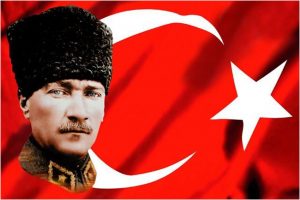
Turkey is a special case: a member not only of America’s 28-nation NATO alliance, but also of Saudi Arabia’s new 34-nation+ Sunni-Islamic global military alliance. In 1922, Turkey’s non-sectarian General Kemal Attaturk had ended the liberal Islamic dominance that had earlier been imposed under Osman I, and he established instead the non-religious nation of Turkey, which has terminated in recent decades with the increasing penetration into Turkey of Salafist or jihadist (i.e., Wahhabist-Salafist) Islam: aiming for the Caliphate or fundamentalist-Islamic empire, not as pre-1922 — not as the liberal-Islamic Ottoman Empire — but instead as a Caliphate (fundamentalist-Islamic empire).
The “Caliphate” is supposed to be imposed by a descendant of Muhammad himself, the founder of Islam. Only such a descendant may found or start the Caliphate — go beyond being only a God-authorized national ruler, to become the God-authorized ruler of the world. For example, the founder of ISIS (also called IS, ISIL, and Daesh), Abu Bakr al-Baghdadi, claims to be a descendant of Muhammad. (However, there is uncertainty as to whether he actually even exists.)
This can be accurately understood only within the context of understanding the tribalism of all African, including of all Arabic, cultures (as well as of Jewish, and other tribal religions). Tribalism is the same as aristocracy, except it’s the other side of the phenomenon: the mass-side, instead of the elite (i.e., aristocratic) side. Both sides are the belief that ancestors — or, in Arabic, “salafis” — determine a person’s status or degree of authority. Aristocracy and tribalism go together, just like heads-and-tails on the opposite sides of a coin do.
When Muhammad Ibn Saud and Muhammad Ibn Wahhab created in 1744 what would become Saudi Arabia, it was upon the basis of two things that are at the root of all conservatism: tribalism and religion. The leaders of a tribe are its aristocracy, and the leaders of a religion are its clergy. Consequently, Saudi Arabia might appear to be a perfect conservative nation: the aristocracy (the descendants of Muhammad Ibn Saud), and the clergy (the clerics of Wahhabism), are united to control the nation. However, there is a flaw in the Saudi-Wahhabist nation: the aristocratic element in it, the Saud family, are not descended from Muhammad. The Sunni ideal is very much the unification of church-and-state; but, in Shiite Islam, such unification between the two isn’t necessary.
Consequently, only the psychopathy of Saudi Arabia’s aristocracy and clergy can sustain their rule in a tribal-religious culture that violates the basic conservative principle of descent from the Prophet, who was himself a conqueror. (Muhammad, as both the head-of-state and the head-of-church; is the Sunni ideal. Shiia Islam broke somewhat away from that ideal of God’s anointment of the leaders via their descent, so isn’t quite as strongly wedded to it.)
Because Abu Bakr al-Baghdadi (or whomever pretends to be him) claims to be both head-of-state and head-of-sect, ISIS presents a threat to the Sauds that even Al Qaeda (from which ISIS itself descended) avoids: Osama bin Laden didn’t claim to be descended from Muhammad. The Saudi religion didn’t demand he be, any more than it had demanded Muhammad Ibn Saud to be. But, the 100% fundamentalists do demand it — and ISIS is 100%. (In fact, the Wahhabist “Hanbali” system of legislation demands everything fundamentalist but anointment-by-descent-from-the-prophet.) So: ISIS is a direct threat to the Sauds: it labels them “impostors” and “infidels.”
Therefore, the Islamic State (ISIS by any name, such as ISIL and Daesh) endangers the Sauds in a way that even al-Qaeda did not (and Osama bin Laden had, indeed, turned away from the Sauds, but on account of the U.S.-Saudi alliance, and not because the Sauds were “impostors” as heads-of-state). IS is even more fundamentalist than Wahhabism-Salafism. It’s unadulterated Islam, like Muhammad’s legendary (and probablly also historical) own original.
Other than that major distinction between Wahhabism and ISIS, the Sauds’ Kingdom is Islamic.
For example, just like the Bible — both its Old and New Testament — all fundamentalist Islam authorizes slavery (as, indeed, does fundamentalist Judaism, and fundamentalist Christianity); and here is how that plays out in the Quranic nation of Saudi Arabia:
The official Saudi Information Agency issued, on 7 November 2003, a news-report, “Author of Saudi Curriculums Advocates Slavery,” which said: “The main author of the Saudi religious curriculum expressed his unequivocal support for the legalization of slavery in one of his lectures recorded on a cassette and obtained exclusively by SIA news. Leading government cleric Sheikh Saleh Al-Fawzan is the author of the religious books currently used to teach 5 million Saudi students. … Al-Fawzan is member of the Senior Council of Clerics, Saudi Arabia’s highest religious body. … According to Saudi liberal writer and scholar Sheikh Hassan Al-Maliki, Al-Fawzan threatened him with beheading if he continued in his criticism of the extremist Wahhabi interpretation of Islam.”
That’s remarkably honest reporting, because it’s about their own country. But, in the less-fundamentalist Western world, the presumption that slavery is to be enforced instead of overthrown, isn’t generally accepted. If there is a “cultural war,” it’s ancient versus modern: it is religious-aristocratic on the one side, versus secular-democratic on the other.
The Saudi Arab News headlined on 27 March 2006, “Why Is There So Much Hate Inside Us?” and a columnist, Abdullah Al-Mutairi, wondered, “why young Saudis hate foreign workers, particularly Indians, Pakistanis and Bangladeshis.” He even wondered: “Do we adult Saudis who sponsor and employ foreigners fulfill the conditions of their contracts — which both we and they have signed? How many housemaids never get a day off? I remember a worker in the school where I work who was on the job every day and who had not been paid for six months. I remember another unpaid worker who asked humbly and politely for his dues and received nothing but curses and insults.” Basically, treating the dependent like filth is considered okay. Obligations are only one-way, and that’s the basic principle in any aristocratic culture.
The Saudi Gazette headlined on 29 November 2013, “What will happen when you allow your employee to keep his identity papers,” and reported that, “Sireen Jamal, owner of a beauty salon, said her driver [a slave] had escaped … with her car,” because he had identity papers and could therefore get out of the country. “Dr. Suhaila Zain Al-Abideen, a human rights activist and a member of the Shoura Council, opposed the idea of giving expatriate workers their identity papers. “Whenever the expat worker has his papers with him, he may not hesitate to escape whenever he has the chance,” she said.” And the speaker, Dr. Al-Abideen, was “a human rights activist.”
And, of course, the Sauds don’t pay only to ISIS head-choppers, but also to their own. These are America’s allies, but these ones are Wahhabist-Salafists. The U.S. can be allied with them, but not with Russia. The U.S. aristocracy insists upon taking control over Russia’s natural resources.
So: although those oil-kingdoms buy more weapons from the United States than any other country (and Saudi Arabia is America’s biggest-of-all foreign purchaser of weapons), their ethical system is locked back in the years when Muhammad lived. It was basically the same ethical system that existed when Jesus did, and even when Moses did (if Moses even existed at all). But whereas the United States and other Western countries are embarrassed by the barbarism in their ‘holy Scriptures,’ Saudi Arabia and the other fundamentalist-Sunni countries simply take for granted this barbarism, as the way things ought to be, and even (such as in ISIS) as the way things must become.
And the United States aristocracy and government is allied with it, but puts on the best pretense they can that they oppose it. This also means that the United States is backing the jihadists to overthrow the secular Shiite Bashar al-Assad in Syria. America is truly extremism’s friend. It’s not as important to jihadism as the Sauds are, but almost. The U.S.-Saudi alliance is somewhat like the aristocratic-theocratic alliance. Each side of the alliance depends on the other.
And both of them want to cripple and take control over the world’s second-largest oil-power, Russia, which means first overthrowing Russia-friendly leaders such as Saddam Hussein, Muammar Gaddafi, Viktor Yanukovych, and Bashar al-Assad.

So: that’s the origin of jihadism. Al Qaeda’s version might be called ‘moderate’ extremism; ISIS’s would be ‘extreme’ extremism (sort of like Barry Goldwater’s “Extremism in defense of … is no vice”; and, if that’s “liberty,” then breakouts from prison constitute no vice). After all, how else could the aristocracy and the clergy fool the public, in a ‘democracy’? The public need to think that the system works for them, and that their enemies are mainly foreign, not mainly members of the same nation, and maybe even of the same religion, as themselves.
Many people who are born Muslims are aware of the threat that their religion is posing. But escaping from it is exceptionally difficult, especially because the world’s most oil-rich country happens to be also the font of it: the biggest promoter, and source of funding, for jihadism.
There is nothing unique about Islam in its providing a basis for ‘holy war’: look, for example, at Christianity’s Crusades, and at the Thirty-Years War in Europe. What’s unique is the Saudi-U.S. petrodollar alliance, which is spawning wars for both god and greed, which now have blowback that compels both nations’ aristocracies to pump their respective bigotries even harder, the Saudi aristocrats against “infidels,” and the American aristocrats against Russians. On both sides of the Saudi-U.S. alliance, it’s an aristocracy deceiving and fooling its own public: brainwashing them on the basis of their particular culture’s bigotries.
When a nation’s aristocracy and its clergy are supporting one-another, it’s like the flame that ignites the fuel. That’s what’s igniting the world.
About the author: Investigative historian Eric Zuesse is the author, most recently, of They’re Not Even Close: The Democratic vs. Republican Economic Records, 1910-2010, and of CHRIST’S VENTRILOQUISTS: The Event that Created Christianity.
Original source of the article: Counter Currents
Origins of images: Facebook, Twitter, Wikimedia, Wikipedia, Flickr, Google, Imageinjection & Pinterest.
Read our Disclaimer/Legal Statement!
Donate to Support Us
We would like to ask you to consider a small donation to help our team keep working. We accept no advertising and rely only on you, our readers, to keep us digging the truth on history, global politics, and international relations.