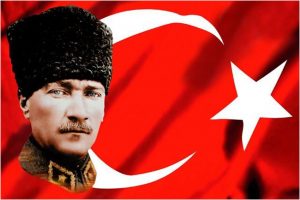

The Greek Genocide (or Ottoman Greek Genocide) refers to the systematic extermination of the native Greek subjects of the Ottoman Empire before, during and after World War I (1914-1923). It was instigated by successive governments of the Ottoman Empire; the Committee of Union and Progress Party (C.U.P), and the Turkish Nationalist Movement of Mustafa Kemal Atatürk [...]
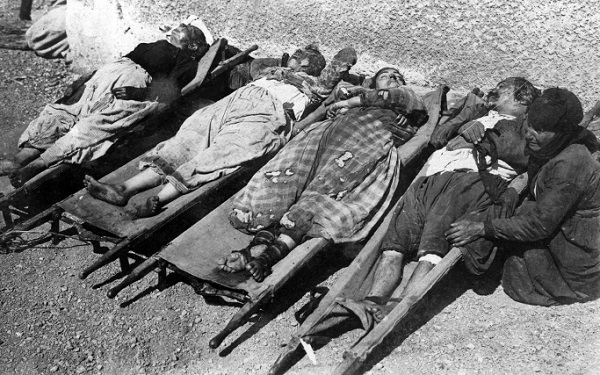
The Greek Genocide (or Ottoman Greek Genocide) refers to the systematic extermination of the native Greek subjects of the Ottoman Empire before, during and after World War I (1914-1923). It was instigated by successive governments of the Ottoman Empire; the Committee of Union and Progress Party (C.U.P), and the Turkish Nationalist Movement of Mustafa KemalAtatürk. It included massacres, forced deportations and death marches, summary expulsions, boycotts, rape, forced conversion to Islam, conscription into labor battalions, arbitrary executions, and destruction of Christian Orthodox cultural, historical and religious monuments. According to various sources, approximately 1 million Ottoman Greeks perished during this period.
The first phase of the Greek Genocide commenced in the Spring of 1914 in Eastern Thrace and western Anatolia when Turks were ordered to boycott Greek businesses. Hundreds of thousands of Greeks from these regions were also deported during this period. With the outbreak of the Great War in July of 1914, all Ottoman Greek men aged between 21-45 years were conscripted into forced labor (or concentration) camps. Most of these men were to perish under appalling conditions after being forced to work around the clock with little food or water. These camps also served as a means to break up and disarm Greek communities, thus bringing about their eventual destruction.
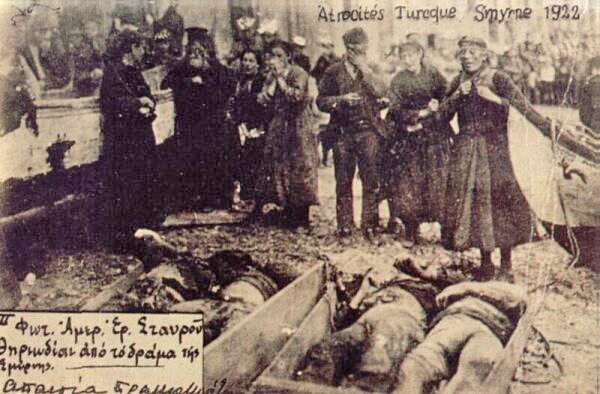
In 1915, under the guidance of German military personnel, the C.U.P ordered the deportation of Greek communities in the Dardanelles and Gallipolli region under the pretext of military necessity. These Greeks were not permitted to take anything with them. Goods in their shops were later sold by Ottoman authorities. Entire communities living along the western coastline of Asia Minor were deported to the interior or to Muslim villages where they were forced to choose between Islam or death. Homes in villages that were not burnt were seized by free-booters of neighboring communities. In some instances, Greeks were forced to sign declarations saying they were leaving of their own free will. In most cases, before deportations took place, Ottoman gendarmes (police) and çetes (armed irregulars) seized money and valuables from communities, committed massacres and burnt churches and schools. In the region of Pontus, Greek communities were deported during the peak of winter when fatalities could be at their highest. Stories of lethal injections, bodies being towed out to sea and dumped, as well as mass killings of Greeks in churches was also witnessed.
According to the Chairman of the Greek Relief CommitteeFrank W. Jackson, by 1917 some 700,000-800,000 Greeks were deported mainly from the coastal regions to the interior of Turkey. The death toll from these deportations was high. With the Ottoman Empire’s defeat in WW1, prominent leaders of the C.U.P Party were given death sentences during Ottoman Courts-Martial for their role in organizing the massacre of Greeks, Armenians and Assyrians during the war. But the post-war formation of the Turkish Nationalist movement under the leadership of Mustafa Kemal Atatürk interrupted the proceedings to bring the perpetrators to justice. Instead, the Kemalist Nationalists continued the C.U.P policy of massacring and deporting Greeks, and resulted in the burning of the city of Smyrna (today Izmir) to the ground and the expulsion of all remaining Greeks from Turkey. All able-bodied Greek males were refused exit from Turkey and were sent to the interior where most perished in slave labor camps or were massacred.
Remembrance:
The following are the days of remembrance for the Greek Genocide. Greeks have preferred to remember the genocide based on region: September 14 (Asia Minor as a whole), May 19 (Pontus region) and April 6 (Eastern Thrace).
We would like to ask you to consider a small donation to help our team keep working. We accept no advertising and rely only on you, our readers, to keep us digging the truth on history, global politics, and international relations.
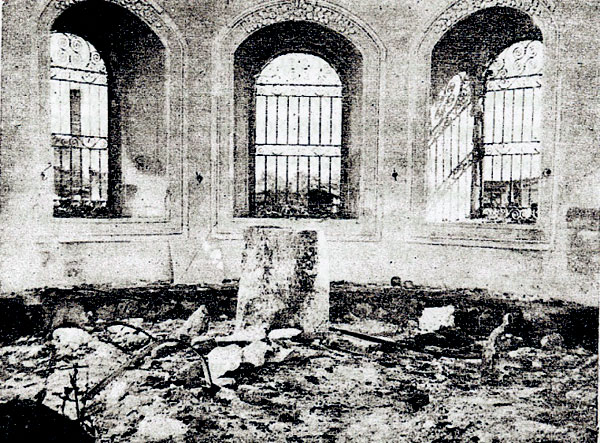
After the Russian military victory over the Ottoman Empire in the 1877−1878 Russo-Ottoman War it was signed the San Stefano Treaty between these two states on March 3rd, 1878. According to the treaty, a Greater “San Stefano” Bulgaria, under the direct protection by Russia, had to be established within the borders of the Ottoman Empire. However, an idea of “San Stefano Bulgaria” directly affected three Balkan nations: the Serbs, Greeks and Albanians as some of their ethnic and historical territories had to become part of a Greater Bulgaria. The “San Stefano Bulgaria” was projected by the Russian authorities to cover ...
When I was a schoolchild in the US a couple of short decades ago, I spent my time acquiring important life skills, ranging from how to fake a wrist fracture in order to obtain a purple cast, to how to craft a teepee replica out of a paper bag.The latter art was perfected in accordance with the holiday of Thanksgiving, which arrived each November to great fanfare, and which, in addition to teepee replication, required my classmates and I to mass-produce turkey drawings, paper Pilgrim hats, and modified, feathered headdresses.These materials were then incorporated into our reenactments of the "original" ...
The Christian population that had made up one fifth of the Ottoman Empire’s population was wiped out in waves of violence by successive Ottoman and Turkish republican governments that left Christians a tiny minority in Anatolia, two Israeli scholars have said in a new study.The controversy over the killings of the Armenian Christian minority living in Anatolia during the last days of the Ottoman Empire is already well known – while the majority of the scholarly community and many international states recognise the killings as genocide, Turkey accepts that killings took place but rejects they constituted a genocide.Israeli historians Benny ...
There are horrific realities of history that must not be questioned, distorted or denied by anyone with even the slightest integrity or sense of decency.The slaughter of millions of Jews in the death camps of Auschwitz-Birkenau, Treblinka, Majdanek, Belzec, Chelmno and Sobibor during the Holocaust of World War II falls squarely in this category.So does the fundamental fact that this ultimate crime against humanity was perpetrated by Nazi Germany and its multinational fascist accomplices.Any attempt to deny or to attempt to trivialise or minimise the enormity of this genocide, or to rehabilitate its perpetrators in any way whatsoever, is, simply ...
Protesters have called for all statues of the former imperial ruler to be removed in recognition of his massacres in the Congo. As 10,000 people took to the streets of Brussels on Sunday (7 June) to protest as part of the Black Lives Matter movement, there was one landmark which drew their ire more than any other: the equestrian statue of King Leopold II outside Belgium’s royal palace.“Murderer!” the protesters cried as they climbed the statue and waved the flag of the Democratic Republic of Congo. Had the statue been flimsy enough to pull down they would have done it, just as fellow BLM protesters toppled ...
A massive destruction of the Ottoman (Orthodox Christian) Armenian population in 1915−1916 is probably the greatest atrocity committed during the WWI and for sure a first 20th century case of the genocide as up to 1.500.000 ethnic Armenians were executed by the Ottoman authorities and their collaborators (the Kurds). As a consequence, the survivors are scattered across the globe. Today it is already a century old event, but the issue of the 1915−1916 Armenian Genocide is undoubtedly still alive and divisive political issue firstly between the Armenians and the Turks[1] but also and among the western “liberal democracies” on the ...
LONDON — Seventy years after he was shot by the Soviets, the reputation of Jonas Noreika goes on trial in Lithuania next week.Noreika — a hero to many in the Baltic state for resisting the Communists’ subjugation of their country — stands accused of being a Nazi collaborator who was complicit in the Holocaust.Jonas Noreika - "General Storm"The case before the Vilnius Regional Administrative Court charges the state-funded Genocide and Resistance Research Center of Lithuania with intentionally distorting the role of Noreika in the murder of Jews.It has been brought by Grant Gochin, a Lithuanian citizen living in the US, ...
The genocidal rule of the Khmer Rouge began forty years ago this month. Their rise to power was inseparable from US intervention.On April 17, 1975, Khmer Rouge (KR) forces stormed Phnom Penh and reestablished Cambodia as Democratic Kampuchea — a supposedly self-sufficient, entirely agrarian society. Resetting the clock to “Year Zero,” the KR forced urban dwellers to the countryside, and began to “purify” Cambodia through a genocidal purge of intellectuals and minority groups. By the time the slaughter came to an end in 1979 — after Vietnam invaded Cambodia and removed the KR from power — some 1.7 million people (21 percent ...
Historical research into the Nazi era rarely throws up many surprises any more. German historian Stefan Ihrig, however, is an exception to this rule. By studying long-published sources, he has uncovered the fascination that Ataturk's modern Turkey held for the German far right, which has been seriously underestimated until now and which set an example for Hitler and the National Socialists.From a right-wing viewpoint, what Ataturk had achieved was an unattainable goal for Weimar-era Germany. Using force of arms, he had managed to reverse the Treaty of Sevres, which had been forced on his country by the Entente in 1920, ...
After the catastrophic attacks of September 11 2001 monumental sorrow and a feeling of desperate and understandable anger began to permeate the American psyche. A few people at that time attempted to promote a balanced perspective by pointing out that the United States had also been responsible for causing those same feelings in people in other nations, but they produced hardly a ripple. Although Americans understand in the abstract the wisdom of people around the world empathizing with the suffering of one another, such a reminder of wrongs committed by our nation got little hearing and was soon overshadowed by ...
The ‘mainstream’ Western media is, almost by definition, the last place to consult for honest reporting of Western crimes. Consider the appalling case of Yemen which is consumed by war and an ongoing humanitarian catastrophe.Since March 2015, a ‘coalition’ of Sunni Arab states led by Saudi Arabia, and supported by the US, Britain and France, has been dropping bombs on neighbouring Yemen. The scale of the bombing is indicated in a recent article by Felicity Arbuthnot – in one year, 330,000 homes, 648 mosques, 630 schools and institutes, and 250 health facilities were destroyed or damaged. The stated aim of ...
Columbus made four voyages to the New World. [1] The initial voyage reveals several important things about the man. First, he had genuine courage because few ship’s captains had ever pointed their prow toward the open ocean, the complete unknown. Secondly, from numerous of his letters and reports we learn that his overarching goal was to seize wealth that belonged to others, even his own men, by whatever means necessary.Columbus’s Spanish royal sponsors (Ferdinand and Isabella) had promised a lifetime pension to the first man who sighted land. A few hours after midnight on October 12, 1492, Juan Rodriguez Bermeo, ...
Once NATO’s 1999 war on Yugoslavia came to an end, units of the Kosovo Liberation Army (KLA) poured across the border. The KLA wasted little time in implementing its dream of an independent Kosovo purged of all other nationalities. Among those bearing the brunt of ethnic hatred were the Roma, commonly known in the West as Gypsies. Under the protective umbrella of NATO’s Kosovo Force (KFOR), the KLA was free to launch a pogrom in which they beat, tortured, murdered and drove out every non-Albanian and every non-secessionist Albanian they could lay their hands on.Not long after the war, I ...
Mustafa Kemal ‘Atatürk’ was the consummator of the Greek Genocide. He was born in 1881 at Salonica in Greece (then part of the Ottoman Empire). He attended the Ottoman Military School in Constantinople and graduated in 1905. Around 1908 he joined the Committee for Union and Progress (CUP). Kemal was an officer of the Turkish Army and founded the Turkish Nationalist Movement (the Kemalists) by regrouping the Ottoman Army, Turkish irregulars and the remnants of the CUP. He continued the genocidal policy engineered by the Committee for Union and Progress.Ottoman Greeks were persecuted throughout Asia Minor and Eastern Thrace under ...
What is the most horrible crime against humanity in history? To Henry Morgenthau Sr., who served as the US ambassador to the Ottoman Empire between 1913 and 1916, it was the Armenian genocide. Morgenthau wrote in 1919:“I am confident that the whole history of the human race contains no such horrible episode as this. The great massacres and persecutions of the past seem almost insignificant when compared to the sufferings of the Armenian race in 1915.”Up to 1.5 million Armenians were wiped out in their native lands in Ottoman Turkey in a genocidal campaign organized by the Party of Union ...
PrefaceDue to the current conflict in (East) Ukraine (historically known as Russia Minor), the world is more and more becoming informed about the genocide of the Poles, Jews, and Russians on the territory of West Ukraine during WWII committed by Ukrainian Nazi-nationalists (the Banderists). However, at the same time, in the Balkans, parallelly with the Ukrainian case, the organized (sadistic) genocide of the Jews, Roma, and above all the ethnic Serbs were on agenda but the world audience is still not properly informed about the case – the case occurred in the Nazi-shaped Independent State of Croatia.At the very start, ...
Genocide accusations are, it would seem, the latest fashion spreading out of the Balkans. On December 5, a former minister in the “government” of NATO occupied and administered Kosovo, Ivan Todosijević, who happens to be an otherwise occupation friendly and cooperative ethnic Serb, was sentenced to a two-year prison term. The court found him guilty of making what it considered the outrageous claim that the so-called genocidal “Račak massacre,” which in 1999 triggered NATO aggression against Yugoslavia, was an imposture. Since the trial began just two days before, by Balkan standards the swiftly reached verdict was remarkably expeditious, suggesting the ...
During World War II, Japan’s imperialist military invaded Northeast China and afterward spread throughout Southeast Asia, then on to an ill-fated attack on Pearl Harbor. Japanese crimes were many during the war and included the coerced services of ianfu (comfort women) for Japanese troops, slave labor, and experimentation on living humans.Today Japanese right-wingers clamor for a re-expansion of Japanese militarism; prime minister Abe Shinzo pays visits to a shrine venerating Japanese dead — among them war criminals; the Diet demonstrates belligerence toward North Korea, a country Japan had formerly occupied; Okinawans’ (Japanese living on the southern archipelago) call for the removal of ...
Last week Pontian Greeks throughout the world justifiably recognized a tragic day in their history that has come to be known as the Pontian Genocide.I wrote about the anniversary, obscure to most people around me who are not well-versed in Greek history and even had to repeatedly change my auto-correct on my computer, which insisted on changing the word Pontian to Pontiac.This anniversary was followed by another recognition of yet another genocide of Greeks— officially commemorated on April 6 and recalling the tragic events targeting the Greeks of Eastern Thrace— the region known today as European Turkey or the lands ...
The term Genocide derives from the Latin (genos=race, tribe; cide=killing) and means literally the killing or murder of an entire tribe or people. The Oxford English Dictionary defines genocide as “the deliberate and systematic extermination of an ethnic or national group” and cites the first usage of the term as R. Lemkin, Axis Rule in Occupied Europe, (1944) p.79. “By ‘genocide’ we mean the destruction of a nation or an ethnic group.”The U.N. General Assembly adopted this term and defended it in 1946 as “….a denial of the right of existence of entire human groups.” Most people tend to associate ...