
Serbia: Parliamentary Elections for the NATO/EU’s Membership
One can ask why A. Vučić opted for the extraordinary parliamentary elections if it is known that his party has controlling the parliament with an absolute majority in coalition with (Slobodan Milošević’s established) the Serbian Socialist Party (SSP) and there are no any serious tensions in the society or any significant opposition to his in fact personal and party’s authoritarian regime which is overwhelmingly supported by the west? [...]
Author’s note: a draft version of the article was originally written at the end of December 2015 and published in March 2016. This is the extended article’s version.
On April 24th, 2016 Serbia faced three-level elections: for the national parliament, local municipalities and Vojvodina’s autonomous provincial administration. The elections did not cover Kosovo province as current Serbia’s pro-NATO/EU’s government already two years ago de facto recognized in its negotiations with the EU and Pristina’s government that this province is not any more an integral part of the legal and administrative system of the Republic of Serbia. Nevertheless, these elections were in the real sense of the meaning the historical once as it had to be finally clarified which “empire” Serbia is going to join in the coming future: the NATO/EU’s one or the Russian.
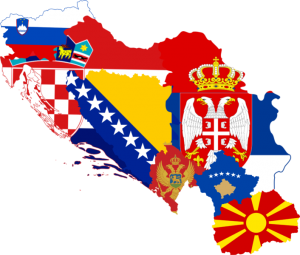
Kosovo
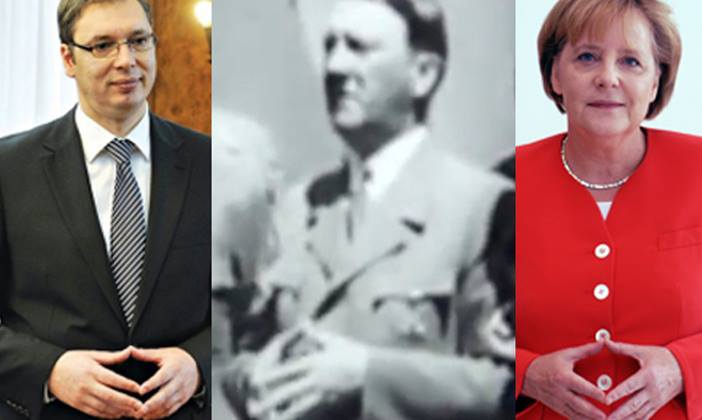
Serbia’s PM Aleksandar Vučić (originally from municipality of Bosnian town of Bugojno) had informed the nation on December 17th, 2016 after the session of the General Board of his ruling (and dictatorial western-backed) Serbian Progressive Party (SPP) that Serbia will face in the spring 2016 all three-level elections at the same time: the extraordinary parliamentary, the local and Vojvodina’s provincial. The purpose of the extraordinary parliamentary elections, according to the PM, was to obtain a full mandate for his SPP until 2020 in order to finish all designed “progressive” reforms in the country which is on the “stable and safe road”. However, the fundamental question was and is: what is the stable and safe road of the present-day Serbia?
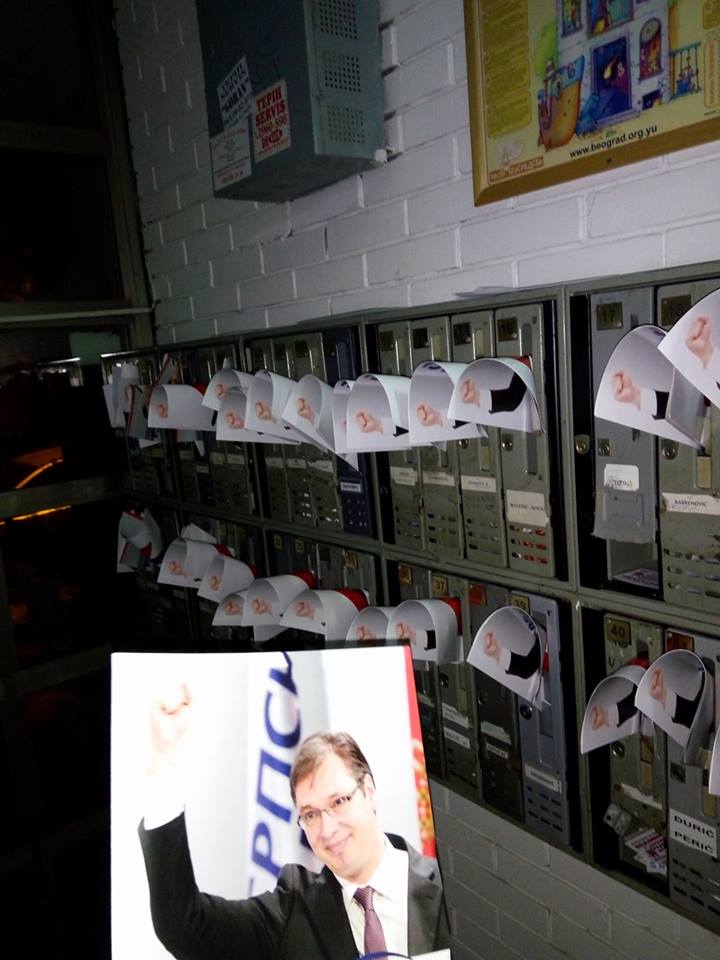
One can ask why A. Vučić opted for the extraordinary parliamentary elections if it is known that his party has controlling the parliament with an absolute majority in coalition with (Slobodan Milošević’s established) the Serbian Socialist Party (SSP) and there are no any serious tensions in the society or any significant opposition to his in fact personal and party’s authoritarian regime which is overwhelmingly supported by the west?
The answer can be only one and simple: it is de facto decision by the main sponsor and even establisher of the SPP – the US embassy in Belgrade. A decade ago, the party was suddenly established by two top ex-radicals: Aleksandar Vučić – a Secretary General and Tomislav Nikolić – a vice-president of the Serbian Radical Party (SRP) which was in the 1990s in governmental and parliamentary coalition with Slobodan Milošević’s SSP. From that time up to now the party’s main political course is the pro-western one, with the cardinal aim for Serbia (without Kosovo) to become a full Member State of the European Union (the EU) and of course of the NATO. The NATO’s membership is, however, not openly advocated for the only reason not to alienate the ethnic Serbs from Serbia (as a majority of population) from the western course of the party and now the government. Nevertheless, it is quite clear that these two memberships have to go together and even that Serbia, like the FYR of Macedonia or Montenegro, firstly has to join the NATO as the open doors for the EU’s membership. The practical problem for both the US and the EU administrations is that overwhelming majority of the ethnic Serbs from Serbia oppose Serbia’s membership to the NATO. According to many investigations of the public opinion during the last decade, it is clear that absolute majority of Serbia’s citizens do not want to see their country as a NATO’s member and even more, they will not support the EU’s membership if the NATO’s membership is a necessary condition. It is also clear that recognition of Kosovo’s independence has to be a crucial political condition for Serbia’s EU’s membership that is originally scheduled by Brussels to happen in 2020 or very soon after this year.
As the western client state of Serbia already started on December 14th, 2015 the final phase of the negotiations with the EU, the very practical problem for the western bosses of quasi Serbia’s independence is how to avoid national dissatisfaction and even possible revolution when Serbia will finally and de jure recognize Kosovo’s independence as a technical precondition for a full membership to the EU? Obviously, Washington decided to make as stronger as position of the SPP in the parliament after the new elections hoping that the party will form the government without making any parliamentary coalition. The hope was a real and realistic having in mind at least three fundamental facts:
All Serbia’s mass media (excluding only part of the internet that is not making any serious influence to the electorate) is under a full Vučić’s (i.e., the US) control.
The citizens of Serbia, including primarily the ethnic Serbs, are during the last 15 years of “democratic” regimes quite well bombed by the pro-western governmental and the NGO sector’s controlled media that the Uncle Sam could believe that their minds are already well prepared (washed) for the final decision to join the western (anti-Russian) train.
The Russian factor in Serbia, due to such media situation and governmental-NGO’s anti-Russian propaganda, is already not serious obstacle for the realization of the crucial western political plans with this Balkan country (likewise with the FYR of Macedonia and Montenegro).
Russia
Obviously, Russia was and is the only great global power which historically was and still is protecting the national interests of Serbia and the Serbs and for that reason for Washington, Berlin and Brussels is clear that the Russian influence in the region, but above all among the Orthodox Serbs, has to be as much as minimized in order to totally transform Serbia and the Republic of Srpska (still part of Bosnia-Herzegovina) into their classical 19th century oversea political, economic and financial colonies as it was already done with all ex-Socialist Central European nations who joined both the EU and the NATO. The western long-term designs with the Serbs are, as well as, clear: to dismiss the Republic of Srpska in Bosnia-Herzegovina and to separate territories of Vojvodina and Raška (Sandžak in Turkish) from the rest of Serbia. In this case, Serbia will have state borders as it was already at the time between the Berlin Congress (1878) and the Balkan Wars (1912−1913). Nonetheless, with such post-2000 October Revolution Serbia’s governments and the Russian not proper political activity in the region such scenario is quite possible.
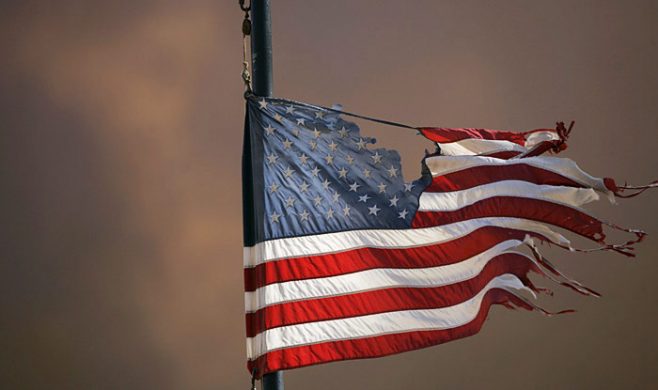
The Uncle Sam was realistically expecting that coming Serbia’s extraordinary parliamentary elections are going to be won (with absolute majority) by its client Vučić’s SPP due to expected absence of approximately half of Serbia’s electorate and already enough pro-western and anti-Russian washed brains of the majority of those who will vote. In this case the SPP will form extremely stable government in the parliament with an absolute majority of the seats. In fact, finally, it happened: Vučić’s SPP won 48,23% of the votes (electoral activity was 55%) and in a coalition with its traditional parliamentary collaborator Milošević’s SSP (10,98% of the votes) or even alone can continue with its authoritarian governmental practice for the next four years that is quite enough to irretrievably hook up Serbia’s wagon to the NATO/EU’s train composition.
The consequences are going to be drastic and even catastrophic for Serbia’s territorial integrity and national interest of the ethnic Serbs but for Russia as well, as the Russian influence in the region is going to be totally eliminated.
Finally, a great part of guiltiness for such situation is on the Russian side itself as Russia simply left the Serbs on the western mercy in 2003 when the Russian peace-keeping troops left both Bosnia-Herzegovina and Kosovo. It is not also understandable why Russia is not financing and politically supporting any serious pro-Russian political party or NGO in Serbia, or at least why such party and/or NGO (if exists) is not profoundly supported by Moscow as it is openly done by Washington, Brussels and Berlin with their own client political parties and NGO’s sector. Vučić’s SPP is currently the most successful western financed and sponsored story in Serbia and Moscow very well know that party’s official policy of “and Europe and Russia” is only a great bluff for the people’s masses especially at the time of electoral campaigns. The SPP’s “stable and safe road” is a road to the NATO and the EU.
Question
But why Russia left Serbia to go on this road? The only reasonable and logical explanation seems to be that according to some secret deal between Washington and Moscow achieved even before Kosovo’s independence proclamation in February 2008, the Balkans is left to the western areal dominance at the exchange for the Transcaucasus and the part of East Europe (the East and South Ukraine, Belarus and Moldova) which are included into Russia’s sphere of influence.
Origins of images: Facebook, Twitter, Wikimedia, Wikipedia, Flickr, Google, Imageinjection, Public Domain & Pinterest.
Read our Disclaimer/LegalStatement!
DonatetoSupportUs
We would like to ask you to consider a small donation to help our team keep working. We accept no advertising and rely only on you, our readers, to keep us digging the truth on history, global politics and international relations.
Can we face it in this election season? America is a weapons factory, the White House a war room, and the president the manager of the neoliberal conspiracy to recolonize the planet. It exports war and mass poverty. On the economic front, usurious neoliberalism; on the military front, illegal wars. These are the trenches of America’s battle for world domination in the 21st century.If not stopped, it will be a short century.Since 1945, America’s Manifest Destiny, posing as the Free World’s Crusade against the Red Menace, has claimed 20 to 30 million lives worldwide and bombed one-third of the earth’s ...
The ongoing crisis in Ukraine and unseemly role of Poland in its instigation and development makes us take another look at the historical context of the Polish-Ukrainian relations. We will focus on dramatic repressions of the Ukrainian minorities in Eastern Poland in 1921-1939 at the territories annexed by Jozef Piłsudski’s government from the Soviet Russia according to Peace of Riga 1921, which eventually triggered ultra-Nationalist Ukrainian terror against the Poles during the WWII (culminating in massacres in Volhynia and Eastern Galicia in 1943-1944).Poland, which used to be a part of the Russian Empire, emerged at the European political map in November ...
The world will long remember the present immigrant crisis in Europe, which has negatively affected countless people there, and almost all countries. History will certainly record it as a major tragedy. Could it have been averted? Or kept within much more reasonable humane bounds?After the United States and NATO began to bomb Libya in March 2011 – almost daily for more than six months! – to overthrow the government of Muammar Gaddafi (with the completely phoney excuse that Gaddafi was about to invade Benghazi, the Libyan center of his opponents, and so the United States and NATO were thus saving ...
What is global politics? It is when a white man sends a black man 20.000 km. far away from home to kill a yellow man, while at home this white man is living on the land occupied from a red man From 1989 onward, as a consequence of the dissolution of the bipolar world in global politics, Security Studies as an academic discipline re-born again its political importance. From the very traditional point of view, it was only the national-state to be considered as the reference object of the security issue that was usually to be obtained by military power[1] and diplomatic ...
New scandalous information about the 2014 Maidan coup d'état in Ukraine has emerged that implicates Lithuania’s important role in instigating the violent events. David Zhvania, a former Member of the Ukrainian Parliament, revealed on his YouTube channel that the seizure of power in Ukraine was financed in “several ways.”“One of the external sources was the Lithuanian embassy, through which money and weapons were transferred, and the internal channel was Diamantbank. I have documented evidence to support my words,” said the former ally of Petro Poroshenko, the previous president of Ukraine.Zhvania called on Prosecutor General Irina Venediktova to initiate criminal proceedings ...
Britain is gripped by fear, panic and anger, after being struck by three terror attacks in the space of three months. Innocent men, women and children have been killed in the terror rampage, filling many homes with tragedy and despair. Martial law has practically been declared in many regions of the country, with troops now being a common site on the streets of Royal Britannia. Many are looking for someone or something to blame, as rage is increasingly triumphing over reason. Lost in all this hysteria however, there sits a glaring connection that needs to be illuminated: the connection between these ...
From a geopolitical perspective, the war on Yugoslavia in the 1990s was about restructuring Southeast Europe after the end of the Cold War. To this end, the US even deployed the combatants with which it had previously fought the USSR in Afghanistan and which it would later call „Al Qaeda“.The political and media propaganda regarding the war on Yugoslavia has been well researched by now. Interestingly, however, many media outlets and commentators are still trying to uphold the official narrative of the time, in contrast to the later war in Iraq, for example.There may be various reasons for this. On ...
A year ago, at a closed-doors meeting between the USA and EU officials and the leaders of the four major parties of FYROM in Strasbourg, a route map for the resolution of the protracted political crisis was agreed on (or rather imposed). The roots of this political crisis are to be found outside FYROM: it is actually more a confrontation by proxy between “the West”, which supports the opposition, and Russia, which is trying to maintain its influence in the region. In conjunction with the public discontent at government policies and the escalating corruption, the negotiations have contributed to sharpening ...
Origins of images: Facebook, Twitter, Wikimedia, Wikipedia, Flickr, Google, Imageinjection, Public Domain & Pinterest.Read our Disclaimer/Legal Statement!Donate to Support UsWe would like to ask you to consider a small donation to help our team keep working. We accept no advertising and rely only on you, our readers, to keep us digging the truth on history, global politics and international relations.SaveSaveSave
The German occupation forces were those who have been the first to create and recognize a short-lived state’s independence of Ukraine in January 1918 during the time of their-own inspired and supported anti-Russian Bolshevik Revolution of 1917−1921. As reoccupied by the Bolshevik Red Army, the eastern and southern parts of the present-day territory of (a Greater) Ukraine joined in 1922 the USSR as a separate Soviet Socialist Republic (without Crimea). According to the 1926 Soviet census of Crimea, the majority of its population were the Russians (382.645). The second-largest ethnic group were the Tartars (179.094). Therefore, a Jew V. I. ...
In an email sent to his business partner and Democratic fundraiser Jeffrey Leeds, former Secretary of State Colin Powell wrote of Hillary Clinton, “Everything HRC touches she kind of screws up with hubris.”Clinton’s tenure as Secretary of State during Barack Obama’s first term was an unmitigated disaster for many nations around the world. Neither the Donald Trump campaign nor the corporate media have adequately described how a number of countries around the world suffered horribly from Mrs. Clinton’s foreign policy decisions.Millions of people were adversely harmed by Clinton’s misguided policies and her “play-to-pay” operations involving favors in return for donations ...
Donald Franciszek Tusk, (born 22 April 1957) is a Polish politician and historian. He has been President of the European Council since 1 December 2014. Previously he was Prime Minister of Poland (2007–2014) and a co-founder and chairman of the Civic Platform (Platforma Obywatelska) party.Tusk began his public career as an activist in his home town of Gdańsk, supporting Solidarity and organizing his fellow university students. With the exception of one four-year stretch, Tusk has served in the Third Republic Sejm (parliament) continuously since its first elections in 1991. He was Vice Marshal (deputy speaker) of the Senate from 1997 ...
Strange things happen in civil wars: During the Russian Civil War in 1919, 13,000 U.S. troops were dispatched by President Woodrow Wilson to occupy the cities of Archangelsk in the Arctic and Vladivostok on the Pacific.Half a century earlier, thousands of Imperial Russian Navy sailors and their officers flooded the cities of San Francisco and New York. But the circumstances were very different. They were there to defend the United States from foreign invasion – not to threaten it and they brilliantly succeeded in their tasks.The incredible story is well told in “Friends in Peace and War: The Russian Navy’s ...
If we start from a premise which understands that Britain and its NATO allies are capable of mounting false flag events in Syria with chemical weapons, then it is entirely possible that British secret services carried out a similar propaganda stunt in England with regard to former Russian double agent Sergei Skripal.We also need to bear in mind that British state intelligence agencies are plausibly running a covert assassination program targeting Russian exiles living in Britain – for the purpose of incriminating Moscow.Over the past two decades, more than a dozen Russian dissidents have met untimely deaths while residing in England, including ...
The recent 70th anniversary of the liberation of Auschwitz was a reminder of the great crime of fascism, whose Nazis iconography is embedded in our consciousness. Fascism is preserved as history, as flickering footage of goose-stepping blackshirts, their criminality terrible and clear. Yet in the same liberal societies, whose war-making elites urge us never to forget, the accelerating danger of a modern kind of fascism is suppressed; for it is their fascism.“To initiate a war of aggression…,” said the Nuremberg Tribunal judges in 1946, “is not only an international crime, it is the supreme international crime, differing only from other ...
During the last decade the deteriorating political and military situation in the world have proved the necessity of well prepared Armed Forces.It is obvious that the level of patriotism in Lithuania is high as ever. Many young men are thinking to join the Armed Forces and be useful to the country. The government only should maintain and strengthen this trend. But battling with numerous political and economical problems the government is going to make some changes in military sphere that could have far-reaching adverse consequences.It should be said that today there is a serious gap in providing the national Armed ...
One of the most hyped “events” of American television, The Vietnam War, has started on the PBS network. The directors are Ken Burns and Lynn Novick. Acclaimed for his documentaries on the Civil War, the Great Depression and the history of jazz, Burns says of his Vietnam films, “They will inspire our country to begin to talk and think about the Vietnam war in an entirely new way”.In a society often bereft of historical memory and in thrall to the propaganda of its “exceptionalism”, Burns’ “entirely new” Vietnam war is presented as “epic, historic work”. Its lavish advertising campaign promotes its ...
ISIS has new turf, this time in Europe. The German magazine Der Spiegel reports that there are now remote villages in the mountains of northern Bosnia where where the ISIS flag flies, and residents live under Sharia law. Roughly half of Bosnians are Muslim, and the radical ultra-devout make up a very small percentage. But it appears that percentage is growing — and growing violent — as extremists are gaining a foothold in rural Bosnian society.There are between 200 and 300 Bosnians fighting with ISIS in Syria and Iraq, more than from any other European nation besides Belgium. The Der ...
GR Editor’s NoteThe following article by professor Eric Waddell was first published twelve years ago by Global Research in December 2003 in the immediate wake of the invasion and occupation of Iraq by US and British forces, with a postscript added in 2007. The article provides an incisive historical perspective on America’s “long war” against humanity, which is being carried out under a fake humanitarian mandate. Let us be under no illusions as to the intent of the US and its allies. We are dealing with World Conquest under the disguise of a “Global War on Terrorism”. Michel Chossudovsky, December 24, ...
There was international jubilation when Montenegro seceded from its union with Serbia in 2006 after a controversial referendum. The Referendum Law prevented Montenegrins living and registered in Serbia from voting in the referendum, ensuring that tens of thousands of Montenegrins, in a country of only 622,000, who would have voted to remain the union could not vote in favour of maintaining it.It must be remembered that state-paid workers like teachers and police were told by the Democratic Party of Socialists (DPS) leader Miodrag Vuković before the referendum May 2006, that someone “cannot work for the state and vote against it,” something objectively ...