
There was an interesting announcement recently that went almost entirely unnoticed in the Canadian media.
On June 17, Peter Szijjarto, foreign minister of Hungary’s centre-right government, made the startling declaration that his national security forces will erect a four-metre wall along the entire 175 kilometres of shared border with Serbia.
Szijjarto’s rationale for resorting to such a drastic measure results from a months-long flood of asylum seekers pouring into southern Hungary. While tens of thousands of these desperate illegal immigrants have been caught, detained and returned into Serbia, the vast majority have used the processing time for their asylum applications to simply disappear into other western European countries.
This, of course, explains why there is no public outcry from other members of the European Union over Hungary’s decision to fence out this wave of desperate humanity.
For impoverished Serbia, staunching the flow of these refugees at its northern border has generated the opposite reaction.
“I thought the Berlin Wall had fallen, but now new walls are being constructed,” stated Serbia’s foreign minister, Ivica Dacic, referring to the Cold War barrier that stood from 1961 until 1991″.
“We are absolutely and fiercely against (Hungary’s) decision to build a fence.”
While the nationalities of those fleeing through Serbia into Hungary and beyond include Syrians, Somalis and even Afghans, the irony is that the vast majority of asylum seekers are ethnic Albanians from Kosovo.
The most recent exodus began in earnest in the fall of 2014, when the Serbian government relaxed travel restrictions on Albanians entering from the declared independent state of Kosovo. Serbia has never recognized Kosovo’s 2008 declaration of independence and still legally considers the region to be sovereign Serbian territory.
In 1999, Kosovo was ravaged by a brutal civil war between ethnic Albanian separatists and Serbian security forces. The root cause of the public discontent was a severely depressed economy, overpopulation and unemployment. The Albanian underworld was able use that unrest to ignite and impassion a wave of nationalist sentiment that soon boiled over into a full-scale armed insurgency.
That year was the 50th anniversary of NATO and, given the collapse of the Soviet Union in 1991, there was a strong desire for NATO leaders to prove that the alliance was still relevant. Thus, NATO threw its full weight behind the Albanian Kosovo rebels.
In the spring of 1999, NATO warplanes, including Canadian CF-18s, launched a 78-day bombing campaign — not just against Serbian military targets in the disputed territory of Kosovo but against civilian infrastructure and utilities throughout all of Serbia. With NATO combat forces, including Canadians, massed in Macedonia for a possible ground war, the Serbian government negotiated a ceasefire on June 10, 1999.
Under the negotiated terms of UN Resolution 1244, Kosovo was to remain the sovereign territory of Serbia after a brief military occupation by NATO troops. Serbian security forces were to resume control of Kosovo’s border crossings and provide protection for the numerous sacred Serbian religious sites and monasteries within the disputed territory.
Of course, that was never actually in the cards. NATO negotiators had never wanted to have ground troops fight their way through Kosovo’s forebodingly steep mountain passes. Therefore, they agreed to all Serbian demands, knowing full well that they would never honour the deal.
In February 2008, that duplicity was formalized when the United States hastily recognized Kosovo’s unilateral declaration of independence and strong-armed allies such as Canada into following suit.
However, the precedent of such declarations of territorial independence based upon ethnic regional majority has prevented many countries from recognizing Kosovo. For instance, Spain, with its Basque separatist movement, and Azerbaijan, with its claim over the region of Nagorno-Karabakh, cannot recognize a unilaterally declared independence.
With Russia using its veto to deny Kosovo membership in the UN and Spain, Slovakia, Greece and Cyprus doing likewise to keep it out of the European Union, Kosovo has remained in a strange quasi-limbo status on the international stage.
What matters most, however, is that at the end of the day, you cannot subsist on flags. Despite its declared independence, unemployment, poverty, corruption and widespread crime are driving a new flood of Albanian Kosovars to seek a better life — anywhere but in Kosovo.
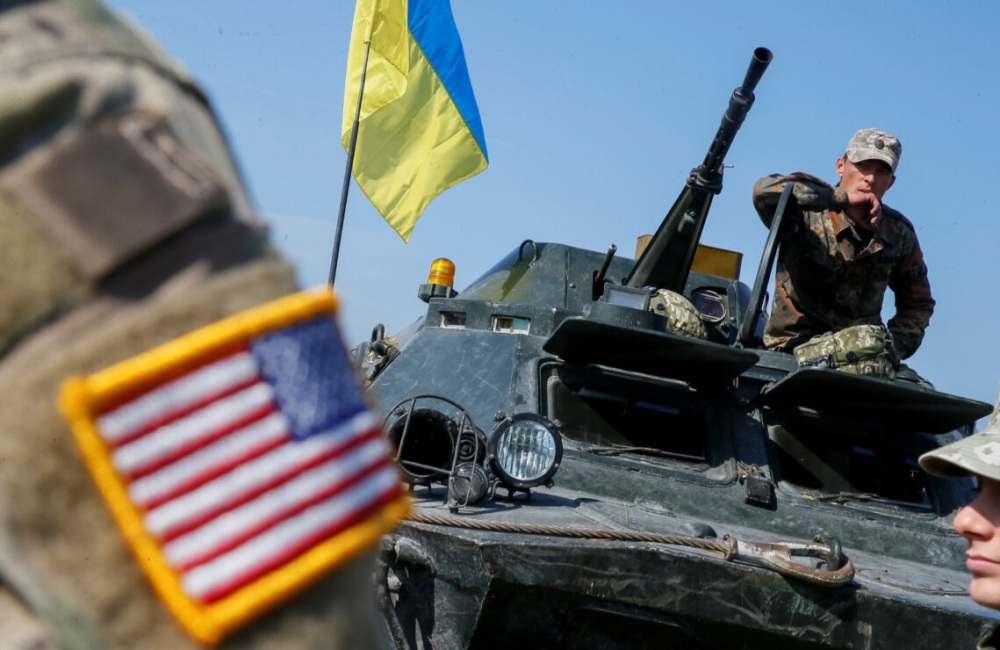
The people of Ukraine who see their salvation in the form of a NATO intervention should take a good look at NATO’s “success” in Kosovo. Short-term military solutions do not solve long-term economic problems.
We would like to ask you to consider a small donation to help our team keep working. We accept no advertising and rely only on you, our readers, to keep us digging the truth on history, global politics and international relations.
Top personalities of the Croatian Revival MovementPreface This text investigates the question of relations between the Croatian national revival movement and the Serbs from 1830 to 1847. Special investigation attention is put on the problem of how the language influenced ethnonational group identity among the Croats and Serbs in Dalmatia, Croatia and Slavonia (the so-called Triune Kingdom) during the period of the Croatian national revival movement that was officially and not only formally named as the Illyrian Movement. This investigation is an attempt to reconstruct the mainstream of the politics by the leaders of the movement and their outlines on how ...
Last month was the 18th anniversary of the attack on the Serbian village of Kravica committed by Moslem forces from Srebrenica under the command of Naser Orić on Orthodox Christmas day, January 7, 1993. Several dozen villagers were killed in the attack, the remaining Serbian population was forced to flee to safety, and many homes were pillaged, demolished and torched during the several weeks that Kravica was forcibly occupied by neighbours from nearby Srebrenica. Regardless of arcane debates of who started the war in Bosnia and Herzegovina, on a human level the attack on the village of Kravica and the ...
PrefaceKosovo (Serb. Kosovo-Metochia, Alb. Kosova) is a square-shaped province of the Republic of Serbia of 10,877 sq. kilometres that is approximately the size of the USA state of Connecticut. The province is situated in the southern interior of the Balkan Peninsula in South-East Europe.[1] For most of the 20th century-history, this province was part of Serbia like in the Middle Ages but from 1455 to 1912 it was occupied by the Ottoman Empire. After the 1998‒1999 Kosovo War the province is an autonomous territory under the formal administration of the UNO but, in fact, USA’s colony. Officially, the province has ...
Arrest and detention of three days for Joanikije, Bishop of Budimlye and Niksic, and eight priests of the Orthodox Cathedral of St. Basil of Ostrog in Nikšić has sparked tensions in Montenegro again. Namely, after the prayer procession that had been held in Nikšić on May 12th, on the feast-day of St. Basil of Ostrog, a 72-hour detention was ordered for Bishop Jonikije, Fr. Slobodan Jokic, Fr. Danilo Zirojevic, Fr. Zeljko Rojevic, Fr. Ostoja Knezevic, Fr. Mirko Vukotic, Fr. Vasilije Brboric, Fr. Dragan Krusic and Fr. Nikola Marojevic.Protests in support of those arrested have taken place in several cities across ...
King Abdullah is being eulogized in the most unrealistic ways possible, from CNN designating him as a “reformer” to Chuck Hagel calling him “a powerful voice for tolerance, moderation and peace — in the Islamic world and across the globe.” Israeli President Reuven Rivlin takes the cake, however, by proclaiming that “his smart policy contributed greatly to Middle East stability.” None of these characterizations are true in any way, as Abdullah’s main legacy isn’t one of reform, tolerance, and regional stability, but of destruction, hate, and regional instability. Every contemporary Mideast problem except for the Israel-Palestine issue can be directly ...
The U.N. Organization was established in 1945 for the very security reason – to preserve the peace in the world. We believe that the governmental bodies and administrative structures of the U.N. have to be composed by the proved democratically oriented politicians and magistrates but above all this requirement has to be applied to the post and function of the U.N. Secretary-General. Nevertheless, in the history of the U.N. there is at least one (extremely) problematic appointment to the post of the U.N. Secretary-General: Kurt Waldheim from Austria.On the official website of the U.N. about its fourth Secretary-General one can ...
The political settlement in the former Yugoslavia is unraveling. In Bosnia, the weakest state in the region, both Serbs and Croats are mounting a concerted challenge to the Dayton peace accords, the delicate set of compromises that hold the country together. In Macedonia, political figures from the large Albanian minority are calling for the federalization of the state along ethnic lines. In Kosovo, the Serb minority is insisting on the creation of a network of self-governing enclaves with effective independence from the central government. In Serbia’s Presevo Valley, Albanians are agitating for greater autonomy. In Montenegro, Albanians have demanded a ...
Origins of images: Facebook, Twitter, Wikimedia, Wikipedia, Flickr, Google, Imageinjection, Public Domain & Pinterest.Read our Disclaimer/Legal Statement!Donate to Support UsWe would like to ask you to consider a small donation to help our team keep working. We accept no advertising and rely only on you, our readers, to keep us digging the truth on history, global politics and international relations.[wpedon id="4696" align="left"]Save
Despite claims made during NATO Summit Warsaw 2016, that “NATO remains a fundamental source of security for our people, and stability for the wider world,” it is clear that the threats and challenges NATO poses as existing to confront are in fact threats of its own, intentional creation and continued perpetuation.From the ongoing refugee crisis triggered by NATO’s own global-spanning and ongoing military interventions, invasions, and occupations, to its continued expansion along Russia’s borders – violating every convention and “norm” that existed during the Cold War to keep it “cold,” NATO has proven that it is to the populations it poses as protector over, ...
The Harper government’s Bill C-51, or Anti-Terrorism Act, has been in the public domain for over a month. Long enough for us to know that it subverts basic principles of constitutional law, assaults rights of free speech and free assembly, and is viciously anti-democratic.An unprecedented torrent of criticism has been directed against this bill as the government rushes it through Parliament. This has included stern or at least sceptical editorials in all the major newspapers; an open letter, signed by four former Prime Ministers and five former Supreme Court judges, denouncing the bill for exposing Canadians to major violations of ...
2006-Present07 February 2018: Israel advances a plan to build a walkway though the Mount of Olives in East Jerusalem to connect two settler residential compounds in the Palestinian At-Tur neighbourhood07 February 2018: During a Knesset report on the policy of refusing to return the bodies of Palestinians killed by Israeli forces to their families for burial, officials are urged to ‘throw it into the sea’, ‘we should not return bodies. We should demolish homes’, others say05 February 2018: A number of Israeli politicians, including coalition government members, call for ‘practical moves’ to be taken to annex settlements in the occupied West Bank while Donald ...
International Criminal Tribunal for the former Yugoslavia in The Hague quietly acknowledged the innocence of former president of Serbia and Yugoslavia Slobodan Milosevic. Ten years after the very suspicious death of the Serbian leader in a Dutch prison, the 1,300th page of the 2,000-page document on the case of Radovan Karadzic, the Bosnian Serb leader, acknowledged that Milosevic had not committed crimes against humanity, nor had he organized any mass killings or deportations of Croats and Bosnians. In other words, it was an innocent man who died in a UN prison. French journalist Dimitri De Koshko was working in Yugoslavia ...
The edifice of the post-1991 world order is collapsing right before our eyes. President Putin’s decision to give a miss to the Auschwitz pilgrimage, right after his absence in Paris at Charlie festival, gave it the last shove. It was good clean fun to troll Russia, as long as she stayed the course. Not anymore. Russia broke the rules.Until now, Russia, like a country bumpkin in Eton, tried to belong. It attended the gathering of the grandees where it was shunned, paid its dues to European bodies that condemned it, patiently suffered ceaseless hectoring of the great powers and irritating baiting of the East European small-timers alike. But something broke there. The lad does ...
UN negotiator on Kosovo Martti Ahtisaari wanted to honor and commemorate Finnish Nazi SS troops in 1999 when he was the President of Finland. He wanted to have the Finnish taxpayers and the Finnish government fund and finance the construction of a plaque in the Ukraine to commemorate the deaths of Finnish Nazi SS troops killed during Operation Barbarossa. Ahtisaari is not, alone, however, in seeking to honor and celebrate the legacy of Nazis and the SS.Kosovo: German recruitment of Albanians for the SS Nazi Skanderbeg DivisionKosovo Albanians have similarly honored and commemorated the legacy of Nazis and the SS. ...
Chrystia Freeland, appointed last week to be the new Canadian Foreign Minister, claims that her maternal family were the Ukrainian victims of Russian persecution, who fled their home in 1939, after Adolf Hitler and Josef Stalin agreed on a non-aggression pact and the division of Poland between Germany and the Soviet Union. She claims her mother was born in a camp for refugees before finding safe haven in Alberta, Canada. Freeland is lying.The records now being opened by the Polish government in Warsaw reveal that Freeland’s maternal grandfather Michael (Mikhailo) Chomiak was a Nazi collaborator from the beginning to the ...
The internal and much more external destruction of the former Yugoslavia in the 1990s was celebrating in 2015 its 20th year of anniversary. However, this historical and much more geopolitical event still needs a satisfactory research approach in regard to the true geopolitical reasons and political-military course of the destruction of this South Slavic and Balkan state. During the last quarter of century, the (western) global mainstream media unanimously accused Serbia and the Serbs of the national chauvinism as the main cause of the bloody wars on the territory of ex-Yugoslavia in the 1990s. However, the role and direct impact ...
Stepan Bandera is considered as a national hero in Ukraine, with many Ukrainians praising him and his deeds as a fighter for Ukraine's independence and freedom before, during and after WW2. Yet his real history shows there is nothing praiseworthy about the man, or what he strove for. As a young man who was a fervent Ukrainian nationalist he joined the Organization of Ukrainian Nationalists OUN in 1929. The OUN was a ultra nationalist fascist organization that accepted violence as a political tool against foreign and domestic enemies of their cause. Bandera quickly rose in the OUN ranks and ...
“While I recognize the danger of the violent right-wing movement, I am more concerned with the right-wing policies that are being enacted into law and policy by both Democrats and Republicans.”What is the character of racist right-wing politics today? Is it the crazed white supremacist who plows into an anti-fascist demonstration in Charlottesville, Virginia, or can it also be the assurance by Lindsay Graham that an attack against North Korea would result in thousands of lives lost…. but those lives will be “over there”? What about the recent unanimous resolution by both Houses of Congress in support of Israel and ...
Barack Obama’s speech on the Ukrainian crisis seems to have left the public confused as he claimed that Kosovo broke away from Serbia “after a referendum”. But attentive listeners quickly pointed Obama’s gaps in history – there was no referendum in Kosovo. Video here.President Obama was speaking Wednesday at The Center for Fine Arts in the heart of Brussels, Belgium, and was telling the youth crowd mostly about Russian-Ukrainian conflict over the strategic Crimean Peninsula.He lashed out at Russia for “violation of international law, its assault on Ukraine’s sovereignty and territorial integrity.”Obama recalled the conflict around Kosovo and NATO’s involvement, ...
November 1991 is a month and year that will forever live in infamy when it comes to one of the most grievous crimes committed under the rubric of Western foreign policy, as it was on this month in this year that the break-up and destruction of the Socialist Federal Republic of Yugoslavia (SFRY) was set in train.The Arbitration Commission of the Peace Conference on Yugoslavia was a body set up in 1991 by the Council of Ministers of the European Economic Community (EEC) in response to the conflict that had broken out between separatists in Slovenia and Croatia and the ...