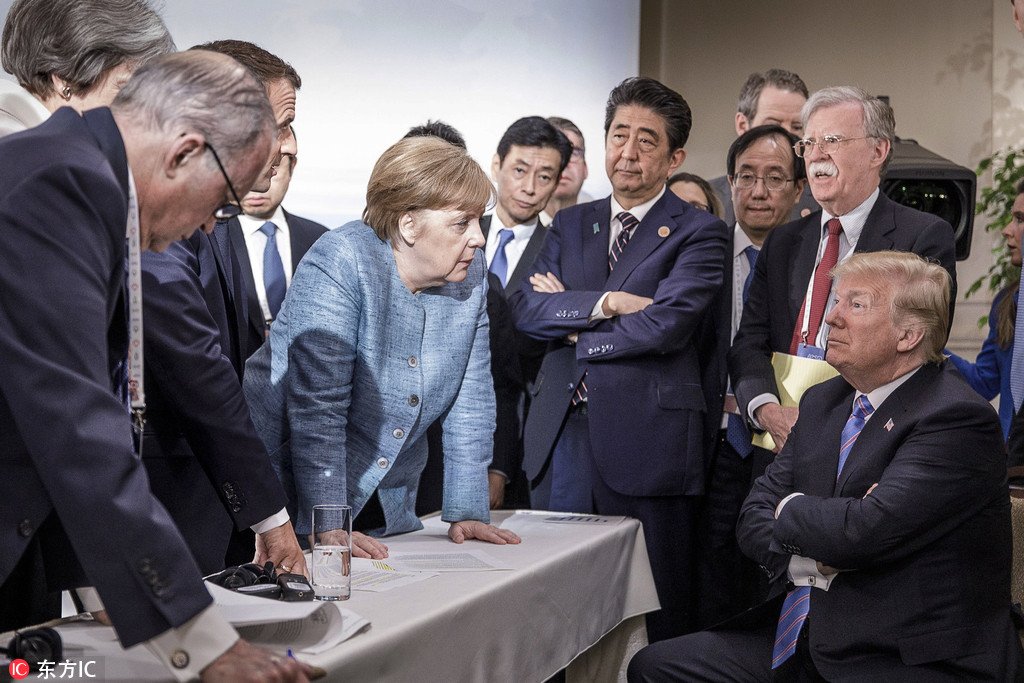

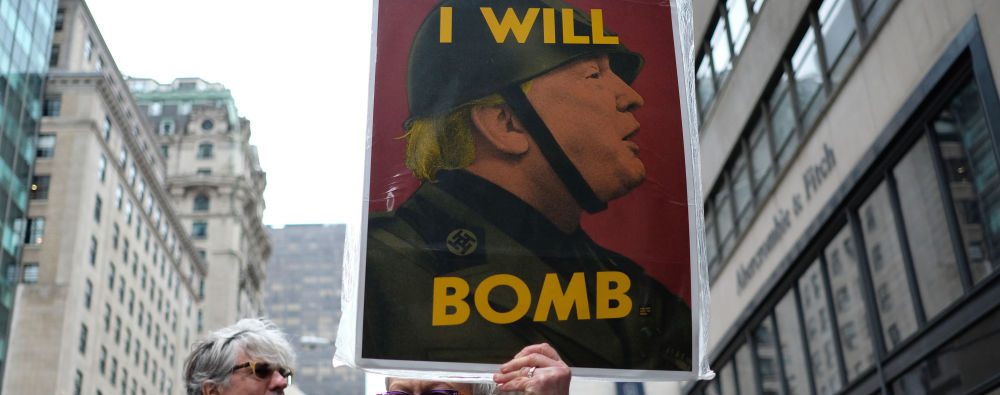
President Donald Trump appears sui generis. Other troublesome populists, like Rodrigo Duterte of the Philippines, hold power. But no other nation of great influence is governed by someone so little rooted in reality and so much dominated by personality.
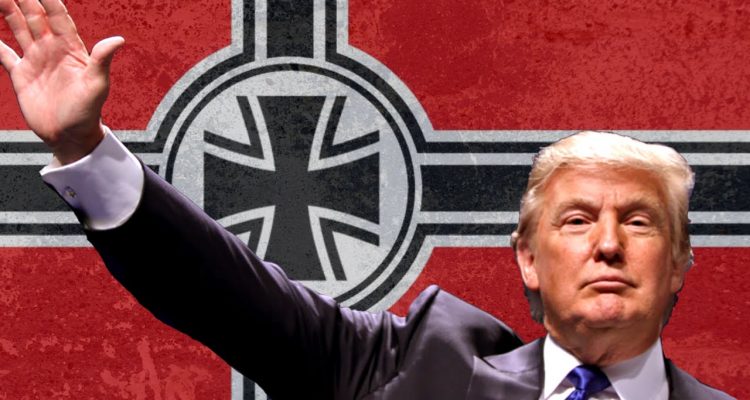
However, the president has a historical soul mate who ruled a century ago. The similarities are striking, though their lives obviously differed in important ways. One wonders: was the German Empire’s Kaiser Wilhelm II reincarnated as President Trump?
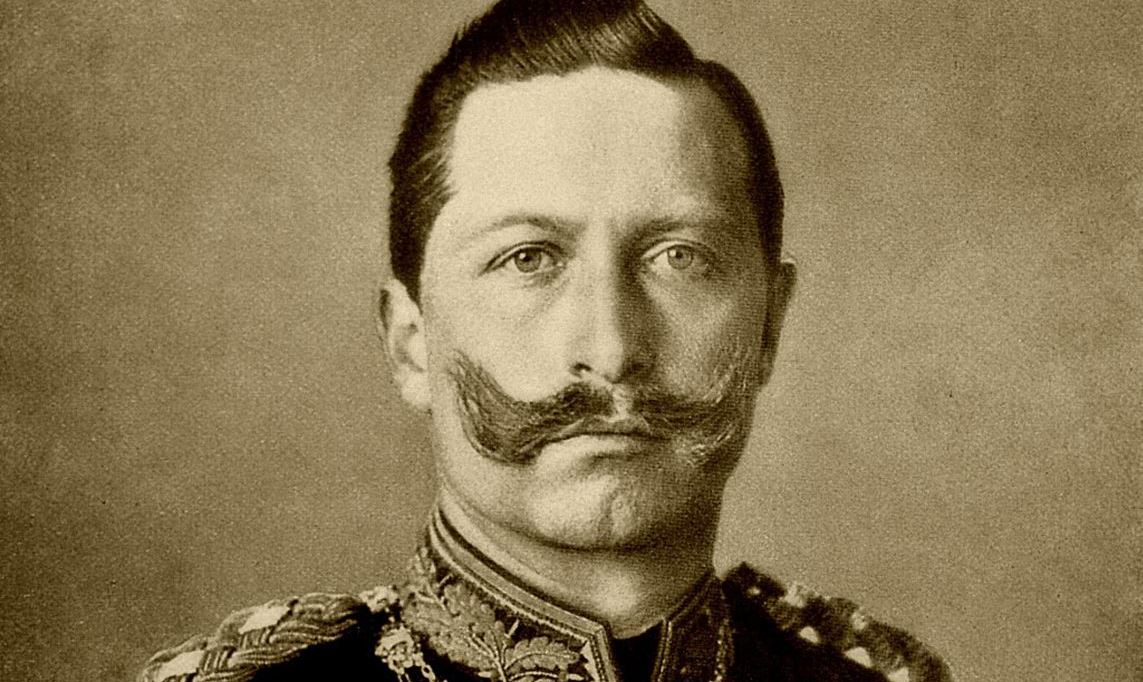
Wilhelm II was born in 1859 in the house of Hohenzollern. A grandson of British queen Alexandrina Victoria, he grew up in a life of wealth and privilege, though he suffered from a withered left arm as a result of a birth injury. This may well have contributed to his psychological need for affirmation, a subject that Thomas Mann deftly explored in his novel Royal Highness.
He took power in 1888 after the death of his grandfather and father. Wilhelm rejected the liberal views of his parents (his mother was British and unpopular among German conservative circles) and favored traditional autocracy. Also, he was determined to rule as well as reign. In contrast, his grandfather, Kaiser Wilhelm I, had mostly left governing to the famed “Iron Chancellor” Otto von Bismarck.
Still, Wilhelm II was no dictator. Germany had a strong constitutional order and an elected Reichstag with a broader franchise than Great Britain. However, the cabinet answered to the kaiser, not the parliament. In that sense, Imperial Germany looked a lot like modern-day America, where the president is both head of state and government, and thereby manages the executive branch, in contrast to Westminster parliamentary rule.
The German Empire was not a superpower, but it was a rising great power. It possessed the world’s second-largest economy, had surpassed Great Britain in industrial strength and enjoyed a substantially larger population than France. The German army was the world’s best army. Kaiser Wilhelm’s attempt to match British naval strength failed, but the potent Kriegsmarine could not be ignored by London. Berlin also acquired a small network of overseas colonies.
The kaiser was particularly interested in international affairs. He dismissed Bismarck in 1890 and embarked upon what he termed the “New Course.” Bismarck was no liberal peacenik, but once he unified Germany and consolidated the empire’s gains, he sought stability. He was uninterested in colonies, opposed a naval race with Great Britain, and sought to keep France and Russia apart. Had his policies remained in place, World War I almost certainly would not have erupted in August 1914. Bismarck famously observed that the Balkans were not worth the bones of a single Pomeranian grenadier. He was right.
Kaiser Wilhelm was aggressive, thoughtless and extraordinarily maladroit. He earned a lengthy litany of criticisms. The Economist recently observed that he “grew up to be emotionally needy, bombastic, choleric, hyperactive and hypersensitive. His personality combined with the militaristic authoritarian culture of the Prussian court to create a monarch who was extraordinarily ill-suited to lead the most powerful country in Europe.”
Historian Thomas Nipperdey called the kaiser “gifted,” but also “superficial, hasty, restless, unable to relax, without any deeper level of serious, without any desire for hard work or drive to see things through to the end, without any sense of sobriety, for balance and boundaries, or even for reality and real problems, uncontrollable and scarcely capable of learning from experience, desperate for applause and success.”
That sounds an awful lot like the current occupant of the White House.
Kaiser Wilhelm insisted on gaining Germany “a place in the sun” by fair means or foul. Although he was nothing like Adolf Hitler in power or intention, he managed to offend ally and adversary alike. There was no Twitter then, but in 1895 the kaiser dispatched an encouraging telegram to the Boers, who were resisting British troops in the Transvaal. This won neither him nor Germany any friends or plaudits across the English Channel.
In 1900 German soldiers joined an international expedition to suppress the anti-Western “Boxer Rebellion” in China. He told them: “Just as a thousand years ago the Huns under their King Attila made a name for themselves, one that even today makes them seem mighty in history and legend, may the name German be affirmed by you in such a way in China that no Chinese will ever again dare to look cross-eyed at a German.” The term “Hun” was put to propaganda use against Germany during World War I.
Five years later, he inflamed tensions with France by visiting Morocco and backing the kingdom’s independence against Paris. His conduct also offended friendly states and lost Berlin support at the international conference called to defuse the crisis. In 1908, Kaiser Wilhelm gave an indiscreet, boastful, condescending interview in the Daily Telegraph, a leading British paper. During the interview, he called the British “mad” and said the German navy targeted Japan. So hostile was the reaction at home, as well as overseas, that the chastened monarch tempered his future foreign ventures.
During the European crisis after the June 28, 1914, assassination of Austria-Hungary’s Archduke Franz Ferdinand, the heir to that empire’s throne, Wilhelm pushed for an aggressive response before unsuccessfully attempting to halt the rush to war with the famous “Willy-Nicky” telegram to his cousin, Russian Tsar Nicholas II. Kaiser Wilhelm was gradually sidelined during the war and forced to abdicate by the Reichswehr after Germany sought an armistice in late 1918. Erich Ludendorff and Paul von Hindenburg ran the show. Kaiser Wilhelm lived out his life in exile in the Netherlands and died under Nazi occupation in 1941.
In both personality and lack of discretion, the Kaiser and the Donald seem to have a lot in common. Thankfully, history never fully repeats itself, but the two remind us of the truth of abolitionist Wendell Phillips’ observation that “eternal vigilance is the price of liberty.”
America has a more powerful legislature, an active opposition and a better developed civil society than imperial Germany — all of which should help hold President Trump in check if his more dubious personality traits lead to trouble. Nevertheless, the presidency has amassed extraordinary authority. Congressional Republicans so far have been largely pusillanimous and understandable popular anger against institutions, such as the media, undercut their influence.
One need not look to history to recognize that the next four years are likely to prove challenging. But President Trump’s closest historical model suggests the urgency of preparing an effective, nonpartisan opposition. Surely, this is a time to be vigilant in the defense of freedom.
We would like to ask you to consider a small donation to help our team keep working. We accept no advertising and rely only on you, our readers, to keep us digging the truth on history, global politics, and international relations.
After the first ever cabinet meeting in the Golan Heights, Israeli Prime minister Benjamin Netanyahu said in a speech on April 17, 2016 that the territory “will remain under Israel’s sovereignty permanently.” This elicited admonitions from some of Israel’s greatest allies, the United States and Germany, and renewed attention on the issue.The Golan Heights were opportunistically occupied by Israel after its victory in the 1967 six-day-war. A United Nations Disengagement Observer Force (UNDOF) has monitored the region since 1974, when Israel and Syria signed a ceasefire agreement, and it has been considered an occupied territory of the UN and the ...
There have been at least two countries in Europe in recent history that undertook ‘anti-terrorist’ military operations against ‘separatists’, but got two very different reactions from the Western elite.The government of European country A launches what it calls an‘anti-terrorist’ military operation against ‘separatists’ in one part of the country. We see pictures on Western television of people’s homes being shelled and lots of people fleeing. The US and UK and other NATO powers fiercely condemn the actions of the government of country A and accuse it of carrying out ‘genocide’ and ’ethnic cleansing’ and say that there is an urgent ...
The new coronavirus and its accompanying disease Covid-19 has stopped the globe in its tracks. Governments, markets and news cycles have become dominated by the pandemic. Europe is now the epicenter for the disease, with reportedly more fatal cases of infection than China where the virus first erupted in December.Several European Union countries have declared themselves states of emergencies, including Belgium, France, Portugal, Spain and Italy. The 27-member bloc has sealed off external borders. Some states, such as Poland, have begun closing borders with other EU members. Brussels, the administrative center of the EU, is alarmed because the much-vaunted single ...
Conservatives have had a very hard time getting over President Trump’s much-repeated response to Fox News anchor Bill O’Reilly’s calling Russian president Vladimir Putin “a killer”. Replied Trump: “There are a lot of killers. We have a lot of killers. You think our country is so innocent?”One could almost feel a bit sorry for O’Reilly as he struggled to regain his composure in the face of such blasphemy. Had any American establishment media star ever heard such a thought coming from the mouth of an American president? From someone on the radical left, yes, but from the president?Senator John McCain on the ...
The US, France, Saudi Arabia, Turkey, Qatar, and the Gulf monarchies have all in the recent past supported al Qaeda and/or the Islamic State (ISIS) with arms, money, and/or manpower.The first example of this was in 1979 when the United States began covert operations in Afghanistan, six months before the Russians arrived, promoting Islamic fundamentalism across the southern tier of the Soviet Union against “godless communism”. All the al-Qaeda/Taliban shit then followed.In addition to Afghanistan, the United States has provided support to Islamic militants in Bosnia, Kosovo, Libya, the Caucasus, and Syria.The United States overthrew the secular governments of Afghanistan, ...
Origins of images: Facebook, Twitter, Wikimedia, Wikipedia, Flickr, Google, Imageinjection, Public Domain & Pinterest.Read our Disclaimer/Legal Statement!Donate to Support UsWe would like to ask you to consider a small donation to help our team keep working. We accept no advertising and rely only on you, our readers, to keep us digging the truth on history, global politics and international relations.[wpedon id="4696" align="left"]Save
The US Senate Report documenting CIA torture of alleged terrorist suspects raises a number of fundamental questions about the nature and operations of the State, the relationship and the responsibility of the Executive Branch and Congress to the vast secret police networks which span the globe – including the United States.CIA: The Politics of a Global Secret Police ForceThe Senate Report’s revelations of CIA torture of suspects following the 9/11 bombing is only the tip of the iceberg. The Report omits the history and wider scope of violent activity in which the CIA has been and continues to be involved. ...
Note: First published by GR in February 2015 in the wake of the Charlie Hebdo Terror Attacks.The barbarous phenomenon we recently witnessed in France has roots that go back to at least 1979 when the mujahedeen made their appearance in Afghanistan. At that time their ire was directed at the leftist Taraki government that had come into power in April of 1978. This government’s ascension to power was a sudden and totally indigenous happening – with equal surprise to both the USA and the USSR.In April of 1978 the Afghan army deposed the country’s government because of its oppressive measures, ...
After escalated provocations with Mexico, until he obtained the necessary pretext in 1846, President James Polk announced, “War exists,” thus explaining away how it really happened. After defeating Spain, William McKinley said he wanted to “uplift and civilize and Christianize” the Filipinos, and “by God’s grace do the very best we could by them.” But they’d already declared independence, so doing the “best” actually meant allowing the worst — killing and burning villages during a 12-year war of resistance.In 1947, Harry Truman (image right) wanted to “assist free peoples to work out their own destinies in their own way.” But ...
Kosovo obtained part independence when America and many European nations gave the go ahead for the creation of this new nation. However, it is clear that things are not plain sailing because many other nations did not support this elitist adventure, therefore, the wider international community was ignored. Therefore, today we have a situation where some nations support this new state, however, the majority of nations in Africa, Asia, and South America, have not given their consent.Also, the Russian Federation, Spain, and some other European nations, refuse to accept this American led adventure. Therefore, what does the future hold for Kosovo ...
What constitutes water can be scientifically proven beyond any doubt, now what constitutes a nation-state is a far more organic question than it would seem. Each of us is very used to seeing maps with the same countries and lines on it throughout the years and take their existence as a given. But depending on where a map comes from its borders may actually look very different. One of these countries to some and non-countries to others is Kosovo which gradually continues to lose the support of the states that recognized it into existence. Furthermore, this sheds light on how ...
In Kukavica village near Rogatica (nowadays Bosnia and Herzegovina), today was marked 27 years since crimes against Serbian civilians committed by Bosnian Muslims, members of the so-called Army of Bosnia and Herzegovina on August 27, 1992.In an attack on a column of Serbian civilians, involving about 1,000 elderly people, women and children on tractors and passenger vehicles, Bosnian Muslim extremists killed 26 and injured 80 Serbs.Rogatica Mayor Milorad Jagodic called this a monstrous crime as among the victims are a child of 11 and 82 years old man.“This was a column of innocent people who were looking for refuge and ...
Seeing through the Official Lies on Ukraine.“We can no longer find any willingness on the part of Poland to conduct serious negotiations with us. These proposals for mediation have failed because [of ] – – Polish mobilization.” (Adolph Hitler, 1939) These are the words of Adolph Hitler just before invading Poland and then the Soviet Union. I have replaced Poland with Russia (see below) to show the analogy of US and Nazi pretexts.“We can no longer find any willingness on the part of Russia to conduct serious negotiations with us. These proposals for mediation have failed because [of ] – – ...
A great explanation from an excellent analyst of what happened in Serbia 20 years ago, and why the Ukraine feels like Deja Vu‘Operation Storm’ in August 1995, when Croatia overran the Serb-inhabited territory of Krajina, was the biggest single instance of ethnic cleansing in the Yugoslav Wars, Because the attack was backed by the US, however, it was never treated as a crime.Between August 4 and August 7, up to 2,000 people were killed and over 220,000 driven from their homes by the Croatian army. No “invaders,” these Serbs had lived in the Krajina – their word for borderlands – for centuries. The ...
Magnum Crimen the book about clericalism in Croatia from the end of 19th century until the end of the Second World War.The book, whose full title is Magnum crimen – pola vijeka klerikalizma u Hrvatskoj (The Great Crime – a half-century of clericalism in Croatia), was written by a former Catholic priest and professor and historian at Belgrade University, Viktor Novak (1889–1977). The book was first published in Zagreb in 1948.Immediately after the book was published, the Vatican Curia placed this book on the Index Librorum Prohibitorum (English: List of Prohibited Books) and pronounced anathema against the author.BackgroundNovak wrote a ...
Whilst there are no golden ages, it is abundantly clear that the world today is in a very unhealthy state. From Eastern Europe to North Africa to the Middle East, countries, in recent years, have been severely destabilised, resulting in carnage and the destruction of hundreds of thousands of lives.And at the heart of that destabilisation is American and British foreign policy.But how have we arrived at this situation in the world today? And what are the roots of America and Britain’s ‘humanitarian intervention’?A lot of people answer the above questions by citing the illegal American and British invasion of ...
Columbus made four voyages to the New World. [1] The initial voyage reveals several important things about the man. First, he had genuine courage because few ship’s captains had ever pointed their prow toward the open ocean, the complete unknown. Secondly, from numerous of his letters and reports we learn that his overarching goal was to seize wealth that belonged to others, even his own men, by whatever means necessary.Columbus’s Spanish royal sponsors (Ferdinand and Isabella) had promised a lifetime pension to the first man who sighted land. A few hours after midnight on October 12, 1492, Juan Rodriguez Bermeo, ...
In British mainstream commentary, the 1999 NATO bombing campaign against Slobodan Milosevic’s Yugoslavia is seen as a ‘humanitarian intervention’. Tony Blair still receives much praise for coming to the defence of the ethnic Albanians in Kosovo, whose plight was surely serious as they were subject to increasingly brutal abuses by the Yugoslav army towards the end of 1998 and early 1999. Yet the NATO bombing that began in March 1999 had the effect of deepening, not preventing, the humanitarian disaster that Milosevic’s forces inflicted on Kosovo. The bulk of the atrocities committed by Yugoslav forces took place after the NATO ...
Media Lies and the Conquest of Kosovo: NATO’s Prototype for the Next Wars of Globalization. Publisher: Unwritten History, Inc., New York, 2007. By Michel Collon, 276 pages, with photographs and maps.“Each war begins with media lies.” This is how Belgian journalist Michel Collon begins his analysis of the Kosovo conflict which resulted in the U.S. and NATO bombardment of Yugoslavia in 1999 and the subsequent occupation of the Serbian Kosovo province by U.S. and NATO troops. The U.S. and NATO had launched a war of aggression without United Nations approval and in violation of the territorial integrity and sovereignty of ...
Imperialism and colonialismOne of the focal historical features of the western (West European) civilization was and is imperialistic colonization followed by the brutal social, economic, political, financial, etc. exploitation of the local peoples and their cultures.By some academic understanding and formal definition, imperialism is a process of extending a nation-state’s power by territorial occupation or by forming political, financial, economic, etc., hegemony (rule) over other people. In more simple words, imperialism is defined as the cases when one state (nation-state) controls the inhabitants and territory of another state (neighboring or overseas). In any case, the cardinal feature of imperialism is ...