
The Ustasha and the Rising Tide of Neo-Nazi Politics in Croatia
The Republic of Croatia has, since its independence, often reverted to the imagery of its Second World War predecessor; the Independent State of Croatia (NDH). The NDH was a puppet state-sponsored by Nazi Germany and Fascist Italy, and was administered by the Ustashe [...]
Over the past several years, analysts and commentators have noticed a rising tide of domestic support for the Croatian homegrown Nazi movement of the Second World War, the Ustashe, which actively exterminated Serbs, Jews, and Roma in the territory it controlled from 1941-45. Far from condemning this alarming development, the Croatian government, the European Union, and non-state actors within it have tacitly and actively supported the rising tide of sympathy towards the Ustashe.
This disconnect between the ostensible “European values” of human rights and tolerance that the European Union claims to represent, and its tacit support of trends towards extremist politics in Croatia will have a significant impact on the increasing trend of Euroscepticism in Serbia and other Balkan states. Furthermore, the Union’s unabashed condemnation of legitimate populist movements in Europe, including but not limited to the Brexit campaign, as “racist” and “xenophobic,” while quietly supporting genuinely extremist political elements will contribute to the increasingly popular perception of the EU as a hypocritical entity.
Surge in Ustasha Sympathy
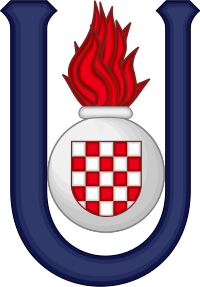
The Republic of Croatia has, since its independence, often reverted to the imagery of its Second World War predecessor; the Independent State of Croatia (NDH). The NDH was a puppet state sponsored by Nazi Germany and Fascist Italy, and was administered by the Ustashe.
During its brief four-year lifespan, the NDH made use of a form of clerical fascism built on the basis of discrimination and systematized liquidation of non-Croatian elements within its boundaries. It was responsible for the deaths of anywhere between 300,000 to 600,000 Serbs and tens of thousands of Jews and Roma.
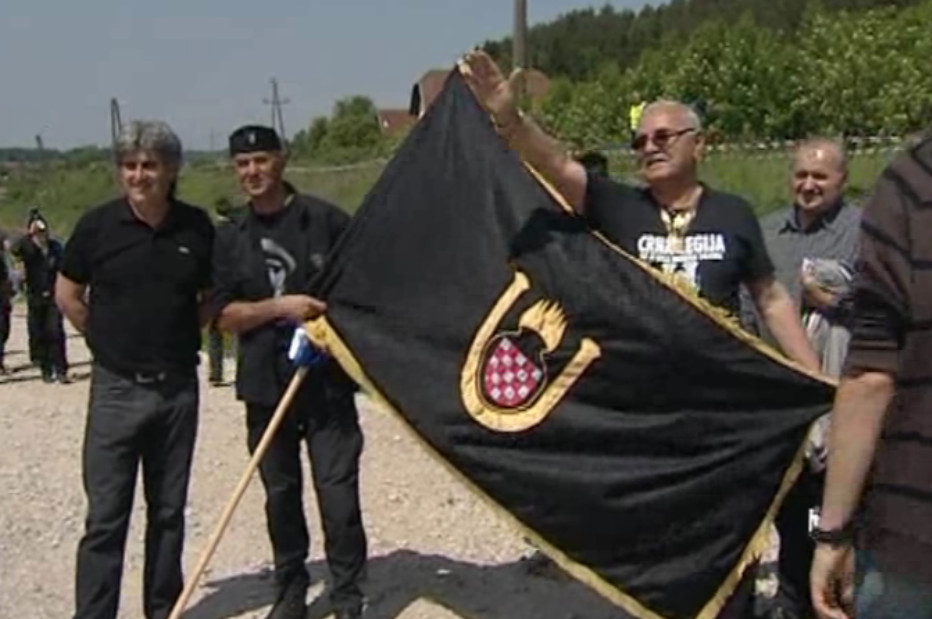
While restricted by law, Ustashe symbolism is freely exhibited at sporting events, political rallies, and all manners of public gatherings. The penalties for these displays are often restricted to a small monetary fine. By comparison, German law (Strafgesetzbuch section 86a) stipulates that a fine and/or a sentence of up to three years imprisonment will be administered.
Ustasha support among football hooligans (including a recent event during Euro 2016 where Croatian fans openly brandished swastikas) has been popular for decades; a more alarming trend is the active and tacit support of the Ustashe movement and legacy coming from the Croatian government. Earlier this year, the government of Croatia was condemned for appointing Zlatko Hasanbegovic, a prominent and open admirer of the Ustashe regime to be the country’s minister of culture. Croatia’s president, Kolinda Grabar-Kitarovic, is an avid fan of the pro-Ustashe musician Marko Perkovic “Thompson” and, while describing the Ustashe regime as “criminal”, also stated in the past that the NDH “at least protect[ed] the interests of the Croatian people” during its short and incredibly violent reign.
Silence at Best, Encouragement at Worst
Despite ongoing reports by international NGO’s of state-sponsored discrimination against Croatian Serbs and routine desecrations of Serbian churches and cultural monuments at the hands of pro-Ustashe elements in the country, the European Union has remained almost completely silent on the issue of growing pro-Ustashe sympathies in the Croatian government and political scene.
Rather than condemn the rising tide of Ustashe sympathy in the country or denounce the appointment of Ustashe sympathizers to some of the Croatian government’s highest ministries, the European Union has chosen to tacitly support the creeping return of political extremism to Croatia. On June 15th, an exhibition dedicated to Cardinal Alojzije Stepinac was held at the European Parliament, one of the EU’s most important institutions of governance. Cardinal Stepinac, who served as the Croatian Catholic Archbishop of Zagreb from 1937 to 1960, was an active supporter of the Ustashe regime and according to prominent Balkan historian Bernd Jurgen Fischer “had close association with the Ustashe leaders as the archbishop of the capital city, had issued proclamations celebrating independent Croatia, and welcomed the Ustashe leaders.”
The European Union has yet to respond to any of the criticisms lodged against it for hosting an event dedicated to a key supporter of a Nazi-backed regime that murdered hundreds of thousands of innocent civilians during the Second World War.
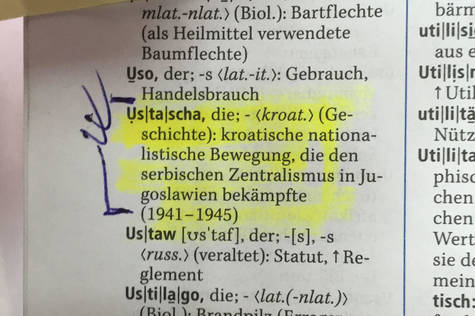
A recent definition (pictured below) of the Ustashe regime in the leading German language dictionary ‘Duden’ as a “movement which fought against ‘Serbian centralism’” has also provoked a firestorm of controversy and a rapidly growing online petition sponsored by the humanitarian organization 28 Jun. (full disclosure: we are both members of this organization). The definition makes no reference to any of the Ustashe’s well-documented and numerous crimes against civilian populations, giving it the appearance of a legitimate political movement with reasonable aims. These recent events are contributing to the growing sentiment among many Serbs who feel alienated by the European Union, and as if a double standard is being applied with regards to Serbia.
Loss of Credibility
Since Serbia attained candidate status in 2011, the European Union has imposed on it a host of requirements and stipulations that ostensibly deal with human rights and unresolved issues stemming from the Yugoslav Conflicts of the 1990’s. The Serbian government has largely complied with the conditions imposed on it by the European Union and has committed itself to the EU through acts such as extraditing members of its own government and “normalizing” relations with the Republic of Kosovo (a self-declared state which unilaterally declared independence from Serbia in 2008) at the behest of the European Union. Additionally, many EU states voted in favour of a failed UN resolution that sought to classify the controversial events in Srebrenica in 1995 as “genocide”.
Given the fact that the European Union has both passively supported the rise tide of extremist political inclinations in one of its member states by refusing to condemn it and actively supported it by hosting exhibitions in its honor, Serbs’ enthusiasm for joining the EU will likely continue to wane. The European Union has demonstrated a lack of integrity and even-handedness in upholding its stated human rights values by enforcing relatively harsh standards for Serbia while imposing virtually none on Croatia, even going as far as openly supporting some of Croatia’s worst historical human rights abusers. Coupled with growing Eurosceptic sentiments in both Serbia and Europe as a whole, the European Union’s quiet support of radicalized politics in Croatia could jeopardize the EU’s strategic goals of acquiring Serbia as a member.
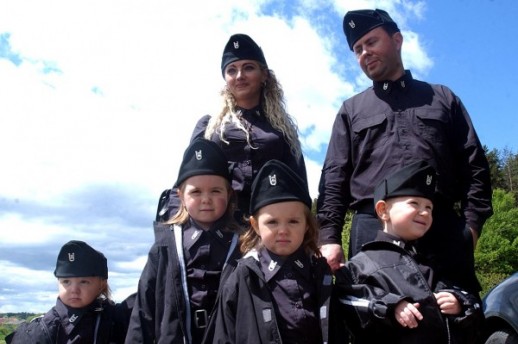
Furthermore, the double standard shown by the European Union in its dealings with Croatia and Serbia represent yet another example of the moral hypocrisy of the European Union. While top EU officials were quick to denounce legitimate populist movements such as the Brexit campaign as racist and xenophobic, those same officials and institutions have done nothing but tacitly support genuinely extremist politics in Croatia. Eurosceptic parties such as Front Nationale and the Austrian Freedom Party are routinely branded as “far right” and “radical” while political extremism in Croatia is allowed to flourish. If the European Union does not take steps to meaningfully combat this moral hypocrisy, then it is likely that the trend of increasing skepticism towards the Union will continue to rise unabated.
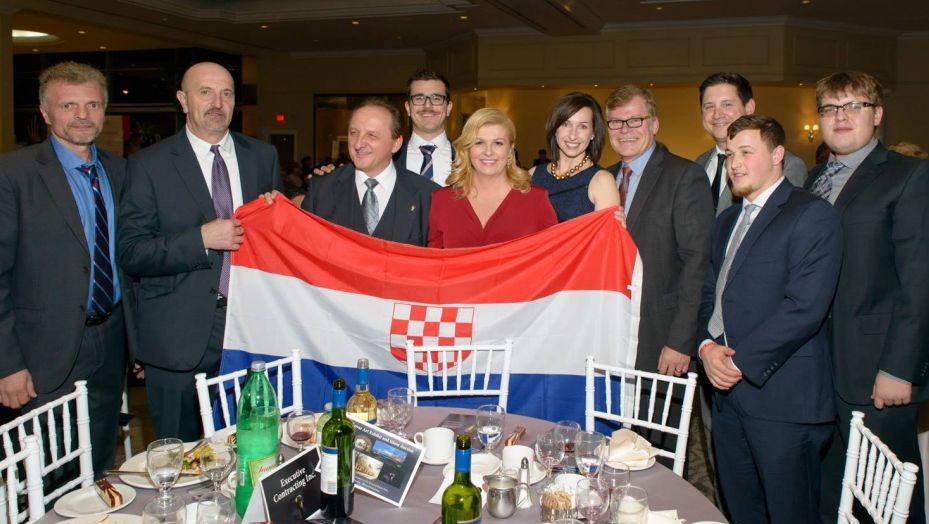
Originally published on 2016-07-13
About the authors:
Nenad Dumanovic is the founder and principal of Impressify, an Alberta-based content marketing company. He is a graduate of the University of Alberta’s Honours political science program and wrote his thesis on Bitcoin and the political, legal, and regulatory ramifications of digital currency and financial technology. Nenad is an active member of 28. Jun, a Canada- based not-for-profit organization and is launching Konstantine, a digital magazine about current events in the Balkans in Winter 2016.
Daniel Jankovic is a graduate of the University of Alberta’s History and Economics program. He studies history and economics, and has an avid interest in political discourse and international relations, especially in regard to the Balkans of Southeastern Europe. He recently completed an in-depth analysis on the death of the residential bar and its social impact in the Balkans. The paper is slated to be published in several academic journals in the upcoming year. He is an active member of 28. Jun, a Canada-based not-for-profit organization and is launching Konstantine, a digital magazine about current events in the Balkans in Winter 2016.
Origins of images: Facebook, Twitter, Wikimedia, Wikipedia, Flickr, Google, Imageinjection, Public Domain & Pinterest.
Read our Disclaimer/Legal Statement!
Donate to Support Us
We would like to ask you to consider a small donation to help our team keep working. We accept no advertising and rely only on you, our readers, to keep us digging the truth on history, global politics, and international relations.
At the time of the illegal NATO bombing of Yugoslavia in 1999 when Martti Ahtisaari was the President of Finland, his government sought to commemorate and to honor Finland’s Nazi SS volunteers from the Holocaust. This offers irrefutable evidence of Ahtisaari’s direct links for support of Nazism and Nazi revisionism. If Ahtisaari had bothered to check the decisions of the Nuremberg War Crimes Tribunals, he would have found that that court held that all Waffen SS troops were war criminals guilty of war crimes and guilty of committing crimes against humanity, namely the mass murder of Jews. Ahtisaari lacks even ...
Ukraine has a complex historical background and most people have little knowledge of this. The western part of Ukraine known as Galicia has an especially complex history. Going back for more than a thousand years, this region had been settled by Slavic tribes who formed the western extension of the Kievan Rus. To the west it had Polish, Lithuanian, Hungarian and Austrian neighbours. And to its misfortune, these neighbours took turns attacking and subjugating these early Ukrainians. It was largely Poland and Austria that took turns suppressing and occupying the region, economically and culturally. Because of this, although Galicia’s population ...
What we are seeing today in the fight over birth control is a revival of a very old, and very dangerous kind of Catholicism. It is not one supported or practiced by most Rank and File Catholics. It is a kind of Catholicism which has done irreparable harm. It is a kind of Catholicism unfit for existence in the modern world.It was the underpinning of the regimes of Mussolini in Italy, The National Catholicism of Francisco Franco, in Spain; The Parti Rexiste in Belgium; The Irish Blueshirts; The Croatian Ustaše, the Nazi puppet government in Croatia, and ultimately, was the ...
At the first glance, an ordinary citizen of the globe can think that probably it must be that everything that is now happening in Banderistan Ukraine and around, including and reconstruction of international relations and reformulation of the global order in politics, is just a big misunderstanding. For the same people, probably NATO's constant expansion to the east since 1999, i.e., to the direction of Russia, has nothing to do with the attempt to subdue and tear Russia apart as wanted the same both Napoleon (in 1812) and Hitler (in 1941). They will tell you that instead of a war ...
General Adolf Heusinger (August 4, 1897 – November 30, 1982) was a German general officer who briefly served as Adolf Hitler’s Chief of the General Staff of the Army during World War II and served as the first Inspector General of the Bundeswehr, the West German armed forces, from 1957 to 1961. Heusinger served as Chairman of the NATO Military Committee from 1961 to 1964.Heusinger was born in Holzminden, in the Duchy of Brunswick, German Empire. He entered the Imperial German Army on June 17, 1915, and was assigned to 7. Thüringisches Infanterie-Regiment Nr. 96, an infantry regiment raised in ...
The Chinese have a genius for pithy expressions and few are more packed with meaning, while immediately understandable, than "paper tiger". NATO is one, but paper tigers that overestimate their powers can be dangerous.Some Russians are concerned that there are today more hostile troops at the Russian border than at any time since 1941. While this is true, it is not, at the moment, very significant. The Germans invaded the USSR with nearly 150 divisions in 1941. Which, as it turned out, were not enough.Today NATO has – or claims to have – a battle group in each of the three ...
It was in 2015 hundred years anniversary of secret treaty signed between three Entente members of the U.K., France and the Russian Empire on the one hand, and Italy on the other, in London on April 26th, 1915 nine months after the break up the Great War of 1914−1918.[1]In a political-military effort to involve Italy in the war on their own side against the Central Powers members of Germany and Austria-Hungary within a month, these three Entente block members confirmed the Italian possession of the ex-Ottoman province of Libya (acquired by Italy in 1912) and the Dodecanese islands in the ...
Contemporary historiography and the Slavonic studies upon the question of the ethnolinguistic origin of the Croats and the Serbs more and more incline on the side of those authors who support the linguistic theory of the Indo-Sarmatian (the Iranian) origins of proto-Croats and proto-Serbs.The Indo-European Iranian originAccording to this contemporary explanation, Croats and Serbs were the people of the Iranian (the Sarmatian) origin, who migrated into the Balkans in the 7th century and subjected the Slavs there. However, in the course of time, they became totally slavicized (like proto-Turkic Bulgars who were settled on the Balkans between the Danube River ...
PrefaceDue to the current conflict in (East) Ukraine (historically known as Russia Minor), the world is more and more becoming informed about the genocide of the Poles, Jews, and Russians on the territory of West Ukraine during WWII committed by Ukrainian Nazi-nationalists (the Banderists). However, at the same time, in the Balkans, parallelly with the Ukrainian case, the organized (sadistic) genocide of the Jews, Roma, and above all the ethnic Serbs were on agenda but the world audience is still not properly informed about the case – the case occurred in the Nazi-shaped Independent State of Croatia.At the very start, ...
President Obama is still considering arming Ukraine in case the latest ceasefire is breached and the conflict escalates; but political analyst Stephen Lendman told Sputnik in an exclusive interview that the US leader is lying, and that the US has been supplying arms to Kiev from the very start of the military operation.The ceasefire between Kiev forces and independence supporters of Donetsk and Luhansk is generally holding, shelling in Donbas has stopped as the truce came in force on midnight, a spokesperson at the Kiev special operations headquarters said Sunday. But a day earlier Ukrainian President Petro Poroshenko and US ...
The US sanctions against Venezuela, signed into law by President Barack Obama on December 18, 2014, resulted from charges of protestors’ rights being violated by the socialist government of President Nicolás Maduro.The sanctions allow the Obama administration to deny visas and freeze the assets of Venezuelan officials accused of violating the rights of anti-government groups. These groups, comprised mainly of the right-wing opposition, have been leading violent protests in Caracas since last February. US leaders blame the Venezuelan leadership, headed by the United Socialist Party of Venezuela, for the deaths of 43 people during such demonstrations, which included both government ...
In early 1944, Mirjana Babunovic-Dimitrijevic, a 22-year-old middle-class woman living in Sarajevo, was arrested by the Ustasa police. After she was arrested along with her mother and aunt, they were all deported to the Jasenovac concentration camp, for refusing to convert to Catholicism. All three women died there in late 1944.These women were among more than 80,000 victims who perished at Jasenovac between 1941 and 1945. While we don’t know precisely how they died nor what happened during their short lives in the camp, two things are certain.First, their deaths were the direct result of deliberate political decisions. Second, they ...
Magnum Crimen the book about clericalism in Croatia from the end of 19th century until the end of the Second World War.The book, whose full title is Magnum crimen – pola vijeka klerikalizma u Hrvatskoj (The Great Crime – a half-century of clericalism in Croatia), was written by a former Catholic priest and professor and historian at Belgrade University, Viktor Novak (1889–1977). The book was first published in Zagreb in 1948.Immediately after the book was published, the Vatican Curia placed this book on the Index Librorum Prohibitorum (English: List of Prohibited Books) and pronounced anathema against the author.BackgroundNovak wrote a ...
The Ukrainian massacre of anti-regime pamphleteers on May 2, 2014 at the Odessa Trade Unions Building, burning these pamphleteers alive there, was crucial to the Obama Administration’s solidification of its control over Ukraine. That massacre was designed to, and it did, terrorize the residents in all areas of Ukraine which had voted overwhelmingly for the man whom Obama had just ousted, Viktor Yanukovych. Especially in the Donbass region, Yanokovych had received 90%+ of the votes. In Odessa, he had received three-quarters of the votes. (Later will be explained why this terror against the residents of such regions was necessary for ...
Contrary to the popular belief, the bloodiest trade in history (when organs were taken away from captured and imprisoned Kosovo Serbs), did not begin in Kosovo, but in Croatia.As reported by the Serbian media in the process conducted by EULEX mission in Kosovo , ” one of the accused confessed about participating in human organ sale”.Driton Jiljta pleaded guilty to the indictment charging him with “abuse of authority and illegal medical activity.” This case is apart of larger process and the prosecution has charged seven Albanians and two foreigners for trafficking , organized crime and transplantation formulized as “illegal medical ...
While the typical narrative of American history positions the United States as a supporter of democracy and opponent of fascism which helped to defeat the Nazis, key figures in Washington also supported dangerous dictators in Italy and Germany in their early days of power.Noam Chomsky, the renowned political philosopher, historian and scholar, examined the flip side of U.S. opposition to dictatorship in a conversation with Zain Raza, a senior editor at the independent media outlet acTVism Munich. An excerpt from the conversation was published Sept. 30 as part of acTVism Munich’s “Reexamining History” series.Speaking to Raza about Italian dictator Benito ...
Neo-Nazi Ustashi in Zagreb todayLast week was marked by the moral acrobatics of two Croatian ministers – War Veterans’ Minister Tomo Medved and Defence Minister Damir Krsticevic – who publicly endorsed two convicted Croatian war criminals, Tomislav Mercep and Mirko Norac.A WWII Independent State of Croatia in which 700.000 Serbs were brutally killedCroatian news site Index reported last week that Mercep, who is serving a prison sentence, spent a total of 45 days at a spa instead of in jail this year and last year. As Mercep is a Croatian war veteran, Medved said he vouched for him as worthy ...
Author’s Introduction and UpdateFirst published by GR on June 14, 2014, updated in August 2014, this article reveals how the US and its allies facilitated the incursion of Islamic State (ISIS) convoys into Iraq in June 2014 prior to the onset of the counter-terrorism bombing campaign launched by Obama in August 2014. It is worth recalling the history of the initial incursion of ISIS forces (Summer 2014) and the timeline extending from the occupation of Mosul in Summer of 2014 which was covertly supported by the US, to the “Liberation” of Mosul three years later which was also supported by ...
The Holocaust and the tragic events that befell the Jewish community in the Second World War are fast fading from Canadians’ memories.A recent survey by The Azrieli Foundation showed an alarming 52% of Canadian millennials cannot name even one concentration camp and 62% did not know six million Jews were killed in the Holocaust.It is essential that Canadians help preserve Holocaust memory and speak out against those who engage in denial, distortion or obfuscation. This is a perilous time, particularly for Jewish communities in Europe.The rise of extremist forces on the right is a critical challenge. Witness the recent targeting ...