
With Monday’s procedural vote in the U.S. Senate to allow Montenegro into NATO, the Washington elite proved once more that heightening tensions with Russia might not just be inevitable, but actually desirable. With the exception of Rand Paul (R-KY) and Mike Lee (R-UT), the entire 100-strong body of the Senate rallied behind the motion that would see the tiny Adriatic state admitted into the Atlantic alliance over the objections of many Montenegrins . The vote set off a 30-hour countdown, during which Senators will debate before putting the issue to a final vote.
If you needed more proof that US foreign policy is misguided, just look to what happened to Rand Paul after his earlier decision to block Montenegro’s accession. The Kentucky senator was subjected to a barrage of insults from fellow Republican John McCain, who flatly accused Paul of “working for Vladimir Putin.” McCain warned Paul that objecting to the tiny Balkan state becoming the 29th member of the alliance would play straight into the hands of the Russian president. While certainly unkind, Paul’s retort that the 80-year-old might be “past his prime” and perhaps “a little bit unhinged” was not entirely wide of the mark.
While Montenegro’s accession to NATO bafflingly enjoys popular support in the Senate chamber and among NATO’s 28 member states, 25 of whom have already finalized their approval of the country’s membership of the alliance, criticism of Paul’s veto is as grossly misguided as any assertion that he is somehow in the pocket of the Kremlin. Correctly arguing that the U.S. is already spread far too thinly militarily in dozens of countries all over the world with little to show for it, Paul questioned the wisdom of expanding the monetary and military obligations of America at a time when it is already drowning in debt. He had previously voted against the matter in a vote last December.
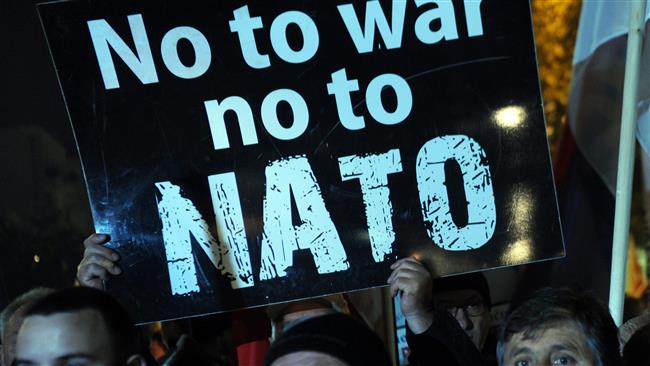
McCain represents a mercilessly hawkish wing of the Republican Party that would be quite happy to risk war with Russia and harm to U.S. interests over such a strategically irrelevant country. Paul, on the other hand, takes a more pragmatic position on the country’s NATO ambitions, as should anyone in full possession of the facts. To begin with, the Montenegrin people themselves display little interest in their country joining NATO. Polls there consistently show that no more than 40% of the public favor NATO membership, with support for accession dropping considerably below that figure among older people. Many remain suspicious of the alliance after it bombed Yugoslavia, of which Montenegro was part, in 1999. Distrust for the military alliance is so strong that anti-NATO demonstrations regularly take place across the country. To press ahead with Montenegro’s NATO accession would fly directly in the face of the will of its people.
Worse, Montenegro’s October parliamentary election was marred with exaggerated charges that a Russian coup was in the works. If it hadn’t been for some last minute intelligence from Serbia and the country’s own agencies, so the story goes, Russian GRU spies would have assassinated Djukanovic and would have installed a puppet government. In fact, the pro-Western Podgorica government has successfully used the specter of Russian influence in order to detain and unlawfully harass opposition leaders. Just last week, Marko Milacic, a pro-neutrality campaigner, was “pre-emptively detained” after campaigning in favor of a referendum that would have allowed Montenegrins to vote on whether they want indeed to join NATO.
Aside from the lack of public support, Montenegro has very little to meaningfully contribute to the alliance. Indeed, its accession would seriously undermine the democratic principles on which the transatlantic community was ostensibly founded. The country’s government is widely accepted to be riddled with corruption. Former Prime Minister Milo Dukanovic was named Man of the Year in Organized Crime by the Organized Crime and Corruption Reporting Project (OCCRP) in 2015, and has been accused of cigarette smuggling on a grand scale in collusion with notorious organized crime groups from Italy, among a litany of other offences any mobster would be proud to have on their resume. Since standing down from his role as Prime Minister last year, Djukanovic has managed to cleverly maneuver the domestic political sphere by intimidating opposition leaders, while skillfully managing to avoid accusation of a “political crackdown” that would have ignited wide-spread civil unrest.
Montenegro’s accession to full NATO membership should also be viewed as no-brainer from a financial perspective. The fact remains that Podgorica currently spends just 1.6% of its GDP on defense and has a miniscule army. As the Senate Armed Services Chairman, John McCain has been busy campaigning for a greater military budget of $640 billion for 2018 to entangle U.S. forces in further conflicts abroad, proving once more that the former Presidential candidate is stuck in a Cold War mentality, as evidenced by his suggestion that Paul is some sort of Kremlin plant.
Republicans and the White House must look beyond this bluster and carefully consider the ramifications of allowing Montenegro’s NATO accession. Accepting a country with a failing economy and corrupt government into the alliance will do nothing to further U.S interests either at home or abroad. On the contrary, allowing Montenegro to join NATO would jeopardize both regional and U.S. security, and perpetuate the mistakes of past administrations that have been too quick to bomb foreign countries on a whim and play geopolitical games.
McCain’s tired brand of rampant interventionism should be consigned to the dustbin of history, while the rest of the Senate should take careful note of Paul’s important points. He is one of a rare breed of lawmakers brave enough to criticize America’s imperialism abroad.
Origins of images: Facebook, Twitter, Wikimedia, Wikipedia, Flickr, Google, Imageinjection, Public Domain & Pinterest.
Read our Disclaimer/Legal Statement!
Donate to Support Us
We would like to ask you to consider a small donation to help our team keep working. We accept no advertising and rely only on you, our readers, to keep us digging the truth on history, global politics, and international relations.
One sharp and interesting analysis of situation in Serbian province of Kosovo Metohija came last week from Andrew Korybko, program host at Radio Sputnik.Mr. Korybko speaks on how the whirlwind of geopolitics, military interests and global giants of business, as well as the change of US administration, could impact the fragile peace in Balkans and what’s behind the latest tensions:”Serbia’s NATO-occupied province of Kosovo has been up to its old tricks lately in trying to provoke Belgrade into another military confrontation conveniently timed to coincide with Trump’s inauguration.The former so-called “Prime Minister” of Kosovo, Ramush Haradinaj, was detained in France ...
The crumbling “liberal” West is in a desperate hurry in the Balkans. More than a quarter century since the first Western states, pushed by Germany, unilaterally recognized the secession of the former Yugoslav federal republics of Slovenia, Croatia and Bosnia-Herzegovina and about 19 years since NATO’s air and land attack against what had remained of the country (the Federal Republic of Yugoslavia, comprising Serbia and Montenegro) resulting in NATO’s occupation and subsequent forced amputation of Serbia’s Kosovo and Metohija province (by way of recognition of its unilaterally declared independence of February 2008 by the main Western powers, some – but not all Muslim ...
The outbursts of anti-Russian rhetoric of Lithuanian President Dalia Grybauskaitė is certainly very bizarre in view of her curriculum vitae. Dalia Grybauskaitė is a very educated woman. Because of the free education system of the former USSR, she was able to complete her university education at the elite Saint Petersburg State University. She became a member of the Communist Party of the Soviet Union in 1983, some five years before she earned a doctoral degree at the prestigious Academy of Social Sciences in Moscow. It is generally known that not every applicant is routinely accepted to become a Party member.This ...
Two decades later Bosnia is still suffering the consequences. ISIS has declared the Balkans the next front for the Islamic Caliphate, and in remote mountain villages, Muslims are already flying the ISIS flag.Central Bosnia in 2015Russia Insider (h/t Maksim) The Balkans is the latest arena where the West is trying to circumcise any attempt of Russia to regainits influence. This anti-Serbian resolution and initiative is the part of the broader strategy and the latest Western attempt to demonize Serbs and delegitimize pro-Russian Republic of Srpska (Serbian part of Bosnia) in an effort to forcefully centralize Bosnia and give the driving seat to ...
It is not only American generals who are irresponsible and declare on the basis of no evidence whatsoever that “Russia is an existential threat to the United States” and also to the Baltic states, Poland, Georgia, Ukraine, and all of Europe. British generals also participate in the warmongering. UK retired general and former NATO commander Sir Richard Shirreff, Deputy Supreme Allied Commander in Europe until 2014, has just declared that nuclear war with Russia is “entirely possible” within the year. http://www.dailymail.co.uk/news/article-3596977/The-outbreak-nuclear-war-year-West-Putin-entirely-plausible-says-former-NATO-chief-promoting-novel-2017-war-Russia.html My loyal readers know that I, myself, have been warning for some time about the likelihood of nuclear war. ...
Eighteen years ago in the early hours of March 24, 1999, NATO began the bombing the Federal Republic of Yugoslavia. “The operation was code-named “Allied Force ” – a cold, uninspired and perfectly descriptive moniker” according to Nebosja Malic.This article was first written in May 1999 at the height of the bombing of Yugoslavia.The causes and consequences of this war have been the object of a vast media disinformation campaign, which has sought to camouflage NATO and US war crimes.It is important to note that a large segment of the “Progressive Left” in Western Europe and North America were part of this disinformation campaign, presenting ...
Article by Vladislav B. Sotirović: „A New Age of Global Security: The ‚Ukrainian Question‘ and ‚Kosovo Precedent‘“, Vojno delo (Military affairs), Interdisciplinary Scientific Theoretical Journal, International Edition, Vol. 69, Issue 4, 2017 (May-June 2017), ISSN 0042-8426, Ministry of Defence of the Republic of Serbia, Belgrade, Serbia, pp. 176−211.Origins of images: Facebook, Twitter, Wikimedia, Wikipedia, Flickr, Google, Imageinjection, Public Domain & Pinterest.Read our Disclaimer/Legal Statement!Donate to Support UsWe would like to ask you to consider a small donation to help our team keep working. We accept no advertising and rely only on you, our readers, to keep us digging the truth ...
The topic to be addressed in this text is the basic misconception on the question of the Balkan Albanian ethnogenesis and national identity that was framed by extremely geo-politically coloured German-based “Illyrian” theory of the Albanian ethnic and cultural origin. This (quasi)theory, unfortunately, has very deep and negative regional political-security consequences. The implementation of the “Illyrian” theory of the Albanian ethnogenesis was accepted firstly by the Rilindja, (the Renaissance) – the Albanian nationalistic and chauvinistic political movement in 1878–1913 for the sake to create the ethnically pure Greater Albania as a national state of all Balkan Albanians composed by self-interpreted ...
Strange things happen in civil wars: During the Russian Civil War in 1919, 13,000 U.S. troops were dispatched by President Woodrow Wilson to occupy the cities of Archangelsk in the Arctic and Vladivostok on the Pacific.Half a century earlier, thousands of Imperial Russian Navy sailors and their officers flooded the cities of San Francisco and New York. But the circumstances were very different. They were there to defend the United States from foreign invasion – not to threaten it and they brilliantly succeeded in their tasks.The incredible story is well told in “Friends in Peace and War: The Russian Navy’s ...
The ongoing de-Christianization of Kosovo continues and unlike the past frenzy of the anti-Serbian mass media in the West, we mainly have a deadly silence about the reality of Kosovo and the continuing Albanianization of this land. However, how is it “just” and “moral” to persecute minorities and to alienate them from mainstream society; and then to illegally recognize this land without the full consensus of the international community?How ironic it is that the same United States of America and the United Kingdom, two nations who were in the forefront of covertly manipulating the mass media; remain mainly silent about ...
After the Donald Trump administration’s decision to recognize the disputed city of Jerusalem as Israel’s capital and move the US embassy there from Tel Aviv, the national aspirations of the Palestinian people to live in their own state have been severely dashed by Washington’s move. Ever since the formation of the United States, it has been American policy to destroy aspirant nations like the internationally-recognized State of Palestine.The first nation destroyed by the United States was the Cherokee Nation, or Tsalagihi Ayeli, which, beginning in 1794, was slowly decimated by forced removals from territory in Georgia, the Carolinas, Tennessee, Alabama, ...
Russian President Vladimir Putin put it succinctly when he recently warned that prospects for peace in Ukraine were negligible as long as the current authorities in Kiev remain in power. Worse, given a new rash of provocations by the Kiev regime, the entire region is being threatened with conflict, and even all-out war.It seems clear – and criminally reprehensible – that the Kiev regime and its President Petro Poroshenko are intent on dragging the United States and the NATO military alliance into a war with Russia. The incendiary conduct of Ukrainian politicians and their military is that of a regime ...
Global Research Editor’s NoteRatko Mladić has recently been convicted to life imprisonment by the the ICTY on charges of genocide, war crimes and crimes against humanity while he was Chief Commander of the Army of Republika Srpska between 1992 and 1995 in Bosnia and Herzegovina.This detailed account first published in 1998 by former UN Military Observer Carlos Martino Branco casts doubts on the decision of the Hague Tribunal (ICTY) that “genocide was committed in Srebrenica in 1995.”“…Bosnia Serb forces carried out genocide against the Bosnian Muslims (…) .Those who devise and implement genocide seek to deprive humanity of the manifold ...
For even the greatest of empires, geography is often destiny. You wouldn’t know it in Washington, though. America’s political, national security, and foreign policy elites continue to ignore the basics of geopolitics that have shaped the fate of world empires for the past 500 years. Consequently, they have missed the significance of the rapid global changes in Eurasia that are in the process of undermining the grand strategy for world dominion that Washington has pursued these past seven decades.A glance at what passes for insider “wisdom” in Washington these days reveals a worldview of stunning insularity. Take Harvard political scientist ...
In April-May of 1944, the Crimean Tatar battalions took part in battles against the Red Army in the Crimea. The units that were evacuated from the Crimea in June 1944, were compiled into the Tatar mountain-Jaeger three-battalion SS Regiment. A month later, the group became the first Tatar-mountain-Jaeger SS Brigade (2,500 troops) under the command of SS Standartenführer Fortenbah. On 31 December 1944, the unit was disbanded to become a part of the East Turkic branch of SS as the Crimea battle group: two infantry battalions and one hundred horses.German Field Marshal Erich von Manstein testified: "Most of the Crimean ...
On the 16th anniversary of the country’s accession to NATO, Lithuanian Minister of Defense Raimundas Karoblis came up with a well-known myth: our state is an equal member of the alliance. “We are stronger than ever before and we are grateful to the Allies for their efforts in strengthening the defense capabilities in the region and their willingness to help when it necessary” said Karoblis.If you look at the facts, Lithuania is fighting alone with the epidemic of COVID-19 infection. However, like all other countries of the North Atlantic Treaty Organization.You just need to look at Italy, which does not ...
No matter how hard White House officials try, they cannot construct a coherent ‘Trump doctrine’ that would make sense amid the chaos that has afflicted US foreign policy in recent months.However, this chaos is not entirely the making of President Donald Trump alone.Since 1945, the United States has vied for total global leadership. The 1991 dissolution of the Soviet Union, and the subsequent disintegration of the Eastern Bloc, gave it complete global hegemony.The US became the force that stabilized and destabilized any region in the world, as it saw fit – which always served the interests of the US and ...
In just one week the United States government will commemorate its 16th anniversary in the bombing and occupation of Afghanistan.This war did not really begin in 2001 resulting from the attacks on September 11 where planes were hijacked and flown into the World Trade Center in New York City and the Pentagon headquartered right outside of Washington, D.C.U.S. involvement in the destabilization of Afghanistan goes back to the late 1970s when the People’s Democratic Party of Afghanistan (PDP) led a socialist-oriented administration which advanced the cause of working people and farmers as well as providing fundamental civil rights to women. ...
The WarmongersThe war, which began in August 1914 – to contemporaries the Great War, to posterity the First World War – marked the end of one period of history and the beginning of another. Starting as a European war, it turned in 1917, with the entrance of the US into a world war. The spark that triggered it off was the assassination of the Austrian heir-presumptive, Archduke Franz Ferdinand (1864−1914), by a Bosnian nationalist of Serb origin – Gavrilo Princip[1], a member of the Young Bosnia (Mlada Bosna) movement, in Sarajevo on June 28th, 1914 on his official visit to ...
The Working Group for the Chapter 35 of the Serbian National Convention on the European Union (EU) has called for the authorities in Serbia and Kosovo to create a cooperation to reduce the spread of the coronavirus pandemic.“We witness the coronavirus pandemic (COVID19) representing a great danger everywhere in the world and the health systems increasingly burdened with the number of infected patients. The pandemic has shown that the spread of the disease goes beyond borders, national and ethnic origin or religion of the affected, and can only be combatted through joint action, cooperation and solidarity. Cooperation is necessary primarily ...