‘Croatian Scenario’ Shortcomings for Ending the Donbass Conflict
The so called "Croatian scenario", is something that has been periodically brought up after the start of the armed conflict in Donbass. (Among other instances, yours truly noted this in articles from this past December 17 and August 24, 2015) [...]
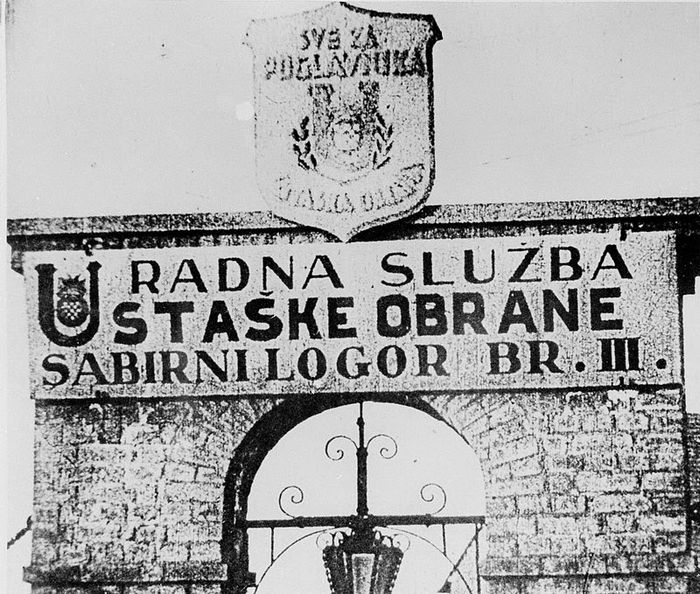
The entrance-gate to the death camp of Jasenovac in Croatia

Views: 3788
The so called “Croatian scenario“, is something that has been periodically brought up after the start of the armed conflict in Donbass. (Among other instances, yours truly noted this in articles from this past December 17 and August 24, 2015.) Promoted at Johnson’s Russia List, the December 28 Euromaidan Press article “What Ukraine Can Take from the ‘Croatian Scenario’ of Conflict Resolution“, omits some key factors for being apprehensive about the probability for success of an Operation Storm like strike against the Donbass rebels.
In 1995, the Serb Yugoslav leader Slobodan Milosevic, had essentially dropped the Krajina Serbs, with the hope that he could improve his relationship with the West. At the time, Russia was weak and Yugoslavia (then consisting of Serbia and Montenegro) was somewhat war weary and faced with a good degree of international isolation through hypocritically applied sanctions against it.
Going into Operation Storm, the Croat government likely knew that Yugoslavia wouldn’t give any military support to the Krajina Serb leadership – something which proved to be correct. Thereafter, Yugoslavia saw some easing of hostility against it. This changed a few years later when events in Kosovo became increasingly more violent – thereafter prompting another hypocritical Western led condemnation of Belgrade.
The Donbass rebels and Russian government are fully aware of this. Hence, they’ve good reason to be on guard against a Kiev regime advance on the rebel held territory. A successful military attack on the Donbass rebels puts their position as a political factor in jeopardy. In turn, Russia will be seen as weak. As is, the Russian government has faced some criticism for not doing enough to support the counter Euromaidan opposition in the former Ukrainian SSR.
In any event, as a major power, Russia isn’t in as much a vulnerable predicament as Yugoslavia. This reality lessens the chance of the Kremlin feeling a need to go against its interests. Analytical omissions aside, the aforementioned December 28 Euromaidan piece, acknowledges some potential problems with implementing a victorious attack against the Donbass rebels.
This can change if the Kremlin were to become extremely annoyed with the rebels and cheery with the Kiev leadership and its Western backers. For now, this appears unlikely. Furthermore, there’s division within Western and pro-Kiev regime circles. The support for increased US military aid to the Kiev regime has been met with some reasoned second guessing that’s worth notice.
Among other things, US Naval War College academic Lyle Goldstein’s November 30 National Interest article, pointedly criticizes the hardline pro-Kiev regime stance of Kurt Volker – the Trump administration’s appointee for handling former Ukrainian SSR matters like Donbass. In a February 15, 2015 Washington Post piece, Brookings Institute analyst Fiona Hill argued against arming the Kiev regime. Hill now serves as a Trump administration adviser on Russia related matters. Over the past couple of years, City College of New York professor Rajan Menon has opposed US military aid to the Kiev regime. Menon hasn’t been sympathetic to pro-Russian concerns (which encompass a good number of folks in the former Ukrainian SSR), as is true of his Rutgers University affiliated peer Alexander Motyl.
The latter is on record for believing that Ukraine could be better off without the rebel held Donbass area – on the basis that its territory has become economically problematical, coupled with a population which by and large doesn’t share Motyl’s negative perception of Russia – a slant evident among many on the pro-Euromaidan side. Motyl’s opinion aside, Donbass has the potential to regain and improve upon its prior status as a key economic area, relative to the former Ukrainian SSR. Granted that much needs to be done for this to happen.
The Trump administration’s decision to provide the Kiev regime with arms represents an ongoing tug of war between the realists and hardline elements against pro-Russian sentiment. Despite their clear differences, Trump’s exhibited realism on Russia was supported by his predecessor Barack Obama in a lengthy 2016 exchange he had with Jeffrey Goldberg in The Atlantic. While being decidedly biased against Russia (as noted by yours truly), that dialogue included a realistic assessment by Obama, which noted Ukraine’s importance to Russia and how Moscow has a geographic advantage over Washington, when it comes to military action in the former Ukrainian SSR.
There’s also the matter of the US having a pecking order of other foreign policy concerns, with the former Ukrainian SSR probably not ranking in the top three or more.
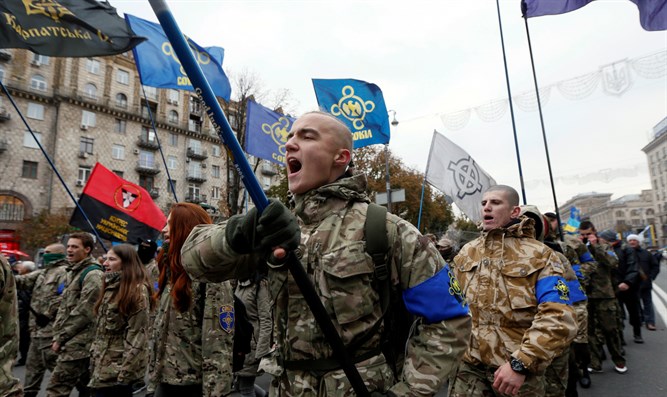
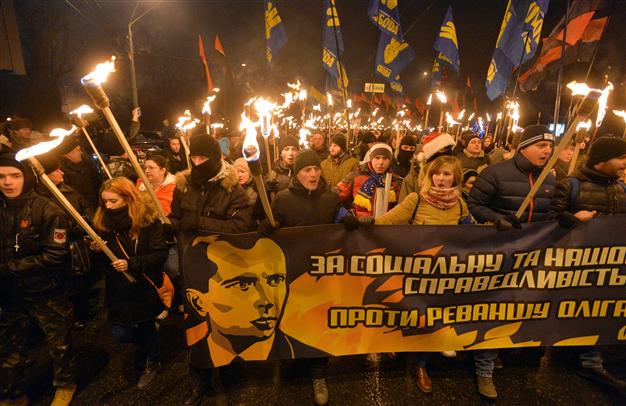
With all this in mind, a prolonged, geopolitically boring frozen conflict seems like the most probable scenario for Donbass. This possibility isn’t necessarily so bad, if the violence ends with improved socioeconomic conditions for both sides. Meantime, the Kiev regime’s ongoing economic problems, ultra-nationalist element and talk of a Croatian scenario for Donbass, might very well increase the likelihood of a skirmish – especially with the announced US military aid package.
Another trigger point could be armed conflict within Kiev regime controlled Ukraine between anti-Russian and pro-Russian groups. Such an occurrence could lead to claims of Russian meddling with Donbass potentially blamed as a base for the trouble – never minding the internal dynamic within Kiev regime controlled Ukraine.
Zagreb, Independent State of Croatia, 1941
Originally published on 2018-01-06
About the author: Michael Averko is a New York-based independent foreign policy analyst and media critic.
We would like to ask you to consider a small donation to help our team keep working. We accept no advertising and rely only on you, our readers, to keep us digging the truth on history, global politics and international relations.
On May 28, 1830, President Andrew Jackson signed the Indian Removal Act into law. The United States government had always used treaties as a ruse to expel Native nations from their ancestral lands, but this major federal legislation was the first that, on its face, soundly rejected tribal sovereignty and Native rights.The Indian Removal Act stated that the president could force tribes to relocate in exchange for a “grant” of western territory where white settlers did not yet live. (No matter that the western land might already be occupied by other tribes.) This became carte blanche for the U.S. government ...
Who are the repefugees coming to Europe as the "immigrants"? Or at least some of them:No comment!Origins of images: Facebook, Twitter, Wikimedia, Wikipedia, Flickr, Google, Imageinjection, Public Domain & Pinterest.Read our Disclaimer/Legal Statement!Donate to Support UsWe would like to ask you to consider a small donation to help our team keep working. We accept no advertising and rely only on you, our readers, to keep us digging the truth on history, global politics and international relations.[wpedon id="4696" align="left"]SaveSave
What does it mean when the US and British financial systems launder hundreds of billions of dollars of illicit funds stolen by world leaders while their governments turn a ‘blind eye’, and yet the very same Anglo-American officials investigate, prosecute, fine and arrest officials from rival governments, rival banks and political leaders for corruption?What does it mean when the US government expands a world-wide network of nuclear missiles on bases stretching from Poland, Bulgaria, Romania, the Gulf States to Japan, surrounding Russia, Iran and China, while the very same US and NATO officials investigate and condemn rival defense officials from Russia, China ...
History and geopoliticsThe extreme geopolitical importance of Russia in global politics and international relations is seen as the best from the very basic facts about Russian geography.Russian Federation is a state in North East Asia and East Europe which is bordering Norway and Finland in the north, Poland in the north-west, Estonia, Latvia, and Lithuania in the Baltics, Belarus, and Ukraine in the west, Georgia and Azerbaijan in the Caucasus, and Kazakhstan, Mongolia, China, and North Korea in the south. Russia’s maritime borders meet the Baltic Sea, the Black Sea, the Caspian Sea, the Arctic, and finally the Pacific Ocean. ...
Today the Old (dying out) Continent is under multi-faced crises pressure some of them having older roots but the others are the product of current political decisions and moves by the European decision-makers (and those who are behind them across the Ocean).The European oldest and mostly painful crisis-problem is a biological declination of the whole continent what from the economic point of view means, at least for the western countries, an import of a huge number of the „outsiders“ in order just to keep the same level of the economic production and national GDP. This solution of course produces a ...
In a remarkable book, 1939: The Alliance That Never Was and the Coming of World War II, the Canadian historian Michael Jabara Carley describes how, at the end of the 1930s, the Soviet Union repeatedly tried, but finally failed, to conclude a pact of mutual security, in other words a defensive alliance, with Britain and France. This proposed arrangement was intended to counter Nazi Germany, which, under Hitler’s dictatorial leadership, had been behaving more and more aggressively, and it was likely to involve some other countries, including Poland and Czechoslovakia, that had reason to fear German ambitions. The protagonist of this ...
When Napoleon crossed the Neman River and said about Russia, “May its fate come to pass”, could we call it aggression on Russia by a nineteenth-century European Union? Whatever you call it, with the exception of the Balkans, which were under the Turks, all the rest of Europe had been pulled into this campaign—Prussia, Austria, and Switzerland as allies, and Poland, Spain, and Italy as vassals. That leaves almost no one else. Of course, when writing about history you can’t use modern terminology in the past tense. But a polemicist can do what a scholar cannot. And understanding the conditional nature of ...
Figure 1. Ethnic Albanian refugees at the Lion airport, April 18, 1999 A French magazine published a couple of photos from the Lion airport on April 18th, 1999, at the time when NATO bombers were pouring their lethal burden over Serbia (and partly over Montenegro), in the course of their “preventing humanitarian catastrophe” at Kosovo. One picture showed the French weaponry ready to be transported to Kosovo, the other presented an ethnic-Albanian family from Kosovo, refugees just arrived to France. The photo deserves well our attention, for it speaks very much indeed; it exposes vividly the very crux of the ...
Read the truth about "Srebrenica Massacre" in 1995.Origins of images: Facebook, Twitter, Wikimedia, Wikipedia, Flickr, Google, Imageinjection, Public Domain & Pinterest.Read our Disclaimer/Legal Statement!Donate to Support UsWe would like to ask you to consider a small donation to help our team keep working. We accept no advertising and rely only on you, our readers, to keep us digging the truth on history, global politics, and international relations.[wpedon id="4696" align="left"]The Al-Qaeda-linked ‘El-Mujahedeen’ brigade of the Bosnian Muslim Army parading in downtown Zenica in central Bosnia in 1995
It is calculated that in addition to the secret arsenal of up to 400 nuclear warheads, according to American Scientists, the Israeli state also reportedly possesses chemical and/or biological WMD, making it a dangerous nuclear hegemon that poses a potential threat not only to the Middle East but also to Europe. Neither France nor Britain nor Germany can equal Israeli state nuclear weaponisation on both land and sea.This calculation is based on the fact that the state of Israel is the only WMD state to refuse to be a party to either the Chemical Weapons Convention (CWC) or the Biological ...
Noel Malcolm – Kosovo – A Short HistoryHistory is written with an attempt to support Albanian territorial claims in the BalkansA Short History of Kosovo by Noel Malcolm is usually considered as one of the prime historical sources on the history of the province. In fact, this book is an example of History with a political attitude because it is not by chance that Malcolm who attacks the “myths” of Serbian history is at the same time a president of the Anglo-Albanian Association and one of the strongest supporters of independence of Kosovo. Being far from an objective scientific work ...
The negotiations on Brexit are attracting a lot of attention. In particular, the possible erosion of the rights of around three million EU-27 citizens living in Britain is a major cause for concern.The European Parliament resolution adopted on 3 October states that “the withdrawal agreement must incorporate the full set of rights citizens currently enjoy, such that there is no material change in their position”.The main author of this text, Mr Guy Verhofstadt, the EP Brexit Coordinator, argues that such an approach – not to lower the level of citizens’ rights – is “the goal of democracy”. But why was ...
During the 1973 Arab-Israeli War, Syrian forces had surprised Israel and were fast approaching the edge of the steep Golan Heights, captured by Israel during the 1967 war. It seemed as if Syrian armor and infantry would retake Golan, then pour down into Israeli Galilee.Soviet recon satellites observed Israel moving its nuclear-armed, 500km-range Jericho missiles out of protective caves and onto their launch pads. At the same time, Israel was seen loading nuclear bombs on their US-supplied F-4 fighter-bombers at Tel Nof airbase.Believing Israel was about to use nuclear weapons against Syria and Egypt, Moscow put huge pressure on both ...
Having just returned from a trip to Russia, I am pleased to report that the Russian people and the officialdom that I encountered displayed none of the vitriol towards Americans that I half expected as a response to the vilifying of Moscow and all its works that pervades the U.S. media and Establishment. To be sure, many Russians I spoke with were quick to criticize the Trump Administration for its hot and cold performance vis-à-vis the bilateral ties to Moscow while also expressing mystification over why the relationship had gone south so quickly, but this anger over foreign policy did ...
South-East Europe, and especially the Balkan Peninsula as the main part of it, have traditionally been the object of numerous geopolitical, geostrategic, and publicist analyses, as well as the subject of debates among the Balkan, European, and global experts in international relations. The new Iron Curtain or the Cold War 2.0 between western and eastern Europe was not the end of the Balkan’s importance for the US administration and NATO as well. At present, along with the Serbian and Macedonian national questions, the most controversial issue is the Albanian national question or, more precisely, the question of the Kosovo knot.[1] ...
NATO has expanded dramatically after the collapse of its primary rivals, the USSR and the Warsaw Treaty Organization, Canadian Professor Michael Jabara Carley notes, posing the question whether NATO was founded as a defensive or an offensive alliance.The North Atlantic Treaty Organization (NATO), a military alliance aimed against the Soviet Union, was established on April 4, 1949; and only seven years after the formation of NATO the Warsaw Treaty Organization was established bringing together eight nations (versus 15 NATO member-states).So, who was the real “aggressor”? What alliance was an offensive one?“There has been much discussion recently of NATO in the mainstream and alternate media. Why was ...
Amply documented, the bombings of Yugoslavia are not strictly aimed at military and strategic targets as claimed by NATO. They are largely intent on destroying the country’s civilian infrastructure as well as its institutions.According to Yugoslav sources, NATO has engaged around 600 aeroplanes of which more than 400 are combat planes. They have flown almost 3,000 attack sorties, “with 200 in one night alone against 150 designated targets”. They have dropped thousands of tons of explosives and have launched some 450 cruise missiles.The intensity of the bombing using the most advanced military technology is unprecedented in modern history. It far ...
True, the majority of investors are Americans who bore a relation to the “democratization” of Yugoslavia that was carried out at the end of the 90s of the last century. Among them is the former commander of NATO forces in Kosovo retired general Wesley Clark, who is determined to invest more than 5.5 billion dollars in the former Yugoslav republic. Experts say that Washington’s strategy could be characterized by the following slogan: “Conquer and plunder”.His closest supporters say that Wesley Clark is a great strategist. He wrote the book “Winning Modern Wars” that was published in 2001. In his fundamental ...
President Donald Trump campaigned last year making the sensible argument that the US should no longer engage in a policy of regime change, and should attempt to have friendly relations with other countries like Russia and China. Yesterday he blew those ideas out of the water by launching 59 Tomahawk missiles at a Syrian airbase and by calling for the removal of Syria’s leader, Bashar al Assad.The pretext for the US cruise missile blitz, an alleged attack on a rebel-held town called Khan Shiekhun in Idlib province, where some 70 people, including children, were reported to have died from illegal ...
A report on August 15th from Russian Television alleged that the Ukrainian government that the U.S. installed in February of this year was resorting to internationally banned white phosphorous firebombs in order to help destroy the million people who lived in the now Ukrainian separatist capital of Donetsk. It lands super-hot and starts fires and burns to death almost anyone it touches.The Ukrainian separatists are the residents in Ukraine’s southeast, where Viktor Yanukovych, the Ukrainian President, was elected overwhelmingly by the votes of the people in this region in 2010. They reject the government that Obama installed, and are therefore seeking independence from it. ...