
FYROM Should be Named Paionia as it was 2,500 Years Ago
Even more significantly for the assimilation of Paionia into the Greek world are the dedications of statues of Paionian kings made at Delphi and Olympia, and especially the bronze head of a Paionian bison, also at Delphi [...]
The name of the modern land-locked country north of Greece, with its capital at Skopje, has returned to the news. It is officially called FYROM, but embedded in that name is “Macedonia” which is a reflection of the longstanding attempt to take over the modern Greek province of Macedonia as reflected in maps used in many places, including schools.
It is clear that this naming implies territorial ambitions which have long been understood (http://macedonia-evidence.org/documentation.html). If that threat to the stability of the southern Balkans is to be stopped permanently, I suggest that the following must happen:
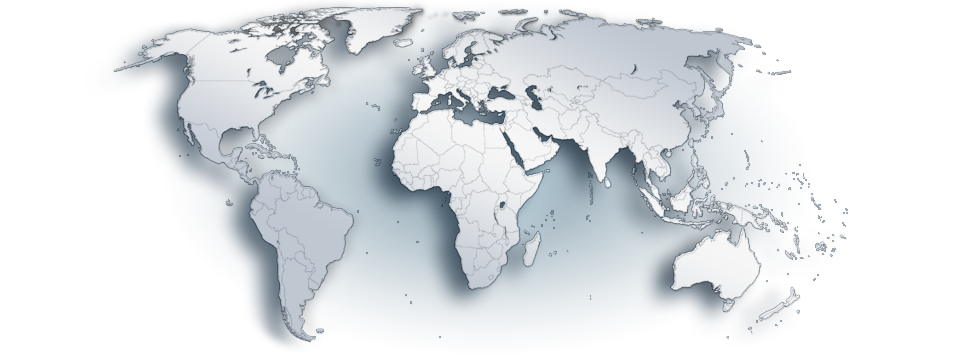
The land in question, with its modern capital at Skopje, was called Paionia in antiquity. Mts. Barnous and Orbelos (which form today the northern limits of Greece) provide a natural barrier that separated, and separates, Macedonia from its northern neighbor. The only real connection is along the Axios/Vardar River and even this valley “does not form a line of communication because it is divided by gorges.”
The geographic situation is made clear by Livy’s account of the creation of the Roman province of Macedonia in 146 B.C. (Livy 45.29.7 and 45.29.12). The land north of Mt. Barnous and Mt. Orbelos was inhabited by Paionians. The natural barrier formed by these mountains must be acknowledged. Barnous (modern Voras or Kaimaktsalan) reaches a height of 2524 meters, while Orbelos (the whole range extending to east and west of the Strymon; the western ridge is the modern Beles or Kerkini with a height of 1474 meters) has a maximum height toward the east of 2211 meters.
Strabo (7. frag 4), writing a few years before the birth of Christ, is even more succinct in saying that Paionia was north of Macedonia and the only connection from one to the other was (and is today) through the narrow gorge of the Axios (or Vardar) River.
The ancient Paionians may or may not have been Greek, but they certainly became ‘Greekish’, and they were never Slavs. They were also not Macedonians. Ancient Paionia was a part of the Macedonian Empire. So were Ionia and Syria and Palestine and Egypt and Mesopotamia and Babylonia and Bactria and many more. They may thus have become “Macedonian” temporarily, but none was ever “Macedonia”. The theft of Philip and Alexander by a land that was never Macedonia, cannot be justified.
The traditions of ancient Paionia could be adopted by the current residents of that geographical area with considerable justification. But the extension of the geographic term “Macedonia” to cover southern Yugoslavia cannot. Even in the late 19th century, this misuse implied unhealthy territorial aspirations.
Unfortunately relatively little is known about the ancient Paionians, partly because “no Paionian Philip ever dominated Greece, and no Paionian Alexander ever conquered the known world” ( Irwin L. Merker, “The Ancient Kingdom of Paionia,” Balkan Studies 6 (1965) 35).
Nonetheless, they appear already in the Trojan War (albeit on the Trojan side; Homer, Iliad 2.848-850, 16.287-291, 17.348-351). Their confrontation with the Persians is recorded by Herodotus (5.1, 12-17). They fought against Philip who subdued them and with Alexander against the Persians, especially in the Battle of Gaugamela in 331 B.C. (Quintus Curtius, History of Alexander 4.9.24-25).
They enjoyed, even under the Macedonians, a certain degree of autonomy as is shown by their negotiations with Athens (IG II2 127), and the many coins minted under a series of Paionian kings, whose names are Greek and inscribed in Greek on the coins. See, for example, the following silver issue of Patraos, probably depicting the slaying of a Persian satrap by the Paionian Ariston, as told by Quintus Curtius (above).
Even more significantly for the assimilation of Paionia into the Greek world are the dedications of statues of Paionian kings made at Delphi and Olympia, and especially the bronze head of a Paionian bison, also at Delphi. See BCH 1950:22, Inschriften von Olympia 303; and Pausanias 10.13.1, respectively.
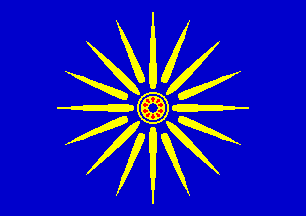
2) the flag with the Macedonian star must be replaced. That symbol is known only in ancient Greek contexts. Perhaps the symbol of Paionia could be the flower named for it: peony.
3) maps used in public places and schools must cease to show a unified “Macedonia” stretching southward to Mt. Olympus and including Thessaloniki.
This prohibition should include such irredentist maps such as that used in an 8th grade history book in 2005 (and perhaps still today), that shows parts of “Macedonia” occupied by Albania (yellow), Bulgaria (purple), and Greece (red).
The use of suggestive commercial devices such as bank notes with the White Tower of Thessaloniki, must be stopped.
The same should be enforced for materials such as coffee sold under the name of Pella – the capital of ancient Macedonia and birthplace of Alexander – with a sailing ship as its symbol. What is implied thereby for a country which has no seaport?
4) The modern statues of Alexander and Philip recently erected by the Skopjean government must be razed. They are an insult to history. Could Alexander have read the Slavic inscriptions on those statues?
Although there will certainly be those in Skopje who will resist such reforms, I believe that they are absolutely necessary if Greece and Paionia are to live in peace. I also believe that the natives of that land would feel a greater sense of security knowing that their identity was not stolen from another.
PS: There is another solution: Greece annexes Skopje.
Originally published on 2018-01-10
About the author: Stephen G. Miller, Professor Emeritus, University of California, Berkeley
Origins of images: Facebook, Twitter, Wikimedia, Wikipedia, Flickr, Google, Imageinjection, Public Domain & Pinterest.
Read our Disclaimer/Legal Statement!
Donate to Support Us
We would like to ask you to consider a small donation to help our team keep working. We accept no advertising and rely only on you, our readers, to keep us digging the truth on history, global politics and international relations.
Serbian emergency shelters for Bosnian refugees sold to the public as a concentration camp to win public support for international intervention.In August 1992, millions of people were shocked to see photographs of a supposed Bosnian Serb death camp. But the death camp story was a lie. The ITN crew had filmed from inside a fenced-in storage area. By shooting through the fence ITN created footage that gave the impression that the Bosnian men were imprisoned. With a little editing, this footage was turned into pictures that gave the impression of a death camp – media manipulation.The death camps were in ...
In 1946, ex-British war PM, Sir Winston Churchill delivered his famous Zurich speech calling for the establishment of the United States of Europe. However, his idea of a united (Western) Europe excluded his native country – the UK. At that time, he envisaged West Europe as composed of independent, free, and sovereign states that would rise from the ashes of WWII and reach for a destiny of unprecedented harmony and democracy. Neutral Switzerland, with its centuries-old harmonious co-existence of four languages and cultures (and international money laundering banks), was to be the blueprint for a multilingual and multicultural Europe that ...
In a shocking display of relative independence from the post-Operation Mockingbird control of the media by the Central Intelligence Agency, a recent article in The New York Times broke with current conventional pack journalism and covered the long history of CIA meddling in foreign elections. A February 17, 2018, article, titled, "Russia Isn’t the Only One Meddling in Elections. We Do It, Too," authored by Scott Shane – who covered the perestroika and glasnost for The Baltimore Sun in Moscow from 1988 to 1991 during the final few years of the Soviet Union – reported the US has interfered in foreign elections for decades. However, ...
Originally, there were four parties involved in the Afghan conflict which are mainly responsible for the debacle in the Af-Pak region. Firstly, the former Soviet Union which invaded Afghanistan in December 1979. Secondly, Pakistan’s security agencies which nurtured the Afghan so-called “mujahideen” (freedom fighters) on the behest of Washington.Thirdly, Saudi Arabia and the rest of oil-rich Gulf states which generously funded the jihadists to promote their Wahhabi-Salafi ideology. And last but not the least, the Western capitals which funded, provided weapons and internationally legitimized the erstwhile ‘freedom fighters’ to use them against a competing ideology, global communism, which posed a ...
On December 7, 1941. Japan’s Attack on Pearl HarborMyth: The US was forced to declare war on Japan after a totally unexpected Japanese attack on the American naval base in Hawaii on December 7, 1941. On account of Japan’s alliance with Nazi Germany, this aggression automatically brought the US into the war against Germany. Reality: The Roosevelt administration had been eager for some time to wage war against Japan and sought to unleash such a war by means of the institution of an oil embargo and other provocations. Having deciphered Japanese codes, Washington knew a Japanese fleet was on its ...
Thursday marked the 150th anniversary of the founding of America’s deadliest terrorist organization: the Klu Klux Klan.Since September 11, extremists associated with various far-right wing ideologies, including the KKK and Jewish extremists, have killed far more people in the United States than extremists motivated by radical Islam.One centuries’ old example of US government double standards when it comes to terrorism, is the infamous Klu Klux Klan. The Klan has terrorized and killed far more Americans than Islamic terrorists ever have; and despite being America’s oldest terrorist organization, the US government does not officially consider the KKK a terrorist organization, classifying ...
An inquiry by the EU has found “compelling indications” that ten Serb captives had their body organs harvested for illegal trafficking during the 1998-99 Kosovo war. However, it wasn’t widespread and there will be no trial, the lead investigator said.The chief prosecutor Clint Williamson, who led the investigation, said there was no evidence of widespread organ harvesting, but that the crime had occurred a number of times.“There are compelling indications that this practice did occur on a very limited scale and that a small number of individuals were killed for the purpose of extracting and trafficking their organs,” he told ...
During the last decade of 20th century, leading “analysts” of the New World Order were presenting the Kosovo’s issue as a democratic matter rather than a historical and geopolitical dispute. It was perceived as a political case in which one ethnic minority (Albanians) was oppressed by a “non-democratic regime” of Slobodan Milošević.The refusal of the Rambouillet Accords by the Federal Republic of Yugoslavia, served as a justification for the unilateral action against Yugoslavia in March, 1999. The Rambouillet Accords called for:1) NATO administration of Kosovo as an autonomous province within Yugoslavia;2) A force of 28,000 NATO troops to maintain order ...
The Balkan Peninsula, together with the region of South-East Europe, historically has been one of the most important focal points of Russian foreign policy, cultural influences and attempts to spread an ideology of Orthodox solidarity and Slavic reciprocity.[1] These ideas are common to almost all trends of Russian public life in the past and very much today too.After Russia lost the Great Crimean War of 1853–1856 she intensified its cultural influence in the region of South-East Europe for the purposes of beating Habsburg (Roman-Catholic) rivalry and to spread an idea of the Pan-Slavism in this part of Europe.[2] However, the ...
Or at the very least, an incipient monarchy: the only problem is that the monarch — while having plenty of clothes — has no head.The most famous twentieth century American journalist, Bob Woodward, who together with his buddy Carl Bernstein broke the Watergate story that forced President Richard Nixon to resign, has written a book that reveals White House palace intrigues worthy of any European king — although it is the French President, Emanuel Macron, who calls himself Jupiter.Under the ominous title Fear, Woodward quotes high-ranking members of the White House staff as well as the heads of crucial departments ...
The Western-backed myth of a Greater SerbiaMuch space, time, and effort have been devoted to the recent history of West Balkans, and in particular in the latest political upheavals, about the alleged project of Greater Serbia especially by Western authors either academic scholars or journalists.[1] The issue must be, however, considered together with its counterparts from Croatia (a Greater Croatia) and Albania (a Greater Albania).Two focal questions arose here: Were all these projects serious and what was the origin of this maximalist concept of forming national states in the otherwise ethnically mixed area? Whose exact interests were involved and to ...
Origins of images: Facebook, Twitter, Wikimedia, Wikipedia, Flickr, Google, Imageinjection & Pinterest.Read our Disclaimer/Legal Statement!Donate to Support UsWe would like to ask you to consider a small donation to help our team keep working. We accept no advertising and rely only on you, our readers, to keep us digging the truth on history, global politics and international relations.
Thankfully humanity is freed from the scourge of a third Hillary and Bill Clinton crime family co-presidency – she in the lead role with her finger on the nuclear trigger as US military commander-in-chief, perhaps eager to squeeze it.Newsweek magazine jumped the gun, printing a special edition, distributing it to outlets before November 8 – Hillary on the cover below the heading “MADAM PRESIDENT.”Shades of November 3, 1948, the Chicago Tribune headlining “DEWEY DEFEATS TRUMAN.” A beaming President HST held up a copy of the broadsheet, saying: “That ain’t the way I heard it!”Like polls predicted a Hillary victory this ...
During the Kosovo conflict in 1999, military intervention by the US and NATO was precipitated by the use of outright lies and deceptions. The conflict was “ostensibly about preventing “genocide” on the scale of the Holocaust. This was the Big Lie. This was the Noble Lie. In fact, the conflict was about secession and separatism and the creation of a US-sponsored Greater Albania. Why was the Noble Lie needed? A deception was needed because US policy was supporting an illegal land grab, a forceful take-over of territory from a sovereign nation, Yugoslavia.Why and how could such lies and deceptions occur ...
An eerily familiar sense of regional unease has crept over all the former republics of Yugoslavia.Slovenian Prime Minister Miro Cerar echoed the Balkan zeitgeist when he warned at a press conference this week that:“If the migrant crisis is not adequately controlled as agreed at the summit in Brussels there is a possibility of conflict situations between the states of the Western Balkans. It is possible that a small conflict would initiate a wider reaction because of the very difficult recent history (of the region), which is why it is very important that we solve this crisis together as no country can solve this problem by itself.”It seems like everybody knows that ...
Middle Eastern Studies are a multicomplex research discipline devoted to as better as knowledge and understanding of different cultures, nationalities, and complexities of the world’s region conventionally known as the Middle East but in its narrow meaning concerning space: from Egypt to Iran and from Syria to Yemen. In principle, the crucial mark of the region is the predominant Arab culture with some contrasts in the cultural habits between, for instance, Saudi Arabia and Egypt. Besides, the cultural features of several other ethnic and confessional groups of the Middle East give a more comprehensive picture of the region’s peoples and ...
In July 1974 the US-controlled Athens military junta organized a coup d’état in Cyprus and an assassination attempt against the President of Cyprus Archbishop Makarios. Everything was executed in exactly the same way as it had been a year before in Santiago Chile. (Cyprus is an island of great strategic importance, now a member of EU and Eurozone. 82% of his population are Greek by nationality and 18% Turkish Cypriots. The country obtained its independence from Britain in 1960, after one of the most successful national-liberation struggles after the 2nd World War).Unlike Salvador Allende, Makarios escaped death and with him ...
On Mar. 24, US president Barack Obama announced that all 9,800 US troops currently stationed in Afghanistan will remain until the end of 2015. This generated a fair amount of criticism: it was, after all, Obama’s promise that the last American troop would leave the country in 2014.How have Obama’s plans for pulling out of Afghanistan fared so far?Those expecting the US to leave Afghanistan, however, should take a minute to consider this: the US still hasn’t left Germany. In fact, there are quite a few places the US hasn’t left, and while certainly most of them don’t pose a threat to American soldiers, ...
By the time you read this piece, it will already be out of date. The reason’s simple enough. No matter what mayhem I describe, with so much all-American weaponry in this world of ours, there’s no way to keep up. Often, despite the headlines that go with mass killings here, there’s almost no way even to know.On this planet of ours, America is the emperor of weaponry, even if in ways we normally tend not to put together. There’s really no question about it. The all-American powers-that-be and the arms makers that go with them dream up, produce, and sell ...
Origins of images: Facebook, Twitter, Wikimedia, Wikipedia, Flickr, Google, Imageinjection, Public Domain & Pinterest.Read our Disclaimer/Legal Statement!Donate to Support UsWe would like to ask you to consider a small donation to help our team keep working. We accept no advertising and rely only on you, our readers, to keep us digging the truth on history, global politics, and international relations.
The magazine is covering the research gaps uncovered by global Western hoax mainstream media platforms and academic teaching & research institutions.
This is an alternative information & academic research digest platform with the purpose to offer an alternative “another side of the truth”.
The magazine is independent, private, and free of any influence by any institution, organization, government, or pressure group. URL: www.global-politics.eu