

Views: 1706

Eighteen years ago, my dying mother asked me to continue working on a book about her father, Jonas Noreika, a famous Lithuanian World War II hero who fought the Communists. Once an opera singer, my mother had passionately devoted herself to this mission and had even gotten a PhD in literature to improve her literary skills. As a journalist, I agreed. I had no idea I was embarking on a project that would lead to a personal crisis, Holocaust denial and an official cover-up by the Lithuanian government.
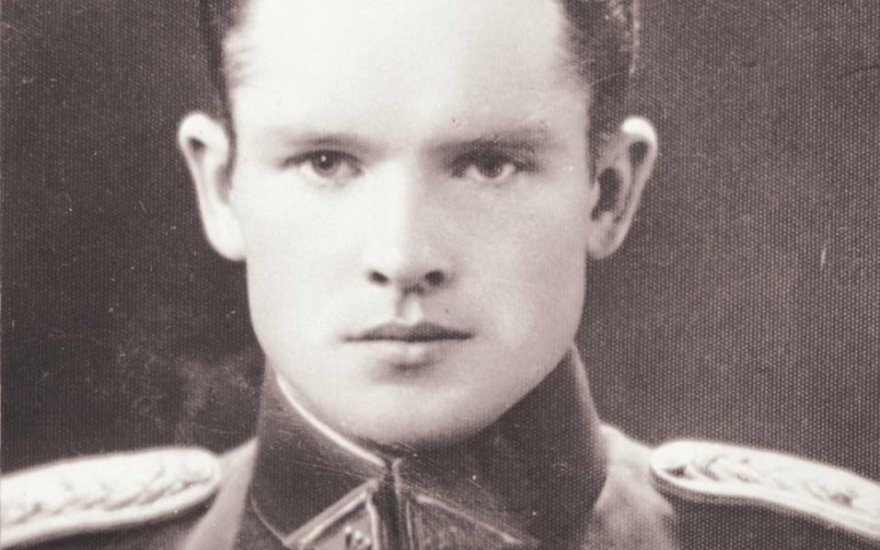
Growing up in Chicago’s Marquette Park neighborhood — the neighborhood that had the largest population of Lithuanians outside the homeland — I’d heard about how my grandfather died a martyr for the cause of Lithuania’s freedom at the hands of the KGB when he was just 37 years old. According to the family account, he led an uprising against the Communists and won our country back from them, only to have it snatched by the Germans. He became chairman of the northwestern part of the country during the German occupation. According to family lore, he had fought the Nazis and then been sent to a concentration camp in retaliation. He escaped that camp and returned to Vilnius to start a new rebellion against the Communists, had been caught, taken to the KGB prison and tortured. I’d heard how he was the lawyer who had led the defense for 11 rebels before the KGB tribunal, was found guilty and had been executed. His nom de guerre was General Storm. It all seemed so romantic to me.
That is the book I started to write. My mother had collected a trove of material that included 3,000 pages of KGB transcripts; 77 letters to my grandmother; a fairytale to my mother written from the Stutthof concentration camp; letters from family members about his childhood; and hundreds of newspaper and magazine articles. A few months into the project, I visited my dying grandmother, who lived a few blocks away. She asked me not to write the book about her husband. “Just let history lay,” she whispered. I was stunned. “But I promised Mom,” I said. She rolled over to face the wall. I didn’t take her request seriously; I thought she was simply giving me a pass because she knew how taxing the project was for my mother.
In October 2000, after my grandmother died, my brother, Ray and I took the cremated remains of our mother and grandmother back to Lithuania to be buried, as they had wished. We were surprised by the outpouring of affection shown at their funeral in the Vilnius Cathedral, and especially astonished when President Landsbergis appeared with his wife to pay their respects to the widow, daughter and grandchildren of General Storm. Many at the funeral had asked, “What about the book on your grandfather?” I answered, “I promised I would finish it.” They patted my back, squeezed my arms and kissed my cheeks. “You’re such a good daughter. Our country needs heroes.”
Before the procession to the cemetery, Viktoras Ašmenskas, a colleague of my grandfather who was part of the rebellion against the Communists and had been in the KGB prison with him, led us two blocks from the Cathedral to the Library of the Academy of Science. It was where our grandfather was a lawyer by day and an underground resistance leader by night. When we arrived, he turned to Ray and me and said, “You both are like my children. I loved your grandfather.” We placed a wreath he brought for us by a bronze likeness of our grandfather and read the inscription on the plaque:
In This Building
From 1945-1946
Worked a Noteworthy Resistor
Lithuania’s National Council
And Lithuania’s Armed
Forces Organizer
And Leader
Jonas Noreika
Generolas Vėtra
Shot February 26, 1947
From Vilnius, Ray and I traveled as honorary guests to Šukoniai, the northern town where our grandfather was born, to see the grammar school named after him. We were shown the modest building of white bricks and oak trim. The school director, a roly-poly man with disheveled white hair, enthusiastically grabbed our hands, telling us how pleased he was that we had come to host the ceremony in homage to our grandfather. He had heard I was writing a book. I asked him, “How did you decide to name the school after our grandfather?” Stroking his chin, he answered, “It was during a meeting of the County Board. We wanted to pick a new name instead of the Russian one we had. Your grandfather’s surfaced immediately.” Then he pulled Ray and me aside so the others couldn’t hear. “I got a lot of grief at first when we picked his name. He was accused of being a Jew-killer.”
Ray and I were aghast. Accused of being a Jew-killer? I looked around the room, at the teachers and the principal. Who were these people? Who was my mother? My grandmother? Who was I? My mind whirled: There must be some mistake. The director stroked my arm in reassurance. “I’m getting more support than ever over choosing your grandfather’s name. All of that is in the past.”
Feeling lost, I couldn’t wait for the ceremony to end so that I could ask more questions. My brother and I got into the back seat of a blue Falcon with Ašmenskas, my grandfather’s colleague, then an 88-year old with snowy white hair. He handed me a copy of the book he had written about our grandfather called “Generolas Vėtra” (General Storm), the cover of which bore a photo of my grandmother pulling my grandfather closer to her by his neck-tie. It had been published by the Lithuanian Genocide Museum, dedicated to Lithuanians who suffered during World War II, many whom died in Siberia. The museum was created in 1992, shortly after Lithuania’s independence, in response to the Holocaust, to show the world that Lithuanian nationalists had suffered under Communism just as much as Jews had under Nazism. The museum was criticized for appropriating the word genocide wrongly, and earlier this year it changed its name to the Museum of Occupations and Freedom Fights. Formerly, the museum was the KGB prison where our grandfather died in 1947, and it bears his name, along with many others’, on its gray marble walls.
“Have you ever heard any of those rumors about him killing Jews?” I asked. Ašmenskas fixed me with his blue eyes. “The Nazis appointed him to the position of county chair in 1941. He was conflicted about taking it, but he thought he could help our country more by accepting it. He was good at playing both sides of the fence, so he took it.” I knew my grandfather was the county chair, considered the height of his political career, but I had never considered that he might have been a Nazi collaborator.
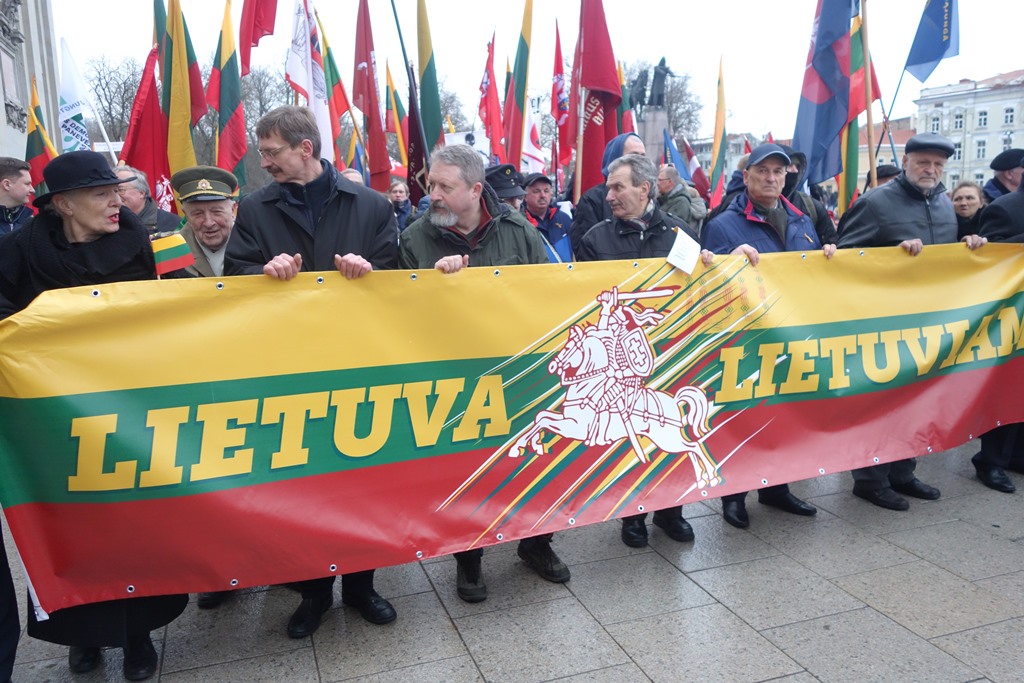
Back in Chicago, I continued to sift through my mother’s material on my grandfather. I was unwilling to admit that this accusation could be true, but then I noticed a yellowing 32-page booklet titled, “Hold your Head High, Lithuanian!!!” In it, I came across a rant against Jews: “In the land of Klaipėda, the Lithuanians are being overthrown by the Germans, and in Greater Lithuania, the Jews are buying up all the farms on auction. . . . Once and for all: We won’t buy any products from Jews!” It was written by my grandfather. My hands shook: I did not want a grandfather who was the author of this brochure.
I strongly considered dropping the project, even if it meant breaking the promise to my mother. Years passed until I felt psychologically ready to continue the investigation, bracing myself for the horrifying possibility that my grandfather was indeed involved in killing Jews.
In 2013 I spent seven weeks in Lithuania. I hired a Holocaust guide, Simon Dovidavičius, director of Sugihara House, a museum honoring Chiune Sugihara, who helped 6,000 Jews escape to Japan during WWII. We became an unlikely pair, investigating the life of my grandfather. I showed him all the monuments on my grandfather; he showed me pits of where Jews were buried because of my grandfather. I gave him the book published by the Genocide Museum stating my grandfather was a hero; he gave me Holocaust books stating my grandfather was a villain.
Dovidavičius was the first to suggest that my grandfather conducted the initial akcija (action) during World War II before the Germans arrived. It coincided with Operation Barbarossa on June 22, 1941, when Hitler invaded Russia, the same day Lithuania began its uprising with the Germans against the Soviets, marking the start of a Holocaust there, where 95 percent of its 200,000 Jews were murdered, the highest percentage of any country in Europe. (About 3,000 Jews remain in Lithuania today.)
Within three weeks, 2,000 Jews had been killed in Plungė, half the town’s population, and where my grandfather led the uprising. This preceded the January 1942 Wannsee Conference, when Nazi Germany decided to make mass-murder its state policy. Put in more chilling terms, Dovidavičius claimed that my grandfather, as captain, taught his Lithuanian soldiers how to exterminate Jews efficiently: how to sequester them, march them into the woods, force them to dig their own graves and shove them into pits after shooting them. My grandfather was a master educator.
I resumed the investigation. I sought out Damijonas Riaukia, a colleague of my grandfather during the five-day uprising. He was a 17-year-old in 1941. “Didn’t my grandfather have anything to do with the killing of the Jews?” “He wasn’t here,” he answered. “He had nothing to do with it. It was the Germans.” By this point I suspected a cover-up, but I needed proof.
Near the end of my trip, my aunt, Aldona Budrytė Bužienė, whose mother was my grandmother’s sister, described how, as a 10-year-old, she babysat my mother in 1941 in Plungė. She told me the story while we were in her apartment in Klaipėda, enjoying a lunch of chicken and rice that she had prepared. Shortly after the uprising, my grandfather moved his family into a house in the center of town once it became “suddenly free” and stayed until they moved to Šiauliai, where my grandfather became chairman of the county. “What do you mean by suddenly free?” I asked. She answered, “The Jews were gone, so the house was free. Many Lithuanians were moving into the new free houses.”
Taking a deep breath, I asked, “Do you mean the houses became free because the Jews were killed?” Looking pained, she nodded. “What about the killing of the Jews then?” I asked. “Who ordered them to be killed?”
“I don’t believe it was your grandfather’s initiative. He was too good for that.”
After a pause, I asked, “But if he was living there, as you said, and he was the head of the uprising, as Damijonas and many others said, wouldn’t he have given the order?”
As Aunt Aldona pieced together the events for the first time, putting them side by side the way I had during my trip, she shook her head and cried. “I just can’t believe it. Maybe he had no choice. He had to maintain order. I don’t know what to think anymore. I suppose it’s possible.” She seemed confused as she tried to come to terms with the possibility about her Uncle Jonas’s involvement in killing the Jews.
It turned out that the house in question faced the police headquarters, an imposing rounded structure with white and blue trim on the corner of the town’s most prominent intersection. The headquarters had been the Nazi command center. The house also stood next to the synagogue, where Jews were sequestered before they were marched into the woods and shot. Is this why my grandmother asked me not to write the book?
By the end of the trip I came to believe that my grandfather must have sanctioned the murders of 2,000 Jews in Plungė, 5,500 Jews in Šiauliai and 7,000 in Telšiai.
Back in Chicago, feeling a mix of rage and anxiety, I continued to work on the book during summers. Two months ago, my project led me to Grant Gochin, a Jewish man of Lithuanian descent now living in California, who has spent decades investigating his own family history. He learned about his cousin Sonia Beder, a Holocaust survivor who testified that armed Lithuanians prevented 6,000 Jews in her village from escaping to the Soviet Union three days before the Germans arrived. Sonia saw eighth-grade boys from the local school being recruited to help shoot these Jewish victims. Armed Lithuanian men plundered the Jews’ homes; they beat the Jews murderously; they humiliated, raped and killed girls. They set a rabbi’s beard on fire, branded his body with hot irons and shot him in front of his community. Sonia managed to escape from certain death. She survived a ghetto that had been created under orders from my grandfather, and later, she survived Dachau.
Gochin has identified more than 100 relatives killed in the Lithuanian Holocaust. Our independent research has shown that my grandfather murdered Gochin’s relatives. We decided to join forces.

While I had been focused exclusively on my grandfather over the past two decades, Gochin had launched a movement in Lithuania to expose multiple men lauded as heroes by the Genocide Museum who played a role in the Holocaust. Three years ago, he launched a campaign to remove my grandfather’s plaque from the Vilnius Library of the Academy of Science building. Despite wide media coverage and a petition signed by 19 prominent Lithuanian politicians, writers, and historians, the government refused to remove the plaque. This month, Gochin presented a 69-page exposé on my grandfather, charging the government with a cover-up of the Holocaust. I’m trying to play my small part in Gochin’s movement by offering an affidavit of support describing my research on my grandfather.
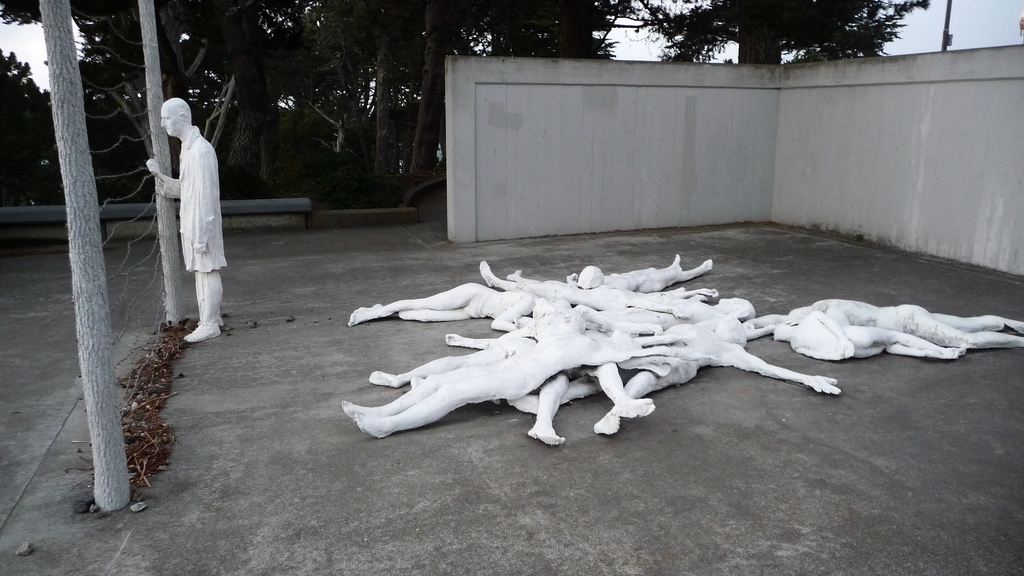
In the face of tremendous resistance by the Lithuanian government, the effort to convince it to acknowledge its role in the Holocaust will be long and hard. The souls of 200,000 Jews buried in Lithuanian soil demand such a reckoning.
Originally published on 2018-07-14
Author: Silvia Foti
Source: Salon.com
Origins of images: Facebook, Twitter, Wikimedia, Wikipedia, Flickr, Google, Imageinjection & Pinterest.
Read our Disclaimer/Legal Statement!
Donate to Support Us
We would like to ask you to consider a small donation to help our team keep working. We accept no advertising and rely only on you, our readers, to keep us digging the truth on history, global politics and international relations.