
In the lead-up to the NATO action and during it, lurid claims were made about the numbers of people who had been killed or ‘disappeared’ by the Yugoslav forces. “Hysterical NATO and KLA estimates of the missing and presumably slaughtered Kosovan Albanians at times ran upwards of one hundred thousand, reaching 500, 000 in one State Department release [...]
There have been at least two countries in Europe in recent history that undertook ‘anti-terrorist’ military operations against ‘separatists’, but got two very different reactions from the Western elite.
The government of European country A launches what it calls an ‘anti-terrorist’ military operation against ‘separatists’ in one part of the country. We see pictures on Western television of people’s homes being shelled and lots of people fleeing. The US and UK and other NATO powers fiercely condemn the actions of the government of country A and accuse it of carrying out ‘genocide’ and ’ethnic cleansing’ and say that there is an urgent ‘humanitarian crisis.’ Western politicians and establishment journalists tell us that ‘something must be done.’ And something is done: NATO launches a ‘humanitarian’ military intervention to stop the government of country A. Country A is bombed for 78 days and nights. The country’s leader (who is labeled ‘The New Hitler’) is indicted for war crimes – and is later arrested and sent in an RAF plane to stand trial for war crimes at The Hague, where he dies, un-convicted, in his prison cell.
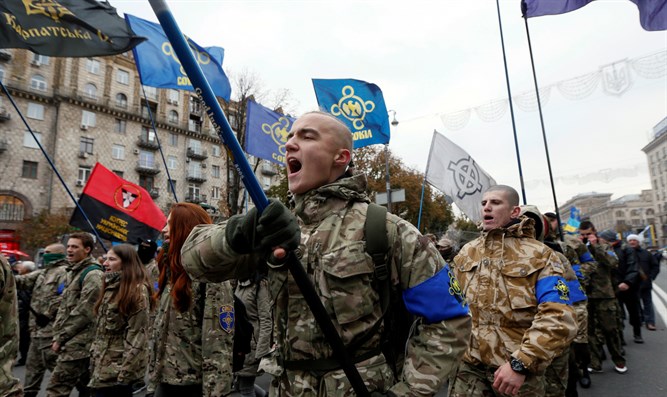
The government of European country B launches what it calls an ‘anti-terrorist’ military operation against ‘separatists’ in one part of the country. Western television doesn’t show pictures or at least not many) of people’s homes being shelled and people fleeing, although other television stations do. But here the US, UK and other NATO powers do not condemn the government, or accuse it of committing ‘genocide’ or ‘ethnic cleansing.’ Western politicians and establishment journalists do not tell us that ‘something must be done’ to stop the government of country B killing people. On the contrary, the same powers who supported action against country A, support the military offensive of the government in country B. The leader of country B is not indicted for war crimes, nor is he labeled ‘The New Hitler’ despite the support the government has got from far-right, extreme nationalist groups, but in fact, receives generous amounts of aid.
Anyone defending the policies of the government in country A, or in any way challenging the dominant narrative in the West is labeled a “genocide denier” or an “apologist for mass murder.” But no such opprobrium awaits those defending the military offensive of the government in country B. It’s those who oppose its policies who are smeared.
What makes the double standards even worse, is that by any objective assessment, the behavior of the government in country B, has been far worse than that of country A and that more human suffering has been caused by their aggressive actions.
In case you haven’t guessed it yet – country A is Yugoslavia, country B is Ukraine.
Yugoslavia, a different case
In 1998/9 Yugoslavian authorities were faced with a campaign of violence against Yugoslav state officials by the pro-separatist and Western-backed Kosovan Liberation Army (KLA). The Yugoslav government responded by trying to defeat the KLA militarily, but their claims to be fighting against ’terrorism’ were haughtily dismissed by Western leaders. As the British Defence Secretary George Robertson and Foreign Secretary Robin Cook acknowledged in the period from 1998 to January 1999, the KLA had been responsible for more deaths in Kosovo than the Yugoslav authorities had been.
In the lead-up to the NATO action and during it, lurid claims were made about the numbers of people who had been killed or ‘disappeared’ by the Yugoslav forces. “Hysterical NATO and KLA estimates of the missing and presumably slaughtered Kosovan Albanians at times ran upwards of one hundred thousand, reaching 500, 000 in one State Department release. German officials leaked ‘intelligence’ about an alleged Serb plan called Operation Horseshoe to depopulate the province of its ethnic Albanians, and to resettle it with Serbs, which turned out to be an intelligence fabrication,” Edward Herman and David Peterson noted in their book The Politics of Genocide.
“We must act to save thousands of innocent men, women and children from humanitarian catastrophe – from death, barbarism and ethnic cleansing from a brutal dictatorship,” a solemn-faced Prime Minister Tony Blair told the British Parliament – just four years before an equally sombre Tony Blair told the British Parliament that we must act over the ‘threat’ posed by Saddam Hussein’s WMDs.
Taking their cue from Tony Blair and Co., the media played their part in hyping up what was going on in Kosovo. Herman and Peterson found that newspapers used the word ‘genocide’ to describe Yugoslav actions in Kosovo 323 times compared to just 13 times for the invasion/occupation of Iraq despite the death toll in the latter surpassing that of Kosovo by 250 times.
In the same way we were expected to forget about the claims from Western politicians and their media marionettes about Iraq possessing WMDs in the lead-up to the 2003 invasion, we are now expected to forget about the outlandish claims made about Kosovo in 1999.
But as the award winning investigative journalist and broadcaster John Pilger wrote in his article Reminders of Kosovo in 2004, “Lies as great as those told by Bush and Blair were deployed by Clinton and Blair in grooming of public opinion for an illegal, unprovoked attack on a European country.”
The overall death toll of the Kosovo conflict is thought to be between 3,000 and 4,000, but that figure includes Yugoslav army casualties, and Serbs and Roma and Kosovan Albanians killed by the KLA. In 2013, the International Committee of the Red Cross listed the names of 1,754 people from all communities in Kosovo who were reported missing by their families.
The number of people killed by Yugoslav military at the time NATO launched its ‘humanitarian’ bombing campaign, which itself killed between 400-600 people, is thought to be around 500, a tragic death toll but hardly “genocide.”
“Like Iraq’s fabled weapons of mass destruction, the figures used by the US and British governments and echoed by journalists were inventions- along with Serbian ‘rape camps’ and Clinton and Blair’s claims that NATO never deliberately bombed civilians,” says Pilger.
No matter what happens in Ukraine…
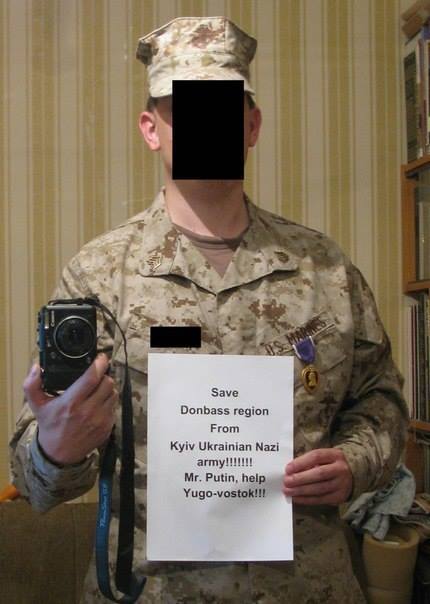
In Ukraine by contrast, the number of people killed by government forces and those supporting them has been deliberately played down, despite UN figures highlighting the terrible human cost of the Ukrainian government’s ‘anti-terrorist’ operation.
Last week, the UN’s Human Rights Office said that the death toll in the conflict in eastern Ukraine had doubled in the previous fortnight. Saying that they were “very conservative estimates,” the UN stated that 2,086 people (from all sides) had been killed and 5,000 injured. Regarding refugees, the UN says that around 1,000 people have been leaving the combat zone every day and that over 100,000 people have fled the region. Yet despite these very high figures, there have been no calls from leading Western politicians for ‘urgent action’ to stop the Ukrainian government’s military offensive. Articles from faux-left ‘humanitarian interventionists’ saying that ‘something must be done’ to end what is a clearly a genuine humanitarian crisis, have been noticeable by their absence.
There is, it seems, no “responsibility to protect” civilians being killed by government forces in the east of Ukraine, as there was in Kosovo, even though the situation in Ukraine, from a humanitarian angle, is worse than that in Kosovo in March 1999.
To add insult to injury, efforts have been made to prevent a Russian humanitarian aid convoy from entering Ukraine.
The convoy we are told is ‘controversial’ and could be part of a sinister plot by Russia to invade. This from the same people who supported a NATO bombing campaign on a sovereign state for “humanitarian” reasons fifteen years ago!
For these Western ‘humanitarians’ who cheer on the actions of the Ukrainian government, the citizens of eastern Ukraine are “non-people”: not only are they unworthy of our support or compassion, or indeed aid convoys, they are also blamed for their own predicament.
There are, of course, other conflicts which also highlight Western double standards towards ‘humanitarian intervention’. Israeli forces have killed over 2,000 Palestinians in their latest ruthless ‘anti-terrorist’ operation in Gaza, which is far more people than Yugoslav forces had killed in Kosovo by the time of the 1999 NATO ‘intervention’. But there are no calls at this time for a NATO bombing campaign against Israel.
In fact, neocons and faux-left Zionists who have defended and supported Israel’s “anti-terrorist” Operation Protective Edge, and Operation Cast Lead before it, were among the most enthusiastic supporters of the NATO bombing of Yugoslavia. Israel it seems is allowed to kill large numbers of people, including women and children, in its “anti-terrorist” campaigns, but Yugoslavia had no such “right” to fight an “anti-terrorist” campaign on its own soil.
In 2011, NATO went to war against Libya to prevent a “hypothetical” massacre in Benghazi, and to stop Gaddafi ‘killing his own people’; in 2014 Ukrainian government forces are killing their own people in large numbers, and there have been actual massacres like the appalling Odessa arson attack carried out by pro-government ‘radicals’, but the West hasn’t launched bombing raids on Kiev in response.
The very different approaches from the Western elite to ‘anti-terrorist’ operations in Kosovo and Ukraine (and indeed elsewhere) shows us that what matters most is not the numbers killed, or the amount of human suffering involved, but whether or not the government in question helps or hinders Western economic and military hegemonic aspirations.
In the eyes of the rapacious Western elites, the great ‘crime’ of the Yugoslav government in 1999 was that it was still operating, ten years after the fall of the Berlin Wall, an unreconstructed socialist economy, with very high levels of social ownership – as I highlighted here.
Yugoslavia under Milosevic was a country which maintained its financial and military independence. It had no wishes to join the EU or NATO, or surrender its sovereignty to anyone. For that refusal to play by the rules of the globalists and to show deference to the powerful Western financial elites, the country (and its leader) had to be destroyed. In the words of George Kenney, former Yugoslavia desk officer at the US State Department: “In post-cold war Europe no place remained for a large, independent-minded socialist state that resisted globalization.”
By contrast, the government of Ukraine, has been put in power by the West precisely in order to further its economic and military hegemonic aspirations. Poroshenko, unlike the much- demonized Milosevic, is an oligarch acting in the interests of Wall Street, the big banks and the Western military-industrial complex. He’s there to tie up Ukraine to IMF austerity programs, to hand over his country to Western capital and to lock Ukraine into ‘Euro-Atlantic’ structures- in other words to transform it into an EU/IMF/NATO colony- right on Russia’s doorstep.
This explains why an ‘anti-terrorist’ campaign waged by the Yugoslav government against ‘separatists’ in 1999 is ‘rewarded’ with fierce condemnation, a 78-day bombing campaign, and the indictment of its leader for war crimes, while a government waging an ‘anti-terrorist’ campaign against ‘separatists’ in Ukraine in 2014, is given carte blanche to carry on killing. In the end, it’s not about how many innocent people you kill, or how reprehensible your actions are, but about whose interests you serve.
Author: Neil Clark
The article is originally published on RT.com (http://on.rt.com/2azwwq)
We would like to ask you to consider a small donation to help our team keep working. We accept no advertising and rely only on you, our readers, to keep us digging the truth on history, global politics and international relations.
In the thousand year long-history of Serbs, Kosovo and Metohia were for many centuries the state center and chief religious stronghold, the heartland of their culture and springwell of its historical traditions. For a people who lived longer under foreign rule than in their own state, Kosovo and Metohia are the foundations on which national and state identity were preserved in times of tribulation and founded in times of freedom.The Serbian national ideology which emerged out of Kosovo’s tribulations and Kosovo’s suffering (wherein the 1389 St. Vitus Day Battle in Kosovo Polje occupies the central place), are the pillars of ...
The current political process of acceptance of the quasi-independent state of Kosovo to the full UN’s UNESCO’s membership opened once again a question of NATO’s military intervention against the Federal Republic of Yugoslavia (the FRY) in March−June 1999 as a foundation for Kosovo’s secession from Serbia and its unilateral proclamation of a quasi-independence in February 2008. Kosovo became the first and only European state up today that is ruled by the terrorist warlords as a party’s possession – the (Albanian) Kosovo Liberation Army (the KLA). The aim of this article is to investigate the nature of NATO’s war on Yugoslavia ...
The current Ukrainian crisis and, in fact, a civil war which started at the very end of 2013 are grounded in for decades lasting internal interregional antagonisms between the western and the eastern regions of Ukraine. The crisis is fully fueled by the Western governments which armed far-right “European” Kiev regime giving to it a comprehensive political, financial and diplomatic support for the policy of brutal Ukrainization and even Nazification of the whole country but primarily at the expense of the Russian-speaking population at Ukraine’s East. A similar example we experienced in “European” Croatia in the 1990s when the same ...
While all eyes have been on the U.S. presidential campaign, such foreign-policy hot spots as Syria, Iran and Pakistan, and the increasingly frosty relations between the United States and China, a simmering problem in the Balkans threatens to come to a boil. The most serious clashes to date involving angry Serb inhabitants of the northern portion of Kosovo and international Kosovo Force (KFOR) peacekeeping personnel erupted on November 28. Thirty German and Austrian soldiers were injured, some by small-arms fire and Molotov cocktails, when KFOR troops tried to remove roadblocks that Serb residents had erected. Those barricades have been the most ...
In 1999, when he was the President of Finland, Marti Ahtisaari’s government wanted to honor and to commemorate the 3,000 Finnish Nazi Waffen SS volunteers that served in Heinrich Himmler’s SS. Why would any government, indeed, why would anyone, want to honor and commemorate SS troops? Why would anyone want to honor and commemorate Nazis and Nazism? This is the question that has remained unanswered in the US and Western media about Marti Ahtisaari. As a sock puppet for the US, NATO, and EU, Ahtisaari’s role in honoring and commemorating the Nazi Waffen SS has been suppressed. As a Chairman ...
Tito’s policy in the 1970s of the so-called “encourage and suppress” for the sake to struggle against politically undesirable and threatening ethnic nationalisms especially the Croat and the Serb ones appeared to be incoherent one. In another words, while some ethnic nationalisms and their ideologies were considered to be dangerous to the system and, therefore, were suppressed and their advocates were jailed or banned from employment[i] (the case, for instance, of the Serbian dissident professors from Belgrade University), other nationalisms, supposed to be non-dangerous for the regime were encouraged by the local Communist elites (for instance, the Albanian nationalism in ...
In this exclusive interview, Prof Peter Kuznick speaks of: the atomic bombings of Hiroshima and Nagazaki; US crimes and lies behind the Vietnam war, and what was really behind that inhumane invasion; why the US engaged a Cold War with the Soviet Union, and how that war and the mainstream media influences the world today; the interests behind the assassinations of President Kennedy; US imperialism towards Latin America, during the Cold War and today, under the false premise of War on Terror and War on Drugs.Edu Montesanti: Professor Peter Kuznick, thank you so very much for granting me this interview. In ...
The Serbs stepped again onto the historical scene in the years of the European wars that swept the continent from the forests of Ireland to the walls of Constantinople in the late 17th century. The Turks finally withdrew from Hungary and Transylvania when their Ottoman hordes were routed outside Vienna in 1683. The disintegration of Ottoman rule in the southwest limbered up the Serbs, arousing in them hope that the moment was ripe for joint effort to break Turkish dominion in the Balkans. The neighboring Christian powers (Austria and Venice) were the only possible allies. The arrival of the Austrian ...
RT: Kosovo wants to establish an army and has received several Humvee armoured vehicles from the USA. Although there was official NATO restraint, how much is the establishment of a Kosovo Army a fixed development?Marcus Papadopoulos: Kosovo is, effectively, a NATO protectorate today – and has been ever since Belgrade lost control of this Serbian province in 1999. It follows, therefore, that the illegal entity which is the Republic of Kosovo will begin the process of creating its own armed forces so that, in time, Kosovo will gain entry into NATO.RT: The EU has rejected the introduction of Kosovo sanctions ...
In late November 2013, the 'Euromaidan' in Kiev began as a popular protest against a generalized state of corruption and cronyism in Ukraine. The spark that ostensibly ignited the protests was the inability of then President Yanukovych to sign an EU Association Agreement that would cut Ukraine's economic and military ties to Russia in favor of a closer relationship with the EU and NATO.The EU had made the release of former Ukrainian prime minister and "gas princess" Tymoshenko a precondition for signing the agreement. But the fact that Tymoshenko was/is a convicted embezzler of state funds, combined with the rather ...
The international community is accustomed to the so-called “checkbook diplomacy” that has been used by China and Taiwan to pilfer each other’s diplomatic allies by exchanging diplomatic recognition for generous financial assistance packages. However, this same battle for diplomatic recognition and de-recognition is being played out between Serbia and its breakaway province of Kosovo. The United States and much of NATO has not only granted Kosovo diplomatic recognition over the objection of Serbia but has also pressured other countries to recognize Kosovo’s independence. This process has hit a major stumbling block amid charges from various parties that fake diplomatic letters ...
The former Yugoslavia was engulfed by many conflicts and ethnic and religious differences tore away at the very fabric of this nation. Like all wars, atrocities took place on all sides but the mass media in general focused on Serbian atrocities, while neglecting brutal crimes committed against the Serbian community. This certainly applies to the glossing over of war crimes done by the Kosovo Liberation Army (KLA).However, more and more evidence is coming to light about brutal KLA death camps and killing people for organs. Therefore, will former KLA members be charged with war crimes and will the “real truth” ...
The current Ukrainian crisis and in fact civil war which stared at the very end of 2013 are grounded in for decades lasting internal interethnic antagonisms primarily on the Ukrainian-Russian relations including above all the “Crimean Question” as an apple of discord from 1954 between Ukraine and Russia.[1] The crisis came from Lithuania’s capital Vilnius were in November 2013 an Association Agreement between the EU and Ukraine had to be signed. Lithuania at that time (July 1st−December 31st, 2013) presided the European (Union) Council and formally had full political responsibility for the breaking out of the crisis as being the ...
Stepan Bandera is considered as a national hero in Ukraine, with many Ukrainians praising him and his deeds as a fighter for Ukraine's independence and freedom before, during and after WW2. Yet his real history shows there is nothing praiseworthy about the man, or what he strove for. As a young man who was a fervent Ukrainian nationalist he joined the Organization of Ukrainian Nationalists OUN in 1929. The OUN was a ultra nationalist fascist organization that accepted violence as a political tool against foreign and domestic enemies of their cause. Bandera quickly rose in the OUN ranks and ...
I follow the evolution of the war in the Ukraine. The New York Times keeps updating the war by the hour. And while I decry the violence of the war, I cannot overlook the hypocrisy of the West, that is, the American-led NATO military alliance encircling Russia.The West blessed the Turkish invasion of CyprusMy mind rushes to 1974 when NATO, primarily America and England, authorized Turkey, a NATO “ally,” to invade Cyprus, a Greek island that had the misfortune of having a Moslem Turkish minority and British military bases.In order to make the Turkish invasion easy, the Americans ordered Greece ...
Many of us go through life searching for our purpose, for something that we are passionate about. After years of searching finally I stumbled upon mine a few years ago. Having the world hear Syrians telling their side of the story while living through this imposed war is what ignited that fire in me. As a Syrian American that was born in Syria and lived in both countries my entire life, I feel a strong link to my heritage, my birth country, my culture, my language, my customs, my nationality, and my history.We have been bombarded with lies and propaganda ...
Origins of images: Facebook, Twitter, Wikimedia, Wikipedia, Flickr, Google, Imageinjection, Public Domain & Pinterest.Read our Disclaimer/Legal Statement!Donate to Support UsWe would like to ask you to consider a small donation to help our team keep working. We accept no advertising and rely only on you, our readers, to keep us digging the truth on history, global politics and international relations.[wpedon id="4696" align="left"]SaveSave
U.S. air strikes continue against the terrorists of the so-called “Islamic State” — formerly the “Islamic State of Iraq and Syria” or ISIS — in the borderlands of Iraqi Kurdistan. American military action has been impelled by the genocidal ISIS threat to Christians and various small Kurdish and other religious minorities, including Yazidis, whose faith is linked to Zoroastrianism, and the ancient monotheistic community of Mandaeans. Meanwhile, questions about the extremist movement and its foreign recruits have spread throughout the Muslim lands and the Muslim minority communities in the West, from Belgium to Australia.On Monday, August 11, authorities in the ...
Every Friday, just yards from a statue of Bill Clinton with arm aloft in a cheery wave, hundreds of young bearded men make a show of kneeling to pray on the sidewalk outside an improvised mosque in a former furniture store.The mosque is one of scores built here with Saudi government money and blamed for spreading Wahhabism — the conservative ideology dominant in Saudi Arabia — in the 17 years since an American-led intervention wrested tiny Kosovo from Serbian oppression.Since then — much of that time under the watch of American officials — Saudi money and influence have transformed this ...
For the approximately 200 Canadian military trainers currently deployed to Ukraine, it is likely that on the first of January they would have witnessed a torch lit procession. Throughout Kiev and numerous other towns in Western Ukraine, thousands of civilians took to the streets – not to usher in the New Year – but to celebrate the 110th anniversary of the birth of a man named Stepan Bandera.This was not the first time Ukrainian nationalists marched with torches to celebrate Bandera’s birthday, but it was the first time such a spectacle was an officially sanctioned affair.On December 28, 2018, Ukrainian ...