

Views: 3356
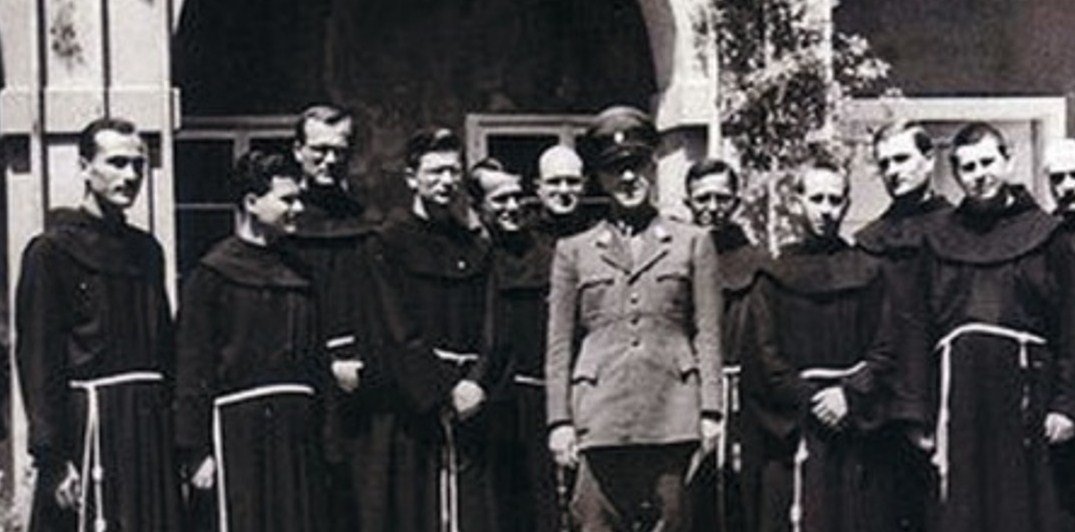 Ante Pavelic – a leader of the Independent State of Croatia with the Roman Catholic clergy
Scattered over almost two centuries across the globe – in Germany, the US, Canada, Argentina and Australia – most members of the Croatian diaspora are still closely linked to their homeland.
The Croatian state responds in kind; it pledges to take “special care” of Croats living abroad, a pledge outlined in the country’s 1990 constitution. Subsequently, Croatia has set up the Central State Office for Croats Abroad, as well as a government body, the Council for Croats Abroad.
More controversially, some in the diaspora maintain close ties with the extreme right in Croatia, pushing a very sympathetic view of the Fascist Ustasa movement that ran the so-called Independent State of Croatia, NDH, under German-Italian patronage during World War II.
In late December, the appointment of Ante Juric, a prominent representative of the Croat community in Australia, to the government’s Council, attracted media attention.
Controversy arose after Juric told a Croat-language TV show on Australia’s SBS radio that the NDH was not a reviled Nazi satellite state but “a Croatian state, and I’m glad it was – while [its leader, Ante] Pavelic was for me one of the greatest Croats in history”.
Germany is home to the biggest Croat community in Europe, numbering some 440,000 people – equal to just over 10 per cent of Croatia’s total population.
Searching for better life, many Croats left what was then Yugoslavia for Germany back in the 1960s, and this trend has continued, increasing after Croatia joined the EU in 2013.
Danijel Majic, a German-Croat journalist who writes about right-wing extremism in Germany for the daily Frankfurter Rundschau, says the connections between parts of Croatian diaspora in Germany and the far right in Croatia are well established.
Croatia’s conservative Christian values NGO, “In the Name of the Family”, has a de facto branch in Germany. This was the NGO that pushed successfully for a referendum in Croatia in 2013 on marriage, defining it as an exclusively heterosexual union and effectively blocking the path to legalised gay marriage.
The NGO also helped file a successful plea for the legal rehabilitation of Filip Lukas, an intellectual close to the Ustasa regime. In July, the Zagreb County Court quashed the verdict passed decades ago by Yugoslav courts, rehabilitating him in full.
Majic says the Catholic Church provides important help for rightist movements among the émigrés.
“The only serious infrastructure among the Croat émigrés in Germany are the missions of the Catholic Church there … Since they the only ones that can offer venues for different political rallies or debates, almost exclusively for rightist politicians and NGOs,” he says.
While Majic says the German Catholic Church often “is not informed” about the activities organised within Croat Catholic missions, they are part-financed by the German Catholic Church, which is also financed partially from the German state budget.
Among those visiting these missions is Croatia’s far-right TV star Velimir Bujanec, host of the controversial TV show, Bujica, which is shown on the four biggest local TV stations in Croatia and aired abroad.
He has become increasingly influential thanks to the high-level guests appearing on his show, and his acquaintances, who include Croatia’s President, Kolinda Grabar Kitarovic.
Another controversial figure, Admiral Davor Domazet Loso, recently visited the German cities of Munich, Stuttgart and Offenbach on a mission organised by a Croatian priest.
In September, as tensions peaked between Croatia and Slovenia over the disputed waters in the Piran Gulf, Domazet Loso released an inflammatory statement declaring that the Croatian military “could be in Ljubljana in two days”.
Majic says events in the diaspora are organised also with the help of right-wing news sites, like Dnevno.hr and its weekly magazine 7 dnevno.
“It is a part of an obvious system, a political concept under which the Catholic Church, in a way, fosters far-right positions,” Majic adds.
 Croat-run death camp of Jasenovac, Croatia (1941-1945): Around 700.000 killed, among them 500.000 Serbs
Goal is to rewrite wartime history
One of the more controversial events organised for Croatian communities abroad was the screening of Jasenovac – the Truth, a documentary on the Ustase-run concentration camp made by Jakov Sedlar.
The film that premiered in Zagreb in April 2016, was screened also in cities across Germany, such as Berlin, Munich, Stuttgart, Frankfurt, Heidelberg, Offenbach and Darmstadt.
Croatian right-wing party In the Name of the Family – Project Homeland, tied to the NGO, organised some of these screenings.
It has been fiercely criticised for seeming to downplay the crimes committed by the Ustasa in the camp, where over 83,000 Serbs, Roma, Jews and leftists were killed between 1941 and 1945.
Majic says the right-wing radicals in the diaspora constantly push a narrative that the Ustasa “weren’t as bad as the Communists”, and even that “the Ustasa weren’t villains at all”.
The recent verdict of the International Criminal Tribunal for former Yugoslavia, ICTY, against six Bosnian Croat officials, and the suicide in court of one of those convicted, Slobodan Praljak, resonated strongly among Croatian communities in Germany, with the Church clearly taking the side of those who claimed Praljak was innocent and blamed the ICTY for his death.
After some Croat Catholic missions announced that Church services would be held in Germany for Praljak, the German Catholic Church distanced itself with a statement noting that “pastoral staff serving the dioceses should not question the verdict of The Hague Tribunal”.
Memories of the Croatian war of independence in the 1990s also loom large among the Croatian diaspora in Germany; back then, many members of the diaspora were actively involved in it.
Croatian communities collected money to buy arms for Croatia, which was under a UN-imposed embargo on arms reaching former Yugoslavia. They also assisted the Croat side in the three-way war in Bosnia from 1992 to 1995, between Bosnian Serbs, Croats and Bosniaks.
“I remember that Croats in Frankfurt gathered money to buy a tank for the HVO [the Bosnian Croat armed force] in Kupres [in Bosnia] … I also remember how young men went to the war in Croatia as well. Some would go to fight during the vacation and then return to work in Germany,” Majic says.
Community in Latin America is in decline
Another sizeable Croat community is located in Argentina, which is home to around 250,000 of people of Croat decent.
However, many of these left what was then Austria-Hungary back in the 1900s, and have weaker ties to the country.
In Argentina, Paraguay and Uruguay, only around 5,000 of them have Croatian citizenship and can vote in the country’s elections.
The first wave of Croats reached Argentina in the later 19th and early 20th centuries. Mostly came for economic reasons, after a vine disease devastated the vineyards on which many people depended in the coastal region of Dalmatia.
The second wave of arrivals that came after World War II, were mostly affiliated to the Ustasa regime, reaching Argentina from refugee camps in Italy and Austria, after the Communists took power in Yugoslavia in 1945.
Among them were some of the highest NDH officials, including Pavelic himself, as well as Eugen “Dido” Kvaternik who was in charge of the NDH concentration camps.
Along with them came Catholic clergy and intellectuals who opposed the new Communist regime.
While the role of the Latin American diaspora was strong during Yugoslav times, when it was seen as a dissident hub, its role has declined since the 1991-95 war in Croatia.
During the 1990s, however, members of the diaspora in Argentina gathered money to buy arms for Croatian forces in both Croatia and Bosnia. Arms were bought from Argentina and the deals involved some of top Argentinean officials, including the then President, Carlos Menem.
In 2013, an Argentinean court jailed Menem for seven years for taking part in an illegal shipment of arms to Croatia defying the UN embargo. The sentence was later commuted to house arrest.
Some Croats from Argentina went to Croatia to fight during the war as volunteers. One of them, Branko “Pilino” Pilsel, who was killed by the Yugoslav army in 1991 in Dalmatia, still has a special place in the memory of the community in Argentina.
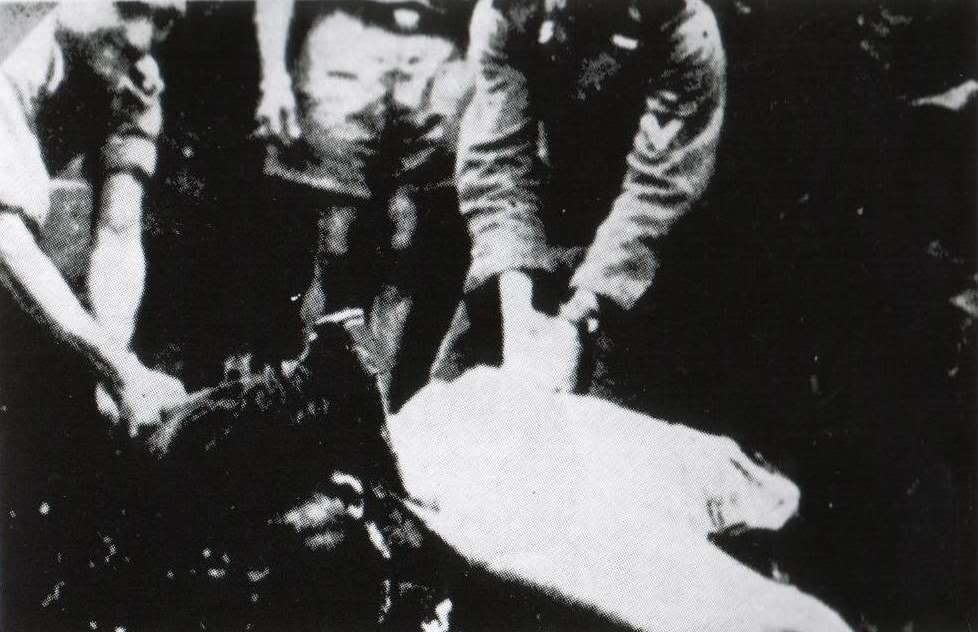 Jasenovac: “Final Solution” of the Serb Question in the Independent State of Croatia
Kazimir Katalinic, who was 18 when he left Yugoslavia in 1945, wrote a four-volume book, From Defeat to Victory, chronicling the Croatian diaspora from 1945 to 1990, which the far-right former Culture Minister of Croatia, Zlatko Hasanbegovic, helped to promote.
However, the influence of the radical diaspora in Argentina had faded, as former NDH officials or political dissidents slowly die away.
The turnout of Croat voters in Argentina in Croatia’s recent elections or referendums has been low.
Due to their lack of interest and because they can only cast votes in Buenos Aires, only 181 people voted in the second round of the Croatian presidential elections in 2015 and 130 in the parliamentary elections in 2016.
While now small in size, the diaspora in Argentina remains mostly oriented to the right. Its members voted against Croatia’s accession to the EU in 2012, and in favour of defining marriage as an exclusively heterosexual union in the 2013 referendum.
More radical elements among them also downplay the crimes committed in Jasenovac.
In 2017, at the Croat community centre in Buenos Aires and on their radio show Croacias Totales, members of a revisionist Croatian NGO, the Society for Research into the Threefold Jasenovac Camp, held lectures in which they insisted that Jasenovac had not been a concentration camp after all.
Despite much documentation and historical research to the contrary, the NGO claimed that Jasenovac was merely a labour camp under the Ustasa – and only became a death camp when the Communists took over.
Most members of the Croatian diaspora there follow the Croacias Totales radio show, which also has its website, as well as a Facebook page. These sites closely follow various events in Croatia, and replay controversial messages from Croatian clergy, among others.
Other radio shows such as Bar Croata and Croacia en mi corazon [Croatia in my heart], are all present on Facebook as well.
Some in the diaspora in Argentina keep up with the far right in Croatia by watching TV shows like Bujica and Markov trg, which was put under a temporary ban of local Z1 TV in 2016 after its host, Marko Juric, warned people in Zagreb to beware of so-called “Chetniks” lurking in the city’s Serbian Orthodox church.
Members of the diaspora in Argentina also criticised the recent verdict against six Bosnian Croat officials in the papers and radio shows.
Originally published on 2018-01-04
Author: Sven Milekic
Source: Balkan Insight
Origins of images: Facebook, Twitter, Wikimedia, Wikipedia, Flickr, Google, Imageinjection, Public Domain & Pinterest.
Read our Disclaimer/Legal Statement!
Donate to Support Us
We would like to ask you to consider a small donation to help our team keep working. We accept no advertising and rely only on you, our readers, to keep us digging the truth on history, global politics and international relations.
[wpedon id=”4696″ align=”left”]
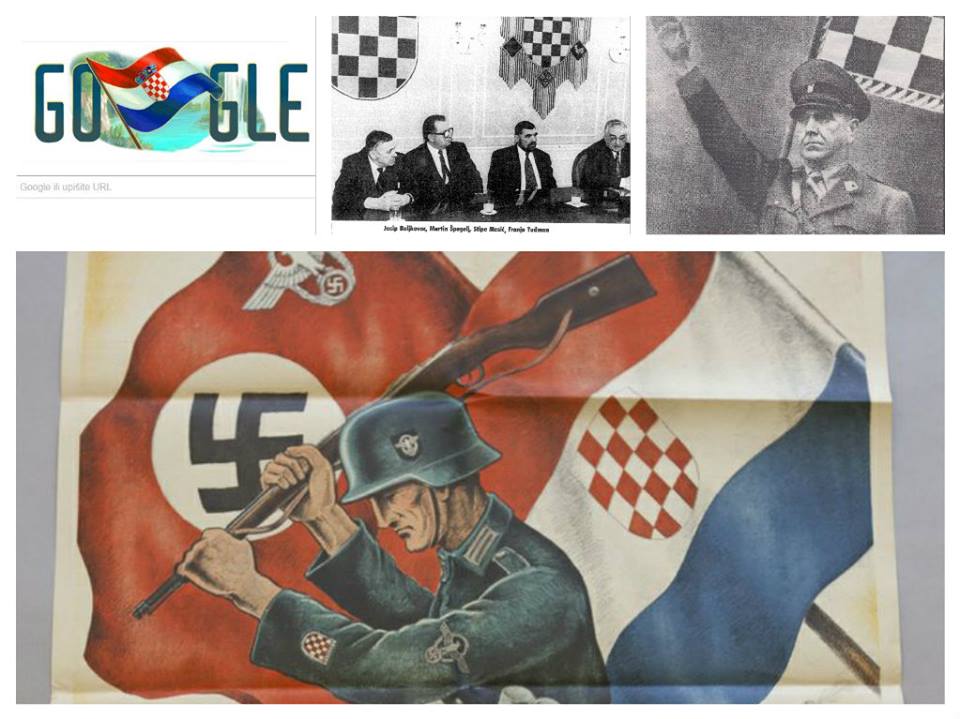 Modern-day Croatia is a carbon copy of WWII Nazi-monstrous Independent State of Croatia