
The Real Story of Zbigniew Brzezinski that the Media isn’t Telling
Brzezinski’s support for these radical elements led directly to the formation of al-Qaeda, which literally translates to “the base,” as it was the base in which to launch the repulsion of the anticipated Soviet invasion [...]
Zbigniew Brzezinski, former national security advisor to President Jimmy Carter, died Friday at a hospital in Virginia at the age of 89. Though the New York Times acknowledged that the former government advisor was a “hawkish strategic theorist,” misrepresenting his legacy as one of otherwise infinite positivity may not be as easy as the establishment might like to think.
As the United Kingdom plays around with levels of the so-called “terror threat” following a devastating attack by an ISIS-inspired individual — and as the Philippines goes into an almost complete state of martial law following ISIS-inspired destruction — Brzezinski’s timely death serves as a reminder to seek a deeper understanding of where modern terrorism originated in the first place.
As the New York Times explains, Brzezinski’s “rigid hatred of the Soviet Union” guided much of America’s foreign policy “for better or worse.” From the Times:
“He supported billions in military aid for Islamic militants fighting invading Soviet troops in Afghanistan. He tacitly encouraged China to continue backing the murderous regime of Pol Pot in Cambodia, lest the Soviet-backed Vietnamese take over that country.” [emphasis added]
While it is progressive of the New York Times to note Brzezinski’s support for Islamic militants, downplaying the effect of his vindictive foreign policy agenda with a mere sentence does an injustice to the true horror behind Brzezinski’s policies.
Because a 1973 coup in Afghanistan had installed a new secular government that was leaning towards the Soviets, the U.S. endeavored to undermine this new government by organizing multiple coup attempts through America’s lackey states, Pakistan and Iran (the latter was under the control of the U.S.-backed Shah at the time.) In July 1979, Brzezinski officially authorized aid to the mujahideen rebels in Afghanistan to be delivered through the CIA’s program “Operation Cyclone.”
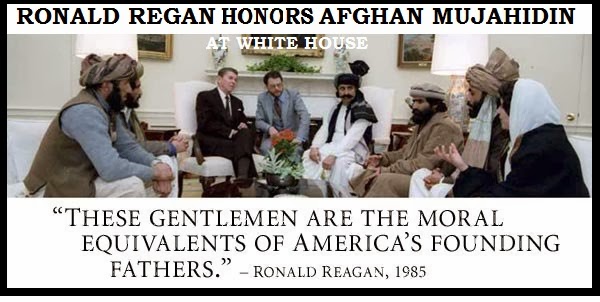
Many people defend America’s decision to arm the mujahideen in Afghanistan because they believe it was necessary to defend the country and the wider region from Soviet aggression. However, Brzesinski’s own statements directly contradict this rationale. In a 1998 interview, Brzezinski admitted that in conducting this operation, the Carter administration had “knowingly increased the probability” that the Soviets would intervene militarily (suggesting they began arming the Islamist factions before the Soviets invaded, making the rationale redundant since there was no invasion Afghanistan freedom fighters needed to repel at the time). Brzezinski then stated:
“Regret what? That secret operation was an excellent idea. It had the effect of drawing the Russians into the Afghan trap and you want me to regret it?The day that the Soviets officially crossed the border, I wrote to President Carter: We now have the opportunity of giving to the USSR its Vietnam war.”
This statement went further than merely boasting at the instigation of war and the ultimate collapse of the Soviet Union. In his memoir, entitled “From the Shadows,” Robert Gates — former CIA director under Ronald Reagan and George H.W. Bush and secretary of defense under both George W. Bush and Barack Obama — directly confirmed this covert operation began six months prior to the Soviet invasion with the actual intention of luring the Soviets into a Vietnam-style quagmire.
Brzezinski knew exactly what he was doing. The Soviets were then bogged down in Afghanistan for approximately ten years, fighting an endless supply of American-supplied weapons and trained fighters. At the time, the media even went so far as to laud Osama bin Laden — one of the most influential figures in Brzezinski’s covert operation. We all know how that story ended.
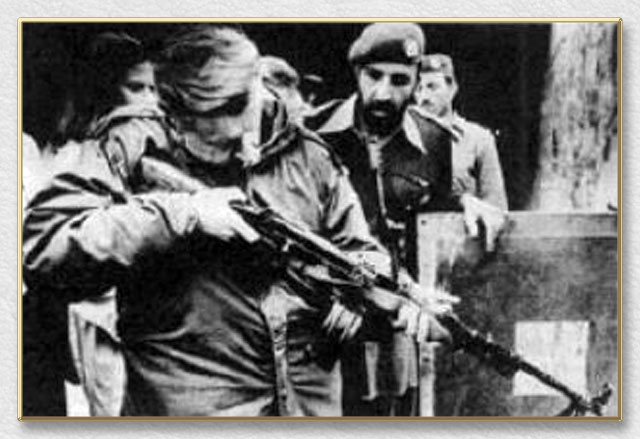
Even with full knowledge of what his CIA-funded creation had become, in 1998 Brzezinski stated the following to his interviewers:
“What is most important to the history of the world? The Taliban or the collapse of the Soviet empire? Some stirred-up Moslems or the liberation of Central Europe and the end of the cold war?”
The interviewer at the time, refusing to allow this answer to pass, retorted:
“Some stirred-up Moslems? But it has been said and repeated: Islamic fundamentalism represents a world menace today.”
Brzezinski dismissed this statement outright, replying:
“Nonsense!”
This occurred back when the journalists asked government officials pressing questions, a rare occurrence today.
Brzezinski’s support for these radical elements led directly to the formation of al-Qaeda, which literally translates to “the base,” as it was the base in which to launch the repulsion of the anticipated Soviet invasion. It also led to the creation of the Taliban, a deadly entity currently deadlocked in an endless battle with NATO forces.
Further, despite Brzezinski’s statements, which attempt to depict a lasting defeat of the Russian empire, the truth is that for Brzezinski, the cold war never ended. Though he was a critic of the 2003 invasion of Iraq, Brzezinski’s stranglehold over American foreign policy continued right up until his death.
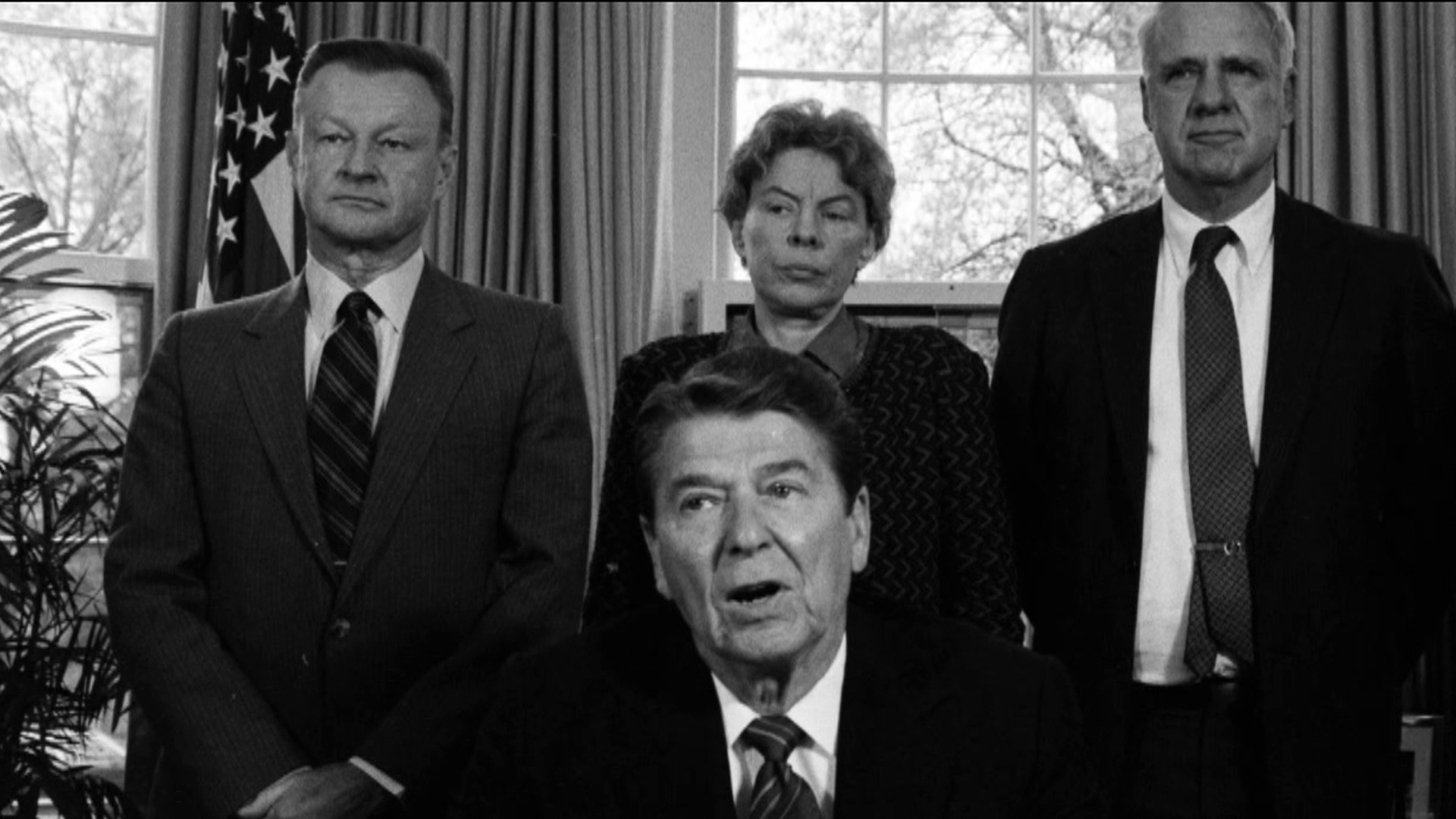
It is no coincidence that in Syria, the Obama administration deployed an Afghanistan-quagmire-type strategy toward another Russian ally — Assad in Syria. A cable leaked by Wikileaks dated December 2006 — authored by William Roebuck, who was chargé d’affaires at the US embassy in Damascus at the time — stated:
“We believe Bashar’s weaknesses are in how he chooses to react to looming issues, both perceived and real, such as the conflict between economic reform steps (however limited) and entrenched, corrupt forces, the Kurdish question, and the potential threat to the regime from the increasing presence of transiting Islamist extremists. This cable summarizes our assessment of these vulnerabilities and suggests that there may be actions, statements, and signals that the USG can send that will improve the likelihood of such opportunities arising.” [emphasis added]
Just like in Afghanistan, the Syrian war formally drew in Russia in 2015, and Brzezinski’s legacy was kept alive through Obama’s direct warning to Russia’s Vladimir Putin that he was leading Russia into another Afghanistan-style quagmire.
So where might Obama have gotten this Brzezinski-authored playbook from, plunging Syria further into a horrifying six-year-long war that has, again, drawn in a major nuclear power in a conflict rife with war crimes and crimes against humanity?
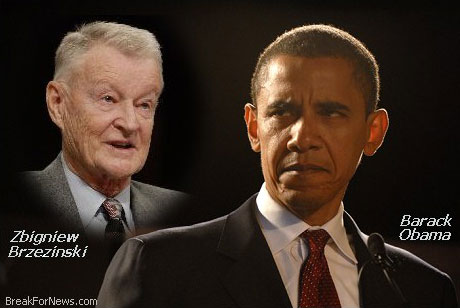
The answer: from Brzezinski himself. According to Obama, Brzezinski is a personal mentor of his, an “outstanding friend” from whom he has learned immensely. In light of this knowledge, is it any surprise that we saw so many conflicts erupt out of nowhere during Obama’s presidency?
On February 7, 2014, the BBC published a transcript of a bugged phone conversation between Assistant Secretary of State Victoria Nuland and the U.S. Ambassador to Ukraine, Geoffrey Pyatt. In that phone call, the representatives were discussing who they wanted to place in the Ukrainian government following a coup that ousted Russian-aligned president Viktor Yanukovych.
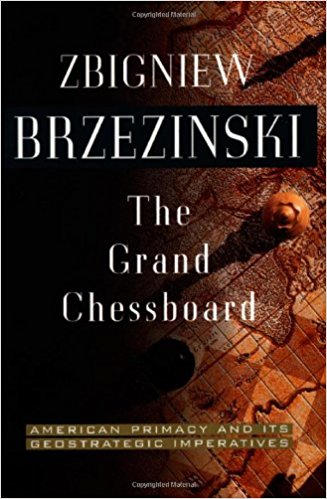
Lo and behold, Brzezinski himself advocated taking over Ukraine in his 1998 book, The Grand Chessboard, stating Ukraine was
“a new and important space on the Eurasian chessboard…a geopolitical pivot because its very existence as an independent country (means) Russia ceases to be a Eurasian empire.”
Brzezinski warned against allowing Russia to control Ukraine because
“Russia automatically again regains the wherewithal to become a powerful imperial state, spanning Europe and Asia.”
Following Obama, Donald Trump came into office with a completely different mentality, willing to work with Russia and the Syrian government in combatting ISIS. Unsurprisingly, Brzezinski did not support Trump’s bid for the presidency and believed Trump’s foreign policy ideas lacked coherence.
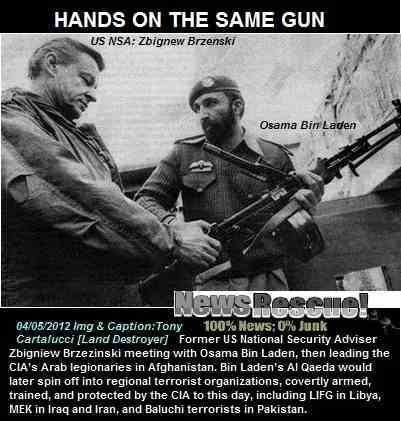
All that being said, just last year Brzezinski appeared to have changed his stance on global affairs and instead began to advocate a “global realignment” — a redistribution of global power — in light of the fact that the U.S. is no longer the global imperial power it once was. However, he still seemed to indicate that without America’s global leadership role, the result would be “global chaos,” so it seemed unlikely his change in perception was rooted in any actual meaningful change on the geopolitical chessboard.
Further, the CIA’s very existence relies on the idea of a Russian threat, as has been evidenced by the agency’s complete assault on the Trump administration whenever it appears détente is possible with the former Soviet Union.
Brzezinski died safely in a hospital bed, unlike the millions of displaced and murdered civilians who were pawns in Brzezinski’s twisted, geopolitical chess games of blood and lunacy. His legacy is one of militant jihadism, the formation of al-Qaeda, the most devastating attack on U.S. soil by a foreign entity in our recent history, and the complete denigration of Russia as an everlasting adversary with which peace cannot — and should not — ever be attained.
We would like to ask you to consider a small donation to help our team keep working. We accept no advertising and rely only on you, our readers, to keep us digging the truth on history, global politics and international relations.
The media is currently in the midst of an anti-Russian hysteria that many have dubbed Cold War 2.0. Of course the first cold war never really ended as the wars in Yugoslavia, Chechnya, and even Afghanistan were aimed at Russia as was the relentless NATO expansion. This manufactured panic is a form of psychological warfare that went into high gear during the Sochi Olympics in 2014 as the US was working to launch a fascist coup in Ukraine. Since most ordinary people would be shocked to discover that Nazis had been installed in power in Ukraine an anti-Russian hysteria was ...
Source: Rich WhitneyAbout the author: Rich Whitney is an attorney, actor, radio commentator and disk jockey, Illinois Green Party activist and former Green Party candidate for governor.Origins of images: Facebook, Twitter, Wikimedia, Wikipedia, Flickr, Google, Imageinjection & Pinterest.Read our Disclaimer/Legal Statement!Donate to Support UsWe would like to ask you to consider a small donation to help our team keep working. We accept no advertising and rely only on you, our readers, to keep us digging the truth on history, global politics and international relations.[wpedon id="4696" align="left"]
Could global warming pose the greatest threat to the future of life on the planet? Quite possibly, if we believe the international (and scientific) consensus, despite a widening stratum of debunkers, deniers, and skeptics. What about the prospects of thermonuclear war between the United States and Russia, two countries armed to the max and seemingly moving toward the brink of military conflict? Where does that rate? If the question is asked of most any Beltway denizen, the response might be something along lines of “sounds frightening, but right now we have other priorities, and we can’t lose sight of the ...
Mainstream TV news anchors including MSNBC’s Chris Hayes are reporting as fact—with fuming indignation—that Russia (and specifically Vladimir Putin) not only sought to influence the U.S. election (and—gosh!—promote “doubt” about the whole legitimacy of the U.S. electoral system) but to throw the vote to Donald Trump.The main accusation is that the DNC and Podesta emails leaked through Wikileaks were provided by state-backed Russian hackers (while they did not leak material hacked from the Republicans). I have my doubts on this. Former U.S. ambassador to Uzbekistan and torture whistle-blower Craig Murray, a friend of Julian Assange, has stated that the DNC ...
March 24 [2020] will mark the 21st anniversary of NATO’s occupation of Serbia’s Kosovo province, and so we reaffirm: Kosovo is Serbia. Serbia does not and will not ever recognize Kosovo’s claims of sovereignty. We call on NATO to end its occupation of Kosovo.NATO’s occupation of Kosovo and its increasing militarization of the province is a threat to the world’s common security. Albanian occupation authorities continue their assault on human rights and fundamental freedoms, brutally silencing critics in civil society and the media, and curtailing religious freedom. Hundreds of individuals from Kosovo, including members of the Serb community, have been ...
General James Mattis, the US Secretary of Defence, visited Macedonia on September 17 and declared that “We do not want to see Russia doing [in Macedonia] what they have tried to do in so many other countries. No doubt that they have transferred money and they are also conducting broader influence campaigns.”His observations were made in the run-up to the referendum to be held on September 30 in which Macedonians will vote on a deal reached in June with Greece that would change the country’s name to the Republic of Northern Macedonia. The referendum question is “Do you support EU and NATO ...
The origins of Czechoslovakia (1918−1920)Czechoslovakia gained its independence from the Austro-Hungarian Empire in 1918. Even though the Austrian-Hungarian Empire was one political entity, the Austrian part and the Hungarian part existed under a Dual Monarchy. Each half of the empire had a large amount of control over their area independent of the other half of the country. The differing policies of the Austrians and the Hungarians had a strong impact on the state of what is now the Czech Republic and the Slovak Republic. In particular, the Czech industry was developed, while Slovakia remained a mostly agrarian area managed by ...
Brzezinski’s death at 89 years of age has generated a load of propaganda and disinformation, all of which serves one interest group or another or the myths that people find satisfying. I am not an expert on Brzezinski, and this is not an apology for him. He was a Cold Warrior, as essentially was everyone in Washington during the Soviet era.For 12 years Brzezinski was my colleague at the Center for Strategic and International Studies, where I occupied the William E. Simon Chair in Political Economy. When I was elected to that chair, CSIS was a part of Georgetown University. ...
The Cold War 1.0It is a pure historical fact that “in a sharp reversal of its withdrawal from Europe after 1918, after the end of World War II Washington employed all available tools of public and cultural diplomacy to influence the hearts and minds of Europeans”[1] as a strategy of the US-led Cold War policy against the USSR,[2] and after 1991 against Russia up today. Undoubtedly, the US succeeded after 1990 to transform herself into a sole global military-political hegemonic power – an unprecedented case in the world’s history.[3]It is usually and generally considered that the end of the USSR ...
There was a speech that the smug Harvard neoconservative Graham Allison presented at the US aristocracy’s TED Talks on 20 November 2018, and which is titled on youtube as “Is war between China and the US inevitable?” It currently has 1,217,326 views. The transcript is here. His speech said that the US must continue being the world’s #1 power, or else persuade China’s Government to cooperate more with what America’s billionaires demand. He said that the model for the US regime’s supposed goodness in international affairs is The Marshall Plan after the end of World War II. He ended his ...
In regard to international relations (IR), power is understood as the ability of state or other political actors to impose its own control or influence over other state(s) or other political actors, or at least to influence the outcome of events on the local, regional or global level. Power politics as a phenomena has two dimensions: internal and external. The internal dimension is applied in the inner policy of the state and the external in the foreign affairs or outside of the home politics. The powerfulness of a state depends on its real independence or sovereignty from outside influence on ...
There are more questions than answers to the Crimean ‘question’.After more than two decades belonging to an independent Ukraine, the Crimean peninsula has become part of Russia, which has thereby gained an extra 27,000 km2 of territory and over two million new citizens. Ukraine and the West see this unprecedented event as annexation and a sign of the Kremlin’s neo-imperial ambitions. To countries not directly involved in the Ukrainian crisis, it is a dangerous violation of the Eurasian status quo that could cause widespread destabilisation in the area, while in Moscow’s eyes it is ‘the return of Crimea and Sevastopol ...
“Russia suspected of election scheme. U.S. probes plan to sow voter distrust.”That’s the Washington Post page-one lead headline of September 6. Think about it. The election that Americans are suffering through, cringing in embarrassment, making them think of moving abroad, renouncing their citizenship; an election causing the Founding Fathers to throw up as they turn in their graves … this is because the Russian Devils are sowing voter distrust! Who knew?But of course, that’s the way Commies are – Oh wait, I forgot, they’re no longer Commies. So what are they? Ah yes, they still have that awful old hangup so worthy ...
Dear Readers, some of you are pushing me to continue with the Las Vegas shooting story while others are asking to know what to make of the release of files pertaining to President Kennedy’s assassination. I appreciate that you are interested and are unsatisfied with official explanations.My answer is that we already know, thanks to exhaustively researched books such as James W. Douglass’ JFK and the Unspeakable (Simon & Schuster, 2008), far more than is in the released files. My answer is also that it doesn’t matter what we know or what the facts are, the official story will never be changed. ...
The anti-Russian/anti-Soviet bias in the American media appears to have no limit. You would think that they would have enough self-awareness and enough journalistic integrity -– just enough -– to be concerned about their image. But it keeps on coming, piled higher and deeper.One of the latest cases in point is a review of a new biography of Mikhail Gorbachev in the New York Times Book Review (September 10). The review says that Gorbachev “was no hero to his own people” because he was “the destroyer of their empire”. This is how the New York Times avoids having to say anything positive about life ...
A map of historical spreading of the Ukrainian territorial imperialistic project. A nation which occupied and annexed parts of ethnohistorical lands of all its neighbors. A historical map of evidence:Origins of images: Facebook, Twitter, Wikimedia, Wikipedia, Flickr, Google, Imageinjection, Public Domain & Pinterest.Read our Disclaimer/Legal Statement!Donate to Support UsWe would like to ask you to consider a small donation to help our team keep working. We accept no advertising and rely only on you, our readers, to keep us digging the truth on history, global politics and international relations.[wpedon id="4696" align="left"]A Crimea census of 1926 (done by anti-Russian USSR's authorities): ...
The Russian Revolution of 1917 terrified the capitalist world. In my last article based on the first volume of D.F. Fleming’s classic “The Cold War and It’s Origins 1917-1960” I traced the story of the attempt to destroy the world’s first communist revolution. 14 Nations attacked the Soviet Union attempting to carve out territory and crush the revolution. They also launched a massive wave of repression at home. Then they attempted to isolate the USSR while they built up Hitler’s Germany as a bulwark against Communism. This lead to World War 2 and an alliance between the USSR, Britain and ...
PrefaceThe current war conflict in Syria and constant warfare between the Israeli state and the Palestinians which recently erupted once again in Gaza strip brought the region of the Middle East to the world attention once again. However, the Middle East is a natural-geographic continuation of the Mediterranean Sea basin and, therefore, it is a part of the broader Mediterranean geopolitical game. Nevertheless, the geopolitical and geostrategic importance of the Mediterranean Sea basin is probably of the highest level from the global perspective.An importance of the Mediterranean Sea area in geopolitical and geostrategic standpoint one can understand from the very ...
Like most Englishmen, I grew up with a natural dislike of “abroad” and a belief in the inferiority of all foreign things. I think it took me five visits to France before I began to regret leaving that lovely country rather than to rejoice at my return to our safe and familiar island.It often strikes me as quite funny that I spent so much of my life as a foreign correspondent, a profession for which I am so unfitted. When I went to live in Moscow in 1990, I felt that I had somehow betrayed my native soil. (I was ...
The official end of the Cold War era in 1989 brought during the first coming years a kind of international optimism that the idea of the „end of history“ really could be realized as it was a belief in no reason for the geopolitical struggles between the most powerful states. The New World Order, spoken out firstly by M. Gorbachev in his address to the UN on December 7th, 1988 was originally seen as the order of equal partnership in world politics reflecting „radically different international circumstances after the Cold War“.[1]Unfortunately, the Cold War era finished without the „end of ...