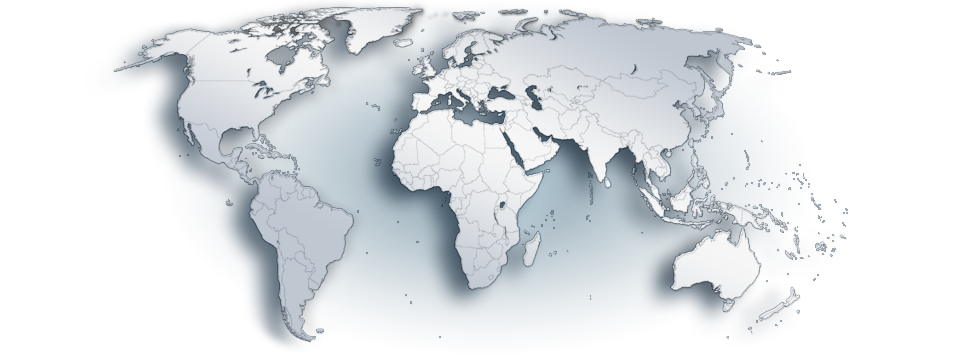

These are all the Countries where the US has a Military Presence (in 2015)
Most of the countries appear to have a small concentration of US bases (below 10). That’s compared to Germany’s 179, Puerto Rico’s 37, or Italy’s 58. The largest military footprint remains in countries that the US invaded in WWII [...]
On Mar. 24, US president Barack Obama announced that all 9,800 US troops currently stationed in Afghanistan will remain until the end of 2015. This generated a fair amount of criticism: it was, after all, Obama’s promise that the last American troop would leave the country in 2014.
How have Obama’s plans for pulling out of Afghanistan fared so far?
Those expecting the US to leave Afghanistan, however, should take a minute to consider this: the US still hasn’t left Germany. In fact, there are quite a few places the US hasn’t left, and while certainly most of them don’t pose a threat to American soldiers, they reveal a pattern about the US staying, rather than leaving.
According to official information provided by the Department of Defense (DoD) and its Defense Manpower Data Center (DMDC) there are still about 40,000 US troops, and 179 US bases in Germany, over 50,000 troops in Japan (and 109 bases), and tens of thousands of troops, with hundreds of bases, all over Europe. Over 28,000 US troops are present in 85 bases in South Korea, and have been since 1957.
Altogether, based on information contained in the DoD’s latest Base Structure Report (BSR), the US has bases in at least 74 countries and troops practically all over the world, ranging from thousands to just one in some countries (it could be a military attaché, for instance).
Calculating the extent of the US military presence abroad is not an easy task. The data released by the Department of Defense is incomplete, and inconsistencies are found within documents. Quartz has requested clarification from the Department of Defense, but hasn’t received a response.
according to the most recent publicized count, the U.S. military currently still occupies 686 “base sites” outside the fifty states and Washington, DC.
While 686 base sites is quite a figure in its own right, that tally strangely excludes many well-known U.S. bases, like those in Kosovo, Kuwait, and Qatar. Less surprisingly, the Pentagon’s count also excludes secret (or secretive) American bases, like those reported in Israel and Saudi Arabia. There are so many bases, the Pentagon itself doesn’t even know the true total.
That is not the only issue—even a definitive count of bases would include a wide range of facilities. “Base” itself is an umbrella term that includes locations referred to as “post,” “station,” “camp,” or “fort” by different military bodies. Vine explains:
bases come in all sizes and shapes, from massive sites in Germany and Japan to small radar facilities in Peru and Puerto Rico. […] Even military resorts and recreation areas in places like Tuscany and Seoul are bases of a kind; worldwide, the military runs more than 170 golf courses.
The map below represents US military bases abroad, according to the official BSR, and from independent research conducted by Vine (and Quartz) using verified news reports as well as cross-referencing information with Google Maps. This map does not take into account NATO bases, including a rumored base in Turkmenistan and a base in Algeria, reported by Wikileaks to be a suspected US base.
Most of the countries appear to have a small concentration of US bases (below 10). That’s compared to Germany’s 179, Puerto Rico’s 37, or Italy’s 58. The largest military footprint remains in countries that the US invaded in WWII, while its presence in areas of more recent contention, such as the Middle East, is somewhat reduced, at least in terms of bases.
It has been noted by commentators before that not all the bases are of significant size. However, given the information available it’s hard to truly gauge the size of the different installation. Vine writes:
The Pentagon says that it has just 64 “active major installations” overseas and that most of its base sites are “small installations or locations.” But it defines “small” as having a reported value of up to $915 million. In other words, small can be not so small.
The information about troops abroad, too, isn’t completely clear, which makes it difficult to know the true extent of the American military footprint. IHS Jane’s armed forces analyst Dylan Lehrke told Quartz that it’s hard to even settle on the definition of military presence—for the government, that means bases or deployed troops, although it would seem acceptable to include other forms of presence:
Surely one could say that the US has a military presence in Syria at the moment. They may not have bases and troops on the ground but we should include the warplanes in the sky. The US military arguably has more presence in Syria than it does in Germany […]. To take this idea further, it would also be rational to say the US has a military presence wherever it uses unmanned aerial vehicles to strike targets.
All the countries that have some sort of American military presence—from one military attaché to the troops involved in Iraq and Afghanistan—essentially results in highlighting pretty much the entire world (Russia included, where the DoD reports having 24 military personnel).
Taking into account a sizable troop presence, existence of bases, and whether the US is conducting drone strikes (Yemen, Syria, Pakistan) in a country results in the geographic representation of US military power abroad as below:
Origins of images: Facebook, Twitter, Wikimedia, Wikipedia, Flickr, Google, Imageinjection, Public Domain & Pinterest.
Read our Disclaimer/Legal Statement!
Donate to Support Us
We would like to ask you to consider a small donation to help our team keep working. We accept no advertising and rely only on you, our readers, to keep us digging the truth on history, global politics and international relations.
The mainstream media (MSM) has declared war on alternative media websites labeling them “Fake News” ever since Hillary Clinton lost the election to Donald Trump. The New York Times editorial board expressed their frustration in an article calling for the censorship of alternative and social media Facebook and the Digital Virus Called Fake News’ which claimed both social media platforms (Facebook and Google) has not been aggressive enough in blocking fake news sites:Most of the fake news stories are produced by scammers looking to make a quick buck. The vast majority of them take far-right positions. But a big part ...
Recently I went on a 15 day visit to Russia organized by the Center for Citizen Initiatives. The group visited Moscow, the Crimean peninsula, Krasnodar (southern Russia) and St. Petersburg. In each location we met many locals and heard diverse viewpoints. CCI has a long history promoting friendship and trying to overcome false assumptions between citizens of the USA and Russia. The founder Sharon Tennison has focused on making people-people connections including the business community, Rotary clubs, etc.. This delegation was organized because of concern about escalating international tensions and the danger of a drift toward world threatening military conflict.We ...
Article by Vladislav B. Sotirovic: „Nationalism and Territorial Claims of the Yugoslavs: Challenge to Re-Map the Balkans in the 21st century. Case Study“, Journal of Security Studies and Global Politics, Vol. 2, № 1, 2017, Islamabad, Pakistan, online: http://sciplatform.com/journals, ISSN (online) 2519-9609, pp. 69−81 (PDF)SaveOrigins of images: Facebook, Twitter, Wikimedia, Wikipedia, Flickr, Google, Imageinjection & Pinterest.Read our Disclaimer/Legal Statement!Donate to Support UsWe would like to ask you to consider a small donation to help our team keep working. We accept no advertising and rely only on you, our readers, to keep us digging the truth on history, global politics and ...
The U.N. Organization was established in 1945 for the very security reason – to preserve the peace in the world. We believe that the governmental bodies and administrative structures of the U.N. have to be composed by the proved democratically oriented politicians and magistrates but above all this requirement has to be applied to the post and function of the U.N. Secretary-General. Nevertheless, in the history of the U.N. there is at least one (extremely) problematic appointment to the post of the U.N. Secretary-General: Kurt Waldheim from Austria.On the official website of the U.N. about its fourth Secretary-General one can ...
As defections continue from the Rome Statute the Netherlands-based group says Washington may have engaged in tortureA recent article published in the New York Times appears to suggest that the United States will be investigated by the Netherlands-based International Criminal Court (ICC) for committing torture against captives in Afghanistan.Surprisingly enough the ICC has almost exclusively focused its attention on alleged war crimes and acts of genocide taking place in Africa. Many of the cases have in effect served the interests of U.S. imperialism where governments which are targets for destabilization and regime-change are indicted by the prosecutorial institution in order ...
The Markale false flag as casus beli – On August 30, 1995. NATO began bombing of Republika Srpska (RS); the aggression lasted until 14. September and resulted in killing several hundreds of civilians. During the period the NATO aircrafts dropped 1,026, bombs with a total weight of explosives: 10,000 tons. NATO officials admitted the use of radioactive ammunition, saying that it was done in order to “bring Serbs to the table.” (i.e. negotiation). Casus beli for the NATO aggression was Sarajevo market Markale blast, 28 August 1995 for which they blamed Serbs, although the report of the Independent Commission indicated ...
Fifty years ago today, in 1967, nearly 100,000 Americans marched on Washington, DC, to protest the Vietnam War. In those days there was a mandatory draft in place, and the risk was very real that a young man just out of high school could quickly wind up 13,000 miles away, fighting an unseen enemy in jungles that didn’t need tanks or B-52 bombers to inflict fear. Worse yet was the possibility of going MIA or coming home in a body bag — just another expendable statistic in the great fight against communism. But even many of those who made it ...
The current Ukrainian crisis and in fact civil war which stared at the very end of 2013 are grounded in for decades lasting internal interethnic antagonisms primarily on the Ukrainian-Russian relations including above all the “Crimean Question” as an apple of discord from 1954 between Ukraine and Russia.[1] The crisis came from Lithuania’s capital Vilnius were in November 2013 an Association Agreement between the EU and Ukraine had to be signed. Lithuania at that time (July 1st−December 31st, 2013) presided the European (Union) Council and formally had full political responsibility for the breaking out of the crisis as being the ...
In 2003, America (and its lap-dog UK) invaded and destroyed Iraq on the basis of lies to the effect that the U.S. (and UK) regime were certain that Saddam Hussein had and was developing weapons of mass destruction. These U.S. allegations were based on provable falsehoods when they were stated and published, but the regime's 'news'-media refused to publish and demonstrate (or "expose") any of these lies. That's how bad the regime was (and its media's 'news' were) — this was virtually a total lock-down against truth, and for international conquest (in that case, of Iraq): it was mass-murder and ...
We all know how the story goes. The Golan Heights is Syrian territory that has been occupied by Israel since the 1967 Six-Day War. It was then controversially annexed in 1981, despite the UN calling the efforts “null”, “void” and “without international legal effect”. Today it is still internationally and legally recognised as Syrian land, but Israel persists with its possession.Of course, such persistence can prove to be quite lucrative when the land is abundant in resources – especially land as fertile as the Syrian Golan – a generous source of gushing waters and game changing oil reserves.In fact, the ...
It is of extreme importance to understand the concept and motivation of soft power by China – the most rising emerging market power today and already the first export nation with the second-largest economy in the world.Concerning China and its foreign policy, soft power is one of the most frequently used political and social concepts during the last two decades. It has to be immediately noticed that one of the major reasons for China’s easy acceptance of soft power is that soft use of power has historically a strong cultural foundation in traditional Chinese foreign policy (for instance, in the ...
The most useful parable about progressives is that offered by Bernard Sanders, self-styled “socialist-progressive-independent” rep from Vermont. Sanders owes his political career to rage against the Vietnam War among radicals, many of whom moved into the state in the early 1970s. They forthwith planned a long-term, carefully organized, assault on Vermont’s two-party structure. Sanders linked his political ambitions to this effort to organize a third force, the Progressive Alliance. He became mayor of Burlington and, later, congressman.At a rapid clip the emphasis moved from party-building to Sanders-building. By 1994, it was apparent that the only movement B. Sanders was interested in ...
On September 21, 2024, about forty representatives of the African community in Paris, to the beat of drums, held a protest rally on the Seine embankment against the neocolonial policy of European countries toward Africa.“We, free citizens of Africa, have gathered here today to put an end to neocolonialism, which is damaging our continent,” said Giresse Nwankwo, an activist and speaker at the event. “We want peace and justice for all countries of Africa, but we see that neocolonial powers do not want to recognize our rights. Foreign companies continue to exploit our natural resources, such as oil in Nigeria ...
The collective West is busy showing what it thinks of Serbia’s determination to conduct an independent policy through an old-fashioned show of force.The weekend of March 27-28, thousands of vehicles from neighboring countries formed lines waiting to enter Serbia. The reason? Vaccines. For free. Lots of them, from both East and West. Sputnik V, Sinopharm, AstraZeneca, Pfizer. More than the rest of the ex-Yugoslav republics combined. And Serbia decided to open its doors to those among its former compatriots who have lost all hope that their Western-approved “democracies” would obtain them in respectable quantities any time soon.So, does this humane ...
Because this article states so many things that might be likely to contradict what most people in Western countries have been led to believe, readers here are especially strongly encouraged to click onto any allegation which seems at all questionable, in order to get to the sources behind any given questionable allegation. And wherever a clicked-onto source turns out to be another article, one is encouraged similarly to do the same there, so that the reader will be able, in this way, to probe down to the ultimate sources, which are the sources upon which this article is finally based.After ...
PrefaceA geopolitical issue of South-East Europe became of very importance for the scholars, policymakers, and researchers with the question of the dismemberment of the Ottoman Empire as one of the most crucial features of the beginning of the 20th century in European history. A graduate collapsing of the one-time great empire was accelerated and followed by competition and struggling by both, the European Great Powers and the Balkan national states, upon the territorial inheritance of it. While the European Great Powers have the aim to obtain the new spheres of political-economic influence in South-East Europe, followed by the task to ...
Twenty years ago, on 24 March 1999, Operation Allied Force began – the NATO bombing of Yugoslavia that led to the country’s dismemberment – and the independent state of Kosovo was proclaimed. Yet these events were far from historically contingent, as some people claim. So who orchestrated the breakup of Yugoslavia and how?These days, few remember that the Bulgarians were at the start of it all. Even the Bulgarians themselves don’t like to think about it.In early March 1999, Bulgaria’s National Intelligence Service told Germany’s Federal Intelligence Service (BND) that it had information about a secret plan by the Yugoslav ...
The European Union (the EU) is officially characterized by a purposeful diffusion of political authority between supranational and intergovernmental institutions. Based on the idea of (quasi)shared leadership, it formally relies on a delicate institutional balance guarding declared equality between its ever more diverse members and managing potential and real tensions between the more and less populated and developed states. Such tensions are present in any federal construct and have been a key concern since the “original six” (EU6) founded the (West) European Coal and Steel Community (the ECSC) in 1951 (the Benelux, West Germany, France, and Italy).The formal facts and ...
The aristocratic poseur, Waldheim, was the grandson of a Czech blacksmith surnamed Vaclavik. Kurt’s father, Walter, migrated to Austria where Christian-Social Party (CSP) activism landed him the plum-gig of school inspector. CSP-founder and Vienna Mayor, Karl Lueger, pioneered electoral anti-Semitism; blaming “Jewish financiers” for every problem.Hitler “learned anti-Semitism from Lueger.” (1) After Walter’s CSP superior explained the limitations of “Vaclavik,” Walter choose the uber-German: Waldheim (“woods-home”). (2) When Kurt turned 18, Walter planted him in the 1st Dragoons of Stockerau – a regiment stocked with scions of ancient noble houses. (3)In 1933 Chancellor Dollfuss transformed CSP into the Fatherland Front. ...
The Western-backed myth of a Greater SerbiaMuch space, time, and effort have been devoted to the recent history of West Balkans, and in particular in the latest political upheavals, about the alleged project of Greater Serbia especially by Western authors either academic scholars or journalists.[1] The issue must be, however, considered together with its counterparts from Croatia (a Greater Croatia) and Albania (a Greater Albania).Two focal questions arose here: Were all these projects serious and what was the origin of this maximalist concept of forming national states in the otherwise ethnically mixed area? Whose exact interests were involved and to ...