
Israel’s Maariv newspaper has revealed that the government of the Zionist state is planning to drop a political bombshell in the coming weeks by presenting a bill in the Knesset (parliament) calling for the annexation of land occupied since 1967. It is likely to have the support of the majority of Knesset members. The newspaper added that the right wing has chosen this time for the move ahead of the US presidential election; America, it is believed, will be too preoccupied to care about what is happening in the occupied Palestinian territories.
Preliminary talks about a first stage have been held, claimed Maariv; Israel would annex all Area C land — which includes 60 per cent of the occupied West Bank —where more than 400,000 illegal Jewish settlers live alongside tens of thousands of Palestinians. Under the proposal, Israel will offer residents Israeli identity while imposing its curricula in schools.
According to far-right Justice Minister Ayalet Shaked, Israel must impose Israeli law in the West Bank, which means in practical terms that the occupied Palestinian territories would come under full Israeli control.
Furthermore, Deputy Defence Minister Eli Ben-Dahan has demanded “the annexation of the West Bank because the Arab and regional situation is appropriate for this step.” Naftali Bennett, the leader of the extreme right-wing Jewish Home Party, which is part of the government coalition, said that, “It is better for Israel to begin annexing Area C”.
These positions and statements should not be taken lightly, because Prime Minister Benjamin Netanyahu’s government is working on the basis that the West Bank is “liberated land” and formal annexation is only a matter of time.
It was in the historic election in 1977 that the Israeli right-wing won a majority in the Knesset for the first time. The government was led by Menachem Begin, a student of Revisionist Zionist thinker Ze’ev Jabotinsky, who authored the iron wall theory. This set out that the indigenous people of the country would not accept what the Israeli occupation authorities want, what they are exposed to or solutions imposed by the occupation; and that Israel will go through a continuous process of change towards becoming a more and more Jewish, right-wing, settler-based and racist state.
This trend has deepened dramatically since Netanyahu’s return to government in 2009 when Israel’s so-called “third phase” began. The right-wing became the mainstream, dominating power in government and society. At the same time, the influence of Knesset members, parties and groups wanting to find a solution that includes the establishment of a Palestinian state alongside Israel faded to the point that the Labour Party abandoned this option. Instead, it adopted unanimously a plan put forward by the country’s President, Chaim Herzog. The plan was based on a unilateral solution that calls for formal separation of the areas populated by Palestinians in order to protect Israel as a Jewish state, and not to expose it to the risk of becoming a bi-national state.
There are a series of changes taking place in Israel where secular and liberal characteristics have all but disappeared, while the religious right-wing has become more prominent. These changes have been made through the adoption of laws and policies, and by imposing facts on the ground that make changing this reality very difficult. If, for example, we look at the state’s relations with the Palestinians, we find that voices calling for their deportation are increasing; these are the voices of people in senior positions in the government, army, security services and Knesset, as well as various state institutions. Also, the Israeli government moved from conflict management and the creation of facts on the ground that can help Israel to impose its unilateral solution when negotiating “final status” issues, to simply imposing that unilateral solution. Thus, the central part of the Israeli government and the opposition basically gave up any semblance of agreement on the establishment of a Palestinian state to the extent that they refuse even to countenance it.
The Israeli position became such that the government refused to talk with the Palestinians unless the latter agreed in advance to specific conditions. These included recognition of Israel as a “Jewish state” for all Jewish people all over the world, and for Israel’s security to be the main, and perhaps only, frame of reference for Palestinian-Israeli relations now and in the future. Israel also insists on the presence of its occupation forces in strategic locations within the Palestinian state after its establishment, and the granting of absolute freedom of movement for them all over the “Promised Land”.
It is within this context that the number of illegal Jewish settlers in the occupied West Bank has reached more than 700,000. Israel is working at an accelerated pace to increase this to one million within a few years.
We can also talk about Israel’s keenness to separate the West Bank from the Gaza Strip and doing all it can to make it a permanent political and physical separation. It is doing this by stripping the Palestinian Authority of its power, to such an extent that, as President Mahmoud Abbas has said repeatedly, the PA is an authority without authority, in spite of all the concessions that he and his ministers have made. The PA continues to be committed to the terms of the Oslo Accords; it accepts the 2003 international road map; and it has made unilateral commitments while Israel shows no commitment at all. From this position, we can understand why the Israeli government refused the offer made by the PA to stop threatening to implement decisions of the Palestinian Central Council, including an end to security coordination with the Israelis, in exchange for Israel’s commitment not to enter Area A. The authority suggested that this could begin with Ramallah and Jericho first, and if that works out, whereby Palestinian security forces would carry out their job in a manner that relieves the occupation from storming into these areas, then the experience could be spread to the rest of the occupied territories. The Netanyahu government was quick to reject any suggestion that would restrict the freedom of the occupation army to move across any area at will; this freedom is sacred for Israel, despite it paying tribute to the achievements of the Palestinian security services.
The question now is whether it would be possible to continue with the same policy that was used during negotiations, even though it was an illusion, and Israel is now becoming more vicious and refuses to partake in any negotiations whatsoever. It continues to impose its own solutions on the ground, stating clearly what it intends to do as it takes advantage of developments in the Arab region (where the Iranian threat has more priority than anything else) and around the world, which it believes have improved its strategic position.
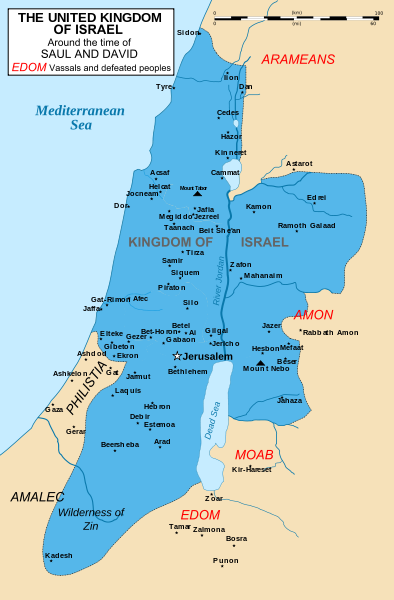
Israel thinks that it has a great opportunity to achieve the still unfulfilled goals of the Zionist movement: the establishment of Israel on the whole of historic Palestine and beyond; in short, to revive the “Greater Israel” scheme from the Nile to the Euphrates.
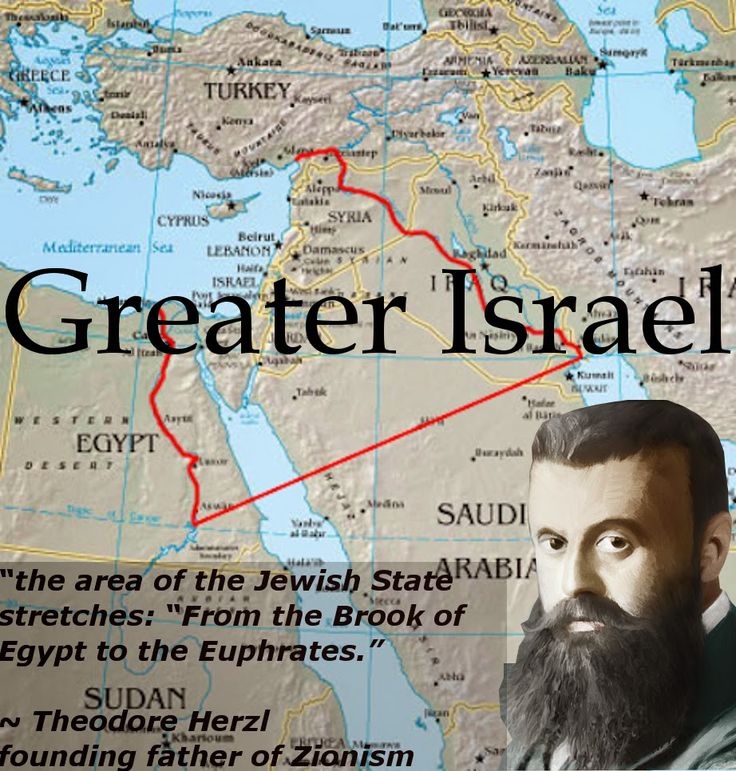
The Zionist state of Israel is relying on the deteriorating Arab situation and the decline of the Palestinian national cause, which is weak, self-destructive and disoriented. The Palestinian leadership is still going round in circles reproducing the same old options without having enough courage to adopt anything new. Both of the main factions are just hanging around and waiting; the others are too small, weak and fragmented to do anything constructive.
Despite all of the above, the path to achieving “Greater Israel” is not smooth. The Palestinians, despite all that they suffer from, are still sticking to their cause, their rights and their presence on their land, and they continue to resist with all available forms of popular and armed resistance. They have also encouraged an international boycott, divestment and sanctions (BDS) movement against Israel which threatens it strategically, and they have UN recognition of Palestine as a state. They have since joined a number of international institutions, notably the International Criminal Court. Most importantly, the Palestinians started a new intifada in October fuelled by individuals with no formal leadership, factions, the PLO or the PA; this is reminding the Israelis that the Palestinians are still there, that resistance continues one generation after the other, and that this racist, colonial-settler occupation cannot continue to be quiet, profitable and permanent.
Although there are elements of strength and a suitable environment for the revival of “Greater Israel” it has some weaknesses. If the Palestinians could learn how best to utilise them, they would be successful. Some of the weak points include Israel being an enemy to itself, proposing a project that has no future as it raises discontent and resentment across the globe, prompting criticism even from its trusted allies, like the United States, Britain, Germany and France.
In order to defeat hostile schemes, the Palestinians need a vision, a national institution, a leadership that is up to the challenges and risks and able to employ opportunities; they need an effective political hierarchy and a strategy for the struggle that can achieve the maximum in each stage. They can then move on to achieve more and more until they realise the humanitarian, democratic and historical solution on the ruins of the racist, colonial-settler, Zionist project.
Origins of images: Facebook, Twitter, Wikimedia, Wikipedia, Flickr, Google, Imageinjection, Public Domain & Pinterest.
Read our Disclaimer/Legal Statement!
Donate to Support Us
We would like to ask you to consider a small donation to help our team keep working. We accept no advertising and rely only on you, our readers, to keep us digging the truth on history, global politics, and international relations.
Editor: Little did I know when I posted a short news story about the ‘invasion of Hungary’ last evening that the situation in Kosovo has become untenable and a mass exodus was so advanced. ‘Pungentpeppers’ has again pulled many threads together to give us the big picture of what is happening in Eastern Europe. Is the US responsible? An Austrian political leader says so!Mass exodus from Muslim Kosovo into Europe~150,000 or more Kosovars on the move since summer~Hungarian Police catch 1,000 Kosovars daily – a small fraction of the total~Hungarian mayor calls for fence as Kosovars overwhelm village~Austrian politician blames ...
In its entire history, there has been very little time when the United States has been at peace. As it wages its many wars and ‘interventions’, the stated goal is always something few people could argue with: fostering democracy when a struggling people are resisting tyranny, removing threats to U.S. security, or punishing a cruel dictator for unspeakable misdeeds.Yet on closer scrutiny, these reasons are seldom valid. They simply hide the true purposes of U.S. military involvement, which are power and wealth. Starting with the barbarous destruction of Native American culture in order to gain farmlands, right through to the ...
Types of elections In the USA, elections are organized on a regular basis for the President, both houses of Congress (the House of Representatives and the Senate), and state and local government offices. In practice, candidates in the majority of cases run for office as members of the party (one of two main political parties – the Democrats or the Republicans) in order to get the party’s support for their candidacy. However, in principle, whoever wants to run as an independent candidate can organize a petition. In that case, if it is collected enough signatures, the person can run. According to ...
On December 8, 1991 Russia, Belarus and Ukraine stated that the USSR ceased to exist and signed an agreement on the creation of the CIS. Mikhail Gorbachev, the President of the Soviet Union, resigned on December 25, 1991. The Russian Federation assumed the USSR’s rights and obligations to become the recognized primary legal successor of the Soviet Union.Each post-Soviet state was free to choose its own destiny but the need to cooperate and maintain mutually beneficial close economic ties was evident.The creation of the Eurasian Customs Union was guaranteed by 3 different treaties signed in 1995, 1999 and 2007. The first treaty in 1995 guaranteeing ...
Tito’s policy in the 1970s of the so-called “encourage and suppress” for the sake to struggle against politically undesirable and threatening ethnic nationalisms especially the Croat and the Serb ones appeared to be incoherent one. In another words, while some ethnic nationalisms and their ideologies were considered to be dangerous to the system and, therefore, were suppressed and their advocates were jailed or banned from employment[i] (the case, for instance, of the Serbian dissident professors from Belgrade University), other nationalisms, supposed to be non-dangerous for the regime were encouraged by the local Communist elites (for instance, the Albanian nationalism in ...
Note: We are republishing this essay by S. Brian Willson describing the true history of genocide in the United States which stands in stark contrast to the myth of Thanksgiving because of its popularity with readers and its educational value.The Defining and Enabling Experience of Our “Civilization” As we again plan to celebrate what US “Americans”call Thanksgiving, let us pause for a moment of reflection. Let us recognize that accounts of the first Thanksgiving are mythological, and that the holiday is actually a grotesque celebration of our arrogant ethnocentrism built on genocide.Native Americans in the Caribbean greeted their 1492 European invaders ...
Historically and intuitively, Russia has fought for the survival of humanity. Of course, things are not always pronounced or defined in such terms. However, already on several occasions, this enormous country has stood up against the most mighty and evil forces that have threatened the very survival of our Planet.During the Second World War, the Soviet people, mainly Russians, sacrificed at least 25 million men, women and children, in the end defeating Nazism. No other country in modern history has undergone more.Right after that victory, Russia, alongside China and later Cuba, embarked on the most awesome and noble project of ...
It was in 1916, in the midst of World War I, that Britain and France (pitted against the Germans, Austrians and Ottoman Turks) made their infamous Sykes-Picot agreement. In grand imperial style, they used this agreement to divide up the Middle East between them. It was a daring move, considering that the war was at a stalemate and the two allies did not know if they were going to win the struggle. Nonetheless, they went ahead with the agreement and in doing so made a number of decisions that continue to shape the region to this day.Besides bringing traditional European imperialism ...
War is evil; permanent war is permanent evil. It is evil to humans but also to other species and the planet; the weapons used destroy us but also contaminate and destroy nature.Despite a general knowledge of the evils of war and acceptance of peace and the rule of law, war has become a permanent feature of the 21st century -destructive, cruel, dehumanizing and vindictive. Its message: those who can kill and destroy the most have the upper hand. Major General Smedley Butler said it in a speech in 1933: “war is a racket.” Butler, who had joined the Marine Corps ...
Part IPart II The policy of language and political parties until the prohibition of the Illyrian name (1843)During the years of 1832–1836 the Hungarian assembly (Dieta) hold several sessions in Pozsony (Bratislava/Pressburg), where Croatia-Slavonia’s deputies, particularly count J. Drašković, fought for the introduction of the national (Croat) language in Croatia-Slavonia instead of the Latin or Hungarian, as well as for the Croatian state-historical rights (the so-called Croatian pravice) as they were claimed as such by the Croat political leadership. At the same time, in 1834 Ljudevit Gaj obtained a permission from the Habsburg Emperor Francis I (1806–1835) to publish the first ...
As I have noted before in Strategic Culture Foundation, the infant Trump Administration is engaged in a life and death struggle with the Deep State, the mainstream media (MSM), all of the Democrats in Congress, and a lot of the Republicans too. One issue lies at the heart of the struggle: the determination of Trump’s enemies not to allow any sort of warming of ties between Washington and Moscow.
Day after day the MSM run story after story alleging, with no evidence whatsoever, that Trump is a puppet of Vladimir Putin, who stole our election to put Trump in the White House. ...
“Who rules East Europe commands the Heartland;Who rules the Heartland commands the World Island;Who controls the World Island commands the World”(Sir Halford John Mackinder, 1919) The term geopolitics was first used by the Swedish political scientist Rudolf Kjellén (1864−1922) in 1899, but the term did not become popular in academic circles until it became used in the early 20th century by British geographer and strategist Halford Mackinder.Nevertheless, the concept of geopolitics as a theoretical approach to global politics and international relations (IR) was soon used firstly in Germany and later in the USA. The concept itself was stressing a set of ...
BELGRADE – Amnesty of crimes during NATO aggression, bilateral legalization of Camp Bondsteel in a friendly milieu, settling the Islamic world with support to their communities in the Balkans and forcing Russia out of that same Balkans, are four reasons the US supports the independence of Kosovo, writes “Sputnik”.On Christmas (according to Gregorian calendar) Michael Kirby shows up. Outgoing US Ambassador congratulates Serbia upcoming New Year. “The normalization of relations between Belgrade and Pristina implies Kosovo’s membership in the UN,” was the content of the “greeting card”.Apart from some kind of formalization, Kirby’s statement is not new for the local public ...
Thursday marked the 150th anniversary of the founding of America’s deadliest terrorist organization: the Klu Klux Klan.Since September 11, extremists associated with various far-right wing ideologies, including the KKK and Jewish extremists, have killed far more people in the United States than extremists motivated by radical Islam.One centuries’ old example of US government double standards when it comes to terrorism, is the infamous Klu Klux Klan. The Klan has terrorized and killed far more Americans than Islamic terrorists ever have; and despite being America’s oldest terrorist organization, the US government does not officially consider the KKK a terrorist organization, classifying ...
PrefaceA geopolitical issue of South-East Europe became of very importance for the scholars, policymakers, and researchers with the question of the dismemberment of the Ottoman Empire as one of the most crucial features of the beginning of the 20th century in European history. A graduate collapsing of the one-time great empire was accelerated and followed by competition and struggling by both, the European Great Powers and the Balkan national states, upon the territorial inheritance of it. While the European Great Powers have the aim to obtain the new spheres of political-economic influence in South-East Europe, followed by the task to ...
Author’s note and UpdateThe following article was first published in September 2014 at the outset of the air campaign “against the ISIS”. In recent developments Russia has officially joined the campaign against the Islamic State (ISIS). What are the implications?Amply documented but rarely mentioned in news reports, the ISIS is a creation of US intelligence, recruited, trained and financed by the US and its allies including Saudi Arabia, Qatar, Turkey, Israel and Jordan. What this means is that the ISIS terrorists are the foot soldiers of the Western alliance. While America claims to be targeting the ISIS, in reality it is protecting the ISIS. The air campaign is intent upon ...
The aristocratic poseur, Waldheim, was the grandson of a Czech blacksmith surnamed Vaclavik. Kurt’s father, Walter, migrated to Austria where Christian-Social Party (CSP) activism landed him the plum-gig of school inspector. CSP-founder and Vienna Mayor, Karl Lueger, pioneered electoral anti-Semitism; blaming “Jewish financiers” for every problem.Hitler “learned anti-Semitism from Lueger.” (1) After Walter’s CSP superior explained the limitations of “Vaclavik,” Walter choose the uber-German: Waldheim (“woods-home”). (2) When Kurt turned 18, Walter planted him in the 1st Dragoons of Stockerau – a regiment stocked with scions of ancient noble houses. (3)In 1933 Chancellor Dollfuss transformed CSP into the Fatherland Front. ...
In examining the future, we must look to the past.As we watch the media today, we are spoon fed more and more propaganda and fear of the unknown, that we should be afraid of the unknown and have full faith that our government is keeping us safe from the unknown. But by looking at media today, those of us who are old enough will be reminded of the era of Cold War news articles, hysteria of how the Russians would invade and how we should duck and cover under tables in our kitchens for the ensuing nuclear war.Under this mass ...
The Axis powers invaded Yugoslavia on 6 April 1941. Vladko Maček, the leader of the Croatian Peasant Party (HSS) which was the most influential party in Croatia at the time, rejected offers by the Nazi Germany to lead the new government. On 10 April the most senior home-based Ustaša, Slavko Kvaternik, took control of the police in Zagreb and in a radio broadcast that day proclaimed the formation of the Independent State of Croatia (Nezavisna Država Hrvatska, NDH). The new Independent State of Croatia" was established as a pro-Nazi government. It was dedicated to a clerical-fascist ideology influenced both by ...
The political settlement in the former Yugoslavia is unraveling. In Bosnia, the weakest state in the region, both Serbs and Croats are mounting a concerted challenge to the Dayton peace accords, the delicate set of compromises that hold the country together. In Macedonia, political figures from the large Albanian minority are calling for the federalization of the state along ethnic lines. In Kosovo, the Serb minority is insisting on the creation of a network of self-governing enclaves with effective independence from the central government. In Serbia’s Presevo Valley, Albanians are agitating for greater autonomy. In Montenegro, Albanians have demanded a ...