
The Tragic Declaration: Colonial Legacies, Balfour and Israel
Indeed, the paper went on to suggest a reassurance: that the Declaration had not envisaged that “Palestine as a whole should be converted into a Jewish National Home, but that such a Home should be found in Palestine.” A home, as it were, within a home – or perhaps a spacious room in a large abode [...]
So much after the fact; so much in terms of opportunism gone to seed and destruction. But planned historical calamities tend to be rare. There are only absurd moments, dastardly opportunities, and tragic convergences. History is less the outcome of wise deliberation than folly dressed up as reason, occasionally tinged by a touch of malice.
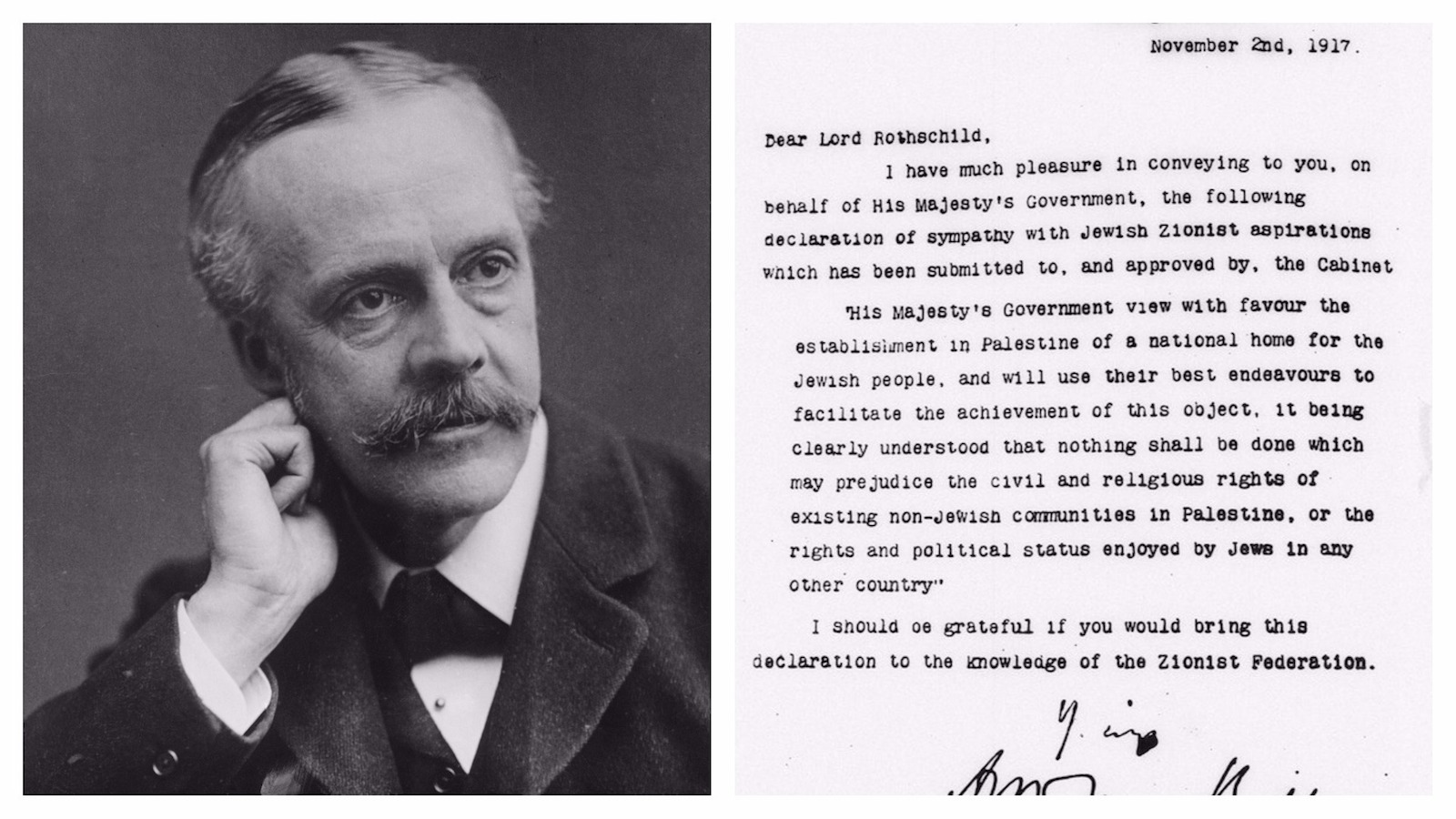
On November 2, 1917, the British government published the Balfour Declaration (one of “sympathy with Jewish Zionist aspirations”) by means of a letter written by Foreign Secretary Lord Arthur James Balfour to Lord Walter Rothschild. It suggested forthcoming British assistance for the establishment of a Jewish National Home in Palestine.
Problems soon emerged, showing what Arthur Koestler would suggest as the solemn promising of one nation to a second the country of a third, all happening even before the Ottoman Empire had ceased to exist.
This was British imperial opportunism at its worst, or, if you fancy that sort of pluck, best. It played on the aspirations of Zionists; it also went counter to the promise of liberation for Arabs in the event they overthrew their Ottoman overlords. The moral tic only came later, a sort of retrospective imposition.
Submerged in the Declaration are a series of questions writ large. There is the Eastern Question – one of Ottoman-eastern influences on Europe and more broadly, the Occident. Then there was that overall niggling problem of where European Jewry persisted as carriers of an eastern legacy in Europe, “which Enlightened and un-Enlightened European Christians,” poses Joseph Massad, “found intolerable.”[1]
This became, with all its paranoid fixations, cultural mania and concern, the “Jewish question”, an absurdist fantasy that attempted to press Jewish influence in Europe as a matter of unreformed, eastern practice. How much better, then, to have that influence exiled altogether?
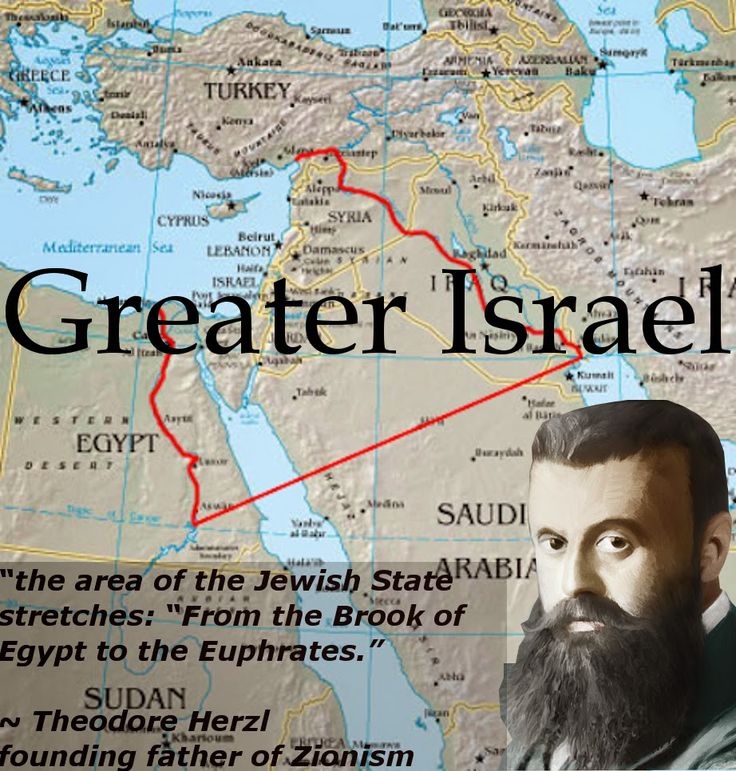
This task also assumed the oddest of forms, and the creation of uncomfortable bed fellows in what effectively became a colonial project of collusion and complicity. Theodor Herzl, founder of the First Zionist Congress in August 1897, revealed the realpolitik caste of mind that would also be mirrored by the politics behind Balfour.
Those “anti-Semites,” he proclaimed, “will become our most dependable friends, the anti-Semitic countries our allies.”
The Balfour letter itself retained those various contradictions. Having pitched for a Jewish state, it then went on to suggest that “nothing shall be done which may prejudice the civil and religious rights of existing non-Jewish communities in Palestine or the rights and political status of Jews in any other country.” This was imperial parcelling of the worst sort, making claims about racial, religious and ethnic reordering without a mind to consequence.
Over time, reading the Declaration suggested the workings of a psychodrama, teasing historians into adventurous analyses. Historian Barbara Tuchman in her classic Bible and Sword, England and Palestine from the Bronze Age to Balfour (1956) imputed to Lord Balfour a religious motive, morally biblical more than realpolitik imperial. The Jews, went this line, needed repaying in some form, a gesture of historical recompense.
Tuchman, it must be said, then proceeded to acknowledge good old little Englander power plays at work. It was Britain’s intention “to take Palestine anyway for its strategic value; but they had to have a good moral case”. By proclaiming “that Britain would enter Palestine as trustee for its Old Testament proprietors would fulfil this purpose admirably and above all would quiet the British conscience in advance.”
As appropriately noted by Michael J. Cohen, reading the British response here requires an understanding of public show and private intimations.[2] A degree of duplicity in diplomacy – the public self adorned differently to the private – is always demanded.
Take, as an example, the meeting between Prime Minister Lloyd George and Chaim Weizmann held on July 21, 1921 at Lord Balfour’s home, with the Colonial Secretary Churchill present. Weizmann, it is noted, was reassured that the British “had always understood and meant the eventual possibility of a Jewish state.”
The 1922 Churchill White Paper supplies an example of the public show, a case of hedging, avoidance, and qualification as to what the intention of the Declaration had been. There was, for instance, never an intention to create “a wholly Jewish Palestine”. To think so was to sport an “impracticable” expectation.
Indeed, the paper went on to suggest a reassurance: that the Declaration had not envisaged that “Palestine as a whole should be converted into a Jewish National Home, but that such a Home should be found in Palestine.” A home, as it were, within a home – or perhaps a spacious room in a large abode.
The terminology “National Home” was picked up by the Peel Royal Commission in 1936 as a problematic formulation, having caused “unrest and hostility between Arabs and Jews”. That term, it is also worth noting, was a confection, less of British foreign policy than that of the First Zionist Congress in 1897.
The language does not suggest promise, but a degree of wooliness. But there was enough certainty to propel modern relevance. It has encouraged urgings on the part of the Palestinian Authority’s Foreign Minister, Riyad al-Maliki, to press for an international law suit fronted by Arab states against the United Kingdom citing the Declaration as the cause of the mass Palestinian eviction in 1948 that became the Nakba.
The complexity behind the machinations of Balfour have now been washed away by moral absolutes and declarations. The gala dinner on November 2 saw British Prime Minister Theresa May speak of British pride in “our pioneering role in the creation of the state of Israel” yet careful to insist on a two-state solution negotiated by fictionally equivalent partners.
Israel’s Prime Minister Benjamin Netanyahu also afforded thanks, and suggested with force the ultimate triumph of a colonial venture that had to be swallowed, consequence and whole.
“A hundred years after Balfour, the Palestinians should finally accept a Jewish national home and finally accept a Jewish state. And when they do, the road to peace will be infinitely closer.”[3]
A picture taken on July 4, 2018 from the Israeli-annexed Syrian Golan Heights shows displaced Syrians from the province of Daraa staging a protest (top L) calling for international protection, in the Syrian the village of al-Rafid, near the border fence with Israel. / AFP PHOTO / JALAA MAREY
Originally published on 2017-11-10
About the author: Dr. Binoy Kampmark was a Commonwealth Scholar at Selwyn College, Cambridge and lectures at RMIT University, Melbourne. Email: bkampmark@gmail.com
We would like to ask you to consider a small donation to help our team keep working. We accept no advertising and rely only on you, our readers, to keep us digging the truth on history, global politics and international relations.Save
This carefully research article by John Steinbach on Israel’s nuclear arsenal was first published by Global Research in March 2002“Should war break out in the Middle East again,… or should any Arab nation fire missiles against Israel, as the Iraqis did, a nuclear escalation, once unthinkable except as a last resort, would now be a strong probability.” Seymour Hersh(1)“Arabs may have the oil, but we have the matches.” Ariel Sharon(2)With between 200 and 500 thermonuclear weapons and a sophisticated delivery system, Israel has quietly supplanted Britain as the World’s 5th Largest nuclear power, and may currently rival France and China ...
One of the most hyped “events” of American television, The Vietnam War, has started on the PBS network. The directors are Ken Burns and Lynn Novick. Acclaimed for his documentaries on the Civil War, the Great Depression and the history of jazz, Burns says of his Vietnam films, “They will inspire our country to begin to talk and think about the Vietnam war in an entirely new way”.In a society often bereft of historical memory and in thrall to the propaganda of its “exceptionalism”, Burns’ “entirely new” Vietnam war is presented as “epic, historic work”. Its lavish advertising campaign promotes its ...
On March 23, 2018, the US media published an interview with the newly-appointed National Security Advisor John R. Bolton, where he stated that the only solution for North Korea is complete disarmament – following the example of Libya under Muammar Gaddafi. This scenario is exactly what Donald Trump and Kim Jong-un need to discuss during their negotiations.John R. Bolton is well-known as a hardliner regarding Pyongyang. During his work for the Department of State in the 2000s, he was one of the most furious opponents of any dialogue with North Korea, and more recently he advocated a preventive strike against ...
In regard to international relations (IR), power is understood as the ability of state or other political actors to impose its own control or influence over other state(s) or other political actors, or at least to influence the outcome of events on the local, regional or global level. Power politics as a phenomena has two dimensions: internal and external. The internal dimension is applied in the inner policy of the state and the external in the foreign affairs or outside of the home politics. The powerfulness of a state depends on its real independence or sovereignty from outside influence on ...
The full extent of the damage to international peace and security caused by the US-led Syrian strikes will take some time to become clear. But its impact on the very concept of legality in international affairs is already evident.Simply put, the most powerful county in the world and its chief satellites, the UK and France, have thrown the rule of law into the trash can. The only "law" now is the law of the jungle. There is no going back.Ironically, the attack itself was claimed by its perpetrators as enforcement of legality, not of its obliteration. For example, NATO Secretary-General ...
A former U.S. President Bill Clinton's: Past, Present, Future:Origins of images: Facebook, Twitter, Wikimedia, Wikipedia, Flickr, Google, Imageinjection, Public Domain & Pinterest.Read our Disclaimer/Legal Statement!Donate to Support UsWe would like to ask you to consider a small donation to help our team keep working. We accept no advertising and rely only on you, our readers, to keep us digging the truth on history, global politics and international relations.[wpedon id="4696" align="left"]
“Religion is the sigh of the oppressed creature, the heart of a heartless world, and the soul of soulless conditions. It is the opium of the people.” So Karl Marx wrote in 1843. For three generations over the course of the 20th century his atheist disciples violently sought to break their subjects of this “opium” addiction.They failed. In many though not all parts of the former communist bloc Christianity not only survived but provided the impetus for national and social revival. In some countries, like Poland, Hungary, and Lithuania, this meant Roman Catholicism. In others, like Russia, Ukraine, Serbia, and ...
The West has a black history in the middle east that must be recognised. In 1916, Arabs joined the allied forces but deceived.The victorious western powers divided the region as they wished without any consideration to the peoples’ will. Then completed this crime by planting the state of Israel, which since day one spread state terrorism throughout the region.The West supported Israel and defied the international law set by the West. Our part of the world continued to live in a climate of war, militarisation and tension because of this. In this respect, the West practised and still the most ...
As 10,000 people took to the streets of Brussels on Sunday (7 June 2020) to protest as part of the Black Lives Matter movement, there was one landmark which drew their ire more than any other: the equestrian statue of King Leopold II outside Belgium’s royal palace.“Murderer!” the protesters cried as they climbed the statue and waved the flag of the Democratic Republic of Congo. Had the statue been flimsy enough to pull down they would have done it, just as fellow BLM protesters toppled Edward Colston’s statue across the channel in Bristol. Estimates vary, but the consensus figure is ...
Louis XVI needed a revolution, Napoleon needed two historic military defeats, the Spanish Empire in the New World needed multiple revolutions, the Russian Czar needed a communist revolution, the Austro-Hungarian and Ottoman Empires needed World War I, Nazi Germany needed World War II, Imperial Japan needed two atomic bombs, the Portuguese Empire in Africa needed a military coup at home, the Soviet Empire needed Mikhail Gorbachev … What will the American Empire need?I don’t believe anyone will consciously launch World War III. The situation now is more like the eve of World War I, when great powers were armed and ...
Yet another scandal is exploding on the Internet. The administration of free encyclopedia Wikipedia removed an article by a Russian researcher, devoted to assessing the loss of US citizens as a result of the Great Depression of 1932-33. Outraged bloggers began mass distribution of articles in the Russian segment of the popular blogging service Live journal. The material led to heated debates, while the so-called historical flash mob continues.Russian researcher Boris Borisov touched a really hot topic in his material on the estimated number of victims of the American Great Depression, which in turn, apparently caused a very strong reaction ...
The corporate media don’t like Donald Trump. They used to like him a lot; in fact, Big Business Media are responsible for making this minor multi-millionaire into a household name. But Trump is on their hit list, nowadays, because the Republican presidential candidate insists on telling his own lies, rather than sticking to the list of official lies parroted by corporate media every minute of every day.Donald Trump told a really “HUGE” – as he would put it – lie when he claimed to have watched thousands of Muslims cheering in Jersey City, New Jersey, as the World Trade Center ...
The historical background of the Israeli-Palestinian conflict goes back to 1917 (the Balfour Declaration) and the establishment of the British protectorate over Palestine (the Palestine Mandate) after WWI with its provision for a national home for the Jews, although formally not to be at the expense of the local inhabitants – the Palestinians. Nevertheless, it became in practice the focal problem to keep an appropriate balance between these stipulations to be acceptable to both sides – the Jews and the Palestinians.The people and the land Since the time of the Enlightenment followed by Romanticism, in Western Europe emerged a new trend ...
The Great Financial Crisis, the Occupy Wall Street rising, Wikileaks and Snowden exposure, imperialist interventions in Iraq-Libya-Syria, the economic-political developments in Greece, and the on-going string of revelations in the US politics take away all ambiguities related to democracy, development and state. With broad and fundamental connections and character the incidents and processes – parts of democracy and development – being witnessed by the contemporary world are significant with far-reaching implications, and helpful to comprehend issues of democracy, development and state.No ambiguity: Ambiguous and confusing narratives of democracy and development are vigorously sold in markets despite the reality of repeated ...
I won’t ever forget hearing the news – working in Pittsburgh as a marketing analyst, returning from lunch with colleagues when it was announced.November 22, 1963, was a Friday. The working day ended once the news broke, everyone in my department stunned, unable to focus on anything else.It was too early to know what evidence later revealed. Lee Harvey Oswald was a convenient patsy, uninvolved in what happened, a state-sponsored assassination, CIA, and secret service dirty hands likely responsible.Killing him mattered. Things might have been different had he lived, at least for a time. November 22, 1963, remains a stain ...
The genocidal rule of the Khmer Rouge began forty years ago this month. Their rise to power was inseparable from US intervention.On April 17, 1975, Khmer Rouge (KR) forces stormed Phnom Penh and reestablished Cambodia as Democratic Kampuchea — a supposedly self-sufficient, entirely agrarian society. Resetting the clock to “Year Zero,” the KR forced urban dwellers to the countryside, and began to “purify” Cambodia through a genocidal purge of intellectuals and minority groups. By the time the slaughter came to an end in 1979 — after Vietnam invaded Cambodia and removed the KR from power — some 1.7 million people (21 percent ...
Origins of images: Facebook, Twitter, Wikimedia, Wikipedia, Flickr, Google, Imageinjection & Pinterest.Read our Disclaimer/Legal Statement!Donate to Support UsWe would like to ask you to consider a small donation to help our team keep working. We accept no advertising and rely only on you, our readers, to keep us digging the truth on history, global politics, and international relations.
Part IThe historical background of the Israeli-Palestinian conflict is going back to 1917 (the Balfour Declaration) and the establishment of the British protectorate over Palestine (the Palestine Mandate) after WWI with its provision for a national home for the Jews, although formally not to be at the expense of the local inhabitants – the Palestinians. Nevertheless, it became in practice the focal problem to keep an appropriate balance between these stipulations to be acceptable to both sides – the Jews and the Palestinians.The people and the landSince the time of the Enlightenment followed by the Romanticism, in West Europe emerged ...
At the dawn of the so-called Arab Spring in 2011, diplomats, politicians, and intellectuals debated a fresh question: what role can Islamist political parties play in a fledgling democracy?It wasn’t an esoteric or academic debating point. In the tumult that followed the collapse of dictatorial governments in Libya, Egypt, and Tunisia, groups of radical Islamists had organized themselves into political parties and attempting to use the ballot box to get them to where the cartridge box could never take them—control of national governments. This was a new strategy on the part of Islamists. Ever since their emergence in the 1940s and their ...
Two Kosovo Albanian Muslim muhajedeens (with the passports of Republic of Kosovo) as members of ISIL in Syria in 2015 (Official ISIL’s video material)After the 9/11, a worldwide “War on terror” begun in order to disband and neutralize Islamic terrorist networks across the globe. The main focus of the largest anti-terrorist campaign in history is focused in the Middle East area, as well as in Afghanistan.The Balkan Peninsula is the European area where this campaign has also taken place, with numerous arrests and a continuous effort into riding the fundamentalist out of the area. The question arising though, is how ...