
America’s War for the Greater Middle East – A Military History
An interesting start to a military history. In the prologue he dates the start of the GME War with Operation Eagle Claw from April 24-25, 1980. In the opening chapter he pushes it back to the 1973 oil embargo as a consequence of the Yom Kippur War in Israel [...]
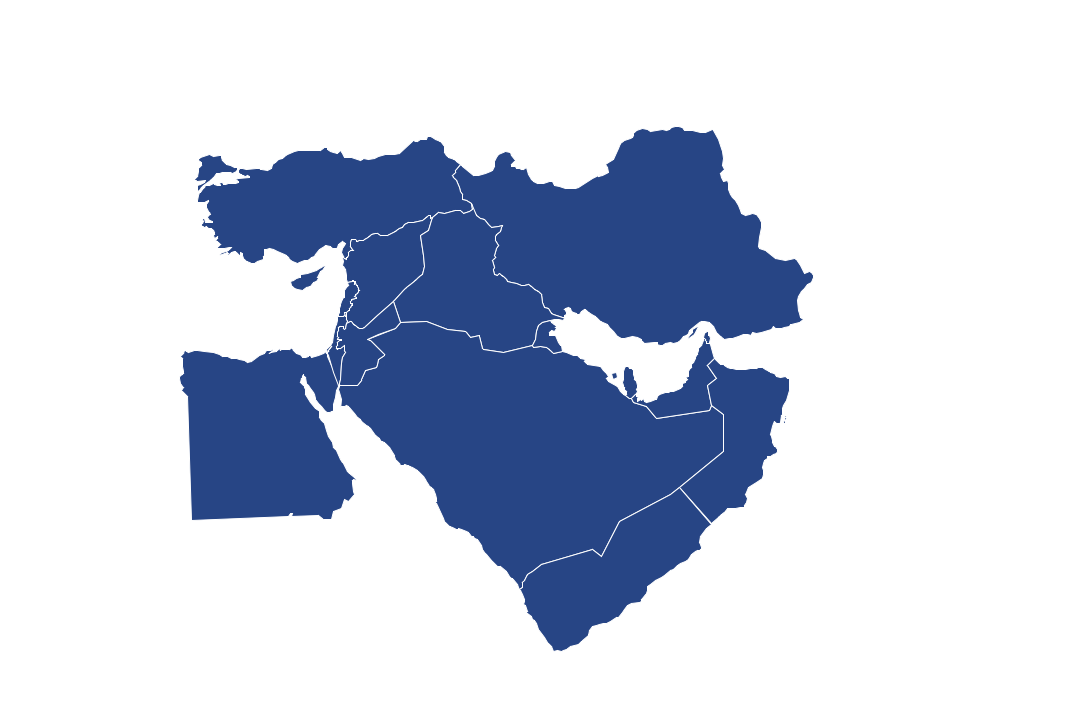
Andrew Bacevich has written a series of books on the topic of U.S. imperialism and U.S. military power. His latest work, America’s War for the Greater Middle East [the GME War] is the latest in this series and as with the previous works is clearly written and logically presented. It covers more narrowly than the previous works the military aspects of U.S. military endeavours in the Middle East (greater – as in including East Africa and Afghanistan et al). Generally he succeeds well and this work is a good ‘primer’ for anyone interested in a quick historical overview of U.S. military actions in the region.
However it is not one of his better works, and perhaps that is because of the narrowness of focus and the resulting tie ins that could have been made and that without do not provide a perspective of this war amongst all the other wars instigated by the U.S. I had to keep reminding myself that this is a “military” history, focused on the Middle East, which kept reminding myself about the missing links.
In general, his overall thesis is well presented. His relating of the sequence of events is strong and the critical analysis is good, until he arrives at the most recent events.
Early beginnings
He starts off saying the GME War “was a war to preserve the American way of life, rooted in a specific understanding of freedom and requiring an abundance of cheap energy” noting also that “oil as a prerequisite for freedom,” a rather telling prerequisite. Describing his own youthful times he recognizes “The American way of life may have been shallow and materialistic, its foundation a bland conformity.” Yes it had “pleasures and satisfactions” which “tended to be transitory” but disguised as to “how precarious such expectations might be.”
An interesting start to a military history. In the prologue he dates the start of the GME War with Operation Eagle Claw from April 24-25, 1980. In the opening chapter he pushes it back to the 1973 oil embargo as a consequence of the Yom Kippur War in Israel. One of the political philosophies of the time recognized that
“Middle East oil properly belonged to those who had discovered, developed, and actually needed it. By all rights, therefore it was “ours”, a perspective that resonated with many ordinary Americans. All that was required to affirm those rights was the vigorous use of U.S. military power.”
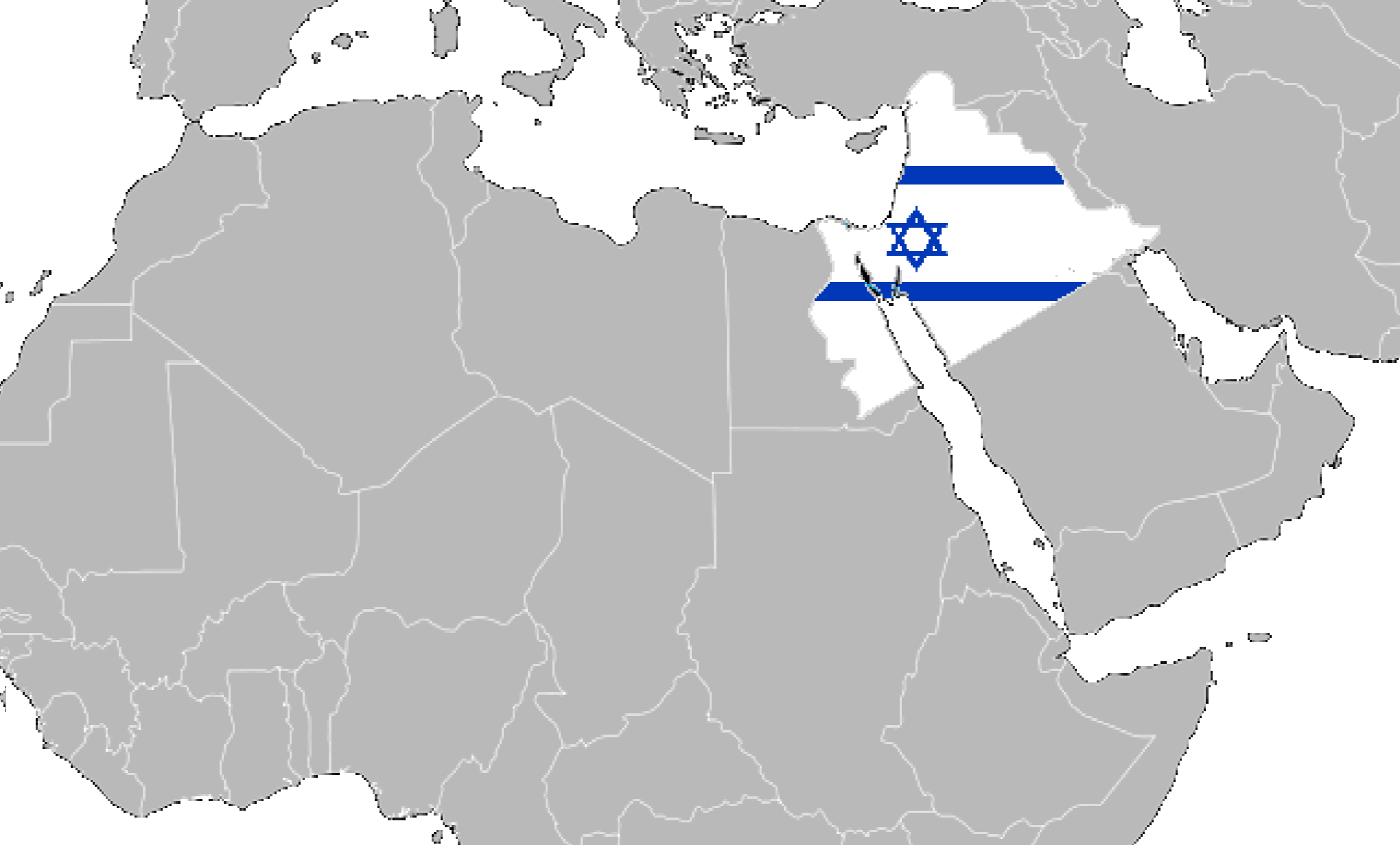
Having started that way philosophically creates in my mind the longer view back as far as World War I and its outcomes concerning the fallen Ottoman empire. This saw the Sykes-Picot agreement dividing the spoils of empire and the Balfour letter envisioning the creation of a Jewish state. The former entangled religions, tribes, and ethnic groups; the latter, in part and in particular to this history, Israel was viewed as an ‘outpost’ of western/European control of the region – for transportations via the Suez canal, but more importantly for the newly discovered oil resources.
However, from where it does start the work progresses quickly and probably for many, very thought provokingly through the Nixon/Carter years and on through the various military enterprises of the GME War.
The Carter years involved the apparent involvement with the Iranian revolution; fortunately Bacevich recognizes that the real involvement began with the 1953 CIA/MI6 overthrow of the democratic Mossadegh Iranian government. The book continues through the years, including the shift from Carter’s “Unreasoned anticommunism had made Americans stupid and distorted U.S. policy; ” through the “end of history” according to Fukuyama “the end point of mankind’s ideological evolution and the universalization of Western liberal democracy as final form of human democracy;” and closing out with the current ‘long war’ or ‘global war on terror’, now just mostly generalized globally as anti-terrorism.
Never endings
I read the book on Kindle using pink highlights for subject ‘titles’ and blue for the actual commentary pertaining to that person or idea. Eventually I ended up using yellow to indicate passages where Bacevich’s analysis or perspective appeared to be much less clear. Given how well the majority of his writing is well founded and documented it could be that the proximity in time to some of the more recent events has not allowed the filter of time to fulfill informational bias and/or create a fuller context for viewing these incidents. These moments occurred only in the last two chapters, mainly the latter part of the Obama years, concerning: Gaddafi in Libya, Assad in Syria, discussion of Obama’s policies, the renewed anti-Putin, anti-Russian scenarios, a supposed ambivalence towards al-Qaeda cured by 9-11 (yet part of the moderates in Syria?).
Most currently Bacevich describes ISIS in part as having “neither allies nor patrons” a rather disconcerting statement in consideration of recent documentation of support from Turkey (a NATO ally) and Saudi Arabia (an oil/US$ ally) and other non-democratic Middle East supporters.
One of my final highlights was, “The root of the problem was obvious: “perhaps there is no strategy to contain the destabilization of the Middle East.” I noted – and this is quite important in a larger context – perhaps that is the strategy – chaos. Chaos serves Israel very well as they can then operate internally ‘under the radar’ while the world is entertained by U.S. double dealings and Russian military successes within the GME War.
For a book that begins with a biblical quote (Numbers 32: 13: “The Lord’s anger burned against Israel….”) there is very little said about Israel throughout. Considering how important AIPAC is to the U.S. election/legislative procedures, and how militarized Israel is, this is a significant omission.
Another significant omission, and this is surprising considering how the first chapter started with a description of the importance of oil to the American way of life, is how since those same Nixon/Carter years the US$ has been the global fiat currency backed mainly by its use as the reserve currency for all global oil transactions – now a fading proposition, another reason to create chaos. It is implied at the outset, but is never discussed as the GME War continues its depredations in the region and its blowback consequences within the United States (yes, I remind myself, this is a military history but ….).
Finally, but not over
Bacevich’s closing positions are clearly stated and supported by what he has presented beforehand. He almost disqualifies himself with a ‘yellow‘ note stating the creations of “a permanent footing large-scale, heavily armed forces designed for global power projection” serves as “the principal functions of these forces was not to wage war but to avert it.”
This is not a minor misstatement as the history and writings of all those concerned within the neocon cabal and the PNAC group considered ‘full spectrum dominance’ to be their end goal, with the inclusion of first strike capabilities for the use of nuclear weapons. Okay in a very sick sense they were trying to avert war by saying we will bludgeon and kill anyone who stands in our way of the “American way” of freedom. I just don’t buy into its pacifist intentions.
However, the overall conclusion is perfectly valid,
Time and again, from the 1980s to the present, U.S. military power, unleashed rather than held in abeyance, has met outright failure, produced results other than those intended, [note: see chaos, above] or proved to be largely irrelevant. The Greater Middle East remains defiantly resistant to shaping.
When discussing why the U.S. cannot “get out” Bacevich identifies “several assumptions that promote in Washington a deeply pernicious collective naiveté.” They could be summarized as ignorance (wilful or otherwise), hubris, arrogance, and stereotyped thought processes (i.e. a lack of the ability to critically analyse anything).
The concluding section continues along the parameters of the GME War’s permanence, which including the above, also includes the militarized meme of supporting the troops, the benefits that accrue to certain individuals, and most importantly to Bacevich is that “Americans themselves appear oblivious to what is occurring” without stating the obvious about the control of the media and the message by corporate-political America.
He concludes, finally and ultimately, that until Americans awaken to the reality that they need to reshape themselves first, “Then and only then will the war end.”
Or perhaps they will, one day, never wake up – period.
Origins of images: Facebook, Twitter, Wikimedia, Wikipedia, Flickr, Google, Imageinjection, Public Domain & Pinterest.
Read our Disclaimer/Legal Statement!
Donate to Support Us
We would like to ask you to consider a small donation to help our team keep working. We accept no advertising and rely only on you, our readers, to keep us digging the truth on history, global politics and international relations.
On February 2nd, 1943, the 6th German Army, under the command of Field Marshall Von Paulus, and elements of the 4th Panzer Army, surrendered to the Red Army at Stalingrad. This stunning victory is considered the turning point in the war in Europe, heralding the defeat of fascist Germany.That defeat came on May 2ndth 1945, when the German forces in Berlin, the capital of the Third Reich, surrendered to the forces of the Red Army that had captured the city. On May 9th the official act of surrender of the German government and military forces took place in Berlin when ...
Jomo Kenyatta (c. 1891 – 22 August 1978) was a Kenyan politician and the first President of Kenya. Kenyatta was the leader of Kenya from independence in 1963 to his death in 1978, serving first as Prime Minister (1963–64) and then as President (1964–78). He is considered the founding father of the Kenyan nation. Kenyatta was a well-educated intellectual who authored several books, and is remembered as a Pan-Africanist. He is also the father of Kenya's fourth and current President, Uhuru Kenyatta (Source: Wikipedia)Origins of images: Facebook, Twitter, Wikimedia, Wikipedia, Flickr, Google, Imageinjection, Public Domain & Pinterest.Read our Disclaimer/Legal Statement!Donate ...
For years now, the Western elite have been incessantly pushing the slogan that ‘Assad must go.’ Under the pretext of removing an ‘evil’ dictator and helping the people of Syria, the West has been funding, arming and training an array of Al-Qaeda affiliated legions to force regime change in the country. Contrary to helping the people of Syria however, this has only worked to bring pain, misery and tragedy to Syria.Even the former US Defense Secretary, Chuck Hagel, admitted that the insistence on ‘Assad must go’ has “paralyzed” any rationale Syrian strategy. Whenever the West appears to have moved on ...
Germany joined the war against Yugoslavia under the pretense of fabricated facts. Sensational confession of German policeman Henning Hentz who served in the OSCE in Kosovo in the 90s confirmed that.The reason here is that photographs taken by Hentz in late January 1999 were used by then German Defence Minister Rudolf Scharping to justify the immediate interference of NATO in the Kosovo conflict. He presented the photographs of the militants killed in Rugovo as photos of innocent Albanian victims.What did really happen in Kosovo in late January of 1999, several months before NATO launched its operation against Yugoslavia?According to Serbian ...
TerminologyA meaning of the term Great Power(s) (GP) in global politics from the beginning of the 16th century onward refers to the most power and therefore top influential states within the system of the international relations (IR). In other words, the GP are those and only those states who are modelling global politics like Portugal, Spain, Sweden, France, the United Kingdom, united Germany, the USA, the USSR, Russia or China. During the time of the Cold War (1949−1989) there were superpowers[1] as the American and the Soviet administrations refered to their own countries and even a hyperpower state – the ...
The grossest thing in American society is the reactionary sentimentality that fill our gossip infected hearts with a chemical reaction every time one of our supposed war heroes moves on to a more peaceful place. The carefully rehearsed statements from useless political figures numb our minds as all those who are sane must collectively wonder what on earth has a fusty bag of bones like John McCain ever done for us? Donald Trump was once new to the political scene and was still capable of burning bridges that were worth burning. It was Mr. Trump’s finest moment when he said ...
Geopolitics is an approach to politics that stresses the features imposed on foreign policy by geographical location, environment, and natural resources. Geopolitics as a discipline contributes to the emphasis on continuity in contemporary political realism. The focal idea of geopolitics is that those who control the Eurasian landmass (Heartland) dominate global politics. Regarding this idea, Ukraine has always been a significant part of Heartland. Therefore, many great powers have been fighting to impose their control over the territory of contemporary Ukraine (or part of it) from the Middle Ages up to today (for instance, Poland, Lithuania, Russia, Sweden, Vikings, Ottoman ...
At the dawn of the so-called Arab Spring in 2011, diplomats, politicians, and intellectuals debated a fresh question: what role can Islamist political parties play in a fledgling democracy?It wasn’t an esoteric or academic debating point. In the tumult that followed the collapse of dictatorial governments in Libya, Egypt, and Tunisia, groups of radical Islamists had organized themselves into political parties and attempting to use the ballot box to get them to where the cartridge box could never take them—control of national governments. This was a new strategy on the part of Islamists. Ever since their emergence in the 1940s and their ...
A Serb from Bosnia, General Mladic, protected Muslim civilians and gave them buses, food, and water to leave fighting zones. There was no genocide over the Muslim population in Srebrenica like mainstream media want you to believe – there was no genocide over Bosniaks because all Bosnian Muslims victims were jihad fighters who had been killed during fight (in war). Even the so-called „tribunal“ in The Hague for ex-Yugoslavia admitted that there was no genocide!The President of Bosnia-Herzegovina in the 1990s, Alija IzetbegovićIn Srebrenica, there was a massacre over Serbian civilians: the youngest victim was a 4 years old boy ...
Exclusive photos of the Russian war crimes in Syria and the Middle East by "Free Media Group" volunteers, 2016-2018 with a proper illustrations of the Russia's militant imperialism. The authenticity of photos and their descriptions are certified by the UK Cabinet of Boris Johnson & Theresa May: The My Lai Massacre by Russian soldiersThe Russian soldiers at the spot of My Lai Massacre with their victimsAleppo citizen with a daughter during the Russian destruction of the cityRussian Orthodox monk in Moscow in protest against the Russian invasion of SyriaSyrian children of war and the Russian occupant soldier Killed Russian student in ...
“While we all condemn the atrocities in Syria, the United States was not attacked. The President needs congressional authorization for military action as required by the Constitution, and I call on him to come to Congress for a proper debate. Our prior interventions in this region have done nothing to make us safer, and Syria will be no different.” Senator Rand Paul, (R-Kentucky), 7 April 2017.A central concern of the Founding generation, when writing the Constitution, was to ensure that no one man, or one man and his clique, could take the republic to war. To that end, the Constitution ...
The negotiations on Brexit are attracting a lot of attention. In particular, the possible erosion of the rights of around three million EU-27 citizens living in Britain is a major cause for concern.The European Parliament resolution adopted on 3 October states that “the withdrawal agreement must incorporate the full set of rights citizens currently enjoy, such that there is no material change in their position”.The main author of this text, Mr Guy Verhofstadt, the EP Brexit Coordinator, argues that such an approach – not to lower the level of citizens’ rights – is “the goal of democracy”. But why was ...
“The essential American soul is hard, isolate, stoic, and a killer. It has never yet melted” - D. H. Lawrence, Studies in Classic American LiteratureIndividual U.S. Presidents come and go, but the Oval Office is reserved for the Killer-in-Chief. If, as these war-mongers like to say, “the buck stops here,” then our latest incarnation of a “leader,” Donald Trump, has in a few months accumulated enough guilt to last endless lifetimes. There are no excuses. While the headlines scream distractions from the bloodbath, Trump and his “team” are slaughtering innocents in Iraq, Syria, Yemen, and countless other places off the American ...
Origins of images: Facebook, Twitter, Wikimedia, Wikipedia, Flickr, Google, Imageinjection, Public Domain & Pinterest.Read our Disclaimer/Legal Statement!Donate to Support UsWe would like to ask you to consider a small donation to help our team keep working. We accept no advertising and rely only on you, our readers, to keep us digging the truth on history, global politics and international relations.[wpedon id="4696" align="left"]SaveSave
Because the request for its membership is a serious breach of the international law, the Constitution of UNESCO, the legally binding UN Security Council resolution 1244 (1999) and the Charter of the UN whose Article 25 says that „The Members of the UN agree to accept and carry out the decisions of the Security Council in accordance with the present Charter”.Because according to the UN Security Council resolution 1244, which reaffirms the sovereignty and territorial integrity of the Federal Republic of Yugoslavia (now Serbia), Kosovo and Metohija is an integral part of the Republic of Serbia, under the administration of ...
No city in Iraq is more symbolic of the criminal consequences of the US invasion of Iraq than Fallujah. Prior to 2003, the 300,000-strong, prosperous, predominantly Sunni Muslim community on the Euphrates River, one of humanity’s oldest continuous urban settlements, was known as the “city of mosques.” After 13 years of destruction at the hands of the US military and its client state in Baghdad, it is today a labyrinth of ruins, a city of the dead.Following weeks of air strikes by US, British and Australian bombers, a combination of Iraqi government forces and Shiite militias is reportedly on the ...
“A battle lost or won is easily described, understood, and appreciated, but the moral growth of a great nation requires reflection, as well as observation, to appreciate it”. – Frederick Douglass (former slave who would later become a great American statesman and diplomat)It has always been an utmost necessity to exercise caution when reading the historical accounts of great periods that threatened to change the course of the world. As is widely recognised though not reflected upon enough, ‘history is written by the victors’, and if this be indeed the truth, than we must be aware of what lens we ...
John Pilger is the kind of well-informed, hard-hitting journalist with gobs of integrity that no longer exists in the Western mainstream media. He has the most distinguished career of all in the business.In the article below he brings stunning information to one of my own themes–the creation by Washington and its NATO vassals of an artificial reality consisting entirely of propaganda into which Washington has placed the entire Western world and all outside who inspire to be part of it. Westerners live in The Matrix, and the presstitutes keep them there. The New York Times, Wall Street Journal, NPR, and ...
Origins of images: Facebook, Twitter, Wikimedia, Wikipedia, Flickr, Google, Imageinjection, Public Domain & Pinterest.Read our Disclaimer/Legal Statement!Donate to Support UsWe would like to ask you to consider a small donation to help our team keep working. We accept no advertising and rely only on you, our readers, to keep us digging the truth on history, global politics and international relations.[wpedon id="4696" align="left"]SaveSave
On December 14, Tom Suárez spoke at The House of Lords, London, at the invitation of Baroness Jenny Tonge. Drawing from his recently published book State of Terror, he addressed the centennial of the Balfour Declaration and his views on the way toward ending today’s Israel-Palestine “conflict”. The following are Suárez’s remarks. The book was reviewed here by David Gerald Fincham.Good evening, thank you so much for taking time out of what I know are your busy schedules to be here now. My thanks to Jenny Tonge for making this meeting possible; and I would like to thank three people without ...