
One thing is certain: we will not survive another 100 years of this. Long before then, we will have to try something else. One thing that could help keep us out of more wars is the Trump face now placed on the wars. People who will hate Russia because they hate Trump may at some point oppose Trump’s wars because they hate Trump. And those getting active to support refugees may also want to help end the crimes that create the refugees […]
This April 4th will be 100 years since the U.S. Senate voted to declare war on Germany and 50 since Martin Luther King Jr. spoke out against the war on Vietnam (49 since he was killed on that speech’s first anniversary). Events are being planned to help us try to finally learn some lessons, to move beyond, not just Vietnam, but war.
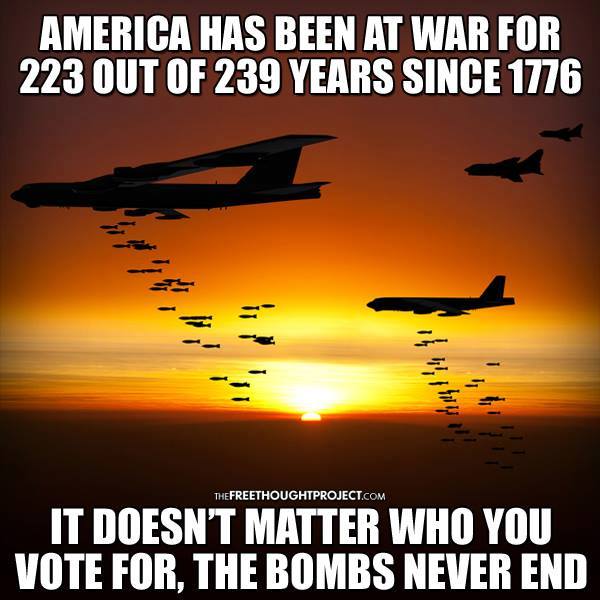
That declaration of war on Germany was not for the war that makes up the single most common theme of U.S. entertainment and history. It was for the war that came before that one. This was the Great War, the war to end all wars, the war without which the conditions for the next war would not have existed.
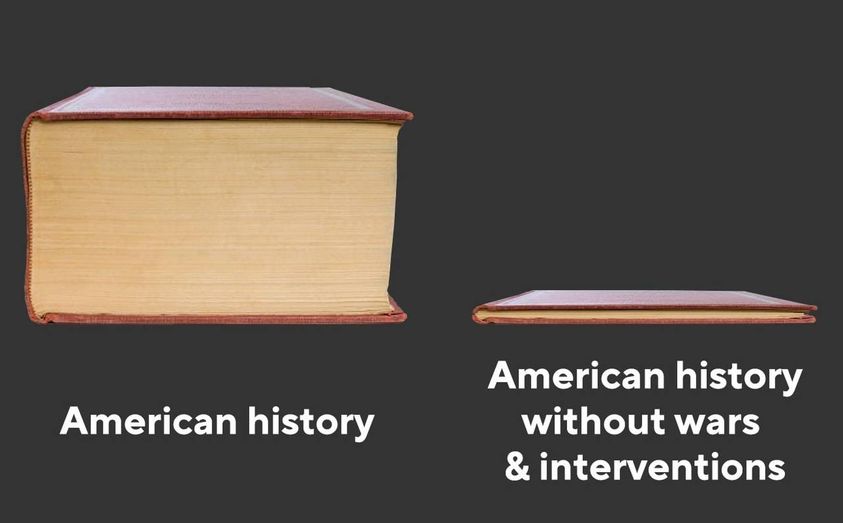
As well recounted in Michael Kazin’s War Against War: The American Fight for Peace 1914-1918, a major peace movement had the support of a great deal of the United States. When the war finally ended (after the U.S. had actually been in it for about 5% the length of the war on Afghanistan thus far) just about everybody regretted it. The losses in life, limb, sanity, property, civil liberties, democracy, and health were incredible. Death, devastation, a flu epidemic, prohibition, a permanent military and the taxes to go with it, plus predictions of World War II: these were the results, and a lot of people remembered that they had been warned, as well as that the ending of all war had been promised.
The peace activists had warned the U.S. government to stay out of the war (not out of foreign relations, just out of mass-murdering foreign relations). And they had been right. The regret was intense and lasting. It lasted right up until the worst result of World War I came along in the form of World War II. At that point, regret was replaced with forgetting. World War I was erased from popular history, and its child on steroids was celebrated rather than mourned, and has been celebrated with growing reverence ever since.
The massive peace movement that outlawed war in 1928, had been widespread, mainstream, and aggressive before 1917 as well. Antiwar Congress members had entered into the Congressional Record a sample of the flood of letters and petitions they had received urging that the U.S. stay out of war. Peace groups had held marches and rallies, sent delegations to Europe, met with the president, and pushed to require a popular vote before the launching of any war, believing that the public would vote war down. We’ll never know, because the vote was never taken. Instead, the United States jumped into the war, thereby preventing a negotiated settlement and creating a total victory followed by vicious punishment of the losing side — the very fuel for Nazism, as well as for Italian fascism, Japanese imperialism, and the Sykes-Picot carving up of the Middle East so beloved by that region’s residents to this day.
An antiwar exhibit that toured the U.S. in 1916 included a life-sized model stegosaurus that represented the fatal consequences of having heavy armor but no brains. The idea of preparing for war in order to achieve peace, which today is simple commonsense, was widely found to be a great source of humor, as Washington cynically pursued “preparedness.” Morris Hillquit, an eloquent socialist — something of a Bernie Sanders without the 21st-century militarism — asked why European nations, having fully armed themselves to avoid war, hadn’t avoided it. “Their antiwar insurance turned out to be a bad case of over-insurance,” he said. You prepare for war, and you get war — remarkably enough.
Woodrow Wilson won reelection on an antiwar platform, and could not have won it otherwise. After he opted for war, he was unable to raise an army to fight his war without a draft. And he was unable to sustain a draft without imprisoning people who spoke against it. He saw to it that conscientious objectors were brutally tortured (or, as we would say today, interrogated). Yet people refused, deserted, evaded, and violently fought recruiters by the thousands. The wisdom to reject war was not lacking. It just wasn’t followed by those in power.
The understanding that war should be ended, which reached its peak perhaps in the 1920s and 1930s, saw something of a comeback during what the Vietnamese call the American War. Martin Luther King did not propose a different war or a better war, but leaving behind the entire war system. That awareness has grown even as the Vietnam Syndrome has faded and war been normalized. Now, the U.S. popular mind is a mass of contradictions.
In a recent poll, 66% of people in the United States are worried that the U.S. will become engaged in a major war in the next four years. However, the U.S. is engaged in a number of wars right now that must seem pretty major to the people living through them, wars that have created the greatest refugee crisis so far on the planet and threatened to break similar records for starvation. In addition, 80% of the U.S. public in the very same poll say they support NATO. There’s a 50/50 split on whether to build yet more nukes. A slim majority favors banning refugees who are fleeing the wars. And over three-quarters of Democrats believe, for partisan rather than empirical reasons, that Russia is unfriendly or an enemy. Despite the warnings of the wise for over a century, people are still imagining they can use war preparations to avoid war.
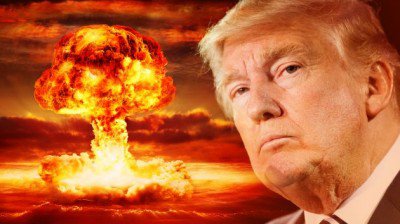
One thing that could help keep us out of more wars is the Trump face now placed on the wars. People who will hate Russia because they hate Trump may at some point oppose Trump’s wars because they hate Trump. And those getting active to support refugees may also want to help end the crimes that create the refugees.
Meanwhile, German tanks are again rolling toward the Russian border, and instead of soliciting denunciations from groups like the Anne Frank Center, as recently done to combat Donald Trump’s anti-Semitism, U.S. liberals are generally applauding or avoiding any awareness.
One thing is certain: we will not survive another 100 years of this. Long before then, we will have to try something else. We will have to move beyond war to nonviolent conflict resolution, aid, diplomacy, disarmament, cooperation, and the rule of law.
We would like to ask you to consider a small donation to help our team keep working. We accept no advertising and rely only on you, our readers, to keep us digging the truth on history, global politics and international relations.
Millions of white people glorify mass murderers because their sense of identity and place in society is deeply tied to white supremacy.“It is important to name and shame the mass murderers.”The perpetrators of crimes against humanity are often elevated to positions of respect and admiration. It all depends on who did the killing, and who was killed. Now the murderers are being called to account. The new movement in the United States against police and other state violence has inspired this welcome change taking place all over the world. The criminals are being exposed decades and even centuries after their atrocities ...
The president of Turkey, Recep Tayyip Erdogan, speaking at a conference entitled the “The Spirit of Turkey’s New Security,” referring to the Treaty of Lausanne, said:“The Turkish Republic is the last state that we founded with whatever was left over from all the self-sacrifices we were able to make... We are heirs of a nation that saw its territory expand to 22 million kilometers. Shortly before the Republic was founded, we had 3 million kilometers which kept diminishing until all we had left was 780,000 kilometers. Some may be offended at my mention of Lausanne. But why does it bother ...
Jomo Kenyatta (c. 1891 – 22 August 1978) was a Kenyan politician and the first President of Kenya. Kenyatta was the leader of Kenya from independence in 1963 to his death in 1978, serving first as Prime Minister (1963–64) and then as President (1964–78). He is considered the founding father of the Kenyan nation. Kenyatta was a well-educated intellectual who authored several books, and is remembered as a Pan-Africanist. He is also the father of Kenya's fourth and current President, Uhuru Kenyatta (Source: Wikipedia)Origins of images: Facebook, Twitter, Wikimedia, Wikipedia, Flickr, Google, Imageinjection, Public Domain & Pinterest.Read our Disclaimer/Legal Statement!Donate ...
There are many definitions and/or understandings of war. However, from the very academic point of view, war can be understood as an armed conflict between at least two sides usually but not necessarily states fought usually for some (geo)political goals. The focal conceptual idea of war is the use of force between large-scale political subjects like states, empires, or coalitions. Historically, wars have been fought mainly for the control of certain land for different reasons ranging from a purely political one to a purely economic one or a combination of several of them.Many types of war and warfare can be ...
With a general election looming in the United Kingdom and Spain possibly following Greece’s revolt against austerity later this year, we need to think, not just who or what we are voting for, but why we should vote at all.People are suffering from a deficiency which is as unbalancing as a hormone or vitamin deficiency. What we are severely lacking in is democracy. Many of those pondering on the state of politics feel unhappy and somehow depleted. They haven’t yet realised it is democracy that’s lacking because they have believed what so many politicians have told them, over and over ...
The Six Day War of June 1967, a series of battles fought by the armed forces of the state of Israel against a combination of Arab armies, is one of manifold significance. From a military standpoint, it presented a model strategy of how to prosecute and win a war waged on several fronts.The stunning victory also created a sense of euphoria among communities in the Jewish Diaspora: Among American Jews, a segment of Jewry David Ben Gurion viewed with disdain because of their failure to migrate en masse to Israel, a new sense of commitment in both emotional and financial ...
Save... and many more pictures!Origins of images: Facebook, Twitter, Wikimedia, Wikipedia, Flickr, Google, Imageinjection, Public Domain & Pinterest.Read our Disclaimer/Legal Statement!Donate to Support UsWe would like to ask you to consider a small donation to help our team keep working. We accept no advertising and rely only on you, our readers, to keep us digging the truth on history, global politics and international relations.[wpedon id="4696" align="left"]
Only one example of traditional Western liberal democracy's support of the notorious war criminals, bandits, and gangsters:Origins of images: Facebook, Twitter, Wikimedia, Wikipedia, Flickr, Google, Imageinjection, Public Domain & Pinterest.Read our Disclaimer/Legal Statement!Donate to Support UsWe would like to ask you to consider a small donation to help our team keep working. We accept no advertising and rely only on you, our readers, to keep us digging the truth on history, global politics, and international relations.[wpedon id="4696" align="left"]Save
The public denunciation by thousands of women and a few men that they had been victims of sexual abuse by their economic bosses raises fundamental issues about the social relations of American capitalism.The moral offenses are in essence economic and social crimes. Sexual abuse is only one aspect of the social dynamics facilitating the increase in inequality and concentration of wealth, which define the practices and values of the American political and economic system.Billionaires and mega-millionaires are themselves the products of intense exploitation of tens of millions of isolated and unorganized wage and salaried workers. Capitalist exploitation is based on ...
TRANSCRIPT:Harold Channer (HC): Good evening and welcome very, very much to the conversation. We’re pleased to welcome to the program, Sean Gervasi. He is a professor and academic who is concerned with economics and particularly with what is relevant to what we want to talk about tonight. He has just returned from a long stay in Belgrade, Yugoslavia, and knows something of that situation. Sean Gervasi, welcome very, very much to the conversation, and back to New York. Before we go into some detail about what in the world is going on in terms of the Balkans, from your experience ...
Author’s note and UpdateThe following article was first published in September 2014 at the outset of the air campaign “against the ISIS”. In recent developments Russia has officially joined the campaign against the Islamic State (ISIS). What are the implications?Amply documented but rarely mentioned in news reports, the ISIS is a creation of US intelligence, recruited, trained and financed by the US and its allies including Saudi Arabia, Qatar, Turkey, Israel and Jordan. What this means is that the ISIS terrorists are the foot soldiers of the Western alliance. While America claims to be targeting the ISIS, in reality it is protecting the ISIS. The air campaign is intent upon ...
Post-colonial empires are complex organizations. They are organized on a multi-tiered basis, ranging from relative autonomous national and regional allies to subservient vassal states, with variations in between.In the contemporary period, the idea of empire does not operate as a stable global structure, though it may aspire and strive for such. While the US is the major imperial power, it does not dominate some leading global political-economic and military powers, like Russia and China.Imperial powers, like the US, have well-established regional satellites but have also suffered setbacks and retreats from independent local economic and political challengers.Empire is not a fixed ...
The West has a black history in the middle east that must be recognised. In 1916, Arabs joined the allied forces but deceived.The victorious western powers divided the region as they wished without any consideration to the peoples’ will. Then completed this crime by planting the state of Israel, which since day one spread state terrorism throughout the region.The West supported Israel and defied the international law set by the West. Our part of the world continued to live in a climate of war, militarisation and tension because of this. In this respect, the West practised and still the most ...
Documentary films about ex-Yugoslavia not seen on global corporate mass-media news. For instance:US documentary movie "RETLINES" with English subtitle from 1991 about Vatican smuggling Croat Nazi Ustashi to South America in 1945Ratlines were a system of escape routes for Nazis and other fascists fleeing Europe at the end of World War II. These escape routes mainly led toward havens in South America, particularly Argentina, Paraguay, Brazil, Uruguay, and Chile. Other destinations included the United States and perhaps Canada and the Middle East. There were two primary routes: the first went from Germany to Spain, then Argentina; the second from Germany ...
The following text is a point by point thematic summary of Prof. Michel Chossudovsky‘s presentation at the Science for Peace Conference, Academy of Sciences, Malaysia. Kuala Lumpur, 15-16 August 2016.IntroductionHistorically, science has supported the development of the weapons industry and the war economy. “Science for Peace” indelibly requires reversing the logic whereby commissioned scientific endeavors are directed towards supporting what President Eisenhower called “The Military Industrial Complex”.What is consequently required is a massive redirection of science and technology towards the pursuit of broad societal objectives. In turn, this requires a major shift in what is euphemistically called “US Foreign Policy”, namely ...
Russian professor, Doctor of History Sergey Perevezentsev has touched upon a hidden historical and political motive of the scandal caused by the speech of the Patriarch Kirill of Moscow at the celebration of Bulgaria's liberation from Ottoman oppressors.It would seem that Bulgarian President Rumen Radev said everything correctly in his speech - he called to keep memory of the warriors of many nations killed on the fields of those old battles: Russians, Romanians, Finns, Ukrainians, Belarusians, Polacks, Lithuanians, Serbians and Montenegrins. "Historical tolerance" is preserved, and principle of "multiplicity of truths" is not broken.However, as the historian explained, in 1874 ...
In Kill Anything that Moves: The Real American War in Vietnam (Metropolitan Books. New York. 2013), Turse writes that the US military’s official position, and the popular understanding in the US, is that leadership “has never condoned wanton killing or disregard for human life.” (2) On the rare occasions when atrocities are brought to light, they are blamed on low-level individuals and are said to be aberrations having nothing to do with official policy. The My Lai massacre, for example, was blamed on Lieutenant William Calley, who is said to have gone “crazy” (4,5) – although he and his unit ...
Read the truth about "Srebrenica Massacre" in 1995.Origins of images: Facebook, Twitter, Wikimedia, Wikipedia, Flickr, Google, Imageinjection, Public Domain & Pinterest.Read our Disclaimer/Legal Statement!Donate to Support UsWe would like to ask you to consider a small donation to help our team keep working. We accept no advertising and rely only on you, our readers, to keep us digging the truth on history, global politics, and international relations.[wpedon id="4696" align="left"]The Al-Qaeda-linked ‘El-Mujahedeen’ brigade of the Bosnian Muslim Army parading in downtown Zenica in central Bosnia in 1995
March 24, 2018, marks the 19th anniversary of NATO illegal and illegitimate bombing of Yugoslavia, Serbia and its Kosovo, province during 78 days. It has – one is tempted to say: of course – been conveniently forgotten by the West itself.It was masterminded by the United States under Bill Clinton and Secretary of State Madeleine Albright after the so-called negotiations between Serbs and Albanians in Rambouillet outside Paris (the parties never met face-to-face).While Clinton may be best remembered for his relations with Monica Lewinsky and his wife, Hillary Clinton, some of us also remember him (and Albright) for bombing Afghanistan, ...
Turkish-US relations have faced many serious stress tests over the past 50 years. The catalyst in overcoming those crises was making strategic considerations, which always underlined the dependence of the two NATO allies on each other, regardless of their differences.These strategic considerations appear to be weakening now, as the regional priorities of President Recep Tayyip Erdogan’s Turkey and the United States no longer overlap, and in many cases conflict with each other.That is certainly the case in Syria, where the two countries are at odds over Washington’s alliance with Syrian Kurdish groups against the Islamic State (IS). Ankara insists these groups are ...